The Hawking Index

We live in an age with unparalleled potential for big data. I nearly wrote “access to big data”, but in fact, a lot of that information is proprietary and only shared within the corporations that own it. Most notoriously, Amazon was able to use Kindle data to work out not only who was buying what, but who was actually reading it. The company was able to announce that Donna Tartt’s The Goldfinch was the least-finished book of recent times, abandoned partway by 55% of the people who paid to read it.

The mathematician Jordan Ellenberg proposed a “Hawking Index”, named for the author of the much-bought, little-read Brief History of Time, listing all the books that failed to get any reader love. It was one of those jokey news items that closed out the day, and little has been heard of it since.

But that big data is still churning. When the online streaming giants started up, there was a veritable scramble for content. Companies sitting on a reasonable backlist of anime found themselves offloading digital rights by volume, because what mattered to the early-bird marketers wasn’t quality, it was quantity. Join our service, they would proclaim, because we have five hundred anime titles! Of course, most of those titles would be stuff like King of Bandits Jing, which nobody really watched, and which had previously only monetised when the warehouse storing the DVDs was burned down during the London riots and the owners got to claim on the insurance.

But that didn’t matter. Never mind the quality, feel the width… until you fast forward a couple of years, and companies like Netflix know exactly what people watch and what they don’t. They know now that nobody is actually impressed by King of Bandits Jing, and see no reason to hang onto it. They’ll just keep Attack on Titan, thank you.

But now Netflix is even dropping their blue-chip titles. Remember: Netflix is a channel, not an archive. Quite controversially, last month it even dropped Buffy the Vampire Slayer, because Netflix is no longer in the old-show game. It wants to make new shows. Good news for new anime that Netflix is prepared to commission, but bad news for anime companies that evaded due diligence for a few years. And bad news for you, if you wanted to watch a less-loved show and didn’t bother to buy the DVD.

Jonathan Clements is the author of Anime: A History. This article first appeared in NEO #164, 2017.
Trolled by the Finns

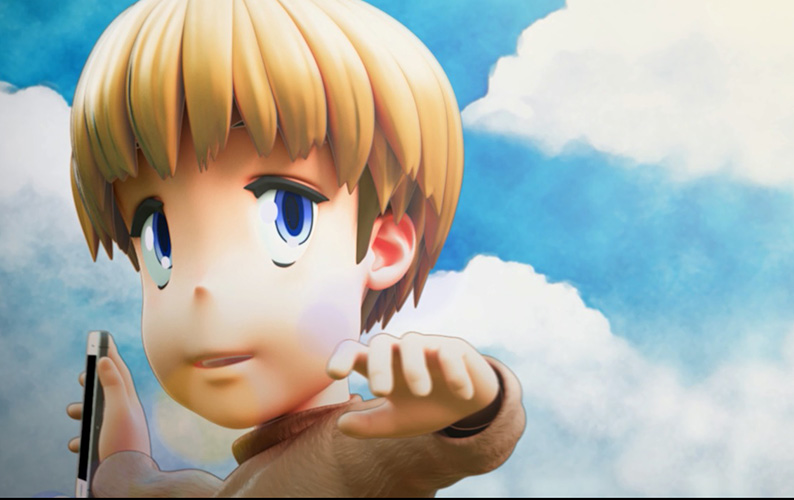
It was only a matter of time before the Finnish embassy in Tokyo came up with a mascot character. And what did they choose? An Angry Bird? A heavy-metal corpse? An open-source penguin? No, they came up with Fintan, a somewhat simple seven-year-old boy, dressed in a lion costume, whose gormless presence somehow helped propel the embassy Twitter feed to 130,000 followers, making it the “tenth most followed diplomatic mission Twitter account.” You hear that? Better than eleventh. In your face, Burkina Faso! Fintan has been infesting the embassy social media for five years, but this year, as the Finnish republic celebrates its centennial, he branches out into animation.

“Our aim through these short anime is to increase the interest of the Japanese public towards Finland, and convey the message that Finns are innovative but also easy-going and easy-to-approach people, who don’t take themselves too seriously”, said Markus Kokko, Counsellor, Press and Culture of the Embassy of Finland in Tokyo.

In Kenji Itoso’s first short episode, Fintan goes to an air-guitar competition and a cellphone-throwing competition, before sitting in a sauna for a while. The “plot” for this and episodes yet to come were the result of an open competition by the embassy in Tokyo, so I guess we should be glad that the public didn’t demand it be called The Adventures of Finny McFinnface. Coming soon from the British embassy, perhaps: the wacky animated adventures of Brekshit the incontinent, immigrant-hating bulldog?

And yet, Finland already has a good showing in Japanese animation. Lucy Heartfilia from Fairy Tail, sometimes seen wearing a Finnish flag made out of boobs, could easily be an ambassador for the country. The Moomins already are, to such an extent that there’s always summer work for Japanese-speakers if they want to dress up as troll-things in the Moominland Theme Park. Meanwhile, in Hetalia, the character of Finland is depicted as being in an oddly creepy relationship with Sweden… also true to life.

Hopefully Fintan’s later adventures will be more adventurous. Things that the Japanese would lap up like crazy about Finland: liquorice-flavour vodka, tar-flavoured ice cream, 58 words for frozen precipitation, the Winter War, the world’s 16th highest rate of gun-ownership, the Northern Lights, Topless Thursdays, and the time a Japanese secret agent sent a bunch of drunken sailors with a ship full of guns and ammo to start a Finnish revolution and distract the Russians from the Far East. Now there’s an anime…

I’m sorry: I made Topless Thursdays up, but there’s still time, Finland.

Jonathan Clements is the author of An Armchair Traveller’s History of Finland. This article first appeared in NEO #163, 2017.

Things Unheard

I would very much like to be enjoying A Silent Voice, but I have a bunch of other things to worry about. Just before the lights go down in the cinema, I get the word that the promised 40-minute post-film Q&A had suddenly dropped to 20 minutes – shoving an extra half-hour onto a slot’s running time often disappears in the cracks between schedulers, projectionists, front-of-house and cleaners. The woman who tells me this also warns me that we are starting 15 minutes late, because someone who shall remain nameless went off to the bogs, and we couldn’t start the film without them.

Anime Limited want to film the Q&A event for a DVD extra. Kyoto Animation are in the house with their own camera. The director, Naoko Yamada, is sitting next to me and has no idea about the blind panic unfolding in my mind over the next two hours. She’s already sat through a 40-minute meeting where we talk over the likely questions, and her minders steer me towards the areas they most want to discuss. But now I am feverishly calculating and re-calculating the logistics.

How much time do I actually have? Assuming that I am not thrown out the moment I take the stage, is there enough time for audience questions at all? If I drop audience questions (and risk the wrath of fans), will there be still time to talk about the staff at Kyoto Animation, as I have been requested to do, or do we now have to make this all-Naoko, all the time? Maybe if I rush. Maybe if I just fire questions at her like an interrogator. Maybe if I drop all questions about the manga and pre-production and just get her talking about her work, I can salvage something.

The lights go up. I take to the stage and introduce the director of A Silent Voice, and catch myself glancing at my watch when the applause goes on too long. Too much applause will cost me another question.

The cameras are running, the audience are laughing. I even relax the interrogation a little and we seem to have time for audience questions. Later on, I find out why – the person tasked with signalling me that we are out of time has decided to simply lie about it. We run over, which means that cinema-goers two films behind us might find themselves hard-pressed to make it for the last bus. Someone is going to get into trouble over this, but it’s a judgement call that saves the event. For the half-hour that the event lasts, it all looks smooth. Nobody saw the negotiations beforehand, the fretting throughout the film, or the slap on the wrist that the distributor got from the Glasgow Film Festival authorities for playing havoc with their schedule. It’s our job to make this all look easy, but sometimes it really isn’t.

Jonathan Clements is the author of Anime: A History. This article first appeared in NEO #162, 2017.

Enemies Reunited

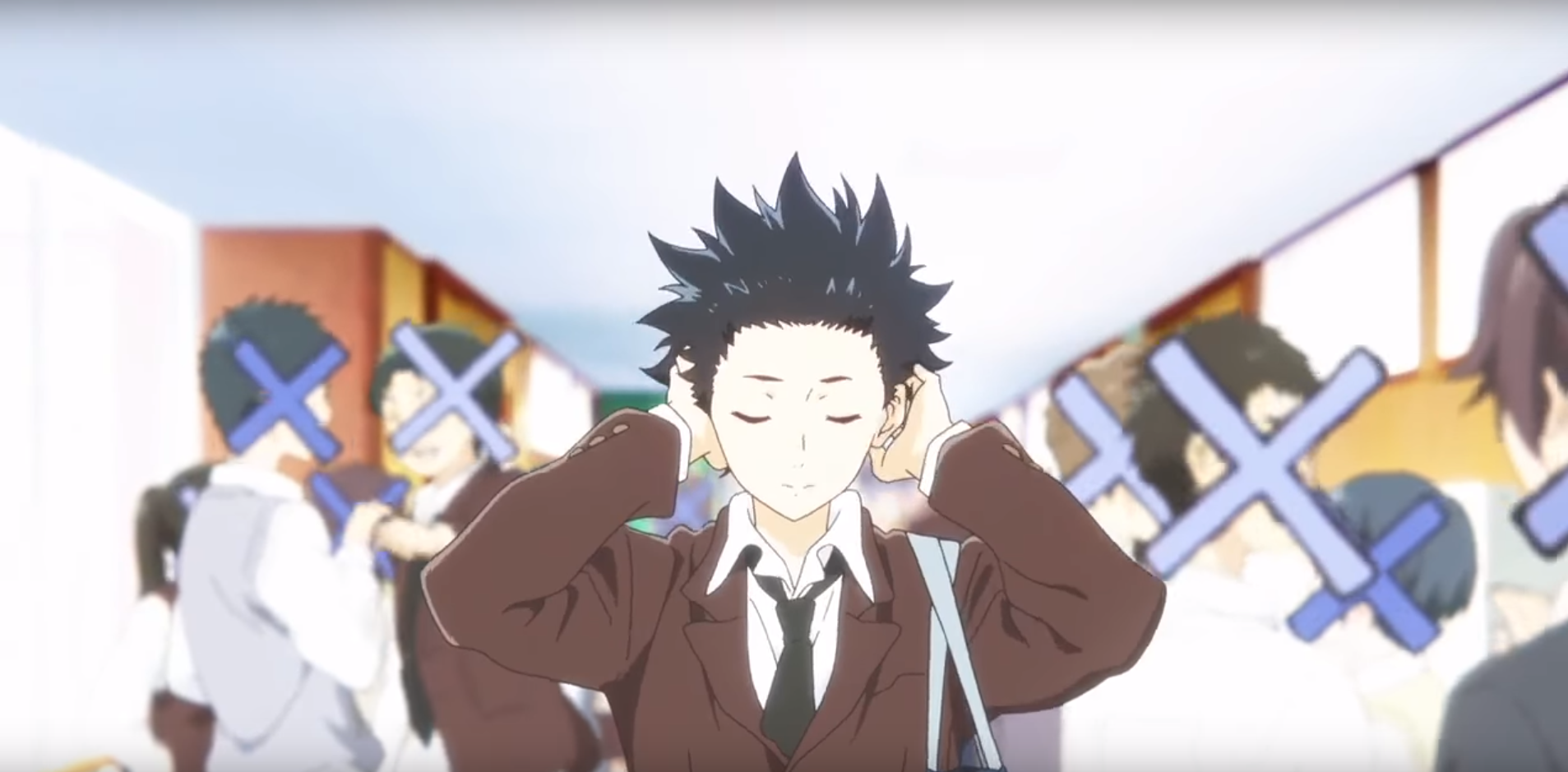
Over at the All the Anime blog, I write an article about Naoko Yamada’s acclaimed film A Silent Voice.

A Silent Voice had a rollercoaster ride to success. Despite winning a Kodansha comics competition in 2008, it sat unpublished for three years as editors and lawyers debated its provocative stance. Disability drama is a recognised sub-genre in the Japanese media, but usually strives for a worthy, didactic message. The implied audience is all too often an ignoramus who needs to be educated about specific conditions. Such stories are often termed Pure dramas, deriving their name from the autism-related 1996 TV series of the same name. But A Silent Voice often focussed not on the saintly deaf girl but on the young thug who bullied her, along with his classmates’ casual disinterest. When it finally saw print in 2011, it did so with a ringing endorsement from the Japanese Federation of the Deaf: ‘Please publish it as it is and do not change a thing.'”

The Day Heidi was Born

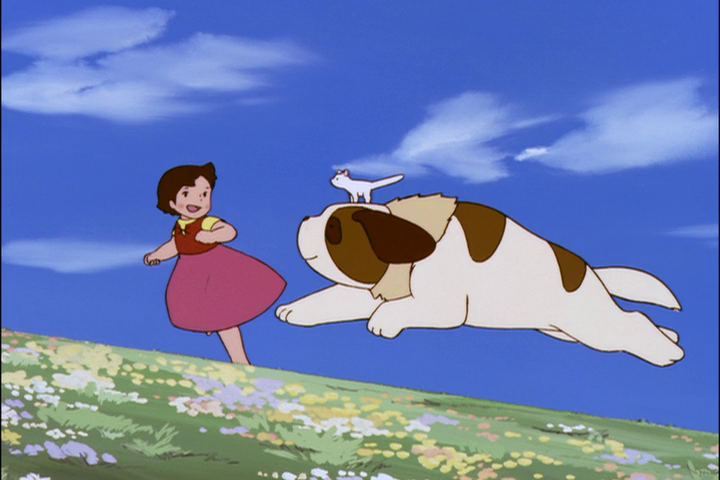
Over at the All the Anime website, I review Kaori Chiba’s new Japanese-language book on Heidi, Girl of the Alps, the landmark anime series that carved out an entire niche in evening programming.

“Chiba deals with the anime’s planning, the shooting of its pilot, and the crew’s location hunt in Switzerland, wherein Miyazaki, Takahata and their long-term collaborator Yoichi Kotabe descend like dervishes on the farmhouse of a baffled local family, demanding to photograph their kitchen table and their cows. From Maienfeld, they head up to Ulm and Frankfurt, soaking up the metropolitan imagery for Heidi’s later adventures in Germany.

“Chiba devotes ample space to the production of the first episode – the scoring of the music, the theme song, and the auditions for the voice actors, the character designs and the backgrounds. It’s only towards the end of the book that her account takes a darker tone, drawing on the complaints of the staff, particularly Miyazaki himself in many later articles and interviews, that television animation was a brutal, relentless, unending task, gobbling up talent and time. The animators put their all into Heidi, only to find that television networks greet its manifest quality with an indifferent shrug.”

The Phantom Pippi Longstocking

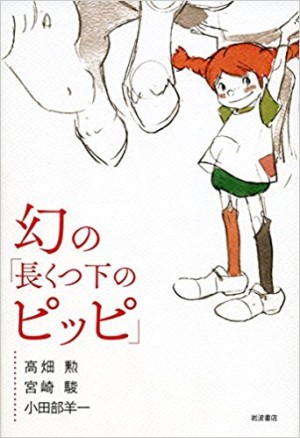
Up on the All the Anime blog, my article on the aborted Pippi Longstocking anime project that caused Hayao Miyazaki, Isao Takahata and Yoshio Kotabe to walk off their jobs at Toei and jump feet-first into the world of television.

“There is no real evidence for [Astrid] Lindgren’s reluctance at the Japanese end, apart from a cryptic comment from Tokyo Movie’s Keishi Yamazaki, who thought that she had once said in a TV programme that Japanese animation was ‘too violent’. Where on Earth she got that idea from in 1971 is anyone’s guess — I like to imagine a Stockholm tea-time coven of famous children’s authors, complaining about foreign cartoons.”

Who Will Make Anime Now?

Over at the All the Anime blog, I review Tadashi Sudo’s just-published book on disruptions to the Japanese animation business.

“Sudo’s book is no simple statement of the obvious. Despite its pocket size, it is an admirable synthesis of two decades of anime business writing, and of the immense changes wrought upon the industry by developments in technology and shifts in demographics. China is, sensibly, a huge part of his argument, as he deals with the seemingly unsolvable problem of pushing Japanese products into a marketplace with willing fans but hostile gatekeepers. He not only points to the disruption of traditional models, but also the growing influence of the likes of Netflix and Amazon in how anime is watched, and how it is funded in the first place. He also deals directly with issues of single personalities, and how they might be expected to influence the business.”

Norio Shioyama 1940-2017

In case you missed it over at the All the Anime blog, my obituary of the character designer and illustrator Norio Shioyama, who died last week.

‘“I wonder if that wasn’t the spirit of the times,” he said. “Everyone was ready to work their hardest, to do their best. The result made Japan the second-largest economy in the world, but I think we lost something. We got colder.’