Approaching Shinkai

A year ago, Motoko Rich interviewed me as part of the research for an article she was writing for the New York Times about Makoto Shinkai. Only a couple of soundbites made it in, so here is what I said in its entirety.


MR: Are you familiar with Shinkai’s earlier work, and if so, can you describe how he has evolved as a director?

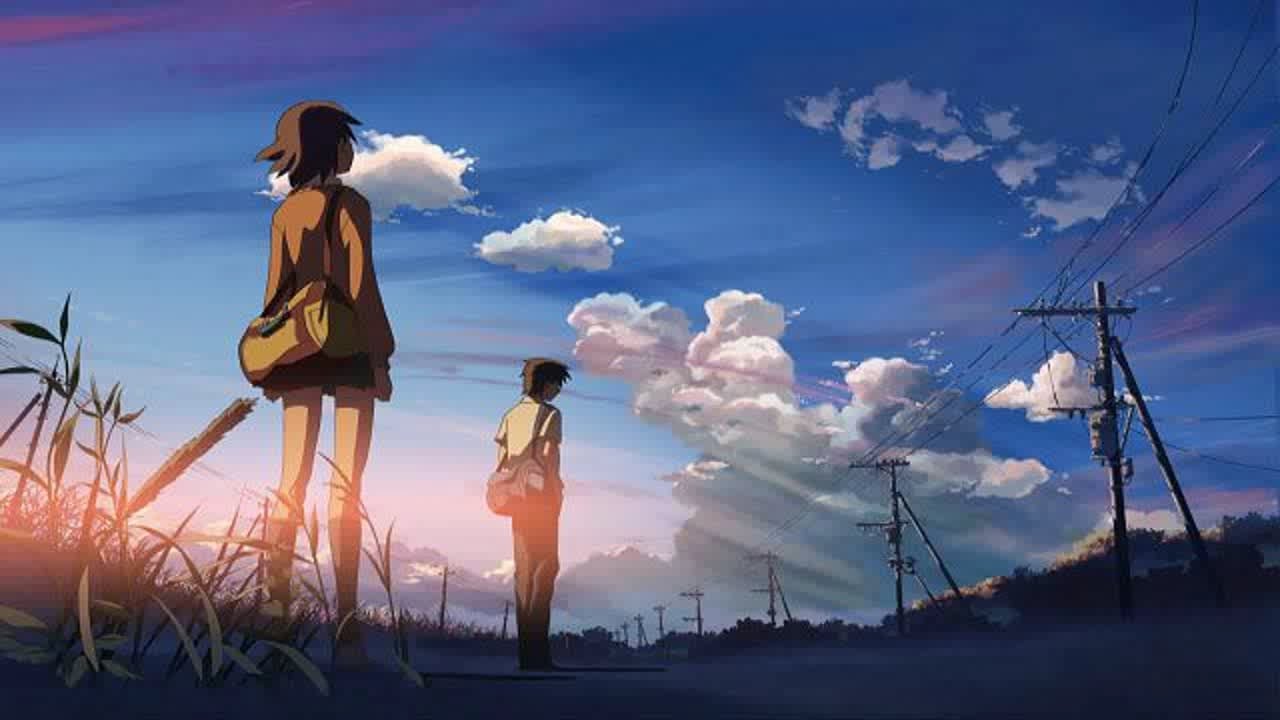
JC: Your Name stands out in Shinkai’s work because it irons out many of the issues that have dogged his earlier work. 5cm/Second, for example, was hampered by a silly logistical issue, which was that it fell a few tantalising minutes short of feature length, and seemed to end with a pop video, as if the director had simply run out of time and money.

Much of Shinkai’s work can be parsed as variations on a theme from Haruki Murakami’s short story “On Meeting the 100% Perfect Woman One Fine April Morning” (“Shigatsu Aru no Hareta Asa ni 100 Percent Onna no Ko ni De’au Koto ni Tsuite”), and Your Name finally delivers the “happy” ending that fans of that story, and indeed of Shinkai’s variations on it, have been waiting for (see my article here).

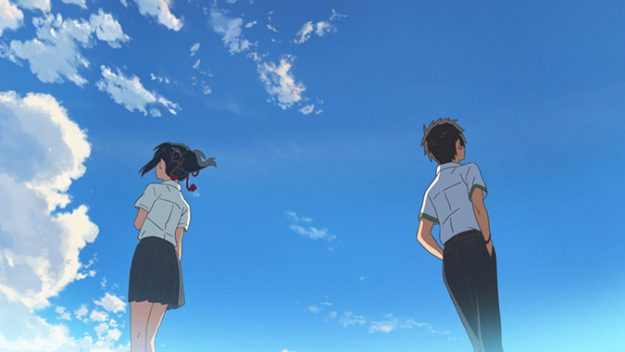
Nothing is wasted in Your Name, everything has a pay-off. Every odd little observation feeds into the direction of the movie. It’s a proper, mature work from a director whose previous feature length work has been frankly wanting — proof that he has greatness in him.
What would you say are his distinguishing talents?

Shinkai is a master at depicting and investigating the distance between people. On Garden of Words, it is expressed in micro-expressions and gestures, inches on a park bench and the direction someone is facing as an indicator of their true feelings. In 5cm/Second and Voices of a Distant Star, it’s expressed through relativity and interstellar distances, but he excels at allegorising the way that human beings are separated by gulfs of yearning.

He told me that he works by laying down dialog and sound tracks in a digital storyboard and then compliments them with images he finds around the internet before inviting animators in to illustrate his vision. He said he doesn’t consider himself a particularly good illustrator. Do you know if anyone else works that way? How is it different from other well know anime film directors?

I don’t know of anyone who works specifically in that way, but his working method bears a resemblance to ways that image boards work in advertising and marketing. He makes no secret of his interest in a bricolage of real-world inspirations, which, I think, is an admirable way of admitting his own weaknesses as an animator, and then finding a way of making them irrelevant.

Is the “successor to Hayao Miyazaki” label fair?

No, it’s a horrible imposition to dump on the shoulders of a young animator, and nobody really knows what it is supposed to mean. At an exhibition level, in cinemas, it’s the distributors saying “we need someone who can put the same number of audience members in cinemas as that guy who’s been achieving big numbers at the box office from Princess Mononoke to The Wind Rises.” But at a reception level, among the audience themselves, it’s a meaningless term. Miyazaki was a one-off — any animator worth their salt doesn’t want to be the “new” anything, they want to be an original! Shinkai doesn’t even make films for the same audience as Miyazaki — he has a much more adult sensibility, so it’s a fallacy to expect him to suddenly make films with an all-family appeal.

When foreign distributors say they want a “new Miyazaki”, what they are asking for is a guarantee of quality that will allow them to release one animated film a year from Japan that will sell a certain number of copies and garner good reviews. They want that kind of imprimatur and they are hoping that someone — Shinkai, or Mamoru Hosoda, or one of several up-and-coming directors — can fill that role. It doesn’t have a whole lot to do with style or content, it’s really about Blu-ray sales and tickets.

How do you think Your Name will be received in the west? Why was it such a breakthrough blockbuster in Japan?

Your Name will get positive reviews — it’s a great film; it’s a fun film; it’s a thoughtful film. It was well-received in Japan in part because it is undeniably a good film, but also because it tapped directly into an important part of the Japanese zeitgeist since 2011. Japan is full of people who lost someone dear to them; who lost their homes, who lost their families. I think Your Name‘s appeal, almost inadvertently, partly derives from the sense of hope and closure that events later in the film offer a large sector of modern Japanese society. Can’t really say much more without giving away spoilers!

Hear Me Now

I feature in two podcasts up recently on AlltheAnime. One is the pre-Scotland Loves Anime interview, in which I talk about the politics of hosting Japanese guests, and libel a bunch of industry figures while discussing their peccadilloes. Then, a week later, I appear at the jury chairman in the big jury hoedown, when festival judges Amelia Cook, Rayna Denison and Elliot Page discuss the four films in competition.

Animation in Japan Until 1919

Over at the All the Anime blog, I review Frederick Litten’s book on Animation in Japan Until 1919.

“In 160 closely-argued pages on animation in Japan and animation from Japan, Litten suggests that many scholars have committed an error of historical practice by believing the old-time hype. The 1923 Kanto Earthquake destroyed most of the materials of the early Japanese animation world, which leaves historical memory in the hands of the people with a vested interest in being remembered. Although Nobuyuki Tsugata has done fantastic work in reconstructing the life and films of the pioneer Seitaro Kitayama, Litten accuses Kitayama of ‘blatant self-promotion’, and calls into question much of what Kitayama wrote about his own achievements.”

Fireworks

Over at the All the Anime blog, I review Akiyuki Shinbo’s Fireworks, a remake of a Shunji Iwai TV movie from 1993. “Producer Genki Kawamura expected sparks to fly between the main staff members, particularly since Iwai the original writer-director was sitting in with Shinbo the animator and screenwriter Hitoshi Ohne, himself no stranger to helming his own films. ‘It was very exciting sitting in a script meeting with three directors,’ Kawamura told Japan’s Buzz Feed. ‘Punches could fly at you from any direction.'”

The Art of the Deal

When Noboru Ishiguro died in 2012, it was only fair to wonder would happen to Artland, the company he helped found. But even five years ago, Artland was already a changed entity. In 2006, it had been subsumed into Marvelous, a computer games conglomerate which turned Artland into a limited company, and then split it into two in 2010. One part, the Artland Animation Studio, continued under its sole shareholder Kuniharu Okano, who toiled on shows such as the upcoming Seven Deadly Sins.

In 2015 the other part was entirely absorbed within Marvelous in order to “improve the efficiency of group management.” Let me translate that for you: the other part was a holding company for intellectual property – shares in anime franchises. You might like to call the late Ishiguro himself an asset of sorts, but his days were numbered, while the franchises he helped create live under copyright law for decades after his demise.

Meanwhile, in 2016, a chunk of ownership in the animation studio was sold to Emon, a subsidiary of the Chinese company Haoliners, in order to “strengthen production capacity.” What did they think they were buying? It surely wasn’t a stake in Macross or Legend of the Galactic Heroes, as they were presumably still part of Marvelous. Was it, perhaps, just the Artland name, so that any work brought in could be spirited off down a fibre-optic cable to cheaper animators in China? Okano’s company, if it truly is merely an “animation studio”, amounts to tables and chairs, pens and paper. It doesn’t own the people who work for it, and it may even only rent the real estate where it resides. True enough, it might be able to work its way out of debt, but why would anyone fund this if it doesn’t own anything?

Four days after the anime press reported Artland’s bankruptcy this July, a fuming Okano went public to assert that the company was trying to restructure its debts, but was by no means dead. He had, he claimed, a bunch of offers from new investors, although he had yet to take any of them up on it. However, the question that everybody is asking is whether Artland itself actually retains any intellectual property – part-ownership of any of the franchises for which it is listed as a co-producer – when surely all that stuff is still sitting in a filing cabinet at Marvelous? Artland is for sale… but what would any new investor really be buying?

Jonathan Clements is the author of Anime: A History. This article first appeared in NEO #167, 2017.

Chie the Brat

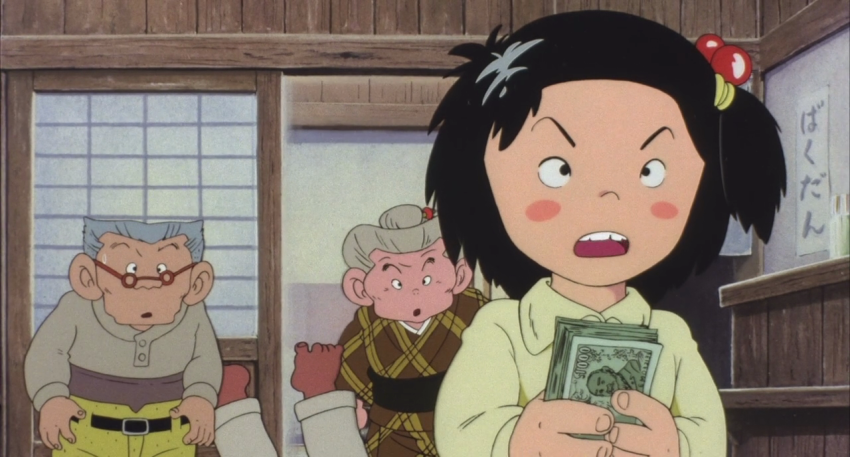
Up today on the All the Anime blog, my article about the obscure Isao Takahata series Chie the Brat. “A board member from the TV broadcaster came over to Tokyo Movie to protest about the use of inappropriate language, only for Takahata to turn on him, shouting that they should have thought of that before they bought the rights to a series about Osaka slum life.”

The Last Squad

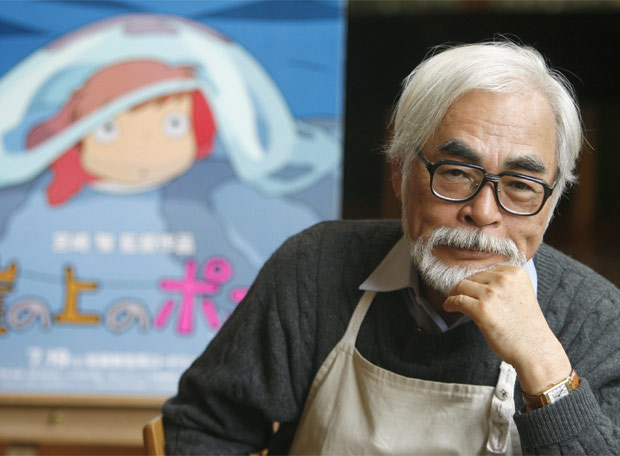
Surprising literally nobody, Hayao Miyazaki has come out of retirement one last time to make another feature film. Studio Ghibli having laid off all its animation staff, he has to round up a new posse, which is great news, right? Except, in an advert that swiftly went viral, his studio was calling for new animators prepared to accept a monthly wage of £1400.

This is an animation studio. You will end up working seven days a week, regardless of the job description. That means £45 a day without overtime.

I think what has really taken fandom by surprise is that Ghibli is just as swayed by the bottom line as every other anime studio, despite its millions in profits and its blue-chip reliability. “Hayao Miyazaki’s last movie” is sure to top the box office again, but the studio is acting like it’s some start-up making a thing about ponies, or vampires, or whatever it is Japanese start-ups do. For years and years, Ghibli’s well-managed hype has presented it as some sort of socialist cooperative, where everybody gets to take part in creative decision-making, and where even the closing credits listed the staff in alphabetical order.

But, no, it’s just like all the rest.

People will still do it, I am sure. There will be canny young artists who realise that even if it ends up costing them money, they’ll be the elite, last class of animators mentored by Miyazaki himself. They will probably be rich already. Far from opening the studio to the best of the best, Ghibli’s decision frankly amounts to an intern scheme, and like intern schemes everywhere, will require its minions to be of independent means. Oh sure, you can be in the Last Squad at Ghibli, but Mummy and Daddy will end up paying for it.

There will be animators ready to take a hit in their income, because they suspect this is their last chance to get the words Studio Ghibli on their CV, and that’s going to be worth money in future. Or is it? Will they fight and duck and dive, scrimp and save, merely for the chance to fight and duck and dive all over again, at some other studio with equally low pay?

Jonathan Clements is the author of A Brief History of Japan. This article first appeared in NEO #166, 2017.

M-People

Last month’s Guardian reported a drastic fall in the price of Elvis memorabilia. As his original fans die off and their collections hit the auction market, there simply aren’t enough new fans desperate to acquire that Jailhouse Rock limited edition.

Is this the fate that awaits our anime collectables 30 years down the line? Will your cherished, unopened, box-new copy of the Zavvi-exclusive Anthem of the Heart fail to monetise for your money-grabbing offspring as they dance on your grave? What is a “collector’s edition”, anyway? It used to carry with it some sense of exclusivity and bragging rights, but in recent years, it has more healthily come to simply connote an anime show worth owning in physical form, rather than trusting to the whims of online content providers. But as an early adopter of DVDs, I have already had to suffer the annoyance of a much-loved disc succumbing to drop-outs and scratches. Manufacturers refuse to guarantee a DVD past five years, although most of them can last for a few decades. But how long do you want to collect your collectable? Will you be watching Akira in your rocking chair, when you can’t read the subtitles anymore?

If that’s the plan, maybe we should get into M-DISCs, Millenniata’s answer to archival data storage. Readable on a standard DVD or Blu-ray player, M-DISCs record their data by physically etching it into a layer of carbon, rendering it far less liable to deterioration and safe for a thousand years. “Your data is engraved in stone – literally,” trills the manufacturer’s website, before immediately conceding that carbon is not actually stone.

The M-DISC might be the great unsung technology of this decade. It’s been commercially available for the last seven years; you can buy them off the spindle for a fiver a throw and many modern disc burners are already compatible with the format. And yet there’s been nary a whisper of it among the anime collectable community. I checked with several movers and shakers while writing this article, and none of them had heard of it. Will M-DISCs be a new fad for fans who want their children’s, children’s children to have access to Ghost in the Shell, or those extra mastering costs seem like too high a price to pay?

“Does this mean,” asks my wife, “that we won’t have to buy a new copy of Toy Story every three months?”

No. M-discs only last a thousand years when they are properly archived… not left on the living room floor for sticky hands to play with.

Jonathan Clements is the author of A Brief History of Japan. This article first appeared in NEO #165.