Approaching Shinkai

A year ago, Motoko Rich interviewed me as part of the research for an article she was writing for the New York Times about Makoto Shinkai. Only a couple of soundbites made it in, so here is what I said in its entirety.


MR: Are you familiar with Shinkai’s earlier work, and if so, can you describe how he has evolved as a director?

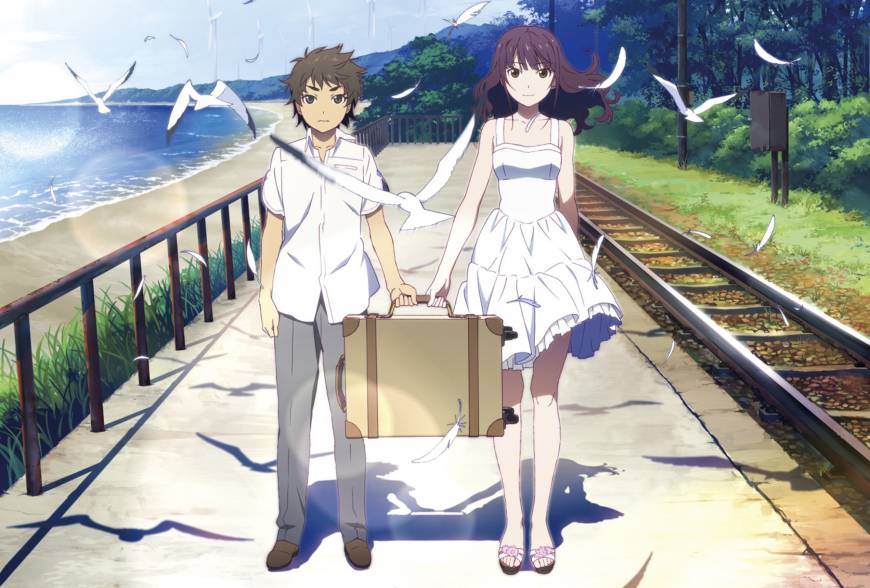
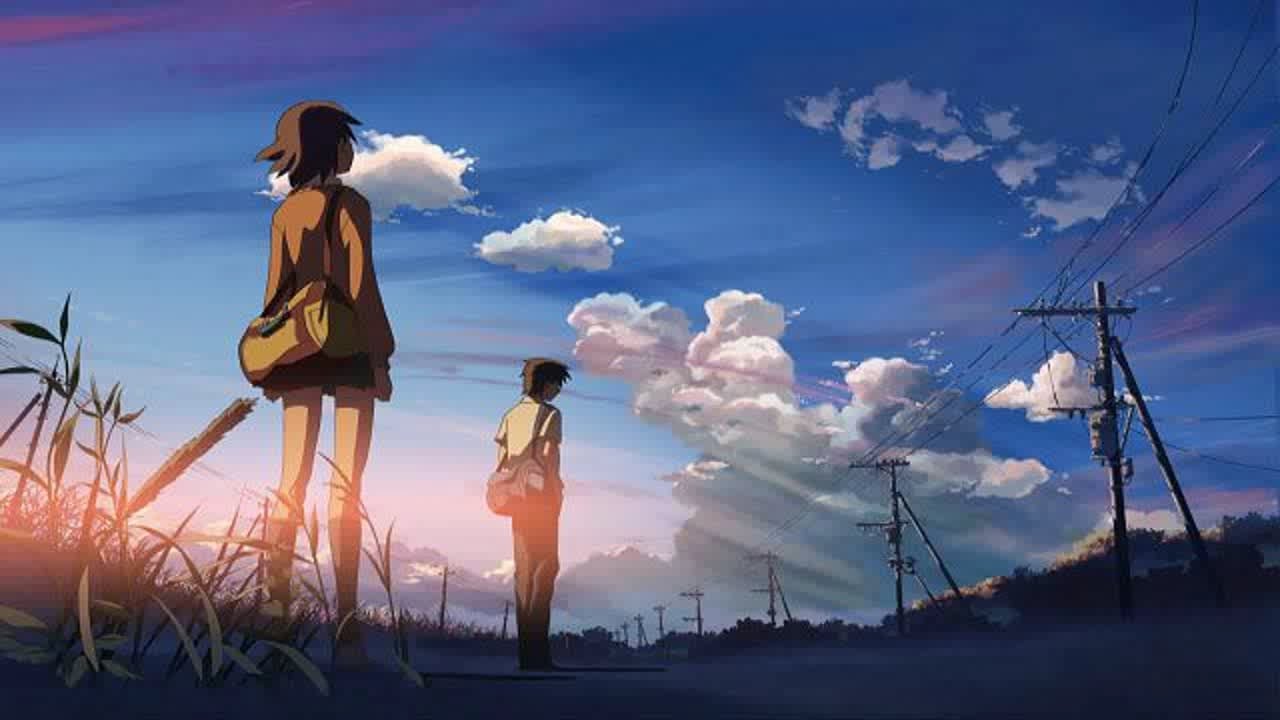
JC: Your Name stands out in Shinkai’s work because it irons out many of the issues that have dogged his earlier work. 5cm/Second, for example, was hampered by a silly logistical issue, which was that it fell a few tantalising minutes short of feature length, and seemed to end with a pop video, as if the director had simply run out of time and money.

Much of Shinkai’s work can be parsed as variations on a theme from Haruki Murakami’s short story “On Meeting the 100% Perfect Woman One Fine April Morning” (“Shigatsu Aru no Hareta Asa ni 100 Percent Onna no Ko ni De’au Koto ni Tsuite”), and Your Name finally delivers the “happy” ending that fans of that story, and indeed of Shinkai’s variations on it, have been waiting for (see my article here).

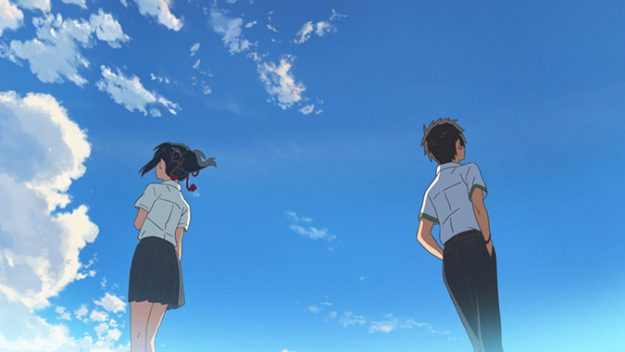
Nothing is wasted in Your Name, everything has a pay-off. Every odd little observation feeds into the direction of the movie. It’s a proper, mature work from a director whose previous feature length work has been frankly wanting — proof that he has greatness in him.
What would you say are his distinguishing talents?

Shinkai is a master at depicting and investigating the distance between people. On Garden of Words, it is expressed in micro-expressions and gestures, inches on a park bench and the direction someone is facing as an indicator of their true feelings. In 5cm/Second and Voices of a Distant Star, it’s expressed through relativity and interstellar distances, but he excels at allegorising the way that human beings are separated by gulfs of yearning.

He told me that he works by laying down dialog and sound tracks in a digital storyboard and then compliments them with images he finds around the internet before inviting animators in to illustrate his vision. He said he doesn’t consider himself a particularly good illustrator. Do you know if anyone else works that way? How is it different from other well know anime film directors?

I don’t know of anyone who works specifically in that way, but his working method bears a resemblance to ways that image boards work in advertising and marketing. He makes no secret of his interest in a bricolage of real-world inspirations, which, I think, is an admirable way of admitting his own weaknesses as an animator, and then finding a way of making them irrelevant.

Is the “successor to Hayao Miyazaki” label fair?

No, it’s a horrible imposition to dump on the shoulders of a young animator, and nobody really knows what it is supposed to mean. At an exhibition level, in cinemas, it’s the distributors saying “we need someone who can put the same number of audience members in cinemas as that guy who’s been achieving big numbers at the box office from Princess Mononoke to The Wind Rises.” But at a reception level, among the audience themselves, it’s a meaningless term. Miyazaki was a one-off — any animator worth their salt doesn’t want to be the “new” anything, they want to be an original! Shinkai doesn’t even make films for the same audience as Miyazaki — he has a much more adult sensibility, so it’s a fallacy to expect him to suddenly make films with an all-family appeal.

When foreign distributors say they want a “new Miyazaki”, what they are asking for is a guarantee of quality that will allow them to release one animated film a year from Japan that will sell a certain number of copies and garner good reviews. They want that kind of imprimatur and they are hoping that someone — Shinkai, or Mamoru Hosoda, or one of several up-and-coming directors — can fill that role. It doesn’t have a whole lot to do with style or content, it’s really about Blu-ray sales and tickets.

How do you think Your Name will be received in the west? Why was it such a breakthrough blockbuster in Japan?
Your Name will get positive reviews — it’s a great film; it’s a fun film; it’s a thoughtful film. It was well-received in Japan in part because it is undeniably a good film, but also because it tapped directly into an important part of the Japanese zeitgeist since 2011. Japan is full of people who lost someone dear to them; who lost their homes, who lost their families. I think Your Name‘s appeal, almost inadvertently, partly derives from the sense of hope and closure that events later in the film offer a large sector of modern Japanese society. Can’t really say much more without giving away spoilers!

“an exhilarating ride”

Lovely review of my Brief History of Japan from Steve John Powell, up online at Zoom Japan. I’ve never been called “admirably non-judgemental” before!

“…manages to make thousands of years of Japanese history both accessible and enjoyable…an exhilarating ride into the heart of how Japan works, behind the facade of the economic miracle…. this book couldn’t be more timely.”

The Samurai Primer

Quite unexpectedly, the Japan Times has just included my Brief History of the Samurai in a recommended list of essential reading for Japan-lovers. “Clements has a knack for writing suspenseful sure-footed conflict scenes: His recounting of the Korean invasion led by samurai and daimyo Toyotomi Hideyoshi reads like a thriller. If you’re looking for a samurai primer, Clements’ guide will keep you on the hook.”

Hear Me Now

I feature in two podcasts up recently on AlltheAnime. One is the pre-Scotland Loves Anime interview, in which I talk about the politics of hosting Japanese guests, and libel a bunch of industry figures while discussing their peccadilloes. Then, a week later, I appear at the jury chairman in the big jury hoedown, when festival judges Amelia Cook, Rayna Denison and Elliot Page discuss the four films in competition.

Animation in Japan Until 1919

Over at the All the Anime blog, I review Frederick Litten’s book on Animation in Japan Until 1919.

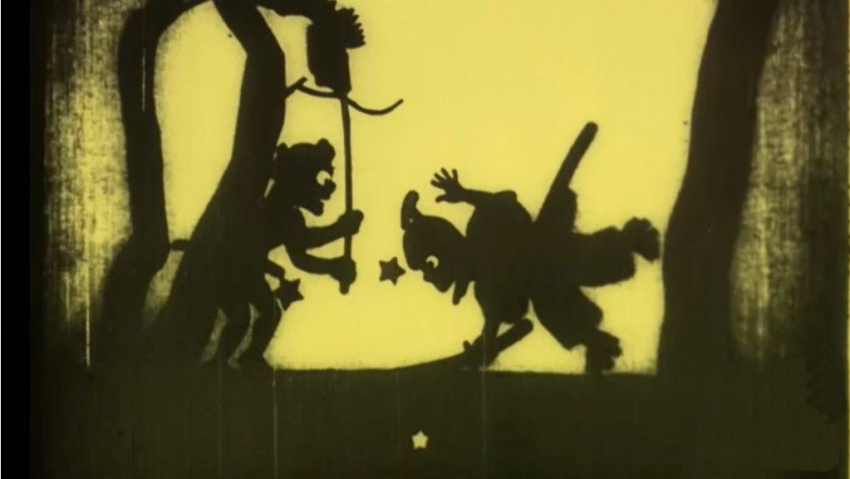
“In 160 closely-argued pages on animation in Japan and animation from Japan, Litten suggests that many scholars have committed an error of historical practice by believing the old-time hype. The 1923 Kanto Earthquake destroyed most of the materials of the early Japanese animation world, which leaves historical memory in the hands of the people with a vested interest in being remembered. Although Nobuyuki Tsugata has done fantastic work in reconstructing the life and films of the pioneer Seitaro Kitayama, Litten accuses Kitayama of ‘blatant self-promotion’, and calls into question much of what Kitayama wrote about his own achievements.”

The Ghosts of Dead Gods

Back from the Worldcon in Helsinki this August, a gathering of science fiction’s great and good. Japanese attendees maintained a strangely low profile at an event that often made me muse upon the thinning of the old guard, and the continuing onrush of the new. While a block of fifty Chinese fans paraded big-name authors, pushed their upcoming Asia-Pacific convention in Beijing and ran a riotous party, the Japanese huddled at a dealers’ table and rarely seemed to venture out. I found myself on two anime-related panels having to apologise for the lack of native speakers, with representatives from the homeland of anime and manga seemingly unwilling to volunteer to talk about it publically. Despite this, two awards were dished out with Japan connections, both sneaking in under Japanese fandom’s radar.

One was for Ada Palmer, sometime historical consultant for Funimation and the founder of the Tezuka in English website, although her accolade here was a John W. Campbell Best Newcomer award for her novel Too Like the Lightning. The other was the Best Graphic Novel Hugo, handed to writer Marjorie Liu and artist Sana Takeda for their ongoing comic series Monstress.

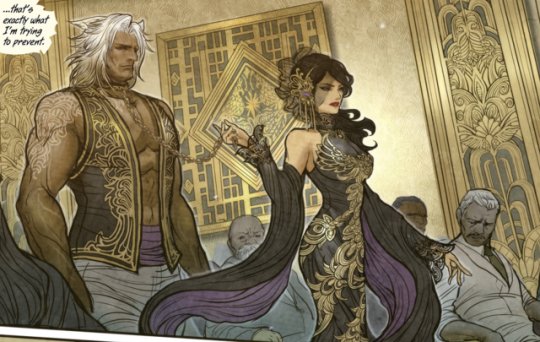
Although drawn in Japan by a Japanese artist, and hence perfectly deserving of a manga tag, Monstress is far better imagined at the forefront of modern “woke” comics, intimately concerned with the powerlessness of slaves and chattels in a colonialist society – what it feels like to be an object in someone else’s world. Trawling through online reviews, I see many readers ascribing a manga sensibility to the artwork. This is news to me – Takeda’s imagery seems to strive to be as un-manga as possible, luxuriating in the availability of a colour palette, thin lines and a sedate panel progression – if it reminded me of anything it was Colleen Doran. One imagines that faced with visceral, violent imagery, some American readers are immediately prompted to pronounce something as “manga” – which is also ironic, considering the reputation that Image Comics already enjoys without any help from across the sea.

The cast are largely women, but Takeda refuses to objectify them. No fan service here – instead these are characters getting on with their various stories, showcasing a cast of widespread ages and grotesqueries, as if Orange is the New Black were suddenly invaded by a coven of steampunk cannibal witches. It’s Liu’s writing that imparts Monstress with its true chills – feral, fearful creatures with magical powers, locked in eternal conflict with predatory, flesh-eating ghouls, constantly fighting to gain control of their own destiny.

Jonathan Clements is the author of Anime: A History. This article previously appeared in NEO 169, 2017.

Fireworks

Over at the All the Anime blog, I review Akiyuki Shinbo’s Fireworks, a remake of a Shunji Iwai TV movie from 1993. “Producer Genki Kawamura expected sparks to fly between the main staff members, particularly since Iwai the original writer-director was sitting in with Shinbo the animator and screenwriter Hitoshi Ohne, himself no stranger to helming his own films. ‘It was very exciting sitting in a script meeting with three directors,’ Kawamura told Japan’s Buzz Feed. ‘Punches could fly at you from any direction.'”

The Art of the Deal

When Noboru Ishiguro died in 2012, it was only fair to wonder would happen to Artland, the company he helped found. But even five years ago, Artland was already a changed entity. In 2006, it had been subsumed into Marvelous, a computer games conglomerate which turned Artland into a limited company, and then split it into two in 2010. One part, the Artland Animation Studio, continued under its sole shareholder Kuniharu Okano, who toiled on shows such as the upcoming Seven Deadly Sins.

In 2015 the other part was entirely absorbed within Marvelous in order to “improve the efficiency of group management.” Let me translate that for you: the other part was a holding company for intellectual property – shares in anime franchises. You might like to call the late Ishiguro himself an asset of sorts, but his days were numbered, while the franchises he helped create live under copyright law for decades after his demise.

Meanwhile, in 2016, a chunk of ownership in the animation studio was sold to Emon, a subsidiary of the Chinese company Haoliners, in order to “strengthen production capacity.” What did they think they were buying? It surely wasn’t a stake in Macross or Legend of the Galactic Heroes, as they were presumably still part of Marvelous. Was it, perhaps, just the Artland name, so that any work brought in could be spirited off down a fibre-optic cable to cheaper animators in China? Okano’s company, if it truly is merely an “animation studio”, amounts to tables and chairs, pens and paper. It doesn’t own the people who work for it, and it may even only rent the real estate where it resides. True enough, it might be able to work its way out of debt, but why would anyone fund this if it doesn’t own anything?

Four days after the anime press reported Artland’s bankruptcy this July, a fuming Okano went public to assert that the company was trying to restructure its debts, but was by no means dead. He had, he claimed, a bunch of offers from new investors, although he had yet to take any of them up on it. However, the question that everybody is asking is whether Artland itself actually retains any intellectual property – part-ownership of any of the franchises for which it is listed as a co-producer – when surely all that stuff is still sitting in a filing cabinet at Marvelous? Artland is for sale… but what would any new investor really be buying?

Jonathan Clements is the author of Anime: A History. This article first appeared in NEO #167, 2017.