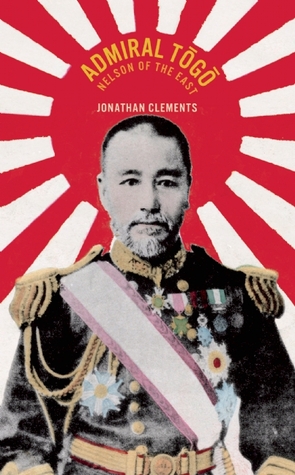
Admiral Togo: Nelson of the East

At long last, available on the Kindle, my biography of Admiral Togo, from Amazon in the UK and Amazon in the US.

“ … a fine attempt to revive the memory and reputation of a most professional and successful naval officer who lived through a period of astonishingly rapid and radical change for his country and service.   Recommended for the general reader, but especially for those who may find themselves working with the Japanese.” – Naval Review

“Clements… recounts the life of a Japanese admiral famous for his victory at the Battle of Tsushima during the Russo-Japanese War. Through his extensive reading of multiple-language sources, Clements points out deficiencies in some of the… sources he quotes, and presents so far little-known episodes like the important roles French advisers played in the Battle of Miyako Bay in 1869 during Japan’s civil war in the early Meiji period.” – CHOICE

“This book is a refreshing account of a defining figure of modern Japan. It is well written and deals with themes such as leadership, individual commitment, social transformation and cross-cultural understanding of great contemporary relevance.” – Mariner’s Mirror

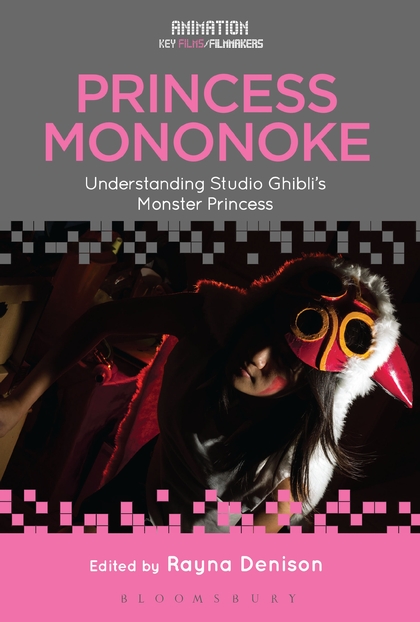
Reading Mononoke-hime

Fittingly for a twentieth anniversary collection of essays on a single, much-loved film, Rayna Denison’s just-published Princess Mononoke: Understanding Studio Ghibli’s Monster Princess (Bloomsbury) throws in everything but the kitchen sink. In the sense that it went mainstream and has been the focus of widespread appreciation, Princess Mononoke has generated a vast amount of secondary materials. Through critical acclaim, corporate backing and foreign sales, Hayao Miyazaki remains the best-represented anime director in translation in his own words, which boosts him in terms of scholarly access – it’s not only easier to sell a Miyazaki book to publishers, but also to readers and even contributors.

And this is an impressive bunch of contributors, featuring some of the sharpest minds working on anime today. Shiro Yoshioka examines the position of Princess Mononoke within Miyazaki’s work, noting that is very success may have forced him into a compromising niche, turning him from an action director into an eco-pundit. Eija Niskanen pokes around Japanese archaeological sites in search not only of Miyazaki’s inspirations, but the gaps in knowledge that he imaginatively filled with his own designs and ideas, noting in the process that the film defies traditional notions of what a “period film” should be like – a samurai movie with no samurai in it, showcasing the also-rans of Japanese history. Julia Alekseyeva provocatively but persuasively argues that Princess Mononoke is a prolonged homage to the Soviet film The Snow Queen, which Miyazaki saw in his shop-steward days. Both Helen McCarthy and Alice Vernon argue for Miyazaki as a feminist storyteller, seeing in his work echoes of the Maid, Mother and Crone of Robert Graves and the “heroine’s journey” of Maureen Murdock, and in Vernon’s case, asking whether the pragmatic, driven Lady Eboshi is a threatening vision of what the future holds for the heroic San.

Other chapters review cunning ruses in stunt-casting, not only of the film’s A-list voices, but of Neil Gaiman as the script adaptor, examining both the promotional value of these decisions and the nuances they introduced to the English-language version, the marketing of which is carefully analysed from the perspectives of posters, trailers and featurettes. Refreshingly, Denison has assembled writers who are not only prepared to dive into appreciations of the film itself, but overlooked elements as its critical reception (for which Emma Pett wades through over 800 reviews), and the long tail of its merchandise. The result is an impressive meeting of Princess Mononoke minds, although at £80 hardback and £55 on the Kindle, Bloomsbury seemingly lacks faith that the film’s much-mentioned blockbuster status will translate into a wide readership.

Jonathan Clements is the author of Anime: A History. This article first appeared in NEO #173, 2018.

The Hard Cel

Maybe they don’t have anything better to do? When the Japanese government reconvenes in Tokyo, a multi-party group of MPs promises to present a new bill that calls for the establishment of a Media Arts Centre that will preserve the core materials of Japanese animation. It turns out that some people are worried that horrible foreigners are ram-raiding the Japanese arts, carting off truckloads of cels and manga sketches, and depriving the Japanese people of their rightful heritage.

Wait a minute… are these the same anime cels that were previously regarded by the studios as “industrial waste”, impossible to dispose of amid ever-escalating government green initiatives, and on one occasion surreptitiously buried in the back yard of a studio that had no space for them? They’re not even a thing any more, since Japanese animation for the last 20 years has been largely a digital affair, even if it looks like it’s drawn on cels. Why on Earth would Japanese politicians suddenly start agitating about something that they literally couldn’t give away in the past? The first notable exodus abroad being the flogging off of all the Akira materials in one big shipping container, to Streamline Pictures, who handed them out as extras to people who bought the video.

You could, of course, argue that it’s a tardy appreciation of the value of animation cels as art, and as a crucial, ineffable element of Japan’s artistic heritage. For reasons to do with intellectual property law, the cels can’t just be scanned into a computer, so they have to be physically stored somewhere if someone wants to preserve them. But why preserve them at all? Or rather, why now?

Maybe it has something to do with that “Media Arts Centre”, which long-term readers of this column may recall was first mooted during the Taro Aso administration in 2009, as a $120 million white elephant to celebrate all that Cool Japan content we keep hearing about. As I observed all those years ago, it wasn’t all that clear what the Media Arts Centre would actually do; maybe this new initiative is a desperate attempt to give it some purpose as a big… bin… full of the stuff the studios used to throw away, built just around the time that the 1980s animation generation, the last to work with actual cels, are retiring, downsizing, and looking to sell off their archives to the nearest customer.

Jonathan Clements is the author of Anime: A History. This article first appeared in NEO #173, 2018.

Maquia

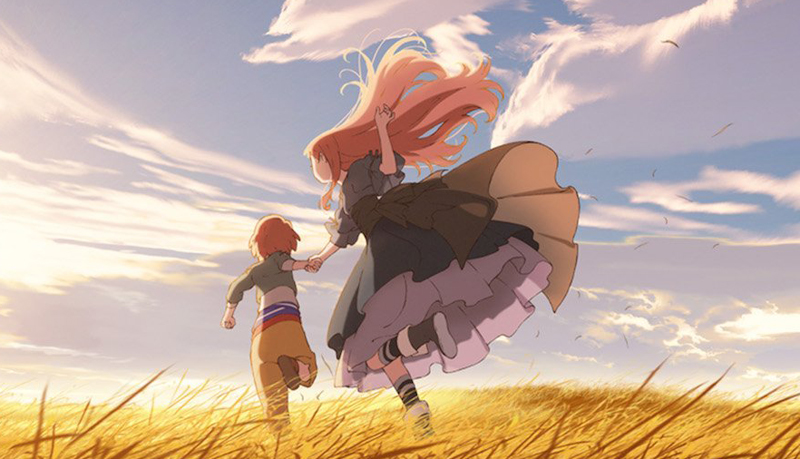
Over on the All the Anime blog, I write an article on Mari Okada’s striking directorial debut, Maquia: When the Promised Flower Blooms, which has its UK premiere in Glasgow this Sunday.

“Okada… seems to regard the political struggles of her world with complete indifference, even though they would surely form the central narrative of such a story if it were directed by a man. She looks for a different kind of hero. Her characters find slavery in victory, and freedom in defeat.”

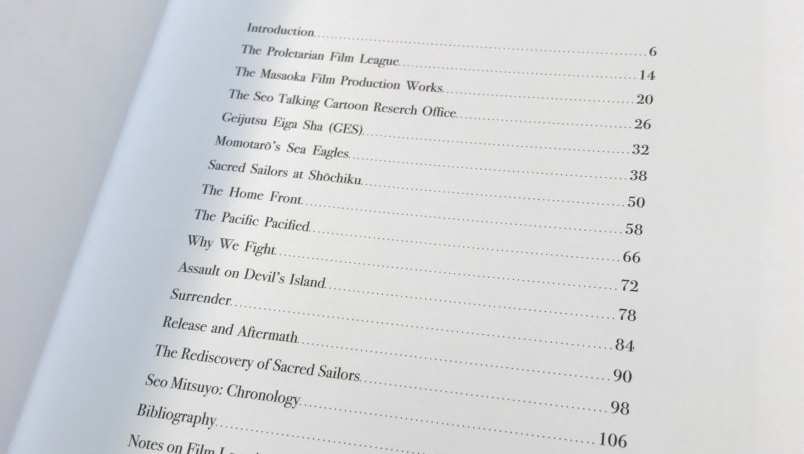
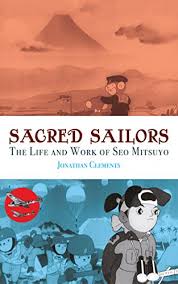
Sacred Sailors: out on the Kindle

Japan’s first animated feature was a masterpiece of propaganda film-making, uncompromising in the bile it directed at the enemy, romantic in its evocation of home and hearth and of Imperial Japan’s Pan-Asian aspirations. Its path to modern audiences is itself an adventure story in which it somehow evaded bombing raids, burial, shredding and bonfires, emerging from hiding after a generation to offer modern audiences a disquieting glimpse of a very different world.

Momotarō, Sacred Sailors (1945) is a film of immense contradictions – the creative pinnacle of Japan’s right-wing military aesthetic, it was made by a director who would later be hounded from the film industry for being a Communist, and a lead animator derided as an “unpatriotic” pacifist.

Jonathan Clements traces the incredible life and career of the film-maker Seo Mitsuyo (1911–2010), and takes the reader on a scene-by-scene analysis of this classic film, its context, reception and legacy. Available now on the Kindle from Amazon US and Amazon UK. Or buy it as a hard copy with the film included, direct from All the Anime.

Floating Worlds

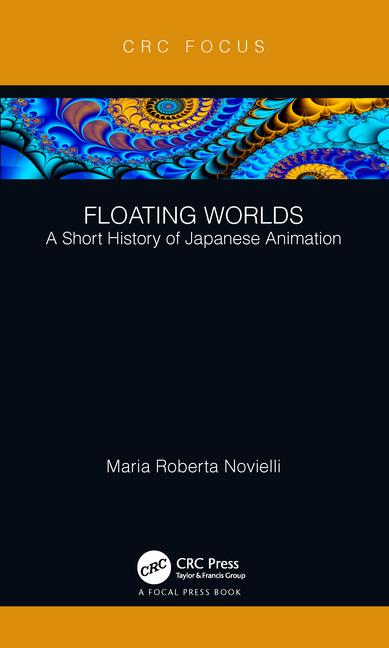
Up now on the All the Anime blog, my review of Maria Roberta Novielli’s Floating Worlds: A Short History of Japanese Animation, which sadly misses the opportunity it sets itself to be a “History of Short Japanese Animation”. There’s a moment when you think she’s really going for it, and she’s really going to try to tell the story of Japanese animation through the arthouse and what wins awards at festivals, but such a solid methodology doesn’t quite materialise. Instead, it turns into a largely unreferenced narrative of Japanese animation history with some odd inclusions and some even odder omissions.

The Music of Yoko Kanno

Up on the All the Anime blog, my review of Rose Bridges’ new book about the Cowboy Bebop soundtrack of Yoko Kanno. “Kanno’s work has shown a constant ability to create a unifying theme to the music she supplies to particular shows, even if they include polyphonic chants in Zentraedi, bagpipes, bongos and a song whose lyrics entirely comprise the recitation of pi to two dozen decimal places.”

The Godfather of Tokyo

“So the Madhouse studio was in debt,” says Masao Murayama, “and there was this big buy-out. I was happy to sell it on to someone else, and then I thought: now what am I going to do? I put people together. We make things that we love. Am I going to stop?”

Which is why, at the age when most Japanese workers are long-retired, Maruyama found himself setting up Mappa, the Maruyama Animation Produce Project Association, which soon established its credentials with the critical smash of Kids on the Slope. But even then, Maruyama bowed out in 2016, as the studio unleashed In This Corner of the World and Yuri on Ice.

Did he retire? Hell, no. “People like me and Hayao Miyazaki,” he said, “we’re all born in 1941. We were there for the beginnings of anime as we know it. We don’t know when to quit. We don’t know what we would do if we did quit!” And so he founded his newest start-up, the studio M2, at the age of 75.

“This is probably my last,” he says, with a twinkle in his eye. “Or is it?”

He is wearing an Astro Boy sweatshirt that recalls his first-ever job, but is remembering a figure from much later in his career.

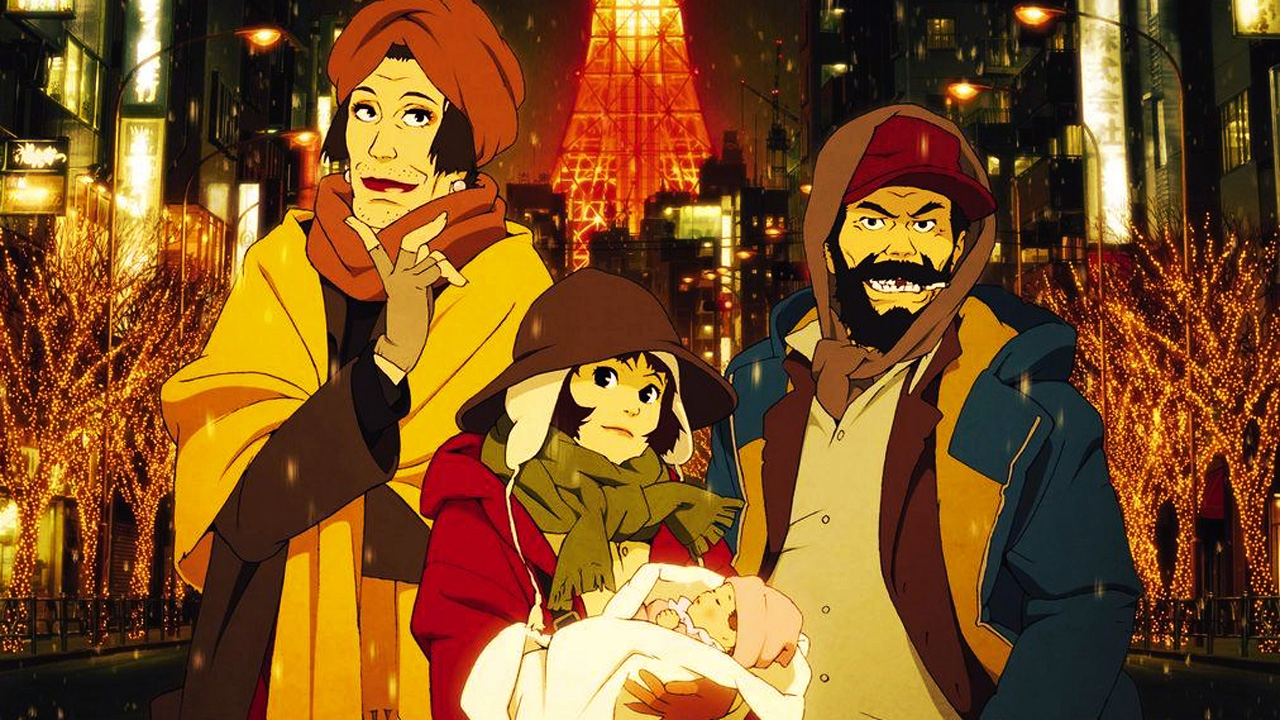
“I said to Satoshi Kon: I like you. I like your work. There’s greatness in you, but the mainstream just can’t see it. We just don’t get the box office on your films. We did horror with Perfect Blue, we did film history with Millennium Actress. So maybe let’s do something entertaining. And he says: ‘I want to do a thing about three tramps who find an abandoned baby.’”

The result was Tokyo Godfathers, anime’s good-natured, sardonic Christmas movie, in which a foundling child inadvertently propels the cast into a series of increasingly unlikely coincidences that fix their issues, solve their lives, and reunite them with their estranged families. The message, arguably, was universal, but the medium was incredibly, well, Christmassy, unleashed on a Japanese population with barely 1% believers.

“Yeah,” sighs Maruyama. “Nobody came to see that one, either.” He looks out over the packed cinema at the Edinburgh Filmhouse, and raises a quizzical eyebrow. “What did you think?” The crowd bursts into raucous applause for his 14-year-old movie. This frail old man, so shaky that my heart’s in my mouth every time I have to watch him climb some steps, beams with pure joy.

Jonathan Clements is the author of A Brief History of Japan. This article first appeared in NEO 171, 2017.

Promiscuous Media

Up on the All the Anime blog, I review Hikari Hori’s new book Promiscuous Media: Film and Visual Culture in Imperial Japan 1926-1945, which has an entire chapter on the development of animated propaganda.

“Animation forms a crucial component of Hori’s book – a fair reflection not of mere scholarly bias, but of a contemporary sense of its transnational value. No less a figure than the film theorist Taihei Imamura argues that animation and newsreels should form the prime media unleashed on Japan’s South Sea colonies, to soften them up for acculturation. Animation hence gets an entire chapter to itself regarding the attempts to form a uniquely Japanese style. In this, Hori cites both the wonders of Disney and the glove thrown by the Wan Brothers with their Princess Iron Fan in China, which already established a bunch of specifically ‘Chinese’ tropes. She notes that when Princess Iron Fan was screened in Japanese cinemas, it was shown on a double bill with the paratrooper documentary Divine Sky Warriors, perhaps explaining why animation and paratroops might occur to the Navy as a reasonable subject for Japan’s first feature-length cartoons.”