Anime Futures

With Mark Schilling’s permission, I’m putting up the unexpurgated text of the interview he conducted with me six weeks ago for his article on Japanese animation futures in the South China Morning Post, in part to show how much work goes on behind the scenes to get a sound bite and an article.
the-wind-rises-creating-planes-clipMark Schilling: You mentioned recently that several well-known anime studios might soon go kaput, but without naming names. Is it mainly a problem of rising costs? Declining revenues? Stiffer competition from Hollywood and elsewhere? All of the above?

Jonathan Clements: Some of it is economics — we’ve lost several minor studios recently, and their rise and fall, or restructuring and rebirth as “New” incarnations of themselves has been a common factor of the industry for decades. Ghibli itself was at least partly formed from the ashes of Topcraft, for example. Japanese studios in the twentieth century were able to function as subcontractors for American animation. That’s sometimes still true, but so many elements of anime production is now off-shored to China or South Korea that anime studios are smaller, and leaner, and more flexible in their behaviours. As Gonzo showed in the late noughties, it’s possible for a company to go almost completely dark, to give up its studio space, to lay off its animators and just coast for a couple of years as little more than a filing cabinet in an accountant’s office, waiting for the foreign residuals to roll in. That’s good for robust business, but bad for an animator’s job security!

There’s a generational issue that many people have spotted in the case of the high-profile retirements at Ghibli, but which is also common to the anime industry. The vision of a single creator, or team of creators, can steer a company and give it a distinctive style or brand, but nobody is immortal. People retire. The anime industry went through something very similar in the 1990s, where a bunch of the first-wave producers cashed in their shares, took their pensions, and handed over their companies to others — it’s what led to some of the big corporate buy-outs like Bandai taking ownership of Sunrise. That was seen at the time almost as a hostile take-over, but for many of the staff it was a welcome hand-over, with one of Sunrise’s biggest and most trustworthy clients taking a direct interest in its output, and thereby preserving the jobs of the employees.

What we have now, and have had for the last few years, is the aging of the Astro Boy generation, not of fans, but of animators. In 1963, Tezuka quadrupled the size of the animation industry, both directly through hirings at Mushi and indirectly through the creation of competition in the market. Those fresh-faced graduates are now in their seventies. Many of them are the leading lights of specific studios and, you know, some of them want to go off and play golf.

frozenIs the enormous success of Frozen in Japan a one-shot — or a game changer? Will more Japanese studios switch to Hollywood-style 3D CG animation, following the lead of the new Doraemon film? Will Hollywood exploit the fading of Studio Ghibli and become the dominant player at the Japanese box office, especially the animated segment of it?

Hollywood has always been the dominant player at the Japanese box office. There have been occasional spikes in local interest for particular directors or franchises, but Japanese cinema is eternally fighting a rear-guard action to push local product ahead of flashy foreign imports. Until Miyazaki’s late twentieth century successes, Japanese animation flourished like a weed, only in the spaces that The Lion King and Aladdin didn’t grow. Even in the 1990s, only a tiny handful of players like Gainax and Ghibli gave Disney anything close to a run for its money on home video. I think it’s worth considering Disney’s acquisition of Ghibli titles in that light — when Disney (or their subsidiaries) put money directly into Spirited Away, they weren’t just investing in a Japanese talent, they were ensuring that they got a piece of the pie from their main competitor in the Japanese market.

Japan has been slow to take up 3D CG, because it involves massive reskilling and investment in software and hardware. It’s a return to the state of the industry in the 1950s, when Disney product, made at a substantially greater cost to Japanese competition, was swamping the market with a relentless onslaught of material.

I don’t see Hollywood filling any new niche in Japan. Hollywood, in the form of Disney/Pixar and DreamWorks, will keep releasing its big family films and rolling on as before. The likely competition to do what anime does, to compete at a more domestic, perhaps even consciously “Asian” level, is going to come from China. Miyazaki’s retirement merited a sixty-page feature on Japanese animation in one of China’s biggest news-stand magazines, Lifeweek, last October. The implication was clear that this was a business feature, identifying a new market opening, and asking if China had what it took to move in on it.

I’m not saying that China is the new Ghibli. Far from it, the Chinese animation business has a lot to learn, and much of its output is highly derivative. But it is generating an animation labour base bigger than Japan’s every year. Kung Fu Panda 3 is going to be a “Chinese” film for contractual purposes, so even DreamWorks is relying increasingly on Chinese labour. The Chinese already represent two-thirds of the labour pool for what we call “Japanese” animation. Granted, that’s all concentrated in the lower, less-”skilled” echelons, but that doesn’t bode well for the future when the upper ranks of Japanese animation companies are increasingly drawn from the ranks of marketers and managers. It means that there is a very palpable risk that Japanese animation won’t have any actual animators steering it.
wind-rises-main_0You’ve no doubt read the anonymously sourced story about Studio Ghibli stopping production and becoming a rights management company. Do this strike you as credible? Some of the claims in that piece, such as The Wind Rises still being in the red, seem rather far-fetched to me…

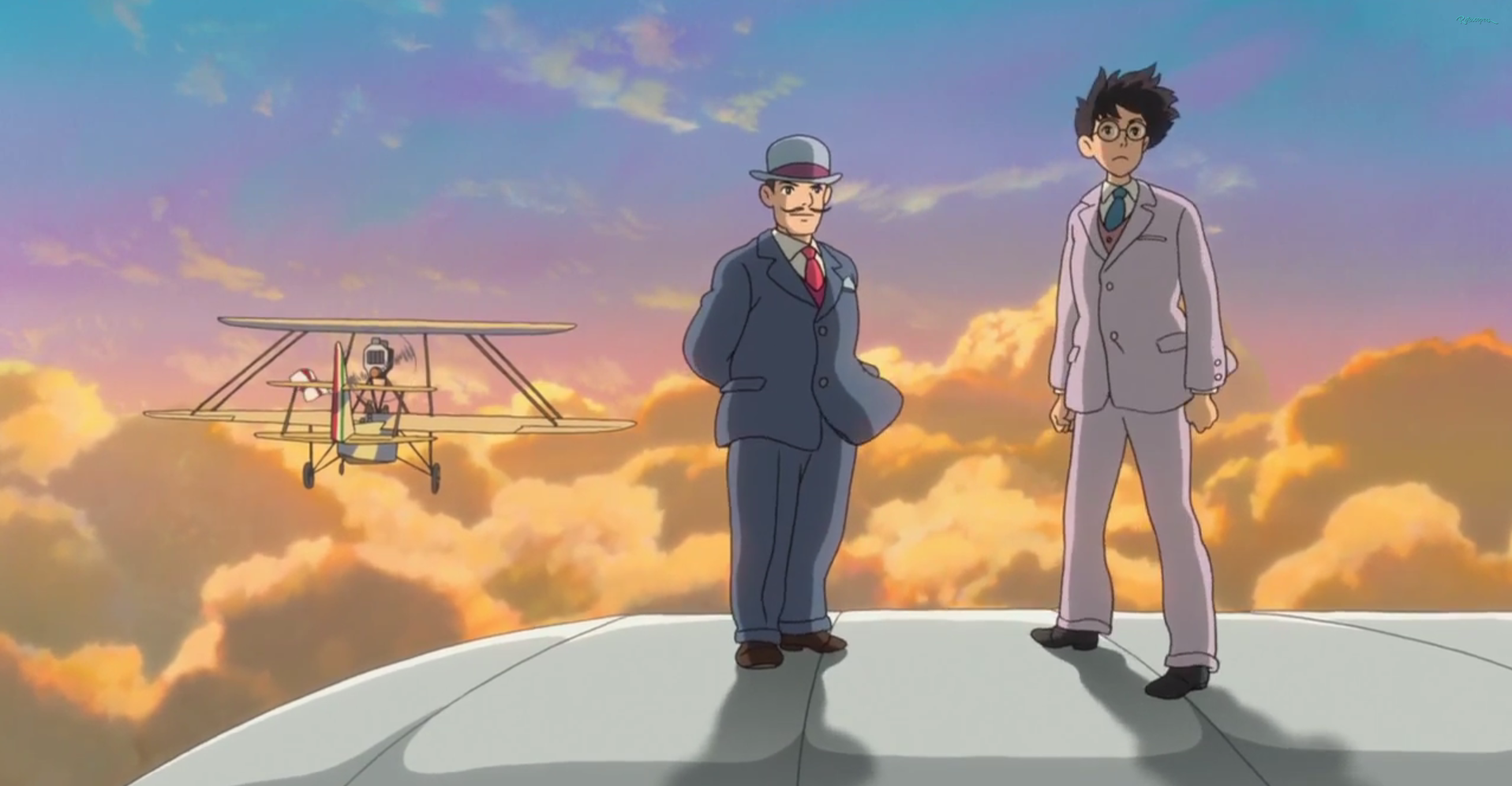
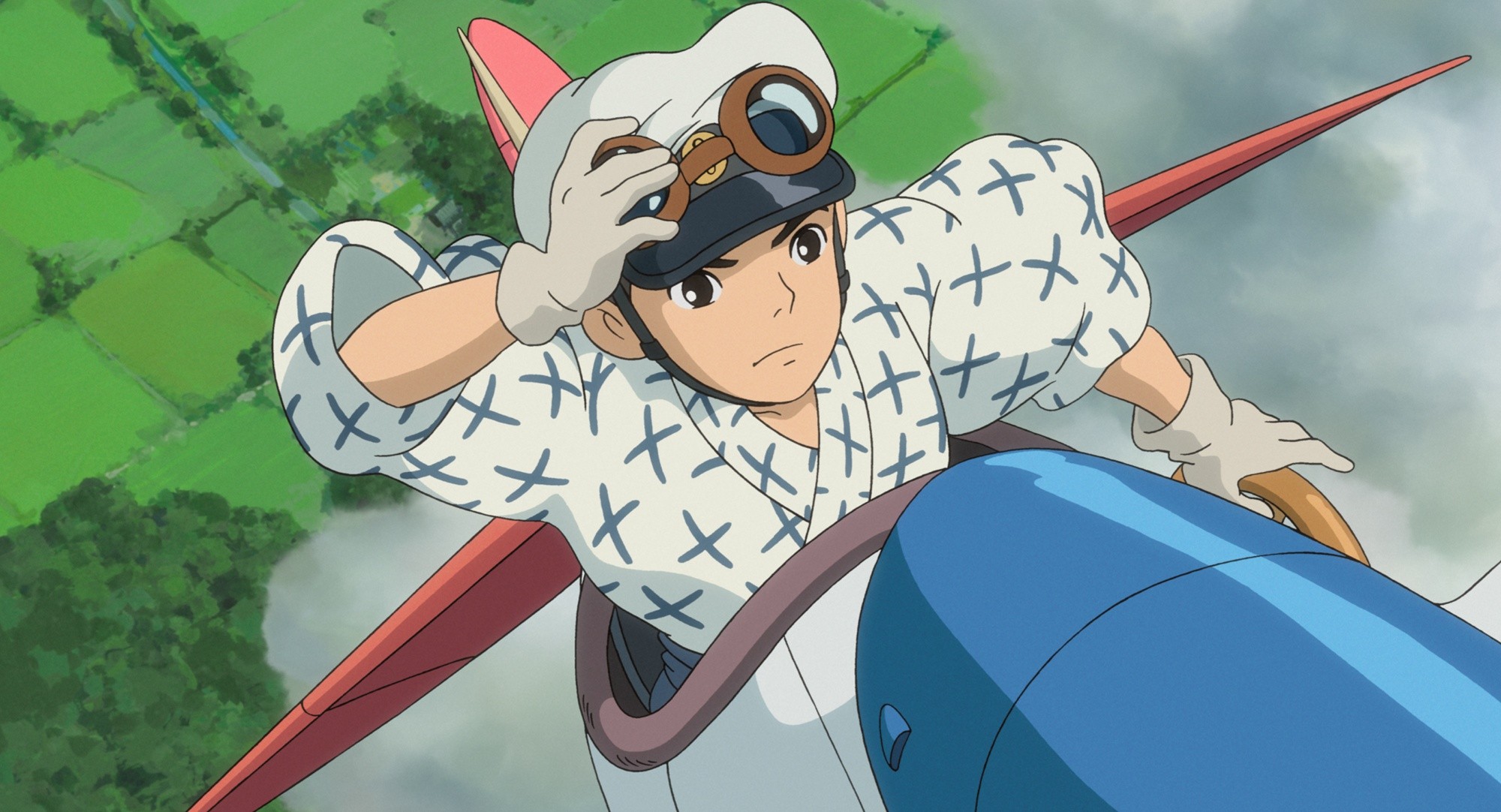
You can see the signs very easily. When Toshio Suzuki was sitting on data that told him that “Studio Ghibli” had a 43% trust rating with the Japanese public, but that the name “Miyazaki” had a 64.2% trust rating, what did he do? He got Miyazaki’s son to direct Tales from Earthsea! I think you can see Suzuki’s very canny, very sharp management insight steering much of the last decade. Even as he retires, he puts a former Disney Japan executive in charge of Ghibli. He builds the Ghibli Museum, which is a classy theme park that generates a movie’s worth of revenue every year. He tries the Goro Miyazaki bait-and-switch manoeuvre, and essentially dares the Japanese public to come and watch the car-crash for themselves. He hypes up this father-son tension in the media, but then gets the Miyazakis working together on Poppy Hill. In the case of The Wind Rises, I see it as another calculated move by the studio, to wring one last box office winner out of Hayao Miyazaki. I like to think of them going to his house and begging him to make one last film to keep the momentum going at the museum and on video, and telling him he can make ANYTHING he likes. Because the subject of that film is so personal, and indulgent, and risky, that I can’t imagine anyone else being allowed to get away with it.
My prediction: in a couple of years’ time Ghibli will go into production on a script “written by” Hayao Miyazaki, just to ring that bell again. He’s effectively given them a 50-title wish-list of children’s literature worth adapting. There is undoubtedly a faction at Ghibli who wants to pivot it towards doing World Masterpiece Theatre, and carrying Miyazaki’s legacy in a different direction, by copying his early TV successes adapting children’s books. That’s why they’re moving into TV with Ronia the Robber’s Daughter, but you can see the Ghibli is only co-producing it. The animation is actually being done by Polygon Pictures.

That The Wind Rises is still in the red sounds ludicrous to me. If it is, it’s only in the movie-accounting sense that Forrest Gump is still technically “in the red.” The Wind Rises did fine.
garden of wordsPeople have been talking about various “new Miyazakis” for years, but that we are truly in the post-Miyazaki era, who do you see as leading the industry, if not necessarily inheriting Miyazaki’s crown? If none of your names are from Studio Ghibli, why not?

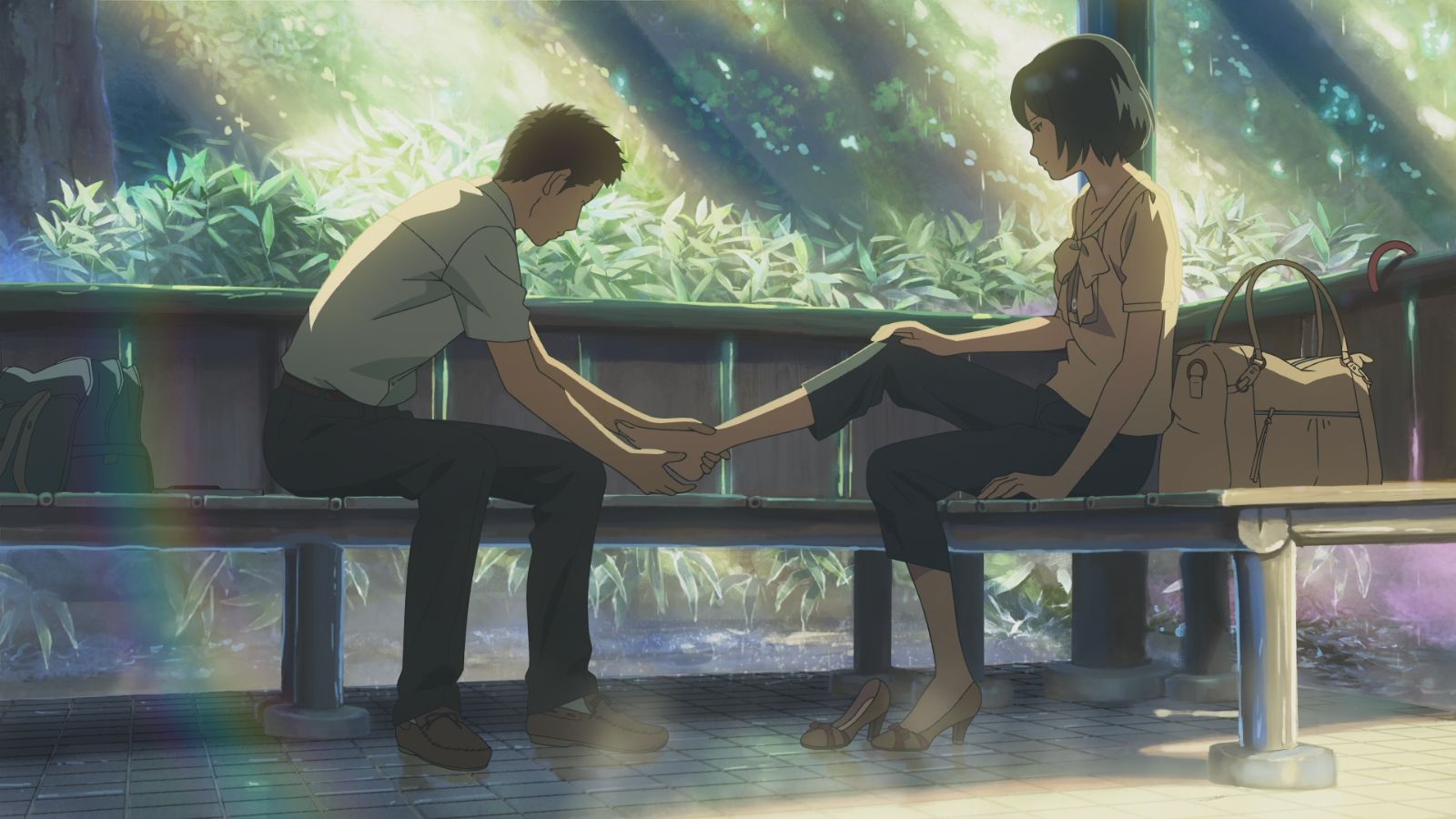
It’s a cliche to talk about the “new Miyazaki.” Japanese animators hate the whole argument, because it usually implies nothing new at all, just a magical cloning of his unique skillset, and his unique, timely rise in the movie market, and with supporters like Takahata and Suzuki. Ghibli was a three-man success story, very much of its time, and you can’t have a new Miyazaki without having a new Takahata and a new Suzuki. It also requires some awareness of what we mean when we ask for a “new Miyazaki”. Because Makoto Shinkai has a lot of Miyazaki’s heart, but none of his “family” appeal. Shinkai has cornered a market in films for people who grew up watching Miyazaki movies, but he doesn’t make movies for tomorrow’s families. I guess that’s the problem, there. It’s not about who the new Miyazaki is, it’s about who the new audience is. It’s now easier in Japan to buy diapers for old people than for kids. The kids’ market is shrinking, and that further reduces your chances of making blockbuster money on a family film.

Studio Ghibli actually tried to grow the new Miyazaki themselves, in several abortive attempts to co-opt big-name talents like Mamoru Hosoda. The fact that Hosoda didn’t fit in at an increasingly management-oriented Ghibli is actually a sign of his true potential, far more than staying there would have been!

They also brought in a dozen promising animation assistants and put them to work directly with Miyazaki and Takahata to foster a new generation of talents. That was called the Higashi-Koganei Sonjoku scheme, and its graduates stand a good chance of making waves over the next ten years. People like Masayuki Miyaji, for example, Masashi Okumura and Kenji Itoso.

But ironically, Miyazaki’s own shadow looms so large that it’s difficult for someone to turn up at Ghibli with a distinctive voice and not have it shouted down by risk-averse managers. Goro Miyazaki’s films often look like a committee trying to recreate his father’s successes, and that should come as a surprise to nobody. Ghibli was lightning in a bottle, and rumours about its move into legacy management are only logical — I think what people forget was just how darn lucky Disney was that Pixar could show up at the right moment and completely revitalise its output with fresh ideas and fresh technology, and real talents. Ghibli doesn’t have that. Ghibli doesn’t have a powerful competitor that it can embrace and merge with.

Jonathan Clements is the author of Anime: A History and Modern Japan: All That Matters.
Venture Capital

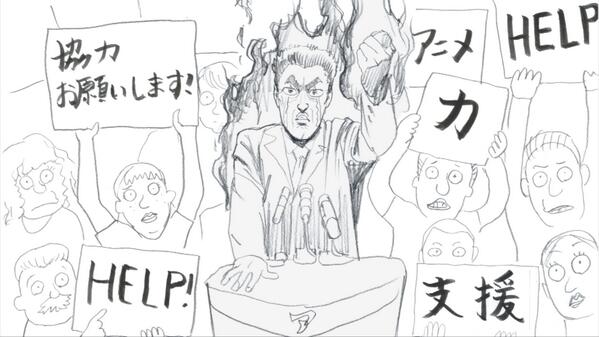
onegaishimasuHow would you feel if this issue of NEO came with a begging letter? Thanks for the £5, but everyone here is underpaid, so could you see your way to paying our editor’s gas bill, and the designer’s rent this month? Wouldn’t that feel like you were being charged twice? Wouldn’t you start to suspect that NEO was owned by a moustache-twirling dastard in a top hat, laughing over piles of money while his staff laboured like Dickensian urchins?

But that’s precisely the feeling I get when confronted with the start-up Animator Dorm project, recently crowd-funded by a group of industry professionals including Tatami Galaxy’s Naoyuki Asano and Gatchaman Crowds’ Shingo Yamashita.

$10,000 has made it possible for two animators to live in a… dorm? I guess it’s paid their rent for a year, thereby allowing them to work for peanuts at some studio, helping to perpetuate the poor conditions for which the industry is notorious. They pay their donors back with merchandise and artwork, and a vague promise about an artist outreach project.

God bless anime fandom, which depending on who you listen to, is either a braying, multi-headed hydra of self-interest, stealing the very stuff it professes to love, or a community of kind-hearted philanthropists, providing soup and blankets for starving artists. So good for you, if you threw in a few quid so that someone could continue to earn minimum wage and still have a roof over their head. If you were a “Bronze” supporter, you got an art book for $50, which is presumably what makes this more appealing than a similar scheme for, say, Primark employees.

As this column noted in NEO 105, there’s crowd-funding and then there’s funding. Put $10,000 into Production IG’s Kick Heart, and you won’t just get a postcard and a lucky gonk; they’ll fly you to Tokyo and make you a producer. At a certain level, the Anime Dorm project is merely a wired-world variant of a pop star selling you a CD and a T-shirt at his concert. These animators have some bonus art to sell, and spending the money on rent, just like everyone else. But is this unprecedented access to the talent, or is it just another example of the owners of anime passing on their poor business decisions to the consumer?

Jonathan Clements is the author of Anime: A History. This article first appeared in NEO 127, 2014.

Lest We Forget

28 juneJust arrived in the mail this very moment, my contributor’s copy of 28 June: Sarajevo 1914-Versailles 1919 — The War and Peace that Made the Modern World, edited by Alan Sharp. It’s a country by country analysis of the outbreak and end of World War One, largely by many of the authors who wrote books in the Makers of the Modern World series. As the biographer of both Wellington Koo and Prince Saionji, the youngest and eldest diplomats to make a splash at the Paris Peace Conference, I have two chapters in this collection, “The Chance of a Millennium” about Japan’s imperial ambitions, and “Labourers in Place of Soldiers” about the 140,000 Chinese coolies who did the laundry, fixed the roads and, yes, dug those famous trenches.

Turning Point

Turning-Point-1997-2008-postMy review of Hayao Miyazaki’s second volume of collected writings is up now on the Manga UK blog. Just a taste:

“It’s crucial, for a long-term understanding of Miyazaki’s legacy, to know just where his priorities were, and the answer is often surprising – more space is given in his afterword to the construction of the Studio Ghibli crèche than to his movies. Nor is this an idle comment – with typical eccentric insight, Miyazaki sees the Three Bears daycare centre not only as a place for his animators to leave their kids, but as a place for Studio Ghibli’s workers to observe their audience in its natural habitat. As ever, he cares passionately about the Child. His producer Toshio Suzuki might always have his eye on the ticket buyer and the bottom line, but Miyazaki remains touchingly involved with the world of the under-tens.”

WAai! Boys in Skirts

This blog only republishes a mere 10% of the wordcount I write for Neo magazine every month, but with the news just out that WAai! Boys in Skirts magazine has suspended publication, I’ll take the opportunity to upload my Manga Snapshot article about it from issue 92, back in 2012. As you can see, I was deeply suspicious of its motives, but also wary of the etiquette of even voicing that suspicion.

——

waai 6Issue #6

Debut Year: 2010

Page Count: 270

Publisher: Ichijinsha

Price: 950 yen (£7.96)

I Want to See Your Smiling Face, by Kamiyoshi, seemingly lifts its opening gambit from the Train Man series. A boy finds himself falling in love with the girl who often sits opposite him on the train to school. One day, he finally plucks up the courage to talk to her and ask her out, only for the “girl” to reveal that she is really a he. A standard school romance then unfolds, with a shared gender being the only discernable difference between this story and any other tale of snogging behind the bikesheds.

Just when you thought that the manga world couldn’t surprise you any more, there’s always some new odd niche that springs into life. And this month’s topic is the oddest yet. WAai! Boys in Skirts is exactly what it says on the cover: a manga magazine for and about transvestites!

I’m sure you’ll agree, this is something of a subgenre of a subgenre. But ever since spinning off from the boys’ magazine Comic REX in April 2010, WAai has still had enough faith in the size of its readership to punt out 270 pages of glossy, high-quality printing four times a year – that’s once per season, in order to ensure varying uses of colours and imagery. The cover to this issue by Akira Kasakabe has two attractive ladies in a state of summery deshabillé, sorting out their lippy and watching the midsummer fireworks. Oh, except they are not ladies. They are both blokes, it says here.

If at first you can’t believe your eyes, the strapline at the top makes it as clear as possible: “Inside this publication are cute kids, but they are not girls. This is a new magazine for otoko no ko of the new generation.” The Japanese otoko no ko literally means Man-Girl or Mannish Girl, but is it intended here to mean “ladyboy”? We are back in the fascinating world of the implied reader – is this a magazine for boys who like dressing up as girls, or is it a magazine for girls who like to look at boys dressed up as girls?

waai 2The advice page doesn’t help. Mitsuba, the pseudonymous author of Wanna Be a Pretty Girl, offers tips on make-up and hair stylings. Even if Mitsuba is actually a man, as her biography implies, there is nothing unusual in Japan about men hectoring women on their looks. Indeed, in the kabuki days, the onnagata female impersonators were widely regarded as the arbiters of taste for how women should behave. The title of Mitsuba’s column uses the verb naritai (“want to become”), but the nature of the “becoming” is nicely vague. Is this a column for plain janes who want some top tips, or is it actually a crash course in femininity for boys who want to look like girls?

In Reversible School Life, by Suemi Tsujikka, an all-boys’ school makes the odd decision to force half of its attendees to dress up as girls on any given day. Transfer student Shu is thrown in at the deep end, since he has no clue how to coordinate his clothes. He is aided and abetted by the more experienced Tsubaki, in a school story that dispenses with the usual “hidden boy” trope in favour of an environment in which cross-dressing is openly encouraged, in fact mandated, as part of school life. As with I Want to See Your Smiling Face, there is a sense that the protagonist is entirely clueless and lacking in experience. The usual mystery of unattainable girls is replaced here with boy-on-boy crushes, but also with initiation into the rules and regulations of living life as a woman. For the generation raised on the arcane taxonomy of Pokémon and the shifting fads of cosplay, perhaps cross-dressing really is the final frontier. It’ll probably keep some people busy for years. Just remember, boys, stripes aren’t slimming.

WAai’s niche is still small – it is half the size and double the price of mainstream magazines, and is not included in the online sales figures of the Japanese Magazine Publishers Association. But this is how all new niches start; the publisher Ichijinsha would be mad to print a million copies and hope that the readership to match it magically arrived out of nowhere.

The Japanese mainstream has treated the otoko no ko “phenomenon” with a degree of suspicion – perhaps wisely, considering the penchant of the media for making up new fads on the spot and hoping the herd will follow. In 2010, the Engan bus company offered spoof free tickets to transvestites as an April Fool’s joke. Later in the year, the same company offered a free ticket promotion for real, but only to female passengers who would dress up as sexy “moe” girls. The transvestites should sue!

The use of the term otoko no ko has been gaining ground in Japanese for the last ten years. But it’s only in the last two years that it has suddenly blossomed into a definable subculture, with its own publications, slang, traditions and inevitable media attention. WAai isn’t even the only magazine for otoko no ko. Already in the last year, the Japanese market has seen the arrival of Change H, Oto(star)ko and Otoko no Ko Club magazines. Meanwhile, Enterbrain has test-marketed the manga anthology Super Otoko no Ko Time, and Square Enix has tried Joso Shonen Anthology (Boys in Girls’ Clothing). Newtype, the trend-setting anime magazine, has already tested an experimental title for the otoko no ko market, with the release in August 2011 of a live-action photography special featuring boys dressed as girls. It sold out on the day of release – but was that a sign of an untapped market, or simply of deliberate under-printing to manufacture headlines?

Its aficionados are keen to point out that these characters are not transsexuals – they are transvestites, dolled up in women’s clothes as an attempt to show a sensitive side. They are, we are assured, boys who like the idea of softness and silkiness, experiments with lipstick and girlish pursuits – an assertion which places them firmly on a timeline that reaches back for several generations, to the manga revolutions of the 1960s that valorised flower-sniffing sensitive types in reaction to the ludicrously macho heroes of the day. Japanese Wikipedia even has its own page on the phenomenon, which goes to great pains to point out that otoko no ko have absolutely nothing to do with sexuality. Just because a boy wears women’s clothes, he is not homosexual, nor does he “want” to be a woman. The artwork in WAai makes that abundantly clear, with images of characters in bikinis and lingerie, pouting for the camera but displaying telltale flat chests and posing pouches that leave nothing to the imagination.

waai 4Meanwhile, many of the stories simply refashion old manga saws with all-male casts, such as Secret Devil-chan by Rumu. This is yet another magical-“girlfriend” tale, in which a hapless Japanese boy called So lands himself with a mini-skirted bedmate who turns out to be a cross-dressing devil-boy called Demon Kogure. School high jinks, knicker flashing and snogs soon ensue, while So’s girl-next-door (an actual girl) fumes at the arrival of her supernatural competition. To coin a phrase, it’s Urusei Yatsura with nobs on. Also, there are nuns in it.

In Past Future by Tsukasa Takatsuki, a girl called Mirai becomes increasingly irritated with her brother Kago’s habit of “borrowing” her clothes. She drags in her friend Ran in an attempt to wean Kago off, but instead inadvertently encourages him. Instead of chasing after Ran and trying to get into her knickers in an altogether different way, Kago instead starts asking her for fashion tips. Meanwhile, people keep shouting Mirai’s name all the time – it literally means “future”, and hence imparts a sci-fi resonance to everything that’s going on, even though it is resolutely set in the present-day era of iPhones and Nintendo DS. That’s as close as the mag gets to SF, although there is more scope for fantasy in the ghost-busting, tentacle-heavy tale Yorishiro, written and drawn by Muranako. Presumably, some of the “girls” in it are boys.

However, there is a flipside. Is this really a magazine for transvestites? The editorial content delivers one message, but the advertising tells a different story. If we want to be cynical for a moment, let’s not immediately assume that otoko no ko materials reflect a grass-roots demand that Japanese conglomerates are sweetly serving. Let’s instead assume that a bunch of large cosmetics companies have realised that heterosexual men represent a bogglingly large untapped market for sales of make-up. Has some bright spark at Shiseido or Nivea suggested that the marketing team take a step beyond “metrosexual” and try to flog lip-gloss and crimpers directly to absolutely everybody? WAai’s concept of femininity does appear oddly and over-enthusiastically consumerist. In other words, its attitude is that women are “made” by buying stuff. Shopping maketh the woman, in WAai’s eyes – it’s a beautician’s idea of beauty, and seems largely materialist and product-orientated.

This is a no-win situation for critics. If we question the motives of the publishers, we are attacking transvestites’ right to be different. But if we report on a “phenomenon” that isn’t really a phenomenon at all, but a cynical appropriation of a subculture as an excuse to bootstrap a new fashion fad, then we are mere stooges of the marketing machine. Meanwhile, it is arguably the height of cynicism to latch onto someone’s heartfelt beliefs and lifestyle, merely because you want to shift a job-lot of depilatory cream. If it’s “in” to be a transvestite this season, that’s all very well, but that’s like saying its fashionable to be Asian, or short-sighted, or tall. What happens next year?

waai 3Mitsuba’s make-up tips aside, why haven’t the WAai ad sales team placed oodles of adverts for face creams and blushers, make-up brushes and powdery things? WAai is a magazine with definite, blunt views on femininity, even though the advertisers aren’t playing along. Where are the adverts for clothes? Surely, the interests and concerns of the average transvestite (whatever that might mean) present myriads of possible attractions to several subcultures, but there is no evidence at all that anyone has taken the bait. Instead, the adverts in WAai are exactly the same sort of material you might expect to find in a teenage boys’ magazine – online gaming, and the Tora no Ana dojinshi shop.

Meanwhile, there is a heavy and frankly boyish concentration on new anime series, with larger-than-normal features dedicated to modern serials such as Astarotte and Baka & Test: Summon the Beasts. Games reviews also take up a substantial proportion of the front matter, including self-explanatory titles such as The Boy Loves Dressing Up as a Maid and Bokukano: Ladyboy Sex Chat.

Regular readers of this magazine may have noted on several occasions that the Japanese comics market is embroiled in a massive argument about the depiction of minors. Its most recent incarnation was in September 2011, when two members of the Japanese parliament presented a petition calling for anime, manga and games to adhere to the same sort of censorship rules as other publications. In other words, there is still a massive fight about the depiction of little girls in print, and it is your correspondent’s suspicion that a large part, if not all of the otoko no ko phenomenon is not about reader demand at all, but merely a new way of circumventing the censor. Just as white panties and blank crotches, tentacles and robots formed new and odd tropes in anime and manga, could it be that bluntly stating that these “girls” are really boys is a sneaky way for certain publishers to hang onto images of flat-chested dollymops, without incurring the wrath of future censors? If so, it’s a very sneaky trick, but let’s not assume it’s a sign of sea-change in attitudes towards cross-dressing… Unless it is.

Jonathan Clements is the author of Schoolgirl Milky Crisis: Adventures in the Anime and Manga Trade and Anime: A History. This article first appeared in NEO 92, 2012. The Manga Snapshot column has been reviewing a different manga magazine every month since 2005.

Yae no Sakura

6e9509ddc8In Japan, currently in a hotel in the middle of the Inland Sea, with giant tankers gliding past a backdrop of green, hilly islands, stretching back into the mists. And because I’m been busy writing all year, I haven’t been following this year’s Sunday night taiga drama, Yae no Sakura, all about a gunsmith’s daughter from Aizu-Wakamatsu, who gets dragged into the Boshin War — the last gasp of the samurai. This is a topic I have written about twice already, as it was also a proving ground for a young Admiral Togo, and I’ve got all the materials assembled for another book about its end, called Samurai Republic, which I have yet to sell. But today it’s mainly an excuse to print a picture of Haruka Ayase with a gun, in her role as “the Bakumatsu Joan of Arc.” The titular Yae (Yaeko Yamamoto, a.k.a. Yae Niijima, 1845-1932) went on to become the first non-imperial woman to be decorated for service to her country, serving as a nurse in the Sino-Japanese and Russo-Japanese Wars. Then she helped found Doshisha University.

Indian Spin

suraj the rising starSuraj is a poor boy growing up in Mumbai, under the watchful eye of his sister Shanti and widowed father Shyam. Dad was once a promising cricketer, and is obsessed with turning his son into a world-class player with a harsh training regime. Inexplicably fair-haired rich kid Vikram is an ace batsman from a family of wealth and privilege, who fears the potential of his slumdog rival, and determines to thwart him at every turn as they fight their way through the ranks of Indian cricket, hoping to qualify for the national team.

Suraj the Rising Star is not Japanese, but although it’s made in India for the Colors network, it is based firmly on the classic anime series Star of the Giants. Repurposing the original’s baseball story with wickets and stumps, Suraj allows Japanese investors to capitalise on a tried and tested formula in a new territory, without having to meet any of the standards required of “real” anime.

Story-wise at least, the tropes and scenes in Suraj have been hammered out and refined over several TV serials and many imitators. But Suraj has very little of the dizzying animation techniques of the 1968 original, and often features sequences in which the characters barely move. Backgrounds smudge all too often into impressionistic blurs when Suraj runs jerkily to bowl or catch, and the imagery often drifts perilously close to something someone might have knocked up on Microsoft Paint. But this is precisely the sort of criticism levelled against early anime in Japan, while young fans lapped up the new storytelling medium.

One is swiftly drawn away from the clunky animation to peripheral areas of studied difference – the subcontinental twang of the music, and the casual contrast of glittering modernity with ramshackle slums. Suraj is openly aspirational towards middle-class affluence, signified in repeated product-placement shots of All Nippon Airlines planes soaring above the slums, new-fangled Nissin cup noodles, Daikin aircon units and Maruti Suzuki cars that motor past swish Maruti Suzuki showrooms. Yes, it’s pretty easy to tell who the sponsors are. Suraj is still Japanese where it counts.

Jonathan Clements is the author of Schoolgirl Milky Crisis: Adventures in the Anime and Manga Trade. This article first appeared in NEO #111, 2013.

UPDATE (12th June 2013): Now they’re trying to sell an Astro Boy remake to Nigeria.