A Stranger Came to the Manor (1938)

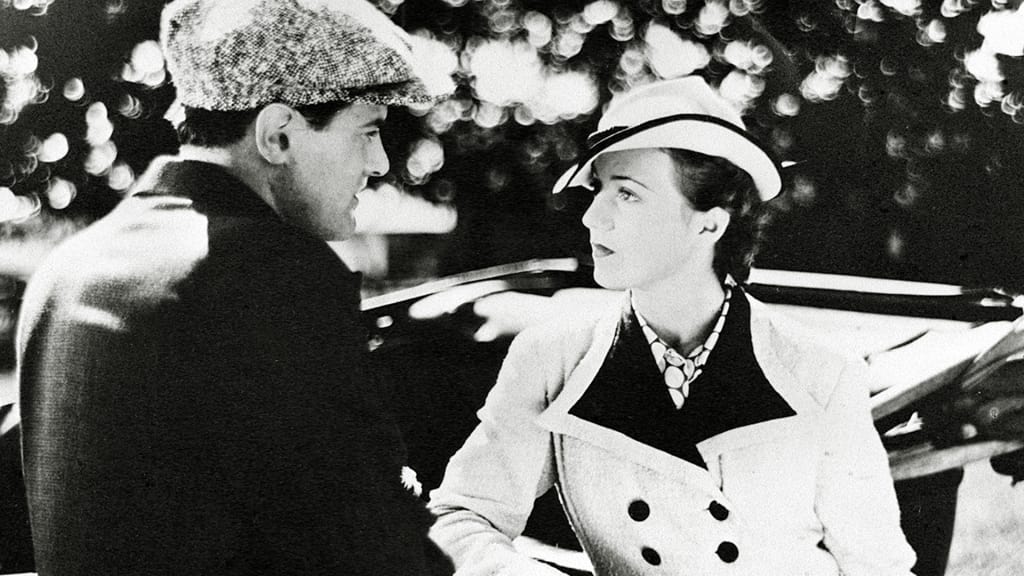
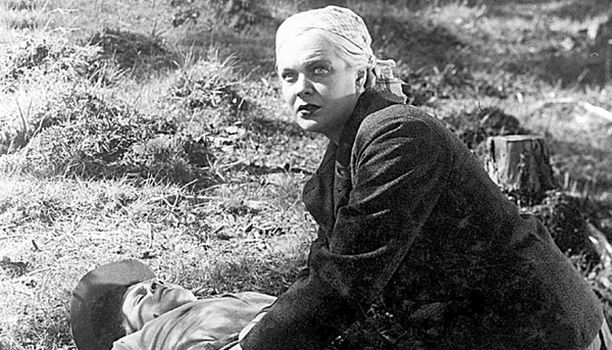
Someone has been shot on the Jönsson farm, and the farmer’s wife Astrid (Kaisu Leppanen) sits in a court-room, watching the proceedings with hollow eyes. A police officer enters an old rifle and a hatchet as exhibits in what appears to be a murder case, and a series of participants are sworn in…

In flashback, Jonni (Eino Kaipainen) arrives at the Jönsson farm in search of work. He’s plainly desperate, as no sane person would want to spend more than ten minutes in the company of Astrid’s shouty, boozing husband Alfred (Kaarlo Angerkoski), a self-styled engineer who thinks that farm work is beneath him. Inevitably, Astrid seeks comfort in Jonni’s arms, and drama ensues.

Annoyed with some of the critical reaction he was getting for his urban tales and historical novels, the author Mika Waltari (see The Unruly Generation) decided to pull a fast one in 1937 by submitting this rural melodrama, Vieras mies tuli taloon, to a writing competition under a false name. His usual haters largely ignored it, although there were plenty of complaints about its moral turpitude, and a film version was swiftly rushed into production the following year, drawing both on the original and on Waltari’s sequel Jälkinäytös (Posthumous, 1938), a novella written in part to assuage critics who were annoyed at the unjust ending.

If it wasn’t shot on a staggered schedule on several occasions, then it makes masterful use of locations to imply that its outdoor scenes cover a farming year from the late days of winter to the collection of the harvest in the autumn. But the entire production seems to struggle with the degree of social realism it wants. Angerkoski is grimy and clammy-faced as befits his character, but Kaipainen and Leppanen both exhibit their usual movie-star good looks, all chiselled features (for him) and radiant skin (for her), which might be said to create a degree of audience sympathy — they look like a pair of romantic leads, so of course they are going to get off with one another.

Meanwhile, a palpable lack of incidental music in the early scenes plays up the loneliness and isolation of the remote farmhouse, only for the orchestra to suddenly strike up after twenty minutes, as if they were caught outside having a fag and are tardily grabbing their instruments. In what could have easily been a kitchen-sink playlet that never left the claustrophobic farmhouse, Waltari’s own adaptation of his stage script spends a conspicuous amount of time outside, chronicling the bright sun and rainy days of forest life. One scene brings a dose of unintentional humour, as the two would-be lovers try to have a romantic picnic in a birch grove, and Astrid visibly struggles to break a hard Finnish rye loaf in half. Her character yearns, constantly to make the best of the situations she finds herself in, pointedly noting when it is a nice day, bullishly insisting on a swim in a bracing lake, and sprucing up her horse with a sprig of flowers. But as the film progresses, these incidents take on an anxious tone, revealing that Astrid’s constant looks on the bright side of life are the symptoms of a woman at the end of her tether.

A stand-out character, largely through not standing out at all, is Aku Korhonen as Hermanni the forester, his usual loquacity dialled down to almost zero, and his features hidden so completely behind a bushy beard that I didn’t recognise him, even though he is a major presence in the whole film. In one, rare, comic scene, he slaps Angerkoski with a fish, so there’s that to look forward to.

Drinking and drunkenness is a recurring obsession in Finnish films of the period, in part because alcohol genuinely was a social problem, but also because of the fascination brought about by a more than a decade of Prohibition, which only ended in 1932, and hence remained a subject of interest years later, not only for authors but for the films that tag along behind their books like a delayed sonic boom. Whispered in the background as well is the matter of women’s rights, particularly after Jonni pulls a drunken Alfred away from an incident of attempted spousal rape.

Despite beginning after the events have happened, the film waits until the last ten minutes to reveal exactly what transpired — is it a double murder? Was it self-defence? Did anyone walk away to turn up as a last-minute witness for the defence…. or the prosecution? Of course they did!

Jonathan Clements is the author of An Armchair Traveller’s History of Finland. 

Jury Service

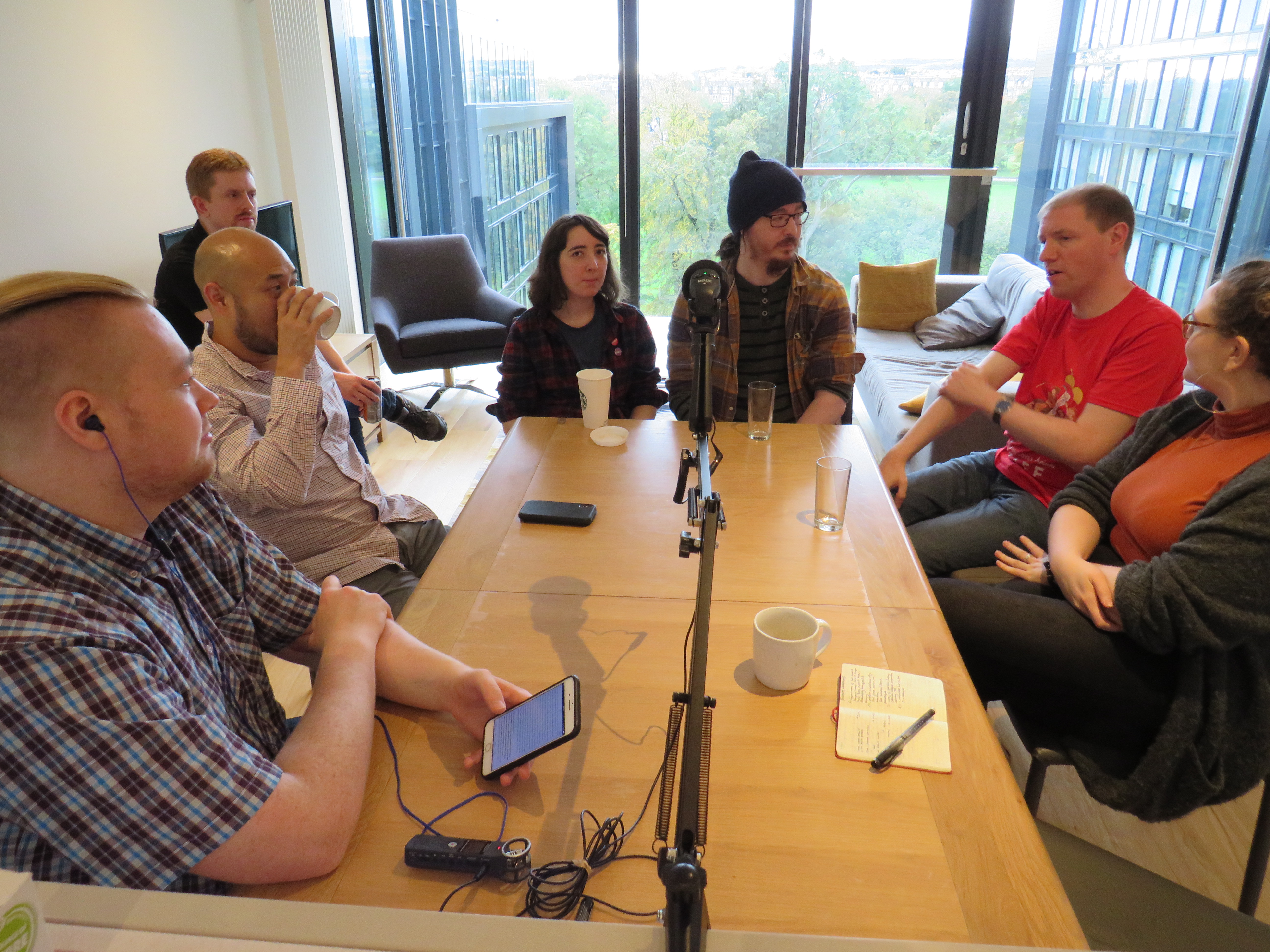
Over at the All the Anime podcast, I appear in my role as the jury chairman for the Golden Partridge award in the tenth Scotland Loves Anime film festival. Tune in to hear judges Freya Allan, Michael Doig, Jack Liang, and India Swift defending their decision not to confer the prize on the festival favourite, Weathering with You, but on Masaaki Yuasa’s outside contender Ride Your Wave.

  • 00:00:00 – Jeremy’s intro before the intro
  • 00:02:18 – Show begins proper, introductions, etc
  • 00:07:13 – Ride Your Wave discussion
  • 00:17:57 – Children of the Sea discussion
  • 00:34:10 – Talk with Andrew Partridge on how the festival has been
  • 00:58:33 – Birthday Wonderland discussion
    01:15:00 – Weathering with You discussion
  • 01:36:33 – How the judges voted
  • 01:44:15 – Experiences of being a judge
  • 01:52:47 – outro, plugs for projects, etc
  • 01:54:14 – Jeremy’s outro after the outro.
  • 01:55:15 [END]

For those interesting in examining the process in earlier years, you can find several previous jury deliberations at the website, including the bunfight over Penguin Highway in 2018, pre-festival discussions in 2017, and the post-festival deliberations in 2017, Your Name versus Silent Voice in 2016, and adventures in filth in 2015. A couple of earlier festival-related podcasts were recorded under the auspices of Manga Entertainment, and no longer seem to be online.

Mamare Touno

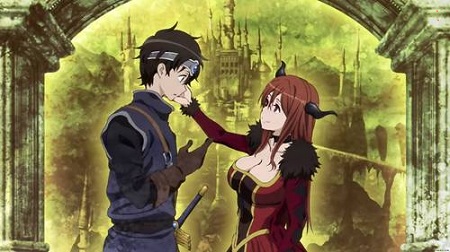
Over at the Encyclopedia of Science Fiction, I write up the author Mamare Touno, whose work is catnip to any reader who enjoys watching attractive redheads enact policies of social reform.

“Maōyū… begins where most stories end with the confrontation of a human hero and a demon overlord at the culmination of a fifteen-year war. The characters, however, recognize that they have more in common than a simplified account of their conflict might allow, and join forces in to remove the inequalities that led their peoples to fight in the first place.”

Glasgow Loves Anime

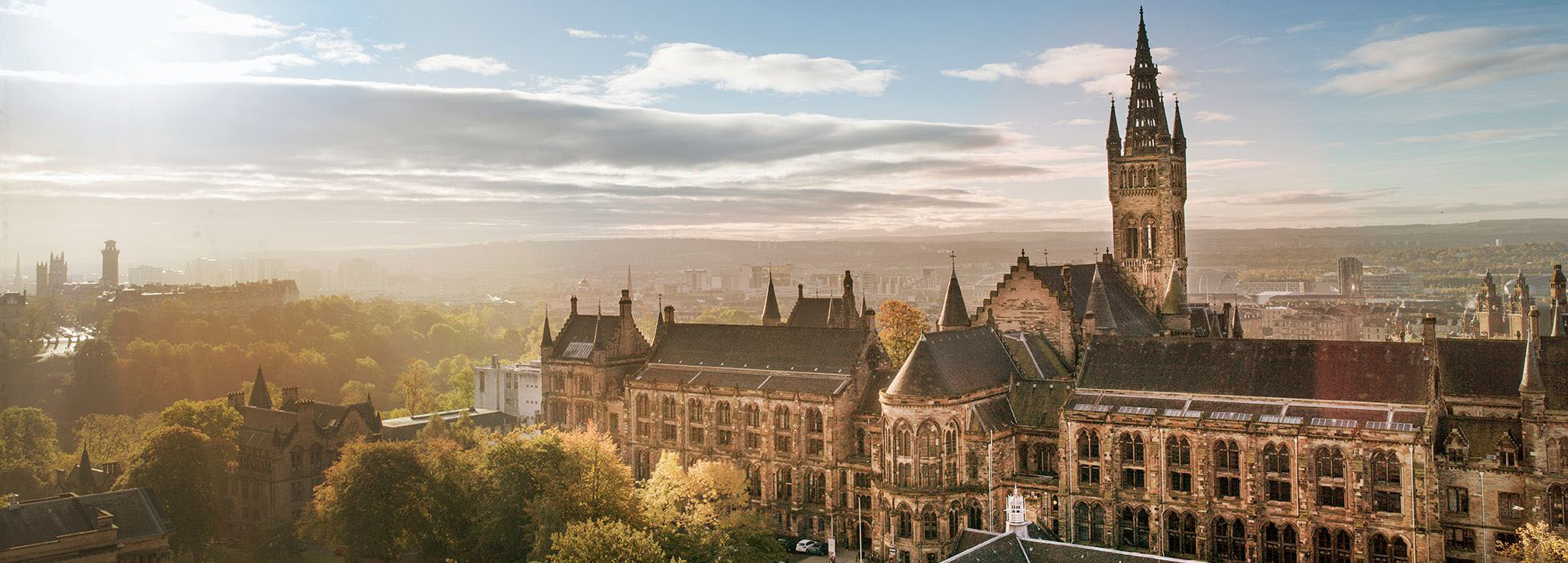
Here in Glasgow for the first leg of Scotland Loves Anime, which kicked off for me last night by talking myself hoarse at the Hogwarts-like university, detailing some of the gossip and scandal from the Japanese fantasy scene. For those who were there and interested in following up some of the strands discussed, I spoke about some of the machinations at Studio Ghibli, the very different careers of Motoko Arai and Hiroshi Yamamoto, the uses and abuses of the work of Kenji Miyazawa, as well as the Persian diversion of Yoshiki Tanaka, the Martian sidequels of Hitoshi Yoshioka, and Tomihiko Morimi‘s love of Kyoto.

Thank you to Rob Maslen of the School of Critical Studies for inviting me along, and for all those students who laughed along with me at some of the misfortunes of Japanese authors, particularly as regarding discovering that all their characters had been turned into cats. And for those of you in the audience who wanted to look at my doctoral thesis, you can read it here.

Kugane Maruyama

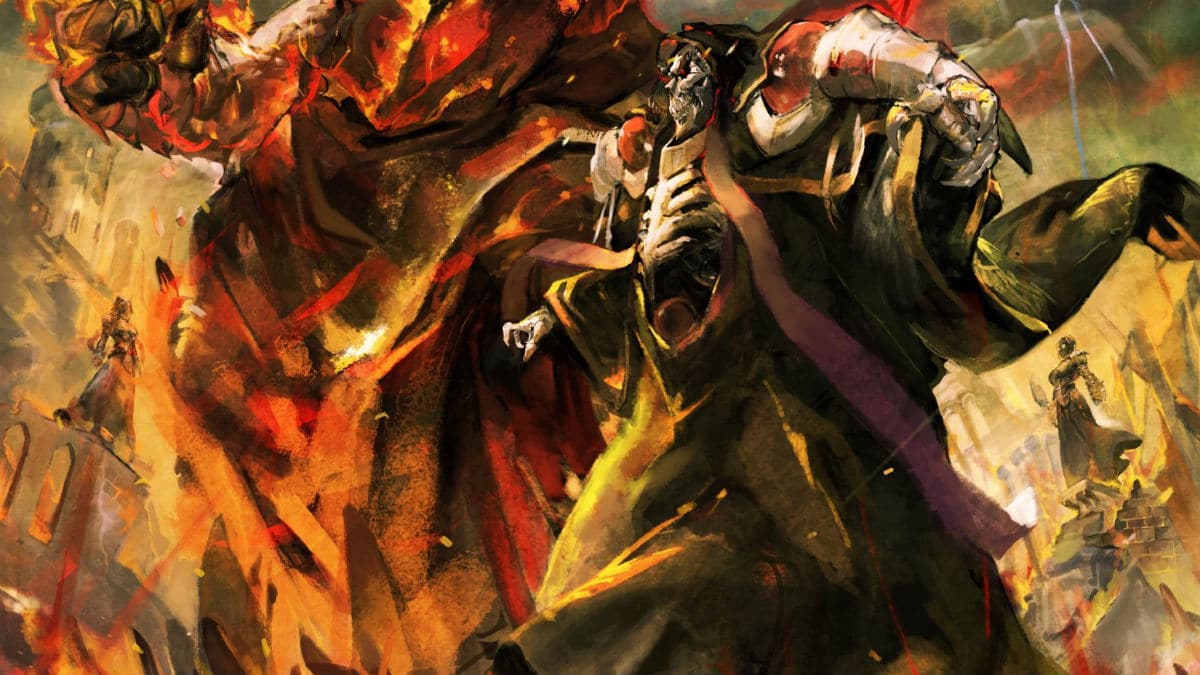
Over at the Encyclopedia of Science Fiction, I write up Kugane Maruyama, creator of the Overlord series, which “…artfully captures the mindset of the generation raised on Massively Multiplayer Online Role Playing Games, not merely in its distraction from the everyday, preoccupied with dramatic events in unseen online worlds, but the risks and hazards to an individual’s moral compass presented by the prospect of power and riches in a realm seemingly devoid of consequences.”

Human Lost

Over at All the Anime, I write up Fuminori Kizaki’s Human Lost, a distaff sci-fi adaptation of Osamu Dazai’s No Longer Human.

“The year… is ‘Showa 111’ – playfully extending Emperor Hirohito’s imperial era as far as the year 2036. But does this mean that this anime takes place in a world where the Showa Emperor has been ruling for 111 years? Is Hirohito still on the Chrysanthemum Throne, a wizened, cyber-emperor in his thirteenth decade, sustained by dark technologies and underhand upgrades?”

The Women of Niskavuori (1938)

Suomi-Filmi’s reliable director Valentin Vaala helms another script based on a play by Hella Wuolijoki, after the success of his earlier Hulda Juurakko (1937). Niskavuoren naiset is a fire-cracker of a story about another of Wuolijoki’s independent, disruptive female characters. The year is 1931 (so says Wikipedia, although people are seen drinking cognac, in contravention of that period’s Prohibition, still in force until 1932). Aging lady of the manor Loviisa Niskavuori (Olga Tainio) is trying to hold her village together in changing times, enduring with implacable stoicism the petty dramas of her heirs, particularly her performatively consumptive grand-daughter-in-law Martta (Irja Lauttia).

Farm life is presented not as a happy idyll, but as a complex, modern industry; the womenfolk discuss fat percentages and crop yields on their way to the store. This is no clueless place in the sticks –  the council is quarrelling over the appointment of a teacher qualified to keep up with the times, and the menfolk have settled on Ilona Ahlgren (Sirkka Sari), a city girl who has “studied more than knitting patterns,” who arrives on the train with her fashionable hat at a jaunty angle.

The locals are relying on Ilona for more than schooling; the priest wants her to help out at Sunday school, the craft circle wants her helping out with the home economics, and even the drama club expects her to take a turn on the stage. They expect her to be a Jill of all trades, a vital contributor to all aspects of village life. She is excited to be in town, not the least because with Woolfian connotation, she has been yearning all her life for “a room of my own.”

Martta’s husband Aarne Niskavuori (Tauno Palo) falls for Ilona, obviously and hard, in a stirring dance sequence in which the camera intercuts extreme close-ups on the band’s musical instruments with the whirling faces of the would-be lovers. But the script keeps us guessing, cutting immediately from breathless flirtations at a summer ball, to a midwinter card game six months later, leaving us to guess what has transpired in the interim.

“Telephone” Sandra (Aino Lohikoski) is the local operator, constantly complaining that the schoolboys have damaged the overhead wires, but also sneakily eavesdropping on everybody’s conversations. It’s she who first suspects that Aarne and Ilona are having an affair, and spearheads the gossip. By the time their trysts are the talk of the town, Ilona is already carrying Aarne’s child. Aarne’s wife, Martta rages against That Woman, refusing to let her in “her house”, a house that as Loviisa dolefully reminds her, is not yet fully hers to rule.

Over a tense coffee conversation loaded with agricultural allusions, Ilona breathlessly talks of spring storms blowing down trees with giddy disregard, while Loviisa sternly reminds her that the men of Niskavuori have deep roots, and that she is a new transplant. Money, in terms of Martta’s wealth, is going to talk much louder than whatever feelings Aarne and Ilona have for each other, but even as the two women glare at each other over their cups and saucers, Aarne arrives with his friend Simola, and the foursome are forced to play along in a forcibly light-hearted conversation about the joys of marriage.

Loviisa has a plan, to marry Ilona to the less well-to-do Simola, avoiding a scandal, or at least squaring off a lesser one by suggesting that Mr Simola and Ilona are facing a shotgun wedding. Ilona’s own vague plan, to run away with her lover, seems thwarted by Aarne’s tardy realisation of his duty to his home manor.

The Women of Niskavuori was the debut role for Sirkka Sari, a young actress with a tragically short career ahead of her. However, ungallant though it may sound, on the basis of this performance, I assume that the ink spilled elsewhere as if she was some great lost talent was a commemoration error, as obituarists struggled to find nice things to say about a frankly unremarkable teenage ingénue, who met with a grisly end while completing her third film, Rich Girl (1939). Naturalism in dialogue is still uncommon in Finnish films of the period, but Sari comes across as an actress out of her depth, too busy trying to remember her lines to really put much effort into delivering them. If she were a star in the making, she seems miscast, here. She was barely eighteen years old when this film was shot, even though the character she is playing must surely be at least five years older, if not ten.

The script is open to multiple interpretations – depending on the way that Ilona’s actress delivers her lines, she could come across either as a fiercely progressive modern woman, or a home-wrecking hussy unheeding of the damage she has done, or a deluded innocent, humped and dumped by a local scoundrel. But Sari persists in staring into the middle distance and softly speaking to nothing, as if she is in a dialogue with the voice of angels and not anyone around her. Meanwhile, Olga Tainio, as the no-nonsense matriarch, runs rings around her with a truly nuanced performance, empathetic with her condition, but steely in her prioritisation of the life and future of the manor.

Loviisa looks down at the old tome we have seen her reading in the opening scenes. It is the Bible, open to the Song of Solomon: “Many waters cannot quench love; rivers cannot sweep it away. If one were to give all the wealth of one’s house for love, it would be utterly scorned.”

The film ends with a tense parlour trial, in which Ilona refuses to name the man whose skis were seen outside her bedroom, while the townsfolk line up a parade of witnesses in order to force her confession. Martta and Loviisa already know who it was, of course, as do we, imparting an element of suspense as we wait not to find out who it was, but what will happen…

“Perhaps,” says Martta hopefully, “we can blame the women for this.” But it was the men of Niskavuori, at the beginning of the film, who were seen guffawing over the prospect that the new teacher might be a bit of hot stuff, deftly illustrating a systemic assumption that makes this film’s concerns ardently up-to-date, even 81 years after its release. As for what happens next, you will have to wait for the belated sequel, Aarne of Niskavuori (1954), although there would be several more films in the Niskavuori series, including the prequel Loviisa: Young Mistress of Niskavuori (1946), in which Palo would return to play his own grandfather. We’ll get to them eventually, although it might take years…

[Note – uncharacteristically, this film came with English subtitles on the DVD.]

Jonathan Clements is the author of An Armchair Traveller’s History of Finland. 
Birthday Wonderland

“The story is famous, not only for its critical acclaim and awards nods, but because it was considered by Hayao Miyazaki as his next movie project in 1998. When Miyazaki put the idea aside and went on to make the thematically similar Spirited Away instead, Kashiwaba’s illustrator Kozaburo Takekawa publicly accused the Studio Ghibli director of plagiarism.” Ahead of Birthday Wonderland’s UK premiere next month at Scotland Loves Anime, I write it up for All the Anime.