Event Horizons

Spinal_Tap_-_Up_to_ElevenI’m fascinated by the procedures that get the cast and crew of a touring production from one venue to another, the economics of tour buses, and the nature of life on the road. In recent years, I have become acquainted with many behind-the-scenes elements, owing to my little brother’s career as a swan wrangler and lion tamer on several famous tours. Whenever I see him, he is soon ranting about point-loads and scissor-lifts, and the problems inherent in getting your steel rigs to Paris when your lighting’s stuck in Amsterdam and your dancers are down the pub.

“I am sick of people saying ‘Oh, Ravenna? You’re so lucky!’” he once raged. “I’m not on holiday, I’m putting 6 tonnes of intricate steelwork in the roof, which will be manipulated on tiny bits of string by people who don’t speak the same language as me in a vain attempt not to kill or maim anybody recreating the Blitz (through the medium of dance) underneath. And all this in searing heat and unbelieveable moisture, in a 300-year-old space, with no extra time.”

So, yes, I am probably the only person in the world who regarded Waddell, Barnet and Berry’s This Business of Concert Promotion and Touring as a fun read. My interest is actually in what the Japanese are calling “events” – live shows featuring starlets or special guests, designed to be unpirateable. This includes film festivals and Hatsune Miku performances, and maybe even the occasional convention, but I’m ready to see how things look like to touring rock bands as well. I’m a sucker for insider business books, and this one is authored by the triumvirate of a production manager, Billboard’s executive director of content and programming, and a professor in the Department of Recording Industry at Middle Tennessee State. You can actually study Advanced Concert Promotion! I love it.
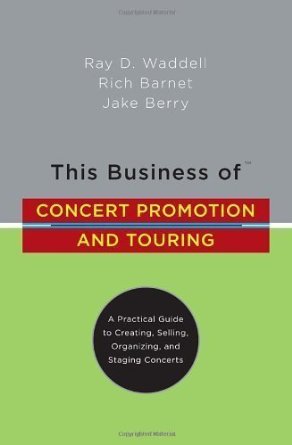
this bizThis Business of Concert Promotion and Touring is a hard-core business book, all about the numbers, and the way they can be massaged. From four guys and a second-hand van, to Iron Maiden and their own 747, it investigates the logistics of getting out on the road and earning money through events rather than record sales. It examines the varying economics of ticket prices – Garth Brooks charging a mere $20, in order to get as many people in the venue as possible, versus Paul McCartney’s courting of the corporate crowd with tickets in excess of $450 for that special VIP treatment. It’s also particularly good on spin-offs, revealing, for example, that the Rolling Stones expect every ticket buyer to spend an average of $18 on merchandise before they can reasonably be said to have got that elusive satisfaction. Ah yes, but that kind of merchandise means you are adding a whole extra truck to the entourage just to ship it and its sellers around with you, and costs mounts up…

Perhaps most interesting for me is a section on the impact of online ticketing, particularly the Ticketron software perfected by three boffins in Arizona, and sold to Ticketmaster in 1991. The first ever ticket sold on ticketmaster.com was an accident in 1996, when the company turned on its system to check for bugs, and saw that someone immediately used it to buy a ticket to Seattle Mariners game. Curious, they tracked the buyer down and asked him why he had bought a ticket online.

“Yeah,” came the reply, “because I don’t like talking to people and I don’t like talking to you.” Then he hung up.

A section at the back talks the reader through the hour-by-hour experience of different members of a rock band’s entourage, from the roadies to the support act, demonstrating how each experiences the day of performance in different ways, and with different bottlenecks and milestones. Sadly there’s no gossip or groupies, although one wonders wistfully about some of the likely questions on a Middle Tennessee State examination paper. You’ll finish the book knowing the exact difference between an “arena” and a “theatre” (no mistakenly booking the EnormoDome for you) and won’t ever make the rookie error of buying rather than renting expensive, crash-prone sound systems to take on tour. And next time I see a guitarist smash his instrument on stage, I will always be wondering if he isn’t following this book’s advice, to cover up a broken string by doing something dramatic until his roadie can slip him a replacement.

This Business of Concert Promotion: A Practical Guide to Creating Selling, Organizing and Staging Concerts, by Ray Waddell, Rich Barnet and Jake Berry, is out now from Billboard Books.
Highland Fling

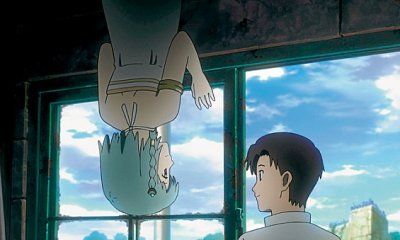
patemaIn Heathrow just about to be shot out of a cannon at Scotland, ready for Andrew Partridge’s mini-tour of regional cinemas. Over the next four days, I am going to be introducing anime like Patema Inverted and Evangelion 3.0 in a number of places I have never been, including Dumfries, Bo’ness, Falkirk and Inverness. Andrew is driving. He has only just passed his test. No pressure.

All Aboard the Gravy Train

doraemonLike some magical artefact pulled from an Anywhere Door, the Doraemon manga suddenly arrives in English, in its entirety! Yes, that’s 12,000 pages of one of Japan’s best loved comics, a valuable missing piece of the manga puzzle.

Publishing Doraemon in its entirety is a big risk, but not as big as it once would have been. E-publishing means that the owners, Fujiko Pro don’t have to print ten thousand copies of a 12,000-page manga, but can store it on a hard-drive and wait for your money. More crucially, the long-running adventures of the time-travelling blue cat arrive part-funded by a Japanese government initiative.

It’s been five years since this column speculated about the likely bail-out package for Cool Japan (NEO #60). But finally we have the Japanese Contents Localisation or Promotion fund, or “J-LOP”, as it appears to have been termed by whimsical policy wonks with a love of Jennifer Lopez. One of the few schemes to survive the collapse of the Aso administration, J-LOP offers millions of pounds to subsidise the translation or promotion of Japanese works.

J-LOP is an impressive exercise in trickle-down economics, an incentive scheme for copyright owners (not publishers or distributors) to push their work in new markets. And while it can front up to 70% of the costs, the owners still have to come up with some of the cash themselves – this is mainly going to be a scheme that benefits the rich, in the expectation that their ventures generate employment for the rest of us.

So it’s a job creation scheme to attract foreign money, thereby creating work for Japanese tax-payers on which they can pay tax. It is, according to its website at j-lop.jp, also a tourism initiative, in order to keep foreign readers and viewers enthusiastic about Japanese stuff. One wonders if Doraemon is merely the first of many classics to get a leg-up, but I suspect that canny form-fillers will soon be at the trough, applying for subsidies not for worthy wallflowers, but for fan-bait that would have got translated anyway. A heroic tribunal will apparently be on hand to stop this happening. Now there’s an anime waiting to happen…

Jonathan Clements is the author of Anime: A History, published by the British Film Institute. This article first appeared in NEO #123, 2014.

Hamster Games

legiobanka
Just back from AnimeFest in the Czech Republic where, I taught my Storylining in a Corporate Environment workshop (the people who brought you Zombie Hitler, Choc Shock and Hattie Bast: Mummy’s Girl). The two teams of competing delegates digested the usual set of factors influencing animated TV shows, and then spat out ideas tainted with the usual degree of mentalism. The almost unpronounceable C<3R3 of Exe-CUTE-ors featured transforming mecha-students at corporate-sponsored high schools, leading a revolution against their exploitative masters after one pilot finds love in the locker room with a girl from a rival team. The other, the inspired Hamster Games, featured a gaggle of schoolgirls, unaware that their fluffy pets were in the middle of a vicious war against hellspawn, fought in the house at night with kitchen utensils and hamster superpowers.

As ever the victims teams had to battle against time constraints, corporate concerns and the everyday misery of having to run a team with no discernable leader. “Monoculture”, that perennial storylining problem, when copying other people means stuff just looks like everybody else’s, came to the fore, as did the perils of pitching. One team went in with a full-on movie-trailer for their concept, but forgot to use some of their best and funniest lines. The other team went for a more traditional approach, but fatally neglected to preface the whole thing with either their high concept: “CUTE + MECHA”, or their major inspiration (“Romeo & Juliet”) which might have saved them from a lot of abuse at the hands of their rivals.

cz legion armoured trainI also had the chance to drop in at the Bank of the Czechoslovak Legion in Prague, an intricate Rondo Cubist building like some sort of transplant from a world of steampunk deco, built with the spoils from the collapse of Tsarist Russia and the fall of the Far Eastern Republic, by the survivors of the army that fought its way across Siberia on an armoured train (^^ look! an armoured fricking train! ^^), in order to get back to Europe the long way round. But it’s not a tourist site per se, it’s an operational office building, so we celebrated by getting Mikiko Ponczeck to take some money out of the ATM.

Meanwhile, at the con proper, I was asked to sign copies of Schoolgirl Milky Crisis, Anime: A History and the long out-of-print Erotic Anime Movie Guide. And I was asked: “What is your favourite kind of meat?” Which has never happened before.

Eurovision Shouty I-Spy 2014

mother of dragonsAnd we’re back for the game of the year. Prepare the booze, dust off those shouting muscles, and prepare for what the Russian right-wing have called the HOTBED OF SODOM. And that’s before Ukraine gets a massive sympathy vote for, you know, being invaded.

We’ve already had to say goodbye to Moldova’s Mother of Dragons and her prancing beige Unsullied, and Latvia name-dropping Raiders of the Lost Ark while singing a chorus that went “Tepteptep Google Google.” Categories that appear to be resting this year include readily identifiable mullet dresses, our popular dubstep dance-off, and the much-missed Buddha Jazz Hands. I’m not even sure there will be much bimbling this year, what with the Turks out of competition. Meanwhile, Armenia have sent a man dressed like a Death Star tech support officer and Poland have just sent… well, you’ll see.

Step One: you will probably need to be quite drunk. Step Two: The following sights will be seen during this Saturday’s Eurovision Song Contest. Can you see them first? Remember to shout it out. Party hosts will need to keep score of who gets what first, or otherwise dish out the forfeits to those that aren’t quick enough. As ever, there is more than one key change, and plenty of orbital cleavage. Keep your eyes (or ears) open for any of the following. And when you notice it, SHOUT IT OUT!

In no particular order, in Saturday’s final you should look out for:

Jesus in a dress
Teleporting girl
Circular piano
Splits
Winking
One-handed voguing
KEY CHANGE! (every time you hear one)
Bimbling*
ORBITAL CLEAVAGE**
Drumstick throwing (blink and you’ll miss it)
Giant seesaw full of blondes
Accordion!
GIANT ONSCREEN MOUSTACHE! MOUSTACHE! MOUSTACHE!
Fingerless gloves
Lyrics: “Lalalalalala lalalalalala”
Chase her around the piano!
Trapeze
SCRUBBER! Every time someone is seen doing their laundry
Man-sized Hamster Wheel
WOO-WEE!: every time hamster boy does a 360.
Ballerina on roller blades
Onstage butter churning
Surprise Trampoline
Whistling
Lyrics: “Tonight I’m going to eat you up.”
Kicks the camera
Band inadvertently dressed in the Tellytubby colours
Human letters spell: L-O-V-E.
Hair tied together
Onstage drums
COSTUME CHANGE
ZZ Top on backing vocals
OMG, what’s the one in orange going to do!? Oh, nothing.

(*swaying one’s head from side to side in a snakey fashion.).
(**ostentatious cleavage sufficient to see from a satellite in orbit, which, according to Eurovision bra consultant Tom Clancy, requires a minimum of C-cup).

Apologies to American readers, who will have to just imagine what the world’s biggest, gayest song contest is like. Just imagine, for one day every year, Europe gets to behave the way that Japan does all the time.

Orange is the New Black

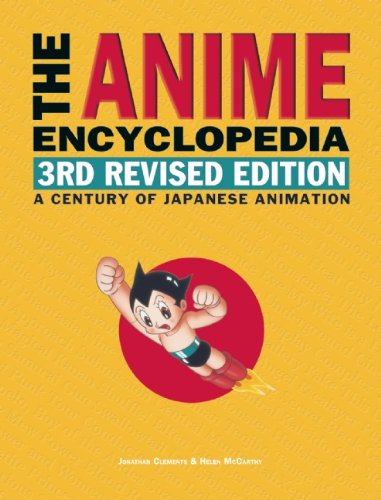
ae3Over 1000 new entries, over 4000 updates and corrections, countless new arguments ended (and begun). The third edition of the Anime Encyclopedia brings the landmark reference work up to date with six more years of information on Japanese animation, its practitioners and its products, as well as incisive thematic entries on its history and culture.

It’s scheduled for publication in December, but already has a pre-order page up on Amazon (and in US).

Patema Inverted

patemaUp now on the Manga UK blog, my article on Patema Inverted, the Japanese animated movie coming to UK cinemas in May: ‘Yoshiura confessed in an interview that these are all part of his overlying scheme for “inversions” throughout the plot, that every possible element of his film should involve a clash of opposites or the confounding of expectations. This attention to detail can be seen in everything from the regimented but unhappy overground realm to the chaotic but jolly underground exiles. Even Michiru Oshima’s music is revealed as an outgrowth of this idea, with the two leads’ themes each written as a musical palindrome of the other, advancing on its own counterpoint until they unite in a new synergy.’

Haruki Kadokawa’s Struggle

kadokawa pictureOver at the Encyclopedia of Science Fiction, the need to revise the entry for the blockbuster flop Virus led me to also write a new entry on its producer, the flamboyant, ever-entertaining Haruki Kadokawa. That’s him in the picture, dressed as a samurai on a Tokyo overpass, photographed by Annie Leibowitz, with a book title that’s the same in Japanese as Mein Kampf. Because if you’re that rich, you would, wouldn’t you?

The Ties That Bind

tied in coverWhen I was a kid, novelisations were the way you could experience an AA- or X-rated film without breaking the law. They were a way of re-entering and re-watching movie texts that meant a lot to you, and they were often a means of finding out all the bits of the film that had been left on the cutting room floor. I even knew a boy at school who once bragged that he only read movie novelisations, as if this were some sort of badge of sophistication. As an occasional tie-in writer myself, I now know his boast for what it was – the literary equivalent of crowing that you only ever ate fast food. It’s not unusual for a movie novelisation to get cranked out in two weeks flat, by an author fuelled on various medications and, erm… enhancers.

I once finished writing a film novelisation bang on time, only to re-read my contract and realise that I was three thousand words short. So I went back in and wrote a whole new chapter, implied but never seen in the script itself, a massive funeral sequence that tied up a bunch of loose ends from the script, and fleshed out some character motivations that were otherwise vague. I’ve seen other authors do this. Arthur Byron Cover, in his novelisation of Flash Gordon, threw dozens of curve-balls into his book, with bonus asides and little scenes that had all sorts of implications. My favourite was when Flash silences Dale Arden with a kiss and says: “Let’s save it for our kids.” That’s in the script.

But in Cover’s novel, Dale thinks to herself: “Kids? Should I tell him about my operation…?” Very confusing for the eight-year-old me.

Zarkov-Dale-and-FlashLicensors can be arseholes. According to Tied In: The Business History and Craft of Media Tie-In Writing, edited by Lee Goldberg, Max Allan Collins was obliged to cut 60,000 words from his novelisation of Road to Perdition (itself based on comic by one Max Allan Collins), because the stuff he added “wasn’t in the script”. He confesses that this situation is “fairly rare” (certainly, nobody has ever stopped me adding extras, and indeed my editors have normally welcomed them). But Collins clearly wasn’t dealing with one of the nice licensors who see a novelisation as a bonus exercise in metatextuality; he was dealing with a literal-minded bean counter who saw a novelisation as an advert for the film, that cannot cross any bland boundaries of expectation.

Licensors can also offer wildly varying degrees of support and interference. The most unwatchably bad franchise I have ever written for happened to have the best-written, most helpful style guide I have ever seen, in any medium. The franchise I’ve most enjoyed writing for was also the least supportive, offering a single line of advice before packing me off to write 80,000 words – presumably, hopefully confident that I knew what I was doing. They then spent a month cordially attacking my work with scissors. Seriously, they could have saved everybody a lot more time by just telling us beforehand a couple of ground rules that they’d kept to themselves.

Tie-in writers can also be arseholes. Some of my best friends are tie-in writers, but our world is orbited by an Oort cloud of dicks, without an original thought in their heads, fighting tooth and claw over the scraps that drop from producers’ tables, bragging desperately of their fannish connection to this TV show or that franchise, and often pissing away their creative lives in serial, flat-fee write-a-thons, with limited artistic heritage and no long tail. I couldn’t care less what those people have to say about their profession, but I am deeply interested in the thoughts and experiences of their smarter colleagues – people who thrive on the discipline and energy of diving briefly into someone else’s world, and turning around a story using the characters and the mood they have been dealt. This is, after all, how Hollywood itself seems to work most of the time, and it’s a skill that any jobbing writer would do well to cultivate.

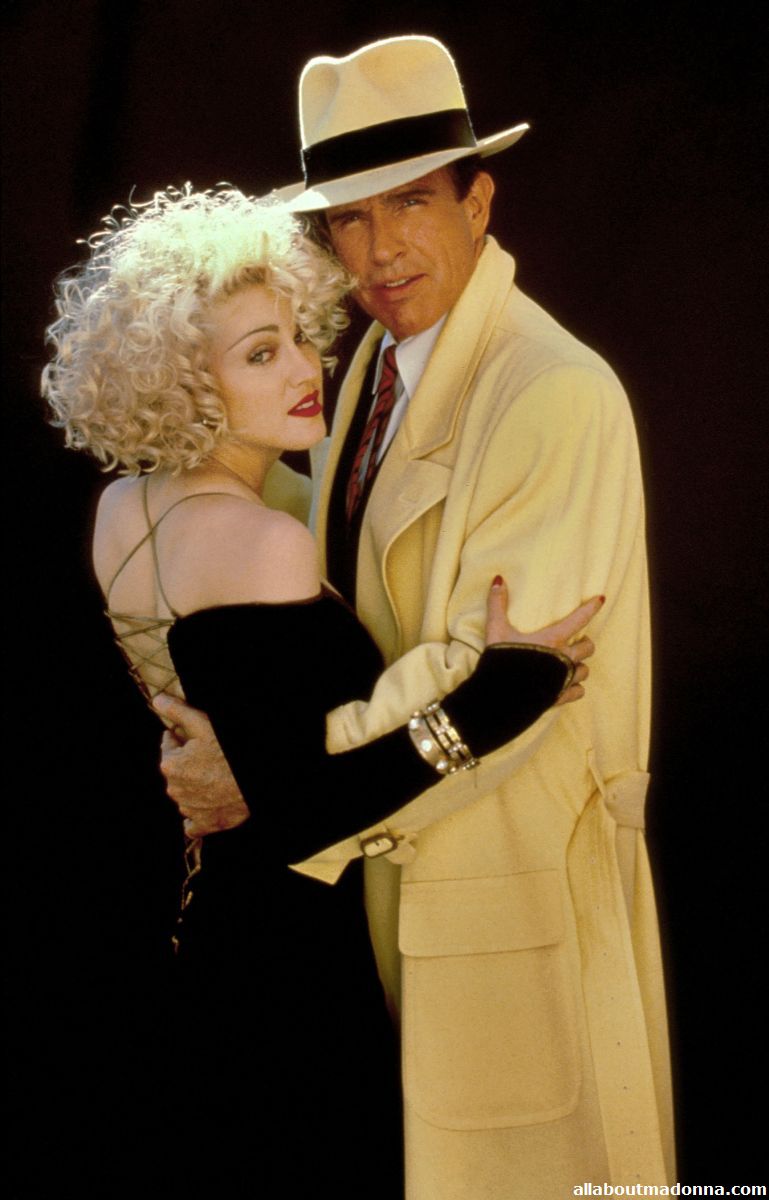
dick tracyI bought Tied In because I was curious if they could pull it off – and, largely, they do. The multiple authors deal to some extent with the peculiar condition of the tie-in world, such as the possibility that a book with your name on it will get kited into the bestseller lists, but only because it has someone else’s name on it as well.

It helps that Max Allan Collins is on board – an author with enough clout in his own right to get away with naming names when it comes to some of the disasters of his tie-in career. There are some real shockers, beginning with his first job on Dick Tracy, when he was made to rewrite his novelisation from the ground-up, and drop the ending from the film itself, by editors who were petrified that the OMG OMG shock twist ending would be revealed by readers before people had seen the film.

There’s a great discussion section, involving over 20 authors, that doesn’t shy away from the nitty-gritty of advances and royalties, demonstrating just what kind of numbers are involved in putting that copy of the Pacific Rim novelisation on the shelf in Asda. Much of the craft of writing a tie-in is no different to the craft of writing any book, except possibly with a first-draft written by someone else in a script format. The forum members discuss the issues of “head-hopping” when a film changes point-of-view, or the particular problems of rendering a cross-cut movie scene into more traditional prose form. Collins in particular shines with some great ideas for original approaches, although his horror stories are so horrific you wonder how he still has the balls to try them. His solution for novelising the Sylvester Stallone vehicle Daylight, framing the whole thing as a documentary, is just great, but one unlucky dice roll with the licensors, and they would have made him throw it in the bin.

Several authors note the unique opportunity to fix plot holes and crappy bits in the script with the greater space afforded to prose. They note the opportunity afforded in a prose (or audio) tie-in for super-duper special effects or locations that are beyond the means of a TV show stuck in Vancouver (or Wales) all the time, or the chance for “Easter Eggs” that will only be noticed by hard-core fandom.

Kevin J. Anderson reveals that he gets a minion to type the whole script into a word processor with the tenses changed, so that when he sits down, he has, in his words, a “badly written” story that already hits 30% of his wordcount. It all sounds dreadfully hacky, but then again, as he points out, his main duty is to deliver a workmanlike 60,000 words to the licensor’s specifications, and what better way to reach that target than by recycling the pre-approved script.

It’s all too easy to sound defensive about a profession that I myself have previously described as the prison shower bitch of the literary world, but there are some interesting arguments to be had about the extra creativity needed to function within another creator’s limits. They’re all here, along with some top tips and some truly terrifying tales of licensing hell. True, some of the contributors seem to think they are promoting their work in a particular franchise rather than the craft that went into it, but Tied In still offers an intriguing glimpse of a part of the literary world that is ever on the bestseller lists, but rarely discussed by critics.

Jonathan Clements, under this name and others, is the author of tie-ins for over a dozen franchises, including Spartacus, Doctor Who, and Strontium Dog.