Her Blue Sky

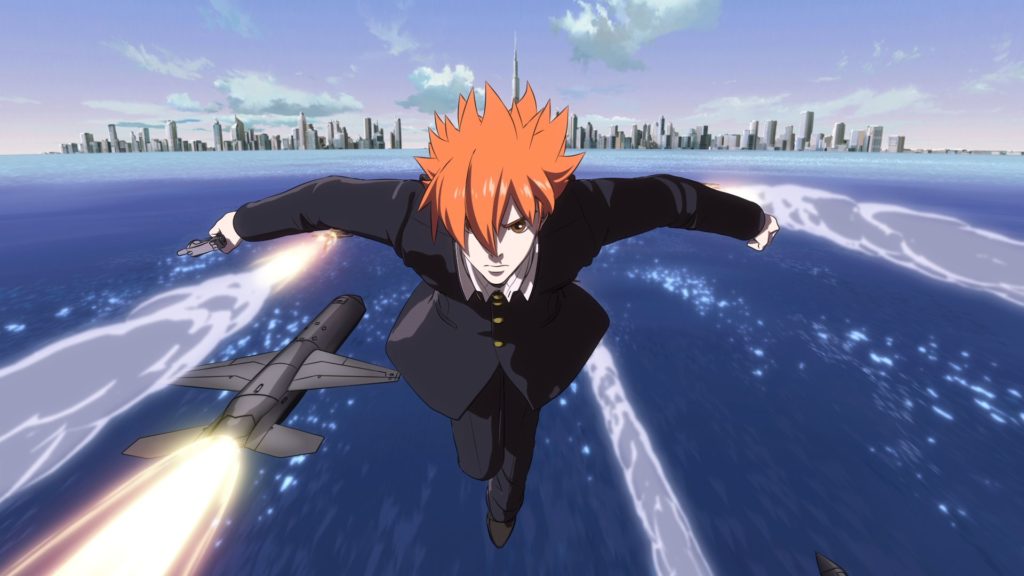
“The band’s first performance is sure to put goose-bumps on the skin of Japanese (and British) viewers of a certain age. For old-timers like me, and anyone else who saw the NHK TV show Monkey on BBC re-runs or Blu-ray in the years since, the opening bars of Godiego’s ‘Gandhara’ are unmistakeable, along with its doleful yearning for an unattainable utopia, tying it directly to the concerns of the film.”

Over at All the Anime, I write up Mari Okada’s Her Blue Sky.

Atom: The Beginning

Several months ago, Motoko Tamamuro and I embarked on a massive multi-volume translation project for a couple of intriguing manga serials. The first volume of the first of those is out now. Atom is written by Masami Yuuki and drawn by Tetsuro Kasahara, and is a prequel to Osamu Tezuka’s Astro Boy, reimagining the older characters from that classic show back in their college days.

Ready for My Close-up

One of the unexpected holdovers from the COVID era has been an increased willingness to pre-record interviews to run after the films at Scotland Loves Anime. So instead of lurking in the wings, or sitting through something I’ve already seen at least twice, or standing alone on a stage and desperately filling for five minutes while the staff drag someone out of the scarf shop (naming no names), I can introduce a film and then go home, secure in the knowledge that I will be popping up onscreen when it’s over and chatting to the director.

This, however, has created a whole load of new requirements – my home studio now boasts a camera that go up to 4K footage, lavalier microphones, a Noco jump starter that doubles as an independent power source, and a family used to me shouting “Everybody shut up for an hour. Mamoru Hosoda is back to talk about Paw Patrol.”

Back in the National Geographic days, I had a whole bunch of staff to faff with things like lights, lenses and sound. In the impoverished world of anime extra-filming, though, it’s just me, and a bunch of sarcy comments on Twitter about the state of my office bookshelves.

Funeral Direction

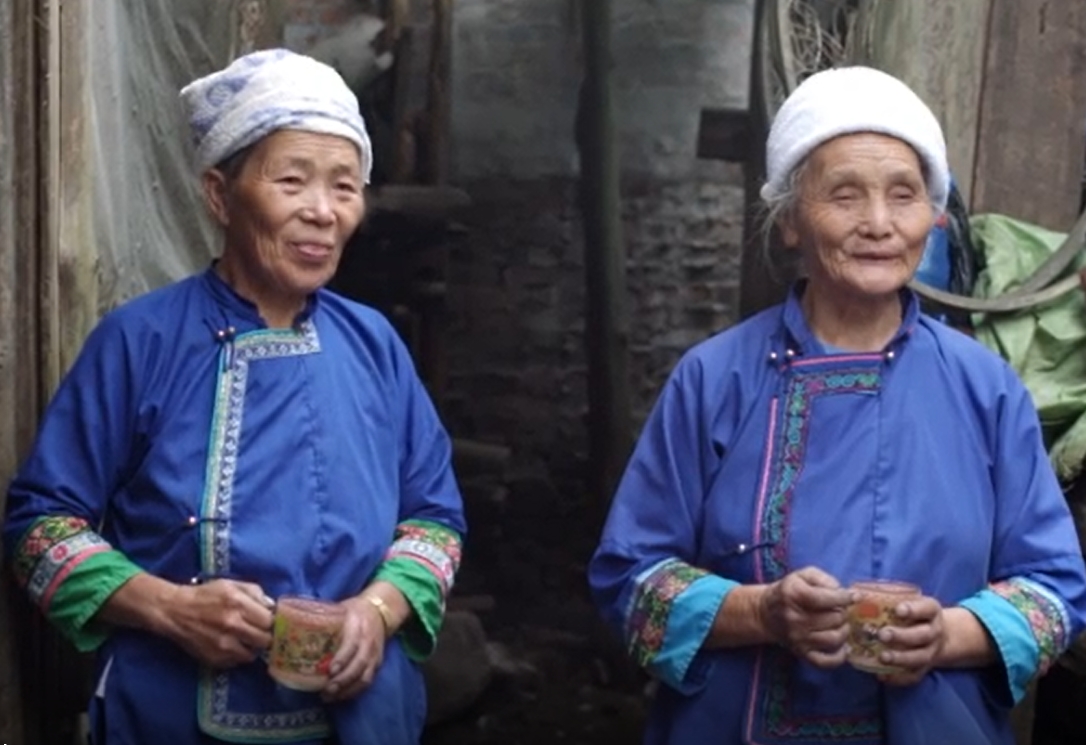
I am down in the hostel hosing the mud off myself when the next event happens, so I am not there for the bullfighting. This apparently involves two drunken bulls (force-fed booze if necessary) incited to charge at each other by letting off firecrackers behind them. Frankly, I don’t know much more than that, so the first I find out about it will be at the same time as you, when I see the finished episode. By the time I am scrubbed clean and ready to stumble back up the hill, the event is over, substantially earlier than planned. It’s only later on that we realise this has caused all the other events to be moved half an hour earlier than scheduled. This, in turn, means that the singing contest starts early, and so my grannies from the other night with their song about subsidy incentives were the first on, before any of us knew the competition had started.

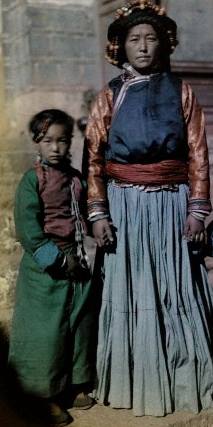
It is annoying. The whole evening comprises picturesque Kam tribeswomen, in their traditional black robes and silver head-dresses, singing about all sorts of polyphonic anthems. But my grannies have already been and gone. After such a great morning, with my catering show quips over a pit of boiling stomach juices, and my mud-fight star-turn being pig-piled in a pond by a bunch of idiots, we had managed to log maybe ten minutes of useable footage – half an episode. But the lack of a pay-off for my granny story means we can probably only talk about them for thirty seconds instead of three minutes. It’s not just today’s footage that we have lost, but any meaningful use for the night before’s.

Mr Wu is deep in his cups at the hostel by this point, having chuffed his way through an entire packet of the director’s fags, and what appears to be a litre of moonshine. The director is trying to entertain him by taking Instamatic photos, but his mates insist on getting me to down a beer in one every time she takes a picture. The evening continues with predictable results, which we will pick up again the day afterwards, after six hours standing around.

This is because Pan has located the Holy Grail for our shoot – an honest-to-god Kam funeral, happening at the next village. Someone whose name is also Pan, has died, and the ceremony is happening today, which will allow us to fulfil our Circle of Life brief this season. The Kam will be the Death episode, and the funeral will provide that difficult-to-find Death part. But this creates a whole new set of nightmares, because if you were burying a relative, the last thing you would want would be a film crew from National Geographic shoving a lens in your face and asking you about the origin of your local traditions. So I am obliged to spend much of the rest of the day sitting on a pile of logs being hassled by the village children, who regard the logs as their playground and food storage vault. The rest of the crew embed themselves deep in the crowd to get footage of the white turbaned mourners, the cortege preceded by sweet-throwing and firecrackers, the long march up through the rice paddies, and the various booze throwing and firecracker-slinging associated with a Kam funeral. All I can do is whisper a few pieces to camera about the dichotomy between documenting cultural traditions and taking a vacation in other people’s misery.

Funerals are a hot topic in China at the moment after a controversial government initiative that proscribed all burials. Henceforth, said the Party, what with all the land we need for crops and stuff, people can’t be buried any more – everybody has to be cremated. This directive is actually quite old, and Chairman Mao himself tried to initiate that for his own funeral, only to be overruled by his successors, who have kept him above ground in his mausoleum ever since. But it’s caused even more of a kerfuffle among the peasantry, since people like the Kam tend to commission coffins from their own carpenters years, even decades in advance, and live with them in their houses. When old people in the provinces refused to give up on the idea of coffin burials, some heavy-handed cadres sent around thugs with pickaxes to break the coffins up.

So, here’s the thing – among the Kam, and certain other tribes, cremation is reserved for people who die from unnatural causes. Taking away their right to burial is like condemning them to an afterlife separated from both their ancestors and descendants, leading a bunch of old people to hang themselves or drink pesticide in order to die ahead of the wrecking crews and the change in the law. This protest eventually swayed the Party, which countermanded its own order. Although I would like to point out that suicide counts as unnatural causes, so if anyone was a stickler for Kam lore, the old people in question wouldn’t have been buried anyway.

Jonathan Clements is the author of A Brief History of China. These events featured in Route Awakening S03E02 (2017).

Hula Fulla Dance

Believe it or not, Fukushima, home of that malfunctioning nuclear reactor we all try to forget about, really does have a holiday location called Spa Resort Hawaiians, where along with all the golf and swimming, visitors get to watch Hawaiian dance shows.

Over at All the Anime, I write up Hula Fulla Dance, in competition at this year’s Scotland Loves Anime.

Finland, Our Dear Native Land (1940)

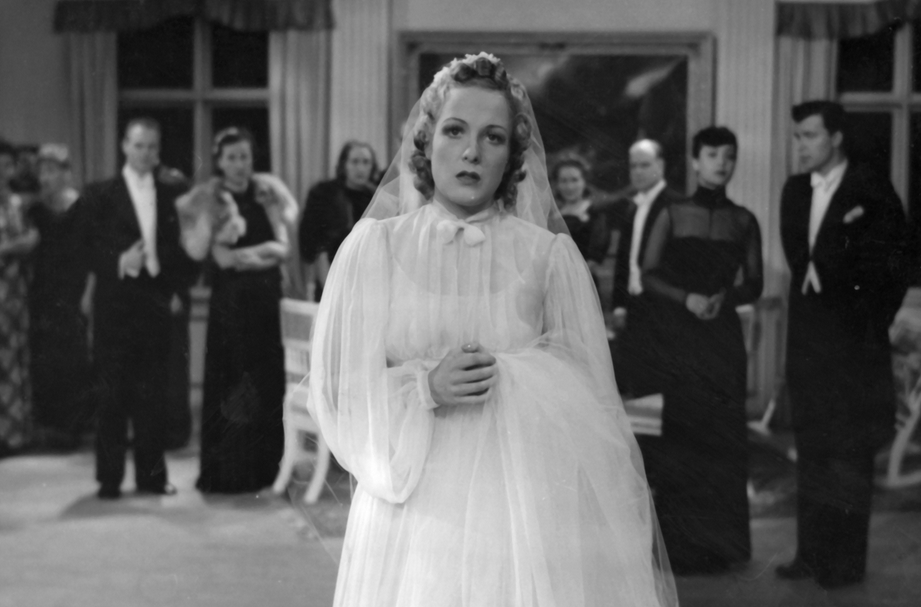
Wounded in the Winter War, Karelian soldier Eino (Eino Kaipainen) is granted leave by his senior officer to visit his dying mother. He finds her in Antila, central Finland, just in time to bid a final farewell, but his late mother’s landlady Annikki (Ansa Ikonen) says he can stay if he works at the manor. Reluctant to rely on others’ charity, but fearing a lifetime of sofa-hopping and vagrancy, Eino takes her up on her offer, and starts renovating a nearby cottage.

He encounters his old war buddy, Janne (Vilho Auvinen), and they sing old songs from their lost homeland. Eino clashes with Annikki over her earnest offer of donating some old clothes to him, and eventually comes to realise that the various odd jobs he is performing are not intended to better the lives of the locals, but to prepare some of the manor land for a profitable sale.

Mika Waltari is back after his triumph with The February Manifesto (1939), and it never ceases to amaze just what a different a real writer can make. Oi, kallis Suomenmaa was based on his own article “Sotilan paluu” (The Return of the Soldier), published in the wartime bulletin Sotainvaliidi, a call for how things should be, “”a description of Finland in 1940, with its sorrows, struggles and hopes for the future.” Renamed to allude to the stirring Heikki Klemet anthem that plays over its ending credits, it is a fascinatingly modern treatment of the refugee condition, delving deep into the experience of being removed from one’s homeland and dumped in a faraway place, uprooted from all support. There is a certain irony, particularly in the English title for this film, Finland, Our Dear Native Land, since the Karelians are both natives and not-natives, “real” Finns who nevertheless hail from a place that has suddenly been turned into part of Russia. The fascinating story of how several hundred thousand Karelians were welcomed and somehow incorporated into free Finland in the 1940s is a story rarely told or referenced today, but Waltari’s script offers a form of up-close reportage of what it must have been like. Eino and his colleagues are variously welcomed, pitied, exploited and even pushed towards criminality by their experience, while the locals in their new home have to come to terms with the needs and wants of these very different people in their midst.

In a particularly moving scene, Eino and Janne run into the old kantele player Aku the Karelian (Toppo Elonperä), whose appearance will recall to any Finn watching the mythical poet of the Kalevala, Väinämöinen. But the bearded Aku is reduced to little more than a busker on the streets of Heinola, his hat on the ground conspicuously empty of any coins from the uncaring passers-by. He lurks in the rest of the film as a Gaimanesque phantom, an echo of ancient times somehow observing and participating in the modern world.

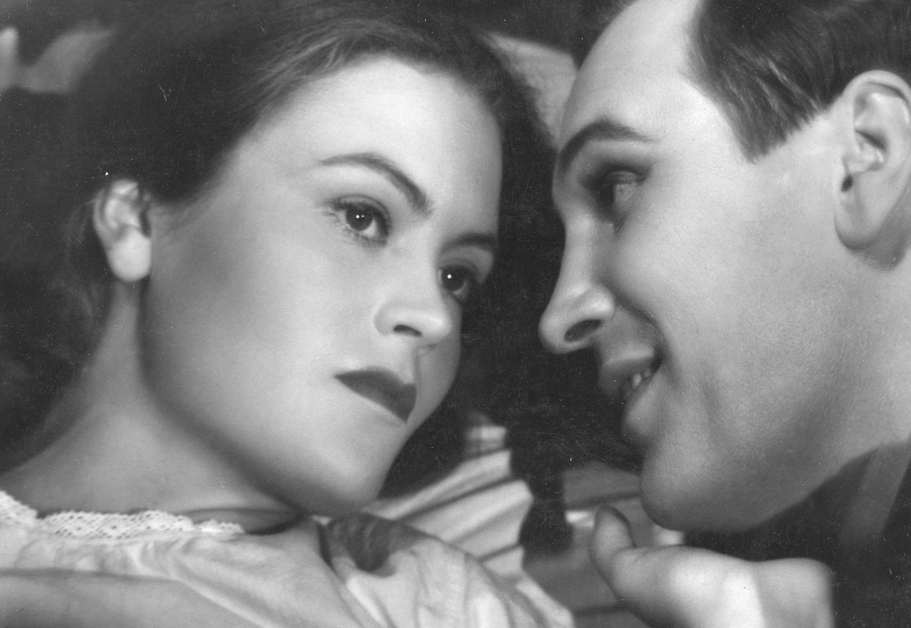
Ultimately, Eino’s hard work pays off, and he wins both his croft and the hand of fair Annikki, ending with the young lovers gazing down on the lakes and rolling fells of their beloved land. Director Wilho Ilmari ably steps up to the task, pausing the film wherever he can to point the camera literally and pointedly at the land of Finland itself.

There was a slew of films that touched on the Karelian refugees in the latter part of 1940, and Oi, kallis Suomenmaa was arguably the best when set against the likes of Anu and Mikko or Foxtail in the Armpit. Critics in the press were nowhere near as happy with it, decrying it for being too close to its material, too sentimental, and too naively patriotic. Leo Schulgin in the Helsingin Sanomat opined that it would take time and distance from the war to truly document events in dramatic form, but the story of the Karelian evacuees is one that remains scandalously undertold, even today. Writing for the Karjala newspaper in Lappeenranta, Erkki Paavolainen complained that its portrayal of Finland as a glorious pastoral paradise was one-sided, and rather avoided the burned-out homes and blackened forests of Karelia itself – a rather pointless criticism that seems to wish Waltari’s script had been about something else altogether. Notably, Waltari’s original script did begin with a montage of war-torn Karelia, but Ilmari cut it in pre-production. Only the unimpressable Paula Talaskivi in the Ilta Sanomat was actually impressed, praising the Suomen Filmiteollisuus studio for “tackling a delicate and demanding subject with excellent tact and consideration.” She also noted the strong use of Karelian music, an audio evocation of what the men have left behind, in its way just as expressive as Paavolainen’s wish-list for wreckage and ruins.

There are all sorts of lovely touches in this film, including Annikki’s fantastic expression at Eino’s mother’s graveside, as Eino puts his mother’s wedding ring on her finger, and she visibly struggles to contain her glee at what is supposed to be a sombre event. The camera pans across the other graves nearby, double-exposed on footage of marching soldiers, as if to say: this is why we fought.

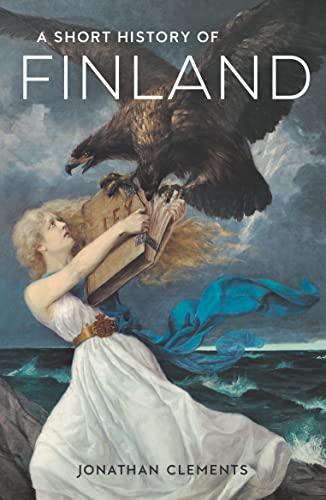
Jonathan Clements is the author of A Short History of Finland.  He is watching all the Finnish films so you don’t have to.

Gone Fishing

There are roosters crowing during the night. This is considered bad luck by the Kam, and the only remedy is to hack off the rooster’s head with a cleaver, so I guess it will be chicken tonight.

“I’m getting some ducks in,” says Mr Wu over our garlicky noodle breakfast. “You know, for the festival.” I don’t know, but I am sure I will find out. Daniel the cameraman returns from the drum tower in the morning light to say that the first ox of the mass slaughter has already been dispatched, and the place is awash with blood. Rather than film the aftermath, the director waits for them to clear it up, and decrees that this morning Pan will take me fishing, as practice for tomorrow’s fishing contest.

Never ones to do anything the sane way, the Kam prefer to catch their fish by hand, which is how I find myself knee deep in a rice paddy, sticking my arms into the muddy water in search of a helpful carp. Pan manages to snag one almost instantly and throws it over to me, so that I can do a good impersonation of a man trying to hang onto a wriggly fish.

He snatches one from the water, and observes that it is not wriggling enough. He shoves his little finger deep into its mouth, and its starts to thrash about, as you might well do if Pan shoved a digit in one of your orifices.

Jonathan Clements is the author of The Emperor’s Feast: A History of Chinese Food in Twelve Meals. These events features in Route Awakening S03E01 (2017).

Pirating the Straw Hat Pirates

To Ghent, Belgium where conceptual artist and provocateur Ilan Manouach has thrown the cat among the pigeons with a new artwork that reprints 21,450 pages of Eiichiro Oda’s One Piece manga as a single, unreadable book in a slipcase, with the word “D’oh!” prominent in Japanese on its end.

“Online participatory culture and the medium’s new networked possibilities have intensified the nature of comics beyond the scope of professional, established expertise with new and disruptive forms of entrepreneurial fan culture,” writes Manouach on his website. “Readers now actively scan, translate and distribute online their favourite manga series. ONEPIECE is a product of this expanded digital production belt.”

I think what he means to say is that his artwork has been made in reference to the glorious world of scanlation, but if that’s his intention, he is walking right into a copyright minefield. Japanese publishers are unsurprisingly unsupportive of scanlations, since they amount to copyright theft. Nor can Manouach trot out the facetious old saw about “exposure”, because the worldwide bestseller One Piece does not require his help in finding readers.

In a thorny legal area, he implies that his artwork is safe because it is unreadable, and therefore not infringing anyone’s copyright. Except nothing has stopped manga publishers selling “unreadable” books before (don’t get me started…!), and Manouach is offering copies of his supposedly unreadable book for €1900 a throw, in a very limited print run of 50.

“The product you mentioned is not official,” said Keita Murano of the rights department at Shueisha, One Piece‘s publisher. “We don’t give permission to them.” Or in other words, if Manouach expects to coin in €95,000 from selling an unlicensed edition of One Piece, unreadable or not, Shueisha is going to come down on him like a manga hammer.

As a work of art, ONEPIECE is fantastically thought-provoking – a material evocation of what it means today for a single “story” to run on into multiple volumes, which either clutter up one’s bookshelves or sit, unnoticed on e-readers. Manouach, who recently earned a PhD in comics epistemology from Aalto University in Finland, adds it to a list of similar intellectual stunts, including his Topovoros books, which are designed, printed, bound and distributed exclusively within a single district of Athens, and Tintin akei Congo, an edition of Tintin in the Congo translated with anti-colonial verve into the Congolese language. You have not heard the last from him, I guarantee it, but he has not heard the last from Shueisha.

Jonathan Clements is the author of Anime: A History.