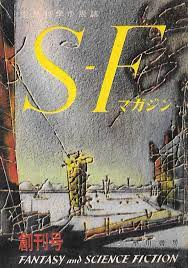
“Unfortunately for Fukushima, the authors he insulted in 1969 became the chief representatives of Japanese science fiction of the late twentieth century, and ultimately the custodians of its historical memory, turning his posthumous footprint into an occasional walk-on role in the memoirs of others.”
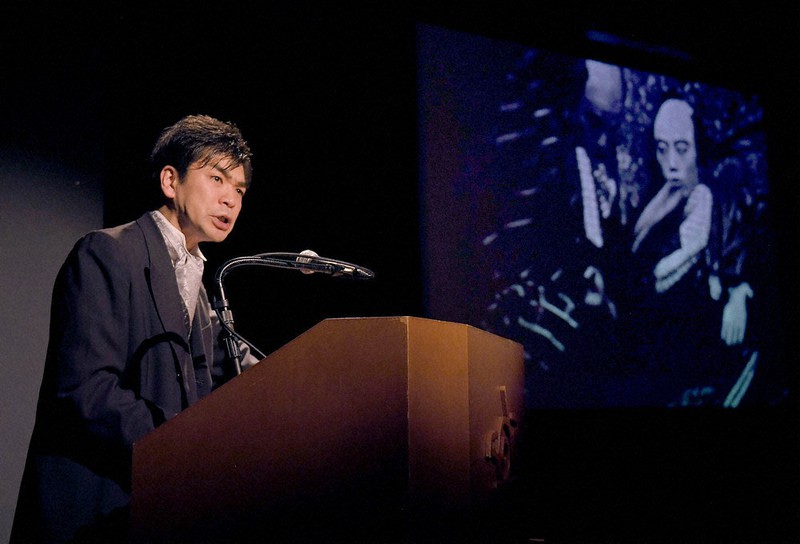
Over at the Encyclopedia of Science Fiction, I write up the founding editor of SF Magazine in Japan, a critic brought down by karma…?
Over at the recommendations site Shepherd, I provide a list of my top-five books on Chinese food — or at least, my top five books today, including the peerless Fuchsia Dunlop, the educational Hsiang Ju Lin, and the America-focussed Liu Haiming. It was particularly hard picking just one book from the American ones, and just one novel, but I did my best to be objective.
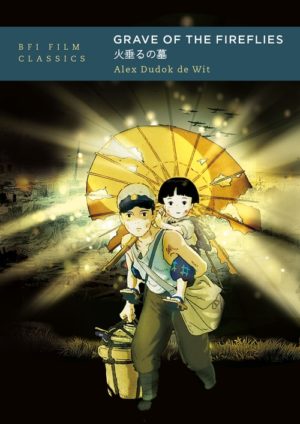
“Grave of the Fireflies was rushed out unfinished, with one scene still uncoloured in the initial print – such a shameful embarrassment that Takahata’s career was proclaimed over (again), until Miyazaki rescued him by promising to be the producer of his follow-up. If Miyazaki is jokingly known as the Guy Who Keeps Trying to Retire, I might suggest that Takahata is the Guy Who Keeps Getting Told ‘You’ll Never Work in This Town Again.'”
Over at All the Anime, I review Alex Dudok de Wit’s BFI Film Classic on Isao Takahata’s Grave of the Fireflies.
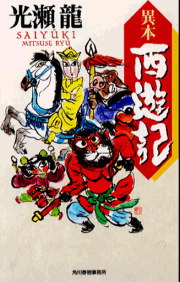
“Published shortly before his death, Ihon Saiyūki [“An Alternate Journey to the West”] was written from Mitsuse’s hospital bed, and reimagines Wu Cheng-en’s novel Xi You Ji [“Journey to the West”] — a.k.a. Monkey. Mitsuse’s version both demythologizes and remythologizes the text, stripping away the pious Buddhist tone of the original to suggest that the true story was not one of a medieval monk travelling to India in search of sacred scrolls, but of an agent sent to Samarkand in search of scientific and technical knowledge, accompanied by three condemned men whose sentences will be commuted if their mission is somehow successful.”
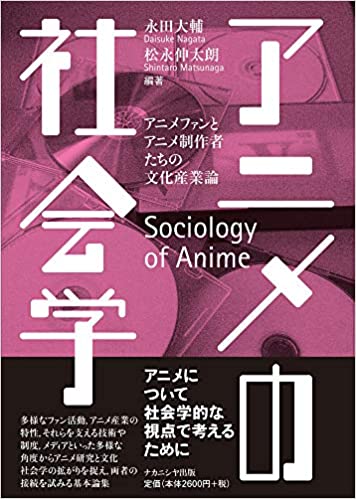
Sneaking out at the end of 2020 in Japan, Sociology of Anime: On the Cultural Production of Anime Fans and Anime Producers is a fine collection of academic chapters edited by Daisuke Nagata and Shintaro Matsunaga. It’s the best collection of new Japanese-language work on Japanese animation by Japanese authors that I have seen since Anime Studies (2011), and contains some fascinating gems of research.
Two of the essays focus on animation during the Pacific War. Mayumi Yukimura revisits the story of the Shadow Staff, the animators who made instructional films for the military, by unearthing what appears to be a script for one of the instalments of the lost Principles of Bombardment. All such films were presumed destroyed in 1945, but Yukmura has unearthed this document sandwiched in between a bunch of German and Japanese aviation manuals on a microfilm.
Similarly exciting is Takashi Kayama’s deep-dive on the infamous “AIUEO song” from Momotaro: Sacred Sailors, which, as I noted in my book on the film, was not written for the project, but was a pre-existing indoctrination aid in use in schools throughout the Japanese empire.
Although there are also a couple of chapters on historical issues such as the rise of anime on video cassette, the bulk of the rest of the book is taken up with accounts of creative production among fans and animators. There’s a tantalising polemic from Hiroaki Tamagawa on the unsustainability of the “Cool Japan” initiative and a piece by Ryotaro Mihara and Kazuo Yamashita about the business of making and selling anime overseas, particularly in China. Similar transnational issues are pursued in Kim Taeyon’s account of the history of anime in Korea.
Closer to home, both Shintaro Matsunaga and Tomoya Kimura write about the nitty-gritty of an animator’s life, drifting almost into the realm of anthropology in their account of what it is like to live on 150,000 yen a month (about £991) as a low-ranking animator. Several other authors grapple with the life-cycle and customer journey of fans, to create a marvellous anthology of contemporary writing on Japanese animation.
“‘One More Time, One More Chance’ also became the subject of an urban myth, with some members of the public coming to believe that it had been written in memory of a lover who had died in the 1995 Kobe Earthquake. This was not true, at least not for Yamazaki himself, although it is possible that at least part of the film’s 1990s success was that other listeners associated it with their own sense of bereavement.”
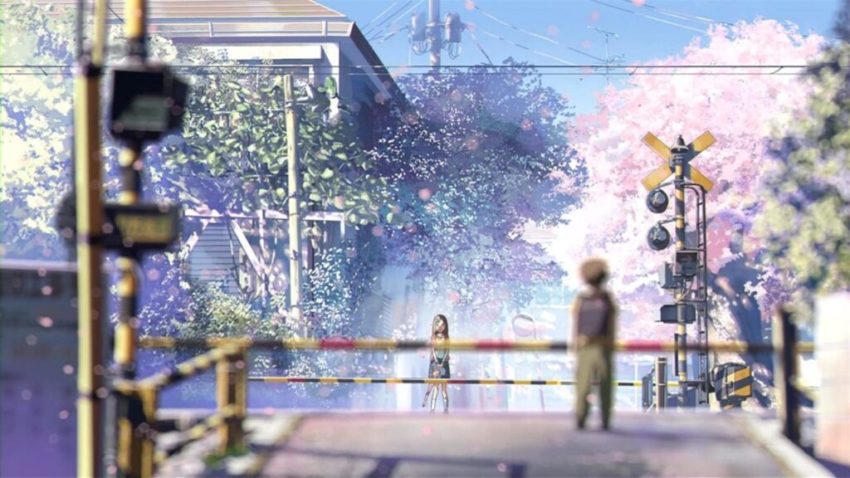
Over at All the Anime, I delve deep into the backstory and the historical resonances of the song that just drops into Makoto Shinkai’s Five Centimeters Per Second right at the end, which I regard as the musical equivalent in Japanese pop culture of Haruki Murakami’s “On Meeting My 100% Woman One Fine April Morning” (for which see here).
“Mitani’s most overtly sf piece, Galaxy Kaidō (2015; trans as Galaxy Turnpike) is more concerned with mundane matters. Set in the year 2265, in a dilapidated burger bar somewhere between Jupiter and Saturn, it allegorizes Earthbound issues of smalltown ennui and relationship dramedy on a galactic scale. Mitani himself conceived of the film as a setting derived from the beliefs of 1950s American sitcoms of what the future would look like… Mitani’s conception of the film’s inspirations was also structural: he imagined it as if it were a single episode in a long-running and episodically interchangeable situation comedy.”
Over at the Encyclopedia of Science Fiction, my entry on the dramatist and film-maker Koki Mitani, takes my contributions over the 200,000-word mark.
“Toyota was one of several employees accused of industrial espionage, thought to have ‘stolen’ the idea of Chappy the Space Squirrel from a discarded concept in one of Tezuka’s own shows…”
Show up in the 1920s at a Japanese cinema like the Denkikan (“Electric Pavilion”) in Asakusa, and you might be greeted at the door by a man dressed like Charlie Chaplin, or Rudolph Valentino, or a famous samurai. And when everybody was in their seats, he would bound on the stage to do a stand-up routine about how cinema works, and what’s going on right now in the projection booth, and things to look for in the presentation that was just about to begin…
When the film started, the impresario would add voices to the characters. He would talk through the backstory, point out weird stuff going on, or inject thoughts and speculations. His voice would change depending on who was speaking onscreen. He’d even do the women’s roles. Coupled with the sound of a handful of musicians at the side of the stage, and “silent” film was anything but silent.
The benshi is not a tradition unique to Japanese cinema. In France, in the early days of film, similar impresarios or bonimenteurs would impart the same kind of drama and colour to the first films. But European cinema soon drifted into the use of intertitles and music alone. In Japan, the benshi remained crucial to the movie-going experience for an additional two decades, there to explain foreign movies and add zing to a night at the movies. When Japan’s first dedicated movie magazine published its inaugural issue in 1909, a benshi, not a movie star, was on the cover.
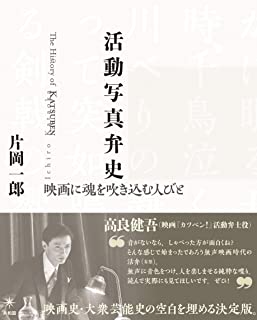
Ichiro Kataoka’s newly published Japanese-language book The History of Katsuben: The People Who Breathed Life into Film is a loving chronicle of the story of the benshi, from their early forerunners in puppet theatre, magic lantern shows and kamishibai, through the evolution of their role from mere MCs to integral parts of a night at the movies. He details their role as curators of content, explaining weird foreign habits or imparting crucial messages or health warnings.
When the USA shut down Japanese immigration in 1924, the benshi boycotted foreign screenings, effectively silencing all American movies in Japan. But as Kataoka notes in his accounts of increasingly fraught arguments over licencing and control, they were also possible agents of subversion. One was caught claiming that a banned movie about the overthrow of the French monarchy was actually a cowboy story about cattle rustlers, incongruously dressed in pompadour wigs and wielding rapiers. A benshi could become a crucial prism for refracting a story and shaping the audience’s experience – the 1926 movie Arirang was presented as a harmless melodrama in Tokyo theatres, but whenever the police were not watching in Korea, local benshi turned it into a piece of anti-Japanese agit-prop and a call for revolution.
They would go on strike again in the 1930s as their role was undercut by talkies – the rise of movie sound would, of course, spell the end for the benshi community, although some would move into related areas. Musei Tokugawa, one of the superstar benshi, would move into voice-acting in the 1930s, lending his voice to the Japanese release of the Chinese cartoon Princess Iron Fan (1941) and subsequently becoming a wartime radio star, chiefly remembered for the long-running serialisation of Eiji Yoshikawa’s novel Musashi.
I remain fascinated with the benshi, not only because they are a lost part of the experience of watching movies in the days of old, but because I have often found myself inadvertently entering their world. In 1995, shilling for KO Century Beast Warriors at a convention in Liverpool, I found myself pushed to the front of an auditorium and obliged to narrate onscreen events in the as-yet undubbed first episode – it cost me my voice for several days. For a while around that time, I was also a periodic guest at a friend’s house, where I was called upon to translate, sight-unseen, the latest episode of Evangelion Fedexed straight from Japan. In 2009, I was hired by the Barbican to narrate screenings of the 1963 Astro Boy: Hero of Space, which for reasons never really explained, was not subtitled.
Then again, it was not quite the raw benshi experience. I neither dressed up as Astro Boy nor was visible to the audience. Instead, I was at the back in a sound-proof interpreter’s booth, shutting me off from any immediate sense of which jokes were getting laughs or groans. I’m told, that when the theme tune kicked in at the end and I obliged by singing along, there was a round of applause, although I was the only person in the cinema who didn’t hear it.
Since then, I have come to see my duties at the annual Scotland Loves Anime film festival as somewhat benshi-like. I have never been called upon to breathe life into a silent movie (yet), but I do keep alive the old tradition of maesetsu – a pre-movie introduction in which the presenter steers the audience into things to look for and interesting gossip about the film. Maesetsu was particularly common in the very early days of cinema. By the heyday of the benshi, they were called upon more for nakasetsu – narrating the film itself, and maybe a little bit of business as a master of ceremonies linked different parts of a film programme.
The benshi were a dying breed by the 1930s, forgotten forerunners of what today we call the seiyu – voice actors, a story chronicled elsewhere, particularly in Hisashi Katsuta’s Biographies of Showa-era Voice Actors. But Kataoka’s 500-page history is a fitting commemoration of the men (and sometimes women) who made early films come alive in a hybrid media experience, and includes forty pages of benshi biographies. These, too, are a fascinating glimpse of the lost performers of a forgotten art – figures like Mitsugi Okura, whose steamy narrations of romantic thrillers made him a magnet for groupies, and Yoshiro Sadomi, left so bereft by the rise of the talkie that he and his family committed suicide; Rakuten Nishimura, who travelled to Hawaii to breathe life into movies for the local immigrant community, and Hideo Hanai, who wandered the whole Japanese empire doing the same, or Musei Yamada, one of the few benshi to effectively achieve escape velocity, finding a new career as a film actor in middle-age, and dying in 1972 after several film appearances as an aging samurai.
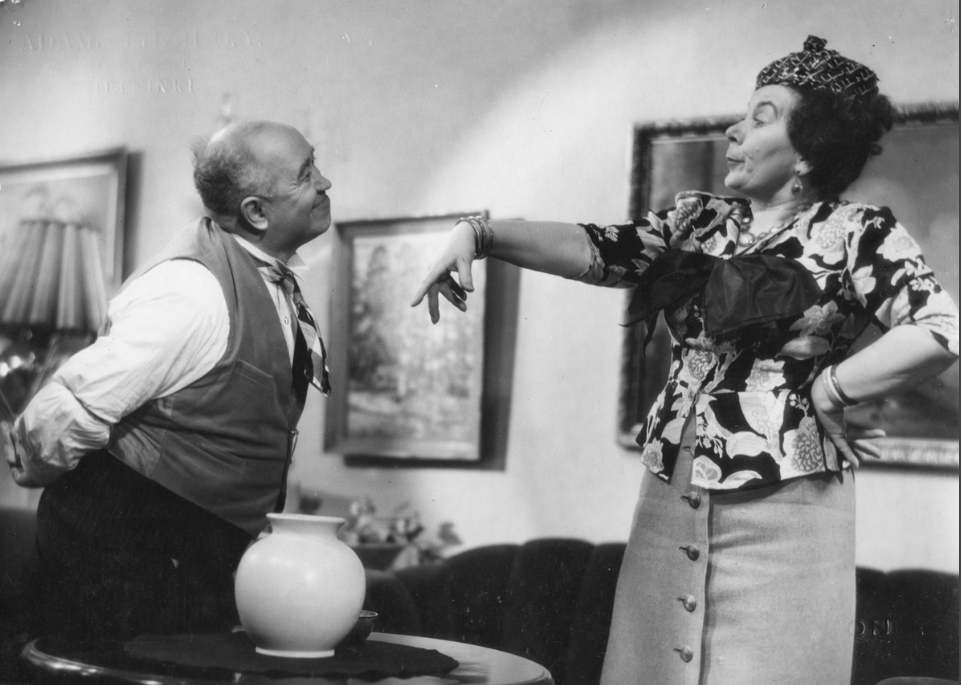
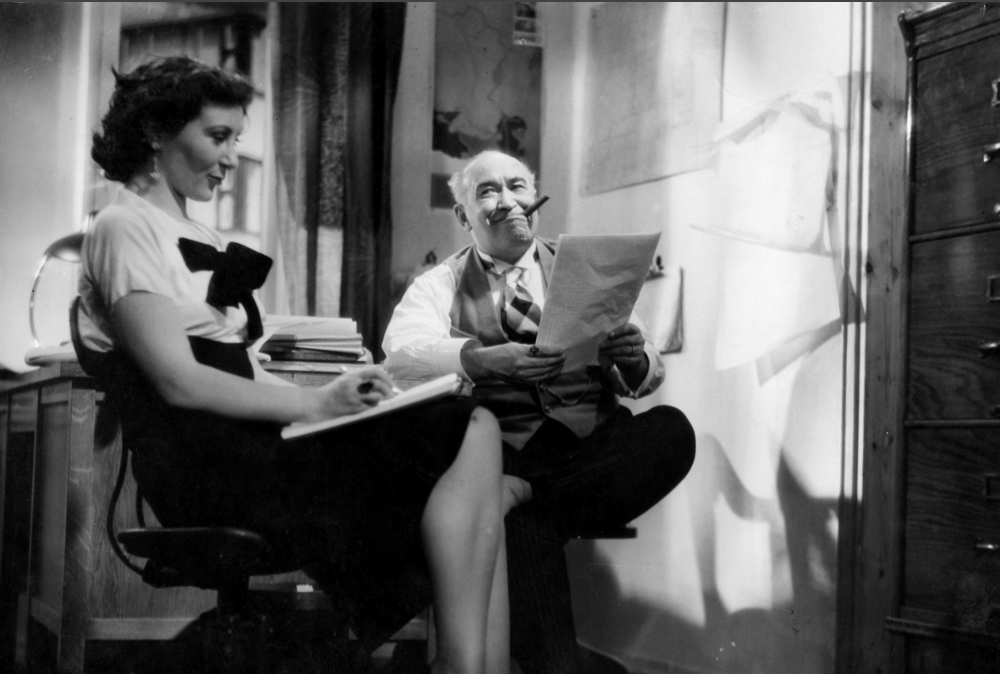
Hen-pecked husband Vihtori Rantamo (Eino Jurkka) takes rather too enthusiastically to his newfound freedom when his wife Klaara (Annie Mörk) goes out of town, and ends up making a fool of himself on national radio. Hearing him singing, Klaara confuses her husband with his duet partner and namesake Vihtori Hiltunen (Arvi Tuomi), a recently divorced man cavorting in Helsinki high-society. Assuming that she has been ditched in absentia and that some floozie has stolen her husband, a shocked Klaara returns to make amends or exact revenge, depending on how she feels. Meanwhile, their daughter Hilkka (Sointo Kouvu ) is up to no good with her foppish boyfriend Robert (Helmer Kaski), creating a series of misunderstandings of her own that will all solve themselves when he turns out to be a millionaire.
“Laugh Bomb!” (naura pommi!) promises the film poster for Kaksi Vihtoria, rather optimistically, particularly considering that director Nyrki Tapiovaara was obsessed with realism in cinema, but obliged here to confine his work within the usual, humdrum constraints of yet another “random-people-descend-on-a-mansion” plot. This, in turn, owes its origins to the fact that so many Finnish cinema productions in the 1930s and 1940s drew their source material from stage plays that predictably called for the recycling of the same sets and props guaranteed to be found at repertory theatres throughout the country.
This one, however, has a fascinating production history, creating a huge set of behind-the-scenes influences and connections. The story itself derives from the stage play Klaara and Her Vihtori (1931), written by Tatu Pekkarinen, but this itself was based on the comic strip known in Finland as Vihtori ja Klaara, and in its native United States of America as Bringing Up Father or Jiggs and Maggie. The strip, created in 1913 by George McManus, ran in Uusi Suomi from 1929 to its final issue in 1991, and presented the intriguingly modernist tale of a blue-collar labourer, suddenly coming into money, and trying with little success to cling to his old friends, haunts and habits, while his wife eagerly embraces the new temptations of the middle class.
This film-by-film blog of Finnish cinema derives from the two massive box sets of the works of the production houses Suomi-Filmi and Suomen Filmiteollisuus, which account for most of the films in the country before the 1960s. There were, however, a number of squib companies and upstarts, works from which I am doing my best to slide into this narrative as and when I can. This film is from one such also-ran, the company Elo-Seppo (“Cine-Smith”), such a small-time operation that it needed to rely on the laboratory at Suomi-Filmi to process its footage.
You know that this is going to be a different film from the very first scene, in which Vihtori is seen innocently, but creepily flirting with a leggy secretary at his office (the sultry Senja Soitso), only for Klaara to walk in and whack him on the head with a rolling pin.
Determined to add a bit of pizzazz, director Tapiovaara takes every conceivable opportunity to cram songs into the storyline. In a film that runs for 103 minutes, entire scenes drag by in perky vaudeville routines and impromptu sing-alongs. In the role of Vihtori and Klaara’s daughter Hilkka, Sointo Kouvu is first encountered playing one song on the piano, before her mother interrupts her and asks her to play another one, all as a prelude to a tiny little bit of plot-creating dialogue. The cast also perform several versions of a song called “Do the Lambeth Walk and there is No Chalk in Your Veins.” Which really is a mutant version of the “Lambeth Walk” in Finnish. Can you imagine? The Lambeth Walk was the last, great global dance craze of the pre-war era, although that is no excuse. Although if you really want to see terror up close, have a look at these tormented Finnish teenagers, grimly shuffling around to the tune of the actual Lambeth Walk at some godforsaken school prom in 2016. I’ll say this for the cast of the 1939 movie – at least they appear to be enjoying themselves.
And, surprisingly, this all works rather well – creating a variety experience in the days before channel surfing, in which a jumble of sketches and songs propel along a vague plot, and if there is something onscreen that you don’t like… just wait a minute. The reviewer for Uusi Suomi, a paper with a vested interest in promoting this movie, wrote that it was “a farce of the lightest species, the sole purpose of which is to produce harmless fun for its viewers.”
The Helsingin Sanomat agreed, noting that “a farce such as this hardly requires a logical plot, since its sole purpose is to entertain the audience, and in that respect the film fulfills its purpose well.” Decades later, particularly since it was shot in a square 4:3 format, it looks less like a film from the 1930s, and more like a sitcom from the early days of television.
Scenes in the café get their own separate billing in the opening credits as a “cabaret programme”, in which the likes of Alexander Saxelin, Mirjami Kousmanen (dressed like a refugee from Planet Mongo), “the Harmony Sisters” and a bevy of can-can dancers bring the story to a grinding halt for another ten minutes of song-and-dance. Chief offender is the apparently unstoppable ukulele-playing, tap-dancing Matti Jurva, who sings songs, juggles hats and hassles people trying to eat. And at the end of it all, the cast leap into one more rendition of the “Lambeth Walk”, dancing on the tables in the drawing room like a bunch of nutters.
Another film, Teuvo Tulio’s Vihtori ja Klaara was released only a few months later, in August 1939, and represents a thorny issue in film historiography, since it both was and was not a sequel. Finding himself without a script and a looming production schedule for the company Tarmo-Filmi, director Teuvio Tulio allowed himself to be persuaded by his already-hired leading man Eino Jurkka to rip off and change the names in an earlier script, Valentin Vaala’s If Father Says So (1935, Kun isä tahtoo), made for Bio-Kuva four years earlier. Jurkka, who had played the leads both in that film and in Kaksi Vihtoria, now played an entirely different Vihtori in this version, although inattentive viewers, of which Finnish cinema seems to have legions, might easily be fooled into thinking that the Vihtori Vuorenkaiku of this film was the same guy as the Vihtori Rantamo of the earlier one, or indeed the same guy as August Lampanpää in If Father Says So, all of whom were, of course, played by the same actor. I never said this would be easy.