Shulamith Firestone and others

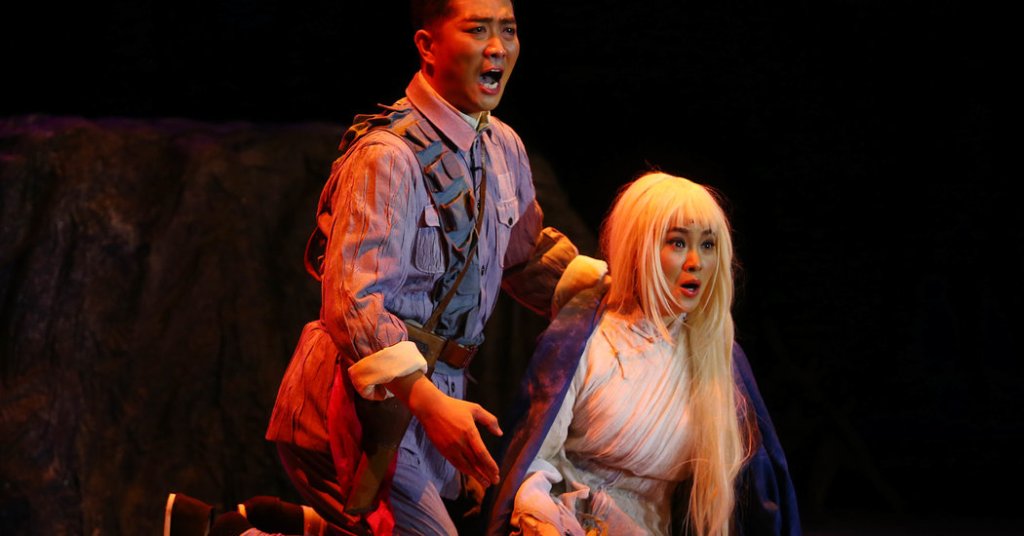
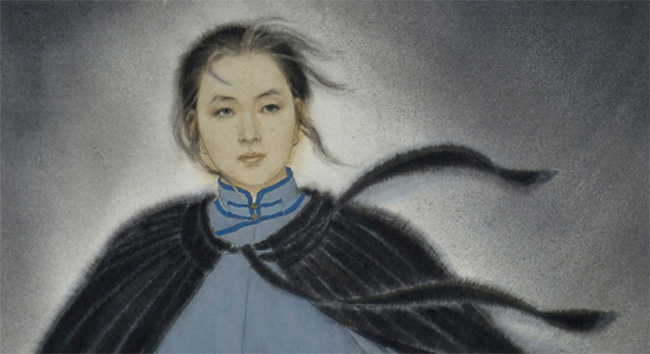
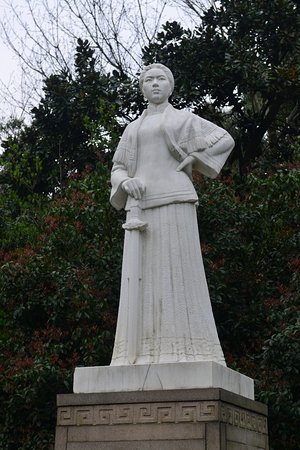
Over at the Encyclopedia of Science Fiction, I’ve contributed a few small entries on some utopian thinkers, including Liang Qichao, who imagined China in 1962 as a constitutional monarchy, Biheguan Zhuren, who imagined the Chinese occupation of the western United States, and Lu Shi’e, who thought a future paradise should be a place where men don’t have to carry umbrellas, as well as the radical feminist Shulamith Firestone (pictured), who called for women to be freed from the barbarism of biology. Also Dutch sci-fi in a cyberpunk Amsterdam from PJ Pancras. It’s all in a day’s work at the Encyclopedia of Science Fiction.

Book Sale: up to 45% off

Haus Publishing tell me that the Kindle editions of my books are currently discounted for a limited time only (discount highlighted below).

Amazon discounts:
Although the majority of e-book readers choose to use Amazon Kindle, some may prefer to read in protected PDF and EPUB format. These can be purchased via Chicago’s website at a 40% discount, using the promotional code HAUSEBOOK40.
Also, over the coming weeks, any Haus books are available at a 30% discount in the UK if you order directly from them, and they will donate 10% of whatever you pay to NHS charities. A collection of the 143 charities that support the NHS. More information here: https://www.nhscharitiestogether.co.uk/what-we-do/#charities-together and here:https://uk.virginmoneygiving.com/charity-web/charity/displayCharityCampaignPage.action?charityCampaignUrl=NHSCharitiesCOVID19
 
Postage and packaging is free of charge to UK residents. To order directly from Haus, one has to call their office 020 3637 9729 between 1pm and 4pm between Monday and Friday.

Opium

That is a map of China, but it’s also a cocktail menu at Opium, a speakeasy in London’s Chinatown that offers a set of mental drinks based on Chinese cities — the Beijing that comes with a calligraphy set and strawberry ink, the Macau that comes with pineapple chunks and a set of safety instructions, and the Urumqi, that comes with pistachio nuts and an eggshell filled with saffron joux. Barman Vincent even managed to do something to make baijiu palatable. I’m writing a history of Chinese food. This sort of counts.

Chinese Antiquities

lovejoyAs an antique-dealer’s son, I have long been used to the world where loveable rogues wheel and deal over flintlock pistols and meerschaum pipes, and occasionally solve crimes and/or bed baronesses. Everything you see in Lovejoy is true; just ask my Dad, but stand well back when you do. My Dad, meanwhile, as the father of an oriental linguist, has gained a new-found second-hand ability to make sense of Chinese in later life, and whenever I drop by his stall at Portobello Road, I am beset with exhortations to date Kangxi pottery or read the inscriptions on opium scales.

Audrey Wang takes such larks to new levels in Chinese Antiquities: An Introduction to the Art Market, published by Lund Humphries in association with Sotheby’s, in which she outlines the state, scandals and securities of the modern trade in Chinese artifacts. The assistant director of Sotheby’s course on the Art Business, Wang is predictably good on the antiques market as a form of bank, where investors seek to stash their money by crystallising it in bronzes and watercolours. Although, of course, the value of investments can go up as well as down, as the British Rail pension fund discovered when it backed Ming vases just before their value slumped.

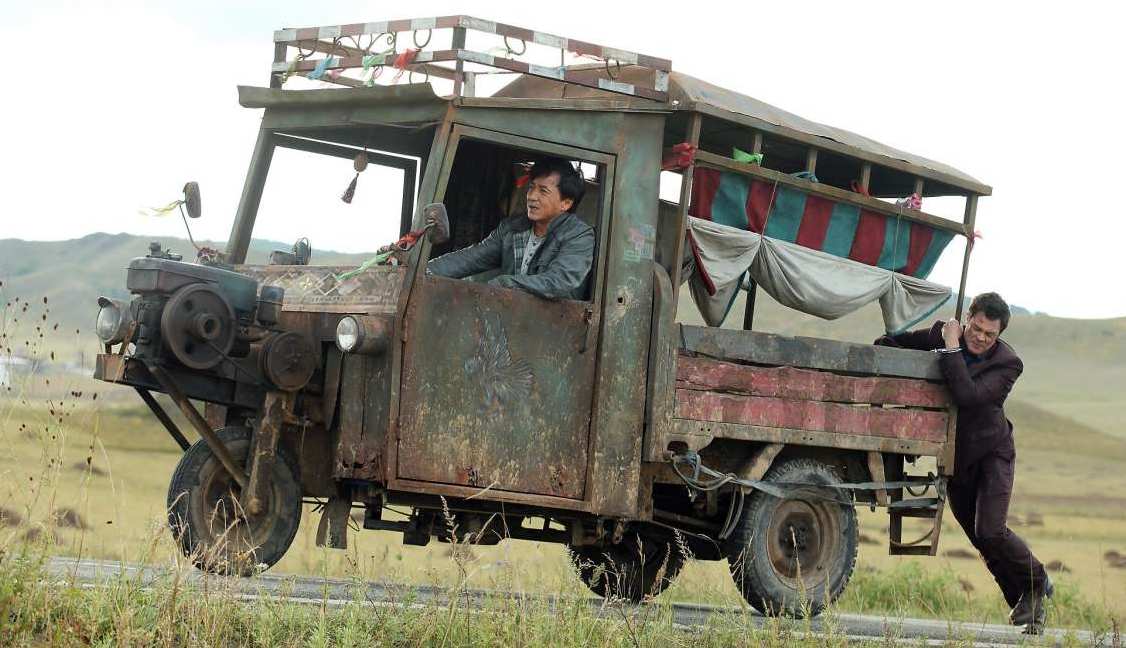
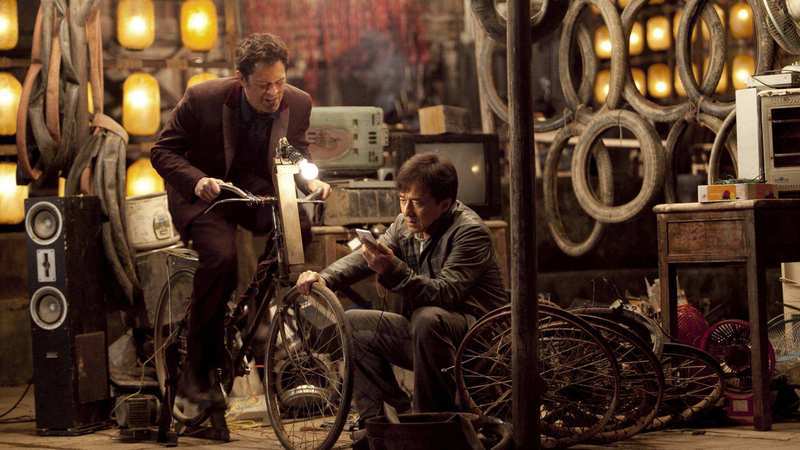
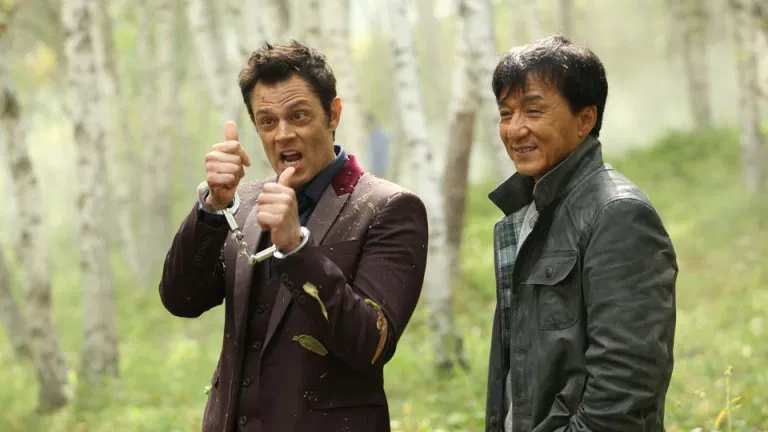
She has lots to say about the spats in the art world over the right of modern owners to sell pieces pilfered from China. There is some space, for example, devoted to the infamous 12 bronze animal heads from a baroque fountain at the Garden of Perfect Brightness (Yuanmingyuan), which are about as “Chinese” as Beyoncé, and were in fact once ordered removed by a Manchu princess who thought that they were ghastly. It is, Wang notes, ironic that pieces so untypical of Chinese culture should have come to become so symbolic of it. As noted elsewhere, not the least in a knockabout action movie starring Jackie Chan, the loss and recovery of these bronzes has become emblematic of China’s “Century of Humiliation,” and its long marathon back to international primacy.

I’ve long been aware of the army of Chinese agents who scour the world in search of antiquities to repatriate. But as an auction-house insider, Wang has a particular antipathy for the rarely mentioned gazumpers, who place winning bids on big-name artefacts, and then refuse to pay out of some sense of national revenge. Such actions consign antiquities to an unsold limbo, with auction houses pursuing their seller’s fee on a sum now redefined as £0, and sellers unable to off-load their property because its ownership is now a multi-faceted legal tangle.

Wang is not afraid to point out the elephant in the room, which is that some of the most prolific thieves and fences of Chinese antiques have always been other Chinese people. She observes, for example, that in 1913 “the imperial family offered to sell the imperial collection in its entirety to the American industrialist JP Morgan for $4 million,” but the trade was halted by his death. Had it gone through, presumably the Forbidden City would have been left entirely empty, and would have been turned into a Mao-era car park. In 1924, after the imperial family was pushed out of the Forbidden City, a suspicious number of antique dealerships opened up in Qianmen, “flooding the market with imperial artworks that had been secretly appropriated over the years.” There is, in fact, an entire 1926 volume, used as a sort of I-Spy book by Chinese collectors, called The Catalogue of Books, Calligraphy, and Paintings Lost from the Palace Collection, which continues to remind us how much has been removed. One of my favourite books of recent years, Who Collects the Yuanmingyuan?, attempts in a beautifully post-modern way to reassemble the Garden of Perfect Brightness by tracking down its extant fragments, built into other buildings, adorning swimming pools in Los Angeles, or gracing a French hotel lobby. Wang’s book deals with such issues deftly and dispassionately, while opening a window on the hard-nosed business world where ancient bronzes are used as storage devices for modern capital.

Jonathan Clements is the author of A Brief History of China.

Mulan and the Unicorn

There are cunning forces at work before you even open Chen Sanping’s book on Chinese history. The squiggles on the cover give a romantic title, Mulan and the Unicorn, which is way more evocative than the bluntly descriptive English: Multicultural China in the Early Middle Ages. But that’s just the first of Chen’s points – that our sense of China is compromised by linguistic and historical assumptions, deeply embedded in the very words we use.

Chen’s interest is in the centuries preceding the founding of the glorious Tang dynasty, when China was split into northern and southern regions. Amid Dark-Age climatic upheavals that saw similar catastrophes in Europe, the Han people, or at least, those that had the means, fled south of the Yangtze, abandoning the north to nomad invaders who swiftly rebranded themselves as the new aristocracy. History books are alive with the odd customs and internal conflicts of the likes of the Xianbei – towering slavers whose womenfolk were expected to forge statues from gold to prove their suitability as queens, and to commit ritual suicide on the accession of their princely sons. Strangers in a strange land, they embraced Buddhism (a foreign import like them), and co-opted legions of local collaborators to make them seem more… Chinese.

This foreshadows the Mongols, Khitans and Manchus of later periods, all of whom similarly swept in and set themselves up as the new overlords. Chen suspects that it might also echo earlier dynasties, too, particularly the ancient Zhou, although the historical record may have deliberately garbled much of their foreign-ness.  He quotes here a spine-tingling observation from Allen Chun, that the Bronze-Age Zhou people, founders of much of historical Chinese tradition, once cryptically observed that “the gods do not accept sacrifices from persons who are not of their own race,” as if they, the priestly aristocracy, were from Somewhere Else. Suggestions of “barbaric” traits enduring among the Xianbei, and their Sui and Tang cousins who reunited China in the 6th century AD, were noted by the eminent scholar (and occasional prankster) Paul Pelliot over a hundred years ago, but Chen really runs with this idea in all sorts of exciting new directions.

With a healthy suspicion of the official record, Chen argues that the dynastic chronicles are riddled with outrageous incidents of spin and fake news, as Chinese authors try to excuse nomadic behaviour in a narrative determined to pretend that everybody is Chinese. He reframes the seizure of power by the Tang Emperor Taizong, a bloody coup fought against his own brothers at Chang-an’s Gate of the Dark Warrior (Xuanwu) in 626, as an entirely everyday incident of blood tanistry – among “Turco-Xianbei” peoples, brothers were expected to fight each other for the succession. In passing, Chen also observes that the gate in question was the barracks for the imperial guard – anyone who controlled the Gate of the Dark Warrior would presumably also have the support of the praetorians of medieval China.

Chen is wonderfully adept at reading between the lines of Chinese history, as chroniclers try to make a “Turkish-leaning” prince sound like a madman, rather than a chip off the old block, and kvetch about women like Empress Wu in positions of power, even though it was the queens who called many of the shots on the steppes. Chen recasts Empress Wu in the context of her Sui and Xianbei predecessors, as a woman for whom ordering the death of her own children would not be all that extraordinary – he’s ready to believe that she did indeed murder her own new-born daughter, which rather undoes all my attempts to make her sound more humane. For Chen, the influence of Turco-Xianbei heritage on the Tang imperial family would stretch all the way to Wu’s grandchild, the Emperor Xuanzong, who had three of his own sons killed on a single day in 737.

In other chapters, Chen gets deeply into historical linguistics, snaffling around for the origins of some remarkably common words, such as ge (elder brother), which he regards as a Turkish import, and nucai (“slave talent”) a later Chinese insult that he believes to have originated in a term for collaborators with invader regimes. Buried in the Chinese language, Chen finds clues to the existence of forgotten Iranian refugees and assimilated Huns, and legions of settlers from Central Asia who swiftly went native if they knew what was good for them.

In one of my favourite passages, he analyses a nonsensical comment in the chronicles, when a Chinese Emperor seemingly started babbling incoherently. But Chen does not see this as a copying error or a corrupted text, but a moment when an angry despot briefly allowed his mask to slip, shouting at his underlings in the language that still functioned as a secret cant among the elite –Chen has a stab at translating what the Emperor was actually saying.

And of course, there is a whole chapter on The Ballad of Mulan, a cross-dressing warrior-woman who loyally served a ruler addressed as “the Khan”, and whose world was so far removed from traditional China, that she is depicted riding on a camel. So, no, not like the cartoon, nor indeed like the forthcoming film. Chen sees Mulan, with its code-switching between Chinese and nomad traditions, its confusions of gender roles and geography as a core text in evoking the clash of alien cultures that defined China’s long medieval period, so carefully air-brushed and redacted by centuries of later authors.

Jonathan Clements is the author of A Brief History of China. Multicultural China in the Early Middle Ages is published by the University of Pennsylvania Press.

Confucius: A Biography (2nd edition)

‘Rich with history and studded with the sayings for which the sage is known. . . Clements uses his considerable story- telling skill to make “the troubled life of a teacher who lived two-and-a-half thousand years ago” come alive.’
The Asian Reporter

‘Clements reveals the man behind the legend, as well as providing a useful introduction to Confucius’ thoughts and teachings.’
The Good Book Guide

The teachings of Confucius have survived for twenty- five centuries and shaped over a quarter of the world’s population – his image appears not only in temples across East Asia, but also above the entrance to the US Supreme Court.

Confucius: A Biography reveals unexpected sides of the ancient philosopher – his youth, his interaction with his pupils, his feuds with his rivals and even his biting wit.

This revised edition includes three new chapters on the influence of Confucius in Chinese history, the modernist and post-modernist backlashes against Confucian thought, and its relevance in our world today.

Reviews: Brief History of China

Roxy Simons is first to publish a review of my Brief History of China, out now from Tuttle.

A Brief History of China deftly explores the global super-power’s past, examining its shifting cultures and competing ideals to create an enthralling read from start to finish. Instead of only telling the stories of the champions, curated to their own advantage to ‘fix’ any unfavourable events, Clements takes China’s history back to its diverse human core, immersing booklovers in a vast cast of characters and a gripping narrative, effortlessly easy to enjoy.”

Puppets, Gods and Brands

“…a brilliant juggling act on a tightrope between anthropology and sociology, which manages to keep ideas in the air from soft power to difference feminism, nation branding and emotional labour. This could have all too easily gone very wrong, but Puppets, Gods and Brands will be welcomed by an entire generation of students trying to talk their supervisors into taking animation seriously.”

Over at All the Anime, I review Teri Silvio’s Puppets, Gods and Brands, out now from the University of Hawaii Press.

Master Cheng (2019)

Dour, widowed Shanghai chef Mr Cheng (Chu Pak Hong) comes to the one-horse Lapland town of Pohjanjoki in search of a mysterious person called “Fong Tran”. Marooned 40 kilometres from the nearest hotel, he lodges with Sirkka (Anna-Maija Tuokko), a divorcee trying to make a go of it at her late aunt’s roadside diner. But when a coach party of Chinese tourists is horrified at the mere thought of a Finnish buffet lunch, Cheng comes to the rescue, whipping up Chinese food in Sirkka’s kitchen.

Cheng’s ability to cook edible food brings more visitors, including a gaggle of feisty pensioners from the old people’s home hoping for a Daoist pick-me-up, and a crocodile of children from the local school, who inevitably have a catalogue of allergies and intolerances longer than the menu. He befriends local old fogies Romppainen (Kari Väänänen) and Vilppula (Vesa-Matti Loiri), who drag him fishing and subject him to a sauna, and his son Niu Niu (Lucas Hsuan) slowly comes out of his shell.

Stick with this one-film-a-month blog of every Finnish movie ever released, and Mestari Cheng will swing around again some time in the early 2040s, when I am probably long gone and the automated updates merely look like I am still there. But since I saw it at the cinema today, I might as well write it up out of order, as a fascinating glimpse of where the Finnish film industry is fated to end up eight decades after the most recent entry in my chronological watchathon, which is currently at the cusp of 1939. Mika Kaurismäki’s little Lapland romance is a carefully constructed advertorial that pretends to sell Chinese food to the Finns, but is really intent on selling Finland to the Chinese.

“IT’S SAUSAGE DAY!” proclaims the sign outside Sirkka’s café, leaving me the lone giggler in a midday cinema full of baffled Finns. Because every day is sausage day in Finland, particularly in the sort of joyless canteen that Sirkka runs. Some suspension of disbelief is required, not that Cheng can acquire ingredients from a Lapland super market, but that the effort will not bankrupt him. One of the spin-offs of having my every purchase logged by the local supermarket chain is that I get sent Statto-the-Statman reports about my purchases, and I can tell you that a household in Finland that tries to cook Chinese food every night ends up spending double the local average on its food budget.

I have sometimes succeeded in getting Finns to eat Chinese food. My finest moment was on Hainan island a few years ago, when I was the Pied Piper that led a dozen disbelieving conference-goers to a restaurant where they had what several proclaimed to be the best meal of their lives, and drank the entire local supply of Tsingtao. But all too often, it has been an uphill struggle that comes with a checklist of intolerances real and imagined, kvetching about spice and mewling about dessert.

“There’s a new Chinese restaurant in town,” my girlfriend has been heard to say. “Let’s go there soon before the Finns ruin it.”

Kaurismäki’s film also requires the audience to believe that Finns presented with fish in mandarin sauce or sweet and sour vegetables will not recoil in horror. I once cooked a green curry for a bunch of Finns, and was forced to dilute it so much that it ended up more like a watery coconut soup. For reasons not worth going into here (but discussed at length elsewhere), Finns often scrimp on the correct ingredients, struggle to get the right heat on an electric hob, and fail to patronise higher-end restaurants, leaving much of the hinterland mired in buffets of grim 1950s gruel. But Kaurismäki still has a faith that was bludgeoned out of me long ago: that Finns fed good food will clamour for more, and not simply throw it down their gullets and ask if there’s ice cream for afters.

Offered perch soup, Romppainen is initially sceptical.

“Is it Finnish perch?” he asks, suspiciously (again, I was the lone laugher in the cinema).

When he is assured that, yes, the perch is not an immigrant, he quaffs it down with gusto, becoming one of Master Cheng’s first and most enthusiastic converts, along with the local womenfolk, who find that Cheng’s soup is a good remedy for period pains. Thanks, Finland.

Romppainen later reveals that he is dying of cancer, but that Master Cheng’s dishes have changed his life. He is still going to die, but Master Cheng’s food has given him hope. In a discovery not unfamiliar from many Chinese foodie films, what he means is that the food has brought him joy.  Some might find this claim rather patronising, and admittedly, it wouldn’t play so well if, say, a bunch of German tourists descended on a French town, proclaimed the local food crap, and demanded that a German chef prepare their favourites. But there is an unsurpassed bliss in Chinese food, that I fell in love with when I was a child and that I have never shaken off, and when I am as old as Romppainen, I expect I shall feel the same. And while cultural relativism has its place, some cuisines are just better than others.

The film bears some comparison with Naoko Ogigami’s Kamome Shokudo (2006, Seagull Diner) a similar hands-across-the-water film about a bunch of Japanese nutters who decide to open a café in Helsinki. But, conspicuously this is not an Asian director trying to get to grips with a Finnish subject, but a Finnish director trying to flog Finland abroad, so we are consequently staring up the microscope in the other direction. Kaurismäki and Hannu Oravisto’s script has a handful of missteps that betray their origins – Cheng bows to everyone like a stereotypical Japanese tourist, and is momentarily taken aback by the prospect of eating reindeer, as if, in the words of famed diplomat Prince Philip the Duke of Edinburgh, the Chinese wouldn’t eat anything with four legs that wasn’t a chair. More tellingly, a school teacher blunders into Sirkka’s café proclaiming that her pupils have no experience of Asian food, which is plainly not true, because several of them are Asian. Then again, as the unnamed teacher, Helka Periaho only has a couple of scenes to establish whether or not her character is a blinkered mentalist, and the jury’s still out on that.

Cheng teaches the Finns to live again, but they do the same for him. Distracted and driven since his wife’s death in Shanghai, he finds in Lapland a place of exultant quiet and calm, vistas of endless fells, and reindeer loping through the mists of ancient forests.

“There’s so much space here,” he comments to Niu Niu. And I would add that you can see it, too. Finland doesn’t have smog, and in a scene liable to cause a lot of upset tourist stomachs over the next few years, Sirkka even demonstrates that you can just scoop up and drink a handful of water from the lake. Any lake…? I’m sure we are about to find out.

The East-meets-West theme is signified even in the opening shots, as an erhu and an accordion sound complimentary notes. We might forgive it a plot so thin that it only stretches out for movie length because nobody bothers to have a proper conversation about Cheng’s backstory. Despite this, the film contains such multitudes that it could easily form the basis of a TV series. Apart from the obvious scope for Cheng’s past (and Sirkka’s future, as hinted at in a closing coda), a longer, episodic running time would have allowed the main characters more time to develop their chemistry. As it is, the Cheng-Sirkka romance kicks off in a perfunctory fashion, as if they are last two standing in an onscreen game of musical chairs, although as their relationship develops, the two actors do get have some moments of believable affection.

As Sirkka, Anna-Maija Tuokko is a tad under-written, or perhaps just realistically Finnish, shouting a lot about the stupidity of men and hectoring Cheng about the need to speak up and be blunt about it. In a naturalistic touch, it’s not necessarily the love of a good woman that perks Cheng up, but the acceptance of a wider community. The septuagenarian Vesa-Matti Loiri, once a rotund, operatic singer, now a lithe little twig like a deflated Falstaff, has a melancholy moment that will mean more to Finns than foreigners, mournfully singing his own “Lapland Summer” as if delivering his own elegy – it is a song about the transience of happiness and the brevity of life, “Mut pitkä vain on talven valta” (But oh so long is the power of winter). Master Cheng counters with a song of his own, “In a Distant Place” (在那遙遠的地方) one of the best-known songs in China, written by Wang Luobin in 1939 to a Kazakh folk melody, and loaded with a similar elegiac quality.  But if Mestari Cheng is a last hurrah for Loiri and Kaurismäki-stable regular Väänänen, it’s also a noteworthy appearance by Lucas Hsuan as the sulky Niu Niu, who manages the rare feat for a child actor of not acting like a child actor.

The closing credits feature a smorgasbord of beautiful shots of high-end Chinese food, which even Master Cheng would have trouble whipping up with three packets of instant noodles and some condemned chicken from R-Kioski. It is, indeed, technically possibly to cook Chinese food using Finnish ingredients, although one wonders what digital tech wizardry Kaurismäki had to employ to stop the aubergines browning within seconds of being sliced.

Jonathan Clements is the author of The Emperor’s Feast: A History of China in Twelve Meals. He has likened getting Finns to eat real Chinese food to teaching Irish ducks how to read Jivvanese.