Smoke and Mirrors

pallavi-7304-166191724_stdWhen Pallavi Aiyar first arrives in Beijing, she is a baffled plus-one, trailing reluctantly behind her future husband. After serving time as an English teacher to an eager but snooty class of yuppie students, she falls into journalism, writing for The Hindu. Just as her tales of Beijing street life exhaust the possibilities of quirky neighbours and intercultural misunderstandings, she is suddenly propelled into a new narrative, speeding off with business delegations, reporting on politicians and pushing herself further afield in search of new stories in Smoke and Mirrors: An Experience of China.

Writing primarily for an Indian readership, Aiyar’s touchstones for Chinese history are a refreshing world away from most other China hands’. She visits the Shaolin Temple and the White Horse Temple, centres of early Buddhism back in the Silk Road days when the Chinese still regarded it as a foreign, Indian import. She lampoons the culture clash of Chinese banquets, where hosts honouring their guests with sea slugs and chicken feet are baffled by the dietary requirements of teetotal vegetarians. She approaches “unique” issues with even-handed objectivity, pointing out that there are provinces in India with far worse boy-girl birth ratios, even without a one-child policy. And she offers the Indian version of everybody’s Beijing traffic horror stories, pointing out that, to visitors from Delhi, Chinese roads are impressively calm and peaceful.

img-1-small480Books about Beijing are ten-a-penny and often sadly samey, but Aiyar is unafraid to go that extra mile. Many, myself included, have reported on the presence of a Bad English Hotline before the Olympics, designed to hunt down the worst mistakes on signage. But Aiyar is the writer who actually calls up to report an error, only to discover that the woman on the other end of the phone doesn’t speak English.

Every decade produces at least one kick-arse account that has an angle valuable enough to work as historical reportage, and Smoke and Mirrors deserves to be shelved alongside Michael Meyer’s Last Days of Old Beijing, for offering important anecdotal details of the first half of the first decade of the 21st century, from SARS to the preparations for the Olympics.

This is an immensely valuable perspective, dragging the reader off from traditional journalistic angles, which, as Aiyar herself points out, are usually white, western ones. She has since turned the tables in similar fashion on Europe itself, which she approaches with occidentalist glee in New Old World, and brought insightful comparisons in her account of the smogs of Beijing and Delhi in Choked. Since she is now based in Tokyo, Japan is sure to follow.

Jonathan Clements is the author of The Armchair Traveller’s History of Beijing. Smoke & Mirrors: An Experience of China is published by Fourth Estate. See Clements and Aiyar in conversation at Mumbai’s 2016 Times Litfest here.

Mumbai or Bust

14713693_1158904380866678_5724866101080070797_n
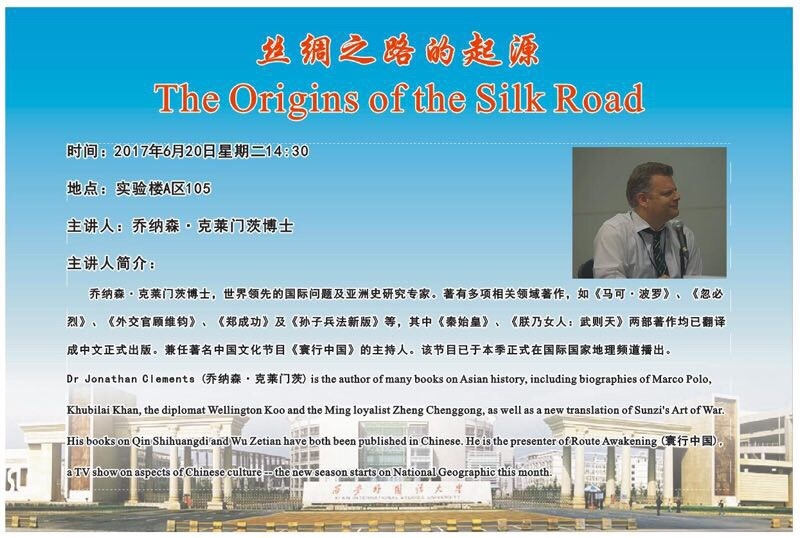
I’m off to India in December as a guest of the Times LitFest, where this year’s theme is “That Man Woman Thing, exploring the relationship, or lack of it, across time, place, space, profession, family, and oh yes, literature.” I expect I shall be mainly pushing the Indian edition of my Silk Road book, which is yours for a mere 196 rupees. Although considering the topic, I expect Empress Wu will come up a bit, too. Apparently,  my schedule so far is:
  • Saturday 3rd Dec, 11:45am to 12:45pm 
  • The East is Read 
  • Two Asia analysts unravel the inscrutable. Jonathan Clements with Pallavi Aiyar.
  • Sunday 4th Dec, 1:30pm to 2:30pm 
  • Wanderlit – Three travel writers explore the craft 
  • Alexander Frater, Jonathan Clements, and William Dalrymple in conversation.

A Brief History of the Martial Arts

7587595896_db1a919508_bOver at the Anime Limited blog, Paul Jacques reviews my Brief History of the Martial Arts: “A Brief History of the Martial Arts walks a path between academic facts and a cracking good yarn; both enlightening and entertaining whilst trying to separate the fact from the fiction. Openly fictional accounts also contribute to the narrative, such as the legends of The Water Margin and Journey to the West… those of a scholarly persuasion will find a gold mine in its exhaustive links to further reading. But just about anyone who is interested in the martial arts, real or fictional, will find page after page of fascinating histories and stories.”

Chinese Stop-Motion Animation

$_1Cao Di’s Mandarin-language book Chinese Stop-Motion Animation chronicles the rise of animated films using the media of pieces of paper, marionettes and claymation. She does so in an impressively all-encompassing 336 pages, according a weighty, persuasive presence on the bookshelf to a medium that is often otherwise confined to the footnotes.

Cao does not shy away from the fact that some of the leading lights of early Chinese animation were Japanese, such as the early pioneer Tadahito Mochinaga, a Japanese animator fleeing the last days of WW2, who adopted the Chinese name Fang Ming, worked in China for the early 1950s, and returned periodically over the next two or three decades clasping new contracts and technology. However, considering his Manchurian childhood, which made him a fluent speaker of Mandarin by adulthood, Mochinaga is arguably a liminal figure that all but went native. Cao does, however, whisk away Mochinaga’s crown, suggesting that he was pipped to the post to make the first Chinese stop-motion film by the obscure On the Front Line, produced in Chongqing in 1939.

Stop-motion films largely remain short works, with concentrated bursts of artistry like the iconic Princess Peacock (1963) and the charming propaganda film Red Army Bridge (1964). China’s political upheavals made remarkably little impact on the output of stop-motion films, with only a three-year gap in releases at the height of the Cultural Revolution. In recent times, stop-motion leaps out of the arthouse into TV commercials and pop videos, where its short running times and quirky look can grab it more hits on the internet.

Cao’s book is packed with usable data – not only its narrative account of the industry, but a thorough chronology, a filmography of the works mentioned, and even an account of spin-off media – even Mao-era China had books-of-the-films. It is a valuable account of this over-looked subset of the animation medium, and a fitting companion to the same serial’s The Stories of Animation Outsourcing in China (1989-2009).

Jonathan Clements is the author of Anime: A History.

Animation in China

41haOrPwuXL._SX331_BO1204203200_Over on the All the Anime blog, I review Sean Macdonald’s excellent Animation in China: history, aesthetics, media and take the time out for a tangent about the politics of book pricing.

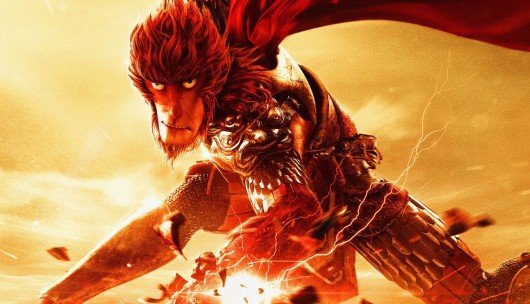
“Macdonald acknowledges the vital importance of Japanese animation for understanding the Chinese market, both in terms of early innovators such as Tadahito Mochinaga, who enjoyed a Chinese career under the name Fang Ming, and later helpers such as Tetsuya Endo, who did the real work on “Tsui Hark’s” animated Chinese Ghost Story. He discusses the famous Uproar in Heaven, the Monkey King from which remains the mascot of SAFS, not only in terms of its Chinese context, but of its parallels with Tezuka’s Alakazam the Great, which was released a year earlier. He even compares the working practices of the Wan brothers (with welcome translated quotes from one of their memoirs) with those of Osamu Tezuka in the age of “limited animation,” playfully comparing the car-crash scene in the first episode of Astro Boy to a famous sequence in Eisenstein’s Battleship Potemkin.”

Animators Below the Line

ruyan wangshi coverThe presence of Chinese animators and colourists in the film industry has often been ignored or denied. In Ruyan Wangshi, which bears the English-language title The Stories of Animation Outsourcing in China (1989-2009), He Bing and He Feng document life below the line for the artisans and labourers who do the dogwork on overseas cartoons, at first in Shanghai, and then as the industry expands, in spin-off companies and daughter-branches in Suzhou and Guangzhou, Nanjing and Chengdu.

Toei Animation is first on the scene in the year of Deng Xiaoping’s reforms, ordering seven thousand cels to be coloured in Shanghai in 1979. By 1985, it’s a company in Shenzhen, in the People’s Republic, that has animated the iconic logo used by the Hong Kong television channel TVB. The authors estimate that in the 1990s, out of a worldwide labour force of 50,000 animators, some 3000 dwelt in China – a proportion that has only increased in the 21st century as Chinese colleges pump out thousands of qualified personnel. By 1994, Disney reps are spotted in Suzhou looking for local talent, and before long, Chinese animators are toiling unnoticed on spin-offs from Pocahontas, Mulan and Hercules.

Many of the stories in the book echo similar tales of the Japanese industry. Art is never completed, only abandoned, and the Chinese struggle to find an equilibrium between the minimum amount of effort, which is a matter of economic sense, and the maximum, which is a matter of personal pride and artistic integrity. It is also theoretically infinite; there is always something that can be improved, a no-win situation that has driven many animators to exhaustion. There are mad dashes to get the artwork to the airport, and animation is described, in terms that echo those of Tadahito Mochinaga from the 1950s, as xinku de gongzuo – a bitterly hard job. The authors describe the Golden Age of Chinese outsourcing as the period from 1995-2005, bracketed by the boom in straight-to-video animation at one end, and, one supposes, the collapse of the anime bubble at the other. Less obvious at first glance is the impact of digitisation and the internet, which would allow Chinese art-college graduates, earning Chinese wages of £200 a month, and paying a Chinese cost of living, to essentially occupy a virtual office next door to their Japanese counterparts, who had to live in Tokyo, where £200 a month barely pays for parking.

Anime looms large in these memoirs, with references to work undertaken on Sakura Wars, Banner of the Stars, Lodoss War, Oh My Goddess, Madlax, Cowboy Bebop, Death Note and GTO, among others. Throughout the period, the Chinese animators dabble in making their own work, fumbling to make their own animated series based on famous proverbs, and holding out for a co-production deal.

Nothing makes the disruption between analogue and digital clearer than the book’s illustrations. A generous opening colour section offers a scrap book of images from the animators’ lives, but often contains frightfully dull pictures of people at forgotten banquets and grim group photocalls. Such images date from a time when cameras could only take 24 pictures, not the snap-happy 21st century where everybody documents their lunch. But the very mundanity of these images speaks volumes about conditions and attitudes in the industry, such as a shot of the anonymous, run-down block where a “studio” nestled above a print works, and a photograph of a visiting Japanese animator that simply credits him as “a visiting Japanese animator.” The clients, too, were often anonymous to their hirelings.

The Stories of Animation Outsourcing in China (1989-2009) is published as part of a series of books on animation by the Communication University of China Press. Several of its sister volumes cover well-worn topics like British or Japanese animation, but the titles relevant to China are far more ground-breaking, including a 336-page history of Chinese stop-motion animation that I hope to get around to reviewing sometime here, too. In the meantime, in attempting to delineate a history and a narrative of the uncelebrated low-echelon workers of the cartoon business, He and He have truly opened a new area in animation studies.

Jonathan Clements is the author of Anime: A History.

Frost on Top of Snow

ruffle 1In A Decent Bottle of Wine in China, author Chris Ruffle recounts his foolhardy efforts to set up a vineyard and build a replica Scottish castle in Shandong. This is not as crazy as it might sound, since Shandong was arguably the home of the modern Chinese booze industry – a former German colony that saw the first lines of grapes planted to make the usual acrid Riesling, as well as the site of the Tsingtao brewery. Ruffle decides to get in on the game, naming his company Treaty Port Wines with a certain degree of tactless cheek. His is by no means the first book to grapple with doing business in China – Tim Clissold has twice sobbed into his typewriter on such matters, and then there’s Paul Midler’s horrifying Poorly Made in China, for starters – but the wine trade brings with it unique issues of classification, husbandry and supply, not the least the government’s insistence that it is not “farming”, but “industry”.

Ruffle is no bumbling idiot or starry-eyed dreamer. He has already successfully restored a real Scottish castle, inadvertently becoming a baron along the way, so has a head start on sourcing architects and materials. He is a master strategist, thinking ahead not only about access roads and transport links, but also about the nature of his customers – the castle is there as a branding exercise, and because he knows the biggest chance of the Chinese spending big money is if they are in a wedding party, and he’s as interested in providing the view, the food and the roof over their heads.

Ruffle is a true money man – an investment capitalist with an eye for the bottom line and a smart drive to understand where his customers’ money is going. This being China, the usual troubles of any new business are compounded by additional hassles, which create, as the Chinese say, “frost on top of snow.” Ruffle’s agonies include inclement weather, corrupt officials and workshy staff. Although he sometimes leaves his tormenters anonymous, there are occasions where he bluntly names the names behind incompetences and betrayals. This, of course, only makes the book more fun, particularly when he reveals the blatant grade-inflation of the Shandong authorities, who talk up his investment almost tenfold in their official reports. As Ruffle observes, it’s this disruption between industry on the ground and officialdom’s appraisal of it that makes investment in China such a volatile enterprise. He captures this reality gap with his account of landing in a private jet at Shanghai airport – oh, it’s ever so swish, except one’s plane has been parked so far from the terminal that getting there requires a 30-minute ride across the tarmac in a ramshackle minibus.

Ruffle tries to do right by the local farmers, only to discover that they have been offered the merest fraction of the sum he handed over to the authorities to buy up their land. Some play the system by planting apple trees on their plots. These three-inch saplings transform their cabbage plots overnight into “orchards” and thereby increase their resale value. On several occasions, Ruffle loans money to grasping employees who then skip town, and he is even scammed by men who pretend to be buying an entire truckload of wine for the People’s Liberation Army, merely to get a free meal out of him.

Although Ruffle presents himself as a gruff and exasperated Yorkshireman shouting at yokels in flipflops, he has a degree in Chinese from Oxford. They don’t just hand those out with packets of cornflakes, putting him further ahead of the competition when it comes to getting things done. But as numerous slamming doors and maddened resignations imply, Ruffle’s plan is regarded by many of his underlings and professional advisers (and occasionally by Mrs Ruffle) as a quixotic money pit.

Despite such misgivings, he is an admirable salesman for capitalism. As he makes clear, but could have perhaps even made clearer, his nutty scheme for putting a Scottish castle in eastern China not only creates a slew of jobs for the population, but encourages the government to improve local amenities. His frankly blind faith in the quality of the soil lures the Lafite corporation to set up its own vineyard next door, and several of his disgruntled ex-employees are not quite so disgruntled that they don’t attempt to ape his project with vineyards of their own. Graciously, Ruffle does not regard them as competition, understanding that a cluster of rival vineyards is more likely to attract longer-term tourism. This, of course, brings problems of its own, such as the threat that some latecomer with no taste will ruin the valley by putting up a shopping mall on the next ridge. But it also brings economies of scale, with the rival vintners lending each other plant and machinery to get the best out of their crops.

Ruffle’s tenses waver from past to present, betraying the book’s origin as an occasional diary – halfway through, we see him having the idea to repurpose it as a book to promote his vineyard, which is honest at least. But like many novice authors, Ruffle has not quite worked out who his readership is. There are several chapters seemingly missing, sometimes out of modesty, sometimes out of discretion, sometimes out of lack of editorial foresight. It’s unclear at the start if Ruffle even knows anything about wine – it’s not until the closing chapters that he describes the industrial process in any detail, and only then reveals his numerous research trips to more established vineyards. Some chapters read like a business report; others like a sump of documents; still others like a Christmas round-robin, name-dropping a bunch of people that the reader stands no chance of knowing. There are odd cul de sacs, such as the full text of a visiting intern’s testimony, along with the suggestion that all was not as reported, but no further details.

As Ruffle notes himself, all land in China is owned by the state, “so what you are buying is only the right to use the land for a specific period of time: residential land for seventy years, industrial for fifty years and agricultural thirty years. No one knows what will happen at the end of the specified periods, but if there is not some ability to roll-over ownership, I guess there will be another revolution.” I was ready to pick up a banner and a brick myself by the end, when he finally glimpses success, only to be kneecapped by the very same institutions he has been struggling against.

In 2013, new government austerity initiatives deliver a savage blow to the gift-giving and booze-drinking market that Ruffle hopes to supply. Meanwhile, the authorities who have thus far only seemed to express an interest in back-slapping and glad-handing, suddenly come up with a bunch of tagalong schemes that seem destined to ruin Ruffle’s venture even as they profess to help it. There is a half-hearted effort to build a Taoist temple nearby, which gets its own eyesore access road, even though it is never finished. Ruffle’s efforts for the valley are eventually rewarded with the news that the government plans to drive a motorway right through the middle of it, compulsorily purchasing back large tracts of the vineyards, and sullying the carefully managed view.

Ever the disarming Oxbridge charmer, Ruffle does not let his anger show, although his quoting of a Czech proverb makes his feelings plain. “In capitalism, man exploits man. In communism, it’s the other way around.”

Jonathan Clements is the author of The Emperor’s Feast: A History of China in Twelve Meals.

If This Goes On…

ten yearsWork continues over at the Science Fiction Encyclopedia, where I’ve contributed new entries on the Chinese tomb-raiding author Tianxia Bachang, and the controversial Cantonese polemic Ten Years (pictured), about life in a near-future Hong Kong. The China entries in the SFE constitute a book within a book, covering everything from early pioneers to Party people, and it’s all online for free, because that’s how they roll. Blessings of the state, blessings of the masses…

China Goes Global

51KIiTJn-HL._SX328_BO1204203200_Over at the All the Anime blog, I review Michael Curtin’s Playing to the World’s Biggest Audience, which is possibly the best book I have read on the Chinese film market.

“As Dan Harmon once said of Hollywood, if the food industry offered the same quality standards as movies, every third can of tuna would have a human finger in it.”