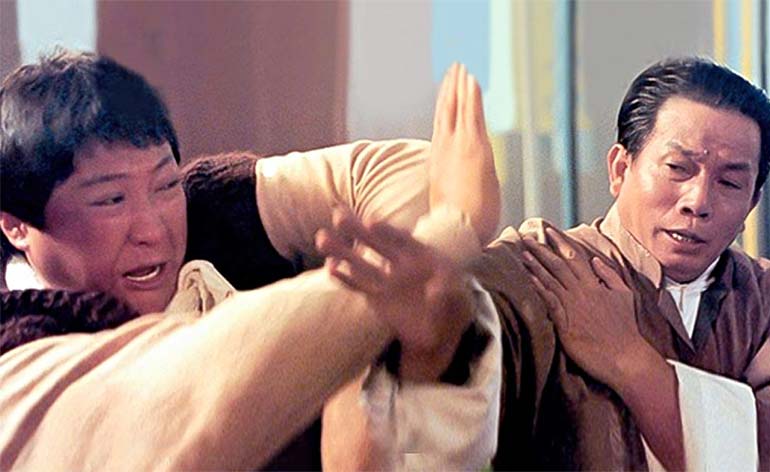
The setting for Pedicab Driver was newly within reach for Hong Kong residents. The Sheung Wan ferry terminal opened in 1985, expediting links between Hong Kong and Macau with a bone-janglingly bumpy ride on a one-hour hydrofoil. The film went into production just after the opening of the China Ferry Terminal in Tsim Sha Tsui in November 1988, which brought Macau into commuting range of the very heart of Hong Kong. While Hong Kong was a city-wide building site of new developments, Macau’s old town retained its colonial-era charm, at least for a while, and offered an “overseas” distraction – comparable to Hung’s California-set Paper Marriage (1988), which was actually shot in Edmonton, Alberta, and Millionaires Express (1986), for which Thailand and Canada substituted for Republican-era China.
Macau was also a glimpse of things to come. 1988 was the official commencement of the “Transitional Framework” between Portugal and the People’s Republic of China, under which the colony was due to be handed back eleven years later. That year saw the removal of the Portuguese coat of arms from local banknotes – time were changing for both Hong Kong and Macau, and this movie forms part of an earnest sub-genre of films that attempted to catch the old world before it was gone forever. It also saw a super-charged onrush of productions, as many a creative crammed their schedule with enough money-makers to buy themselves a foreign passport.
From my sleeve-note essay to be found in Arrow Video’s forthcoming Blu-ray release of Sammo Hung’s Pedicab Driver.
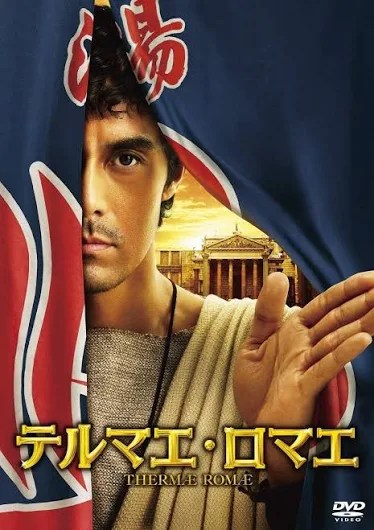
If written ten years later, this might have become an isekai story with a lame title like I Drowned in Ancient Rome and Woke Up in Japan Where I Learned About Marketing. But the 2008 publication date for the first volume of the Thermae Romae manga kept it classily Latinate, infused with its creator Mari Yamazaki’s fascination with the classical world, and peppered with her hectoring rants about modern-day European hygiene. Its movie incarnation, in particular, emphasized the very personal nature of her storyline—despite being played for laughs, it is also the tale of a struggling manga artist who finds herself sharing her life with a man who knows a lot about the Roman Empire.
Although Yamazaki received a paltry million yen for the movie rights, a live-action film went into production starring heartthrob Hiroshi Abe as the manga’s Lucius Modestus. It turned out that some of the majestic sets built for the sadly truncated HBO series Rome (2005) were still standing, allowing the Japanese cast the chance to cavort around scenery that looked far more salubrious than one might expect for a low-budget movie.
Over at my “Behind the Screens” column at MediaOCD, I write up the time-travelling-Roman-bather tale Thermae Romae.
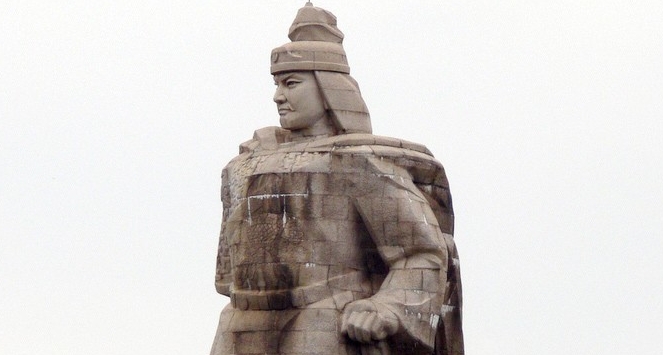
The child of a millionaire Chinese smuggler-admiral and a samurai woman from Japan, Coxinga is raised in luxury and symbolically adopted by a fugitive Ming pretender. When the Manchu invaders reach south China, his wily father switches sides, but Coxinga stays doggedly loyal to a doomed dynasty, becoming the leader of the Ming resistance in his twenties. Includes the strange case of the “boiling river dragon”, reporting to an empty throne in the “zombie Ming dynasty”, the nature of a maritime “ghost nation” and the Manchus’ devastating “wall around the sea.”
Over at the Subject to Change podcast, our two-part piece on the fall of the Ming dynasty gets to my beloved Zheng Chenggong, a.k.a. Koxinga, a.k.a. Quaesingus, a.k.a. “the arch-pyrate Coxinga, etc etc. He was the subject of my first-ever real history book, Coxinga and the Fall of the Ming Dynasty.
In 1924, the redoubtable travel-writer Mrs Alec-Tweedie dropped in on the Forbidden City and had tea with the Last Emperor. It was a stilted, awkward affair, for which she ended up writing more words about the wait than the chat itself. She, like everybody else in the 1920s, was fascinated with the absurd situation in the palace, in which the final monarch of the Qing dynasty was effectively held prisoner in a “cruelly restricted golden cage”, ruler of little more than half a city-block, watched and guarded by an army of surly eunuchs, whom he rightly suspected were busily pilfering the family jewels.
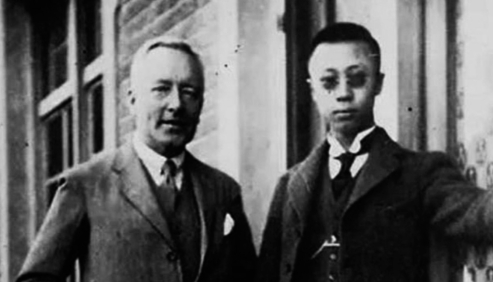
Puyi was trapped in limbo while his overthrowers argued over the best way to deal with him. His tutor and adviser, Reginald Johnston, was kept in place by the British in the vague hope there might be a restoration, which would put the UK at the heart of a new constitutional monarchy. Warlords thought he was a toxic reminder of the past, and a potential rallying cry for counter-revolutionaries, and with that in mind, he was best dealt with in the “Romanov” manner: taken out and shot. For the new-formed Chinese Republic he was a clueless aristocrat, best kept out of sight.
Puyi was all too aware of this, and cherished the notion of fleeing from it all and somehow finding a new life in exile. In halting, broken English, he told Mrs Alec-Tweedie of his unlikely plans.
“I go Oxford,” he said.
But he didn’t go Oxford. Not long after their meeting, he was banished from the Forbidden City and escaped to a new limbo in Tianjin. Wisely, as it turned out, he had done some pilfering of his own, and could live for a time on some of the proceeds from the antiques he had liberated from the Forbidden City. Paul French’s new book The Last Emperor of China, is particularly good on the politics of these shenanigans. The prevailing narrative of Puyi’s story is that the eunuchs were nicking all his stuff, and even staged a fire in the palace so that losses were harder to account for. But French reminds us that Puyi and the Republic were in fervent disagreement about whose stuff it actually was. That’s the problem with keeping your monarchy alive after a revolution — they keep pointing out that they still own everything. Was the Forbidden City a super-massive stately home, occupied by the last members of the Aisin Gioro family? Or were they merely living exhibits in a giant museum owned by the state?
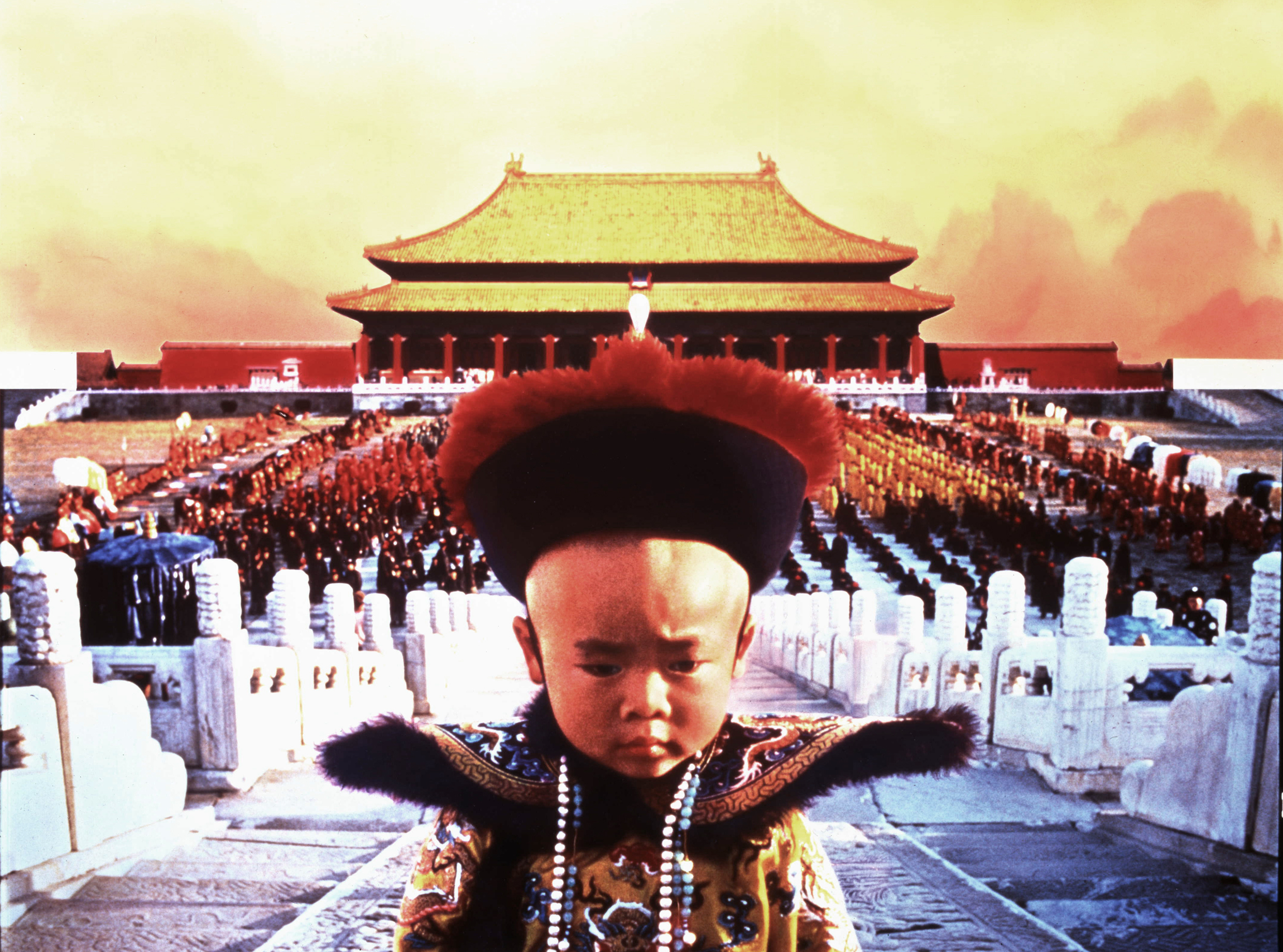
French zeroes in on this conundrum, pointing out that both Puyi and his thieving eunuchs were relics of a departed era, with little hope of surviving in the new world order unless they could somehow spirit some of “their” possessions out of the sight of their usurpers. He also pauses his narrative repeatedly, to wander off in illuminating discussions of who these people were. It is as if the Bertolucci film suddenly has an extensive hypertext, freeze-framing on passing faces and downloading their entire history, before restarting the story to show their odd behaviours in a new light.
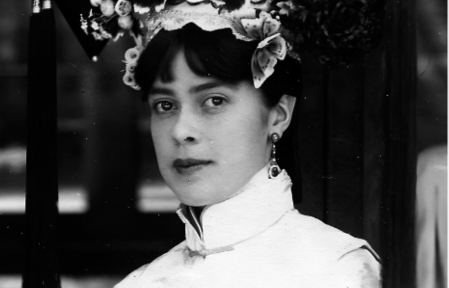
And so we get back-stories and motivations for a whole bunch of supporting players, including Willem Oudendijk, the Dutch diplomat who is dragged into Puyi’s escape plans, holds some of his stolen goods, and has to tell him that sending the Embassy limo to pick him up would be a diplomatic disaster. Then there’s “Elizabeth” Wanrong, the Empress, and “Grace” Wenxiu, the Emperor’s consort, set up in many a book as seething frenemies, but actually more often giggling co-conspirators. The eunuchs themselves get a chapter in which we see just what they have been through to get there, and just how marooned they are by changing times. And then there are the bit-players, like Dr Ernest Peake, the visiting physician who is fascinated by the whole set-up, and whose son Mervyn is inspired by it to write a whole fantasy about a lone aristocrat, trapped in a castle that is also a prison.
French’s subtitle is “Twilight of the Forbidden City”, which echoes Johnston’s memoir, but also suggests that the Forbidden City itself is the true subject. Someone at his publishers must have also worked out that is’s and of’s and deictic shrapnel are most easily disregarded by search engines, and that before long, this book is sure to be returned as a top search result for anyone looking for Johnston, or Puyi or even the peerless Bernardo Bertolucci film, The Last Emperor.
And, about that: the problem with the Bertolucci film is that it’s really, really good. It is so faithful to the true story in so many ways, its cast so persuasive in their various roles, that it can be difficult to think of Puyi’s life in any other terms. His own memoir was a major source, but was not only ghostwritten at the time for political purposes, but has been shunted and redacted in the 21st century to appease new Party requirements. Reginald Johnston’s own Twilight in the Forbidden City was also a hugely useful resource, but as French points out, it has its omissions.
The most glaring is the one that French addresses most directly — in the 500 pages of his memoir, Johnston only once mentions Isabel Ingram, who was the English tutor to the Empress Wanrong, and in just as intimate a contact with the imperial couple as he was. French has dug up Ingram’s correspondence archive, which not only includes her letters to her sister, but also Johnston’s letters to her — Johnston’s own archives having been destroyed after his death. French believes that Johnston’s silence about Ingram was the result of his disappointment about her rejection of his advances, an unrequited sulk that led to, for example, the fact that Wanrong’s English tutor is only mentioned once in the Bertolucci film.
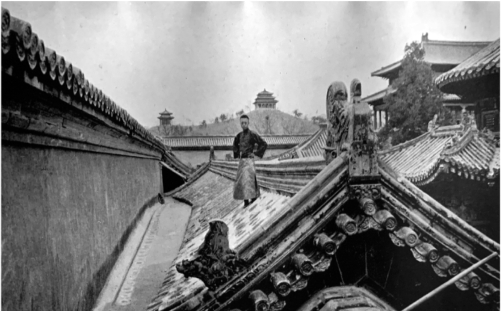
But Ingram comes alive in French’s book, with her vivid accounts of life with the imperial couple — her own perspective on events already familiar from Johnston, and all-new anecdotes and moments like a disc of movie extras. Photographs from Puyi’s own collection recentre her in the story, which creates a delightfully fresh angle on this well-told tale. In the film, we see Puyi laying his head to the cobblestones, to hear the strange sounds of the world outside. But here, we see him clambering onto the rooftops of his palace-prison, to gaze out upon the bustling world outside, and to hear “the city of sounds”. This is no authorial fancy — French has the pictures to prove it.
Two years after Puyi was expelled from his palace, Mrs Alec-Tweedie returned and found it literally abandoned, left to the ravages of time, untouched since that day.
“It was November when they took flight,” she wrote. “November is a chrysanthemum time, and countless pots were evidently full of growing chrysanthemums and asters. There they stood in 1926 in dozens, the flowers dead and brown, the earth like yellow sand, the pots begrimed with dust.”
“Go west, young man. Go west. Way west.” Beyond the Rocky Mountains, beyond California, across the Pacific, there was still a place where cowboys could be cowboys. For nearly three decades, the out-of-work rodeo riders and cow punchers of the Old West had one last place they could live on – China.
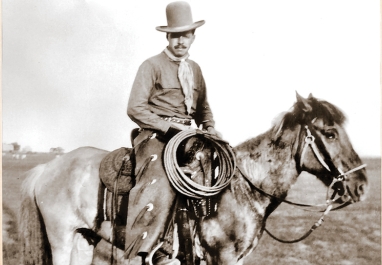
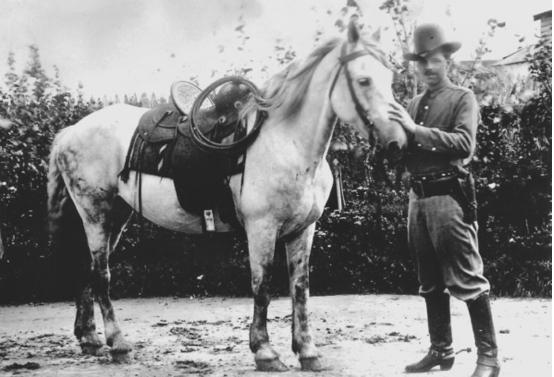
Fred Barton (1889-1967) showed up in China at the tail end of the Qing dynasty, offering to help the Chinese military pep up its strength with a steady supply of proper warhorses, rather than the stocky Mongolian ponies they were used to. He stayed around after the Revolution of 1911, to supply vital mounts to the Chinese Republic and its various warlord helpmeets, including Manchuria’s Zhang Zuolin, who had an entire company of White Russian cavalrymen, the Mukden Lancers.
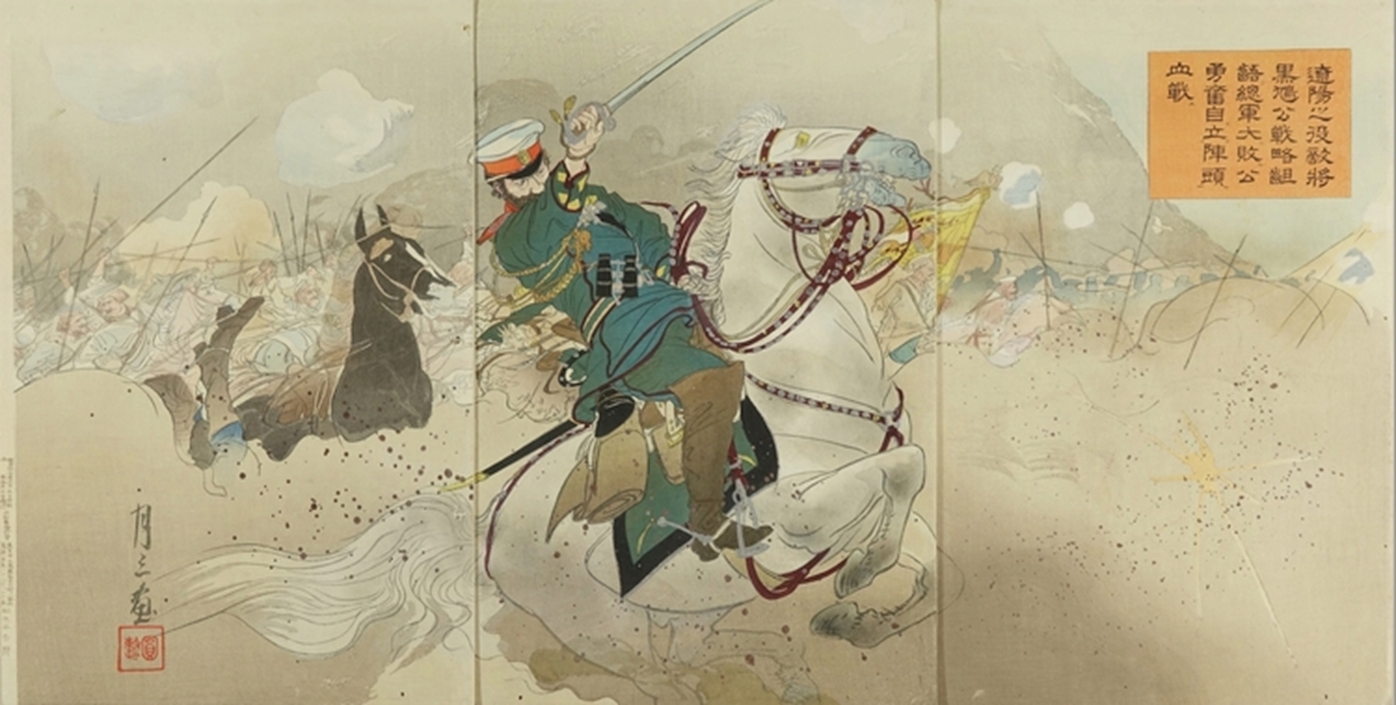
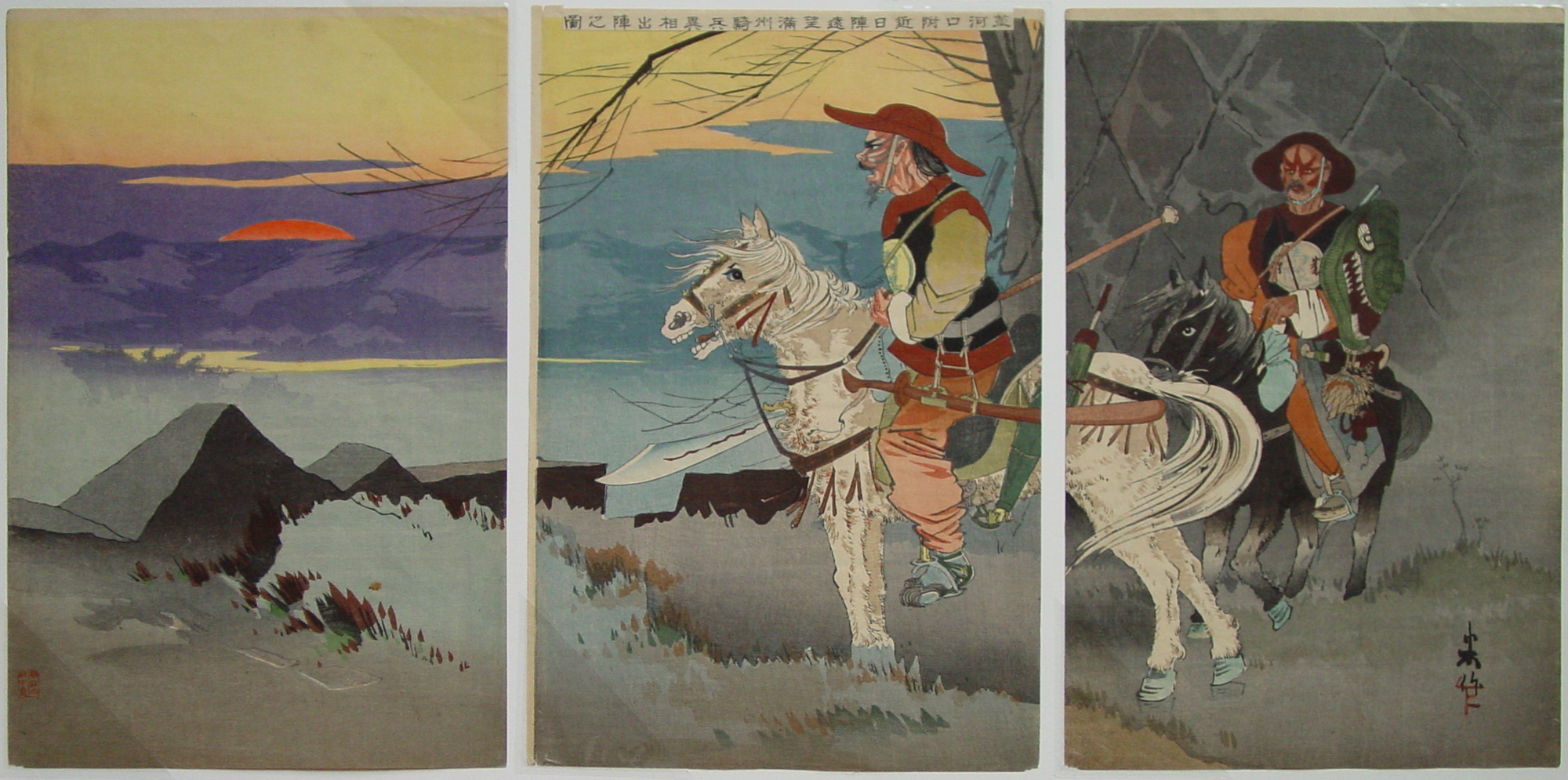
A Russian cavalry officer from a decade before Barton’s arrival. The green overcoat and brown boots foreshadow the uniform of the Mukden Lancers.
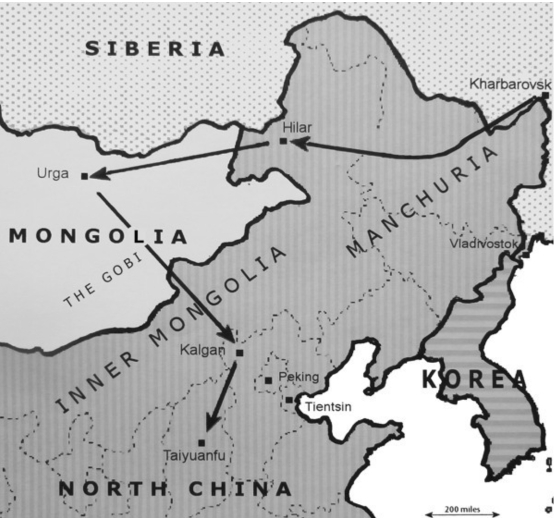
Barton proposed driving 3,500 Russian Orlov horses from Siberia, through Manchuria and Mongolia, to a ranch in north-west China, where he would breed them with several hundred American Morgans. Before long, this would generate an annual delivery of hundreds of towering battle-ready mounts, ready to supply China’s many conflicts of the 1920s and beyond.
Montana cowboys and eight former horsemen on loan from the US 15th Infantry in Tianjin were drafted to help Fred Barton’s grand enterprise. It didn’t always go to plan. They were watering their 650 Morgan studs on the outskirts of Beijing, when the horses were spooked by the entirely alien odour of a passing line of camels. It took a week to round them all back up again.
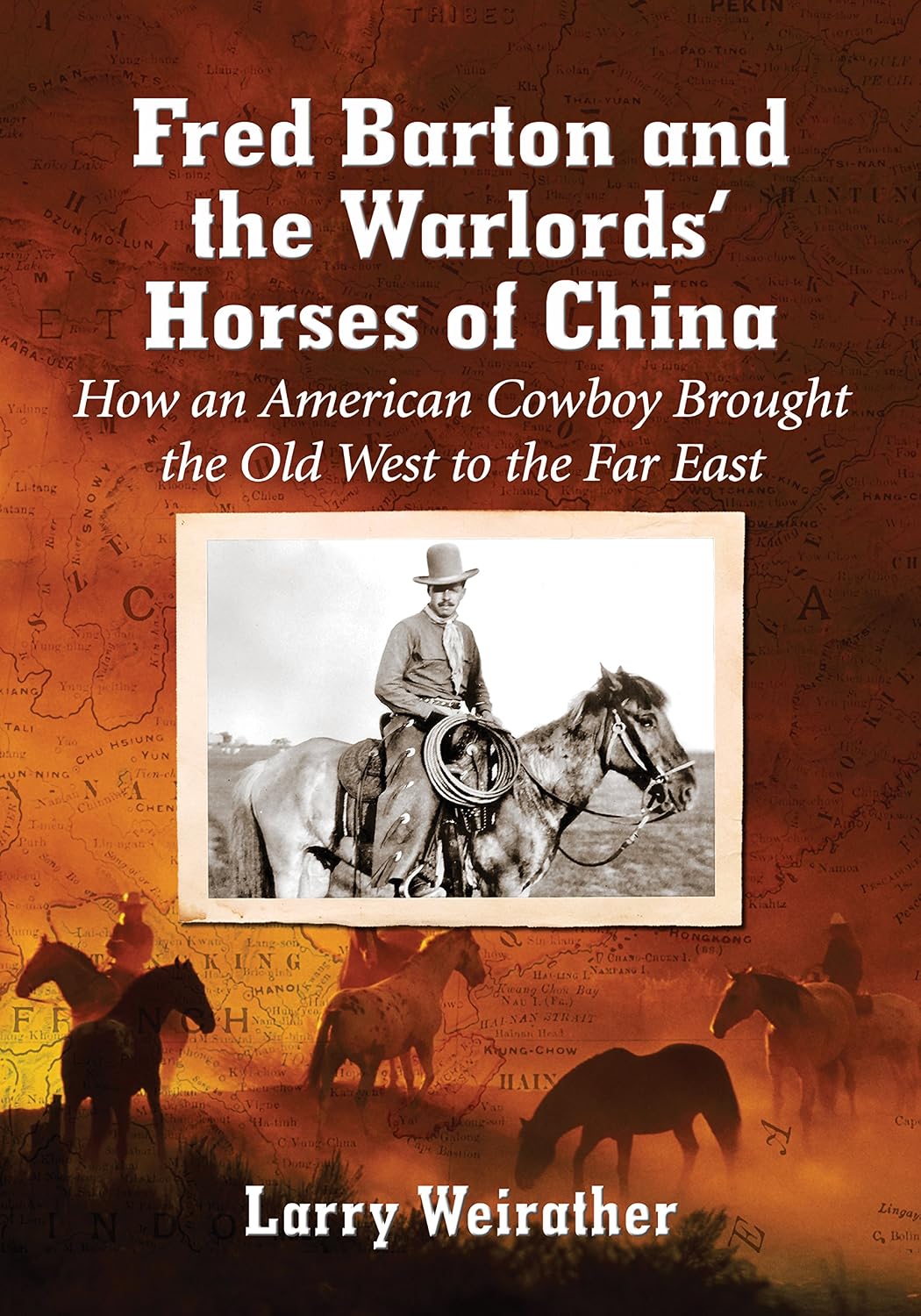
Larry Weirather’s book Fred Barton and the Warlords’ Horses of China: How an American Cowboy Brought the Old West to the Far East is thick with detail and local colour about this oddest of historical stories. He relates the unexpected trip-hazard of underground rodent warrens, close to the surface where the hoof of an unsuspecting horse could smash through the roof of a marmot lair. On the plus-side, marmot pelts could be dyed black and passed off as sable to the clueless ladies of the California elite.
The story is a fascinating clash of Wild West clichés with the shock of new, oriental hazards and tall tales. I was particularly taken with the depiction of Kalgan, the westernmost point on the railway that led to Beijing – which is why, incidentally Mannerheim’s ride across Asia stopped there in July 1908, because from that moment on, he could get the train. Weirather describes a city over-run with Mongols, whose steppe ways literally ride rough-shod over the manners and practices of the Chinese residents. Kalgan is the last bastion of the old Silk and Tea Road caravans, where camel trains from the west unload their cargoes.
Accomplished rodeo performers, Barton and his men show off some of their skills to the Mongols. The Mongols, in turn, teach them “horse skiing”, which is like an equine version of water-skiing, impossible on American plains scattered with cacti and scrub, but entirely feasible on the featureless grasslands near the Gobi Desert.
Weirather’s story is rooted in broader issues of climate and technology, some of which played out before Barton was even born. From 1875-1875 it rained a lot on the American prairie, creating huge swathes of verdant grassland, enough for the cattle- and horse-rearing barons to think of it as a practically infinite source of free food. In today’s money, an entrepreneur could clear a profit of a million modern-day dollars by delivering a thousand steers to market.
That all changed with the Great Die-Off of the winter of 1886-1887, which annihilated entire herds out on the prairie, and brought a sudden end to what had once been the “open range”. Grassland was suddenly a resource to be fenced in, and the great long-range cattle drives became a thing of the past.
Meanwhile, the American railroads were making a difference. Cattle could be killed and processed out on the plains, and shipped in refrigerated trucks to the east coast, or even outward across the Atlantic. The internal combustion engine was starting to make a noise of its own, and the prices of horses were fated to dip.
Honghuzi bandits in Manchuria were a ready market, as their own ponies were rather small.
The First World War was the last great horse-trade in history, with the US military prepared to pay up to $225 for a strong beast fit to pull artillery. One and a half million horses went to war in the European theatre. At the outbreak of the war, Russia alone ordered twenty million horseshoes – a sign of the era’s true reliance on live mounts. But in peacetime, horses were soon outpaced by trains and cars and tractors. In 1919, the horse-driver Hadley Robinson reached the banks of the Yellowstone River, expecting to trade his herd at $100 a head. Instead, he was offered only $90, and turned his horses loose in disgust.
Before long, horse-traders were being offered only $12, and by the 1920s, the best deal a trader could get was $10 for the knacker’s yard.
There was, however, one exception. Chinese warlords would pay $350 a head for the best warhorses, which proved to be an irresistible temptation for the last entrepreneurs of the Old West. But Barton’s long horse-drive was fraught with perils, both natural and supernatural. Weirather reports him finding a vast field of impossibly lush grass, only for his Mongol guides to inform him that it is the site of an ancient battle, and that the pasture is so rich because it has fed for centuries on human blood. They have to move on, or risk a Mongol curse.
This whole edifice came crashing down in the 1930s, when the Japanese over-ran much of the Chinese Republican military. Barton’s Taiyuan ranch fell to the Japanese in 1937, whereupon he and his men escaped back to obscurity in the US. China’s next flirtation with foreign “consultants” would be its drive to recruit airmen for the Flying Tigers, but that is another story.
As late as the Korean War in the early 1950s, American POWs reported the sight of Chinese officers riding on what were unmistakeably Morgan horses. They were baffled as to how they got there. As for Fred Barton, he went into what some might describe as a “quiet” retirement, dedicated to preserving artefacts and memorabilia of the Old West, even as the media went crazy for it.
He even became an adviser for Wild West movies, although it seems his consultancy was often ignored. He was particularly animated, for example, about the shapes of the hats worn on screen, which had creases in them of which he highly disapproved: “The Movies and Television today show cowboys riding saddles with little or no cantle, looks like an English saddle with a horn. Also they put cheese hats on the cowboys. I never saw a [sic] open-range cowpuncher with a cheese cake hat.”
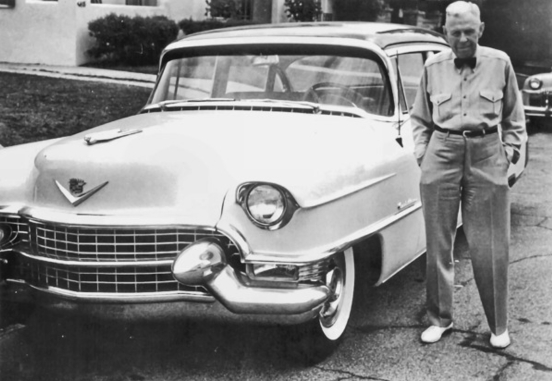
Fred Barton in the 1960s, his cowboy days far behind him.
This story is not “untold.” Barton told it plenty himself when he was alive, and in 1977, Ralph Miracle published an extensive essay about it in Montana: The Magazine of Western History. Weirather himself has written a book previously on the topic, and this new version adds substantial new information that came to light after people knew where to find him to unload their stories — I will note, however, than in the oh-so-techy 2020s, it took me four tries to get Amazon to show me his book, as it kept correcting his name to “Weather.” Even so, as I so often find myself wondering in my researches, why isn’t this already a movie? Of course, there was Destination Gobi, starring Richard Widmark, which was a heavily fictionalised account of a true story from WW2, in which a band of Navy personnel in China ended up fighting the Japanese with horse-mounted bazookas, using steeds descended from Barton’s stock. But of Barton’s incredible ride, there is no sign in the mass media. Weirather even supplies the perfect framing device for the movie, in which bookseller Richard Upton visits the ageing Barton at his home in the 1960s.
He rings the doorbell, and waits expectantly while someone inside slides bolt after bolt, and unhooks chain after chain, in a series of locks that stretch all the way from the top to the bottom of the door. When it finally opens, Barton looks him up and down, and then says: “You’re five minutes early!”
He slams the door in Upton’s face, and switches back all the locks with agonising slowness, only to immediately unbolt them all again to open the door at the appointed time.
Jonathan Clements is the author of A Brief History of China. Pictures of Fred Barton are from the Archival Collections of the Montana Historical Society.
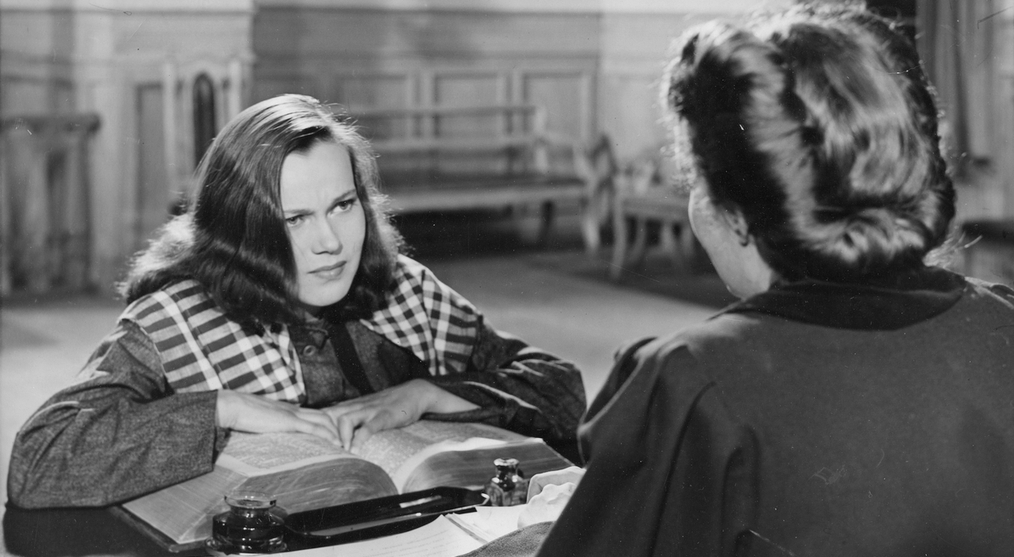
In the tense lead-up to the final law exams, student Martta (Helena Kara) takes private lessons from her secret fiancé Juho (Unto Salminen), who happens to be the son of the examiner, Professor Karsta (Uuno Laakso). In an oral exam alongside three other students, Martta performs the best, but the professor puts her through unfairly hard questions, including some topics that were not even on the curriculum.
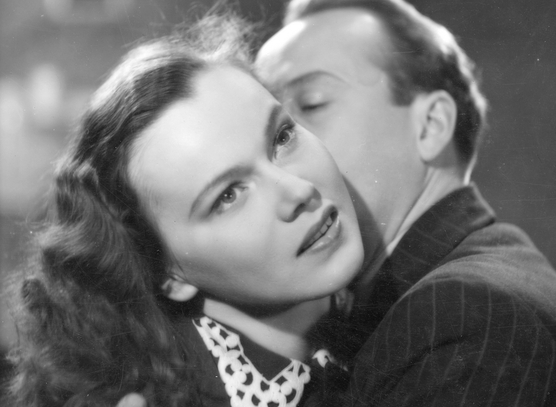
At graduation, Juho gingerly introduces his fiancée to her father-in-law-to-be, who cringes that she can re-sit the examination after all. But two years later, when Martta and Juho are happily married, it’s Juho that now opposes her seeking further qualifications. He argues that Martta is the mother to a young child and that consequently she should give up any further qualifications in law. Instead, she pursues a junior magistrate’s position that will allow her to advance further up the ladder.
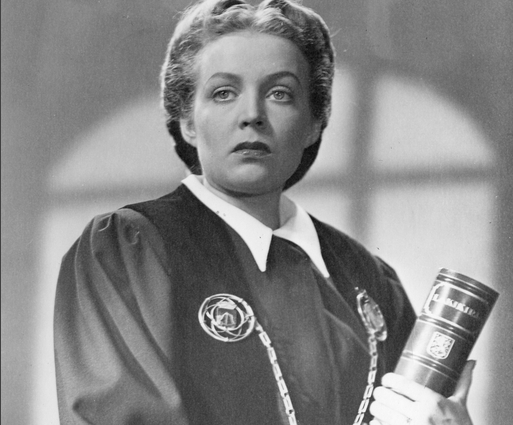
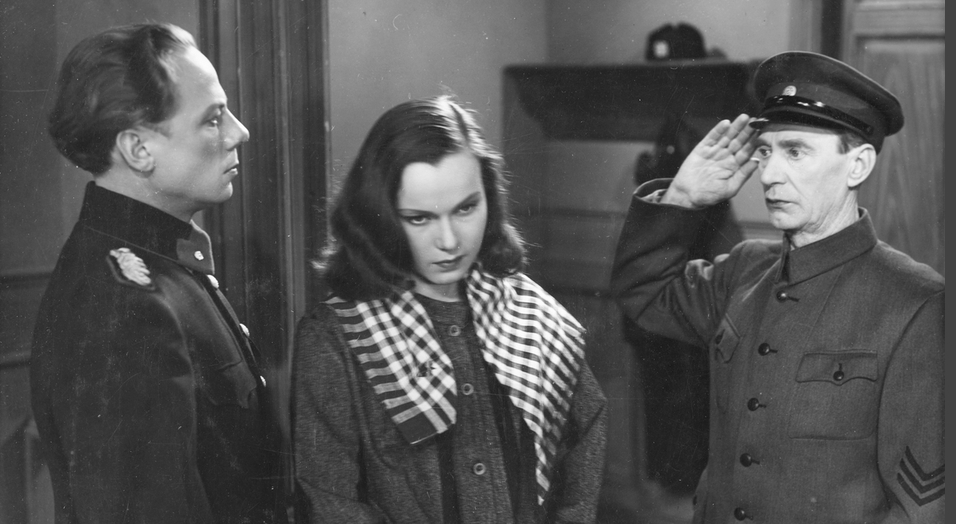
Judge Schroderus (Aku Korhonen) is mildly scandalised to find that one of his benchmates is a woman. “The world is truly upside down when women sit in judgement and men look after children.” But despite cavils from the other legal men present, Martta is sworn in on her first case, in which the young Hedvig (Mervi Järventaus) is accused of manslaughter for shooting her would-be rapist, who was also her fiancé’s Dad.
The courtroom drama that unfolds would never happen today, because half the participants would have to recuse themselves. The prosecutor knows the accused and the victim, and went to college with both Martta and Hedwig’s boyfriend. When prosecutor Väiniö (Sasu Haapanen) realises Hedwig acted in self-defence, he drops the charges, leaving Martta’s role in all this somewhat oblique. All she really does is read out the verdict, which itself has been pre-empted by the prosecution’s own admission.
Martta hears that her son has fallen down the stairs under Juho’s care, and she rushes from the court to his bedside. “It was there in court that I finally learned what a woman’s role is,” she simpers. “I would never have forgiven myself if I had lost my child because of a bit of ambition.” Feeling awful that she has left her child in the hands of her incompetent husband, she turns to the camera and harangues the audience: “Mothers, do not leave your small children!”
Well, that was awkward, and I suspect that screenwriter Martti Larni found writing Tuomari Martta awkward, too. There were multiple cuts to the film in progress, particularly as producers got cold feet about the way that its pre-war message might hit with a mid-war audience. The most obvious result is Martta’s final, impassioned plea directly into the camera, which is tight on her face because it was the third re-take, and the set had already been dismantled.
It was based on Ilmari Turja’s successful stage play from 1938, but times had very obviously changed in the five years since. At some point, maybe the same time that the similarly hectoring Born a Healthy Girl (1943) went into production at rival studio Suomi-Flimi, it must have seemed like a no-brainer to reunite the principal cast, as the film largely did. Laakso, Korhonen and Rinne all reprise their stage roles, although the director’s wife, Helena Kara, is parachuted in to replace the stage’s Kyllikki Väre, who is rather spitefully recast as Martta’s dowdy housekeeper, Mrs Kunttu. In another moment of meta-playfulness, Martta announces she is off to the flicks to see My New Life – the person she is telling is Unto Salminen, who starred in it.
The press could not agree whether the film had liberated itself from its theatrical origins. Olavi Vesterdahl in Aamulehti thought that the location shooting broadened the feel of the story. But Paula Talaskivi in the Helsingin Sanomat was having none of that: “The screenwriter has failed to capitalise on the inherent dynamism of the plot; instead, the scenes are arranged largely within the same four walls to which the stage play was confined.” That seems a little harsh, bearing in mind that courtroom dramas inevitably play out indoors, but there was no pleasing that Paula. Salama Simonen in Uusi Suomi voiced what everyone was really feeling, which was that the film’s message fell short in times when women were really casting aside traditional gender roles in the war effort, and that the whole thing came across as preachy and a little half-hearted.
Eighty-three years later, the best thing about this film is Mervi Järventaus as Hedwig, who lights up the screen like a Finnish Lauren Bacall with a great sideline in “oh-for-eff’s-sake” scowls. She had been contracted to Suomen-Filmiteollisuus straight out of high school in 1940, but spent several years stuck in bit parts. This was her first real chance to shine, and she would finally get her dues playing the lead in Anna-Liisa (1945). By that point, however, she’d had enough of the movies, and left the business to pursue further jobs on stage, and to return to school, where she qualified as a speech therapist.
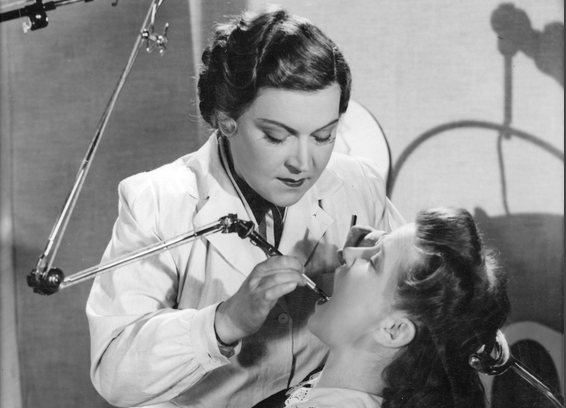
Also, dentists. Why are there so many dentists in old Finnish films?
Jonathan Clements is the author of A Short History of Finland. He is watching all the Finnish films, so you don’t have to.