“The Iria animation was both popular and obscure. Representatives for one US anime company went on the record to say that it had proved so popular on pirate video that they no longer thought there would be a market for it in the US.”
Over at my Behind the Screens column at Media OCD, I write up Keita Amemiya’s Zeiram and Iria.
Prohibition may have been lifted in Finland, but the old smuggling routes are still in place, and there are still profits to be made by evading the local alcohol tax. Coastguards Olavi (Joel Rinne) and Haanpää (Oke Tuuri) run down a likely smuggler, only for the sneaky boat-captain Kivalo (Santeri Karilo) to outwit them by towing his cargo behind him in the water, out of sight.
Later at a town dance, Olavi and Haanpää run into the two pretty girls who were catching a lift on Kivalo’s boat. Anni (Martta Kinnunen) hits it off with Haanpää, but Marja (Regina Linnanheimo, in her first major film role) snootily dismisses the lawman, because she’s a bad girl who runs with gangsters. She changes her tune after Kivalo gets handsy, and Olavi comes to her rescue, but before any snogging can commence, a coastguard emergency flare goes up, and Olavi and Haanpää have to rush to their posts…
Retitled somewhat unimaginatively in the United States as “The Smugglers”, VMV 6 is a fascinating snapshot of the mid-1930s, when Finland was still struggling with the impact of its thirteen-year ban on strong alcohol, one of the first laws passed after the country gained its independence from Russia. While some are dyed-in-the-wool teetotalers, a huge swathe of the population are secret tipplers under Prohibition, criminalised by decree. Now that booze is legal again, a good number of them still stray onto the wrong side of the law, eager to pay less for contraband drinks. Olavi’s investigation of the hooch trade turns into a logistical forerunner of The Wire, with a conspiracy that reaches all the way up to the local consul Dasselheim (Axel Slangus) – a dastardly Swede.
Smuggling pays better than fishing for the boatmen of south Finland, an inevitable temptation when toffs in straw boaters are sidling up to waitresses in the cafés and asking if they have a stronger kind of tea. Meanwhile, the coastguards are outnumbered and outgunned, forced to patrol miles of shoreline, to stop cargo reaching local people who often turn out to be their friends and families. In one scene, the coastguard Hämäläinen (Eino Hyyrynen) is left alone, nursing a toothache, when his station is stormed by a posse of smugglers he cannot possibly fight off.
The film’s uncredited star is the coastguard motorboat (Vartiomoottorivene) that provides its Finnish title, one of fifteen real-life patrol boats criss-crossing the Baltic in search of bootleggers at the time. But all the chase sequences and stunt work, outside locations and watery dynamics ran up the budget far beyond those of the average Finnish movie. Even simple set-ups come with a certain flair, such as the opening sequence of churning waves, filmed from a speedboat, or a decision to film smugglers unloading their cargo in a vertiginous shot, for which someone has somehow carried a bulky camera up to the topmast. Although it was a success, it took six years to recoup its costs at the box office, as one might expect for a 1936 action film in which our heroes rush to the rescue in a seaplane.
The storyline is a heady mix of unexpected juxtapositions. The upper classes are in bed with smugglers, and the cops are drinking at the bar alongside the people they are supposed to be chasing. Originally clocking in at over two hours, even this shorter cut takes its sweet time with a long, languorous interlude on a rocky beach, as the smugglers drink and make merry, confident that their fortunes will be made as soon as their contraband reaches town. Kivalo is indignant and aggressive when the coastguards stop his boat, fulminating about what a waste of time this all is, even though the audience knows he has a fortune in contraband floating underneath it.
In one lovely touch, Olavi dismisses the thwarted Kivalo with a stern “Good night” even though they are standing in broad daylight – this is Finland, where such a counter-intuitive set-up is indeed possible all through the summer (see, for example, similar midnight-sun shooting in Helsinki Crimes). Marjo’s character journey is also well realised, as she evolves from a bored small-town bad girl into a good-hearted heroine. It’s she, literally paddling her own canoe, who finds a wounded coastguard left for dead in the water and alerts the authorities.
The film was an early leading role for Regina Linnanheimo, whose star quality in the 1930s and 1940s was one of those mysteries, like the contemporary rise of Gracie Fields in the UK, that eludes the modern critic. But there was something about her that would make her one of the holy pantheon of Finnish movies until the middle of the 1950s, anchoring big-name films like Beautiful Regina of Kaivopuisto (1941). Although it’s become a running gag in this blog that she never bloody smiles, she is beaming all over the place in this one, even when a bootlegger serenades her with an accordion. In fact, the musicality of this films is one of its most intriguing historical issues– the jury is still out as to whether Finns were more musical in days of yore, or if the crew are just trying to distract the audience with an occasional sing-song.
Behind the scenes, the film’s biggest technical innovation came in sound, when director Risto Orko at the Suomi-Filmi studio acquired better recording equipment from Aga-Baltic, as well as a two-channel mixer which allowed dialogue to be post-synched, and music to be integrated with sound. You can see (and hear) the results here, as well as in the The Woodcutter’s Bride (1931), in which such widgets transformed a director’s ability to tell a story. This veritably encourages the cast to burst into song at inopportune moments – I have asked around about this, and the newly PhD’d researcher Jaana Ruotsalainen tells me that communal singing was indeed more of a thing in Finland before the onset of a culture in which music was experienced as recordings rather than live.
The film was also an early scripting job for the author Mika Waltari, who would become internationally famous as a novelist, but whose high-class work for the screen is often overlooked by modern readers. VMV 6 was actually the fourth script he wrote, after several false starts and disappointing collaborations, but it’s weird to see him here, paired with the “more experienced” scenarist Tauno Tattari, who was only 29 on this project, and who was fated to die of tuberculosis shortly after it was finished. But 1930s Finnish cinema was indeed a place where “veterans” could still be in their twenties. We find Waltari later in this blog’s chronology writing some of the best scripts of the decade to follow, such as The February Manifesto (1939) and Finland, Our Dear Native Land (1940).
The critics loved it, with Arvo Ääri in the Helsingin Sanomat calling it “a triumph for Finnish cinema… offering the best in speed and excitement that Finnish film has yet to achieve.” It certainly marked a nexus in production in the early thirties when directors and actors thrilled to the application of new technologies and the opportunities they brought, leading to sparkling blockbusters like Our Boys in the Air (1934) before the industry started to get swamped once more with cheapo theatre adaptations and unfunny comedies. It even made it to America, where a print toured the Finnish-speaking enclaves of Michigan’s Upper Peninsula, and Canada’s Thunder Bay.
Jonathan Clements is the author of A Short History of Finland. He is watching all the Finnish films so you don’t have to.
“Some scholars have argued that far from clinging to the past until they were overwhelmed, the Qing dynasty created modern China in 1644, by establishing a previously unseen level of centralized control, and by wiping out the northern border problem. The Qing dynasty is hence, in the words of William T. Rowe, ‘a constantly moving target,’ only passing from living memory in the twenty-first century.
“We might equally argue that the period of ‘humiliation’ began not in the 1840s, but two hundred years earlier, in 1644, when the first and most successful foreign element, the Manchus themselves, swept in from the north-east to form a lasting, exploitative aristocracy.
“Or, if we accept, as all modern Chinese books do, that the Manchus were simply another sector of the Chinese world, and that they were hence not really foreign, then surely their regime, with its wars of conquest in Central Asia, its self-assurance of its racial and cultural superiority, and a military mission that doubled the size of Chinese territory in the space of 150 years, was an immensely successful imperialist power, not all that different in attitude from the outsiders that would bring it down.”
Over at the Encyclopedia of Science Fiction, I update my entry on China with details of the relatively new sub-genre of stories in which time-travelling boffins try to make China great again.
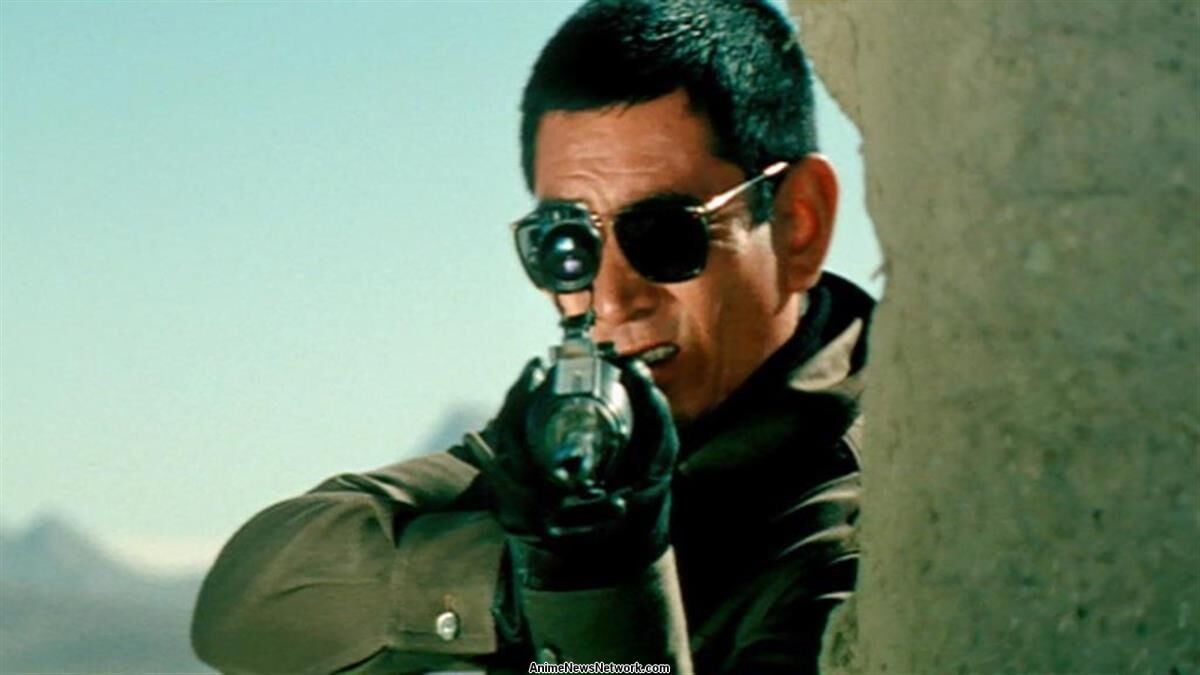
“Officially, the film was shot entirely in Iran during the last years of the Shah, presenting a priceless time-capsule of everyday life before the 1979 revolution propelled the Ayatollah into power. Secretly, several pick-ups and interiors were actually filmed back in Japan, but the media printed the legend, possibly because admitting it might have triggered a breach of contract with the manga creator.” Over at MediaOCD.com, I delve into the curious history of Golgo 13’s live-action mission to Iran.






 The Official Schoolgirl Milky Crisis Blog