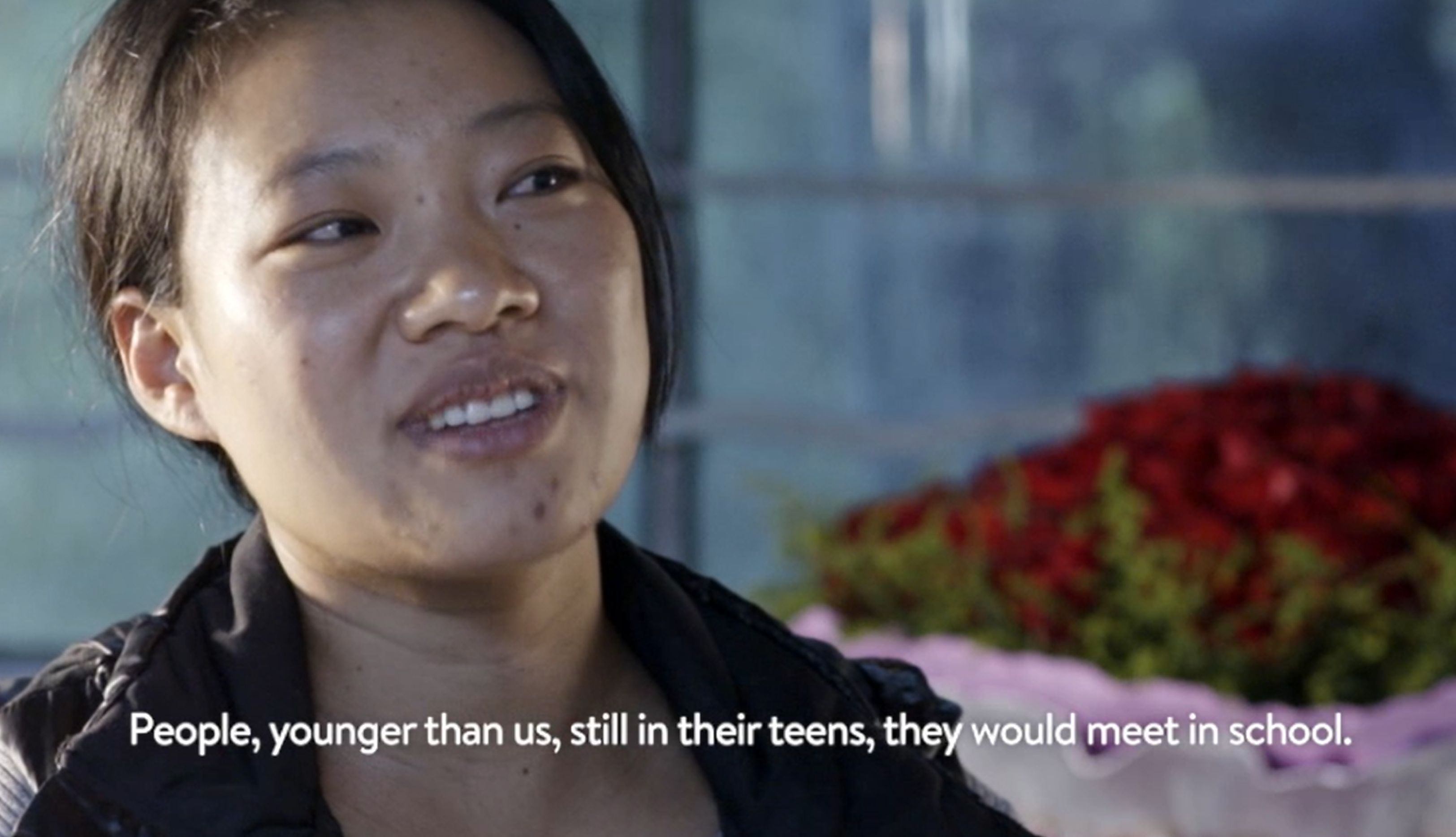
One of the photographers staying in the same building as us seems different from the rest. She is a slim Chinese girl in a bobble hat, dubbed “Alice” by Mickey the sound man because we are living next door to her – one of many obscure 20th century pop references in Mickey’s everyday banter. He noticed her because she alone seemed to know how to operate her camera, and it turns out that she is a genuine professional. She sells prints of her photos, but is wandering China, somewhat aimlessly, in the help of selling a book about it, because “foreigners don’t know anything about any tribe apart from the Han.” I resist the urge to point out that even if it were true, there are thousands of pre-existing picture books about China, none of which she appears to have heard of.
Alice was born in Hong Kong and now lives in New York, and is one of those Chinese girls who believe that being Chinese is the sole qualification required for understanding China, that she has learned everything she needs to know solely through her DNA, and that foreigners are all clueless. She has already pegged me as a high-maintenance idiot after overhearing half a conversation between me and the director the day before, about the best time for me to shave when there is no hot water.
Yes, I say, we were going over what kind of timing was needed to make my face look presentable in 4K digital. If you’re behind the camera, you can look like shit warmed up and nobody will care. But if you’re in front of it, you need to look like you’ve run a comb through your hair, or it is distracting.
“Oh,” she says in surprise, “you appear to understand quite a bit of Chinese.”
Behind their porridge bowls, the crew snicker and snort.
“Have you been to China before?” she asks, and the snorts turn to giggles.
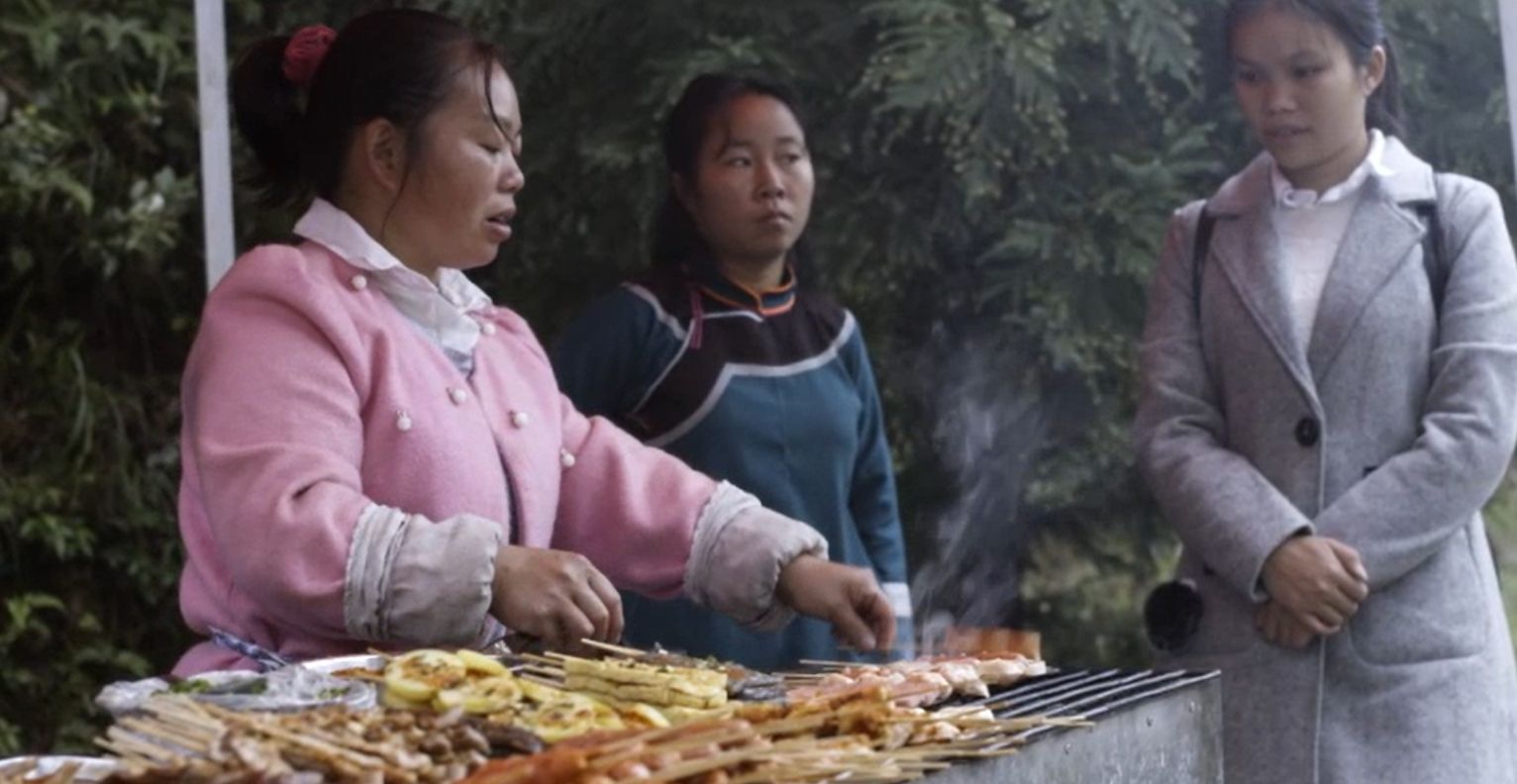
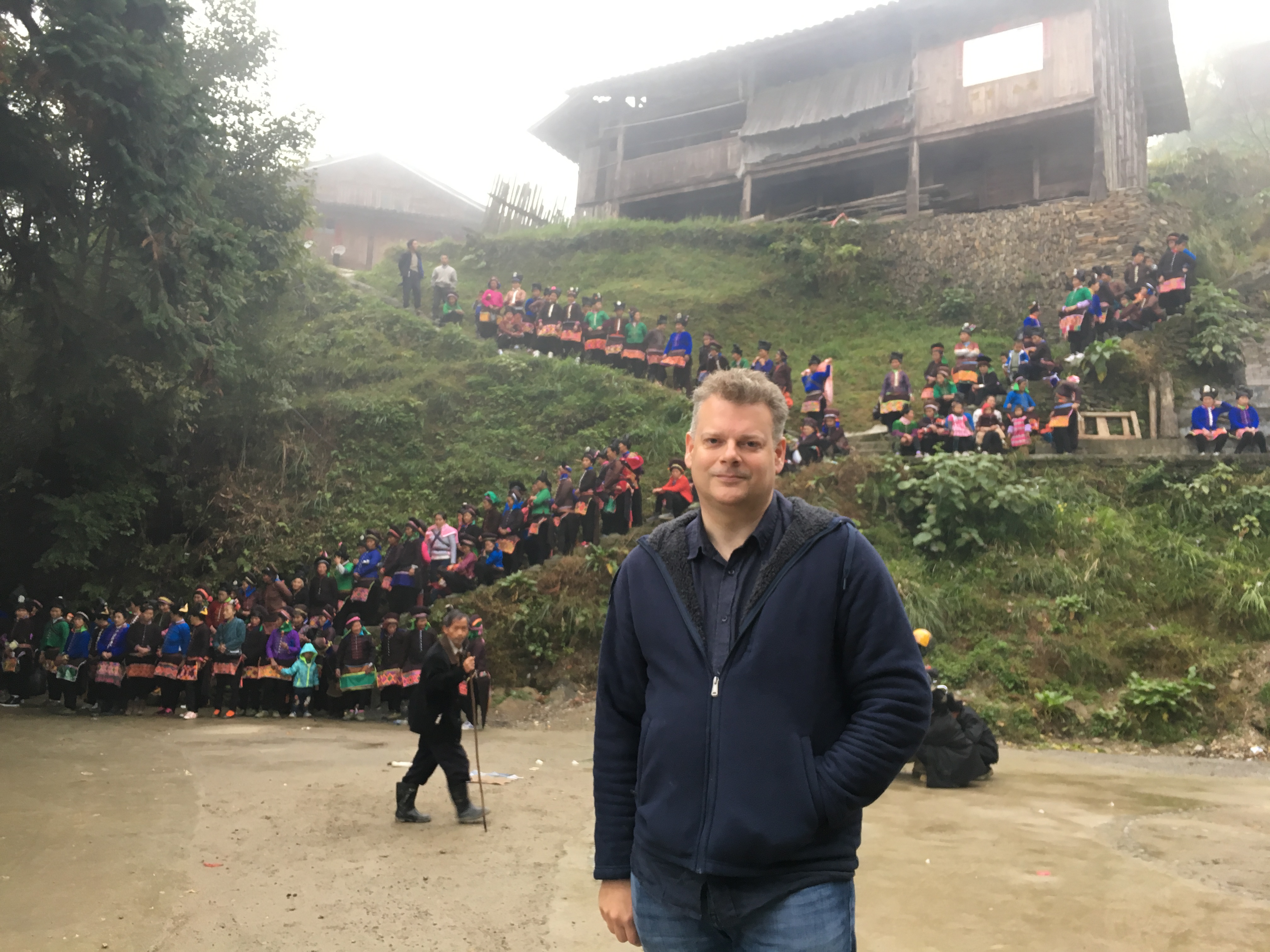
A village fete of some sorts has sprung up around the village gate. There’s a mobile convenience store on the back of a truck, a fruit seller, a lady selling gristle on sticks, a lucky dip and a spin-the-wheel stall where you can win a live terrapin in a cup.
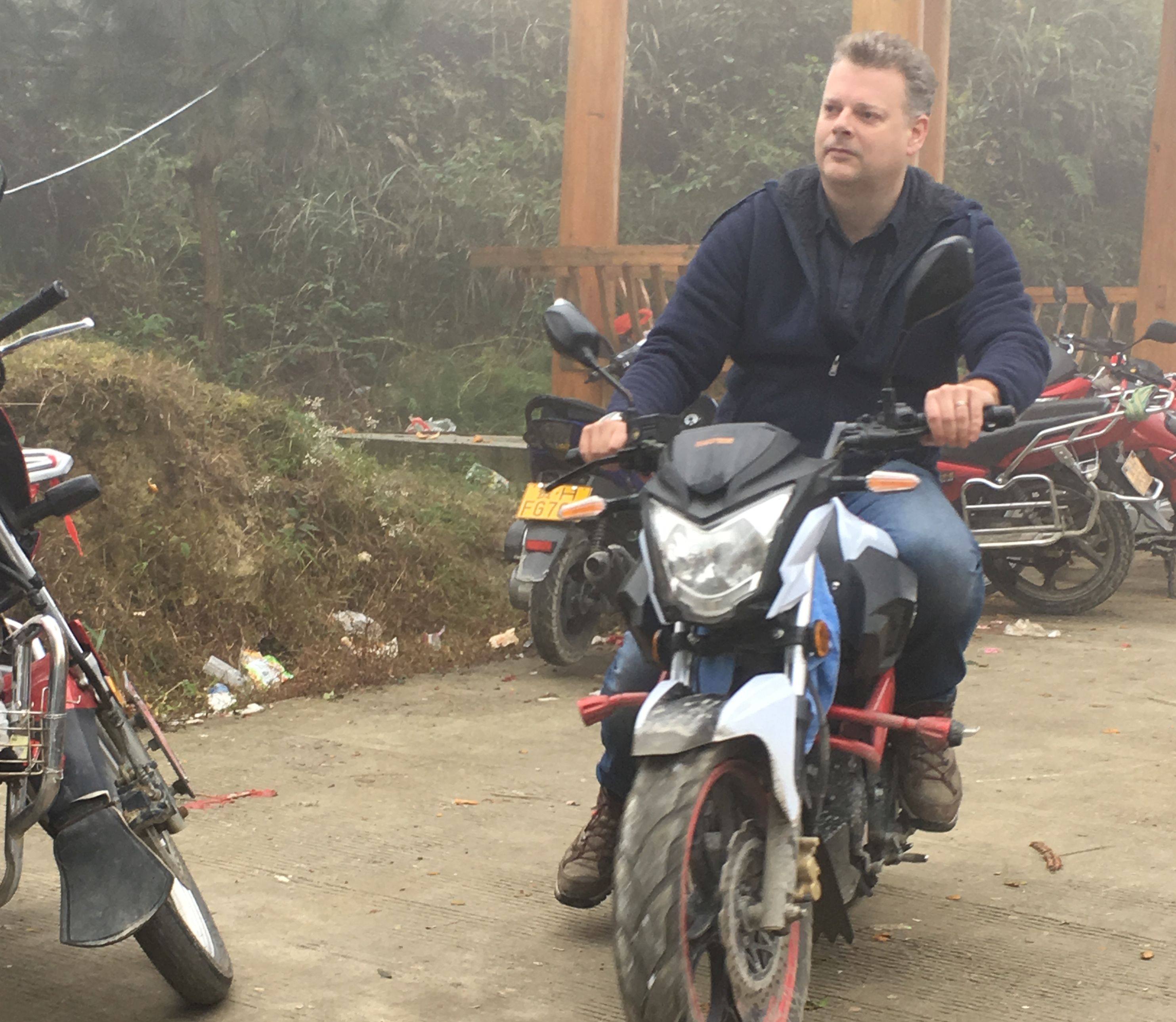
The Very Slow Motorcycle Race is another of the town committee’s attempts to keep the young people interested. Chalk marks in a wavy chicane are drawn across the car park, and the local bikers are made to traverse the path in the slowest time possible. Not that that is much of an issue, because only two bikers actually make it all the way along the fiendishly winding path at all. The director decides that I shall have a go, and purloins a bike from a passing man.
It is a 250cc white Chinese model, and as I sit astride it with entirely misplaced confidence, I remember that I haven’t actually sat on a motorbike for 25 years. The locals immediately cluster around with helpful advice, including “Starting in second gear is a stupid idea, mate”, and “If you rev it that much, you’ll go over the cliff.”
Luckily, I have vague memories of the five minutes I once spent in a Taiwanese car park on Gilbert Mackay’s little 150cc bike in 1991, so at least I know that what would be the left brake on a bicycle is actually the clutch on a motorbike. I know where the gears are to shift it down into first (they’re by your left toe), and I know that pulling too hard on the front brake will pitch my head over the handlebars.
I gingerly wheel it to the starting line with only two stalls, and then head off when Tubby, our landlord, blows his whistle. It’s all over in barely a second, as I careen along the opening leg, fail to correctly take the first corner, and whirl off into the crowd, through a screaming flock of onlookers, and around the car park, coming to a juddering halt a couple of feet away from the precipice that leads down into the rice paddy.
The camera catches not just my comedy performance, but all the Chinese laughing at me at the starting line, as well as the fleeing onlookers as I charge through them. It’ll look good.
I chug the bike over the man we got it from, and thank him for letting us use it.
“Oh, it’s not mine,” he says. “I have no idea whose bike you just stole.”
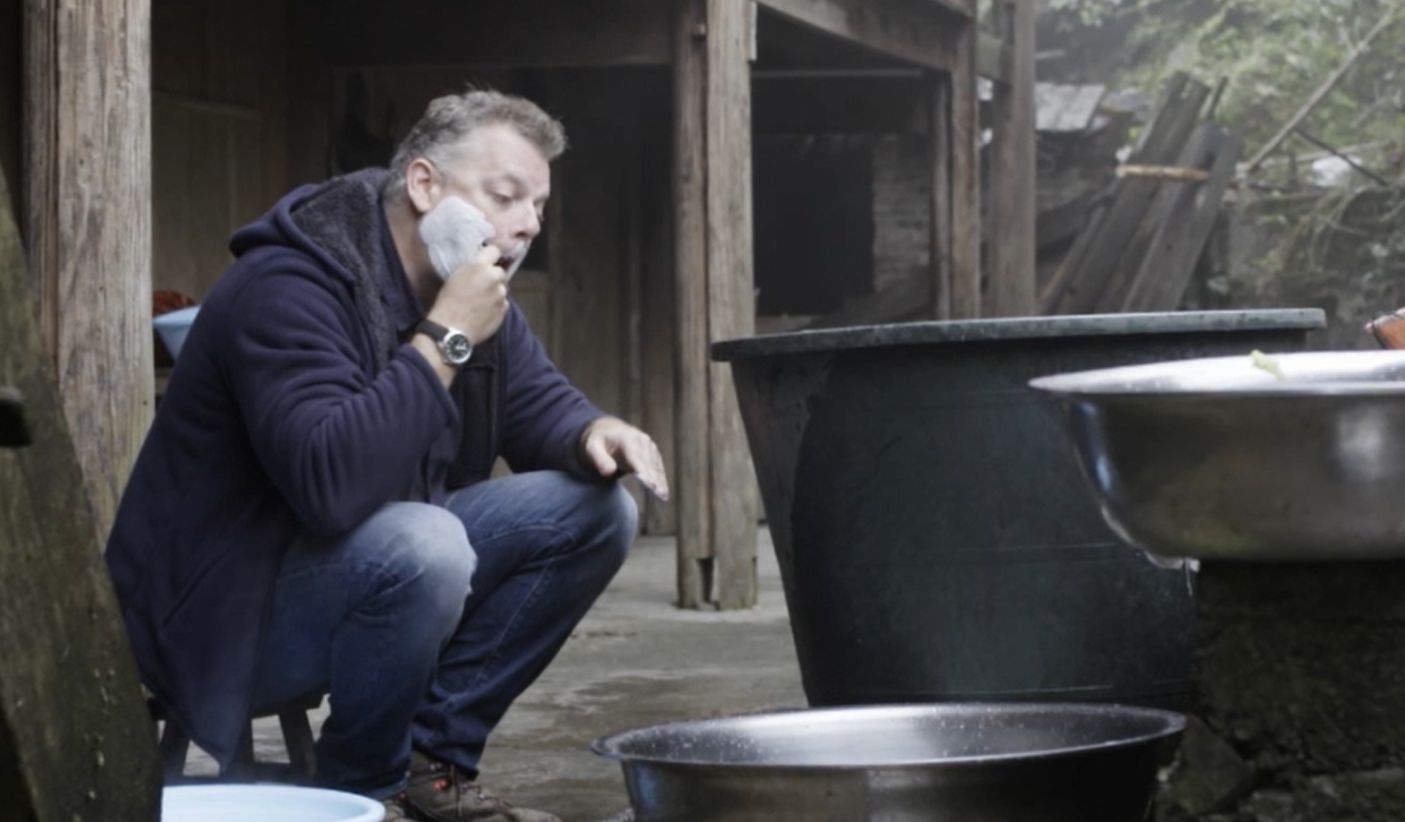
Breath freezes in the air in the morning, and there is no view past the next house, since we are level with the clouds and the whole place is shrouded in fog. I grit my teeth and dowse my hair in cold water in an attempt to get it to assume a reasonable shape. Nobody elsefrom the crew wants to wash.
The fog has not lifted. If anything, it is even worse. We cannot see to the next house, let alone the allegedly stunning vista below. The hill-climbing race has been postponed, if not cancelled, and there is no point in sending up the drone, because all it will be able to film is the inside of a cloud.
With nothing else to shoot, the crew are trying to get footage of the family cooking in their kitchen, but there are already six photographers blocking the view and getting in the way. Some of them are wearing the logo of the Guizhou Photography Club, and have plainly been bussed in with the same vague hope as us of catching something suitably ethnic.
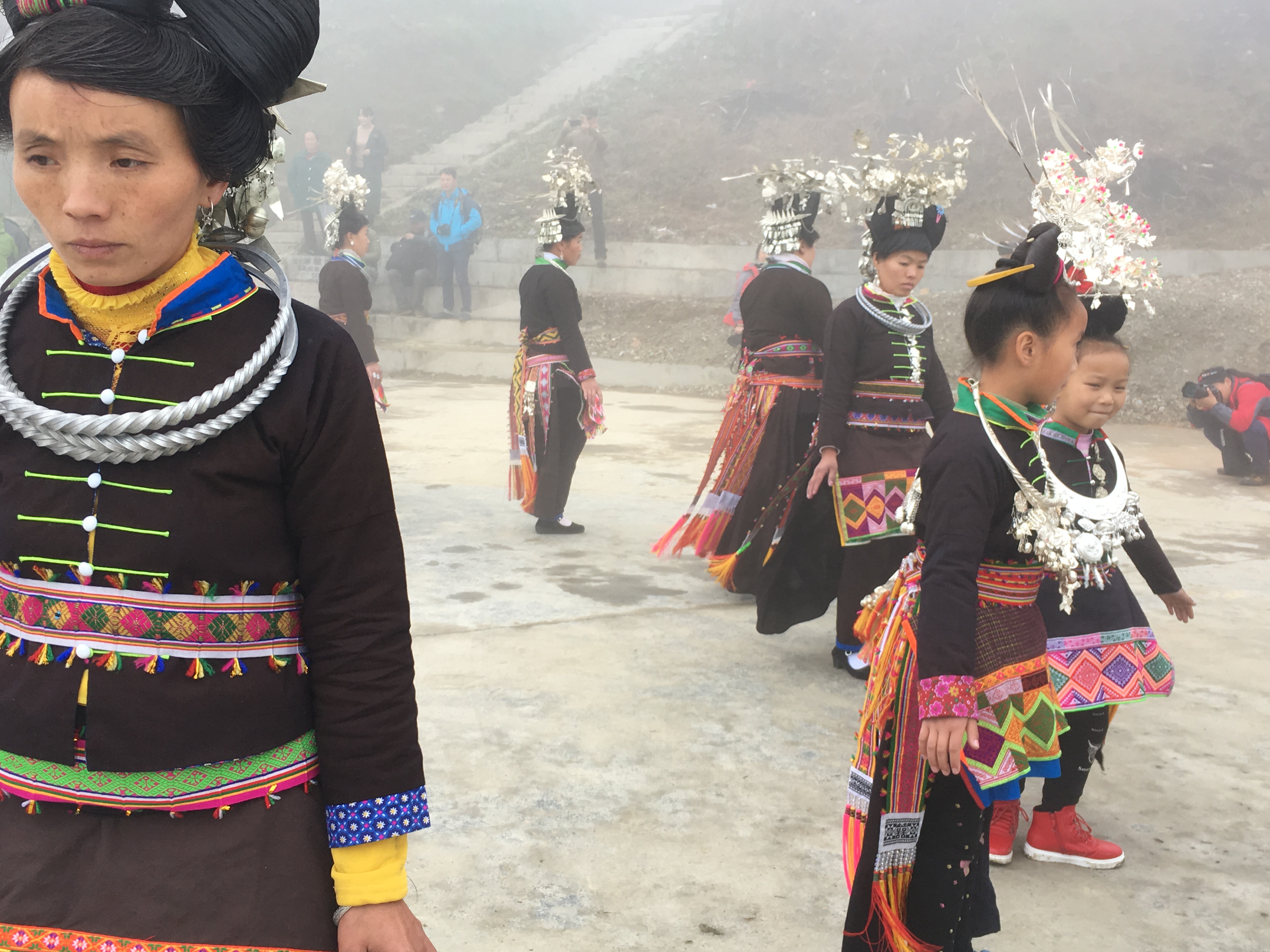
The Miao village women are assembling for the Pheasant Dance in the square. A lusheng band, some of them carrying instruments twelve or more feet high, are blowing a farty, unchanging tune that sounds like The Doors trying to tune up to play “Light My Fire”, with an additional unnecessary tuba player co-opted into the band. The Pheasant Dance involves making a half-hearted motion with one’s hands, as if skipping with an invisible rope, and then shuffling left-left-right-right-left-left-right, endlessly, endlessly, for hours.
There are fourteen or so dancers and a five-man band, already outnumbered by a crowd of photographers, toting expensive Nikons and Canons that they seem ill-equipped to use, with lenses that cost more than a year’s wages for some Chinese. Our cameraman is already getting pissed off with the two dozen, then soon three dozen interlopers, who keep ruining his shots, wandering into the frame and talking over the music. There are even several foreigners – desiccated pensioners with Tibetan jackets and Spock haircuts, grimly pointing their own cameras at the mess.
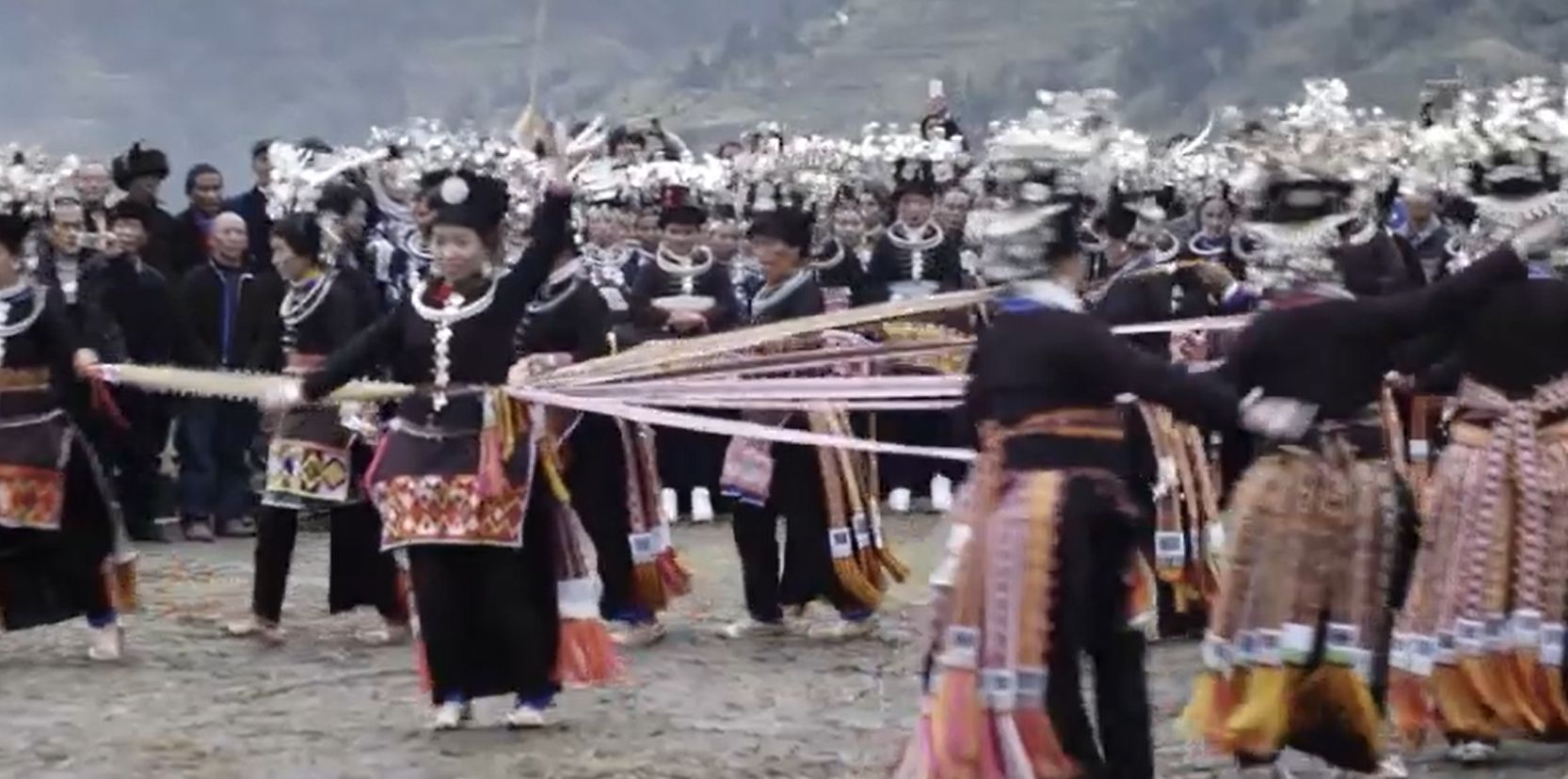
The village women are crowned with elaborate headdresses topped with pewter birds and foil ribbons, wearing dresses that give them bulky hips, tailing embroidered streamers. The embroidery is all done themselves, serving as advert for their potential wifely skills.
The crew and I lurk around the village gate, where we are soon accosted by a bunch of local characters. There is the drunken, bespectacled man from Beijing, who has plainly necked far too many dishes of welcome booze, and wants to talk to me about Northern Ireland. There is the local Party secretary, whom I have dubbed Man With a Stick, because he walks everywhere with a nobbly branch that he insists is used in massage techniques. And there are two giggly girls from a Beijing college who want their photograph taken with me because they have never met an American before. And they still haven’t.
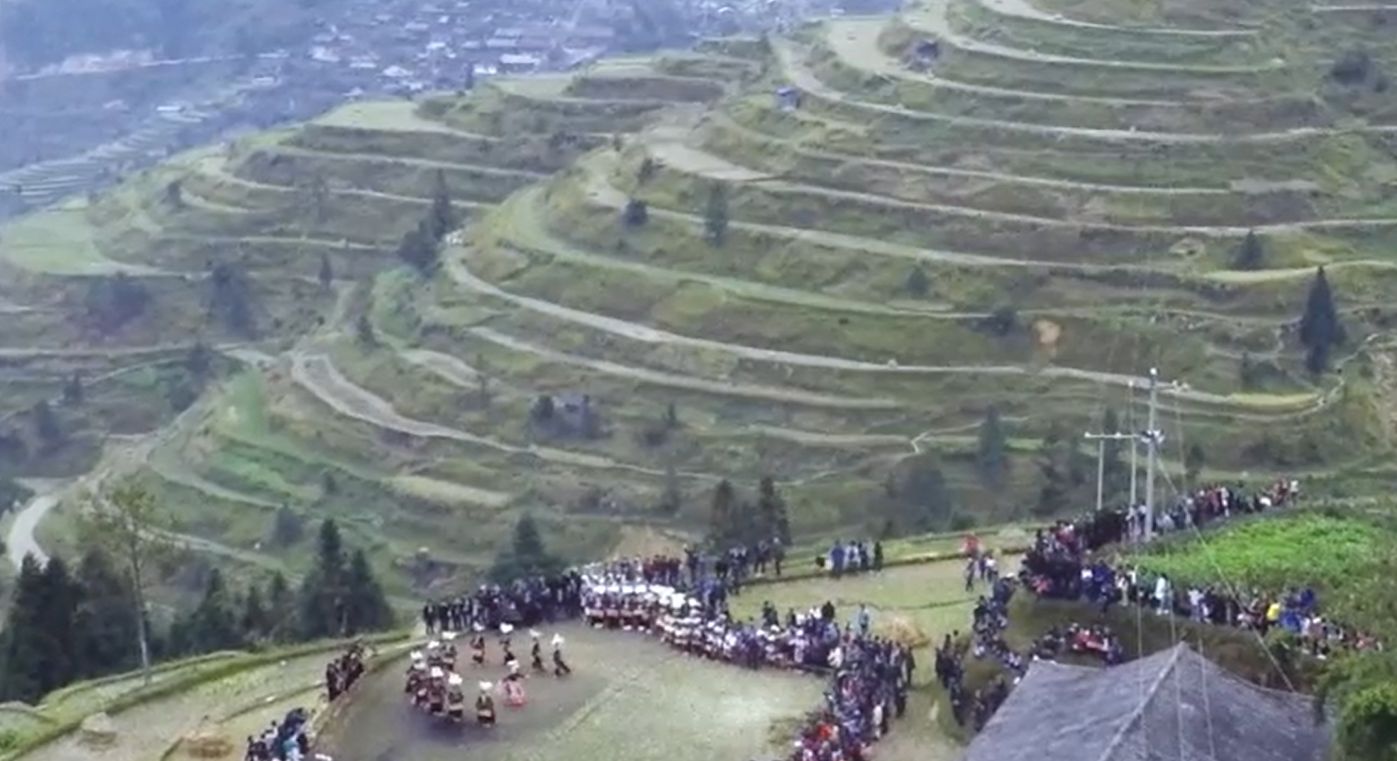
A Pheasant Dance competition breaks out in a drained rice paddy… well, partly drained, as my shoes soon discover. Different Miao tribes compete over their interpretation of the Pheasant Dance, but since the music is the same every time, and you can’t score them for having better headdresses just because they come from a different tribe, the judges (and indeed the crew) resort to judging them on entirely arbitrary criteria – matching shoes, boob size, and whether or not they look as bored as we are. There really is no contest, since the last group on is the local girls from this village, Maniao, who actually have a bunch of different steps and a Eurovision costume-change gimmick where the outer dancers grab the skirt ribbons of the lead girl, and form a pheasant tail behind her.
The director is phoning it in from the house, supposedly because we are droning from that vantage point, but actually because the chaos is unfilmable, and she knows that the best our cameraman can do is snatch some cutaways. It’s not like we need new audio when everybody plays the same song; the light is fading; the background looks like a building site in the mist, and the place is full of middle-aged men with preposterously expensive cameras, trying to snatch a “National Geographic”-style bit of local colour, and ironically preventing National Geographic from doing so.
I am perhaps the last to realise that today is a disaster. I have been hired, at least in part, for my curiosity about such things, and I confess that I stayed to watch the welcoming ceremony because I wasn’t going to travel for ten hours and not see it. Our director and cameraman, with an eye on the visuals, probably worked out at lunchtime that there was no point in shooting any more footage today. The rest of the crew just took the path of least resistance.
A huge dance, a swirling circle of all the Miao tribes, is kicking off in the main square as the sun sets, with all visitors invited to join the end of the invisible-skipping-rope conga line. But by the time it begins, I am all alone from the crew, radioing back up to the house with increasingly plaintive reports about the number of dancers and the tribes who have joined the fray.
“Thank you for the commentary, Jonathan,” says the director carefully over the walkie-talkie. “But come back to the house. Today is a wrap.”
“He had little time for magic swords or charmed arrows, since any everyday weapon could become ‘magical’ in the hands the right martial artist. Indeed, as he noted, the higher echelons of martial artists should have no need for weapons at all, since they had become so at-one with the universe that they could draw upon the qi around them to fashion their bodies into deadly weapons. Perhaps out of a sense of deliberate contrariness, he even bucked against the trend for morose, troubled knights errant, pushing instead for libertine, sensual ‘happy heroes,’ an idea which would itself form the basis of his novel of the same name, inspired in part by John Steinbeck’s novel Tortilla Flat (1935).”
Out today from Arrow, the majestic Shawscope #3 box set, which includes my long article on the writer Gu Long, and my feature-length commentary track on the Song dynasty historical epic 14 Amazons (1972).
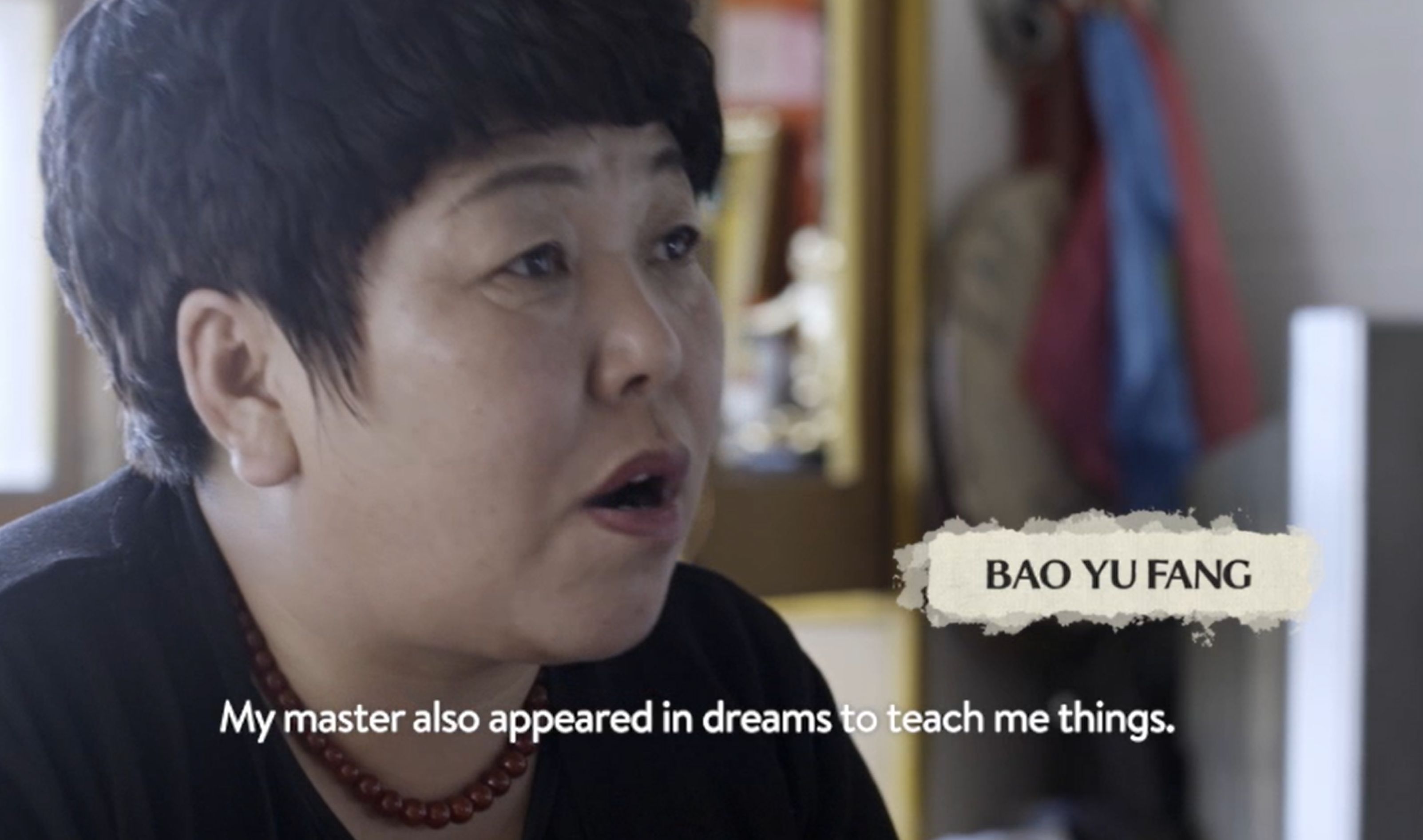
Yufang, the instigator of the infamous “OKAY, OKAY” dance, has invited us out into the countryside to witness a qingshen ceremony, in which the gods are invited into someone’s home. The director accepts, figuring it will be more shamanic mentalism.
Yufang and her long suffering husband live in a single-room cottage two hours outside of Songyuan, next to a pig sty, and with a back yard that swiftly turns into a field of maize. Their single room is dominated by a kang, a traditional Chinese heated dais that functions as central heating, stone sofa and warmed-up bed – I lie on it, enjoying the sense of history and attracting the unwelcome attentions of the local cat. There’s plainly not a lot to do out here in the countryside. Yufang, along with all the other people we meet here, has an odd notch in one of her front teeth, which I first mistook for a shamanic initiation symbol.
“Oh no,” she giggles, tapping her gappy tooth. “That’s where we bite on the husks of sunflower seeds. It wears down over the years.”
It slowly sinks in that the foreign idiots she has invited to her house are actually a film crew, and that far from merely hanging out with us to prolong the fun from our days in Songyuan, she will actually be appearing on camera. The interview is postponed for five minutes while she slaps on some lippy. In all our dealings with the shamans, Yufang has been the clown and the Head of Morale, ever ready with an impersonation or a piss-take to liven things up when we’re standing around in the cold waiting for Mickey the drone pilot to warm up his batteries. But when the camera is pointed at her, she is suddenly all business, prim and serious.
“There’s no way I can make a living here as a shaman,” she sighs, gesturing outside her window at the tiny huddle of nearby houses. “Maybe if I was in the big cities, there would be more work, but less people in the big cities actually believe in this.”
I am not sure that all that many of the locals believe it in, either. The neighbours soon gather to gawp, standing not only around the Buick as the crew try to film me, but wandering unbidden into the house, where they have no compunction about hawking up a mouthful of phlegm and spitting it onto Yufang’s kitchen tiles.
Yufang shows me her shamanic credentials, since Gorlos shamans are now accredited by the government, and also by the committee that runs an annual wizard school at Changbaishan, (Long White Mountain) on the border with Korea. There are nine grades to attain, none of which have anything to do with actual religious belief at all. Instead, the government recognises shamanism as a cultural performance, and insist on shamans achieving acceptable levels in dance classes, paper cutting, knife walking, costume, and sundry other handicrafts.
These include drum-making, which Yufang’s long-suffering husband (I think it’s fair to add the prefix “long-suffering” to all the witches’ husbands I have met) has apparently got himself a qualification in. He shows me a rancid bucket in which a sheep’s skin has been soaking for several days.
“The hairs are much easier to pull out if you soak it for a couple of days,” he says brightly. “And the bonus is that in winter it doesn’t smell so much.”
Yufang’s husband and I sit glumly pulling hairs from the wet skin in the bucket, which feels like I am sticking my hand into the cold bathwater of an entire pack of wild dogs.
We then piss about hammering designs into the metal crown, but the sun is already setting and our hearts aren’t really in it. Yufang is already cooking dinner, ready for the big event, which will be a four-way qingshen after dark.
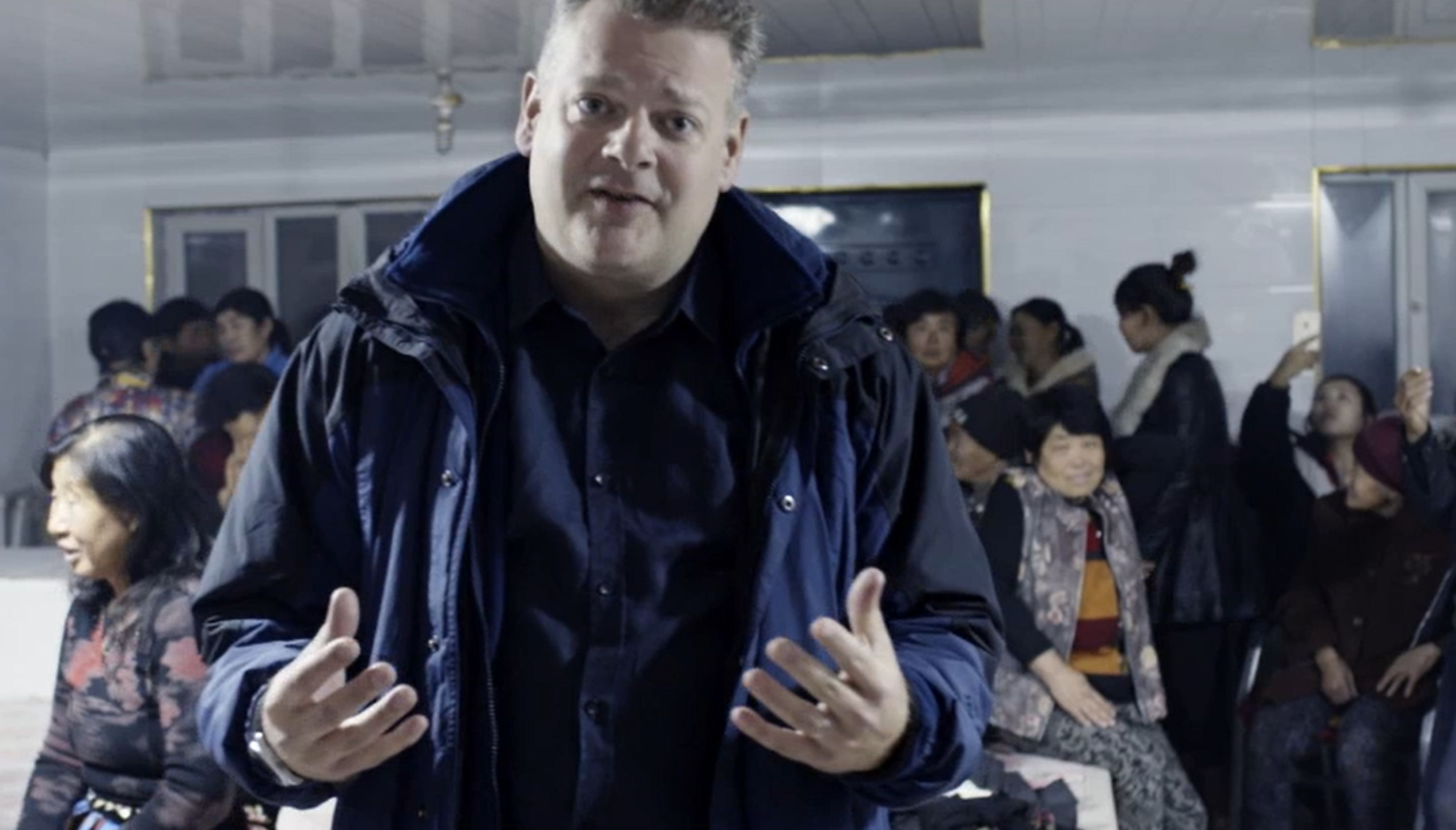
A crowd gathers. The entire village empties itself of a bunch of wizened crones and tubby men, with a couple of hot-looking yummy mummies and a one-eyed granny, all of whom pile into Yufang’s kitchen and start staring variously at either the shamans or the film crew. For once, the director doesn’t call for quiet, but gets me to do a piece to camera in the middle of all the hubbub, surrounded by snickering yokels who believe my name is Foreigner.
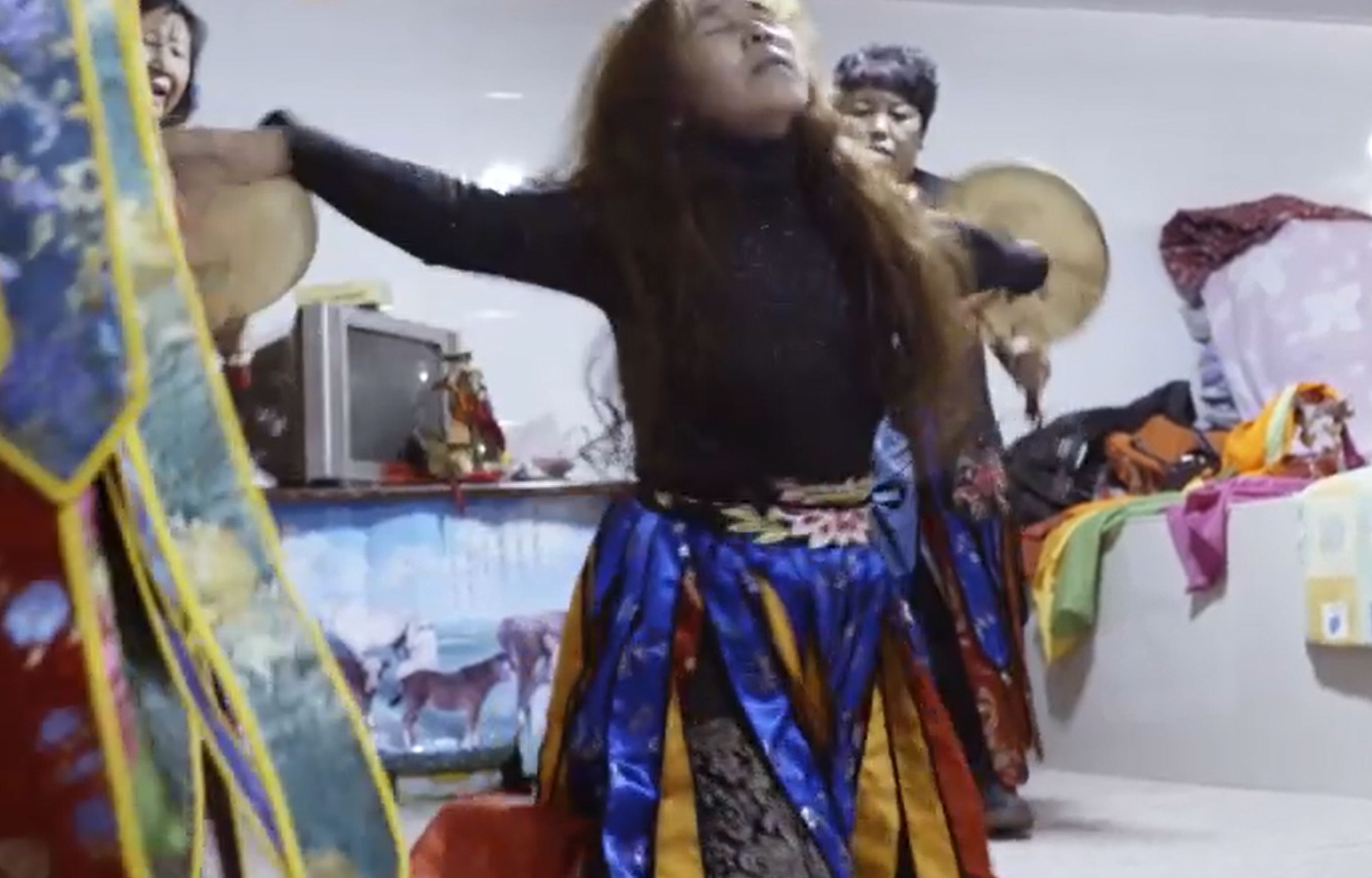
The shamans start chanting and skipping in circles, spinning ever more wildly. In each case, the person to be possessed is the only one in full finery, including the all-important beaded fringe that hides the host’s eyes from incoming spirits. The first up is a woman I refer to as Wallflower, who seems very quiet, but has always gamely jumped into all the ceremonies, and has been there for everyone. As the door to the icy fields outside is opened, she spins and whirls, her arms suddenly outstretched in an imitation of wings.
She throws herself back onto the kang, and sits there panting, and growling repeatedly: “FIRE! FIRE! FIREFIREFIRE!” Yufang’s husband lights a fag and hands it to her, and she smokes the whole thing down in seconds, rotating it rapidly as she puffs. Suddenly, when most of the cigarette is ashes, she flips it around and sticks it in her mouth, chewing on the ashes and the lit embers and chasing them with a few mouthfuls of the local hooch. She whispers a few words in guttural hisses to Yufang, revealing that she is an Eagle Spirit who has popped in to see what’s happening, and then she announces that she is leaving.
She jumps to her feet, spinning and flapping again, and two men position themselves by the open door, to stop her flying away along with the soul inside her. Wallflower charges at ramming speed straight for the door, but she is physically stopped while, we are told, the Eagle spirit flies from her mouth. The room is quiet once more, except for the sound of Wallflower retching and throwing up on the doorstep, as you might well do if you’d gargled a lit fag with a vodka chaser.
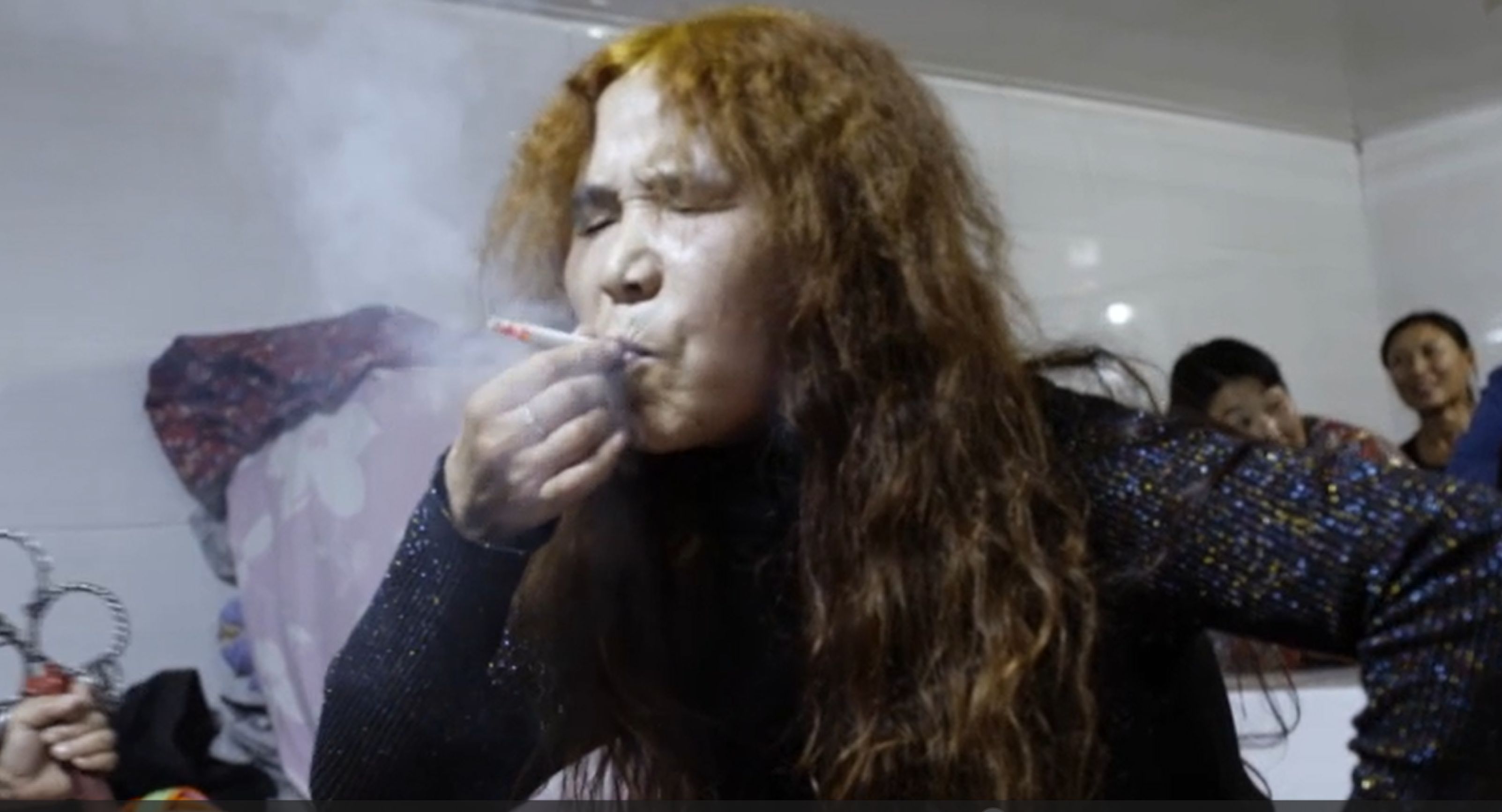
Next up is Red – not her real name, just what I have ended up calling her – a sour-faced old lady with a ginger dye job, who similarly dances in circles and similarly welcomes an eagle spirit. But when she grabs a lit fag, she immediately inverts it and puts the lit end in her mouth and blows, which turns out to have an effect not unlike a smoke machine. Then, she is also hunched over the doorstep, throwing up.
Yufang is next, and apparently receives the spirit of her own grandfather, who doesn’t have much to say, but does neck an awfully large amount of booze before coughing a lot and growling.
Afterwards, there is a break when Yufang asks to see the director’s monitor, as she has never seen what happens to her when she is in a trance. She stands there, clutching the small TV as Daniel plays back from the camera. She shakes and weeps at the sight and sound of her grandfather’s spirit.
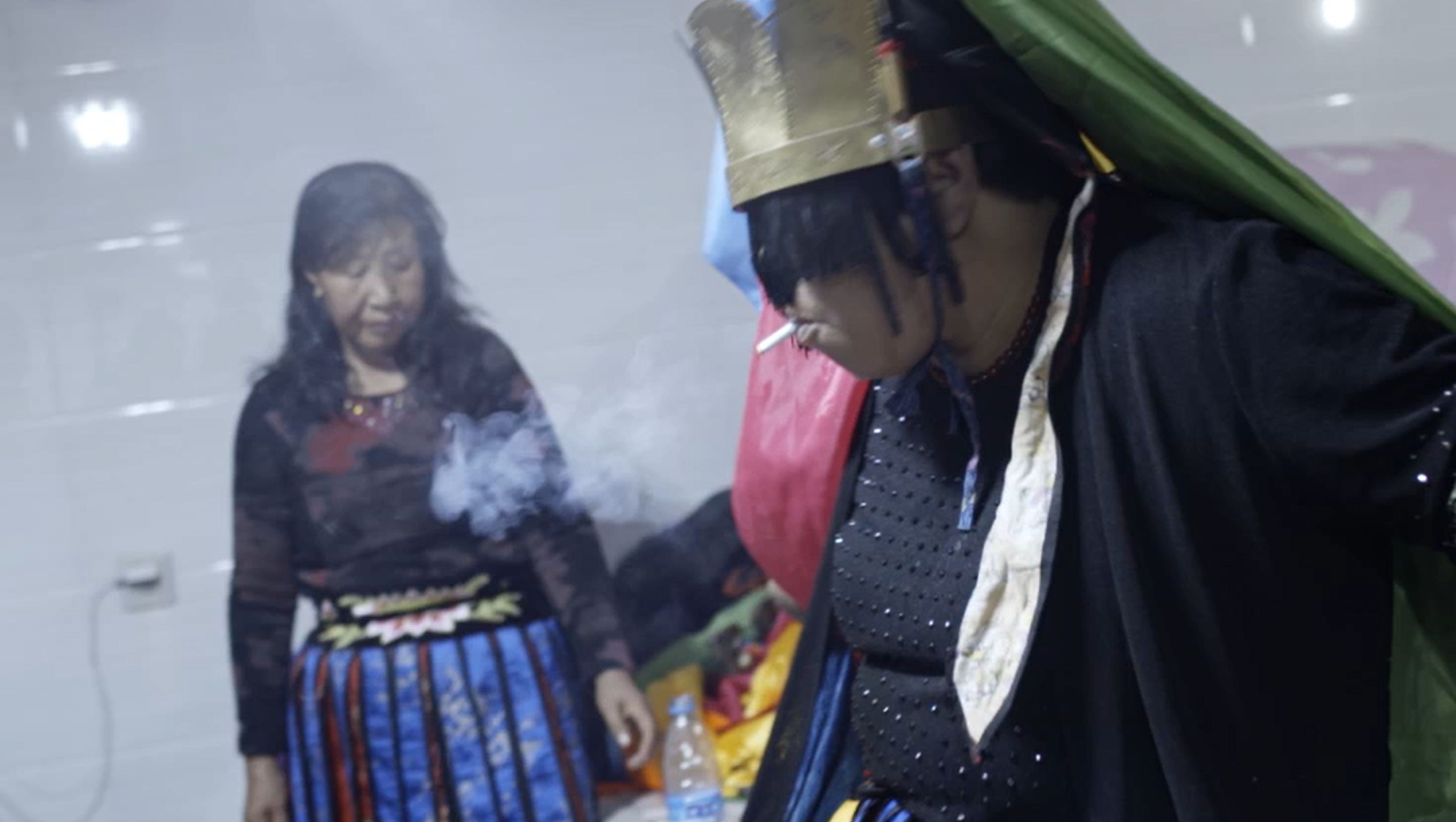
The last of the women is simply called October, a name of such startling lack of interest that it suggests an entire lifetime lived as a parental afterthought. She turned to shamanism in her late thirties after an unspecified illness, and reports that she, too, had no interest in it until it cured her. Shamanism has plainly given her something to shine at, and she is the big finish, in which she will not merely invite a spirit to pop into her body for a bit, but will actually swap souls with it for a while. This looks not unlike the process from before, except she flings herself around with somewhat gayer abandon, and doesn’t ask for any fags, which is a relief, because the place is starting to smell like a fire in a sofa factory. Instead, she downs three quarters of a bottle of firewater, makes a few bibbling noises, and jumps up to her feet. The two catchers rush to stand guard at the door, and October makes a run for it, but is so munted by this point that she actually misses the door by three or four feet, instead running straight into the wall next to it, and bouncing off like a drunken clown with a gold crown and rainbow streamers, smelling of hard liquor and carrying a tambourine… if you can imagine that.
The day before, I had joked with Mandula the musician that his 20-a-day habit must be have been a boon for throat singing. “Oh yes,” he replied, straight-faced. “And so is booze.”
I bring this up because one of the unique selling points of shamanic performances is that the women suddenly speak with the voice of men, which, I suggest to you, is easier if you’ve just smoked three tabs in a row, stuck the last one into your mouth while still lit, and gargled with a bottle of industrial-strength vodka. I will also observe the odd way that Wallflower smoked her cigarette, twisting and twisting as she puffed… possibly an odd spirit-world affectation, but perhaps more likely to be a way of keeping all the ashes balanced in place, instead of allowing them to fall on the floor before she could stick them in her mouth. In other words, an oddly organised approach from someone supposedly in a trance.
Michelle our associate producer was very impressed with it all, and as an exorcist’s daughter, she is usually the crew’s go-to girl for spiritual matters. But I found the whole thing to be an elaborate carnival of parlour tricks and stunts, performed rather than enacted, by a bunch of women who can pack the whole village into their living room if they purport to be consorting with talking eagles. The sceptical reader might also note the degree to which Yufang was waving around her stack of credentials from the Long White Mountain School of Wizards, which strikes me as about as useful as a loathsome “Team-Building Exercise” in a Northampton adventure playground.
But there was something about the look on her face as she watched herself on the monitor, and the tears on her cheeks as she heard her grandfather’s voice, that made me doubt myself.
Jonathan Clements is the author of A Brief History of China. These events featured in Route Awakening (S03E03), 2018.
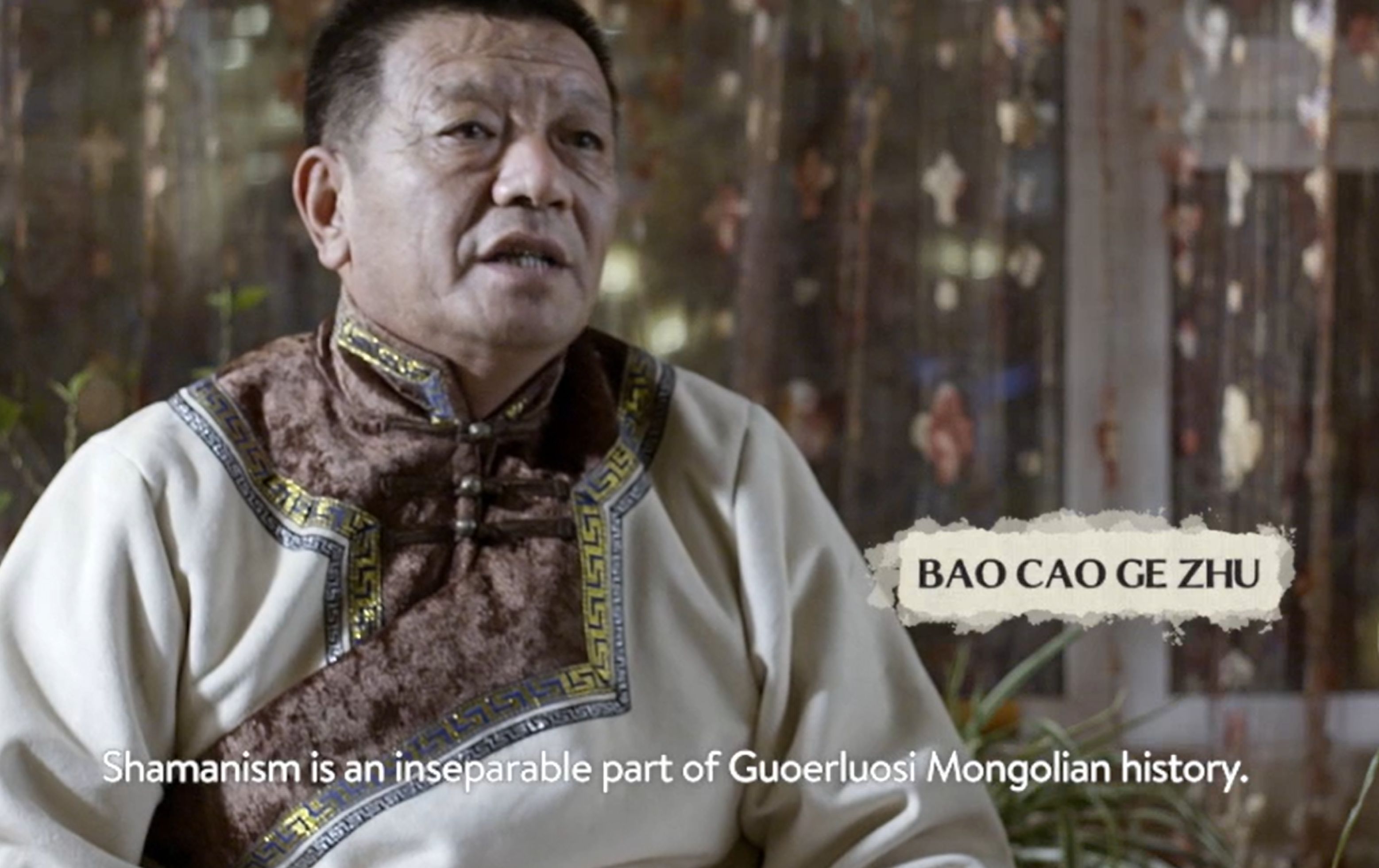
Mr Bao has turned up in a long Mongol robe with a trilby perched incongruously on the top. He is here to talk about the intangible cultural heritage of Mongol epics, which he sings and talks through while playing a sihu.
The sihu is a fiddle-like instrument, like the erhu, with a soundbox at the base, a long shaft held perpendicularly, and four strings, played by a double-stringed bow so that two strings are sounding at any one time. Mr Bao’s performance includes a bunch of little tricks, adding vibrato by shaking the shaft rather than the strings, adding a drumbeat by clicking the edge of his bow on the soundbox while he fiddles, and flicking the strings to make them thrum. All the while he sings and yells through the story of Toqta-Temur, the last non-Muslim leader of the Golden Horde and the great-great-great grandson of Genghis Khan. Toqta spent a large part of his “reign” fighting off civil war with other Mongols and insurgencies by the peoples of Eastern Europe, which leaves plenty of time in his epic to talk about his attacks on the Russians his war with his cousin and former ally, Nogai, to whom he had once rashly given the Crimea.
Late in his reign, around 1304, he and his cousins accepted the authority of the grandson of Khubilai Khan, thereby restoring peace to the Mongol Empire that had, in fact, not been peaceful at all at any previous point. He declared war on Italian merchants in the Caucasus, and eventually married a weeping teenage bride, Maria Palaeologus, the daughter of the Byzantine Emperor. But none of us get much of the above, because Mr Bao is singing in Mongol.
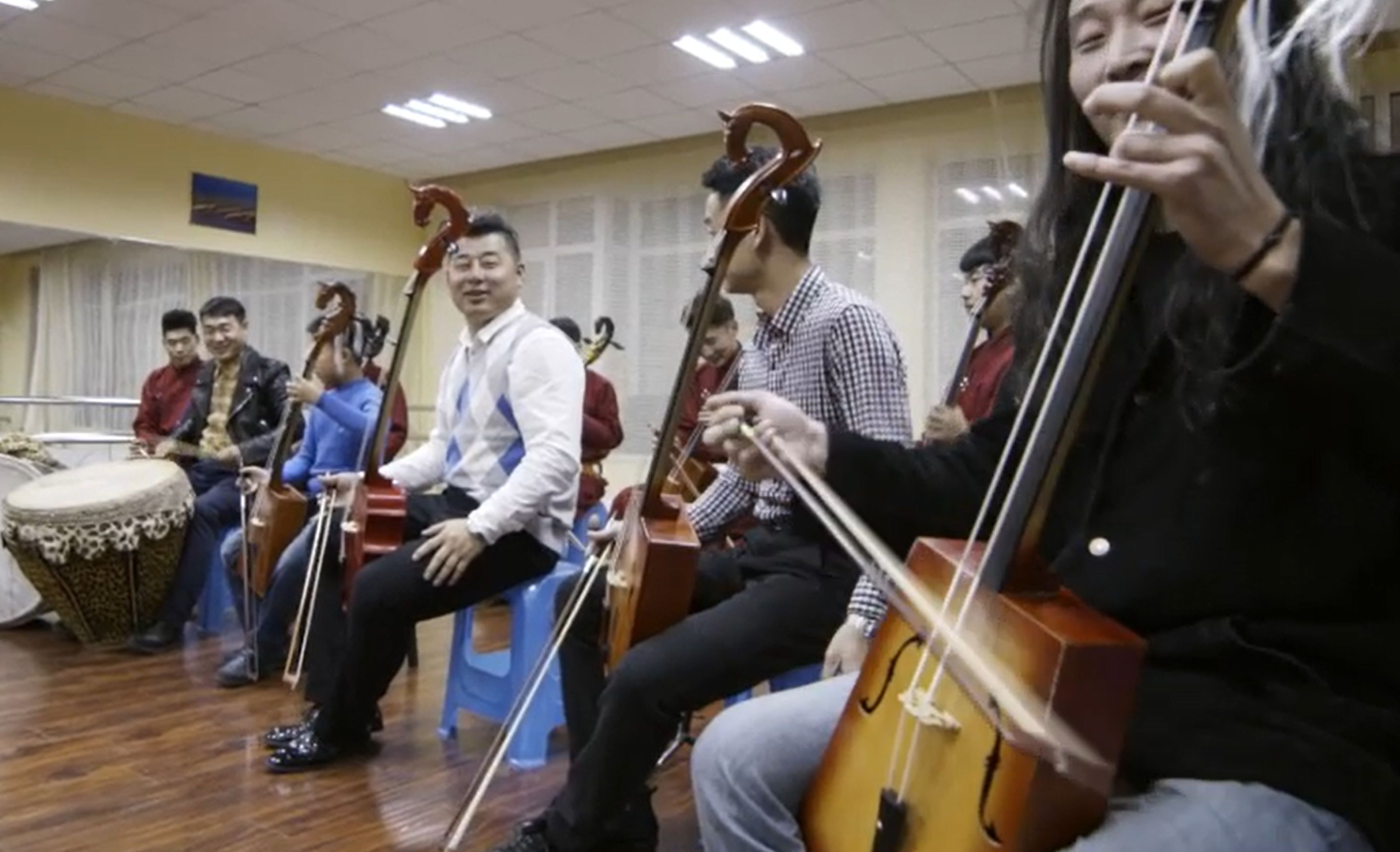
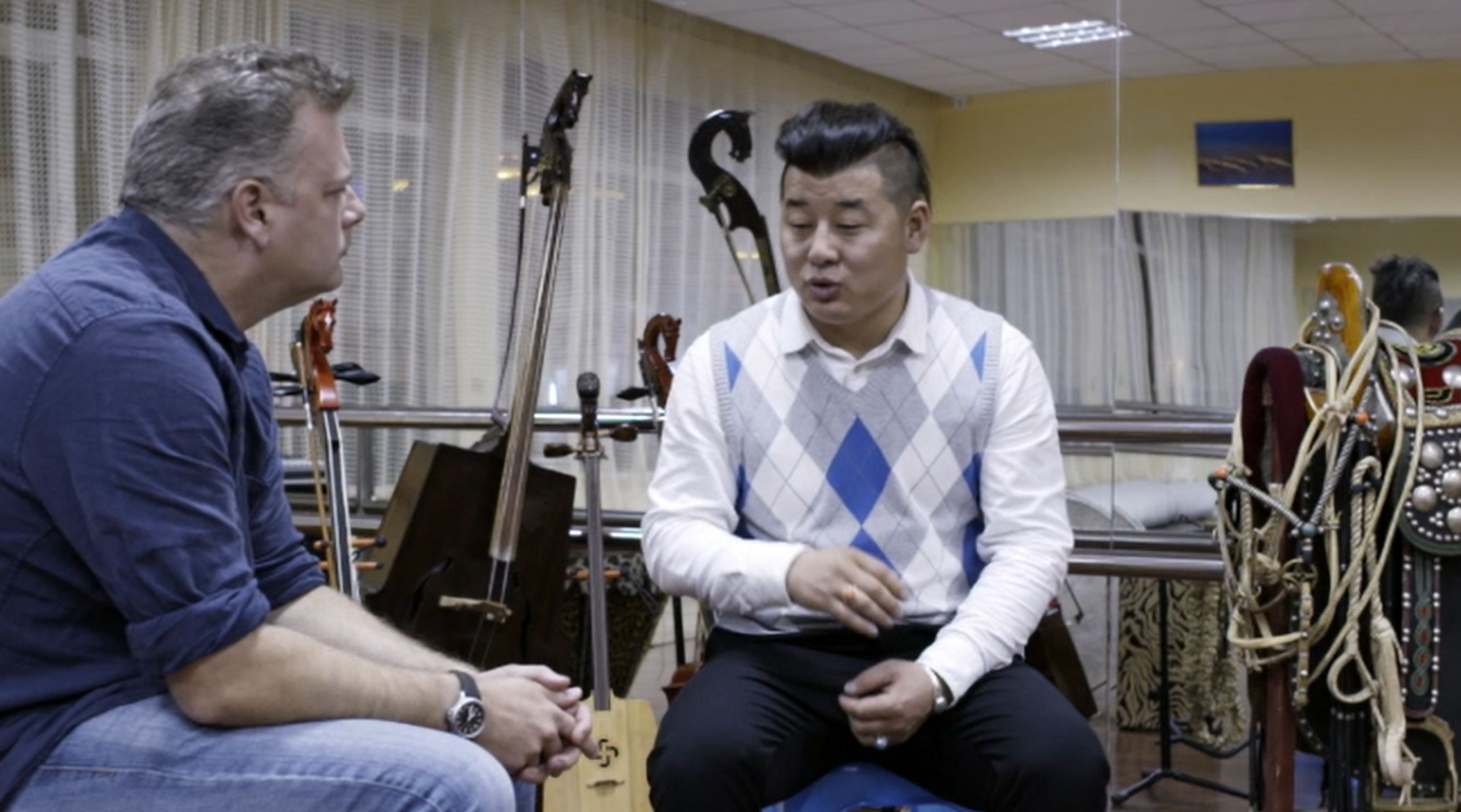
Late in the day, we relocate to the Mandula music school, where a man called Mandula leads the Mandula band. It’s a proper hothouse for the musically gifted. Lessons start at half past seven each morning, with normal schooly-type stuff up to lunchtime. From one o’clock to half past eight each afternoon, the tuition is entirely musical. Mandula is something of a teddy boy, favouring a long purple coat and well-polished winkle-pickers, as well as an impressive mohican. He has something of the rock star about him, but has accreted an impressive array of students – a bunch of youths playing erhus and sihus, as well as a statuesque singing girl in a searingly white slinky dress and a Mongolian dildo hat, several drummers, a man who plays an instrument made from a string of sheep’s kneebones, and a gaggle of groupies. This last group seems to serve no actual purpose, but clutter up the practice hall, sneaking photographs of the camera crew on all occasions. I am sure that within a few weeks, framed pictures of the National Geographic crew will join those already on the wall of his students with various C-list celebrities, and/or clutching prizes for princely sums like £10.
We shoot them playing a 20-minute set that I wish I could have bought on CD, although sadly we will be unable to use the moment when Mandula got bored and decided to break into the Game of Thrones theme – music clearances.
I am really enjoying being with the Mongols. They are easy interviewees, talkative and friendly. One doesn’t feel that one is dealing with a hostile witness, but instead with someone who enjoys the attention and is keen to make a good impression. Mandula in particular, who has written a book of horse-head fiddle music and appeared several times on some sort of national show like China’s Got Talent, has got plenty to say for himself, and gamely tries to teach me how to do the droning Mongolian throat-singing called khöömi. It takes three months to learn, apparently, so there is not much hope of me getting it right in ten minutes, but there is plenty of fun footage of us growling at each other, bibbling our lips and impersonating goats.
Mandula then reveals that as well as leading a band of Mongols, he has attempted to integrate ancient and modern by combining khöömi with rapping. This seems too good to resist, and so the director asks him to give us a whirl. He throws his teddy boy coat behind him, where there is a minion poised ready to catch it, and launches into a beatboxing horror that sounds like a herd of goats falling down some stairs in an echo chamber.
The director gets us to finish by droning at each other: OOooooOOoooOOeeeh, OOowowooowowo, Errrrrrgle. I’ve had worse Wednesday nights.
Jonathan Clements is the author of A Brief History of China. These events featured in Route Awakening (S03E03), 2018.
Awake before dawn so that the three-hour drive back to Lijiang still puts us there before breakfast, all the better to get a day out of it. But nobody knows what day to have. We need something Naxi-related and preferably fertility related, and the best Mack can rustle up is an afternoon masterclass in pictograms with Mr He, our favourite wizard. So we do some driving shots around Baisha and select a restaurant to charm so that we can use their upstairs room as a jury-rigged studio. We end up in a place that has its own micro-brewery, with predictable results.
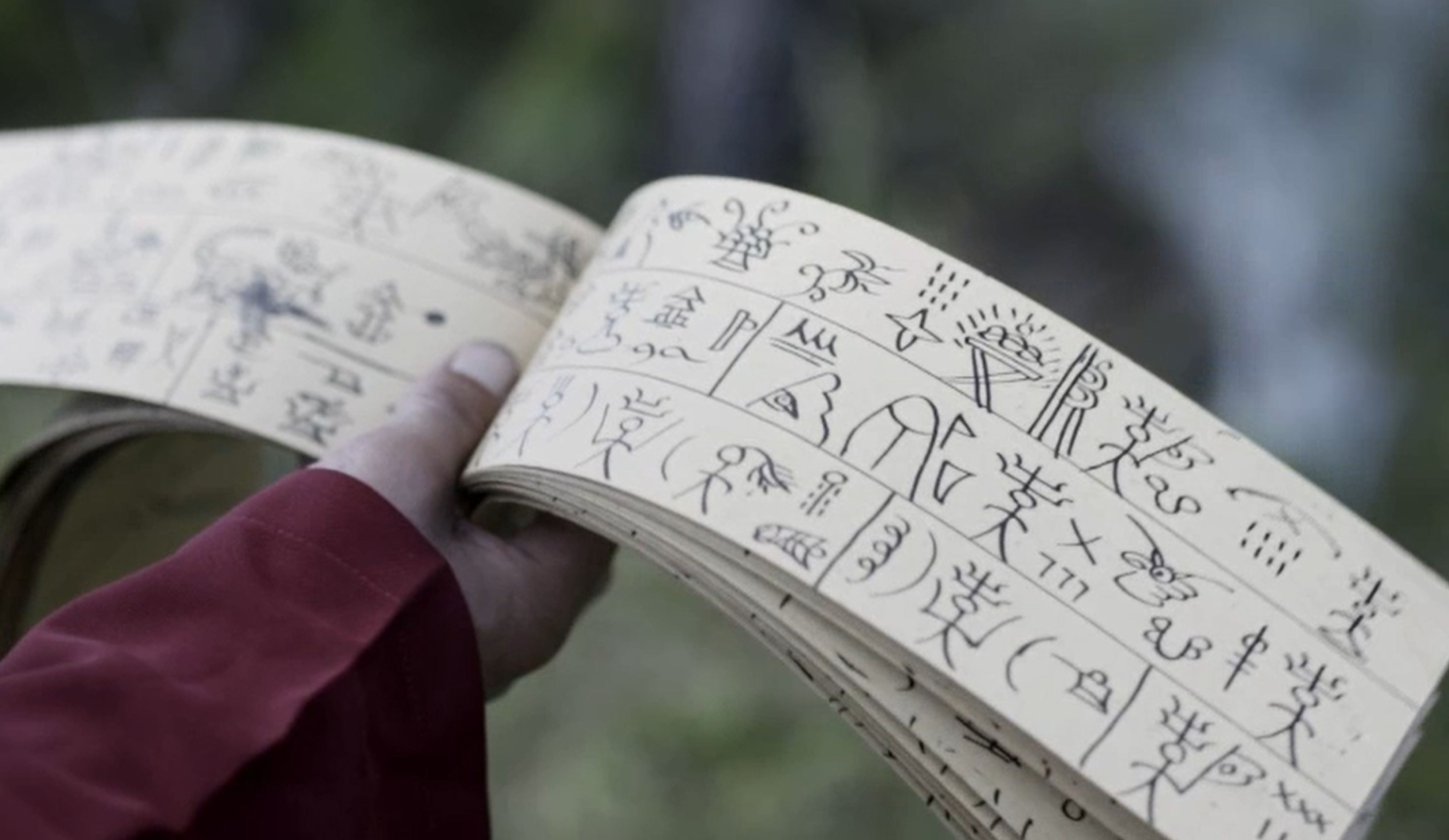
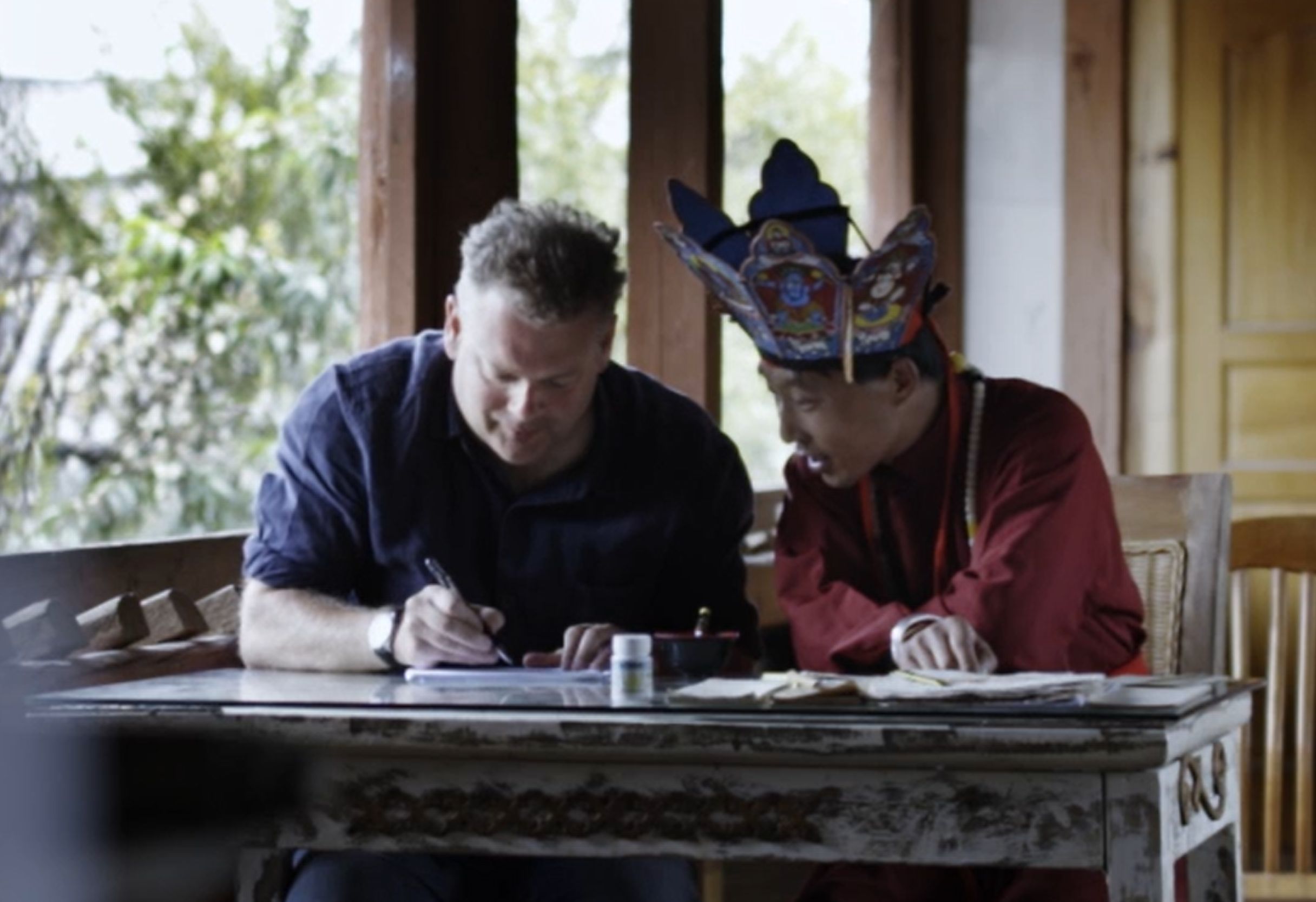
Somewhat merrier, we set up for the wizard, who has come to teach me some of the Naxi pictograms – the world’s only living hieroglyphic script. We start with some simple ones like house, man, and family, and soon progress to more complex ones like the various words for animal or a particular kind of sacred mountain. I ask him how the Naxi handle modern inventions, and he takes a new piece of paper to show me the words for aeroplane, television and computer.
Fine, I say, you can draw an aeroplane. But what about the wizard down the road?
Oh, says Mr He, there’s a dongba council that rules on the correct way to draw new words. So we all draw them that way.
We finish up with him writing a sentence in hieroglyphics and asking me to translate it. It contains seven characters, only two of which he has taught me, so I have to wing it. The seventh is “home” and the sixth is a man on two lines, which I guess means “walk”. The second is river and the fourth looks almost exactly like the Chinese character for rice paddy, while the fifth is a man who appears to be carrying a bag.
“Crossing the river,” I say, “I harvest crops and return home.”
Not crops, he says, “corn”, but he is plainly impressed. But this is how I have been reading Chinese for twenty years. It wouldn’t be the first time I had to deduce meaning from a sentence with only two reference points.
Jonathan Clements is the author of A Brief History of China. These events featured in Route Awakening (S03E04), 2018.
I’m on Late Night Live tonight in Australia (and online for listeners elsewhere) discussing my book Rebel Island with David Marr, on all sorts of issues including Australia and Taiwan’s similar experience of indigenous issues, jungle warfare on the Kokoda Track, and “semiconductor sovereignty.” With 50,000 Australians having been born in Taiwan, I’m expecting a chunky audience.
Hongyan, the village where we have spent this week, is three hours from Lijiang. We have driven a further three hours on the winding mountain roads, which have turned into single lane tracks, and peter out here, on a precipice, above a squat, concrete dam. Two Chinese men are waiting for us in a flatbed tractor, the only vehicle that can make it up the slope and along the muddy pathways for the next half an hour before we reach our destination – a remote hilltop farmhouse where Master Peacock makes knives.
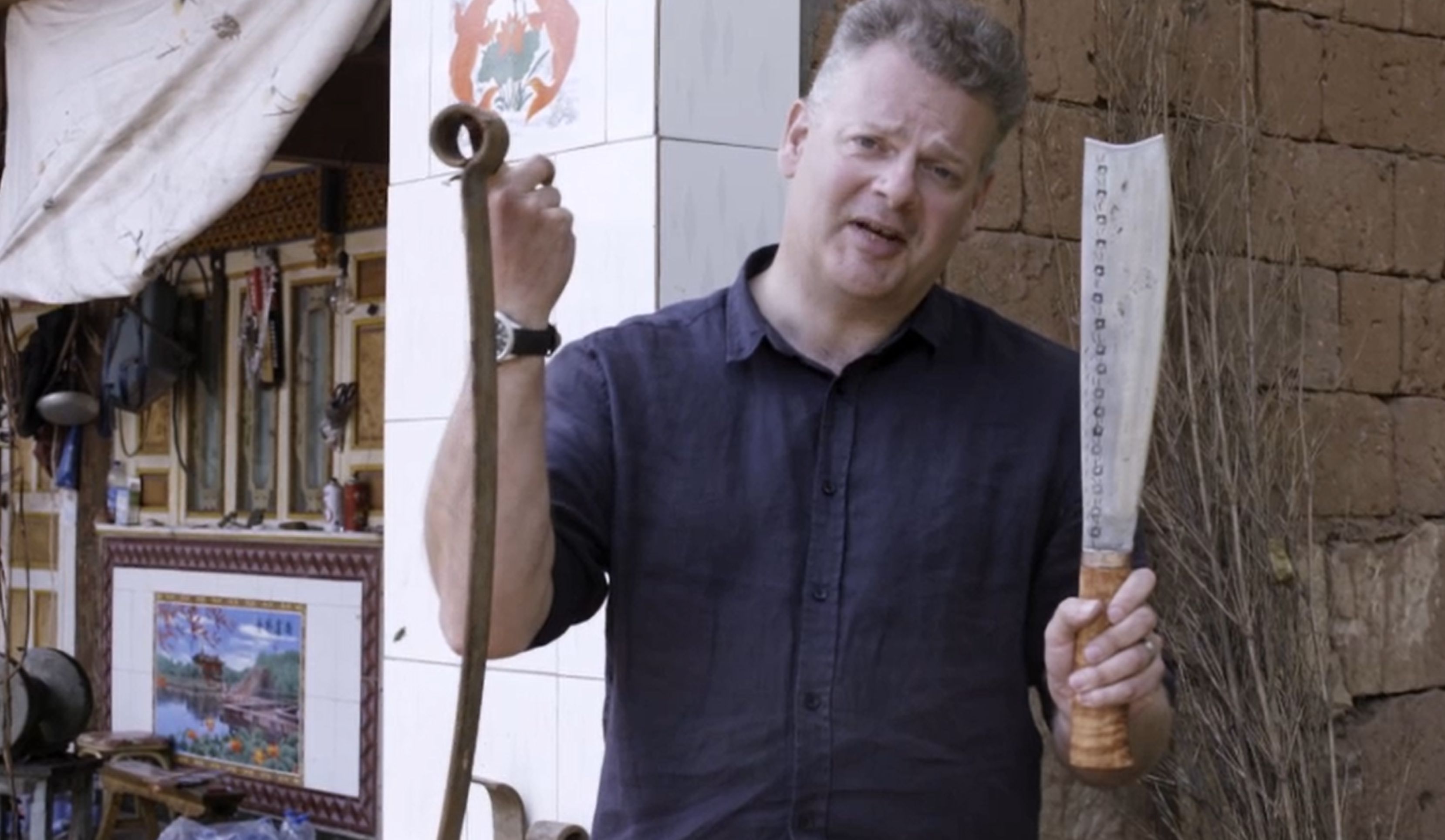
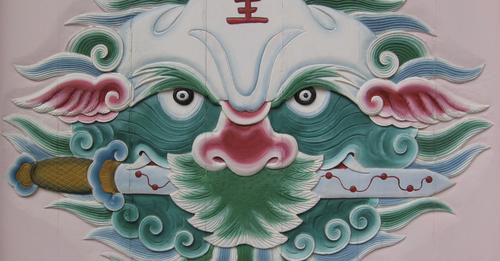
This is the second Peacock we have had to deal with here, so I shall redub him John Craven in a Lenin Hat. John Craven in a Lenin Hat doesn’t just make knives, he makes the iconic fork-topped machetes that are an iconic symbol of Lisu manhood, and even show up on the Lisu crest.
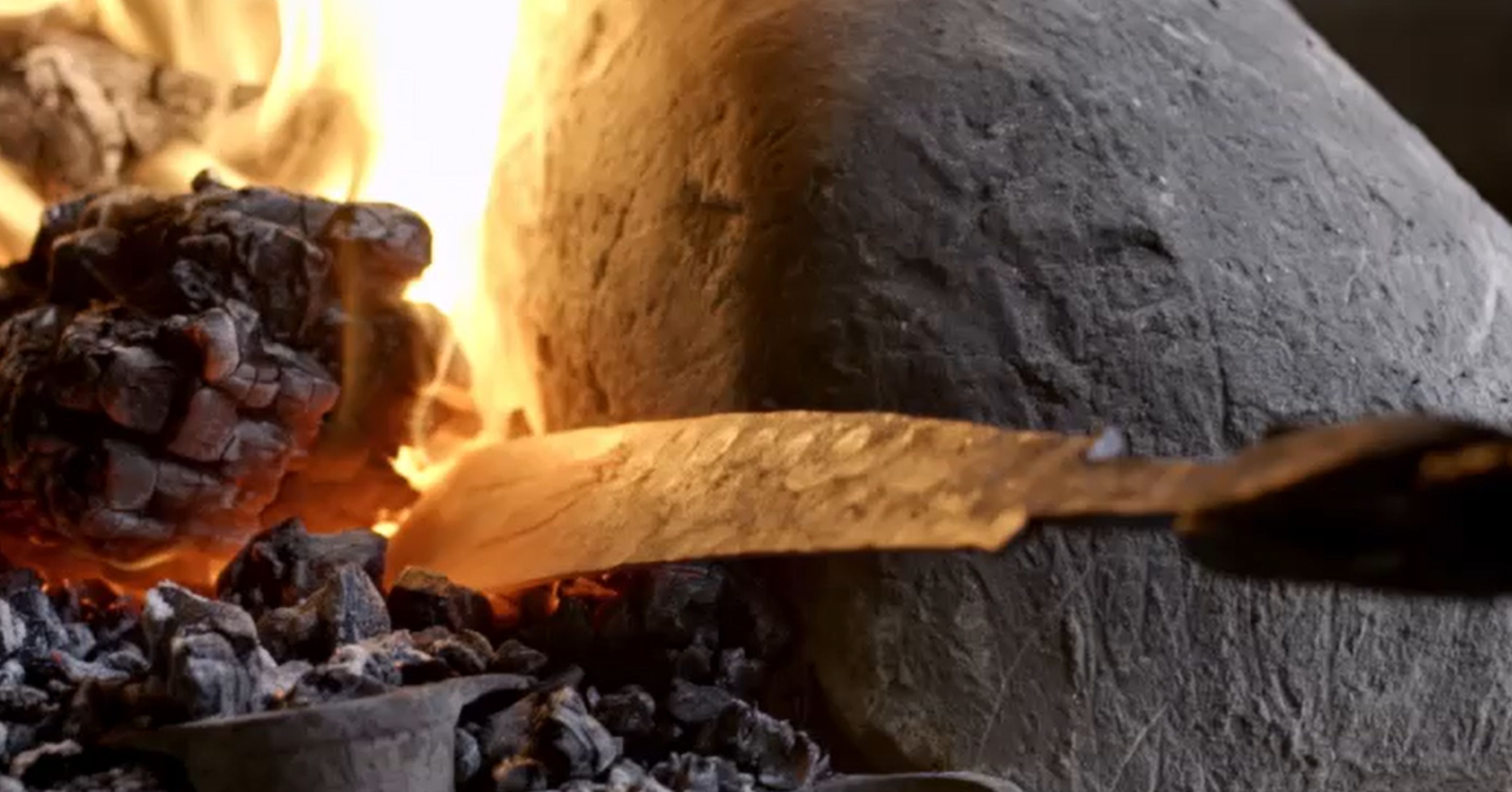
He makes them out of truck suspension springs, which turn out to be good steel even when the truck is broken up. He breaks off a piece of roughly the right size, and hammers it in his forge until it is done, firing the flames with a bellows the size and shape of a coffin, operated by a giant pump handle. I briefly step in with his son to hammer on one side of the anvil, but John Craven in a Lenin Hat doesn’t speak Mandarin, so there are no interviews to be done – most of today’s shooting is B-roll of him at work, while I sit on a rock and wait for my next 20-second piece to camera.
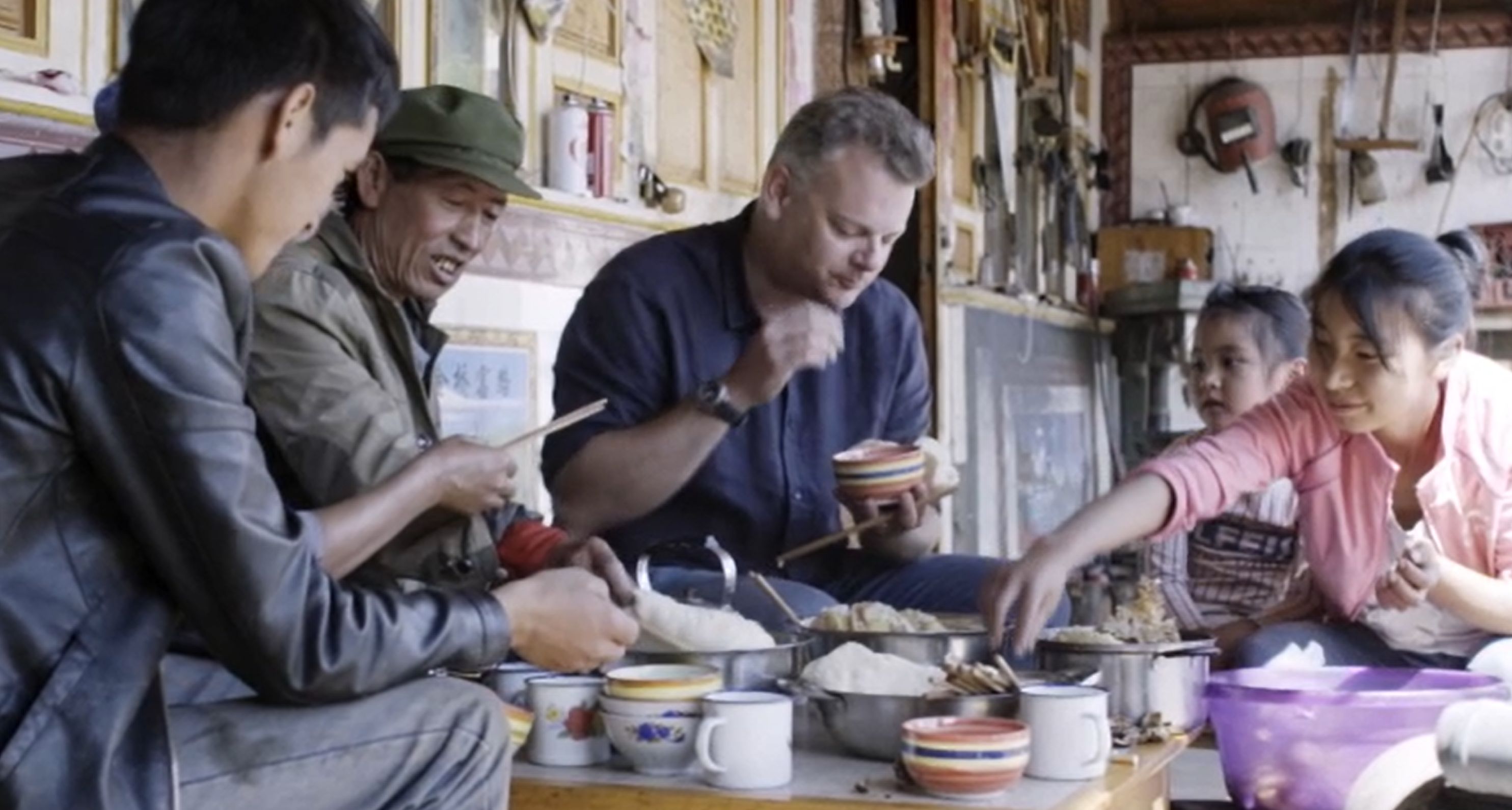
For lunch, his wife lays out freshly made bread and a bowl piled with oozing honeycombs. The director tries to stage a dinner scene, but the Craven in a Lenin Hat family are all petrified of me, and the set-up ends up looking like Saddam Hussein trying to be chummy with hostages.
John Craven in a Lenin Hat’s two-foot knives are rather wonderful, and very cheap here at the source, seven hours from the nearest airport. I am tempted to buy one for myself, but it is now illegal to have knives in one’s luggage, even when checked in, thanks to the Islamist knife attacks at Kunming airport a while ago. Postage restrictions are unclear, and I am not going to blow my cash on a machete that I have to dump at the airport.
The director has strictly ruled that we must leave by 3pm. It will take half an hour to get back to the car, and another three hours to get back to the village, and this evening we have to be there to watch another of our interviewees climb the Ladder of Knives and throw himself into the Sea of Fire. This is the big finale of the local show, but he can’t be arsed to perform it if there are less than 20 people in the crowd, so we have had to bribe him with 500 kuai to perform it regardless. All of which means we don’t have the time to do pick up shots of John Craven’s chickens, nor to drone among the majestic mountains, tightly clad in green firs, that tower above the shadowy, narrow valley.
But John Craven won’t let us leave. His wife has made dinner and we have to eat it or he will lose face. They’ve killed a chicken and everything. So we glumly pick our way through gizzards and feet, the director sucking on the liver, until it is decreed that we have put on enough of a performance of eating to be allowed off the mountain-top.
Author and TV presenter Jonathan Clements discusses the rise and fall of the so-called “Kingdom of Dongning”, an enclave of Ming loyalists that held out on Taiwan for twenty years after the Manchu conquest of China. Torn between opposing ideologies of resistance and accommodation, Dongning clung to the memory of the Ming dynasty, even as its last pretenders died out and mainland support thinned and faded.
A mere footnote in most accounts of Asian history, it was nevertheless a pivotal influence on the history of Taiwan. Includes incest, strangling and sword-lions.
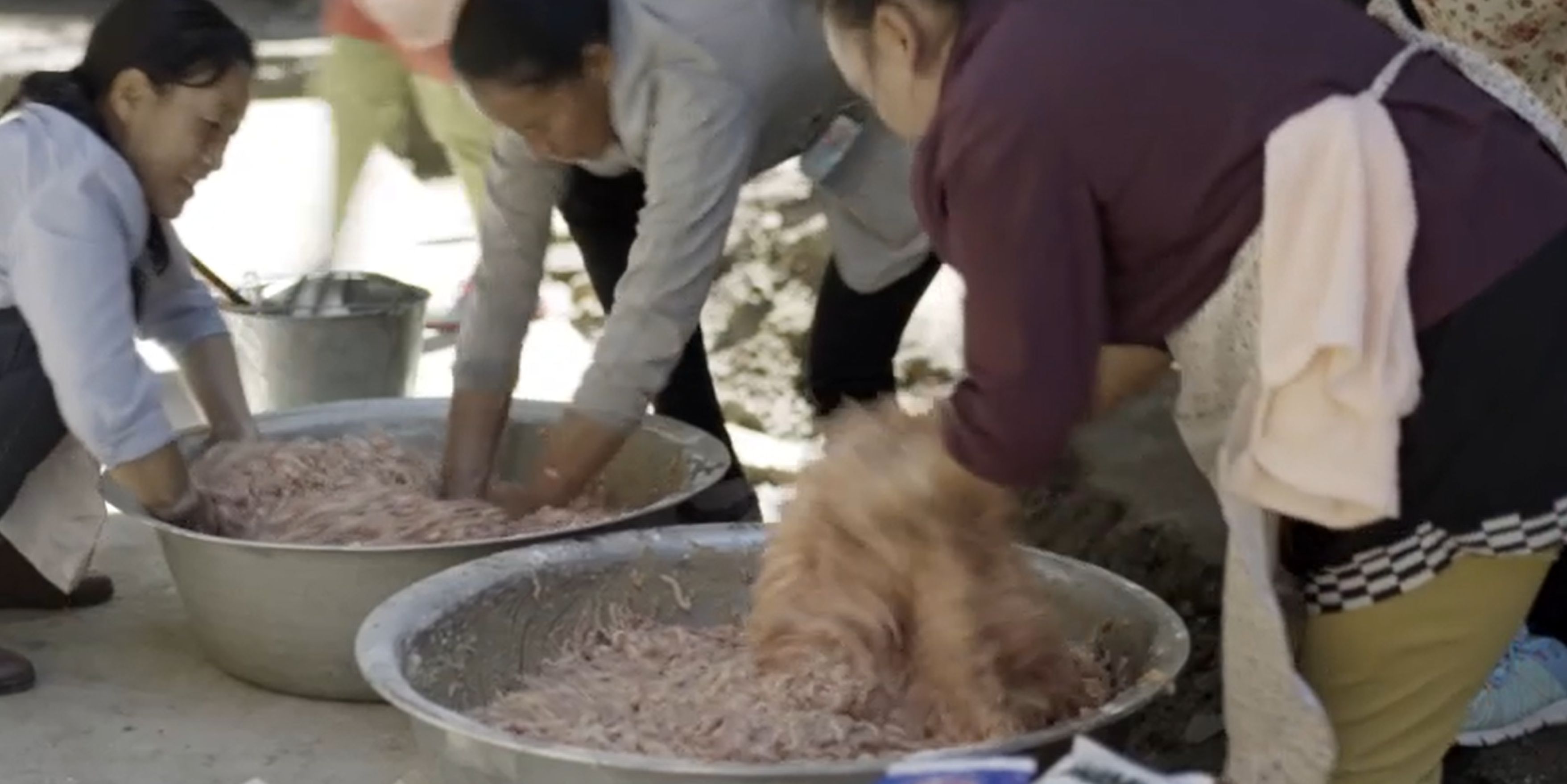
Bored with the two-hour wait for everybody to get their stuff together for breakfast, the director storms off back towards our hostel, thereby stumbling across a bunch of peasants slaughtering a pig in a field. It is a wedding party, getting ready for a blowout tomorrow where 1000 guests will work their way through a quarter of a tonne of pork, 184 chicken feet, 40 chickens (feet included), and by my calculations, about 30 carp. A conga line of assistants is bringing in one-gallon containers of vegetable soup, which until last week appeared to have contained industrial paint. The film crew swiftly invades the scene, with Mack the fixer running point to befriend the responsible parties, armed with several packets of fags to hand out.
We get footage of the production line of chickens being slaughtered, boiled, plucked and skinned; the fish being gutted; the pigs being blowtorched, much of it in the open air on the waste ground by the power station, which is apparently where the happy couple’s home has been built. The blushing bride is four months pregnant, and reveals that there is no ceremony as such. Just her and her husband welcoming guests at a jerry-built arbour, she handing out melon seeds, and him handing out fags. If we’re lucky she will put on new tracksuit. Then they will stage eight or nine sittings for dinner to get through their thousand anticipated guests, and in the evening there will be some dancing.
So, not actually a wedding at all. Two common-law cohabitants are staging a dinner party presumably to get their hands on some gifts, as every one of the thousand guests is expected to hand over some money. But it’ll do. The director, who has been ill for a week and miserable for most of the shoot, is so pleased with herself for discovering this ready-made big finish for the episode that she smiles for a whole ten minutes.
We manage to interview the bride in her family’s restaurant in the afternoon. She turns out to be one of those people the camera loves, and goes from plain to gorgeous when Daniel the cameraman fiddles with his lenses. However, two other crew members have take over the interview, because I am temporarily indisposed, groaning on the throne back in the hotel (probably too much information for you, but nothing I have eaten has stayed inside me long for the last three days). Although I rush back to take my spot as the interviewer, they tell me to stay out of it, because they have “already established a rapport.” Which leaves me with nothing to do but grin like a loon at the back, as they crash the interview into the floor, distracting the subject, leading her into one-word answers, fluffing their questions and failing to pursue any new openings revealed in the answers.
I’d been feeling for a couple of days that I was not achieving much, but watching them tank it reminds me that I do often contribute to the production, sometimes in almost imperceptible ways like knowing what questions to ask. The ingredients list for the wedding menu above, for example, was something I assembled on my own initiative, sending Mack the fixer into the kitchen to get the precise numbers while the director was still trying to decide where to place the camera. It formed the basis of my 20 seconds on camera which would have otherwise been simply “Ooh, look, a wedding!”
The director growls a warning that I am starting to sound like Fluffy, her term of abuse for a presenter on another series who tried to turn everything into a cooking show. Before you ask, her term of abuse for me is either Chicken Wings, because of the way I stand, or Treediot, because I don’t know anything about plants.
I try very hard to enjoy myself on location. I see places that I would never in a million years even think of going to, and on the good days, there is lovely Chinese food. But on this trip we have been particularly out in the boonies, away from good restaurants and flushing toilets, and that has taken its toll. So instead I keep my mind on the money.
If we were better embedded in the village, it would have been fun for me to be one of the kitchen skivvies trying to feed a thousand people, but the best we can do is gawp at the industrial production-line quality of such a large-scale meal.
Mickey the sound man is waylaid by three girls plying brownish, gloopy local ale, and forced to drink three cups of it before he is allowed through the front gate. I myself have to keep moving to avoid similar aggressive hospitality. The director succumbs to a couple of the niblets in the kitchen, but soon cries off the food when she sees leftover soup being poured back into the industrial paint containers from whence it came, ready to be ladled out again to some other guest.