Lu Great Uncle arrives, a bent, wizened figure half my height, 82 years old, with a straggly mystic’s beard and teak-tanned face. He is clutching a long-stemmed pipe and looking around him in a faintly baffled manner, as if he went to sleep in 1896 and is taken aback by the sight of horseless chariots. This figure is the local guishi, or ghost master – a herbalist, feng shui consultant and exorcist.
“What do you make of the building outside?” I yell over the noise of the cement mixer. “Good or bad feng shui..?”
“Good it is,” he beams. “Feng shui’d it I did.”
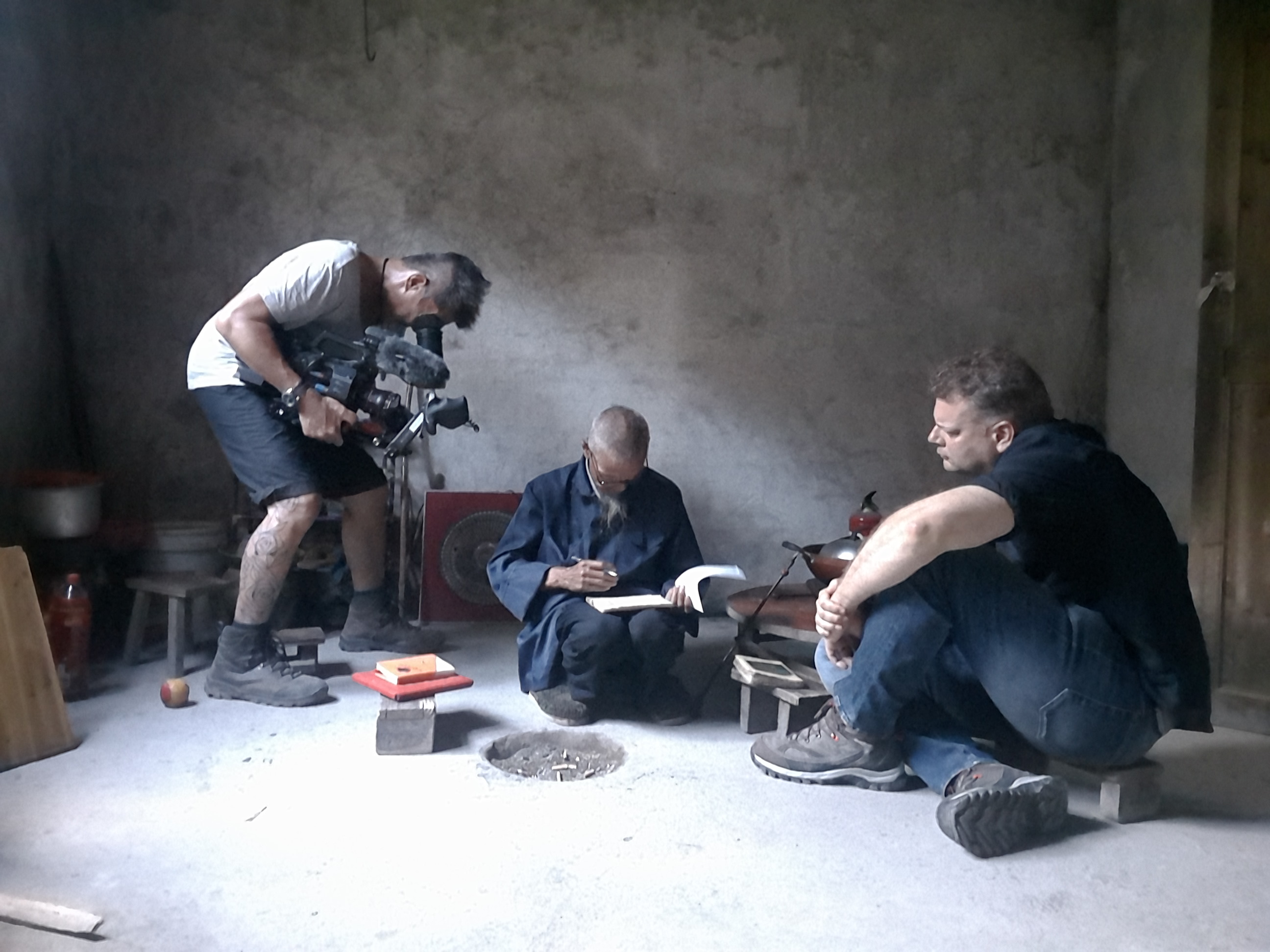
We relocate to the relative silence of Lu Great Uncle’s house, which is right next to the drum tower. We squat uncomfortably around his fire pit in a grey, cement room, and he talks me through his life, including his poverty-stricken teens, the inheritance of his gift for second sight from his father, and the various elements of parapsychology that he taught himself from books he got on a rare trip to Hong Kong. He speaks Mandarin, but occasionally slips into Kam without realising it. But, oh, he can talk. I have a list of seven questions to ask him and I talk him through them before we start. But when I begin with “So, Lu Great Uncle, tell us a little about yourself…” (using the nin particle for respect that I rarely ever bother with when talking to the Chinese), he gives a 15-minute reply that manages to answer all seven questions in an unceasing oration.
Despite having previously claimed he was not able to tell my fortune, he then proceeded to tell my fortune. He took note of the date and time of my birth, counted on his fingers and thumbs for a while, ruffled through a book, and then began reading out a series of poems and portents, which amounted to: “You are smart, you are diligent, you have a good heart. You have a golden life with few hurdles. At 42, you were sick at heart. You will never want for anything. Your parents are still alive. It is known. You have a son? You will have another. And you will die at 81.”
This all takes a lot of calculation and book-flipping through his meticulous hand-written notes, so much so that the director is already bored and moving the cameraman around us to get cutaways and close-ups. But Lu Great Uncle continues to look at his notes and write observations on a scrap of paper. Suddenly, he leans over to me and whispers: “When you were born, the sun came out.” And my fortune is told.
“Kyoto has been successfully digitised; 2027 has been ingested to such a degree that it can be run in Naomi’s own future as a simulation indistinguishable from the real world itself. In effect, his whole world has been carefully saved and archived, which is good news for his future self, because Ruri Ichigyo, the girl he fancies, is fated to be put in a life-threatening coma in just a few weeks.”
Over at All the Anime, I write up Tomohiko Ito’s Hello World.
“In a medium notorious for shots and beauty-passes that go on for way too long in order to amortise the costs of set construction, Hori’s camerawork is brisk and choppy, never outstaying his welcome in any particular scene, deftly creating the illusion that he is snatching his footage on the fly, not painstakingly building it one frame at a time, paltry seconds of motion taking hours to create.”
Over at All the Anime, I watch Takahide Hori’s stop-motion future feature Junk Head.
Evacuated from the city of Viipuri, recently lost to Russia in the war, Valle (Arvo Lehesmaa) sets up a musical group with his old war buddies Nalle (Leo Lähtenmäki) and Jalmar (Martti Lohikoski). The boys are soon thrown into the company of a trio of fun-loving office ladies, who unwittingly drag them into a series of misunderstandings about a valuable fox-fur scarf that comes into their possession. Eventually, all’s well that ends well, three couples find love, but the women dutifully donate their engagement rings to the Finnish war effort, since every little helps.
Released in the last week of 1940 and not making it to many provincial theatres until the following spring, Ketunhäntä Kainulossa rounds up a bunch of B-list actors, overlooked by the Suomi-Filmi and Suomen Filmiteollisuus studios. Leading ladies Mirjami Kuosmanen and Aune Häme, for example, had only managed bit-parts in films for the majors, while Aino Angerkoski might have a familiar surname, but only because the recently deceased star Kaarlo Angerkoski was her brother. All gamely throw themselves into a farce that tries to make light of the war raging just outside – famously, Finland had banned dancing during the Winter War as a mark of respect to the hardships on the frontline, and the jazzy, toe-tapping resumption of fun times seen here would soon be repealed again when hostilities resumed. As a result, the cast desperately try to cram in as much singing and dancing as they can, from impromptu a cappella singalongs on apartment stairwells, to a full-on variety show that bulks out the running time in the last reel.
The film’s odd title derives from a Finnish slang term – a foxtail in the armpit, not unlike a wolf in sheep’s clothing, denotes a wily predator trying to pass himself off as something he is not. In this case, it refers to a folktale about a fox trying to pass as human by cramming itself into an overcoat, only for its tail to poke out, giving it away. It is also the title of one of the many songs sung during the course of the film – in this case, at a bizarre masked ball that the cast attends, and where people throw paper streamers in an attempt to make things more interesting. The song is reprised at the end in a song-and-dance number in which Lähteenmäki is surrounded by a bunch of lissome Finnish girls in hotpants, so life could be worse.
The film was written to order by Reino “Palle” Hirviseppä, a prominent radio scenarist hired to dash something off to capitalise on the armistice. His revue-style caper (compare to the contemporary S-F Paraatiand the same company’s earlier Kaksi Vihtoria), throwing together a bunch of stock characters better known from Finnish radio, often lumbers towards incomprehensibility when divorced from the memes and call-backs of its original era. Hirviseppä openly feuded with director Blomberg over liberties taken with his script – rushed into production so fast there was no time to wait to shoot planned summer scenes, losing most of the first-choice cast to also-rans, and a bunch of rewrites that he regarded as ruinous. He would later comment that the premiere at the Helsinki Savoy was an unmitigated disaster, and that he was ashamed to be present. Audiences agreed, in a year for which cinema attendance was already in a slump – this was the fifth and last film for the production company Eloseppä, and its box-office failure caused the cancellation of the planned follow-up, Singing Cinderella (Laulava Tuhkimo).
The Helsingin Sanomat was unimpressed, with movie critic Paula Talaskivi archly noting that a movie billing itself as the “funniest Finnish movie of all time” failed to elicit a single chuckle in the cinema. Instead, she found it to be “the saddest thing imaginable,” betraying the audience’s trust by committing the most unforgiveable crime for any comedy: being boring. Olavi Vesterdahl was similarly damning in Tampere’s Aamulehti, berating the film for even bothering to staple its song-dance routines together with such a flimsy plot. The Swedish-language press commentary is beyond me, but I cannot resist sharing the Google translation of the review in Hufvudstadsbladet, which reads: “”This is an insertion for the whole of the landfill and the landfill of the landfill. However, the number of landfills used is not open to the public from the operative coupling of the ramp.” Say what you mean, Sweden.
Critics were more easily swayed in the Finnish provinces, where the Savo Sanomat called it a veritable “herring salad” (sillisalaatti – this is apparently a good thing if you come from Savo), and commented: “There’s such a vibrancy and momentum in the movie, so that no one sleeps at all while watching it. In places, the film touches such limits of respectability that it should be categorically kept from children.”
Two years later, director Erik Blomberg would marry leading actress Mirjami Kuosmanen, so I suppose someone found it raunchy enough outside Savo. Hirviseppä and Blomberg, however, never spoke to each other again, and were still bitter about the whole thing in interviews four decades later.
Jonathan Clements is the author ofA Short History of Finland. He is watching all the Finnish films so you don’t have to.
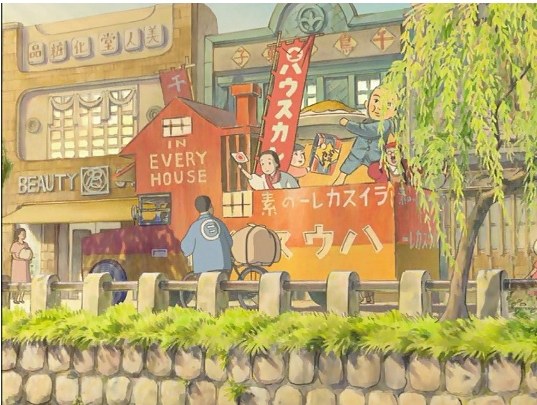
“Denison devotes entire sections to Ghibli’s short films and advertising contracts, many of which will be completely new to some self-proclaimed fans, despite a cumulative running-time equivalent to that of a whole other movie. These include, for example, Hayao Miyazaki’s nostalgic advert for House Foods, made in 2003 and unseen abroad.”
Over at All the Anime, I review Rayna Denison’s new book, Studio Ghibli: An Industrial History.
Out today to a world-famous series of valleys of Mesozoic rock, known in Chinese as the “Rainbow Ridges” for their beautiful multi-coloured strata. Do not believe everything you hear.
“It’s just fifty shades of brown,” says the director.
Our driver, who has been supplied by the marketing office, answers her with a weary and hostile tone, which makes me think that he has to say this rather a lot.
“Don’t you have eyes? Can’t you see the subtle gradations? Anyway, the many colours only really show up after a rainstorm, but in the sunshine, at the sunset, in springtime…” He continues to list an absurd set of parameters for the valley looking the way it does in the pictures. We soon discover that even the publicity shot that brought us here, taken in the valley, was in a location that was impossible for a car to reach, and had been created with the magic of Photoshop.
I start to realise why the visitor centre has three windows: one for information, one for tickets, and one for complaints.
Four locations in the park are set aside for scenic views, but all of them have been thoroughly ruined, festooned with toilets, construction sites, visitor centres, and in one place, a permanent loud-speaker loop of a man singing a song about horses. Also, mirabile dictu: camel rides. So the director gets the driver to drop us off at a secluded spot where I can wander along the base of the mountains, while our drone buzzes above me.
“Don’t actually climb the mountains,” warns the driver, “because there’s a fine.”
We walk a couple of hundred metres across the plain, and start to set up the drone. Immediately, a jobsworth on a moped beeps his horn and drives onto the plain with us, gouging up deep tyre tracks in the soft wadi.
“You can’t go off the road,” he shouts.
“We can’t go up the mountain,” says Clarissa the fixer. “We can go off the road.”
“No you can’t!” The security guard is quite adamant about this, despite the fact that he has no trouble riding his motorcycle into the middle of it, and from the tracks all around, he is not the only one.
“Yes we can!”
“On whose authority?”
Clarissa waves a pink piece of paper from the Marketing department, who have given us access at the request of the Ministry of Foreign Affairs. But this isn’t good enough, because the security guards only answer to the Head Security Guard, and he is having lunch, while the Head of Marketing is somewhere in the park that doesn’t have radio reception. Clarissa and the security guard argue for so long that we could literally have done our drone shot and left again. Meanwhile, a group of Chinese women see us standing on the plain and decide that if we are there, they can go off the road, too, and start climbing the slope. This results in the surreal sight of the security guard bellowing at us that we are not allowed in, while three Chinese women cavort behind him, taking selfies on the supposedly forbidden ridge.
As far as the guard is concerned, he is doing his duty by obstructing us until his superiors confirm otherwise. Clarissa makes a point of taking his uniform number. He makes a point of setting his mobile to record, and placing it in his top pocket. After half an hour has been wasted, the director announces that the park can shove its publicity up its arse, and Clarissa pointedly rings the marketing department to tell them after travelling a thousand miles to get their rocks on film, that we have wasted our allotted time waiting for a man on a moped to get out of the way, and that their rocks will consequently not be appearing in the National Geographic documentary, even though they boast on all their signage that National Geographic decreed them to be one of the ten wonders of the natural world. We stomp off back towards the car park, from where we sneakily film some footage over the fence, after the director sees a nice view when she goes into the bushes for a piss.
Our driver, however, who seems to know everybody and everyone, knows another place where he can get us in. The mountains there are sort of like the ones in the park, he says, and he knows a dry riverbed between them, where we can get some good shots.
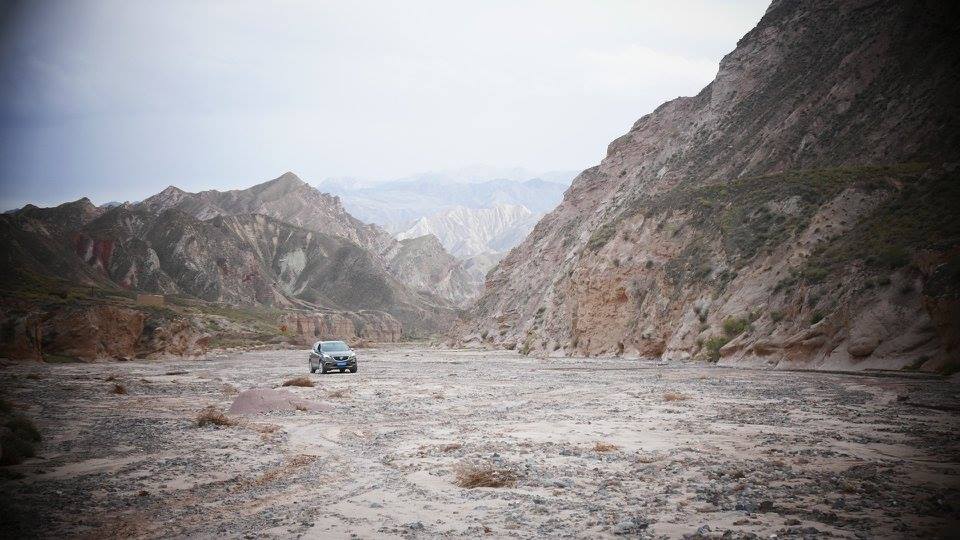
Which is why I find myself driving a Buick, wheel-spinning my way along a wadi, sending flints and quartzes flying, bumping along the ridges and gullies carved by spring streams, as the Yuneec Q500 Typhoon buzzes overhead, and our spare camera, bolted to the dashboard, films me at the wheel.
I’ve got a couple of things in the archive for any would-be obituarists covering Leiji Matsumoto :: this wide-ranging interview with him from Salon Futura, and my own entry on him from the Encyclopedia of Science Fiction.
“It’s not quite some teenager’s fan fiction thrown up online and then stuck between covers as IP bait to lure in an anime company, but that’s largely because I can see that an editor has been near this: the first chapter is the work of a much better author than the second, as if the experience of writing the book has already taught Nahuse some tricks of the trade, and he snuck back to write a better opening. Either that, or he had his whole life to write chapter one, but chapter two came swiftly afterwards, against a deadline.”
Over at All the Anime, I review the first volume of Nahuse’s Rebuild World.
After days of pleading, the director is persuaded to let us get the cable cars up the mountain. There are two stages, which eventually put us at 2800 metres, or in other words, the same height we were at last week in Lijiang. But now we have a vista below us that looks like the Grand Canyon, if the Grand Canyon’s lower flanks were green with trees and shrubs.
The tourist office had claimed that the place would be rammed with travellers today, but it is surprisingly quiet. It takes until 11am for the yammering Chinese to make it to the summit and yell “MY NAME IS WANG! HELLO!” into the abyss, as if anyone will be impressed with that. Earnest notices inform passers-by that the cliff opposite is known as the Two Elephants Paying Homage to the Dragon or The Sleeping Buddha, and we launch our drone from the top of Thousand Turtle Mountain, the peak of which is criss-crossed with domes and lines like a cluster of tortoise shells.
This is the most breathtaking scenery I have seen in China, and it is still relatively unspoilt. Stern notices forbid smoking anywhere at the summit, and for once the Chinese seem to be obeying, leaving the area mercifully free of fag ends and forest fires. The peaks dip sharply into the valley below. In more developed parts of China, this would surely all be rice terraces by now, but it is still clad with wild forest. I am glad I have seen it before someone puts advertising hoardings and a shopping mall on it.
I am still not at 100%. Last night I dined on a packet of crisps and two cans of beer. I tried to eat something at lunch, but had to run for the bathroom when we returned to the hotel. Skipping a few meals will do me no harm, and it is preferable to being caught short out in the wilderness where the only toilet makes my in-laws’ shed in the forest look like a five-star hotel.
The director is better, but miserable about the state of the footage we have. So far we have one good episode, about the Kam and Death, and scattered fragments of three others, none of which really have any rhyme or reason to them. Tonight, we are pinning all our hopes on the Lisu Courtship Dance, which promises to be an evening of song, dance and booze, in colourful costumes, and will hopefully hold this episode together. But we have no interviewees so far, as the only person we have had any contact with who speaks Mandarin is the tourism officer, and he is a Naxi.
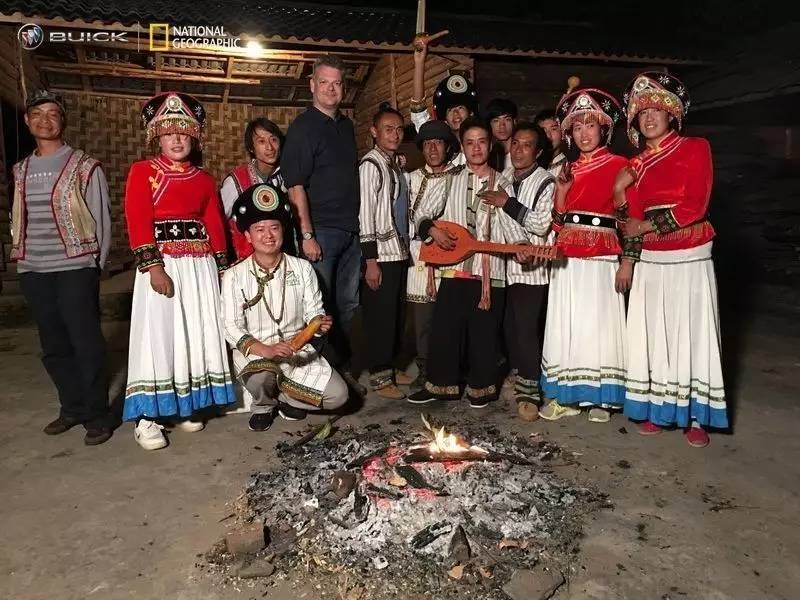
Wang Yonggang has arranged a tribal get together at his shed. He turns out to be something a big name in the world of lusheng-playing and climbing ladders of knives, and has even been whisked away to Paris to perform. Tonight he has rounded up a dozen of his mates, their wives and children, and stages a series of Lisu songs and dances for the camera, the men in their white tunics adorned with career-related patches, the women in their ornate red skirts, topped by jangly headdresses.
Overhead, there are more stars than I have ever seen before, so many in fact that I can barely recognise any constellations. Cassiopeia, which is a simple, recognisable W-pattern of five stars, has about thirty new members.
The first performance is the Welcome Dance, a ring-a-roses performed around the fire, into which I am dragged. I am not however, informed just how fast it’s going to get or how close to the fire, and I am left wheezing and coughing from the smoke. The director then announces that the cameraman was changing lenses at the crucial moment when the tempo switched up, and that consequently we have to do the whole thing again. On both occasions, the giggling Lisu flee for the shadows the moment the music stops, leaving me standing, dazed and panting, on my own by the fire, which ought to make for a good shot.
Then there is the Back to Back Dance, an important component of Lisu socialisation, and once in which I am fortunately not asked to participate, since it also comprises holding hands boy-girl-boy-girl, dancing around the fire once more, and energetically rubbing your arses together, first to the left, then to the right, repeat. “Back to Back”, I would suggest is probably a modern spin on what I would call the Arse Rubbing Dance, which ends with everybody piling into the shed, around another smoky fire, and singing at each other about their requirements for a mate.
“I would really like a girl with brown eyes,” sings one man, which is a low-level boss in China.
“I want a man with at least five cows,” sing the girls in response and one of the Lisu men gets up and glumly leaves.
This goes on until only a single boy and a girl are left in the shed, at which point he sidles over to her bench and they sing together softly, before sidling out into the night. The couple in question are actually married, and the director asks them how they met.
“We were doing the Arse Rubbing dance,” laughs the man, “and at the end she wouldn’t unlace her fingers, she just kept hanging on to me!” Sadly we don’t get their little love story on film, because the cameraman is already pacing outside waiting to leave, but the rest of the crew are encouraged to socialise for a while in the shed, sipping on crappy Xuehua beer and gnawing on baked potatoes from the fire.
There is a drinking song with much clinking of glasses, which goes something like:
I invite you to drink with me
I invite you to drink with me.
If you won’t drink with me.
Fuck you.
One of the dancers reveals that he can speak a little English, having graduated from a police college in the nearest big town. He is only the third person from the valley to get a bachelor’s degree (our tourist liaison was the first). The Lisu, he says, rarely think about tomorrow, and that includes their planning for education. They are usually married shortly after high school, a fact attested by the ages of the women present. One of the dancers, a leggy model who takes off her tribal dress to reveal denim hotpants over black tights, is not only married to one of the men, but appears to be the mother of a teenage daughter, not quite old enough to join in, who hovers in the shadows in a yellow sweater, mouthing the lyrics to herself and practising the steps.
We don’t leave until half past eleven; the director is still miserable, but the footage required to make this an episode about Courtship, and hence to fulfil our “Circle of Life” brief, is in the can, along with clean audio of the songs.
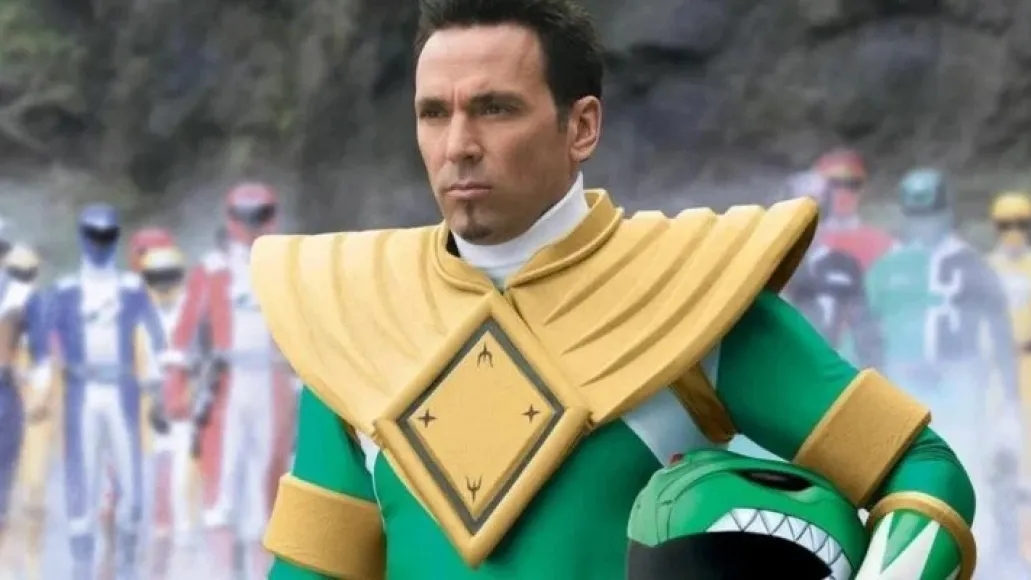
When I met Jason David Frank for the first and only time, I was a 24-year-old newshound for a children’s magazine, and he’d drawn the short straw, dispatched on a press tour of Europe to promote Mighty Morphin’ Power Rangers: The Movie.
It was driving him slowly crazy. He was holed up in a west London hotel suite, with only an old school buddy of his to keep him company. The publicity people, usually hands-on and clock-watching, were nowhere to be seen.
I introduced myself and showed him our magazine, and he laughed heartily at our electric rotating lollipop cover-mount, which everybody agreed looked like a sex toy.
“The thing is,” I said to him as we sat down to talk, “when I watched the film–”
“You watched it!?” he said. “Dude, nobody who’s come through here today has seen anything more than the trailer.”
“Well, I thought it would be smart to watch it.”
“D’ya think?” he laughed around the rotating electric lollipop in his mouth. “Go on, man.”
“I saw that some of the actors were under-cranked so they looked like they moved faster. But you– ”
“Yeah! Right!” Suddenly he sat bolt upright, flinging the electric lollipop onto a coffee table, looking at me with intense focus. “They don’t have to speed me up. Sometimes I think they want to slow me down. It’s because we’ve all got our skill sets, you know, like one’s a dancer and one’s a gymnast and so on, but I’m a martial artist. This is what I do.”
We talked about the martial arts, about how he’d taken the job as the Green Ranger and been so overwhelmed by the love of his fans – an entire generation of children who thrilled to have him back in successive iterations of the franchise, as the White Ranger. In later years, he would be a Red Ranger, a Black Ranger and a Green Ranger again. He boasted that he was throwing all the money he could spare from his starring role into real estate, because this might be the only chance he got to make proper money. I don’t think it ever registered with me that he was still only 22 – he had a presence about him that made him seem much older.
The next journalist in line had been kept waiting for almost half an hour as we ran over. But Frank didn’t want me to go. “A lot of these guys,” he confided. “They don’t care. It’s just great that someone appreciates the work, you know.”