Sacred Sailors: out on the Kindle

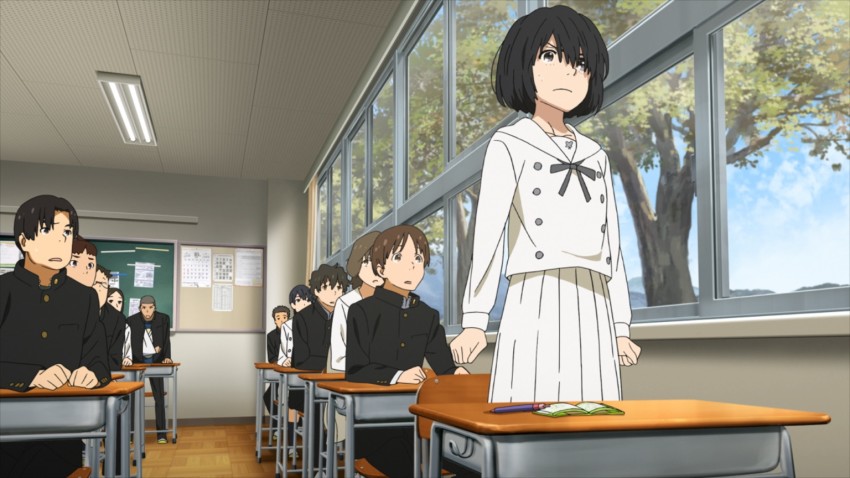
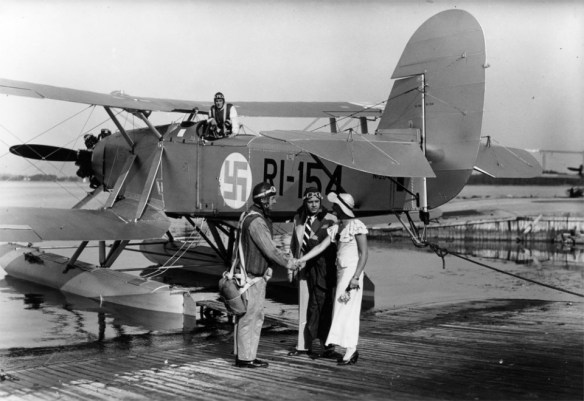
Japan’s first animated feature was a masterpiece of propaganda film-making, uncompromising in the bile it directed at the enemy, romantic in its evocation of home and hearth and of Imperial Japan’s Pan-Asian aspirations. Its path to modern audiences is itself an adventure story in which it somehow evaded bombing raids, burial, shredding and bonfires, emerging from hiding after a generation to offer modern audiences a disquieting glimpse of a very different world.

Momotarō, Sacred Sailors (1945) is a film of immense contradictions – the creative pinnacle of Japan’s right-wing military aesthetic, it was made by a director who would later be hounded from the film industry for being a Communist, and a lead animator derided as an “unpatriotic” pacifist.

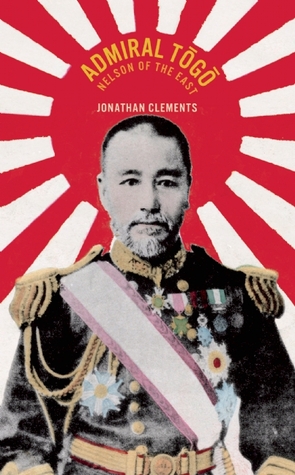
Jonathan Clements traces the incredible life and career of the film-maker Seo Mitsuyo (1911–2010), and takes the reader on a scene-by-scene analysis of this classic film, its context, reception and legacy. Available now on the Kindle from Amazon US and Amazon UK. Or buy it as a hard copy with the film included, direct from All the Anime.

V2: Frozen Angel

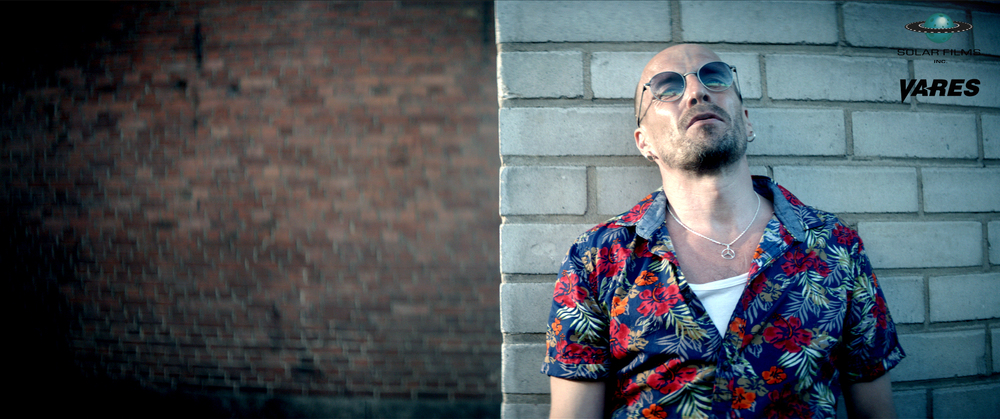
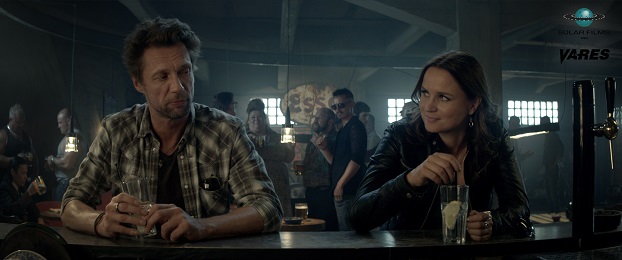
Seedy second-hand car salesman Jakke (Hannu-Pekka Björkman) is believed by everybody in the Finnish port town of Pori to have been responsible for the death of Mirjam (Johanna Kokko), a sometime prostitute whose death in winter went unnoticed until the snows melted. Jakke hires his former classmate Jussi Vares (Juha Veijonen) to clear his name, neglecting to mention that at the time of the death he was knee-deep in an attempt to blackmail a group of powerful local figures.

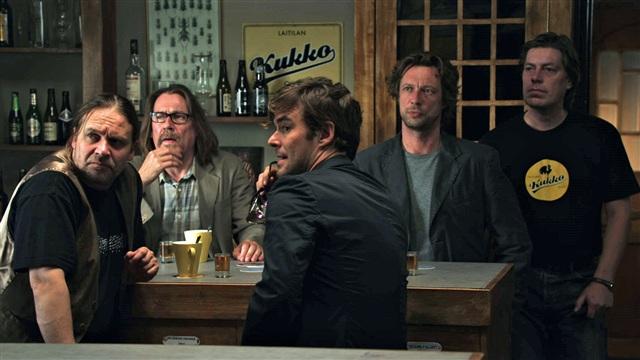
Based on Jäätynyt enkeli, the fifth book in the series by novelist Reijo Mäki, the second Vares film continues to lampoon Finnish masculinity with the joyous abandon of a drunk tramp pissing on a dumpster fire. Its cast is an utterly ghastly procession of sweaty, flabby, beered-up chain-smokers stumbling through the plot, double-crossing each other in motels and dive bars. Even the sponsors’ logos that begin the film look like a recipe for the worst night of your life, including (if I remember correctly) Karhu beer, an online poker site, and some guy’s kebab shop.

Stories are like pizzas, observes one character sagely. The thinner the base, the tastier the topping. The victim has slept with half of Pori, sometimes for cash and sometimes for love, enmeshing her in a complex web of possible exes and indifferent one-night stands. The police, as in the first film, can’t be trusted – in the film’s biggest plot hole, the entire case might have been more easily solved if they’d just made a cursory examination of the body. Instead, it’s left to Vares to uncover a complex conspiracy involving Swedish hookers, a heavy metal band, a daisy-chain of polyamorous lesbians, a comic-relief transvestite, and a gang of small-town big-wigs with a terrible secret. Meanwhile, the towering bully Veikko (Jussi Lampi) comes home after serving a stretch in a Swedish prison. “Those Swedes understand Finnish well enough,” he growls, raising his fists. “And if they don’t, there’s always sign language.” Yeah, up yours, Sweden! He hates Swedes the way that Indiana Jones hates Nazis, and is always ready to postpone the action for a few minutes while he beats some up, or in one scene, tries to drown a pair in petrol.

Unlike the novel, which took place in winter, the film tries hard to play up the unbearable heat of the Finnish summer. Yes, really. Everybody is sweating, and telling each other how terribly warm it is all the time, which adds a note of unintended comedy for anyone who’s had to wear an anorak in July. Vares deftly uncovers a conspiracy, hunts down some stolen cash, and fights off the hulking minions sent to dissuade him, but it’s only at the end, as he burpily recounts his mission to his drinking pal Luusalmi that everybody realises he’s forgotten to solve the actual killing.

Jonathan Clements is the author of The Armchair Traveller’s History of Finland.

Floating Worlds

Up now on the All the Anime blog, my review of Maria Roberta Novielli’s Floating Worlds: A Short History of Japanese Animation, which sadly misses the opportunity it sets itself to be a “History of Short Japanese Animation”. There’s a moment when you think she’s really going for it, and she’s really going to try to tell the story of Japanese animation through the arthouse and what wins awards at festivals, but such a solid methodology doesn’t quite materialise. Instead, it turns into a largely unreferenced narrative of Japanese animation history with some odd inclusions and some even odder omissions.

The Music of Yoko Kanno

Up on the All the Anime blog, my review of Rose Bridges’ new book about the Cowboy Bebop soundtrack of Yoko Kanno. “Kanno’s work has shown a constant ability to create a unifying theme to the music she supplies to particular shows, even if they include polyphonic chants in Zentraedi, bagpipes, bongos and a song whose lyrics entirely comprise the recitation of pi to two dozen decimal places.”

The Godfather of Tokyo

“So the Madhouse studio was in debt,” says Masao Murayama, “and there was this big buy-out. I was happy to sell it on to someone else, and then I thought: now what am I going to do? I put people together. We make things that we love. Am I going to stop?”

Which is why, at the age when most Japanese workers are long-retired, Maruyama found himself setting up Mappa, the Maruyama Animation Produce Project Association, which soon established its credentials with the critical smash of Kids on the Slope. But even then, Maruyama bowed out in 2016, as the studio unleashed In This Corner of the World and Yuri on Ice.

Did he retire? Hell, no. “People like me and Hayao Miyazaki,” he said, “we’re all born in 1941. We were there for the beginnings of anime as we know it. We don’t know when to quit. We don’t know what we would do if we did quit!” And so he founded his newest start-up, the studio M2, at the age of 75.

“This is probably my last,” he says, with a twinkle in his eye. “Or is it?”

He is wearing an Astro Boy sweatshirt that recalls his first-ever job, but is remembering a figure from much later in his career.

“I said to Satoshi Kon: I like you. I like your work. There’s greatness in you, but the mainstream just can’t see it. We just don’t get the box office on your films. We did horror with Perfect Blue, we did film history with Millennium Actress. So maybe let’s do something entertaining. And he says: ‘I want to do a thing about three tramps who find an abandoned baby.’”

The result was Tokyo Godfathers, anime’s good-natured, sardonic Christmas movie, in which a foundling child inadvertently propels the cast into a series of increasingly unlikely coincidences that fix their issues, solve their lives, and reunite them with their estranged families. The message, arguably, was universal, but the medium was incredibly, well, Christmassy, unleashed on a Japanese population with barely 1% believers.

“Yeah,” sighs Maruyama. “Nobody came to see that one, either.” He looks out over the packed cinema at the Edinburgh Filmhouse, and raises a quizzical eyebrow. “What did you think?” The crowd bursts into raucous applause for his 14-year-old movie. This frail old man, so shaky that my heart’s in my mouth every time I have to watch him climb some steps, beams with pure joy.

Jonathan Clements is the author of A Brief History of Japan. This article first appeared in NEO 171, 2017.

Promiscuous Media

Up on the All the Anime blog, I review Hikari Hori’s new book Promiscuous Media: Film and Visual Culture in Imperial Japan 1926-1945, which has an entire chapter on the development of animated propaganda.

“Animation forms a crucial component of Hori’s book – a fair reflection not of mere scholarly bias, but of a contemporary sense of its transnational value. No less a figure than the film theorist Taihei Imamura argues that animation and newsreels should form the prime media unleashed on Japan’s South Sea colonies, to soften them up for acculturation. Animation hence gets an entire chapter to itself regarding the attempts to form a uniquely Japanese style. In this, Hori cites both the wonders of Disney and the glove thrown by the Wan Brothers with their Princess Iron Fan in China, which already established a bunch of specifically ‘Chinese’ tropes. She notes that when Princess Iron Fan was screened in Japanese cinemas, it was shown on a double bill with the paratrooper documentary Divine Sky Warriors, perhaps explaining why animation and paratroops might occur to the Navy as a reasonable subject for Japan’s first feature-length cartoons.”

Tellus

So a Finnish boy and a Finnish girl meet in a noisy night club and leave together. As they get outside, he says: “Your place or mine?” And she says: “Why are you talking so much?”

I had this typical Finnish joke in mind a lot while watching Tellus (2014), a TV series from Jukka-Pekka Siili about a bunch of Helsinki eco-terrorists and the security squad dedicated to taking them down. Starting out as pamphleteers, bloggers and monkey-wrenchers, the Tellus protestors become increasingly more pro-active, until a fateful day when arson on an industrial estate leads to the death of a security guard. This takes them out of the realm of misdemeanours into serious felony, and puts seasoned detective Taneli Lokka (Pirkka-Pekka Petelius) on their trail.

The Tellus group is a stereotypical coven of urban guerrillas, with some more militant than others, but each self-righteously assured of their nobility of purpose. Notably, they are always shown drinking a variety of beers, to ensure that no single brand can be associated with terrorism. Someone had a meeting about that, I bet. True tension mounts when their nominal leader, Eeva (Minkka Kuustonen) is targeted by an undercover police informant, Alex (Lauri Tilkanen). He’s under orders to get closer to the organisation’s heart, but this inevitably brings him into moral conflict, not only over his own feelings for Eeva, but his attitude towards the group’s crimes.

The romance between the leads is oddly paced and posed, as if two emotionless puppets are going through the motions of dating… or perhaps as if two players believe each is duping the other. She resists his advances coldly and dispassionately, only to suddenly agree to a date with equal indifference, so the pair of them can bike around Helsinki like a couple of smug hipsters. Even then, Eeva presents every hallmark of being a self-involved, self-regarding dullard, less of a love interest than a love disinterest. Alex, meanwhile, is hardly a catch himself, so cocky that he practically brow-beats her into a snowbound picnic, despite very obvious signs that she barely notices him. And then suddenly they are all smiles and touchy-feely. Apparently, a relationship has broken out, like hives. One wonders to what extent this is a deliberate evocation of her single-minded vocation and his clandestine mission, and to what extent it’s just because they’re a couple of joyless Finns. Maybe there is some witty, subtle nuance of Finnish social interaction that I am missing. Or maybe the way to pick up Finnish girls really is to bombard them with phone calls until they relent.

But there is a lot of double-bluffing going on in the script. A scene which first appears to be a hackneyed pixie-dreamgirl moment, of Eeva lying on her back staring at the sky, is revealed to be a scouting mission for another attack – she is not laying low on a hilltop as a poseur, but because she doesn’t want to be seen. The story comes alive, explosively and unexpectedly, in a throwaway kitchen scene wherein the stressed investigator Taneli suddenly turns on his listless teenage son for wasting food. It’s a dinner-table sequence that many writers would use as expository filler, but actor Petelius lets loose in an incandescent rant, tying up family tensions, workplace stress, and a startling revelation – that deep-down he is sympathetic with the eco-terrorists’ beliefs.

This pivotal moment cleverly repositions all arguments about Them and Us. We really are all in this together. Taneli and Alex and Eeva and her hardcore friends are all in total agreement that Something Must Be Done. They simply disagree on the methods, in a drama that focuses itself very much through an ecological lens, both in terms of the troubles that the Earth is facing, and a thought experiment as to the attitude and appearance of Green extremism.

Jonathan Clements is the author of An Armchair Traveller’s History of Finland.
Trainspotting

Ahead of the European premiere of Eureka 7: Hi-Evolution 1, director Tomoki Kyoda pokes at his posh-nosh gnocchi with a fork. The Michelin-recommended hotel is a far cry from the Scotland he saw in certain movies, one of which supplied the name of his lead character.

“Originally Renton was a place-holder name I just lifted it from a film I liked. I figured I would go back and change it sometime. But then the production got so integrated into rave music, and people kept calling him Renton. In fact, the working title for a long time was Renton 7. Eureka just kind of stuck.

He confesses to me that he is worried he should admit such things to a Scottish audience. “Won’t they be insulted that I have stolen something from them?” he frets. No, I say, they will love it. This is, after all the same Scotland Loves Anime festival that was once celebrated in a notorious cartoon that pastiched the “Choose Life” speech from Trainspotting, delivered by a figure in a kilt backed up by a Braveheart-era Mel Gibson riding a giant mutant haggis.

Ten years on from Eureka 7’s original airing in Japan, Kyoda is overseeing a film trilogy that re-cuts and augments the original, taking it off in a very different direction, much like the Evangelion movies. Some things, however, remain the same. “In the original, I wanted to give 2D animators the chance to do fighting robots. Everyone only ever wanted 3D work, and I felt that the industry was losing a particular skillset.” A decade later, he is more concerned about the disappearance of a different echelon of talent.

“The thing that amazed me about the Tohoku Earthquake was how little it affected the business. The studios managed to keep running. We outsource so much work these days that Japan can suffer all sorts of issues and just keep rolling. But we rely so heavily on the overseas in-betweeners that we couldn’t function without them. If you want to know what shuts down the Japanese animation industry these days, it’s a national holiday in China.

“So, anyway, the first thing I did when I got to Scotland is I dragged everybody down to Edinburgh. I got them to take my pictures as I ran along Princes Street, and down those steps (they’re not where you think they are, you know), and banged into a car. I went and found that bridge from the film. I was like a Trainspotting tourist.”

“Did you try and score any heroin?” I ask.

“No,” he says.

This article first appeared in NEO 170, 2017. Eureka 7: Hi-Evolution 1 is released in the UK by Anime Limited on 27th August 2018.

None More Black

Late last month Jordan Zakarin from SYFY Wire interviewed me about the representation of ethnic minorities in anime and manga. As ever, only a small part of the interview made it through to the final piece, so here’s our conversation in full.

——————-

JZ: How did the look of anime and manga characters develop in the early years, to what seems to have significant Caucasian traits? What cultural factors led to that?

“Whiteness” is the default position when you are delineating images in ink on a blank page. Culturally, the Japanese regard themselves as homogenous, and even the more significant local “minority” populations, such as the Koreans, Chinese and Ainu, are often physically indistinguishable, particularly when subtler nuances and differences are sacrificed to speed and economy.

In the development of anime, early practitioners were heavily influenced by Disney and the Fleischer brothers. Sometimes they were aping an international art style known to work in foreign markets — Betty Boop, in particular seems like the prototype for a lot of early manga girls — but also an art style known to be suited to the available technology. When you have limited animation budgets, you can’t afford photo-real depictions of human image and movement. Bigger eyes allow for an easier, more simplified depiction of emotions; a small mouth requires less enunciation in speech; rainbow hair colours and wacky styles help distinguish characters at a glance, when a realistic depiction of Japanese people would be much more samey.

Not to mention that fact that the early days of television in Japan were dominated by a tidal wave of foreign imports, that Japan only began to shake out of primetime in the late 1950s. As a result, the sight of white people speaking in fluent (dubbed) Japanese was common on Japanese TV. All these factors combined to make whiteness and the big-eyes/small-mouth look as regular occurences in anime and manga. There were occasional experiments to buck the trend — Giisaburo Sugii’s Tale of Genji, for example, which gave all the characters realistic hair colour (and thereby made them much harder to tell apart), and the titular Akira, whose features were certainly more pronounced and “Asian”.

How did black people get portrayed early on, and how did that change over time? What (broadly speaking) caused any change?

Early on, I’d say that black people were largely invisible or in subaltern roles, much as they were in American television. Japanese people’s experience of black people, if they had any experience at all, was largely derived from what they saw on foreign media, and occasional encounters with American soldiers and sailors.

By setting Jungle Emperor (a.k.a. Kimba the White Lion) in Africa, Osamu Tezuka stumbled right into the middle of race issues. By modern standards, his caricatures of black characters in the manga would leave many readers aghast, but he would have been mortified to discover that he had insulted anyone. His black characters were no more or less caricatured than the whites, but he was drawing in a vacuum, unaware and unaffected by American identity politics. That is, of course, until the anime adaptation of his work, which was sold to America in production in 1965. This led to Tezuka being bombarded with directives from the American production end, seemingly borne from a new-found sensitivity towards racial issues in *America*.

Although Kimba was set in Africa, the American directives began with a rule not to show black people, which was soon relaxed after protests from the writers, so it then allowed black people, but ONLY IF THEY WERE NICE! No bad blacks, only bad whites! Later anime, particularly by the 1980s, often featured incidental black characters as reflections of a melting-pot future. Black characters had significant roles in the Macross franchise, for example. Nadia, the leading lady in the steampunk series Secret of Blue Water, was originally designed as significantly darker, but toned down to more of a tan colour in development.

As an aside, in the late 1990s, the critic Maki Watanabe in Animage magazine called out Japanese cartoons for their relentlessly biased portrayal of Muslims and the Middle East. She pointed out that anime in the 1950s and 1960s had been awash with stories from the Arabian Nights, which while orientalist in tone, nevertheless featured middle-eastern characters as protagonists, leading men and heroines. But by the 1990s, influenced by and pandering to the American market, middle eastern characters were universally presented as terrorists and religious fanatics.

How are black people portrayed in anime/manga (in Japan) now?

In the sense that Japanese pop culture continues to at least engage in discourse with American pop culture, both cultural imports and work-for-hire for foreign clients have come to reflect changes in America’s own growing awareness of diversity. Black characters are regular occurences in the line-up of team-shows intended for international distribution, and there are shows like Cowboy Bebop and Samurai Champloo that actively reference blaxploitation and hip hop culture. Most notably, of course, we have Afro Samurai, work made for hire by the Japanese for American clients, starring Samuel L. Jackson. How much more black could it be…. and the answer is none… none more black.

I would also add that the rise of digital animation, since 1997, has changed the technical restrictions on the depiction of all forms of blackness. Too much darkness on a cel, be it night-scenes, or skin tones, or shadows, risked cel halation effects because the light from the rostrum camera would accentuate imperfections. This issue was wiped out by the adoption of digital imaging instead of cels, which meant that the turn of the 21st century saw a sudden rise in the number of vampire shows, night scenes, and moody noir. That may well have made it just plain easier to invest in the more realistic depiction of black characters, instead of just giving some characters a deeper tan.

I think, though, it’s fair to say that although there are increasing examples of diversity in anime shows, these often remain the idle speculations of Japanese creatives with a limited experience of other cultures. Some black characters are living, breathing human beings, but others remain hulking, inarticulate gaijin seemingly inspired by something someone’s brother-in-law once said about a G.I. his friend’s friend once saw in Yokohama.

Jonathan Clements is the author of A Brief History of Japan.