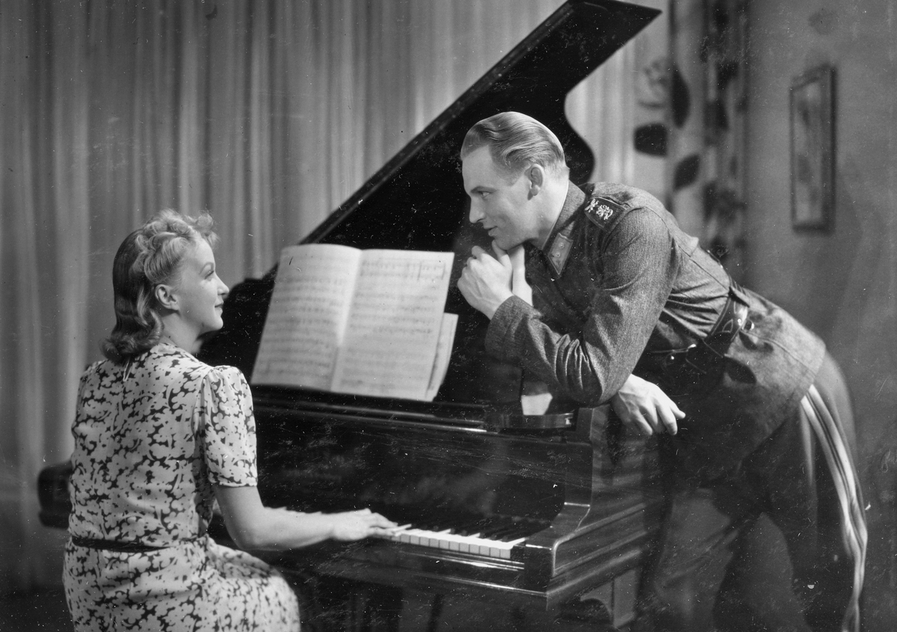
In this pointlessly convoluted farce, company director Tobias (Uuno Laakso) tries in vain to persuade tailor and officer reservist Hesekiel (Reino Valkama) to sell him his property so that he can expand his factory. Meanwhile, at the garrison, the impossibly handsome Lieutenant Raimo (played by the impossibly handsome Kullervo Kalske) wants to marry the colonel’s daughter Helvi (Lea Joutseno), but her mother will have none of it, because she wants Emma to marry a poet, not a military man. In a vain attempt to win over the impossible lady, Raimo commissions his adjutant Asko (Oiva Sala) to knock up some terrible poetry, and to keep bombarding her with it until she admits Raimo is a better bet.
Meanwhile… look, everything’s “meanwhile” in this film, everything happens at once and while it is all sort of tied up with a bow like a well-greased episode of Seinfeld, there are an incredible number of moving parts and childhood associations, and somehow Tobias’s medical records are mixed up with someone else, and he ends up conscripted into the military, where the only person who can save his bacon is the very same tailor he has been harassing, who happens to be an old friend of Raimo. Amidst all this, the colonel’s maid Emma (Irja Rannikko) apparently laughs at something, which seems an odd thing to hang the whole film on.
Based on a 1939 novel of the same name by “A.V. Multia” (in fact, serving military officer Akseli Viljasalo), this baffling film is a return to the barracks larks of Cavalryman Kalle Kollola (1938) and The Red Trousers (1939). Critics were unimpressed, shrugging off something that they regarded as old hat, and not much in a mood to laugh at a soldier’s life so soon after a war. It was, however, lapped up by Finnish audiences, presumably now almost universally close to matters military, and happy to see it all treated so lightly.
In the closing scene, in a parody of military protocol, the colonel orders Raimo to stand to attention, face left and then kiss his daughter, which is all very well, but surely audiences of the time will remember seeing the same joke in The Regiment’s Tribulation (1938)?
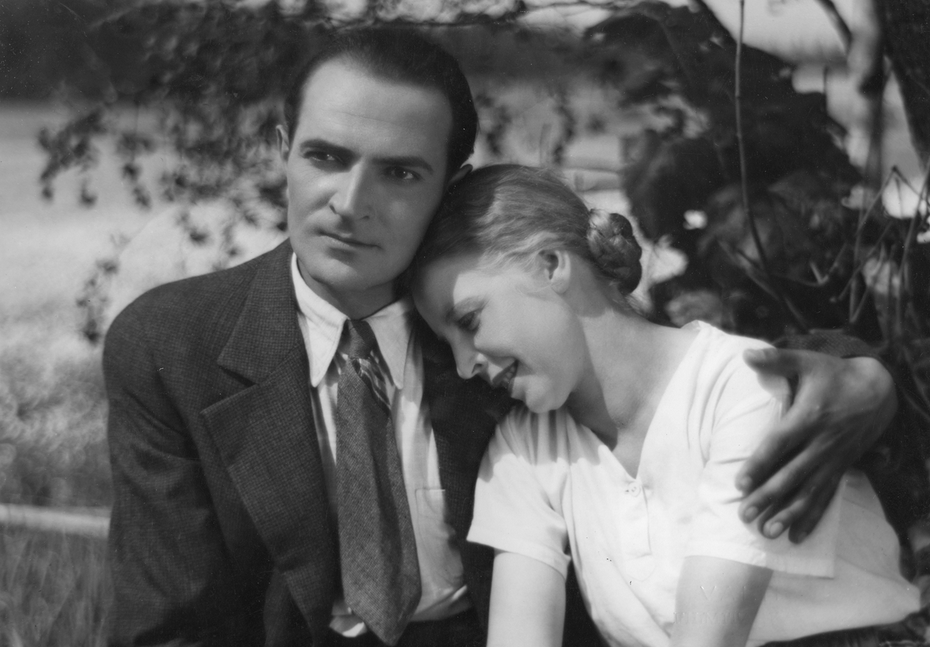
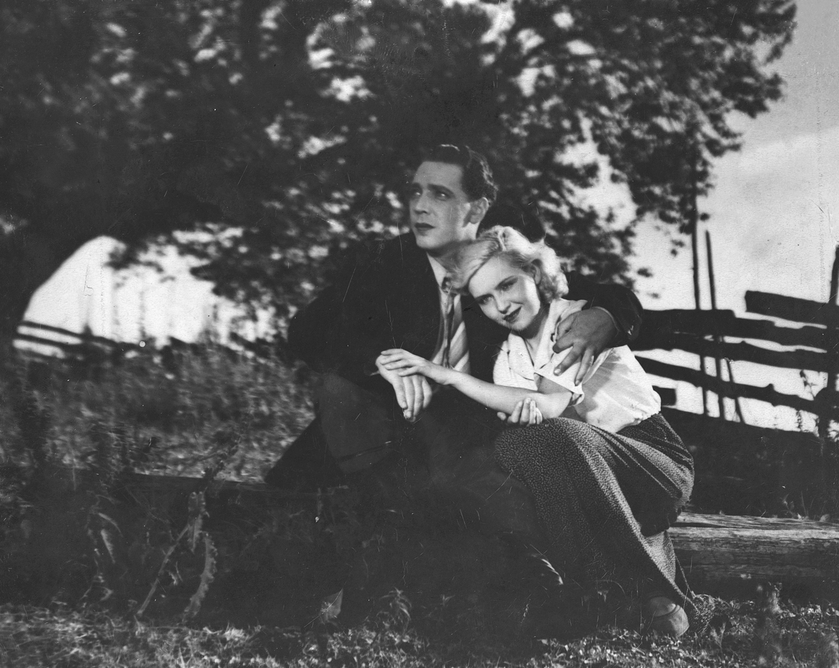
Orphaned Karelian girl Anu (Henny Valjus) is reluctant to follow through on her late mother’s promise that she will marry the nice-but-dim rich boy Junu (Reino Valkama). Instead, she has eyes only for the handsome carpenter Mikko (Santeri Karilo), even though Mikko backs off in the mistaken belief that Anu loves Junu. Mikko runs away to the big scary city of Helsinki, where he hits on the idea of returning home to start a furniture factory – shades here of the woodtastic prospects of Green Gold (1939).
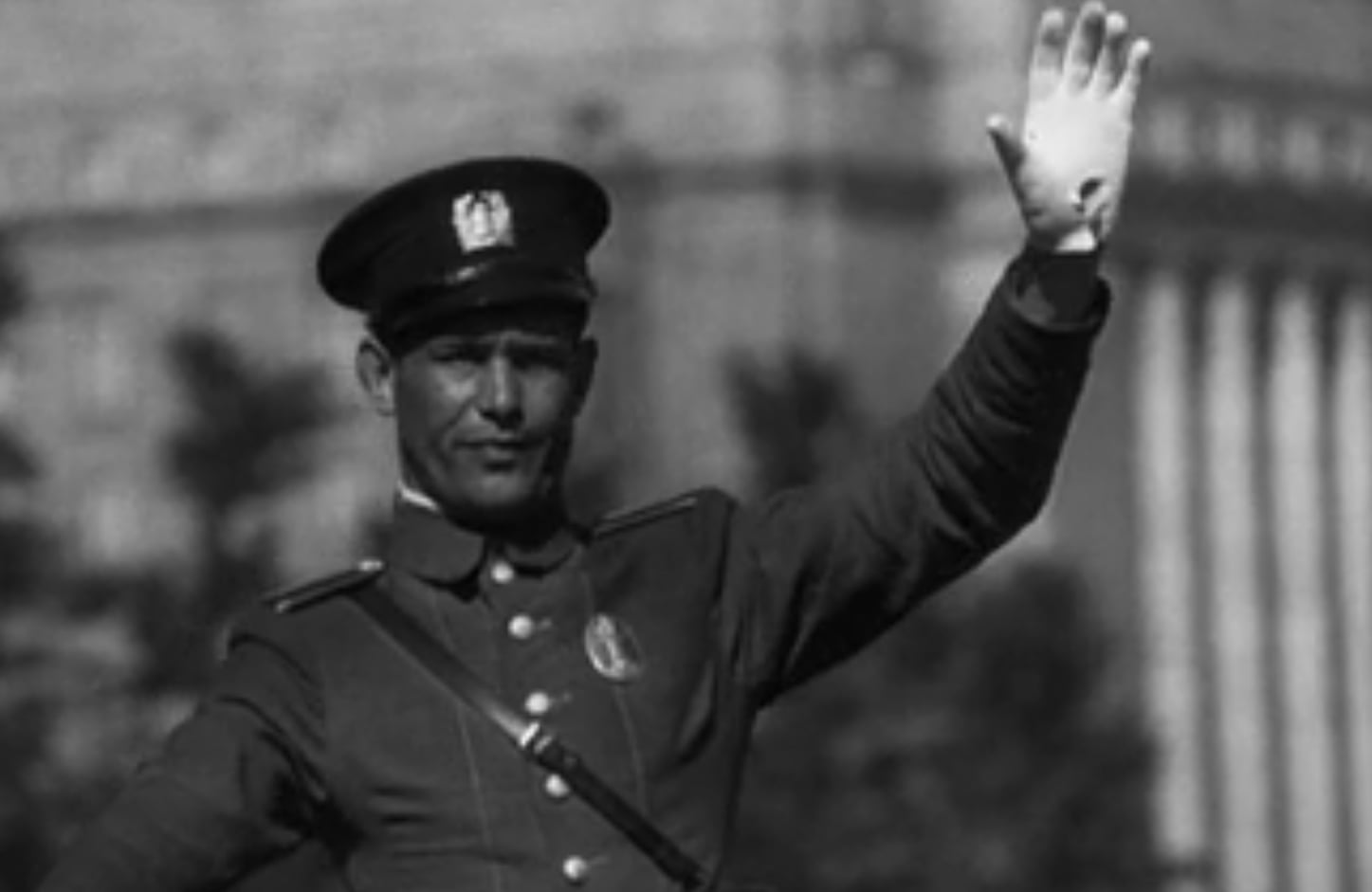
Based on a 1932 play by Kersti Bergroth and subsequently remade with the same title in 1956 and again for TV in 1975, Orvo Saarikivi’s Anu ja Mikko is an initially baffling choice for so many productions. It was shot at Suomi-Filmi’s Munkkisaari studios, but also features a number of exteriors showing off Nurmijärvi in the summer of 1940 – Finnish cinema audiences had almost nothing to chew on for half the year, and then a sudden rash of titles either mothballed during the Winter War or rushed into production that spring. There are also some lovely exteriors of 1940 Helsinki as Mikko gets off the train to seek his fortune, although his exit from the station is rather compromised by the camera’s sudden interest in a woman in a white dress, so much so that Mikko in his dark clothes practically teleports into focus only when she is out of shot. There’s also a lovely moment in which the camera lingers on a tanned cop outside the parliament building, irritably functioning as a human traffic light for the local trams. Both these striking figures in the film appear to be members of the public who happened to be caught by Uno Pihlström’s camera.
There is a certain return of the mixed messages of Bergroth’s earlier Rich Girl, along the lines of “money isn’t everything (BUT IT REALLY HELPS).” We are supposed to believe that Anu and Mikko are made for each other, but that Mikko is only worthy of Anu when he is a humble carpenter. When he tries to better himself by going into business, Anu finds his industrial mind-set off-putting. When his business fails, it’s Junu’s family money that bails him out. Junu finds love with Heti the maid (Anitra Kartro), but would she really have been all that interested in him if he hadn’t been the lord of the manor? Meanwhile, Anu is something of a drip and a wallflower – her most characterful moment in the film is at a dance, where everybody expects her to sing, but she is so heartbroken that she can’t get the words out.
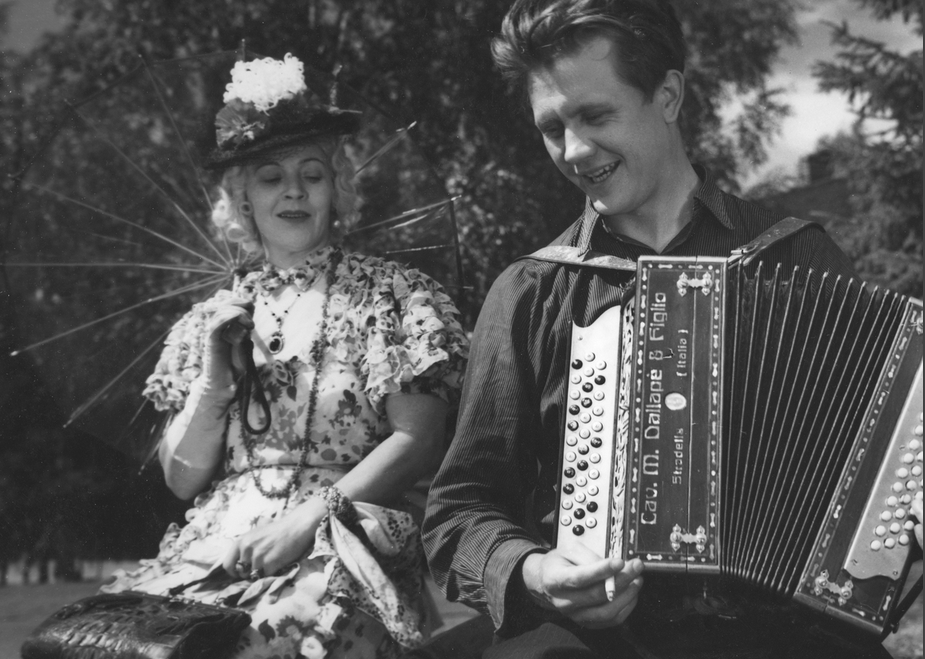
Repeatedly in Anu ja Mikko there is the assertion that there’s no place like home. Mikko leaves for the big city, but returns to his hometown girl and his hometown dreams (whatever they are, since apparently making a living isn’t one of them), as does “American” Mari (Aino Lohikoski), a local girl recently returned from New York, who fills everybody’s heads with tales of international travel, but ends up marrying a local accordion-player. Mari is a fantastically uppity snob in an impractically frilly dress, who insists on using English words and trills excitedly about the talking pictures she has seen (this film is set in the 1930s, when such things would have been more new-fangled).
It is precisely the sort of drama one might expect to find a ready audience after a wartime disruption, gently soothing the viewer that things will soon be back to normal and everyone can go home. Except everyone can’t – author Bergroth was a native of Viipuri and director Saarikivi was born in Sortavala, both now on the Russian side of the border, along with the village of Antrea (now Kamennogorsk), the real-world inspiration for Bergroth’s fictional “Kaunuskala”. Many of the cast members were themselves of Karelian origin, although the degree to which they were refugees is questionable – Viipuri was Finland’s second city, so having been born there was a bit like having been born in Birmingham or Glasgow, hardly a matter of note until the day it was suddenly rebranded as Russian territory.
Paula Talaskivi, the hard-to-please movie critic, was totally taken in, writing in the Ilta Sanomat that even hard-bitten Helsinki urbanites would love the rural, Karelian snapshots of a time past and a land lost. Salama Simonen, the critic for Uusi Suomi, thrilled to the sound of the Karelian accent (something that would also charm viewers of the same year’s Lapatossu & Vinski’s Department Store), singling out Santeri Karilo as a genuine Karelian… all gentle nudges largely lost on the average modern reader, but reminding 1940s Finns that the Winter War has displaced thousands of Karelians, and lost much of the Karelian heartland celebrated in this film. The allusions and evocations of a lost land, which by my ad hoc reckoning, has an immediate family connection for one out of every four modern Finns, is a primary contributor to this story’s enduring presence.
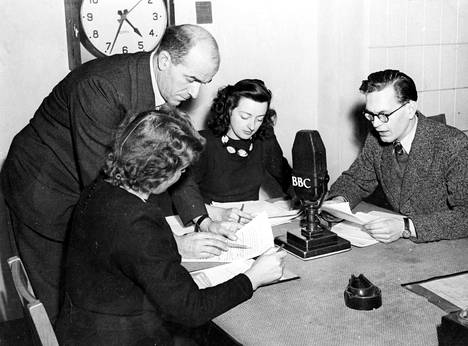
After the Russian attack on Finland in 1939, BBC producers scrambled to rustle up some Finnish speakers to produce programming. It took them so long that by the time the first broadcast went on-air in 1940, the Winter War was already over. Reasoning that there was still a value in pandering to the Finns and correcting whatever nonsense the Russians were telling them, the BBC broadcasts kicked off anyway, and were hence already up and running when the Continuation War broke out.
Moscow tried to seize the airwaves with their own stooges, including Armas Äikiä, who had briefly been the Minister for Agriculture in the short-lived “Finnish Democratic Republic” proclaimed in what is now the St Petersburg suburbs. The real star, however, albeit for all the wrong reasons, was Aino Kallio, a.k.a. “Moskovan Tiltu”, bestowed with a name that recalled, for Finns, imagery from a popular 1920s song of credulous teenage cluelessness. While “Tiltu” harangued the Finns about their co-belligerency pact with the Nazis, (a style ridiculed in a popular song as nothing but “soup and rattling”) the BBC also entered the fray, with broadcasts from Greta Kivinen, a.k.a. “London Jenny.” She also slagged off the Finns for getting into bed with Hitler, but tried to warn them off Stalin as well.
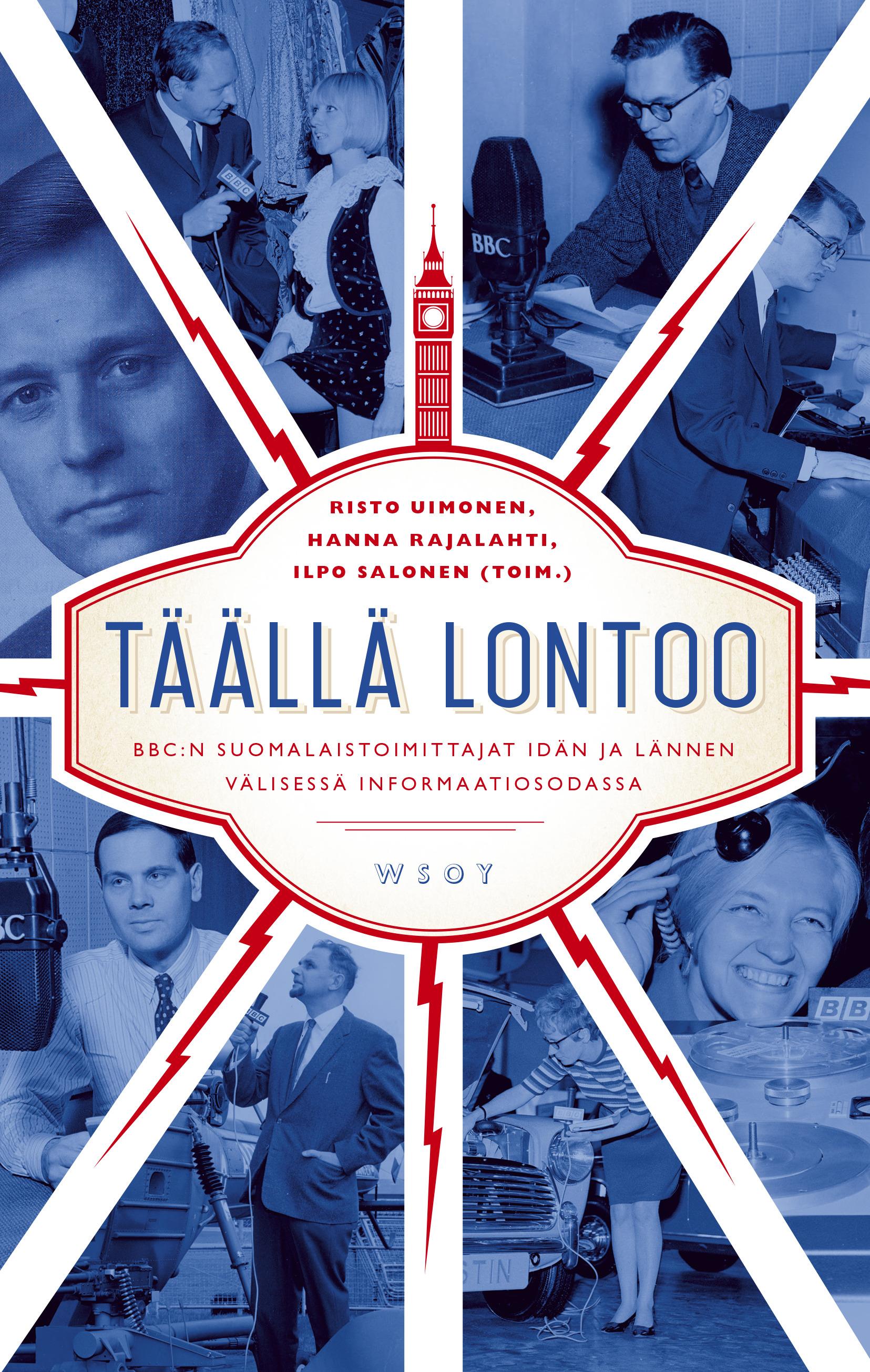
In the Finnish-language book This is London: the BBC’s Finnish Broadcasters in the Information War Between East and West (Lontoo Täällä: BBC:n Suomalaistuomittajat Idän ja Lännen Välisessä Informaatiosodassa) editor Ilpo Salonen and contributors Risto Uimonen and Hanna Rajalahti present a bitty grab-bag of reminiscences and anecdotes. There are, in fact, dozens of authors, with almost every surviving journalist seemingly given a couple of pages to reminisce about their challenges and careers. This can occasionally lead to chapters that repeat themselves, but represents a fascinating patchwork of accounts of the changing requirements of these obscure cogs in the Bush House machine, who referred to themselves as the bushfinnit.
During the Cold War, it was not even clear if anyone was listening. The Soviets began jamming the BBC’s short-wave radio frequency, such that many Finns reported nothing but a crackle of static when they turned the dial to the correct point. Up until 1956, when the Soviets returned the Porkkala peninsula to Finland, “you had to strain to listen carefully if you wanted to hear something through the noise.” By the 1960s, the journalists had got the hang of it, and worked out what sort of news stories would be catnip to the Finns. In the face of ongoing BBC bureaucratic stone-walling, they fought for extra time to do justice in Finnish broadcasts of Churchill’s funeral (1965) and the state visit to London by the Finnish leader Urho Kekkonen in 1961.
A new generation of staffers arrived in the 1970s, determined to shake up what they saw as a stuffy establishment. As the old guard retired, their younger replacements, raised on sixties radicalism, began to argue that while they understood that it was the mission of the BBC’s foreign service to report on the world from a “British” perspective, they would secure a larger audience if they tried to pander, at least a little, to Finnish interests. There were, for example, substantial arguments behind the scenes over the BBC’s intended coverage of Vatican matters, since Finland hardly has any Catholics who would give a toss. The Finnish section was also somewhat wrong-footed by the occupation of the Falkland Islands, which they regarded for several days as an eye-rolling “And Finally…” joke, until Thatcher sent a task-force to counter-attack.
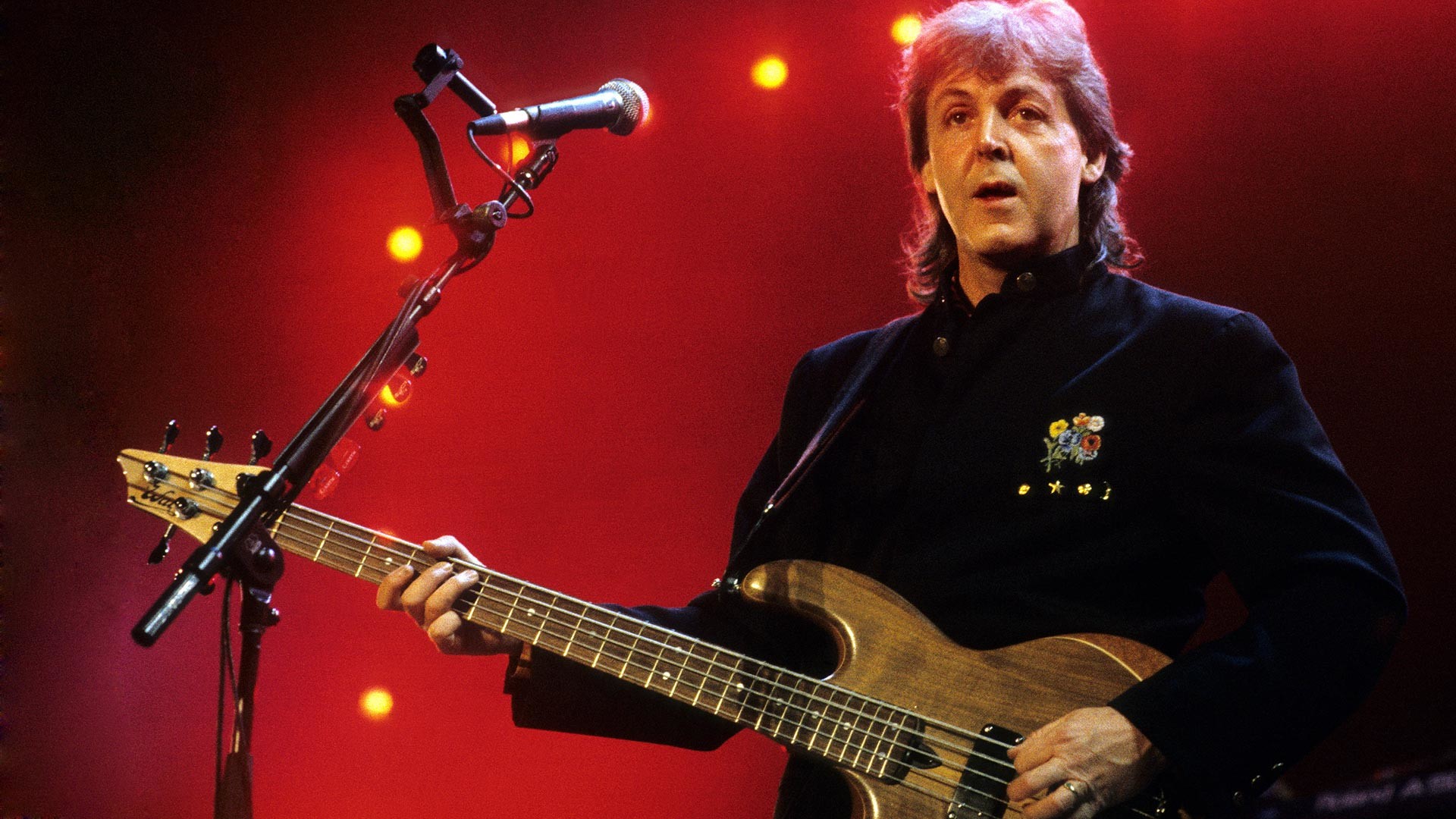
Many of the correspondents are plainly incredible Anglophiles, and there are many touching stories about Swinging London and the early rumblings of Cool Britannia. Not to mention a cringe-worthy Alan Partridge moment, as, after the broadcast of Paul Macartney’s glasnost-era concert in Moscow, famously featuring the triumphalist “Back in the USSR”, the Finnish section’s Petri Nevalainen spots Macartney coming out of a studio, and sees the chance for doorstepping journalistic gold.
He grabs the former Beatle, shoves a microphone in his face, and demands to know why he has never performed in Finland.
“I did,” says Macartney. “With Wings.”
For many years, the BBC maintained at least one stringer in Finland, but from 1996 had a dedicated Helsinki office in Kaisaniemi, effectively moving much of the Finnish broadcast operations in-country. There was, however, a less obvious need for the BBC to stick its oar in at all, and in the face of cutbacks and increasing competition from the Finns themselves, the short-wave broadcasts shut down for good in 1997.
A closing essay by Jyrki Kokki takes the story of the foreign languages section up to 2020, amounting to a litany of funding cuts, ill-conceived revenue-generation initiatives, and the slow shuttering of a service once deemed vital by government and administrators. In some cases, this was a matter of changing demographics – there seems, notes Kokki, little point in running German-language broadcasts if all the Germans speak English anyway. But there is also a note of quiet concern, as a national broadcaster is undermined by its own government, slowly chipped away into nothing, even if nation still needs to speak unto nation.
Jonathan Clements is the author of An Armchair Traveller’s History of Finland. Lontoo Täällä: BBC:n Suomalaistuomittajat Idän ja Lännen Välisessä Informaatiosodassa is published by WSOY.
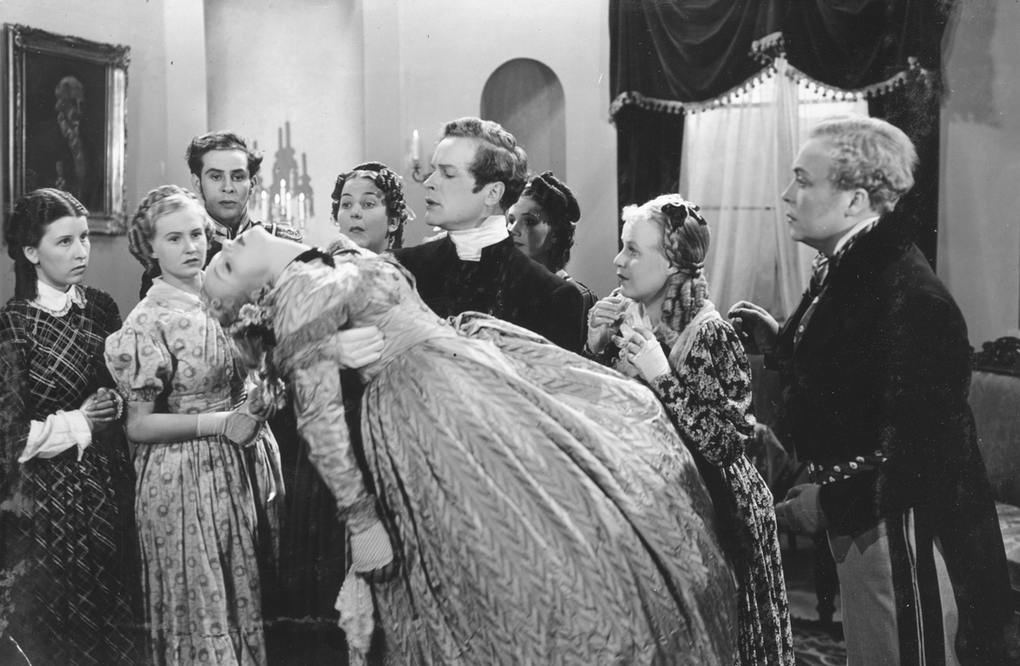
At the time of its release, Runon kuningas ja muutolintu was the longest-gestating film in Finnish history. Playwright Elsa Soini was commissioned to write the script in 1937, principal photography by Yrjö Norta commenced in 1938, but was delayed by the onset of the Winter War, with the premiere of the film not coming until October 1940 – compare to similar delays besetting The Heir of Tottisalmi and In the Kitchen.
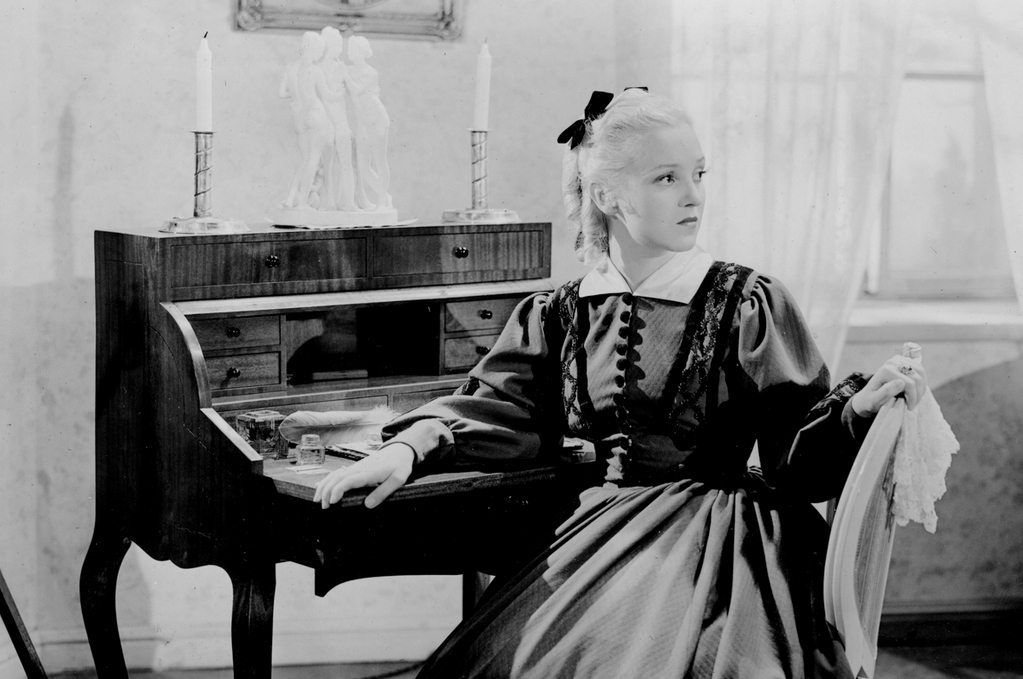
The story spans a crucial decade from 1837 to 1848, beginning with poet J.L. Runeberg’s acceptance of a post teaching Latin literature at a Porvoo college. This inevitably drags him away from the hustle and bustle of life in That Fancy Helsinki, and his wife Frederika (Anni Hämäläinen) frets that his creative genius will wither in the provinces.
A few years later, the young Emilie Björkstén (Ansa Ikonen) moves to Porvoo and soon attracts the wagging tongues of the town gossips, who regard her as trouble because she is a beautiful woman without a squire – “the right jar of syrup to catch flies.” A fan of Runeberg’s poetry, she is drawn to him, and he to her, in a series of will-they-won’t-they, did-they-do-they encounters. Runeberg (Eino Kaipainen) protests that he is a man, not merely a poet, seemingly warning her that her fangirling over him might be misinterpreted by his hindbrain as sexual advances.
Eventually, the two end up snogging, and Emilie’s landlord, the local bishop (Ossi Elstelä) accuses her of “tarnishing the poet’s crown.” Brow-beaten into staying away from him Emilie puts on a brave face, and tells him at their next meeting that she is expecting to be betrothed to her beau Robert (Unto Salminen). But instead of taking this for what it is – a gentle acknowledgement that their love is not to be – Runeberg calls her a temptress and a flirt for stringing him along.
Leo Schulgin in the Helsingin Sanomat thought it was “the best Finnish film yet made”, while the hard-to-impress Paula Talaskivi in Ilta-Sanomat deemed it to be “a pleasant surprise,” praising not only for its choice of subject matter, for its attention to detail and the fact that it was shot in extremely adverse circumstances. These two leading reviewers were echoed by much of the rest of the press, with Uusi Suomi remarking on the loving evocation of mid-19th-century Porvoo. Posterity has been less kind, with more cynical modern commentators regarding it as an entirely unbelievable version of the past, accorded way too much slack by the audiences of the 1940s.
But Runon kuningas ja muutolintu was dogged by controversy from the moment it commenced production, based on Bert Edelfelt’s book Some Old Pages from a Diary (1922, Ur en gammal dagbok). There is a whirlpool of tensions beneath the surface of this film, in which a resolutely Finnish production team celebrates the Swedish-speaking poet who would write Finland’s national anthem, but also reveals that he was a human being with human foibles. On announcing that the film was in production, director Toivo Särkkä was mobbed by a delegation of university lecturers, pleading with him not to besmirch the character of Finland’s national poet. Runeberg was an untouchable demigod of Finnish culture, and to suggest that he might have his head turned by some girl was regarded as sacrilege. I am also tempted to point out that leading man Eino Kaipainen had founded his entire movie career to date on being a Finnish heart-throb that no red-blooded woman could possibly resist, which rather places an unfair pressure on any character obliged to remain immune to his charms.
Our own era has been even more critical of the film, noting that it sets up Runeberg as some pious, dutiful patriot, and his lover as a flighty “migratory bird”, breezing into his life to cause chaos like that uncaring strumpet in The Women of Niskavuori. This, modern critics have argued, is only Runeberg’s film because of what his written work has become to Finns – pity the poor woman whose poetry doesn’t get sung at public occasions decades after she has died in obscurity. But that is precisely what Elsa Soini’s script is driving at through much of the film – the fact that gender and customs and assumptions of the mid-19th-century have doomed posterity to assume that Emilie is a talentless flirt, and Runeberg a tormented poet, when in fact, allowed to interact as equals, they prove to be able and creative collaborators. Runeberg’s own wife dismisses his flirtation with a shrug, Emilie thanks God for helping her “resist temptation”, but buried deep down in all this is an artful consideration of noble sacrifice.
Teenage orphan Sirkka (Sirkka Salonen) meets local rich boy Aarne (Kille Oksanen) when he almost runs her over with his horse. The couple begin a flirtation that leads to a relationship, in which Aarne risks his family name by forging cheques in the name of his elder brother in order to help cover Sirkka’s family debts. When Sirkka inevitably becomes pregnant (this happens so often in Finnish films that one is surprised anyone cares any more), Aarne fights with his brother and leaves the manor. Sirkka gives birth to a son, but the boy is stolen by a gipsy (no, really – Evald Terho in a nameless and off-handedly racist role) in revenge for the poor treatment he received at the manor house. Kirsti (Kirsti Hurme), her former rival for the attentions of Aarne, piles on her troubles by accusing her of having murdered Aarne, for which she goes to prison for six years.
Returning in disgrace to her home town, Sirkka gets work back at the manor house as a maid for Aarne’s elder brother Urho (Kyösti Erämaa), who has always believed that she was framed. Her innocence is finally proven when Aarne shows up in a motor car, announcing that he has merely been away working hard, and the lovers are reunited. Meanwhile, the dying gipsy tells his adopted son (Timo Jokinen) to seek charity at the nearby manor, where the boy is identified by a distinctive birthmark, and reunited with his real parents.
Based on a Swedish film from 1933, itself based on Henning Ohlson’s play Hälsingar (1922), Unelma karjamajalla was already a creature out of time by the time it had its September 1940 premiere, notably not in That Fancy Helsinki, but out in the provinces in Kuopio, Lahti and Pori. This was not a production from the majors, but from the relatively small Tarmo-Filmi company, but it was one of the first movies to make into cinemas after the Winter War, and hence seems to have been unjustly praised by movie critics starved of content. Olavi Vesterdahl in Aamulehti called it “content with the old customary style, and this is perhaps its strongest point.”
Eighty-two years later, the most striking thing about this film is the naturalism of its low-budget exteriors, as director Teuvo Talio snaps windswept location work among the farms of Nurmijärvi and Hämeenlinna, and shoots a tense scene by a ravine as Sirkka Salonen (a former beauty queen in her only feature role) rescues a fallen lamb, accompanied by Bach’s “Toccata & Fugue”. There is also the powerful shadow of class differences. Sirkka Salonen and Kirsti Hurme are fierce, strong presences on the screen when they are bickering with each other, but shapeshift into downcast, timid wallflowers when addressed by the lord of the manor.
Hurme in particular is a striking femme fatale, stealing the show in a role that would propel her out of the theatre and into a brief but remarkable movie career, poached in 1941 by Suomi-Filmi, and effectively becoming the forces’ sweetheart of the Continuation War – her public appearances for the troops were apparently very popular. She appeared in numerous vampy roles over the war years, fading briefly from the public eye after marrying her first husband in 1944, and almost completely after marrying her second, the industrialist Leo Martin, in 1951.
It’s not that Oula Seitsonen is opposed to what he calls “book history”. It’s just that as he poked around Lapland cataloguing Stone Age archaeological sites for his day-job, he became increasingly aware that a more modern historical presence, that of German soldiers in the 1940s, was slowly fading away. There were, true enough, written records of the Nazi troops who arrived in Finland to hold almost a thousand kilometres of borderlands against the Soviets, but these were subject to recurring reversals and re-interpretations.
Drawing on what would eventually turn into his doctorate, Seitsonen’s Archaeologies of Hitler’s Arctic War chronicles the tangible and intangible heritage of the German presence in Lapland, where, at its peak, German soldiers outnumbered the locals, and its ebb, every single German was hounded from the country when the Finns turned upon them in the Lapland War of 1944-5. On their way out, a scorched-earth policy famously ensured that almost no building was left standing north of Rovaniemi, which is why the locals still sometimes shake matchboxes pointedly at German tourists. Seitsonen specialises in ruins and fragments, and tirelessly hunts down ditches that were once trenches, hillocks that were once middens, and ramshackle sheds that were once machine-gun posts. In this, he is hampered by the fact that one man’s research material is another man’s “war junk”, often at odds with the earnest wishes of the Keep Lapland Tidy movement to “clear up” detritus that has been clogging up forest paths for decades.
Seitsonen begins with an account of the Waffenbrüderschaft against the Soviets, that uneasy cooperation between the Finns and Germans that the Finns insisted was not an alliance, but merely a “co-belligerency pact.” In doing so, he wades through some of the obfuscations and hand-waving that characterise Finnish feelings on the subject, for which, in an understandable fudge common to all nations, nobody really wants to be told a negative story about their own relatives. If one does meet a Finn whose granddad was in the SS, one is liable to be told he was in that special division that got cats out of trees or helped old ladies across the road. He notes that most of the concentration camps established in Finland are now conveniently outside the modern borders, left behind in Karelia when it was lost to the Soviets – the National Archives did not open their photograph collection to researchers until 2013, and even then, many materials lack temporal or geographic metadata. Seitsonen does, however, visit Miehikkilä, still on the Finnish side of the border, and observes that someone is still leaving flowers and tending the mass graves of Soviet civilians there.
The German presence, he writes, has been “largely ignored in national-level narratives,” although I would like to point out that this is not merely a feature of WW2. The German presence in Finland’s own revolution and civil war, for example, was carefully edged out of the national narrative as early as the victory parade in 1918 for the newly independent Finns. An exhibition that ran in 2015 at the Museum of Lapland was movingly titled Wir Waren Freunde: We Were Friends, neatly encapsulating another fact that often eludes modern historians, that the Germans in 1941 were welcomed with open arms as the one power prepared to really help Finland in its time of need, and not for the first time. Imagine, if you will, 67,000 German soldiers suddenly showing up in Ukraine tomorrow, and saying they were there to help, and the kind of impact that would have on the hard-pressed locals.
There are a bunch of military memoirs written by both Finnish and German soldiers, which offer some useful context. But Seitsonen frets about the lack of “experiential perspectives” that would offer a broader sense of what like was like for common soldiers, local people, labourers, lovers and prisoners. Then again, he uncovers Wolfgang von Hessen’s Aufzeichnungen (Records), privately published in 1986, a candid memoir by the major who oversaw transportation on the Arctic Ocean Road. It might sound like no great shakes, except von Hessen was the son of Prince Frederick Charles of Hesse, who had been mooted but then booted as the prospective King of Finland in 1918. For a few months in 1918, Wolfgang had been briefly hailed as the heir to the “throne” of Finland… he returned twenty years later to the country that was almost his, where Gustaf Mannerheim would pin a Freedom Cross on him in 1943. Why has this not already been a movie!?
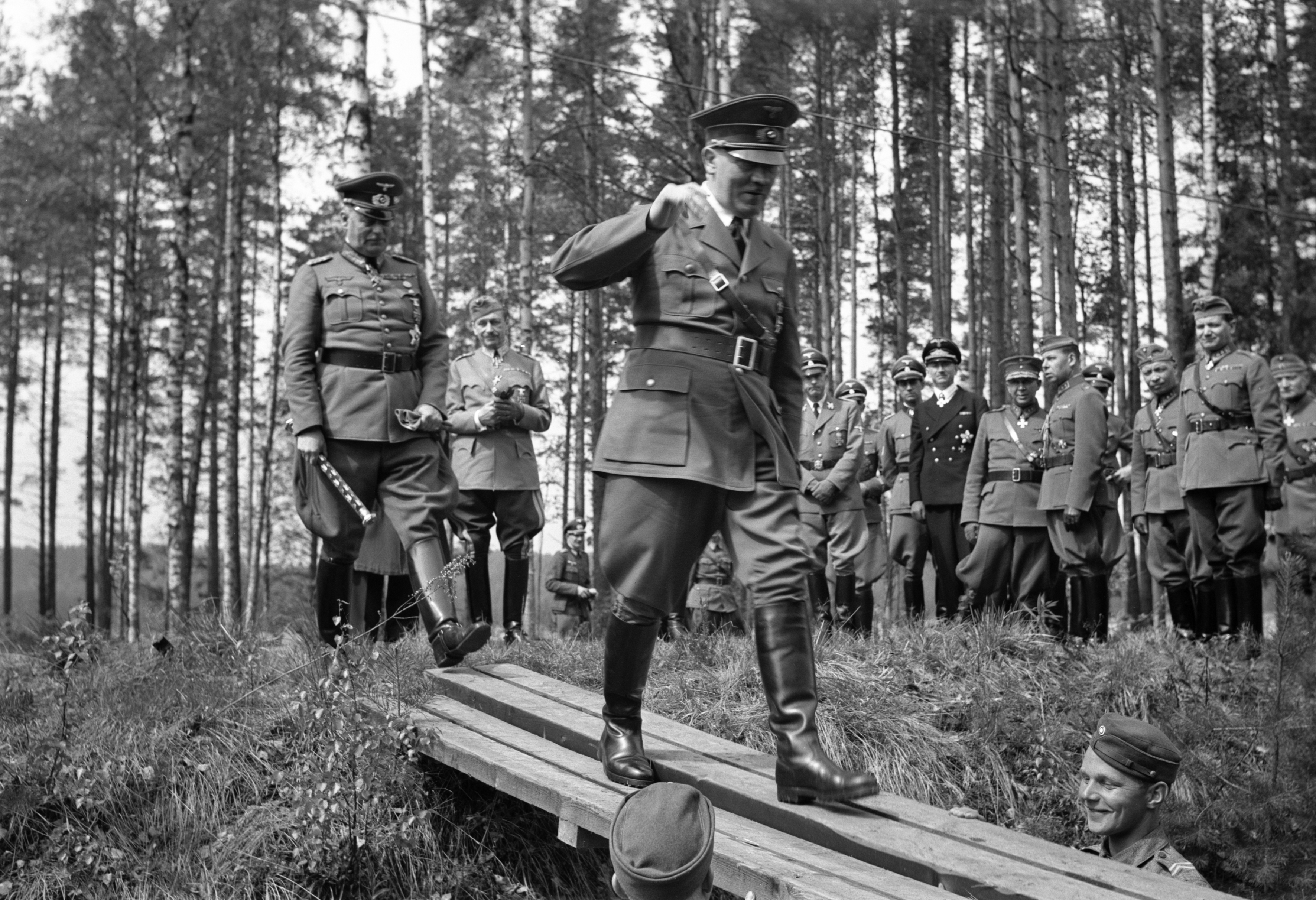
The honeymoon did not last long. The “Hermans”, as the Finns called them, featuring a strong contingent of Austrian mountain jägers, were ridiculously over-confident about the difference they could make in the north, proclaiming “Arktis is nicht” (The Arctic is nothing). Nein, Herman. The Arctic is definitely something, and while German commanders proclaimed that the area was “completely unsuitable for military operations,” the Finns became increasingly disenchanted with the dug-in, advance-averse nature of their co-belligerents. The Germans ridiculed the Finns as a bunch of messy-haired yokels who held up their trousers with string, but it was the Finns, intimately familiar with the landscape and its conditions, who were the most successful against the Soviets. Echoing the sort of “colonialist Othering” that Seitsonen derides in his introduction, the Germans proclaimed that the Finns’ orienteering skills were nothing short of “supernatural”, and before long, they were adopting the locals’ low-tech clothing to keep out the cold, and building fake tanks out of snow to distract Soviets from the fact that whole ten-mile stretches of borders were guarded by little more than a dozen nutters on skis.
“Small girls,” wrote one Captain Ilander, about the full-service teenage ‘cleaning ladies’ draw from the local population, “but hard-bitten, drink alcohol and smoke like real men.” That’s Finnish women for you, who were soon fraternising with the Hermans at many an occasion – the mind boggles at the thought of Albert Speer, the noted Nazi architect, living for a while in a Finnish shed, and coming out to make merry with a bunch of Finns at a Rovaniemi Christmas party. Amid such frivolity, Lapland was in thrall to a series of terror attacks, as roaming platoons of Soviet partisans sought to tie up the troops in the most heartlessly economical way possible, by targeting random civilian settlements. Seitsonen’s archival research includes a picture of a mutilated girl, no older than seven, being carried from a log cabin by a glum soldier. Here, too, there is an issue with “book history”, as most of these partisan atrocities went carefully unreported in the Finnish media – to have given them publicity would have given the Russians what they wanted.
The Russians are another undocumented presence in the history of Lapland. Nine thousand Soviet prisoners of war were drafted as slave labourers to make up for the lack in the region’s manpower, in order to help the Germans create the infrastructure that they required to fight in the manner to which they had become accustomed. Conditions in the nearly 200 camps scattered around Finland ranged from “tolerable” to “inhuman”, but Seitsonen argues that the shadow of this unmentioned labour can still be seen in modern times: “many of the modern roads in Lapland trail the… Second World War tracks, and the cadastral plans of several northern towns follow those of the German barrack villages.” There was, Seitsonen suggests, also a ‘punishment camp’ for Jewish prisoners of war somewhere in Finland, although his researches have yet to officially locate it. It was, presumably nowhere near Syjärvi, where in one of the most absurdly unlikely incidents of WW2, Finnish Jews serving in the army set up the only field synagogue on Nazi front-lines, and held services attended respectfully by their SS comrades. Even so, the Jews fighting alongside the Nazis did so amid recurring rumours that when the war was over, ‘the ship would be waiting’ to take them away to an unknown fate. One of them, the Jewish field doctor Leo Skurnik, was even awarded the Iron Cross after fearlessly carrying wounded SS men out of harm’s way during an attack. He then bluntly refused to accept it, with the words: “I wipe my arse with the Iron Cross.”
Offended by this for some reason, the Nazi authorities demanded that he be handed over, only for his commanding officer to refuse to give up his best doctor. Two other Finnish Jews also refused a German medal, although not quite so colourfully. Having encountered Jewish soldiers on a trip to inspect the Nazi lines, Heinrich Himmler buttonholed the Finnish prime minister, asking him what he was going to do about the Jewish question.
“We have no Jewish question,” was the fantastically Finnish response.
Seitsonen is just as informative concerning the “Ragnarok” that was the Lapland War, as the Germans fled towards the safety of the Norwegian border, leaving behind a hellscape of burning buildings, a rain of burning papers falling from the sky, and a land strewn with mines. For years to come afterwards, there was a risk of exploding reindeer – as is his wont, Seitsonen points out that the grim truth, that hundreds of local people also lost their lives to mines after the war, and some 2,000 were injured, was only really publicised in 2012. A year later, arguably explaining why it had been kept quiet for so long, a metal detectorist looking for Nazi memorabilia in Kemi was killed by a grenade he was cleaning.
The church bells went missing from the burned Kuusamo church in 1944, and were only recovered in 1959, when a German visitor revealed that they had been saved by an SS officer who had fallen in love with a local girl to the sound of those bells, and had consequently hidden them in the local graveyard.
Seitsonen’s excavations of fragments of stoves, cutlery and smashed Nazi crockery prove to be utterly fascinating. He demonstrates with cunning didactic power how easy it is even for modern archaeologists to read too much into simple materials – Were those binders burned to hide evidence? Was that smashed Pelikan ink bottle used to tattoo prisoners? Or was it just a bottle of ink. He draws a logistical map of Europe, to show where the artefacts in Finnish ditches were manufactured in the Nazi empire, and tabulates the diet of the soldiers based on whatever he can dig out of their middens – not merely a predictable 30% local reindeer component, but Danish cattle and Argentinian corned beef.
He points out the many subtle shifts and redactions of local history that shield and obscure the wartime era. Sometimes, they are in plain sight, like the Alppimaja (Alpine Lodge) district on Oulu’s Tirolintie (Tyrol Street), named for the Austrian jägers once quartered there. Others are less well-known. The patriotically named Kalevalankartano (Estate of the Kalevala), for example, was originally built as the Oulu SS Officers’ Club, and come to think of it, does look rather Teutonic. And there’s comedy gold as it turns out that the world-famous Santa Claus Village, in Rovaniemi, is built on the site of a former Luftwaffe airbase, and that the year-on-year expansion of the Village threatens to wipe out many archaeological materials from its previous existence.
Seitsonen finishes with an observation about the nature of history and memory, and how even memorials carved in stone can be fungible. In a school in Vuotso, outside Sodankylä, there is a standard 1939-1944 Isanmaa Puolesta (For the Fatherland) memorial, which features a death in 1959 – a local boy, killed by an unexploded bomb. Such tragedies are included by the Finns in official accounts of the “war dead”, for a war that is still not over until the last of its materials cease to kill.
Amidst all of this, the Sámi watch, unmoved. For them, the Germans were just one more colonialist power tearing up the countryside, and their voices in Seitsonen’s book can be entertainingly gruff. One comments that it’s all very well mourning accidental casualties as war-dead, but he has little sympathy for the trophy hunter who got blown up in 2013. “Stupidity has its price,” he scoffs. “They shouldn’t go around taking things from our land.”
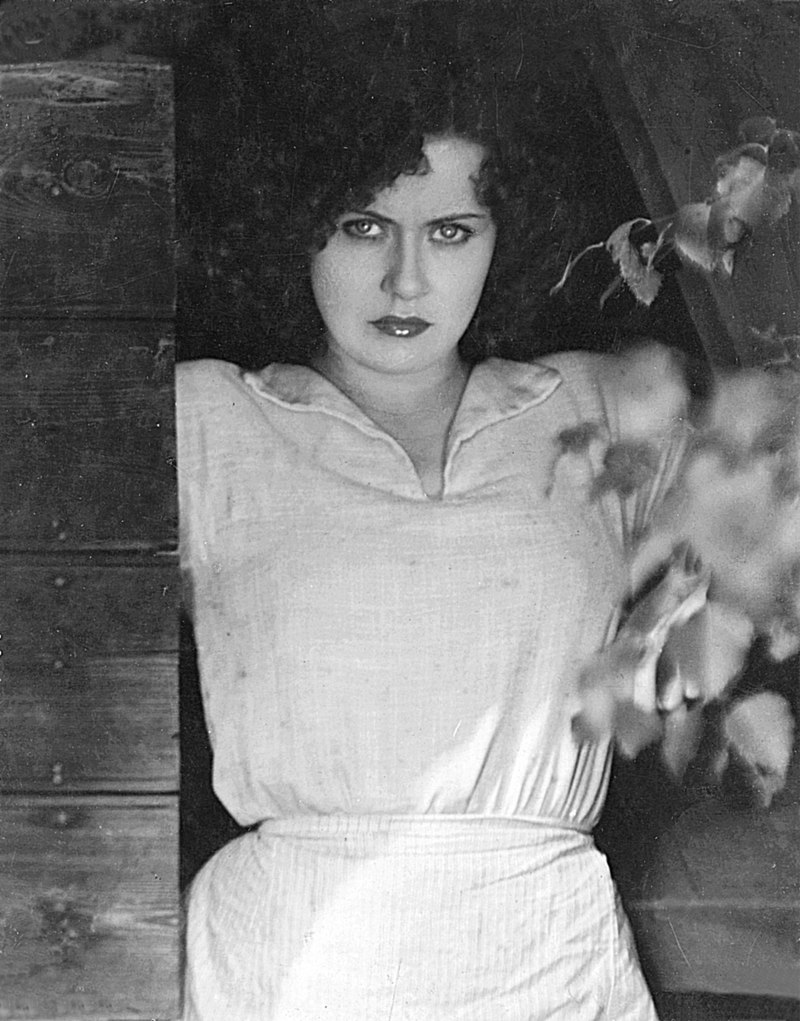
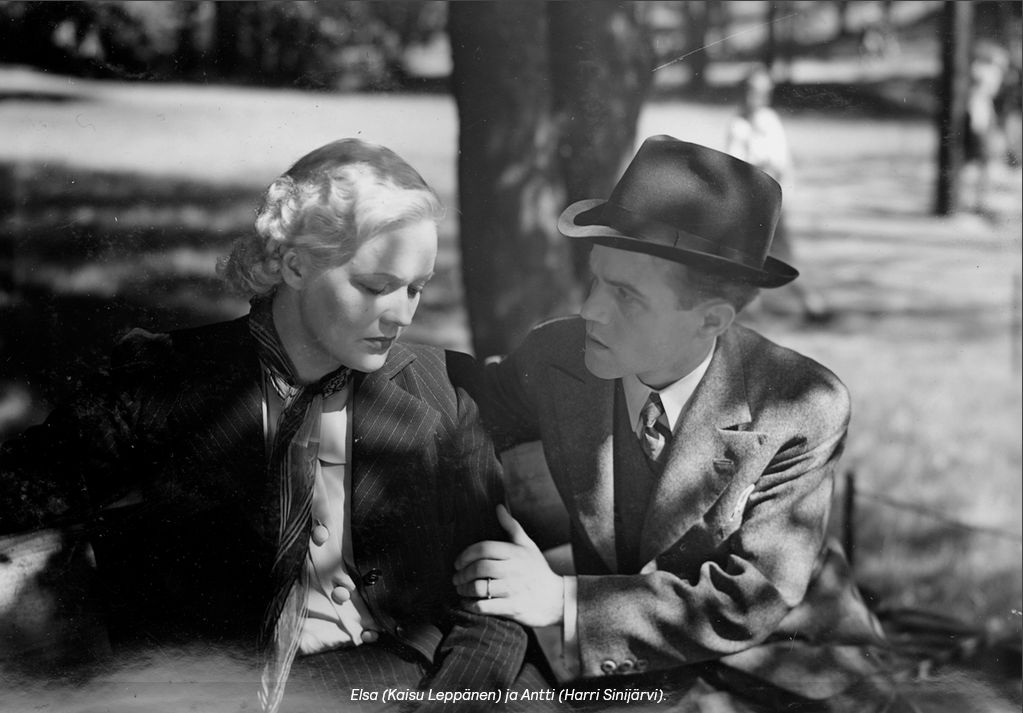
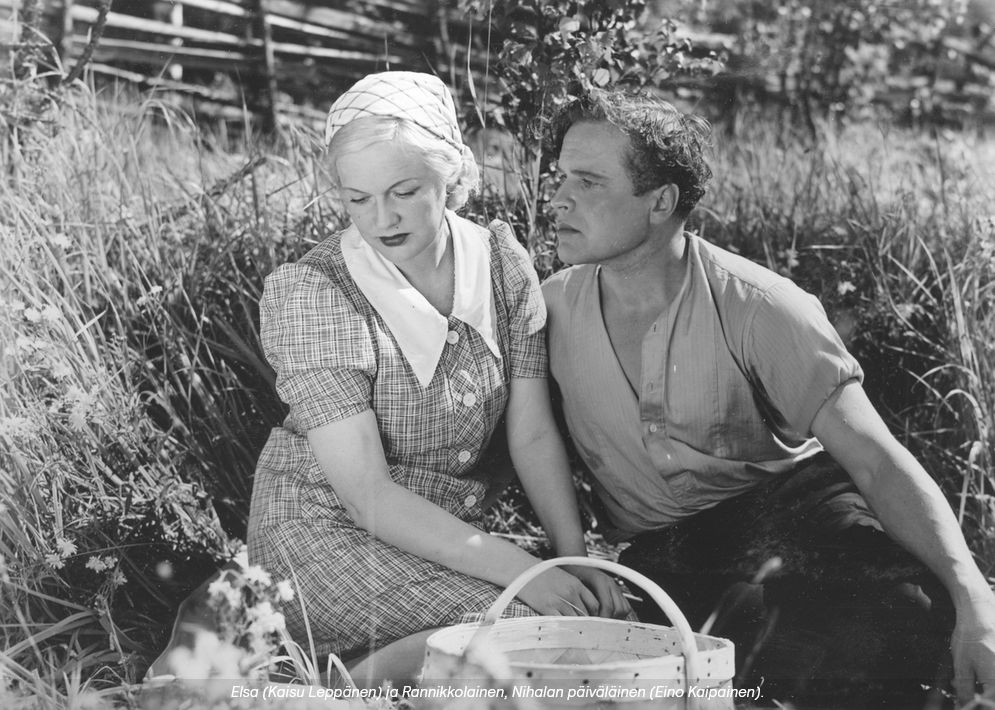
Laundry-worker Elsa (Kaisu Leppänen) marries Antti (Harry Sinijärvi) after a whirlwind one-day courtship, only to suffer for three years of constant failures to have a child together. Increasingly obsessed over getting pregnant, she goes away to the countryside to stay with Antti’s sister Katri (Lilli Sairio), only to enter into a torrid and ultimately fertile romance with local labourer Rannikkolainen (the ever-smoldering Eino Kaipainen). Protesting that she still loves her husband, but cannot keep away from Rannikkolainen’s rugged charms, she continues their affair, despite words of warning from Katri that village gossips are talking about her.
When the ailing Antti comes to visit, Elsa confesses to Rannikkolainen that she is pregnant, but that her child “…is neither yours nor my husband’s. The child is mine.” After Elsa chooses to return to the city with her husband, a heartbroken Rannikkolainen begins a relationship with Kaisu (Regina Linnanheimo), a local girl who has carried a torch for him for years. Elsa, meanwhile, confesses to her dying husband that she is pregnant, and asks for his forgiveness. She returns to the countryside in search of Rannikkolainen, but he has already agreed to marry Kaisu. Accepting her fate, Elsa congratulates Kaisu and returns to the city and her job in the laundry, asking her infant son not to judge her.
Well, that escalated quickly. Drawing on Helvi Hämälainen’s 1937 novel The Empty Embrace (Tyhjä syli), scenarist Arvi Kivimaa delivers a surprisingly progressive account of what was sure to be a recurring social issue in post-war times – a spate of unwed and/or widowed mothers recalling the scandals and tragedies seen before in The Women of Niskavuori (1938), Green Gold (1939) and God’s Judgement (1939). The early scenes of this Suomen Filmiteollisuus film are particularly good on the drudgery of blue-collar work, as Elsa, her biological clock ticking like timpani, pouts and sighs her way around the grim, back-breaking work of washing Finnish bedsheets in the days before washing machines. But as the script makes clear, she is not desperate – she rejects the advances of the handsy chauffeur Nieminen (Ossi Elstelä), so it’s not like she is ready to plight her troth with the first man to blow in her ear.
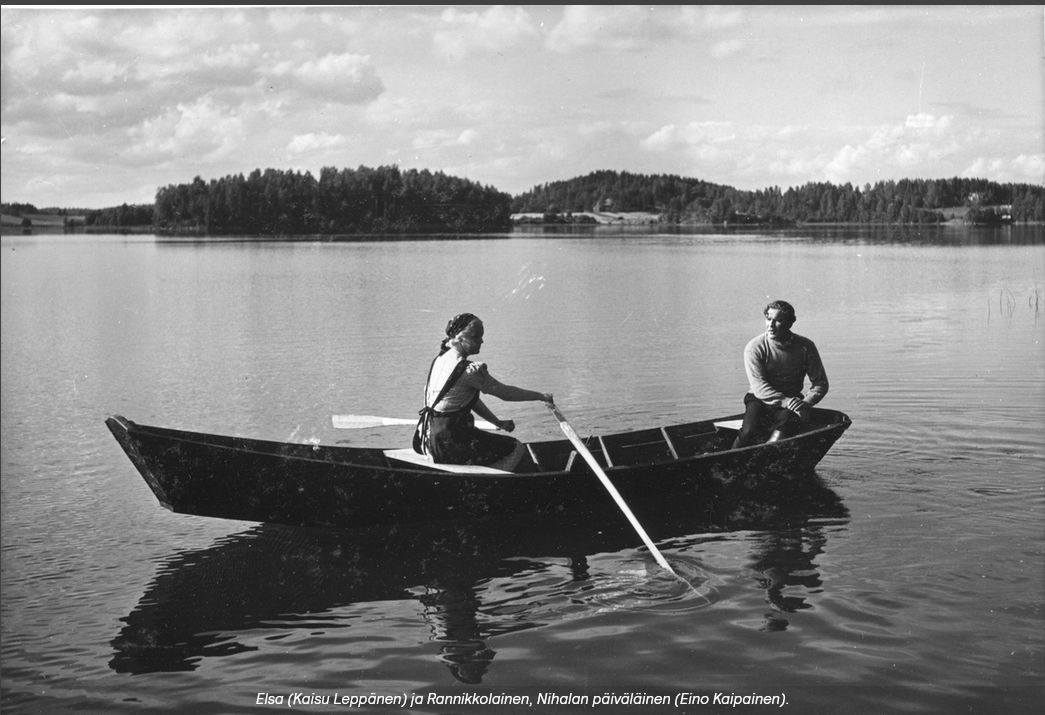
Not that Antti is a dreamboat hero, sweeping her off her feet. When he proposes to her, with the twin, thin rings of Finnish tradition (one for engagement, the other to be added at the wedding itself) she acts as if he has just run over her cat, and, somewhat gauchely, immediately starts wittering about how this her chance to have a child. In a charmingly Finnish moment, when her fellow washerwomen see that she has got engaged, they line up to shake her hand enthusiastically, bellowing their congratulations – no squeals and squees here. In fact, the no-nonsense, go-getting strength of Finnish women is a constantly recurring theme in this film, showing up in all manner of set-ups, such as the time that Elsa bodily ejects a drunken, abusive man from a tenement, and where she, with her powerful washerwoman’s arms, elects to row a boat on the lake, leaving even the manly Rannikkolainen to meekly hold the tiller.
Actor-turned-director Jorma Nortimo concentrates conspicuously on the joys of the Finnish countryside, as if delivering a celebration of all that is wholesome and good about agrarian life, almost as if suggesting that the sickly Antti was an urban, modern failure – a dud who would have died on Elsa sooner or later anyway, and that Rannikkolainen is something of a noble savage, part-Heathcliff, part-Mellors, doing his bit for posterity by helping to make little Finns. He is helped greatly in this by the casting, since Eino Kaipainen had been a Shatner-esque leading man for years, while Harry Sinijärvi had only appeared in two previous films, and is hence something of a non-entity. Kaipainen, in fact, is so magnetic on-screen that he even manages to get a smile out of Regina Linnanheimo, who as previously noted on this blog, usually looks like she is chewing a wasp. He first appears, driving a horse-drawn milk cart standing up, like a Ben Hur of the Finnish countryside, and is no less gropey with her than the city-man she had previously rebuffed.
Nortimo, meanwhile, tries every trick in the book to inject the film with symbolism and subtleties, such as a scene in which Elsa is filmed through the mesh of a fisherman’s net, as if she, too, is entrapped by her circumstances, or where Elsa and Rannikkolainen’s embrace is shot in silhouette, criss-crossed by telling barbed wire. There are some lovely stills kicking around from this production, suffused with the light of a forgotten Finnish summer, the exteriors presumably held off until the very last days of shooting, in order to make the most of June-July, and have the film ready for its release in September 1940.
The Finnish press of the time was guardedly positive about a “sensitive subject”, although the Swedish-language newspapers seemed to latch onto it as a quintessentially “Finnish” theme, as if only Finnish country bumpkins got up to this sort of thing, and Swedes would never dream of it.
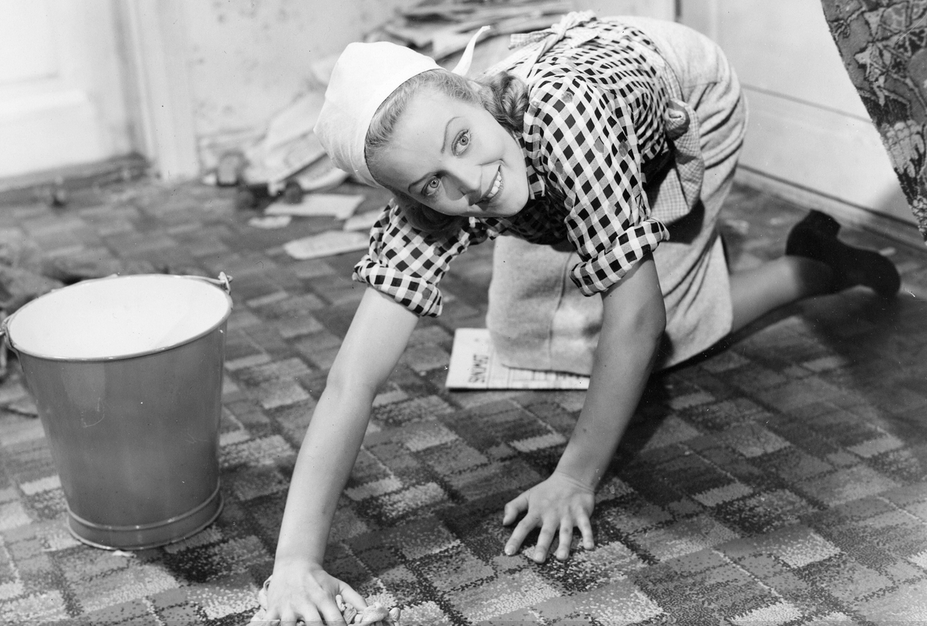
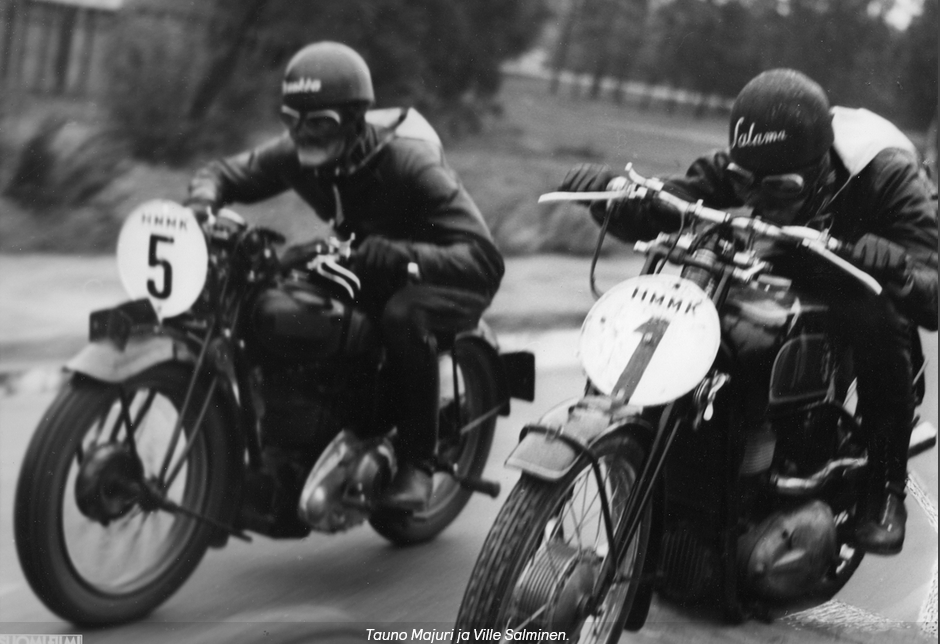
Engineering student Ari Karma (Tauno Majuri) tries to pitch an innovative motorcycle design to industrialist Mr Virmala (Hugo Hytönen) but is laughted out of the presentation. Undeterred, he vows to create a motorcycle that will trounce the Salama (“Lightning”) factory model at the next big race. Meanwhile, Virmala’s spoilt daughter Arja (Helena Kara) heads off to the beach in a colossal sulk, because her father’s declining factory profits have deprived her of the all-expenses-paid trip to Paris that she was promised. Complaining to her increasingly distant boyfriend Jali (Ville Salminen), she rashly accepts a wager from her friends that she will be unable to work in a real job for more than three months.
These initially unrelated plots soon merge at Hauka Manor, where Arja, already fired from her first job for failing to correctly make coffee, is now working as the world’s worst kitchen maid, while Ari is moonlighting as a chauffeur in order to use the mansion’s garage as a place to build his wonder-bike. Amid a series of backstairs romances and kitchen disasters, Ari and Arja fall for each other, only for Jali to show up at a dinner party where Arja is a server. Ari misunderstands their conversation, and leaves in a rage, convinced that Arja is having an affair.
In the fateful motorcycle race, Arja shocks her father by not cheering for the Salama rider, but for the unknown Ari with his home-made bike. Ari’s design beats Jali on the Salama factory model, and in the celebrations, Ari and Arja are reunited, their true identities revealed.
Based on a 1932 Swedish film, itself deriving from a 1930 Norwegian novel by Sigrid Boon, In the Kitchen’s incredibly dull English title somewhat unfairly dooms it to sound like a crappy home farce, rather than, a multi-location comedy, shot not only in several Finnish towns, but also across the water in Tallinn at the Kloostrimetsa race track — the first “international” Finnish film I can recall in this watchathon. The film went into production shortly after the success of the similar Have I Arrived in a Harem? (1938), and was originally set to star Olavi Reimas, who has been similarly chasing posh totty in Rich Girl (1939) and Green Gold (1939). However, filming was split on either side of the Winter War, during which Reimas was wounded, leading to his replacement with Tauno Majuri. But Majuri does fine in his new role, while Helena Kara, ever bright-eyed and perky onscreen since her star-turn in The Bachelor Patron, is a fine foil.
Kara, in fact, was paused on the brink of meteoric success in Finnish film. She was already a popular star, and was one of three actresses put on a permanent salary by Suomi-Filmi, each of them notably without a background in theatre. However, her former flatmate Sirkka Sari died in a tragic accident on location for Rich Girl, while the third actress, Tuulikki Paananen from The Jaeger’s Bride (1938) fled for America with the outbreak of war. This left Kara as the undisputed queen of Suomi-Filmi, a role she sealed early in 1940 by marrying the studio head and sometime director Hannu Leminen, with whom she would work on a dozen later films.
Not for the first time, Finnish film flirts with the difference between “upstairs and downstairs” as a poor little rich girl cosplays as a working-class servant, learns a little bit about life (in particular, the powerlessness of the subaltern class to defend itself against accusations of theft), and eventually gets the rich boy she deserves. The press reacted with customary Finnish understatement, with Eila Paicheff in Ilta-Sanomat damning it with the faintest of praise: “Two hours spent In the Kitchen is undeniably fun,” she conceded, “and it probably fulfils its purpose.” Latter-day critics have been far kinder; the same newspaper’s Heikki Kataja observed in 1977 on its television broadcast that it featured “witty romance, carefree beautiful people, and pre-war domestic film-making at its most typical, if not least-worst.” Displaying what, for a Finn, was unbridled exuberance, Arto Pajukallio in a 1989 issue of Katso admitted that it was “in some places, a little bit fun, in others, even thrilling.”
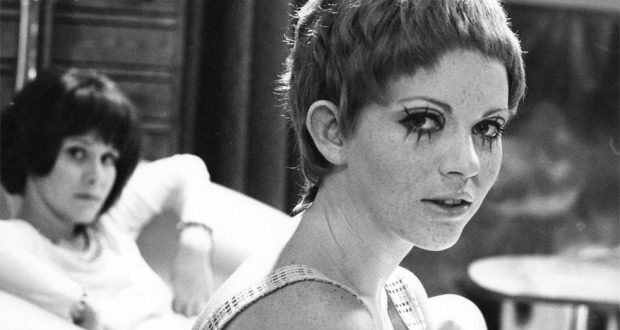
“Helsinki, Finland, in the year 2012 is a prosperous, peaceful society ruled by a meritocracy of technicians. The somewhat smug researcher Raimo (Tuominen) embarks upon a project to compare his time with that of his ancestors, by making a drama-documentary about the life of a figure from the past. He settles upon the life of Saara Turunen (Vepsä), an uneducated saleswoman in the chemicals industry and part-time erotic model, who met with a tragic end in 1976. His mistress and collaborator Anu (Markus) alerts him to the existence of Kisse (also Vepsä), a contemporary woman who bears a striking resemblance to the historical Saara, and who is persuaded to take on her role in the film.”
Over at the Encyclopedia of Science Fiction, I write up the 1969 Finnish oddity A Time of Roses.
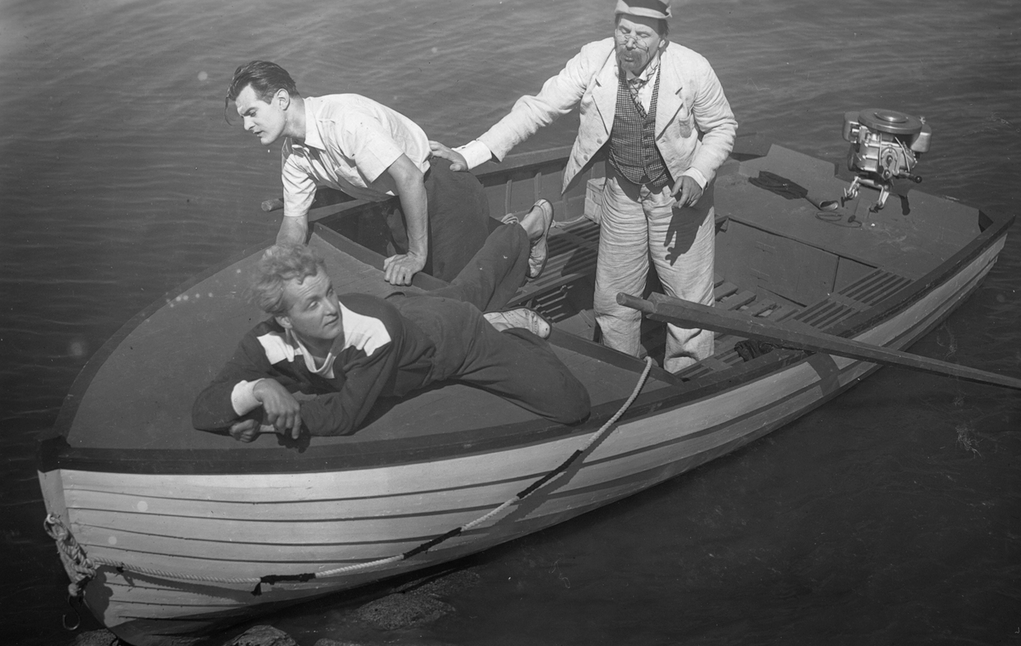
Vacationers Aarne (Tauno Palo), a pharmacist, and Paavo (Leo Lähteenmäki), a lieutenant in the army, offer to help the flustered station-master Mr Virimäki (Jalmari Rinne) get back home from the Finnish countryside. The trio set out in a motorboat, in an attempt to catch the steamer or reach the train station, but engine failure and a dunking in the lake leaves the two Good Samaritans wet, naked and marooned on an island.
Dressed like Adam and a Little Bit Like Eve began life as a 1928 novel by Agapetus, the unfunny scribe who has bafflingly provided so many Finnish “comedies” of the 1930s. By the time this 1940 production rolled out, it had already been turned into a film in 1931, as Finland’s first partial “talkie”, starring Jalmari Rinne’s brother Joel, and would re-made in East Germany in 1959, and again in Finland in 1971.
Terrifyingly, Dressed Like Adam begins in song, as Aarne and Paavo dick around their campsite boiling water and singing about the joys of sunshine. Mercifully, however, they soon stop, and get on with the story, a veritable comedy of errors.
As the nervy Mr Virimäki, the unrecognisable Jalmari Rinne boasts a pair of buck teeth that only add to the impression he gives of being the ever-late White Rabbit from Alice in Wonderland. His panic is pointlessly overblown – the boys pick him up at the dockside mere moments after the steamer has left the harbour, and frankly if he had only stopped pratting around and threatening to swamp the boat, they could have easily caught up with it.
The set-up, of course, superficially recalls Jerome K. Jerome’s Three Men in a Boat, and since Finns are involved, one might readily imagine that this, too, would turn into a bunch of people wittering about pets and discussing imaginary illnesses. But no, because within minutes, the boat has broken down, Aarne and Paavo have lost their clothes, and Mr Virimäki is beset upon by a field full of cows. The location work was shot on the manor at Pyhäniemi, a manor near Hollola that can also be glimpsed in several other Suomen Filmiteollisuus productions, including The House at Roinila (1935), All Kinds of Guests (1936), Seven Brothers (1939), and Serenade on a War Trumpet (1939). Its most recent use as a location was for Hella W(2011), a film about the writer Hella Wuolijoki, author of The Women of Niskavuori (1938).
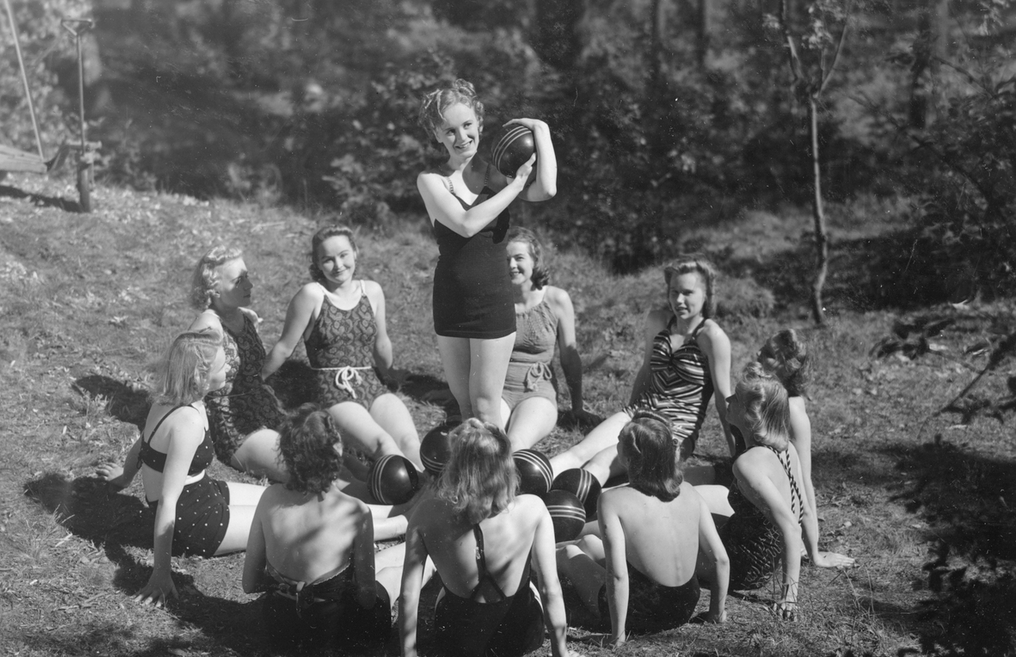
The farce is inevitably compounded when we are introduced to Alli (Sirka Sipälä) and her coterie of beauties exercising in the forest – a bevy of Finnish women in industrial-strength swim-suits, rhythmically lifting medicine balls like a dehydrated Esther Williams routine. She, however, is merely a bit of local colour to distract from the actual drama, which is escaped prisoner Vilho Vikström (Yrjö Tuominen, who played Paavo in the previous 1931 version), hiding out in the forest. Having got into a fight with Vikström and stolen his clothes, Paavo is mistaken for the criminal and arrested by the local police. When Paavo doesn’t return that night, Aarne also swims to the shore in search of him, and ends up having to climb a tree to escape from a dog in Alli’s garden.
Alli throws Aarne some clothes, causing him to spend much of the next act dressed as (and mistaken for) a woman. Cross-dressing comedy then ensues, with actor Palo convincing playing the ingenue, all except for his broad shoulders and prominent hairy chest threatening to give him away… but then again, this is Finland.
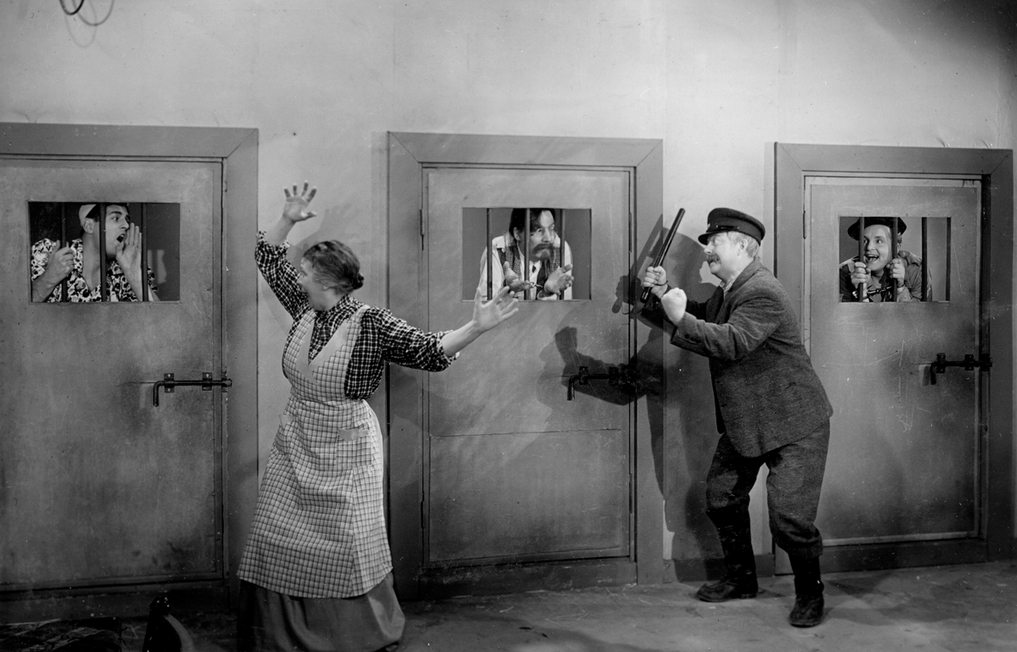
To be frank, I see so much nudity in modern-day Finland that it is difficult to take the jeopardy in this film as anything but manufactured. When my neighbours have proclaimed Topless Thursdays down by the lakeside near my house, and there are more baps on show than a Burger King assembly line, the fact that Paavo and Aarne haven’t got any pants on doesn’t feel all that much of a big issue. Like many other Finnish farces of the period, Dressed Like Adam relies on unconvincing slapstick and misunderstandings that could reasonably be dispelled by people simply having a conversation. Before long, all three men are incarcerated on suspicion of being Vikström, singing at each other in jail while Alli roams the countryside in search of the real criminal, who has, of course, got into their boat and made himself ill drinking a bottle of something he thought was moonshine.
That’s not to say there aren’t some moments of genuine humour, such as Paavo introducing himself to Vikström in the forest, standing to attention and reciting his name and division within the Jyväskylä Regiment, but with his cock plainly waving in Vikström’s face. High-jinks inevitably ensue, with Aarne falling for Alli, who remains blissfully and somewhat worryingly unaware that he is a man – compare to similar gender-bending in the earlier The Man from Sysmä. By the time Alli was crawling into bed next to Aarne for an all-girls-together slumber party, and then demonstrating her exercises scandalously and boobily in the nude, I was tittering away like a 1940s Finn, and unexpectedly warming to a script from an author whose work I usually find about as welcome as a prostate exam. Possibly, the victory here does not belong to Agapetus, but to Nisse Hirn, the screenwriter who adapted his novel. Hirn was also responsible for The Man from Sysmä and The Bachelor Patron, but at this point in his career, his greatest works were still ahead of him.
Extra points awarded for Alli’s pert nipples, which manage to be prominently on display even when she is wearing clothes again, poking through her summer dress. I guess that’s why actress Sipilä got top billing, even though the film’s triumph, among audiences and critics, was Palo’s prolonged and often convincing experiment with what constitutes femininity in 1940s society.