The Path of the Righteous Men

Jussi Vares (Antti Reini) is approached by Olle (Markku Maalismaa), a pastor from small village in the hinterland, who wants him to solve a crime that the police seem to have given up on. Just for a change, it’s about the murder of a sexy young girl, and there is a long list of potential suspects. Could it be Taisto Raapana (Peter Franzén), a fire-and-brimstone preacher whose Christian sect has dragged many of the already devout locals away from Olle’s church? Or Sulander (Järmo Mäkinen), the seedy printer who publishes Raapana’s religious tracts? Or even the local police, who are demonstratively suspicious of Vares as he pokes into their business?

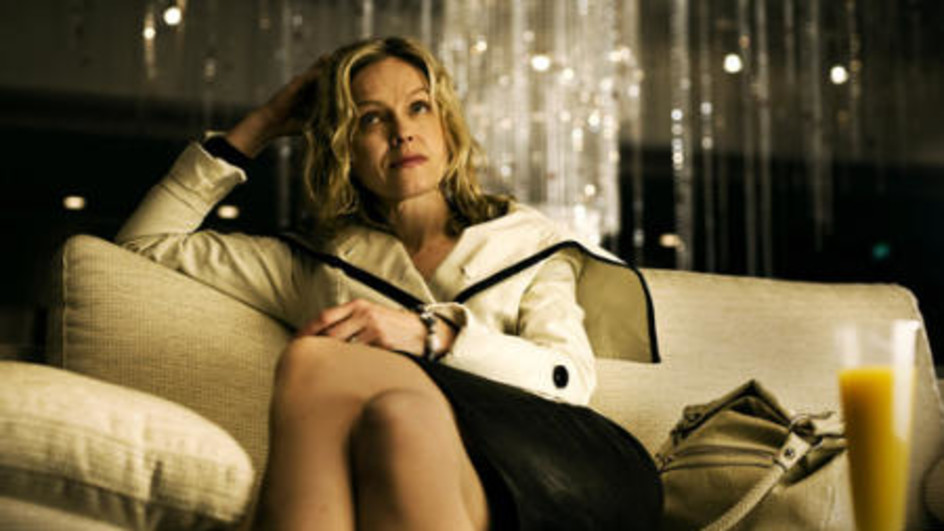
Not for the first time, the Vares series tests the limits of the Finnish acting profession. The constant need for fresh murder bait, it seems, has exhausted the entire crop of this year’s young Finnish starlets, leaving this episode’s love-interest in the more mature hands of Elisabeth (Merja Larivaara), Raapana’s sexually frustrated wife. Meanwhile, the bent doctor Hento, who secretly prescribes her birth control pills, is played by Kari-Pekka Toivonen, who previously played another role in the second Vares film, Frozen Angel. Famous Finnish crooner Kari Tapio, no stranger to provincial barn dances full of murderous banjo-twanging cultists, I am sure, appears as himself in a concert scene.

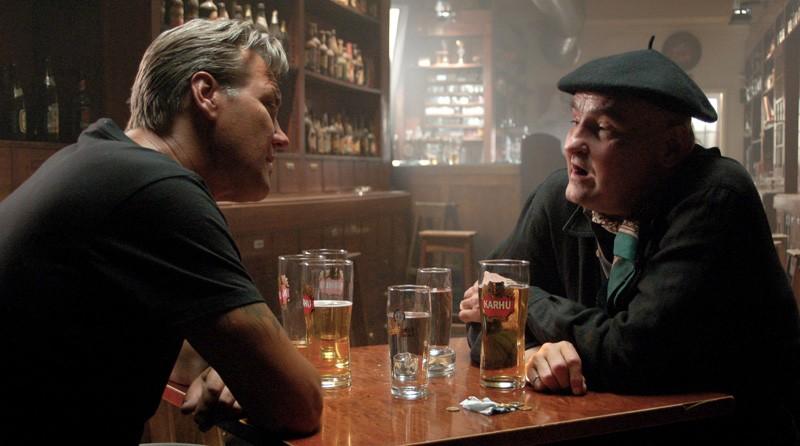
Legend has it that the four 2011-12 Vares films were shot back-to-back on a 120-day schedule. And someone has certainly made the most of the economies of scale, presumably shooting a bunch of top-and-tail pub scenes with our hero’s drinking buddies that will suffice for all four movies, while another crew gets on with the aerials. Lauri Törhönen could have been off shooting the prison break sequence for Garter Snake, which involves none of the regulars, while Anders Engström was off with the leading man in the countryside, banking this low-key, low-budget diversion almost entirely featuring a guest cast, released straight to video in 2012.

So even though we begin with the usual overhead shot of summertime Turku, the shadow of the helicopter visible in frame as if to advertise the money spent – no drone footage here! – the bulk of Path of the Righteous Men is set in Ostrobothnia, on the Finnish Baltic coast. Considering the Vares serial’s ongoing feud with things Swedish, I am rather surprised they didn’t make more of the region’s Swedishness. Even its name, “East of the [Gulf of] Bothnia” rather than the more logical “West Finland”, parses it in terms of its geographical relationship to Sweden. I drove through the area once researching the John Grafton incident, and the road signs were in Swedish first and Finnish second. Instead, the script by Mika Karttunen and Katariina Souri, and presumably the 1992 Reijo Mäki novel Vares ja kaidan tien kulkijat on which it is based, focuses on another element of the Finnish hinterland, religious fundamentalism.

It’s certainly refreshing to take Vares out of his Turku home to see a little of the countryside, packed off to a dry county where only low-alcohol beer is available, and his landlord gets a telling-off from the police if he lets him have a snifter of brandy. Raapana’s happy-clappy sect all seems mostly harmless, until Vares realises that the preacher is offering places in heaven in exchange for donations of real estate. There’s certainly something fishy going on, and Vares soon finds himself wading hip-deep into the tawdry secrets of a one-horse town. It’s not clear to me, however, to what extent he actually solves all the mysteries – as with the novels by Reijo Mäki, which mix first- and third-person narratives, there are some scenes of vital exposition that take place when Vares is absent. He certainly stumbles across the truth of who committed the murder, but the degree to which he leaves town having solved all the crimes witnessed by the audience is debatable.

Jonathan Clements is the author of The Armchair Traveller’s History of Finland.

Garter Snake

Sukkanauhakäärme (1989) was one of the earliest Vares novels, set at a time when our hero was still fixated on the life he almost had as a big-shot lawyer. Some faint echoes of this remain in Lauri Törhönen’s 2011 film adaptation, in which Jussi Vares takes on a job tracking attorney Pauli Kontio’s unfaithful wife Annika (Rebecca Viitala), at least partly out of envy for the client seemingly having it all.

Someone who is most definitely having it all is Jesus Lobo (Ilkka Villi), a smarmy piano player who seems to have tupped half the women in Turku. Vares starts tailing him with the expectation that he has found Mrs Kontio’s lover, only to discover that Lobo has a girl in every piano bar. He also tinkles the ivories on the ferry to Stockholm, which makes him an ideal mule for drugs and “special” Swedish porn, the nature of which is never revealed, but presumably involves lukewarm saunas and insufferable smugness. As ever in Vares, Sweden is the source of all criminality and torment, a sinful utopia at the other end of the ferry lines.

Meanwhile, Torsten Rapp (Petri Manninen) busts out of jail. If that sounds like a non sequitur, it is for most of the movie, which begins with the prolonged preparations for a jailbreak. But as soon as Rapp has fought his way out of prison with a guard’s uniform dyed blue with toilet bleach, and an improvised shotgun made out of a crutch, he disappears for half the running time, only popping up again at the end for the now-traditional sequence in which one set of criminals is trumped by an even more violent thug, allowing Vares to save himself and the day by dropping between the cracks and cleaning up the mess they leave behind.

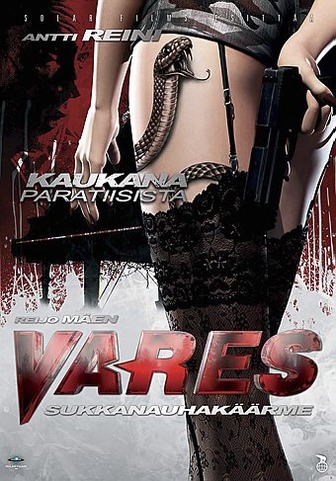
Even by the standards of the Vares films, this is a low-rent offering much more on the straight-to-video end. You can even see this in the box-art, which features a sexy, suspendered thigh flashing a snake tattoo on the DVD cover, but hides this behind a more demure basque version on the cardboard sleeve. This is pretty much all there is to say about the titular “Garter Snake” – an epithet directed at a femme fatale in a throwaway line, but otherwise nothing to do with the film at all. Our hero, meanwhile, finally gets behind the wheel of a car, tooling around town in an old Volvo before someone blows it up.

Vares, as usual, spends most of his time blundering between Turku’s watering holes – a Vares drinking game could only avoid alcohol poisoning if viewers took a sip whenever a glass wasn’t in his hand. We can only imagine the product-placement bingo that precedes each shoot, as the cast roll up in some guy’s pub and offer to make sure the sign gets into shot, as long as everyone can have free booze. In one scene, Vares and his friends each have two drinks in front of them, as if they are desperately trying to cram one more in before closing time. The fact that this was the earliest chronological Vares book to be adapted for the screen also creates a continuity confusion, as Vares “finally” sleeps with his perky part-time stripper neighbour Anna (Maria Järvenhelmi), even though she has been acting like his occasional squeeze in the four previous films.

Jonathan Clements is the author of The Armchair Traveller’s History of Finland.

The Girls of April

Hard-up Finnish journalist Ruuhio (Mikko Lempilampi) leans on his drinking buddy, private eye Jussi Vares (Antti Reini) to poke around a cold case that has long been forgotten. Fifteen years earlier, three girls from Turku disappeared in swift succession – maybe they left the country, maybe they were murdered – but the town has already forgotten the scandal.

This is probably because the town is munted. Antti Reini’s second outing as Vares rarely strays far from the pub, which seems to be the location for much of Turku’s thinking, drinking and big pimping. He’s been so smashed for the last decade that he hasn’t even noticed that his drinking buddy Luusalmi (everybody is a drinking buddy) not only dated one of the missing girls, but wrote a book in which he outlined his personal theory about their disappearance. Luusalmi, however, is not renowned for his problem-solving skills – he thinks they were in a sapphic love triangle, and that one bludgeoned the other two to death with a dildo before running off to Lesbos to become a tour guide.

Ruuhio’s challenge to Vares to bring him some reheated column inches is only the first of a remarkable series of unlikely coincidences, which put most of the suspects, victims and investigators not only in the same city, but often in the same building, and sometimes the same pub. One of the girls, it transpires, didn’t even leave town, but put on a wig and switched careers to become a fortune-teller. We see her in the opening sequence, telling Vares’ hot mess of an ex-girlfriend that she knows just the guys to put the scare on our hero, a pair of off-the-peg thugs, one of whom also used to date one of the murder victims. Meanwhile, menacing bad-guy “Tristan da Cunha” (Taisto Oksanen) gets off the ferry from Sweden (it’s always the ferry from Sweden, which is like Mordor if you’re Finnish) and soon establishes his bad-guy credentials by picking up a man in a gay club, force-feeding him a cock-shaped birthday cake, and then savagely murdering him so he can squat in his apartment.

Based on Huhtikuun tytöt, the 15th book in Reijo Mäki’s Vares series, Girls of April (2011) is an odd choice for adaptation, coming right behind a similar cold-case in the previous instalment, Kiss of Evil. One wonders how problematic a dozen other novels had to have been for this one to get the greenlight. Our hero is so drunk, in fact, that he doesn’t dare get behind the wheel of a car, and travels everywhere either on public transport or in a taxi driven by a part-time stripper. A vital clue is provided for him when his cat goes missing, prompting him to shamble, sozzled, into his next-door neighbour’s storage unit and kick over a box full of 15-year-old photographs. If anyone is more incompetent than Vares, it’s the police, who need him to tip them off that there’s been a murder, and who do not seem to have drawn any of the dots together on the case for the last decade and a half. Vares has stumbled into a complex web of blackmail and double-crossing over high-end prostitutes, and half-heartedly fends off the blunt and clinical advances of one victim’s sister, who has been told by a fortune-teller that he’s going to be the best shag she has that year. Admit it, we’ve all been there.

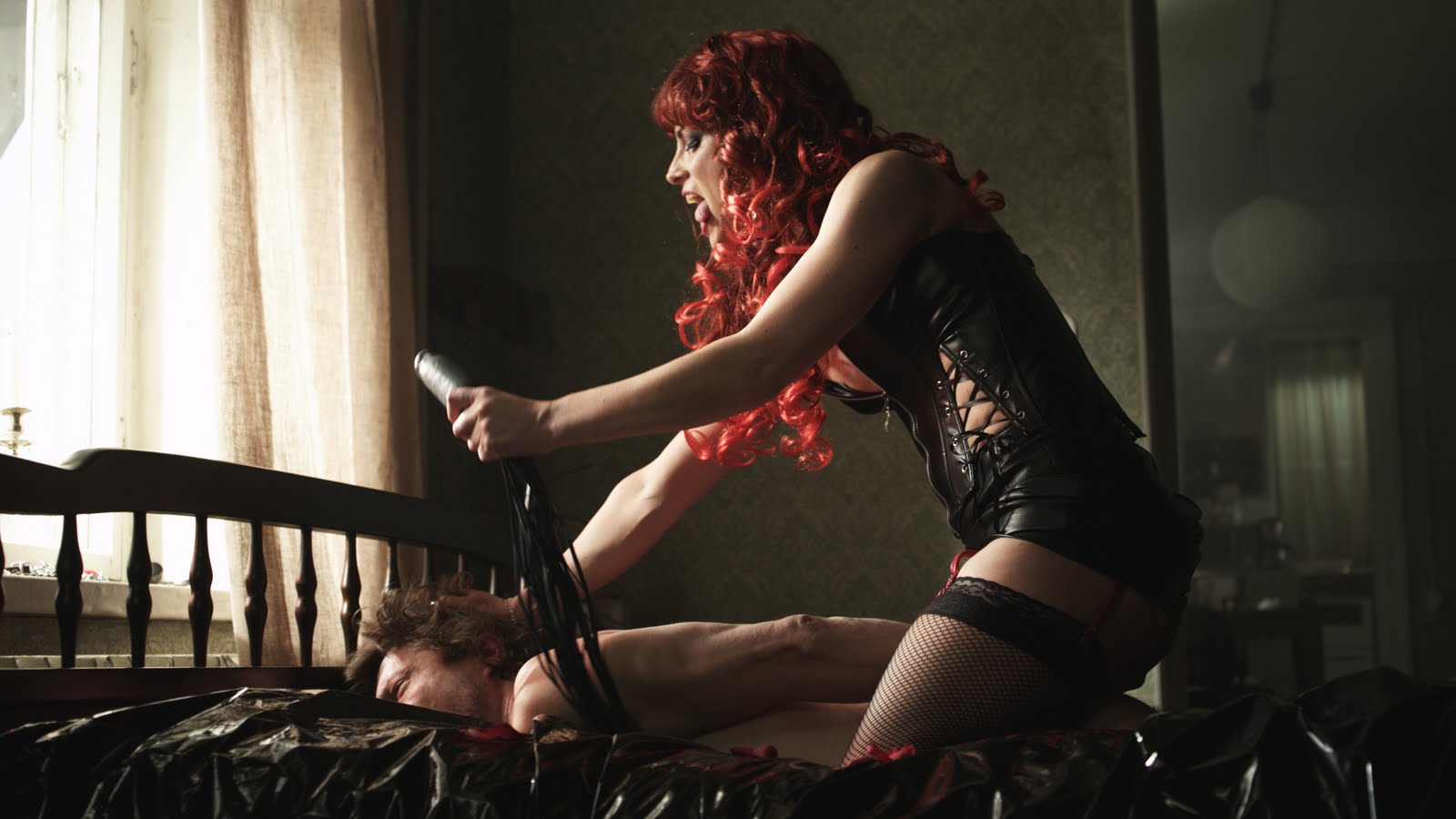
Screenwriter Katariina Souri (who, as Kata Karkkainen, was also the December 1988 Playboy Playmate of the Month, because this isn’t surreal enough already) takes her hands off the wheel and lets Mäki’s original story carom through its plot. She appears to have been hobbled not only by the original story, but by what is now clearly the restrictions of network television, with several gruesome murders happening off-camera, leaving characters to coyly tiptoe around even their descriptions of what has happened. In one crucial moment, a death is merely hinted at by the sight of a pile of fresh earth, and the viewer has to embark on a detective mission of their own to work out who’s been killed. Meanwhile, elements of what I blush to call magic-realism creep in, with visions in a crystal ball that appear to accurately reflect events going on elsewhere, and Vares himself haunted by sado-masochistic dreams in which the murder victims seemingly try to offer him clues.

Souri, like Mäki himself and every other author working today, must also grapple with the narrative problems introduced by the singularity of social media. Vares is investigating a case from 1995 (1983 in the original novel), at least in part because 21st century metadata would have made it so much easier to crack. My bank statements today will tell you how much I spent on booze last month, where I bought my groceries, and even which cab I took home on Monday. Such an information overload has confronted the world of the crime novelist with a huge crisis; it has ruined half of the plots that used to work, solved a bunch of cases within moments, and forced criminals, police and, indeed, authors to come up with a whole new bunch of ruses, hacks and tricks to carry on their trade. Dating from 2004, the original novel is ironically more recent than the three sources that were adapted into movies before it (1999, 1990 and 1998 respectively), but looks back to the 20th century for its crime and its evidence.

Souri does add one moment of subtle drama, drawing fittingly on the nature of alcoholism, or rather, its absence. A kindly supporting character is revealed to have been a complete bastard 15 years ago – entirely reformed through giving up the bottle, he is something of an object lesson to the other cast members, although the change in him is so complete as to call into question whether he could even be considered to be the same person. One would hope that a female scenarist would find some fun to be had with the outrageously toxic masculinity of the Vares cast, but instead she leaves them to it, perhaps on the understanding that anyone who doesn’t already see these characters as ludicrous failures is probably a lost cause.

In the lead role, Antti Reini remains counter-intuitively charming – there is no evidence in the script that he is anything more than a piss-artist, but he exudes heroic charisma, even when unsteadily toasting his chums in the eighth or ninth bar-room scene of the film, or shooting the shit in his mate’s bookshop. The women in this film, meanwhile, are all crazy bitches, fit to be banged or murdered, or banged then murdered. Much like the growing pile of corpses that turn Inspector Morse‘s Oxford into a comedically unsafe place to live, Vares’ Turku is a veritable minefield if you are a girl in a miniskirt. Even the danger is chauvinist – girls and gays are expendable, but the straight men in Vares’ world live oddly charmed lives. If you’re a good guy, even the criminals sent to beat you up will give you a free pass, and even the murderer you’re chasing will cut you loose if he sees another criminal planning to kill you. Violence is occasionally dealt out to men, but usually by criminals dispensing rough justice to other criminals. Vares’ Turku has to be the cushiest police assignment anywhere; you just sit in the pub all day and wait for one bunch of thugs to murder another. Meanwhile, the blonde at the bar is giving you the eye, and is probably up for it.

The Vares series seems to dwell in a time warp where the latter part of the twentieth century never happened, when men were men and women were grateful. It often seems uncaring or ignorant of the social contract that is to be found even within old-school sexism – call it chauvinism or chivalry, the code implies that the womenfolk within it are protected, but the men of Vares’ world inevitably arrive years too late to save a damsel in distress, although they are available to shag her sister, and/or write a book in which they call her a dyke.

If you asked me to pitch a more “Finnish” crime series, it would be about a tough, female detective in a country run by women for women, more Jane Tennison in a socialist utopia than these losers. Maybe such an idea was itself a structuring influence: the Vares films went into production shortly after the broadcast of Rikospoliisi Maria Kallio, based on Leena Lehtolainen’s novels about just such a heroine. I can’t help but wonder if that’s part of Vares’ appeal for its readers and viewers. Somewhere in Finland there are unreconstructed men who miss the good old days of fags, booze and knee-tremblers behind the kebab shop. And they yearn for simpler times, when women knew their place, which was apparently either bed or a shallow grave.

Jonathan Clements is the author of The Armchair Traveller’s History of Finland.

Kiss of Evil

Private eye Jussi Vares (Antti Reini) is hired to chase up a cold case. The police have given up on the 2009 murder of young Kerttu Malmsten, but her mother Asta (Outi Mäenpää) is prepared to pay thousands of euros if justice can be done. But when a second body is uncovered, seemingly linked to Kerttu, Vares begins to suspect that unless he solves the first two murders, a third might be in the offing.

The third film in the Vares franchise begins with a book launch, as author Luusalmi (Eppu Salminen) finally breaks his ten-year writer’s block. His new novel charts the misadventures of one “Juha Korppi” a tough, unflappable Finnish private eye, inspired by his best friend Vares. In other words, much as Maria Bello in The Mummy 3 shrugged her shoulders and suggested that Rachel Weisz in earlier films was a fictionalised version of her real self, the first two Vares movies have been gently slid out of continuity. As well they might, since not only has Luusalmi been replaced by a new actor, but so has Vares himself. There’s plainly been a lot of water under the bridge in the four years since 2007’s Frozen Angel – enough time has elapsed for Jasper Pääkkönen to be re-cast in an entirely different role. Formerly, he had an unforgettable turn as the sleazy lead singer of a metal band; here he returns as Antidote, a drug addict trying to go straight.

That’s not all that’s changed. The film blows a fair chunk of its budget on a grandstanding aerial shot that sweeps in on Turku from the Baltic Sea, catching it in summer glory and tracking around its cathedral. If the plan was to make Turku look like Miami in the trailers, it was money well spent, but unfortunately for a story in which a major plot point rests on changes in lighting, it’s abundantly obvious that the airborne footage was shot at the height of summer, while the bulk of the action takes place on distinctly greyer days.

New director Anders Engström has plumped for a very different version of Reijo Mäki’s laconic hardman, partly because the plot of Pahan suudelma (1998), the tenth book in the original series, seemed to call for it. Whereas the Vares we first saw in the movies was a man in a vest smacking people with a shovel, Antti Reini sports designer stubble and a carefully crumpled suit. This Vares has had a decade to get used to the modern world, and to adopt modern technology – he takes photos with a mobile phone; he investigates the time-stamps on digital photography, and he hunts his prey using social media. He seems completely at ease in his dealings with the Swedish-surnamed middle classes of Turku, unphased by encounters with ship designers and randy housewives, and far more accommodating to the police, with Inspector Hautavainio (Ilkka Heiskanen) now a cordial ally.

There’s some confusion as to whether this third “film” is a film at all. Despite movie-level production values, it was shot back-to-back with the next four entries in the franchise, and its own distributor’s website divides the cast into “regulars” and “guest stars”. From this point on, some instalments were premiered in cinemas while others went straight to video, with a central cast that would remain static from story to story, while cycling in some big names from Finnish film. In this instalment we have a cameo from Mikko Nousiainen (the best thing in Renny Harlin’s otherwise terrible 5 Days of War) as a boy from the wrong side of the tracks who functions as a conduit of criminal goods to the Turku suburbs.

I rather miss the Vares of old. In the title role, new-guy Reini barely sucks down more than a gallon of beer and a couple of fags in the whole film. He carries a book in his jacket pocket and wears glasses to read through documents, as if the original blue-collar hero has been kidnapped by the pod-people of Turku. But there are still flashes of the original’s dark humour and off-hand misogyny – every woman is either desperate to hump him or go shopping for lingerie, and the Finnish underclass and underworld are always just two streets away from whatever gastropub he’s sitting in. Even his part-time chauffeur, taxi-driver Anna (Maria Järvenhelmi) conveniently moonlights as a stripper in order to economise on speaking roles and set up several scenes in a titty bar. But whereas the earlier Vares films were triumphs of low wit, Kiss of Evil heads sadly upmarket, delivering the sort of gumshoe thriller you can see anywhere else on primetime. Pietari Kääpä, in Directory of World Cinema: Finland, suggests that the Vares reboot was a deliberate attempt to muscle in on the Nordic crime market of Wallander and the Millennium series, but if that’s the case, Vares has had to sacrifice much of what made it so scabrously unique.

Jonathan Clements is the author of The Armchair Traveller’s History of Finland.

V2: Frozen Angel

Seedy second-hand car salesman Jakke (Hannu-Pekka Björkman) is believed by everybody in the Finnish port town of Pori to have been responsible for the death of Mirjam (Johanna Kokko), a sometime prostitute whose death in winter went unnoticed until the snows melted. Jakke hires his former classmate Jussi Vares (Juha Veijonen) to clear his name, neglecting to mention that at the time of the death he was knee-deep in an attempt to blackmail a group of powerful local figures.

Based on Jäätynyt enkeli, the fifth book in the series by novelist Reijo Mäki, the second Vares film continues to lampoon Finnish masculinity with the joyous abandon of a drunk tramp pissing on a dumpster fire. Its cast is an utterly ghastly procession of sweaty, flabby, beered-up chain-smokers stumbling through the plot, double-crossing each other in motels and dive bars. Even the sponsors’ logos that begin the film look like a recipe for the worst night of your life, including (if I remember correctly) Karhu beer, an online poker site, and some guy’s kebab shop.

Stories are like pizzas, observes one character sagely. The thinner the base, the tastier the topping. The victim has slept with half of Pori, sometimes for cash and sometimes for love, enmeshing her in a complex web of possible exes and indifferent one-night stands. The police, as in the first film, can’t be trusted – in the film’s biggest plot hole, the entire case might have been more easily solved if they’d just made a cursory examination of the body. Instead, it’s left to Vares to uncover a complex conspiracy involving Swedish hookers, a heavy metal band, a daisy-chain of polyamorous lesbians, a comic-relief transvestite, and a gang of small-town big-wigs with a terrible secret. Meanwhile, the towering bully Veikko (Jussi Lampi) comes home after serving a stretch in a Swedish prison. “Those Swedes understand Finnish well enough,” he growls, raising his fists. “And if they don’t, there’s always sign language.” Yeah, up yours, Sweden! He hates Swedes the way that Indiana Jones hates Nazis, and is always ready to postpone the action for a few minutes while he beats some up, or in one scene, tries to drown a pair in petrol.

Unlike the novel, which took place in winter, the film tries hard to play up the unbearable heat of the Finnish summer. Yes, really. Everybody is sweating, and telling each other how terribly warm it is all the time, which adds a note of unintended comedy for anyone who’s had to wear an anorak in July. Vares deftly uncovers a conspiracy, hunts down some stolen cash, and fights off the hulking minions sent to dissuade him, but it’s only at the end, as he burpily recounts his mission to his drinking pal Luusalmi that everybody realises he’s forgotten to solve the actual killing.

Jonathan Clements is the author of The Armchair Traveller’s History of Finland.

Tellus

So a Finnish boy and a Finnish girl meet in a noisy night club and leave together. As they get outside, he says: “Your place or mine?” And she says: “Why are you talking so much?”

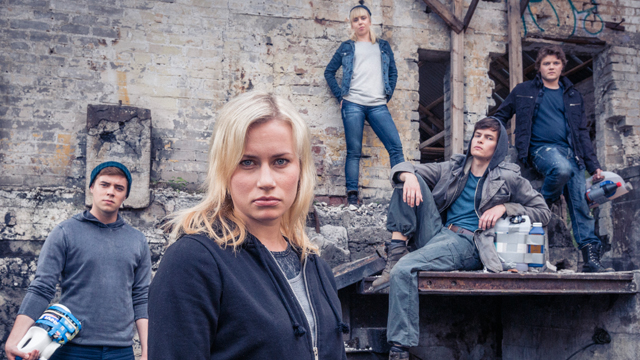
I had this typical Finnish joke in mind a lot while watching Tellus (2014), a TV series from Jukka-Pekka Siili about a bunch of Helsinki eco-terrorists and the security squad dedicated to taking them down. Starting out as pamphleteers, bloggers and monkey-wrenchers, the Tellus protestors become increasingly more pro-active, until a fateful day when arson on an industrial estate leads to the death of a security guard. This takes them out of the realm of misdemeanours into serious felony, and puts seasoned detective Taneli Lokka (Pirkka-Pekka Petelius) on their trail.

The Tellus group is a stereotypical coven of urban guerrillas, with some more militant than others, but each self-righteously assured of their nobility of purpose. Notably, they are always shown drinking a variety of beers, to ensure that no single brand can be associated with terrorism. Someone had a meeting about that, I bet. True tension mounts when their nominal leader, Eeva (Minkka Kuustonen) is targeted by an undercover police informant, Alex (Lauri Tilkanen). He’s under orders to get closer to the organisation’s heart, but this inevitably brings him into moral conflict, not only over his own feelings for Eeva, but his attitude towards the group’s crimes.

The romance between the leads is oddly paced and posed, as if two emotionless puppets are going through the motions of dating… or perhaps as if two players believe each is duping the other. She resists his advances coldly and dispassionately, only to suddenly agree to a date with equal indifference, so the pair of them can bike around Helsinki like a couple of smug hipsters. Even then, Eeva presents every hallmark of being a self-involved, self-regarding dullard, less of a love interest than a love disinterest. Alex, meanwhile, is hardly a catch himself, so cocky that he practically brow-beats her into a snowbound picnic, despite very obvious signs that she barely notices him. And then suddenly they are all smiles and touchy-feely. Apparently, a relationship has broken out, like hives. One wonders to what extent this is a deliberate evocation of her single-minded vocation and his clandestine mission, and to what extent it’s just because they’re a couple of joyless Finns. Maybe there is some witty, subtle nuance of Finnish social interaction that I am missing. Or maybe the way to pick up Finnish girls really is to bombard them with phone calls until they relent.

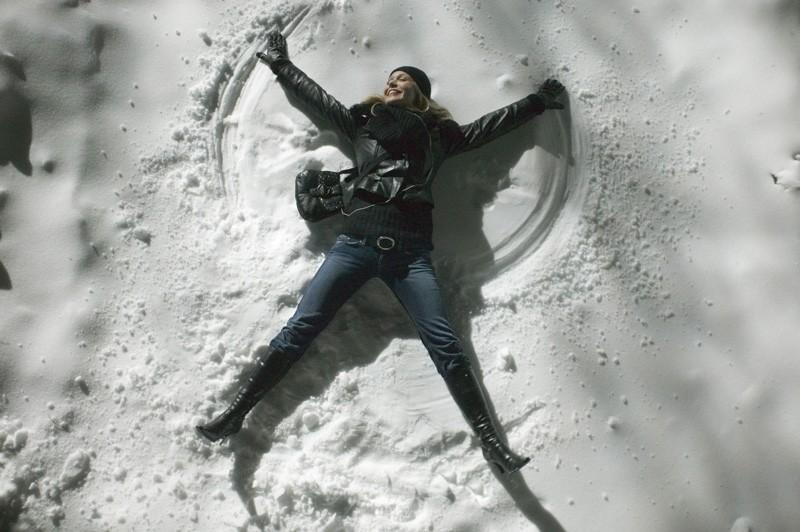
But there is a lot of double-bluffing going on in the script. A scene which first appears to be a hackneyed pixie-dreamgirl moment, of Eeva lying on her back staring at the sky, is revealed to be a scouting mission for another attack – she is not laying low on a hilltop as a poseur, but because she doesn’t want to be seen. The story comes alive, explosively and unexpectedly, in a throwaway kitchen scene wherein the stressed investigator Taneli suddenly turns on his listless teenage son for wasting food. It’s a dinner-table sequence that many writers would use as expository filler, but actor Petelius lets loose in an incandescent rant, tying up family tensions, workplace stress, and a startling revelation – that deep-down he is sympathetic with the eco-terrorists’ beliefs.

This pivotal moment cleverly repositions all arguments about Them and Us. We really are all in this together. Taneli and Alex and Eeva and her hardcore friends are all in total agreement that Something Must Be Done. They simply disagree on the methods, in a drama that focuses itself very much through an ecological lens, both in terms of the troubles that the Earth is facing, and a thought experiment as to the attitude and appearance of Green extremism.

Jonathan Clements is the author of An Armchair Traveller’s History of Finland.

Vares

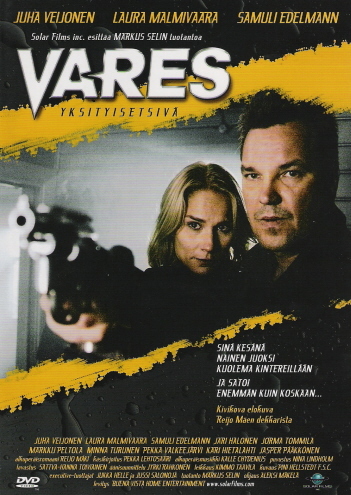
Professional con-man Kraft (Jorma Tommila) persuades gullible schoolteacher Eeva (Laura Malmivaara) to help him bust out of jail, smuggling a pistol into their wedding ceremony to fight off his guards. As they wait for their fake travel documents to arrive, Eeva discovers a little too late that Kraft already has the slinky sexpot Ifigenia (Minna Turunen) waiting for him on the outside, and that he intends to bump off his rescuer as soon as the time is right. With nowhere left to turn, Eeva calls Vares (Juha Veijonen), a private eye she vaguely knows from the army reserves, who comes to the rescue with extreme prejudice.

Based on The Yellow Widow, one of the 25 Vares novels by Reijo Mäki, Vares: Private Eye (2004) was a monstrous success in its native Finland, spawning eight sequels in such a pig-pile of productions that later episodes would replace the director and recast the lead. Set in and around the picturesque city of Turku, it largely ignores the medieval charm of Finland’s former capital, focussing instead on a grotty wainscot society of dive bars, sex shops and motels, beneath drab skies and pounding rain. It’s less like Nordic-Noir than a Finnish Elmore Leonard, with a rich cast of characters entirely unaware that they are in a comedy, most obviously in a scene where two men stand around trying to suck their way through a job-lot of 500 chocolate penises that a local entrepreneur is having trouble shifting.

Vares is cast very much in the mould of Harri Nykänen’s Raid, another Finnish anti-hero who flourished in print a decade earlier, and whose own eponymous movie hit Finnish cinemas in 2003. But whereas Raid was an outlaw with a heart of gold, Vares is a smidge closer to the right side of the law. Since lead detective Mikko (Samuli Edelman) is in the pocket of organised crime and cannot be trusted, freelance Vares determines to both rescue the lady and spirit her away from the police.

Helped greatly by English subtitling on the DVD that decompresses laconic Finnish dialogue into sardonic quips, Pekka Lehtosaari’s script delivers a grand guignol of ridiculous blue-collar failures – a criminal kingpin in a polyester kimono, a corrupt detective who projects all his guilty feelings onto his long-suffering wife, and a mullet-sporting getaway driver whose day-job is pizza delivery. Several cast members seemingly stumble through the entire exercise drunk, including the Mary-Sue novelist Luusalmi (Markku Peltola), a shambling alcoholic with stringy hair and the night-sweats, who blunders in and out of the plot to offer worthless barfly philosophy.

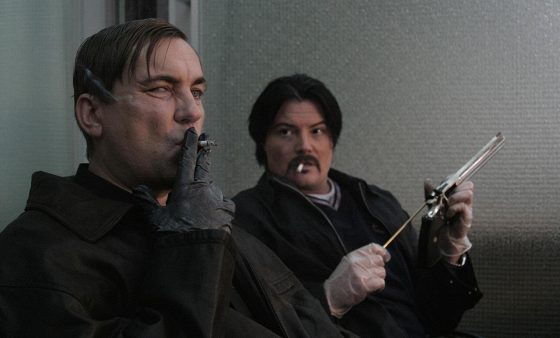
It’s difficult to imagine anything more Finnish than this film. A pair of inept hitmen wear plastic gloves at all times, because they are allergic to everything. There is a sex scene in a sauna and plenty of dialogue about pizzas. The protagonist turns up late to the movie that bears his name in order to smack people around with a shovel, while a bunch of Russians swoop in at the last moment to make off with the McGuffin. Best of all, a throwaway scene features a naked Finnish girl serving as a human table for a banquet of meat products, wearing Swedish meatballs on her nipples and a sausage on her chest. This film is much more fun than it ought to be, and is probably best enjoyed in a cinema full of drunken Finnish truck-drivers, who won’t question too much the hokier nature of the plot, such as the likelihood that shooting someone point-blank with a grenade launcher is liable to have adverse consequences.

Jonathan Clements is the author of An Armchair Traveller’s History of Finland.

Sleeping with the Enemy

katilo-1024x773

All the Nordic countries had unique experiences in the Second World War. Sweden was neutral; Norway and Denmark were occupied by the Nazis; Iceland, rarely discussed, was occupied by the Allies. But Finland’s war was the most complex, abandoned by the Allies, left to fight alone against the Soviet Union, and entering a controversial pact with Germany, not as allies but as “co-belligerents” who happened to fight the same enemy. It was not the first time that Germany had proved to be Finland’s best friend in a time of need. The Finns ultimately turned against them in the little-discussed Lapland War, which destroyed every building north of Rovaniemi, and led to the bitter departure of some 700 Finnish women who refused to desert their German husbands.

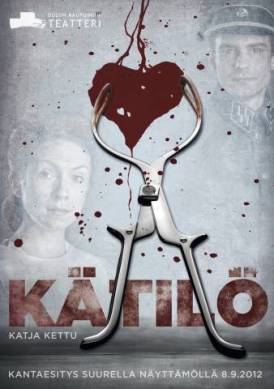
Katja Kettu’s 2011 novel The Midwife (Kätilö) went out under that title in most of the 19 languages in which it was published, but seems to have been renamed Wildeye in attempts to flog it to the German- and English-speaking markets. Oddly, English seems to be one of the few major languages it hasn’t been translated into – perhaps there was some resistance among publishers to a romance that featured a Nazi male lead.

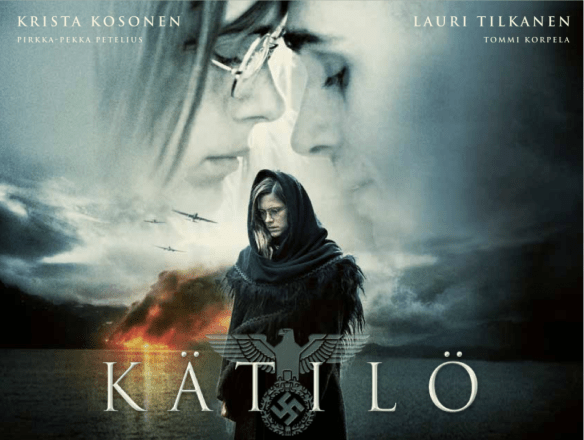
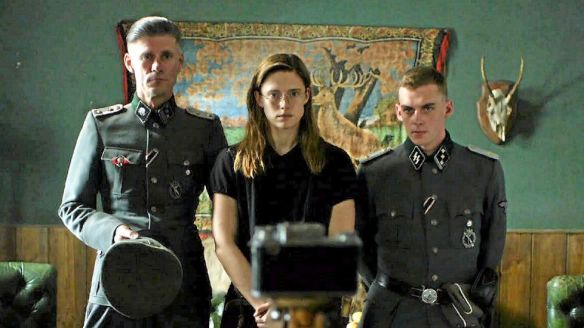
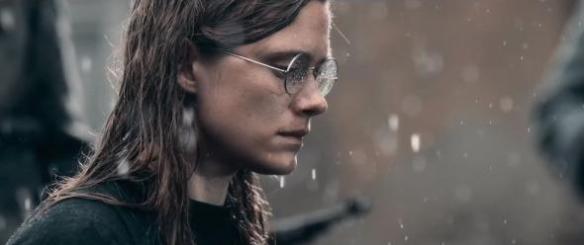
Antti Jokinen’s 2015 film version is now available to own (Time Travel Footnote, and now available in the UK, 2017)  – I could not face it raw in the cinema, but correctly guessed that it would have English subtitles on DVD. It is set in a Finland that no longer exists: that eastern arm stretching up to Petsamo and the Arctic coast, lopped off during World War Two and lost to Russia. Based on the depiction here, you’d be forgiven for thinking that the Finns were well rid of it – broad strokes swiftly delineate it as a grimy, miserable place populated with cackling, brown-toothed witches, racists, and thugs. Helena (the award-winning Krista Kosonen) is the closest thing that the locals have to a paramedic, forced to oversee difficult, bloody births in remote cottages. The film begins with one such event, swiftly followed by the locals’ stoic, heartless decision to drown the unfortunate infant in a swamp.

Helena is sick of it, too, and sees her chance to escape when she meets the steely blue-eyed gaze of Johann (Lauri Tilkanen), a half-Finnish German officer who has been posted to the nearby concentration camp of Titovka. At no point does the film claim to be a true story, although media coverage at the time of the novel’s publication suggests that it is partly based on the life of a real person – Kettu’s own grandmother. This opens up a whole can of worms by even suggesting that there were Nazi concentration camps on “Finnish” territory, where human experimentation (“Operation Cowshed”) was carried out on Russian prisoners and other undesirables. You would think someone would have brought this up before, if it were true!
1440647876163

Soon the sole surviving employee with any medical training, Helena finds herself complicit in the shaving of prisoners’ heads and the administering of “medicines” that turn out to be lethal viruses. This is explosive material to introduce into modern times. The extent of Finland’s cooperation or collaboration with the Nazi regime has been a matter of much reconsideration in recent years, most notably in the anthology Finland’s Holocaust: Silences of History, which challenges the nation’s usual narrative of firm resistance. In a 2011 interview in Kuvalehti, Kettu noted that modern historiography was reluctant to admit that one’s grandfather or uncle might have been a killer or a rapist. Her take on this, however, is gendered and universal, that war makes killers and rapists of us all. Helena is certainly an inadvertent stooge at Titovka, administering poison to doomed prisoners, and posing unhappily with two SS officers for the Third Reich newsletter. Even most of the Nazis are unhappy about their duties, but get on with it anyway in a jobsworth, everyday evil that is somehow more chilling than the open malevolence of the camp commandant Gödel (Tommi Korpela, channelling Ralph Fiennes).

This is no Schindler’s List – Helena ultimately only manages to help herself and a single prisoner escape, abandoning the rest of the camp to their fate. But that is at least part of Kettu’s point, that her heroine is almost entirely powerless, stripped of agency, left with little to live for but her own survival, and little to hope for but her unlikely prince charming.

Jokinen’s camera-work does a beautiful job of capturing a lost Finland on the edge of Norway, one with actual mountains. As with Jalmari Helander’s Big Game, this is achieved by filming somewhere that isn’t actually Finland – in this case Lithuania, which is not only 30% cheaper for film productions, but cheaper to reach by plane than the real Lapland. He also artfully captures the desperately awful conditions of Helena’s daily life, so that her decision to move to a concentration camp is indeed regarded as a step up. When it comes to the war itself, the film allots its €8 million budget superbly in capturing a worm’s-eye view of the Lapland War. In one notable scene, Helena is caught in the middle of an aerial bombardment, literally unable to turn in any direction for fear of death, spun in circles by a series of explosions like a human pinball.
kristatrl

The film evokes elements of the novel’s cut-up format – each of its original six sections began with a flash forward of a starving Helena in the remote Dead Man’s Cabin, on the run from the war and waiting for Johann to show up at their agreed meeting point. Only then it would it jump back to her horrible life in 1940s Lapland, the brief flurry of joy at her romance with her dashing officer, and the collapse into hell of Operation Cowshed and the Lapland War.

Elements of it inadvertently recall earlier Finnish war films – there has in fact, been a degree of carping from online pundits that all Finnish war films are the same, and seemingly strive to fulfil an annual quota of grim sisu and pyrotechnics. This is a most unfair comment to level here, particularly in the case of Wildeye, which is not even the first film to give a Finnish woman’s perspective on WW2, but certainly does so in an original, if melancholy, manner. I will note, however, that those playing Finnish War Film Bingo will have plenty to keep them occupied nevertheless, including a gratuitous oral sex scene ripped off from Rukajärventie and three people in a shed recalling Käki (The Cuckoo). This isn’t even the first Nazi-Finnish romance movie either – the so-bad-it’s-good Sensuela managed to beat it by decades, and that was a remake.
katilo_juliste_hr

It also appears to have been a stage play.

From what I can glean from author interviews, Kettu never claimed that the Titovka concentration camp was a real place: her inspiration came from her grandmother’s letters about the war itself, the experience of stumbling across an abandoned hut on the Norwegian coast, and her childhood memories of playing in the ruins of a German prison camp near Rovaniemi. Instead, her interest was in telling the story of the human cost and effect of 200,000 German soldiers posted to Lapland, and their subsequent removal with extreme prejudice. The Lapland War is an embarrassment to the Finns, partly because it was one of those conflicts that effectively destroyed the place over which it was fought, displacing 168,000 residents, but also because it was a terrible betrayal of people who had been their friends.

The Titovka concentration camp is hence a handy device to confront the characters directly with the nature of Nazi evil, although it feels to me that this undermines one of the author’s intended points, that men like Johann were not goose-stepping fascists, but human beings caught up in a conflict not of their own making.

However, trawling through the Finnish-language web, I am surprised that nobody in Finland called the story out on its depiction of war crimes, which (commenters please correct me if I am wrong) seemed to have been invented by the author for dramatic effect, and yet are repeated in the film with an air of realism. Experience during the press junkets for my Mannerheim book taught me that many young Finns get far too much of their historical knowledge from movies and the internet, and are apt to accept any and all literary devices as representations of real events.

This is true all the world over, of course, and it is not the fault of Kettu or Jokinen that their book and film might be misinterpreted as more factual than they warrant. That would, perhaps, be something best addressed in DVD extras, but the version I bought in Finland offers nothing but a trailer, a teaser, and a picture gallery. For a subject that risks becoming so controversial, and so open to misinterpretation, this is a disappointment.

Jonathan Clements is the author of An Armchair Traveller’s History of Finland (Available from Amazon in the US/UK). The film was finally released in the UK in 2017 as Finland 1944, “based on true events”.

The Girl King (2015)

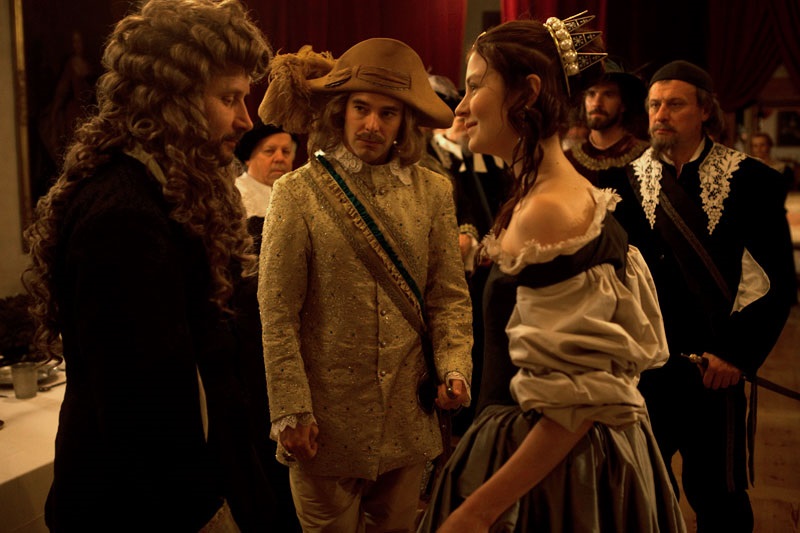
kuningatar kristiina elokuva kuvauksetMika Kaurismäki’s latest film, Tyttökuningas uses a deliberately counter-intuitive coinage in Finnish, directly translatable as “The Girl King.” Like Empress Wu and Queen Hatshepsut, the titular monarch was a woman who sought the recognition and power of a man in a man’s world. In the case of Queen Christina of Sweden (1626-89) the terminology is truly apt – she was the sole heir of a doomed king desperate for a son, inheriting her father’s throne as a child, and, it seems, never quite growing up.

The movie is an earnest Europudding from multiple funding bodies – based on a French-Canadian play about a Swedish queen, but shot in Finland with Turku Castle and environs standing in for Stockholm. The Finnish connection eludes many international viewers, but is entirely apt; at the time that Christina took the throne, Finland formed the eastern marches of the Swedish empire. Christina was, indeed, also the Queen of Finland, and the Finnish republic remains peculiarly obsessed with Swedish royals.

tyttokuningasNETTIMichel Marc Bouchard’s script, based on his own 2012 stage play Christine: la reine garçon, makes much of Christina’s intellectual aspirations, depicting her as a crazy bibliomaniac, authorising the invasion of Czechoslovakia to get her hands on the king’s library (many books from which turn out to be in languages nobody can read), and frotting her girlfriend on the open pages of the stolen Codex Gigas or Devil’s Bible. In her own eyes she is a proud iconoclast, defying the old order represented by her chief minister, and scattering Enlightenment like fairy dust. In this mode, she pompously bestows china plates and wine glasses on the hidebound Swedish court, which she thinks is enough to qualify as a “revolution”, and pouts when she is not allowed to read books by Catholics.

Malin Buska smoulders persuasively in the title role, playing the clueless virgin queen as an occasionally saucy but usually baffled teenager with a winning lopsided smile. But if the film belongs to anyone, it’s the impotent menfolk who tut and wring their hands at the side lines. There is, to be sure, an argument that Christina’s mad life is best presented as a tragi-comedy, and the only moment that drew universal laughter in the Finnish cinema where I saw the film was the scene where Count Axel Oxenstierna (Michael Nyqvist) hems and haws and gamely tries to mansplain that “women’s friendships are different.” It’s Oxenstierna who shoulders the burden of running the country through his queen’s minority, and who begs her to do her duty, marry and get pregnant… and when she’s not up for that, to just try to be sane and not do anything daft like switch religious faiths at a time of political crisis.

True to any good historical movie, Kaurismäki and Bouchard do not rewrite the facts, although they do try and present them as best they can. A protagonist who does not change is a villain, not a hero, and the film struggles, as do historians and previous scenarists, to present Christina in any light other than that of a spoiled brat, impossibly deluded, drunk on power but shirking any sense of responsibility. She dresses in a tight, swashbuckling get-up, the first indicator of her androgynous personality, but then trips lightly around the castle balustrade pretending to be a pony: a far more evocative depiction of her infantile nature.

17-41592566ae4c65ab0dInitially, the story of Queen Christina must look like a dream come true for the queer film lobby: a European princess, raised as a boy, who falls in love with her lady in waiting and rails against the stuffy patriarchy! What a trailblazer she must have been… what a modern dash she must have cut among the dour Swedes. Except, no. The more one knows about the historical Christina, the more one cringes in embarrassment for any interest group that might dare to claim her. She has been depicted before in multiple media, including several operas, as well as the 1901 August Strindberg play Kristina, itself a source for the 1933 Greta Garbo costume drama Queen Christina. Garbo’s version pushed for an unlikely heterosexual resolution to her story, as did The Abdication (1974), in which Liv Ullman plays an older Christina, living in the Vatican and lusting after a cardinal.

There is, admittedly, some pleading of mitigation. Zachris Topelius, that great Finnish chronicler of the country’s Swedish past, wrote in his Stjärnornas Kungabarn of the similarities between Christina and her famous father King Gustav II Adolf, suggesting that her true misfortune was to inherit the hot temper and violent mood-swings that served him well on the battlefield, but which were deemed unwelcome in a regal daughter. Similar arguments are obliquely referenced in the film, particularly in an opening sequence which whisks through Christina’s awful childhood in thrall to a bonkers mother, who demands that she kiss her father’s putrefying corpse every evening, and who is later accused of having attempted to murder her. As the troubled dowager Maria Eleonora, Martina Gedeck periodically returns to chew the scenery, increasingly resembling a swivel-eyed Vivian Westwood, attended by an orbiting cloud of fops and dandies like a periodic pitch invasion by the cast of a Fellini film.

The script also pleads for the incipient intelligence of the young Christina. By the time she takes the throne in her teens, however, the bright, questioning girl of the early scenes has become a mercurial despot, unheeding of the advice of her ministers and generals, and promulgating a bipolar foreign policy that swings between hand-holding kumbayah internationalism and devious double-crosses. As her loyal subject Johan (Lucas Bryant) angrily berates her at one point, there is a human cost to every one of her decisions, and it is paid in the deaths and misery of others.

TheGirlKing_800aThere is an attempt in the closing scenes to present her abdication as a great self-empowerment, or the realisation of her True Self as some sort of wandering swordswoman. But there is also some sense remaining that this capricious termagant has skipped away from the burning wreckage of an entire kingdom, leaving broken treaties in her wake and a vast, costly expansion of the nobility, which someone else has to pay for. Queen Christina clung desperately to the trappings of royal power, even as she spurned any of the duties that it brought.

Christina is a privileged, predatory idiot when seducing her handmaiden Ebba (Sara Gadon), commanding her into bed and forcing herself upon her, only to realise that she has no idea what she should do next – a fitting metaphor for her entire life. And in the grand finale, as in the historical record, she marches smugly from the throne room, having dumped the crown on her cousin, riding not quite into the sunset, but into the Alps. A closing title reveals that she died in Italy as the centre of a great salon of intellectual debate, and understandably neglects to mention her pathetic return to Sweden in 1660, when she demanded the return of her crown and was sent packing by an establishment that was glad to be rid of her.

Jonathan Clements is the author of An Armchair Traveller’s History of Finland, available now in print and on the Kindle (UK/US).

Big Game

“Samuel L. Jackson flies through a Lapland forest, in a fridge, while Titus Pullo dangles from a helicopter shooting at him with a sub-machine gun…” (trailer)

Big-Game-poster-excerpt

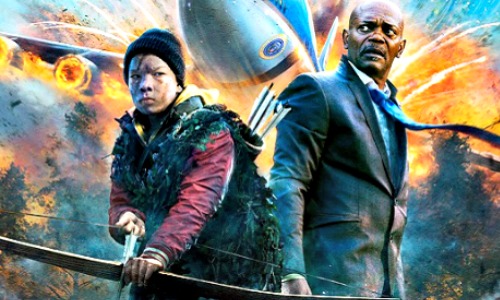
Lame-duck American president Samuel L. Mummofaffing Jackson (“Call me Bill”) is travelling to a conference in Helsinki when Air Force One is shot down over Lapland by jodhpur-wearing Arab Bastard (he is Arabic, and a Bastard) Mehmet Kurtulus, a “grade-A psychopath” who plans to mount and stuff him. Back at the Pentagon, a bunch of aides wring their hands and send the SEALs all over the place, while the President goes on the run with a 13-year-old Finnish boy Oskari (Onni Tommila), interrupted partway through his traditional manhood ritual, which involves running into the forest with a bow and arrow and bagging the biggest possible game. He was hoping for a bear or a reindeer, but instead finds himself playing impromptu bodyguard to POTUS.

Meanwhile, the President’s real bodyguard, Ray Stevenson, is secretly working with the Arab Bastard, in a troubled and contentious partnership that usually involves shooting a henchman every time they disagree. Tracking the fleeing President and his teenage guardian, they briefly apprehend them, leading to a bonkers escape sequence in which Samuel L. Jackson flies through a Lapland forest, in a fridge, while Titus Pullo dangles from a helicopter shooting at him with a sub-machine gun. They go to ground in an explosive shoot-out in and around the wreckage of Air Force One, which eventually seems to result in the blowing up of half of the Finnish countryside.

arab bastard no really its in the plot

As with writer/director Jalmari Helander’s previous film, Rare Exports, Finland itself is playfully stereotyped and archetyped to a wilfully silly degree. If the Americans are shouty morons with lots of guns and expensive tech that proves to be useless, the Finns are a bunch of earnest, grubby hunters with Bowie knives and trousers held up with string. They are enacting a portentous coming-of-age ceremony that involves running out into the woods and killing something. If Helander were not actually a Finn himself, we’d think he was a clueless hack, but since he plainly knows that Lapland isn’t actually a mere 45 minutes north of Helsinki, we can file his more absurd action-movie fudges as a deliberate invocation of a Finland of the mind – a sweetly childish playground of forest adventures and easily-outwitted bad guys, with time out to grill a sausage over a fire. He takes this to extremes with his landscapes, which replace the drab fells of the real Lapland with the breath-taking peaks of the Bavarian Alps, thereby hoovering up German film-fund money for a movie whose Hollywood action style is really a thin veneer over a multi-national Europudding.

With its 13-year-old protagonist and an 80-minute running time, Big Game is carefully targeted at the juvenile audience, despite its Die Hard trappings and the inevitable appearance of Samuel L. Mummofaffing Jackson’s favourite word, in a Yippie-kay-aye Moviegoer quotable that is long in coming but worth the wait. Helander’s script ultimately paints America as both an aspirational paradise and a corrupt rogue state, while its president is by turns baffled and charmed by Finland’s grim sisu resolve, and ultimately regains his self-confidence and poll rating through the acquisition of firearms and snark.

Jonathan Clements is the author of An Armchair Traveller’s History of Finland.   Big Game is released in UK cinemas on 8th May.