Medieval Frenemies

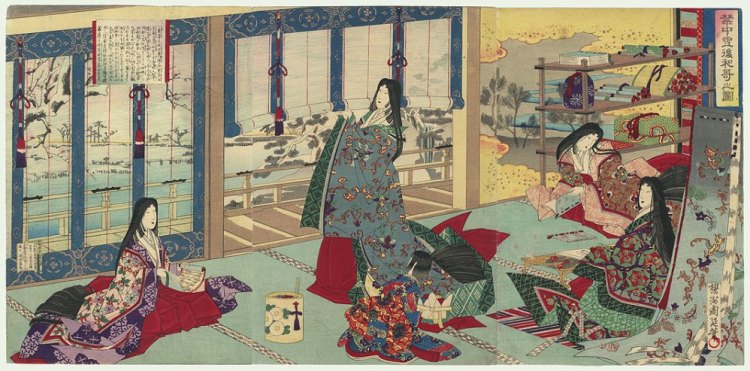
One of our most valuable records of life in the Heian court comes from a chatty, contrary, vulnerable lady-in-waiting whose habit of writing topical lists and musings often makes her come across like a modern blogger. Common to the etiquette of the day, her true name remained unspoken in public and is hence lost, although she is usually referred to by her nickname, Sei Shōnagon (Lesser Councillor of State Kiyo’s [Woman]). Some of her diary entries even appear to be what we might now call memes—snickering about a cat treated as a royal personage, or a long-forgotten in-joke about a spindle tree, enduring today as nothing but an unintelligible punchline.

Sei Shōnagon loves getting letters; she derives a nerdy joy at finding books she hasn’t read before. Rude people piss her off. She can never find a truly good pair of tweezers. She hates that moment when you splash ink on a book you are copying out; that moment when you wait up all night for a man who doesn’t show; or when he does and then snores loud enough for your neighbors to know what’s going on.

She doesn’t like going to bed alone, and burning fine incense that makes her feel like she is a class act if there is no man to notice. When she looks in her Chinese mirror and the burnished bronze is a little cloudy, it makes her fret that she, too, is losing her looks. When an evening letter arrives from her lover, she can’t wait to find a lamp, and uses tongs to snatch a lump of red charcoal from the nearby brazier, squinting in the half-light, heedless of the fire hazard.

Sei Shōnagon gets annoyed when she hires an exorcist to deal with someone’s spirit possession, only for the guy to turn out to be a drowsy charlatan. She swells with childish pride when the empress addresses her and she accidentally says the right thing in response.

When her carriage travels down a narrow woodland lane, she reaches out to touch the trees.

Haters still hated. Murasaki Shikibu (the “Wisteria Girl of the Ministry of Ceremonies ), a fellow court lady who also kept a diary, couldn’t stand Sei Shōnagon, but had to put up with her scribblings. A thousand years later, we are immensely fortunate to have access to the writings of both these remarkable women, who not only wrote beautifully and evocatively about their lives, but did so at the same time and place. Somewhere, sitting in a bar not far from you right now, there is a pair of frenemies just like them—one bubbly, chatty, and sensual; the other shy, plainer, but smarter. Sei Shōnagon is the hot, flirty one with a ready comeback; Murasaki Shikibu is the wallflower who thinks of something cleverer, but only on the way home. Widowed at a young age, Murasaki was introverted, introspective, icily witty but faintly repulsed by human contact, particularly with Sei Shōnagon, whom she regarded as insufferably smug, airheaded, and with an inflated sense of her own literary merits.
“If we stop to examine those Chinese writings of hers that she so pretentiously scatters about the place,” Murasaki wrote, “we find that they are full of imperfections.” By far the smarter one, Murasaki tried and largely failed to keep her intellect secret from her fellow court ladies, whom she rightly suspected would be at first curious, and then jealous. Murasaki, who dismissed Sei Shōnagon for her flighty interests and empty opinions, had the last laugh, being remembered as the world’s first novelist for writing The Tale of Genji around the turn of the eleventh century.

From A Brief History of Japan by Jonathan Clements, available now in the UK and the US.
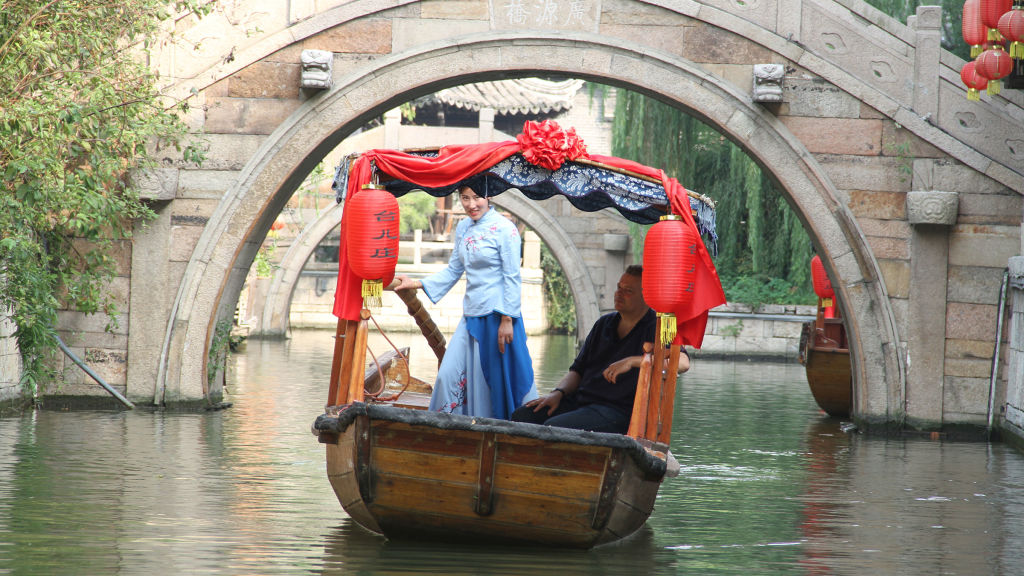
Shandong: Land of Confucius

This appears to be blocked in the United States, but viewers in other territories can now see my National Geographic documentary Shandong: Land of Confucius (2018) on YouTube.

“Jonathan Clements takes us on a thought-provoking journey to the land where the young Confucius formed his earliest ideas: Shandong Province. Guided by Confucius’ most influential sayings and Clements’ unique perspective on Asia we explore this coastal province and learn how even after thousands of years the great sage’s thinking is still relevant in today’s China.”

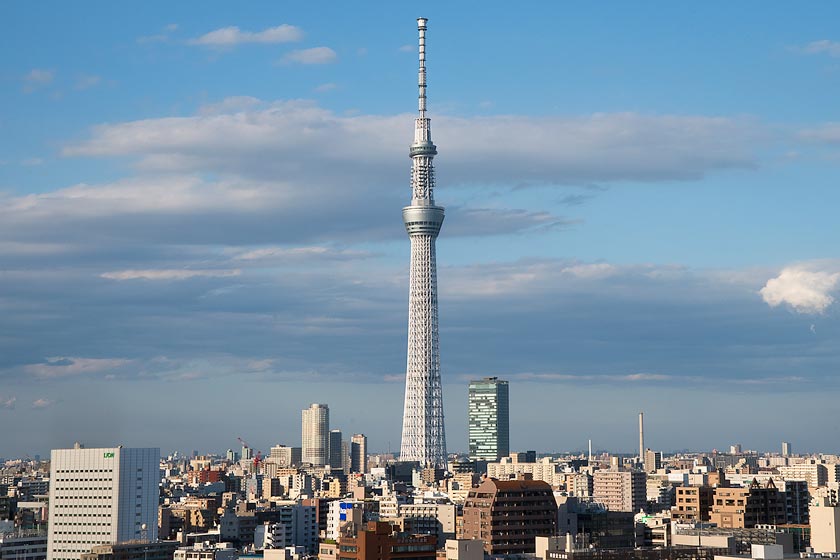
The Tokyo SkyTree

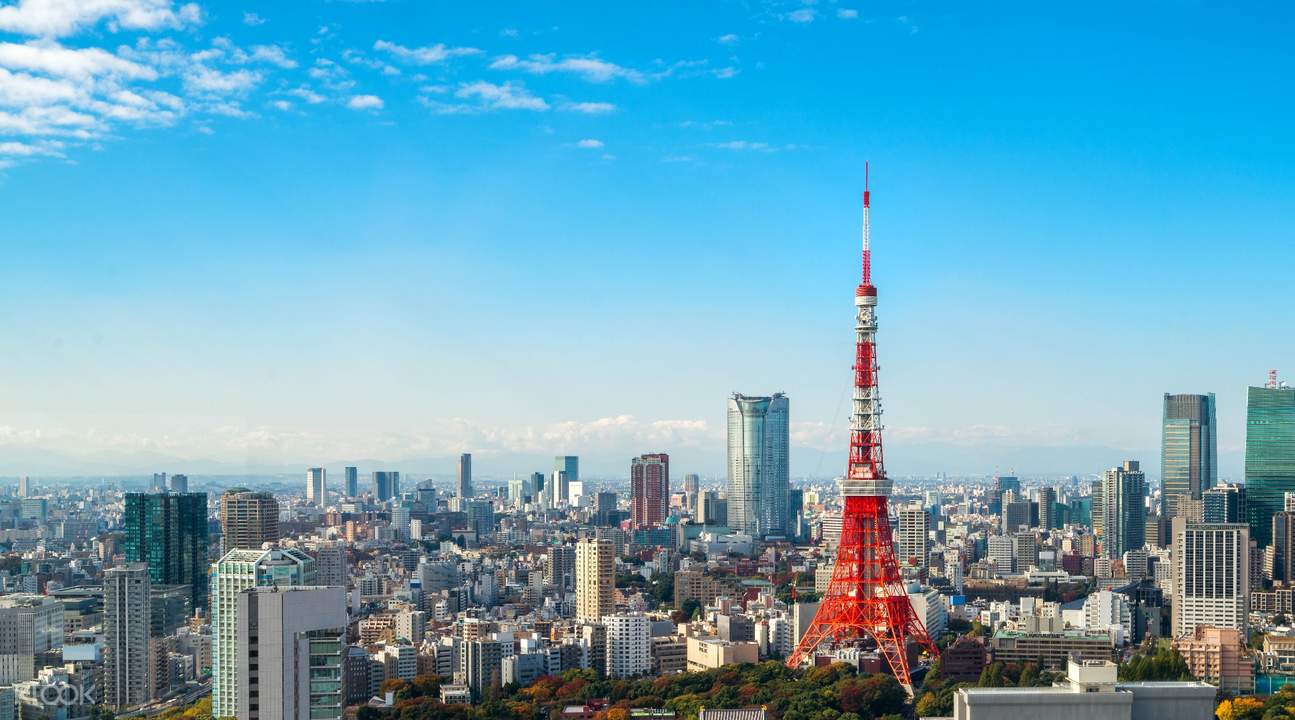
Behind the scenes, another invisible technological transformation would spell disaster for a Tokyo landmark. With tourist attendance already dropping, Tokyo Tower was found to be no longer fit for its main purpose as a TV broadcast antenna. The new requirements of all-digital broadcasting, and the obstructions caused by multiple skyscrapers all over the city, now demanded an even larger broadcast tower.

The Tobu Railway company jumped at the chance to meet that need. Its managers had found themselves lumbered with a tempting piece of real estate – a derelict cargo yard, left over from the pre-highway days when Tokyo’s construction boom required the movement of building materials by rail. Now, with lorries fulfilling such functions, and passenger traffic lured away by more convenient stations nearby, Tobu needed something to fill the 60,000-square-metre space. A combined subway station, shopping mall and landmark TV tower would do the trick, with the project getting underway in 2005.

In Japan’s stagnating economy, there were few excuses for such boondoggles – but the new digital broadcast tower would prove to be an exception. Opened to the public in 2012, the new 634-metre building was named by a public vote. Rejected names included the Edo Tower, evocative of the samurai past, and the Rising East Tower, alluding to the ‘Pacific Century’ – a term denoting the idea that the twenty-first century will be economically dominated by states of the Asia-Pacific region. One suspects that the architect was rather hoping for the chosen name to be Musashi, which is simultaneously an old word for the Tokyo area, the name of a famous samurai and a pun based on the tower’s height: 634 metres = mu-sa-shi. Inexplicably, the winning name was the meaningless Tokyo SkyTree; we should count ourselves lucky that nobody suggested Buildy McBuilding.

As with Tokyo Tower in earlier generations, the structure itself was merely a beacon on top of a more traditional property, in this case the Solamachi (‘Sky Town’) shopping centre, which also hosts the Sumida Aquarium, a planetarium and the Postal Museum, along with offices and restaurants. In the usual shuffling of place names and associations associated with Tokyo, the nearby Narihirabashi metro station was renamed Tokyo SkyTree – its fourth name in only a century of operation.

From An Armchair Traveller’s History of Tokyo, by Jonathan Clements, available now in the UK and the US.
Passionate Friendship

Over at the All the Anime blog, I review Deborah Shamoon’s wonderful Passionate Friendship: The Aesthetics of Girls’ Culture in Japan, which delves deeply not only into the creation of female-centred media, but the attempts by various interest groups to “gatekeep” what those media mean.

“Shamoon takes Jennifer Robertson to task for her pioneering work in English on the Takarazuka Revue, accusing her of talking up fans’ reaction to this all-girl performance troupe as a form of proto-lesbianism. She eloquently outlines a polarised debate over whether we should believe the facetious asexuality hyped by the Takarazuka Revue itself, or the hype of researchers determined to daub it all over with the rainbow colours of queer theory. Her discussion of a possible middle ground, a ‘lesbian continuum’ in the terminology of Adrienne Rich, along with the widespread implications of stating that, for example, lesbianism is normal, or lesbianism is abnormal, is a delightful and nuanced tiptoe through that particular identity politics minefield.”

Yes, that’s the poster for the all-girl musical about the life of Abraham Lincoln. Thanks, Japan.


Game-Changers

Up now at the Encyclopedia of Science Fiction, an entire nest of articles about the women who transformed manga in the 1970s, including large entries on Moto Hagio and Keiko Takemiya, and a general piece on their Year 24 Group. As an additional bonus, there’s also a piece on Sachiko Kashiwaba, the fantasist whose work was infamously proclaimed as an “inspiration” for Hayao Miyazaki’s Spirited Away.

Borrowing Some Matches (1938)

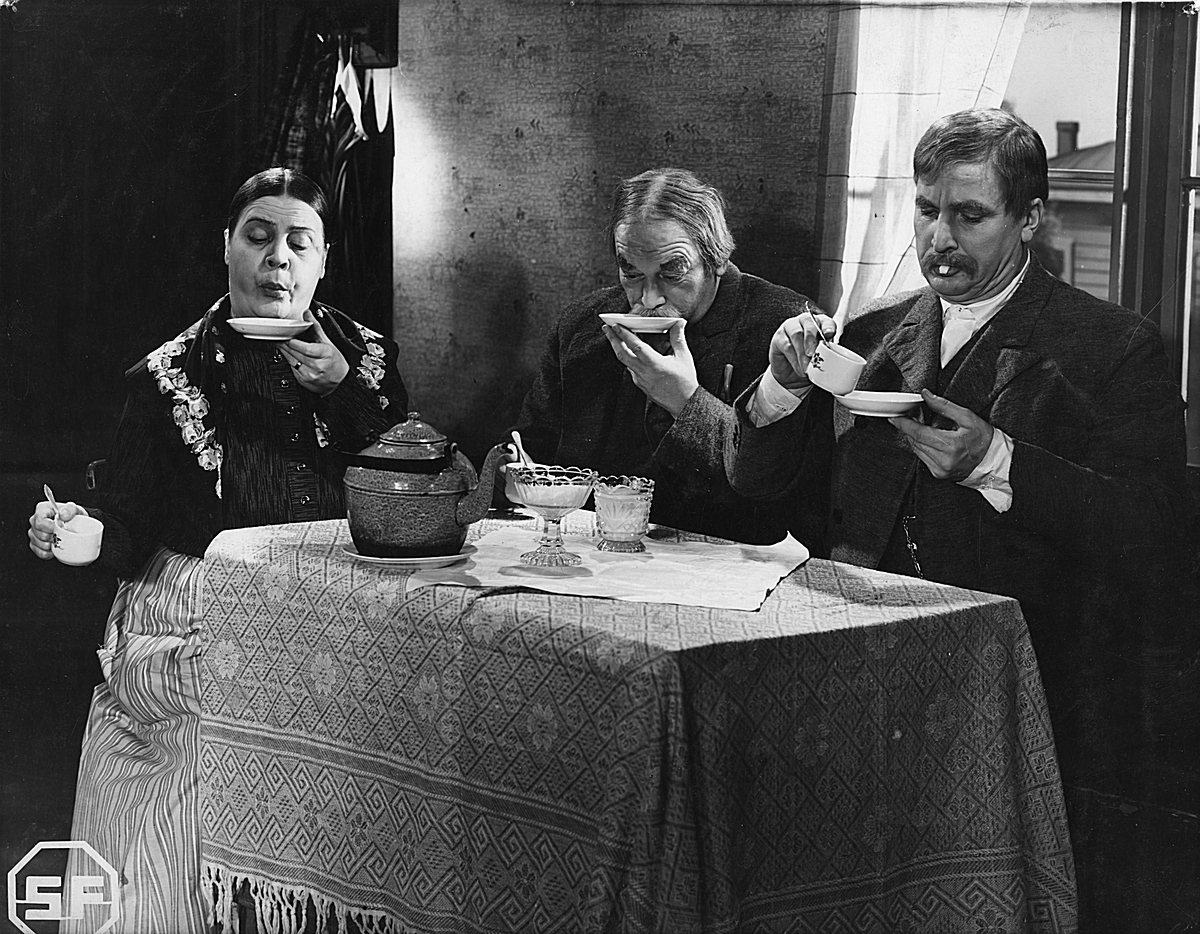
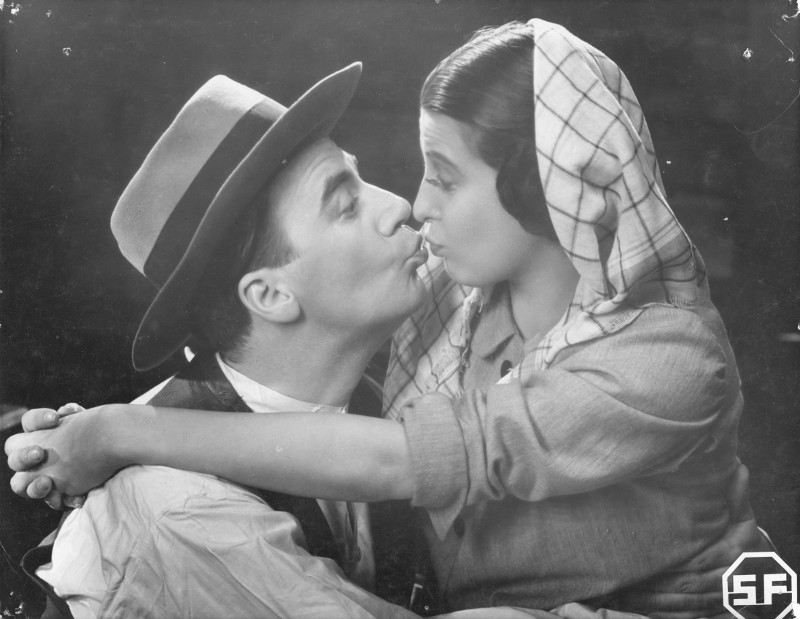
Fat old man Antti Ihalainen (Aku Korhonen) pops out to get some matches, and runs into his old friend, the widower Jussi Vatanen (Uuno Laakso), who has just hitched a new horse to his cart, and is on the road to give it a test. But Jussi is also in a celebratory mood, having waited a reasonable year since the death of his wife. Agreeing on a vague plan for finding Jussi a new bride, the two men go off on a drinking spree, forgetting all about the matches. They cause several accidents on the road, and start several fights, and as news of their escapades drift back to the farm, Antti’s family comes to believe that he has decided to abandon them and emigrate to America.

While his daughter Maija-Liisa (Ester Toivonen, in a wacky Princess Leia hair-do) cries on the shoulder of her idiot farmhand beau Ville (Joel Rinne), Antti and his drinking buddy become involved in chasing a piglet around the nearby town. Then they forget where they left the horse, so they steal another one.

They really should have called this one Dude, Where’s My Horse? At least Tulitikkuja lainamassa is mercifully short, and if the misunderstanding-about-man-off-on-a-common-errand plot is already tired and weak in Finnish film narrative (see, for example, The House at Roinila, 1935), there’s plenty of broad humour to be had. There’s also a lot of unintentional comedy provided by the cast, with Ester Toivonen entertainingly unable to take the plot seriously enough to weep convincingly, a piglet that often outperforms the professionals, and a series of policemen trying a little too hard to be funny, through outrageous facial hair and a running style inspired by the Keystone Cops.

For the 21st century viewer, there is also an intriguing glimpse at the customs and mannerisms of the era, not the least the ready way that the menfolk are prepared to trade their daughters in marriage, with only the merest acknowledgement that the ladies (still eight years away from the right to vote when the original story was written) might want a say in it. The cast also have a strange and stilted way of saying “America”, referring constantly to Amerriikka, as if they have misheard someone speaking of Amer-reich or Amer-riike, a mythical Land of Amer across the sea.

The Finns provide ample material for passing anthropologists with their custom of drinking coffee from a saucer (juoda tassilta), pouring their drink into a cup, staring at it for a while as if wondering what it is for, and then decanting it into a saucer so they can slurp at it like kittens. This was apparently the way of cooling one’s drink down faster – only the upper classes had the time to drink from one of those cup things. Antti also ostentatiously holds a sugar lump in his mouth as he drinks, the better to offset the bitter taste of his discount coffee.

Aku Korhonen reprises much of his Lapatossu schtick as the silly old Antti, adopting the one-eyed school of acting whereby winking constantly substitutes for any other expression. Notable in part for the degree to which the camera can’t keep its eyes off her is the 18-year-old former Miss Heinola, Nora Mäkinen, in the role of a young girl who attracts Jussi’s fancy. She has appeared in bit parts in a couple of previous Suomen Filmiteollisuus productions, but here visibly shines.

The original novel on which the film was based was published in 1910 as by “Maiju Lassila”, a pseudonym for the left-wing radical author Algot Untola (1868–1918), who famously edited the last edition of the Työmies newspaper single-handed in 1918, even though there was nobody left in Helsinki to read it. As well as his exhortations to overthrow the state, he paid the bills by knocking out potboilers under a variety of names, with Borrowing Some Matches sharing shelf-space with his The Barn Boys, The Young Miller and Love. His life took him from what is now Russian Karelia to St Petersburg, and then Finland, where he fled after being implicated in a terrorist conspiracy. His first marriage ended within days, allegedly because Mrs Untola turned out to be a hermaphrodite. His second ended in tragedy when his child died and his wife poured sulphuric acid on his genitals. It ended under doubtful circumstances in 1918, when, captured by the White Guards and on the way to his execution in Helsinki, he either jumped from the deck into the icy waters, or was shot and pushed overboard. He was himself the subject of a biopic, the 1980 film Tulipää (Firehead), which concentrated on his radicalism and ignored his “Maiju Lassila” works entirely.

As if this couldn’t get any more surreal, the screenplay for Borrowing Some Matches was adapted by Jorma Nortimo, a regular player in front of the camera, appearing briefly here in a cameo as a disapproving magistrate. And because once wasn’t enough, the story was adapted as a film a second time, in 1980, the same year as the Tulipää movie pretended it didn’t exist.

Jonathan Clements is the author of An Armchair Traveller’s History of Finland

Tokyo Tower

Television arrived in Japan in 1953. The technology would transform the city’s skyline. The original transmitter of NHK, Japan’s national public broadcaster, was inadequate to cover the entire Kantō region, and rival firms soon popped up with their own broadcast requirements. In order to avoid peppering the entire city with antennae, a consortium of channels and developers pooled their resources to create one massive broadcasting tower with a footprint that would reach all the way to the mountains. Modelled at least superficially on the Eiffel Tower in Paris, Tokyo Tower was originally intended to be taller than New York’s Empire State Building, although resources and requirements eventually dictated a slightly shorter height of 332.9 metres.

Work began on the tower in 1957 – the 2005–12 film series Always: Sunset on Third Street would later use the sight of the tower under construction as a background evocation of life in the post-Occupation period. Tokyo Tower became a symbol of Japan’s reconstruction, rising from the ashes of the war-torn city, asserting Japan’s greatness in the post-war world, and doing so by quite literally repurposing the trash of the old world order – a full third of the steel used in its construction came from hundreds of scrapped US tanks from the Korean War. It was completed in 1958, proclaimed as the tallest freestanding tower in the world, at least for a while, and painted in a bold orange-and-white colour scheme for safety purposes.

“The fact that the Tokyo Tower is a cultural landmark building,’ writes the author Patrick Macias, ‘speaks volumes about the lack of cultural landmark buildings in Tokyo.” It was always intended to have a dual function as a tourist site, although the prospect of having an observation deck a bit higher than the surrounding buildings would diminish in appeal as the years passed. Today, it seems faintly ludicrous to be excited about the prospect of being a few floors up when you’ve arrived in Tokyo in a jumbo jet. The Foot Town shopping complex beneath lures visitors to stay longer with restaurants and several museums, but, to be brutally frank, the Tower never quite achieved the status abroad that its investors had hoped for. Tourist brochures heralding Japan abroad tended to plump for stereotypical scenes depicting natural beauty or evoking the samurai. If they wanted to go modern, they would go for Mount Fuji, foregrounded by a rushing bullet train. The only place that Tokyo Tower achieved significant recognition was among the legions of movie fans who would see it regularly trashed, bent and stomped on by the likes of Godzilla, Mothra and Mechani-Kong. This is particularly ironic, since at least part of the will to destroy the tower on the part of 1960s film-makers surely stemmed from its role serving the competition, broadcasting the TV programmes that were luring audiences away from cinemas.

From An Armchair Traveller’s History of Tokyo, by Jonathan Clements, available now in the UK and the US.

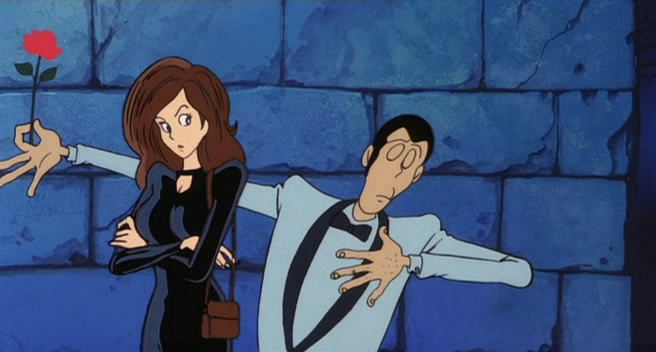
Monkey Punch (1937-2019)

Over at the All the Anime blog, my obituary for Kazuhiko Kato.

“The editor said to me – ‘It’s hard to tell whether your art was done by a Japanese or a foreigner, so let’s create a pen-name that is indistinguishable by nationality.’ And after a lot of discussion in the editor’s room, they came up with MONKEY PUNCH.” Which was nicely inconspicuous.