

Golden… Thing
Reply

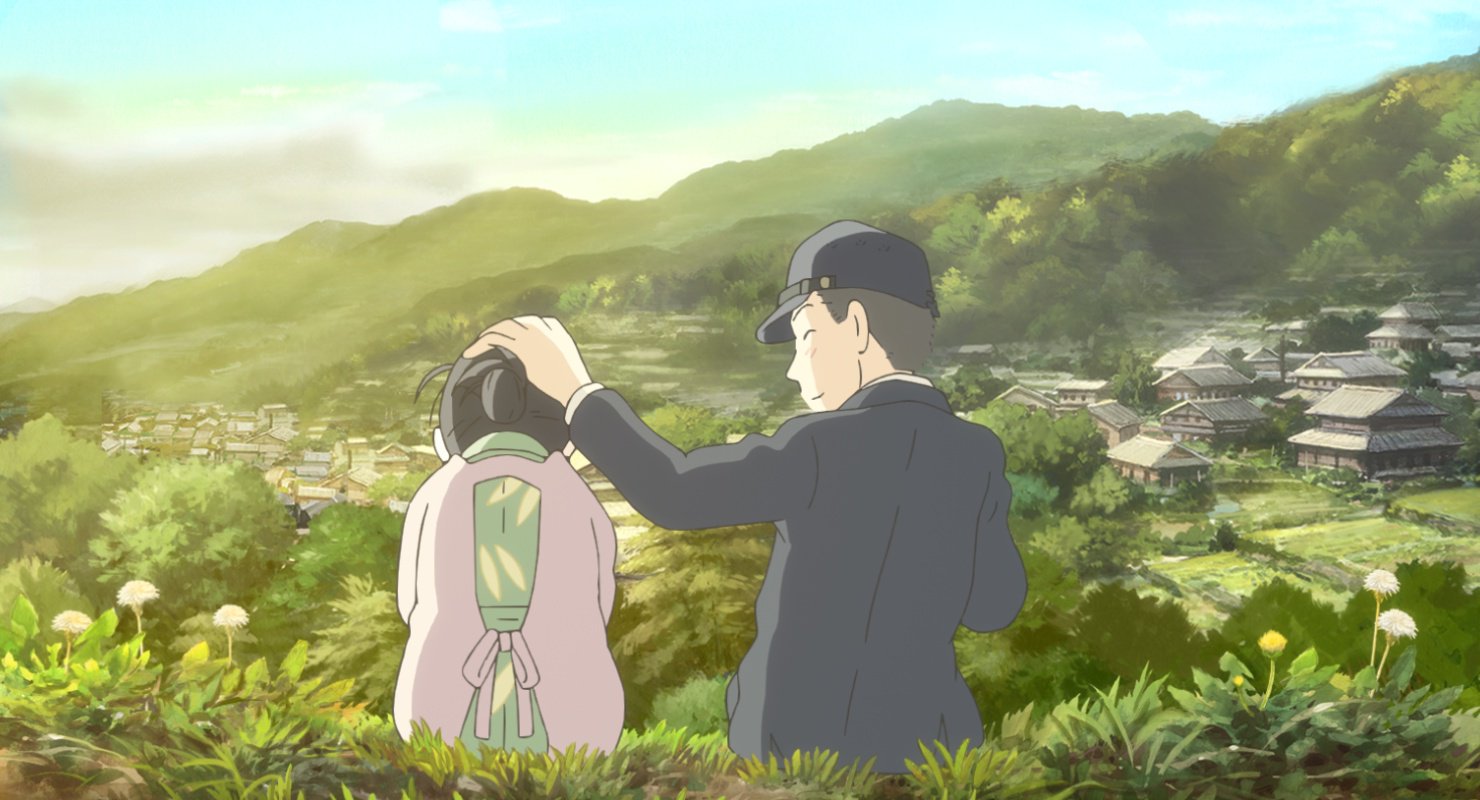 The director Sunao Katabuchi has just announced that he will be re-releasing his Hiroshima film In This Corner of the World with half an hour of bonus footage, interleaving other scenes from the original manga. I am rather surprised that everybody appears to be pleased about this, and not kvetching that they have already paid to see the film once, and now will have to pay to see it again, at a bum-numbing 159 minutes.
In This Corner is arguably a special case, since it was crowd-funded from the start, and its director might, presumably, genuinely have other bits he wants to tinker with. Art is never finished, as they say, only abandoned, and it’s easy to see why creatives given the chance to fiddle with their work will jump at the chance to improve it. One of anime’s worst-kept secrets, after all, is the number of releases that are buffed up after their hasty cinema release or TV broadcast, toshed up a little before anyone gets the chance to spot mistakes and fudges on home media.
But I’d like to register a possibly lone protest about the ongoing fetish for “director’s cuts” that, far from honing work of art a little bit closer to perfection, simply hang adornments on it in a cynical attempt to fleece customers of more money.
Culturally, there seems to be a fetish in Japan for making films as long as possible so that everyone feels that they are getting their money’s worth. I used to think this was a hold-over from the pre-video days when TV serials were re-cut for cinema release, whereby producers felt that if they couldn’t show you anything new, they could at least give you a long film. But such economies simply don’t work in the world of original anime, where every frame you see has to be painstakingly created from scratch. Whisper it, then: sometimes this is really counter-productive.
As a case in point, Cowboy Bebop: The Movie, for which the film-makers actually boasted in their publicity that they had taken a taut, lean 90-minute thriller and bloated it with half an hour or unnecessary filler. Sometimes less, really is more, and I am baffled by creatives’ willingness to test the patience of their audience. Sometimes I wonder if some film-makers are really making films for human beings at all, and instead have an eye on appeasing a robot at a streaming service, that only counts minutes accessed, rather than stories told.
Jonathan Clements is the author of Anime: A History. This article first appeared in NEO #180, 2018.
 Up on the All the Anime blog, I write about Penguin Highway, which has its European premiere at Scotland Loves Anime this month.
“The original award-winning 2010 novel, reprinted multiple times in its native Japan, adds a single word to Arthur C. Clarke’s Third Law: ‘Any sufficiently advanced technology is indistinguishable from magic-realism.’ Since Aoyama is only ten, it barely seems to occur to him that penguin apparitions and a bizarre ‘silver moon’ in the nearby forest are any weirder than any other puzzle to be solved.”
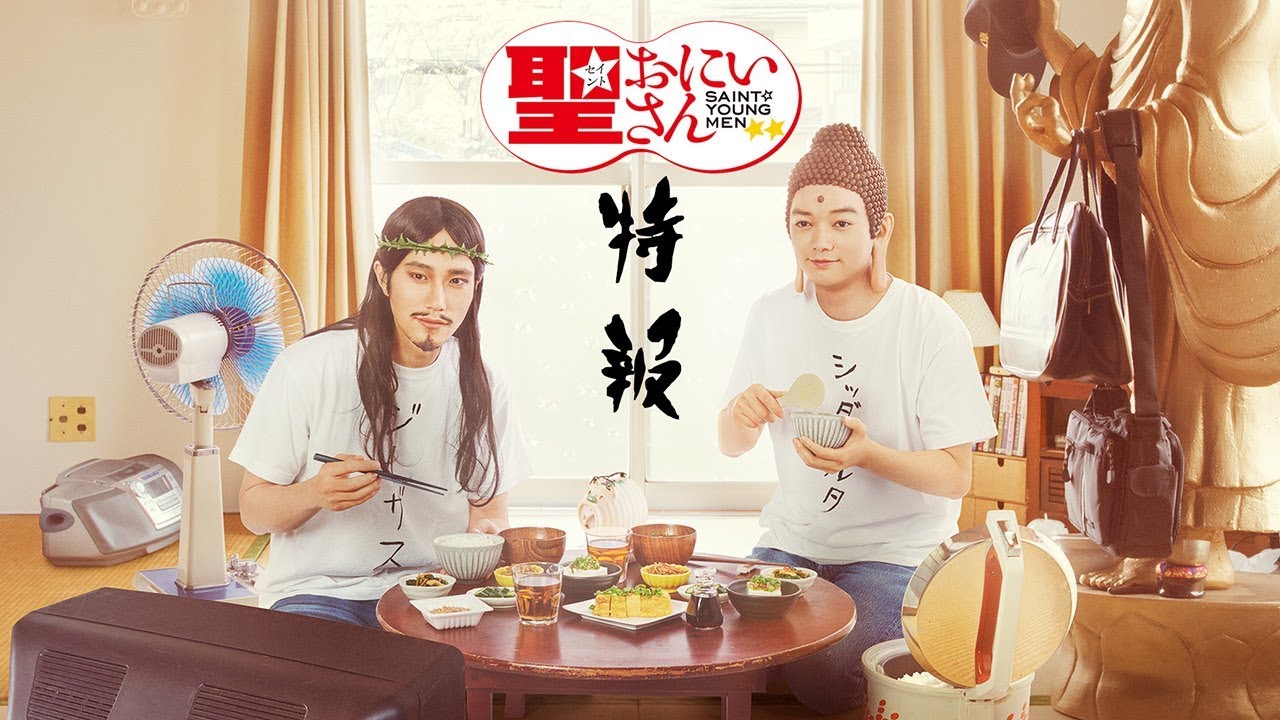 Morning Two’s greatest success story was a manga that began running in its very first issue, Hikaru Nakamura’s Saint Young Men. At one level, it is a slice-of-life comedy about two with-it hipsters sharing a Tokyo apartment. They squabble over vegetarian recipes; they experiment with a boutique T-shirt business, and they go shopping for noodles at the corner store. But Nakamura’s high concept has incredible bite, because these young men are really Buddha and Jesus, roughing it in an earthbound vacation.
In this month’s chapter, they argue about the washing up, and then go on a trip to Ikea, because even God-made-flesh needs a working hob and an extractor fan. Buddha enthuses about how idyllic life must be for all those Viking gods and Valkyries in their beige Swedish wonder-kitchens. Jesus goes a bit crazy in Home Furnishings, and then realises he has to carry his purchases home.
Nakamura’s storyline injects a much-needed humanity and humour into figures usually viewed only through translations of ancient books. Jesus is a resolutely happy person, who can laugh at the fact that schoolgirls mistake him for Johnny Depp. He runs a blog about TV drama, and frets about how to keep his crown of thorns dry in the shower. Buddha likes reading manga (particularly Osamu Tezuka’s famous Life of Buddha), and has an irritating ability to somehow get infinite lives whenever he plays a video game.
This could have all too easily gone horribly wrong. Nakamura is well aware of this, and has been reluctant to allow her manga to receive an English-language edition, because she is afraid of the likely knee-jerk reaction from the Christian Right in the USA. This doesn’t appear to have stopped it getting translated in Italy (the home of the Pope), or in Spain (the home of the Spanish Inquisition – nobody was expecting that). This is a sad state of affairs, because Saint Young Men is a truly charming story, rich with humour and compassion, and oddly respectful of its protagonists. Its satire is not directed so much at them, but at the modern world in which they find themselves, repeatedly confronting 21st century customs and attitudes with the nature of old-world religious figures.
If you think that gay marriage causes hurricanes, that tattoos will send you to Hell, and that a prawn cocktail is forbidden, then you are never going to like Saint Young Men. If you believe that “reverence” means never laughing at absurdity or imagining “what would Jesus do”, then this manga is certainly irreverent, and that makes it literally blasphemous. Nakamura is an equal opportunities satirist, and throws in a bunch of other gods and goddesses – this is typically Japanese eclecticism, but unlikely to play well with anyone who refuses to accept that others believe differently.
Jonathan Clements is the author of Anime: A History. This article first appeared in NEO #144, 2015, and is reprinted now because of the Saint Young Men live-action TV show, currently creating waves online.
 Reino (Toivo Palomurto) is a high-level engineer at a shipyard, laid off along with many of the workers as the recession bites. His girlfriend Maire (Ester Toivonen) is sure they’ll muddle through, but her father, the shipyard owner Mr Rauta (Yrjö Tuominen) has other ideas, and is determined to find a more suitable suitor for his daughter. Mistakenly believing that Reino has stolen ten thousand marks, Rauta forbids Maire from seeing him, although all’s well that ends well after she’s fought off the cad Korppi (Jorma Nortimo) and the scheming shopkeeper Nixman (Kaarlo Kartio).
Erkki Karu planned on directing this remake of the Swedish Uppsagd (1934, Laid Off) after completing the previous year’s The House at Roinila, collaborating on the script with Ensio Rislakki, a journalist and satirist known for wordplay and literary parodies. But Karu’s demise dumped the project unceremoniously on Glory Leppänen, a 35-year-old theatre director whose film experience was limited to acting roles in a couple of silent movies.
Inadvertently becoming Finland’s first female film director, Leppänen delivers Onnenpotku (A Stroke of Luck) on the cusp between silent and sound. A dozen plot points are conveyed by close-ups on letters, notes and posters, as if she misses the days of intertitles, and in what is either a provocative staging decision or a fault in the audio, a whole dance sequence without any accompanying soundtrack. It is as if she doesn’t trust audio to convey anything of worth, causing several sequences to unfold as mime. Most notably, the rude mechanical Jussi (Aku Korhonen) accidentally robs the nervous shopkeeper Nixman, when the latter mistakes his cigarette case for a gun, a scene played entirely silently, when the words “Oh, it’s only a cigarette case” might have helped dispel the misunderstanding.
 In a reversal of the original Swedish version, the Finnish title “A Stroke of Luck” emphasises the hero’s escape from straitened circumstances, rather than his unemployment. The film certainly caught the spirit of its time, finding a Recession-era audience ready to sympathise with its downtrodden workers making the best of a bad situation. Employers and capitalists are presented as snarling baddies, with both Korppi and Nixman sporting ridiculous caterpillar moustaches. If anything, Leppänen is let down by her leads, both of whom had played similar roles before, but who seem ill at ease with performing as a couple already in a relationship. When they kiss, it looks like Palomurto is trying to eat Toivonen’s chin. Meanwhile, Yrjö Tuominen is creepily hands-on in his dealings with his on-screen daughter, constantly pawing at the former Miss Finland under the guise of delivering paternal advice.
Toivonen seemed to spend much of her acting career similarly put-upon. She was still only 22 at the time she appeared in this, her third feature film, catapulted into the limelight by her beauty-queen status. That, in itself, carried a heavy burden, forcing her into a role as an example of pure Finnish womanhood, intended to demonstrate to overseas immigration bureaus that Finns were Europeans, not as had been argued in some quarters, Asians. Pushed into an acting career she for which she was ill-prepared, she would marry and retire at the end of her twenties, later writing in her memoirs of her perpetual annoyance with directors, critics and cinema-goers who were unable to see past her looks.
But many workers in cinema’s early days were similarly finding their feet by trial and error and would not necessarily stick around – Glory Leppänen would return to a successful career in theatre; Toivo Palomurto would retire behind the camera to become a film composer, and Jalo Kalima, who played “Man in Coffee Shop”, would go back to being the Professor of Slavic Philology at the University of Helsinki.
Jonathan Clements is the author of An Armchair Traveller’s History of Finland.
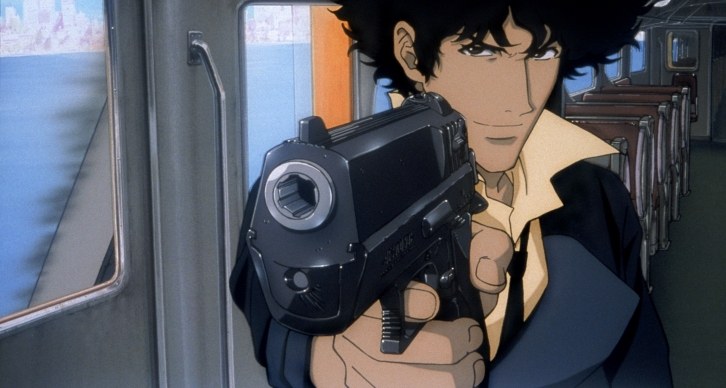 Up on the All the Anime blog, I write a piece on Cowboy Bebop: The Movie, and its place in exhibition history.
“When finally released, it was slated to hit American cinemas slap-bang in the middle of hysteria about 9-11. Its concentration on the motives of a terrorist turned into a sudden spell of cold feet on the part of its distributors, and it was consigned to the movie sin-bin for a while, along with Rintaro’s Metropolis, which featured a disturbingly familiar sight of a large building crumbling into dust. And when it first hit the UK with a 15-week run at the prestigious ICA cinema on Pall Mall in 2003, its coughing, plague-ridden characters evoked unpleasant reminders of SARS, a different kind of terror then threatening the Far East.”
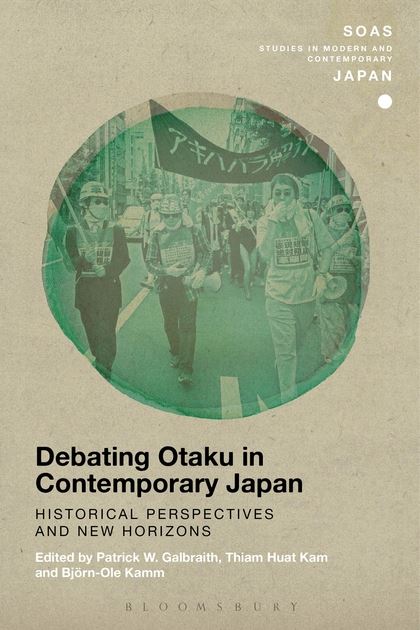 Over at the All the Anime blog, I publish a review of Galbraith et al’s Debating Otaku in Contemporary Japan.
“Eiji Otsuka, a man complicit in the coinage and dissemination of the term otaku in the first place, is furious that it has become such a thing, and regards the attention of researchers and the vainglorious bragging of the Japanese government as an air-brushing of history…. He is so angry, in fact, that his foreword to this book comes with a prolonged translator’s note pleading mitigation and indulgence, like some apologetic youth dragging a drunken uncle away from a bar fight.”
 It was Sentai Filmworks’ Matt Greenfield, then at ADV Films, who uttered the magic words to me at a party in 2001: “The next format is no format.” And for many of you, watching anime on a laptop screen in your bedroom, streaming it straight from the interwebs, that prophecy has come to pass. What surprises me 17 years later is that it’s still not true for so many of us – the anime market remains a healthy niche in the entertainment business, possibly because anime fans were some of the first to notice that online streaming sites were anything but permanent archives.
But anime fans without a Blu-ray player may soon have little choice except to knuckle up and buy one. Companies all over the globe are giving up on DVD, and with the likes of Sentai Filmworks in the USA, and Madman in Australia not even bothering to burn DVD masters any more, this inevitably affects those companies that rely on them for materials. Now, in Britain, MVM’s Tony Allen announces that his company is releasing Flip Flappers only on Blu-ray, because DVD masters were not forthcoming from his overseas partners.
This column reported way back in NEO #95 on the decision by Bandai America to give up on DVD. If it’s taken another six years for everybody else to catch up, it’s because Bandai trusted other companies to take up the slack by licensing the products for DVD themselves. This latest round of cancellations reflects the fact they have stopped bothering.
Even though only 15% of the UK public seemingly owns a Blu-ray player, roughly 60% of anime sales are on Blu-ray. It well be that the true figure is significantly higher, and that many of the DVDs “sold” in dual-format packs are little more than throwaway coasters to purchasers who don’t need them – we can’t say for sure.
But American Blu-ray sales peaked in 2013 and have been plummeting ever since. Last year, Den of Geek observed that Cameron Crow’s Aloha (2014) didn’t even go “straight to DVD” in the UK, but went straight-to-streaming. Could it be curtains for all discs…
“Packaged goods”, as they’re known, still form a crucial part of the anime market, because without a physical disc containing the film, it’s impossible for a distributor to sell you the box that it comes in, with the foil on the box, and the special foldy-out thing, and the liner notes, and all the other things that create value in a collector’s edition. So Blu-ray is here to stay, at least in anime, at least for the immediate future. There can be no flip flapping on that.
Jonathan Clements is the author of Anime: A History. This article first appeared in NEO #179, 2018.
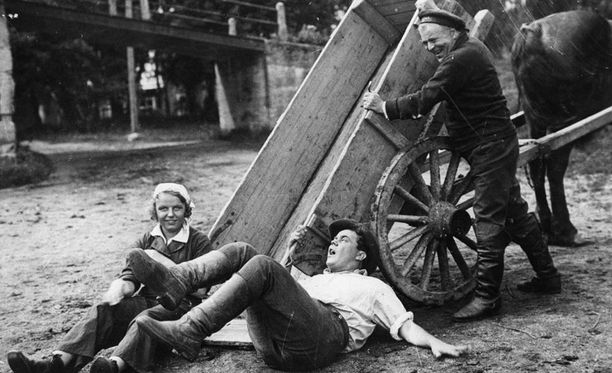 Elli Ojala (Laila Rihte) is duped out of her inheritance by her devious cousin Olli (Kaarlo Kartio), and has come to find work at the neighbouring farm, Roinila. There, she falls for Eero (Eero Eloranta), the heir to Roinila, who starts to suspect that Olli has not told Elli everything about her late father’s will. Eero and the retired sea captain Matti (Hemmo Kallio) sneak off to Helsinki to consult a judge. Finding Eero’s hat in the lake, the farm matron Sanna (Kaisu Puuska) immediately assumes he is dead, and breaks the news to the manor folk. Eero and Matti return to save the day, waving notarised documents, the sputtering Olli is taken away by the authorities, and everybody else heads off for a multiple wedding.
The last film directed by Erkki Karu (1887-1935), The House at Roinila (Roinilan talossa) is based on the 1883 play by the same name by Minna Canth (1844-97), a writer and activist so celebrated that she became the first Finnish woman to get her own national flag day. But The House at Roinila is unrepresentative of the work that made Canth truly famous, written two years before she would drift into gritty social realism with A Worker’s Wife (Työmiehen vaimo). Instead, it is a rather gentle and frankly unfunny pastoral comedy, in which three intersecting couples fall in love and overcome their tribulations. Elli and Eero are the supposed leads, although their romance is shadowed by that of Anna (Rauni Luoma), the daughter of Roinila, and her farmhouse manager Mauno (Toivo Palomurto). But although Canth was renowned in later life for her commentary on Finnish class and gender roles, The House at Roinila seems to offer little in the way of distinction between upstairs and downstairs. Mauno and Anna might witter about the struggle they face for coming from different worlds, as if they are somehow in some star-crossed dilemma like the characters in Miss Julie (1888), but there seems little difference – in class, clothes, mannerisms or language – between the lady of the manor and the peasant at the plough.
This may be a feature of the shift in setting. Canth’s stage play was a contemporary drama, and indeed, there is little in the first half of the film to make you think it is not set in the 1880s. A glimpse of electricity wires crossing a field presages the sudden influx of modern technology partway through the film, as Eero goes out for a drive in his motor car, thereby revealing that this movie adaptation, by the playwright Artturi Järviluoma, has moved the action fifty years later than Canth’s original. Like a similar moment in The Wind in the Willows, when what could have easily been 19th century country life is disrupted by a passing 20th century vehicle, it conveys the sense that decades of unchanging rural existence are beset by immense changes. In the gap between 1883 and 1935, Finland has won its independence, and fought a civil war largely defined by the social divisions between town and countryside. And it’s the countryside that is the true star of this film, as Karu’s camera lingers for long reveries on the lakeland of Hollola, near Lahti. Much of the film is shot outdoors in the long days of a Finnish summer – remarkably few scenes are set indoors, and when they are, they seem drab and lifeless by comparison.
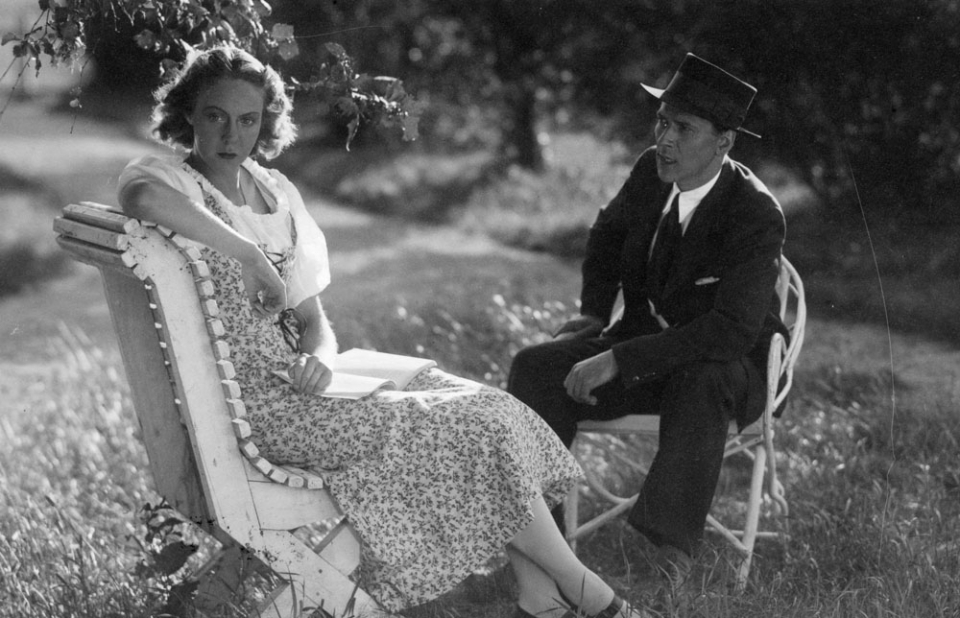 Most of the cast, sadly, are also quite dull. The male leads are characterless drones, while as the disinherited Elli, Laila Rihte seems permanently dumbfounded to find herself at the centre of action and attention, all too aware that a camera is watching her. Rauni Luoma, as Anna, is supposed to play second fiddle, but her features are so striking, and her screen presence so powerful, that she dominates any scene she is in. Not that she hasn’t got competition from the underlings, particularly Kaisu Puuska as the idiotic Sanna who, common to many supporting actresses in 1930s Finnish films, has seemingly been directed to play her every scene as if she is an over-acting pantomime dame.
Acting the rest of the cast off the screen is veteran stage performer Hemmo Kallio as Matti the old sailor, a remarkably thin role that he stretches with comedy business, songs, soft-shoe shuffles and his recurring English catchphrase: “All right! Yes!” A man of the world with two hipsterish stud earrings, Matti has a seemingly endless supply of novelty pipes to smoke, and travels in the course of the film’s two hours from grating comedy bumpkin to vital saviour of the day. His own flirtations, with the aging cook Leena (Kaija Suonio), form the last of the three couplings in this film, but are the only ones that come with any sense of realism or genuine humour.
Jonathan Clements is the author of An Armchair Traveller’s History of Finland.
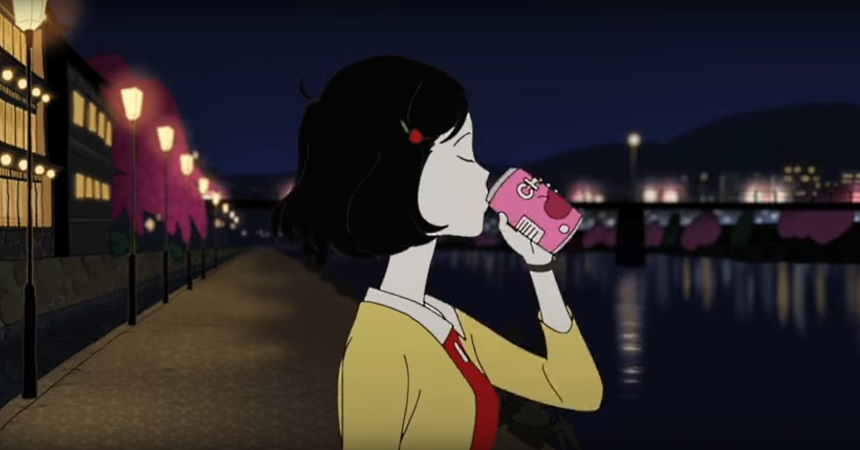 A few more entries from me up online at the Encyclopedia of Science Fiction, including one on the Japanese author Tomihiko Morimi, another on China’s Chen Jiatong, and a third on the 1930s Finnish film Our Boys in the Air.

