The Almost-King of Finland

Finland needed a ruler. That, at least, was the claim of the monarchist faction in its 1918 parliament, keen to hold off the Swedish aristocracy and Bolshevik agitators, and to establish the newly proclaimed independent country as a European monarchy.

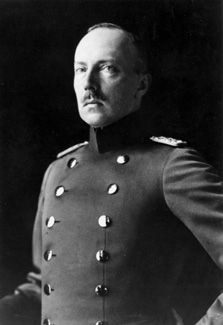
Before claiming independence, Finland had spent a century as a Russian grand duchy, causing the policy wonks of the new state to dig deep into the archives in search of a precedent. They found it in a 1772 statute, back when Finland was still part of Sweden, suggesting that in the case of a monarch not being available, a new one could be elected. Determined not to have a Russian or a Swede in charge, the Finns turned to the Germans, who eventually offered them Prince Frederick Charles of Hesse (1868-1940), the Kaiser’s brother-in-law.

Frederick threw himself into Finnish lessons, which soon turned out to be harder than he was expecting, while the womenfolk of Finland started enthusing about his eldest surviving son, Wolfgang, the Crown Prince. Plans were afoot for the new king to take to his throne late in 1918, as King Karl I of Finland, although republican rumour-mongers started spreading the fake-news version, that he would have the ridiculously old-school name King Väiniö. But it was the republicans who were the problem, refusing to show up for the critical votes in the Finnish parliament that would establish the state as a constitutional monarchy, and bogging the negotiations down.

Prince Frederick Charles was only the nominated “king” for sixty days. By December 1918, Germany had surrendered in the Great War, and other states were refusing to acknowledge Finland except as a republic – they wanted no German princeling raised to power in what used to be part of the Tsar’s empire. Frederick Charles officially gave up his crown on 14th December, before he had even been to Finland, and instead Baron Carl Gustaf Mannerheim was proclaimed the republic’s new regent until a president could be elected.

But there is far more to this footnote of Finnish history than meets the eye. Although on paper it sounds like little more than an exchange of telegrams and some faffing around a possible political appointment, the plan to create a Finnish king was far more involved. At the time Prince Frederick Charles walked away from the idea, Finnish designers were already hard at work on his monograms and his crest, and the uniforms of his honour guard, hand-picked from the ranks of the German-trained Jägers who had fought in the Finnish civil war. The carpets and fixtures for his palace (the former Imperial Palace, now the Presidential Palace) had already been ordered, and artisans from the Stockmann department store in Helsinki were already delivering his sofa.

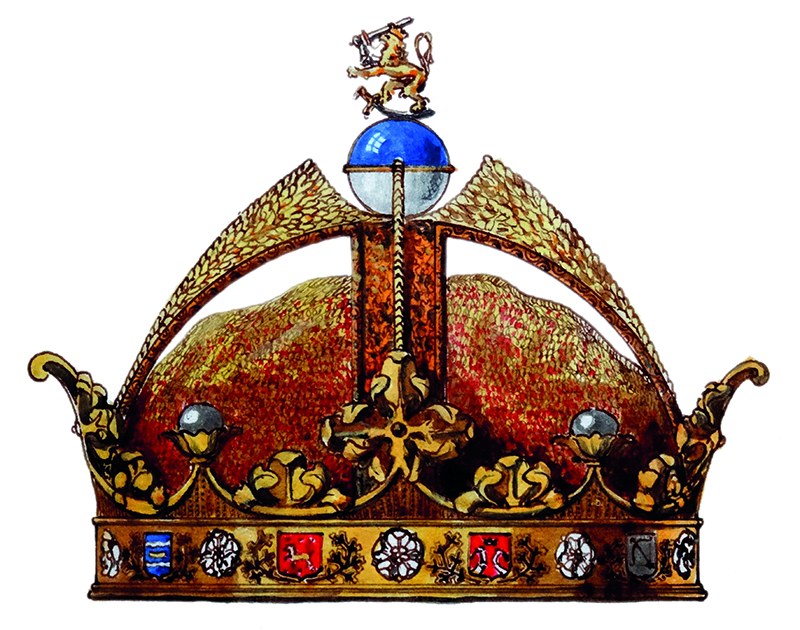
It’s these elements that lend such weight to the Suomen Kuningas exhibition currently running in Tampere – not merely the story of the king that never was, but the sight of the chairs he had planned to sit on. These cool Deco items were a matter of some controversy – delivered for a kingdom that would not exist, no official of the new republic would pay for them, and Stockmann was obliged to put on a special sale of almost-royal furniture. The curators are to be commended for rounding up some surviving examples in this centenary exhibition, along with the designs for his crown, and his guards’ uniforms, and a snide pop song from the period about the man who would be king.

The almost-King of Finland died in 1940, as the Head of the House of Hesse. Two weeks after his funeral, an envoy arrived from the Finnish embassy in Berlin, and discreetly laid a wreath on his tomb.

Jonathan Clements is the author of An Armchair Traveller’s History of Finland. The Suomen Kuningas exhibition runs at the Museo Milavida in Tampere until October.

Kiss of Evil

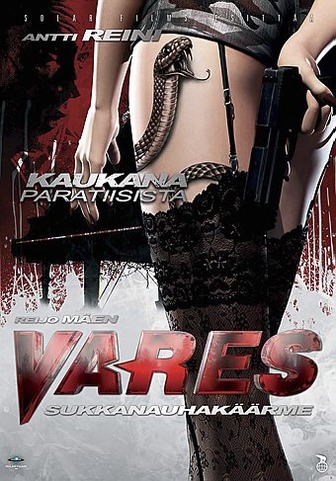
Private eye Jussi Vares (Antti Reini) is hired to chase up a cold case. The police have given up on the 2009 murder of young Kerttu Malmsten, but her mother Asta (Outi Mäenpää) is prepared to pay thousands of euros if justice can be done. But when a second body is uncovered, seemingly linked to Kerttu, Vares begins to suspect that unless he solves the first two murders, a third might be in the offing.

The third film in the Vares franchise begins with a book launch, as author Luusalmi (Eppu Salminen) finally breaks his ten-year writer’s block. His new novel charts the misadventures of one “Juha Korppi” a tough, unflappable Finnish private eye, inspired by his best friend Vares. In other words, much as Maria Bello in The Mummy 3 shrugged her shoulders and suggested that Rachel Weisz in earlier films was a fictionalised version of her real self, the first two Vares movies have been gently slid out of continuity. As well they might, since not only has Luusalmi been replaced by a new actor, but so has Vares himself. There’s plainly been a lot of water under the bridge in the four years since 2007’s Frozen Angel – enough time has elapsed for Jasper Pääkkönen to be re-cast in an entirely different role. Formerly, he had an unforgettable turn as the sleazy lead singer of a metal band; here he returns as Antidote, a drug addict trying to go straight.

That’s not all that’s changed. The film blows a fair chunk of its budget on a grandstanding aerial shot that sweeps in on Turku from the Baltic Sea, catching it in summer glory and tracking around its cathedral. If the plan was to make Turku look like Miami in the trailers, it was money well spent, but unfortunately for a story in which a major plot point rests on changes in lighting, it’s abundantly obvious that the airborne footage was shot at the height of summer, while the bulk of the action takes place on distinctly greyer days.

New director Anders Engström has plumped for a very different version of Reijo Mäki’s laconic hardman, partly because the plot of Pahan suudelma (1998), the tenth book in the original series, seemed to call for it. Whereas the Vares we first saw in the movies was a man in a vest smacking people with a shovel, Antti Reini sports designer stubble and a carefully crumpled suit. This Vares has had a decade to get used to the modern world, and to adopt modern technology – he takes photos with a mobile phone; he investigates the time-stamps on digital photography, and he hunts his prey using social media. He seems completely at ease in his dealings with the Swedish-surnamed middle classes of Turku, unphased by encounters with ship designers and randy housewives, and far more accommodating to the police, with Inspector Hautavainio (Ilkka Heiskanen) now a cordial ally.

There’s some confusion as to whether this third “film” is a film at all. Despite movie-level production values, it was shot back-to-back with the next four entries in the franchise, and its own distributor’s website divides the cast into “regulars” and “guest stars”. From this point on, some instalments were premiered in cinemas while others went straight to video, with a central cast that would remain static from story to story, while cycling in some big names from Finnish film. In this instalment we have a cameo from Mikko Nousiainen (the best thing in Renny Harlin’s otherwise terrible 5 Days of War) as a boy from the wrong side of the tracks who functions as a conduit of criminal goods to the Turku suburbs.

I rather miss the Vares of old. In the title role, new-guy Reini barely sucks down more than a gallon of beer and a couple of fags in the whole film. He carries a book in his jacket pocket and wears glasses to read through documents, as if the original blue-collar hero has been kidnapped by the pod-people of Turku. But there are still flashes of the original’s dark humour and off-hand misogyny – every woman is either desperate to hump him or go shopping for lingerie, and the Finnish underclass and underworld are always just two streets away from whatever gastropub he’s sitting in. Even his part-time chauffeur, taxi-driver Anna (Maria Järvenhelmi) conveniently moonlights as a stripper in order to economise on speaking roles and set up several scenes in a titty bar. But whereas the earlier Vares films were triumphs of low wit, Kiss of Evil heads sadly upmarket, delivering the sort of gumshoe thriller you can see anywhere else on primetime. Pietari Kääpä, in Directory of World Cinema: Finland, suggests that the Vares reboot was a deliberate attempt to muscle in on the Nordic crime market of Wallander and the Millennium series, but if that’s the case, Vares has had to sacrifice much of what made it so scabrously unique.

Jonathan Clements is the author of The Armchair Traveller’s History of Finland.
V2: Frozen Angel

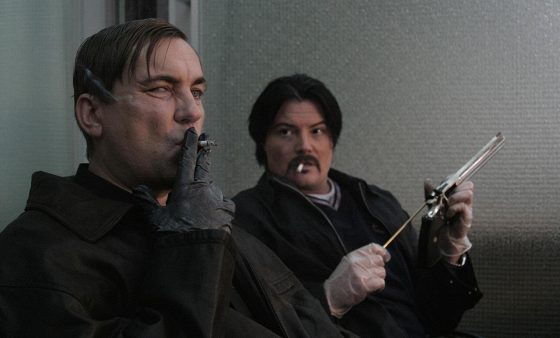
Seedy second-hand car salesman Jakke (Hannu-Pekka Björkman) is believed by everybody in the Finnish port town of Pori to have been responsible for the death of Mirjam (Johanna Kokko), a sometime prostitute whose death in winter went unnoticed until the snows melted. Jakke hires his former classmate Jussi Vares (Juha Veijonen) to clear his name, neglecting to mention that at the time of the death he was knee-deep in an attempt to blackmail a group of powerful local figures.

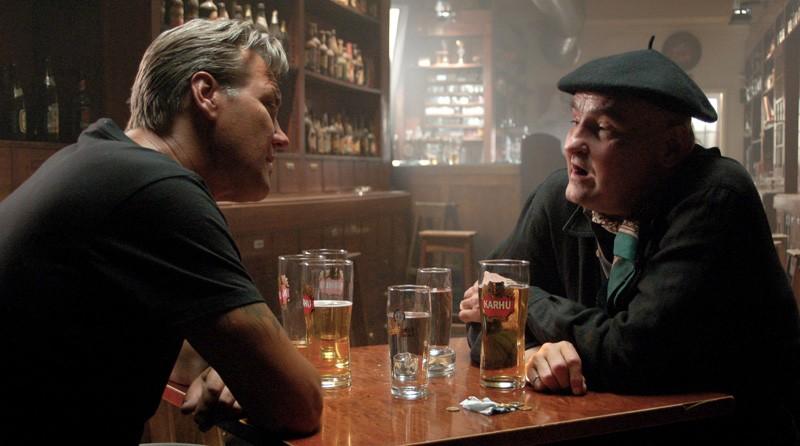
Based on Jäätynyt enkeli, the fifth book in the series by novelist Reijo Mäki, the second Vares film continues to lampoon Finnish masculinity with the joyous abandon of a drunk tramp pissing on a dumpster fire. Its cast is an utterly ghastly procession of sweaty, flabby, beered-up chain-smokers stumbling through the plot, double-crossing each other in motels and dive bars. Even the sponsors’ logos that begin the film look like a recipe for the worst night of your life, including (if I remember correctly) Karhu beer, an online poker site, and some guy’s kebab shop.

Stories are like pizzas, observes one character sagely. The thinner the base, the tastier the topping. The victim has slept with half of Pori, sometimes for cash and sometimes for love, enmeshing her in a complex web of possible exes and indifferent one-night stands. The police, as in the first film, can’t be trusted – in the film’s biggest plot hole, the entire case might have been more easily solved if they’d just made a cursory examination of the body. Instead, it’s left to Vares to uncover a complex conspiracy involving Swedish hookers, a heavy metal band, a daisy-chain of polyamorous lesbians, a comic-relief transvestite, and a gang of small-town big-wigs with a terrible secret. Meanwhile, the towering bully Veikko (Jussi Lampi) comes home after serving a stretch in a Swedish prison. “Those Swedes understand Finnish well enough,” he growls, raising his fists. “And if they don’t, there’s always sign language.” Yeah, up yours, Sweden! He hates Swedes the way that Indiana Jones hates Nazis, and is always ready to postpone the action for a few minutes while he beats some up, or in one scene, tries to drown a pair in petrol.

Unlike the novel, which took place in winter, the film tries hard to play up the unbearable heat of the Finnish summer. Yes, really. Everybody is sweating, and telling each other how terribly warm it is all the time, which adds a note of unintended comedy for anyone who’s had to wear an anorak in July. Vares deftly uncovers a conspiracy, hunts down some stolen cash, and fights off the hulking minions sent to dissuade him, but it’s only at the end, as he burpily recounts his mission to his drinking pal Luusalmi that everybody realises he’s forgotten to solve the actual killing.

Jonathan Clements is the author of The Armchair Traveller’s History of Finland.

Tellus

So a Finnish boy and a Finnish girl meet in a noisy night club and leave together. As they get outside, he says: “Your place or mine?” And she says: “Why are you talking so much?”

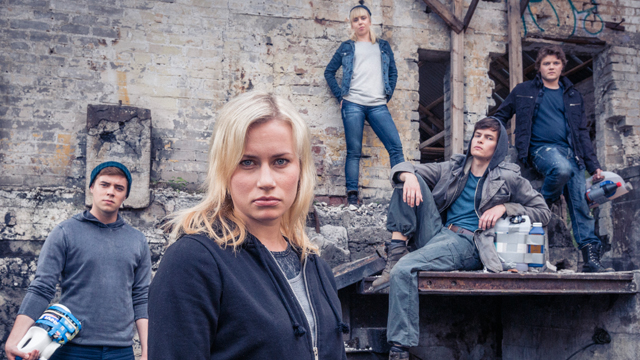
I had this typical Finnish joke in mind a lot while watching Tellus (2014), a TV series from Jukka-Pekka Siili about a bunch of Helsinki eco-terrorists and the security squad dedicated to taking them down. Starting out as pamphleteers, bloggers and monkey-wrenchers, the Tellus protestors become increasingly more pro-active, until a fateful day when arson on an industrial estate leads to the death of a security guard. This takes them out of the realm of misdemeanours into serious felony, and puts seasoned detective Taneli Lokka (Pirkka-Pekka Petelius) on their trail.

The Tellus group is a stereotypical coven of urban guerrillas, with some more militant than others, but each self-righteously assured of their nobility of purpose. Notably, they are always shown drinking a variety of beers, to ensure that no single brand can be associated with terrorism. Someone had a meeting about that, I bet. True tension mounts when their nominal leader, Eeva (Minkka Kuustonen) is targeted by an undercover police informant, Alex (Lauri Tilkanen). He’s under orders to get closer to the organisation’s heart, but this inevitably brings him into moral conflict, not only over his own feelings for Eeva, but his attitude towards the group’s crimes.

The romance between the leads is oddly paced and posed, as if two emotionless puppets are going through the motions of dating… or perhaps as if two players believe each is duping the other. She resists his advances coldly and dispassionately, only to suddenly agree to a date with equal indifference, so the pair of them can bike around Helsinki like a couple of smug hipsters. Even then, Eeva presents every hallmark of being a self-involved, self-regarding dullard, less of a love interest than a love disinterest. Alex, meanwhile, is hardly a catch himself, so cocky that he practically brow-beats her into a snowbound picnic, despite very obvious signs that she barely notices him. And then suddenly they are all smiles and touchy-feely. Apparently, a relationship has broken out, like hives. One wonders to what extent this is a deliberate evocation of her single-minded vocation and his clandestine mission, and to what extent it’s just because they’re a couple of joyless Finns. Maybe there is some witty, subtle nuance of Finnish social interaction that I am missing. Or maybe the way to pick up Finnish girls really is to bombard them with phone calls until they relent.

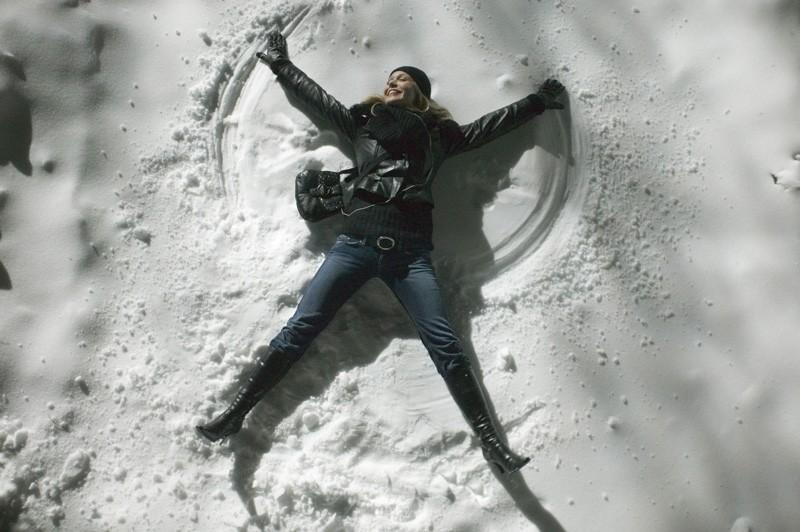
But there is a lot of double-bluffing going on in the script. A scene which first appears to be a hackneyed pixie-dreamgirl moment, of Eeva lying on her back staring at the sky, is revealed to be a scouting mission for another attack – she is not laying low on a hilltop as a poseur, but because she doesn’t want to be seen. The story comes alive, explosively and unexpectedly, in a throwaway kitchen scene wherein the stressed investigator Taneli suddenly turns on his listless teenage son for wasting food. It’s a dinner-table sequence that many writers would use as expository filler, but actor Petelius lets loose in an incandescent rant, tying up family tensions, workplace stress, and a startling revelation – that deep-down he is sympathetic with the eco-terrorists’ beliefs.

This pivotal moment cleverly repositions all arguments about Them and Us. We really are all in this together. Taneli and Alex and Eeva and her hardcore friends are all in total agreement that Something Must Be Done. They simply disagree on the methods, in a drama that focuses itself very much through an ecological lens, both in terms of the troubles that the Earth is facing, and a thought experiment as to the attitude and appearance of Green extremism.

Jonathan Clements is the author of An Armchair Traveller’s History of Finland.

Vares

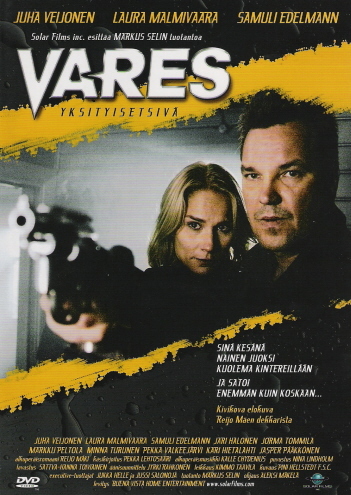
Professional con-man Kraft (Jorma Tommila) persuades gullible schoolteacher Eeva (Laura Malmivaara) to help him bust out of jail, smuggling a pistol into their wedding ceremony to fight off his guards. As they wait for their fake travel documents to arrive, Eeva discovers a little too late that Kraft already has the slinky sexpot Ifigenia (Minna Turunen) waiting for him on the outside, and that he intends to bump off his rescuer as soon as the time is right. With nowhere left to turn, Eeva calls Vares (Juha Veijonen), a private eye she vaguely knows from the army reserves, who comes to the rescue with extreme prejudice.

Based on The Yellow Widow, one of the 25 Vares novels by Reijo Mäki, Vares: Private Eye (2004) was a monstrous success in its native Finland, spawning eight sequels in such a pig-pile of productions that later episodes would replace the director and recast the lead. Set in and around the picturesque city of Turku, it largely ignores the medieval charm of Finland’s former capital, focussing instead on a grotty wainscot society of dive bars, sex shops and motels, beneath drab skies and pounding rain. It’s less like Nordic-Noir than a Finnish Elmore Leonard, with a rich cast of characters entirely unaware that they are in a comedy, most obviously in a scene where two men stand around trying to suck their way through a job-lot of 500 chocolate penises that a local entrepreneur is having trouble shifting.

Vares is cast very much in the mould of Harri Nykänen’s Raid, another Finnish anti-hero who flourished in print a decade earlier, and whose own eponymous movie hit Finnish cinemas in 2003. But whereas Raid was an outlaw with a heart of gold, Vares is a smidge closer to the right side of the law. Since lead detective Mikko (Samuli Edelman) is in the pocket of organised crime and cannot be trusted, freelance Vares determines to both rescue the lady and spirit her away from the police.

Helped greatly by English subtitling on the DVD that decompresses laconic Finnish dialogue into sardonic quips, Pekka Lehtosaari’s script delivers a grand guignol of ridiculous blue-collar failures – a criminal kingpin in a polyester kimono, a corrupt detective who projects all his guilty feelings onto his long-suffering wife, and a mullet-sporting getaway driver whose day-job is pizza delivery. Several cast members seemingly stumble through the entire exercise drunk, including the Mary-Sue novelist Luusalmi (Markku Peltola), a shambling alcoholic with stringy hair and the night-sweats, who blunders in and out of the plot to offer worthless barfly philosophy.

It’s difficult to imagine anything more Finnish than this film. A pair of inept hitmen wear plastic gloves at all times, because they are allergic to everything. There is a sex scene in a sauna and plenty of dialogue about pizzas. The protagonist turns up late to the movie that bears his name in order to smack people around with a shovel, while a bunch of Russians swoop in at the last moment to make off with the McGuffin. Best of all, a throwaway scene features a naked Finnish girl serving as a human table for a banquet of meat products, wearing Swedish meatballs on her nipples and a sausage on her chest. This film is much more fun than it ought to be, and is probably best enjoyed in a cinema full of drunken Finnish truck-drivers, who won’t question too much the hokier nature of the plot, such as the likelihood that shooting someone point-blank with a grenade launcher is liable to have adverse consequences.

Jonathan Clements is the author of An Armchair Traveller’s History of Finland.

The Big Finnish

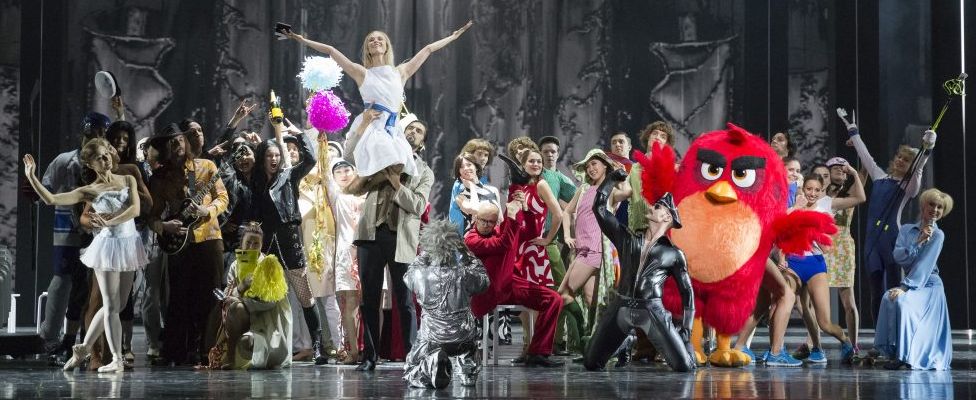
First there was the ice, then came the reindeer – shambling, atavistic giants, pursued by men with spears. In a rush of eleven thousand years, the Finnish National Opera and Ballet’s Kalevalanmaa chronicles what happens next, as heroes fight over the daughters of the north, the land becomes the marches of Sweden and a grand duchy of Russia, and fights for its independence in a bitter civil war. Through it all, the Jack Frost-like child figure of Sisu, the embodiment of Finnish resolve, lurks at the sidelines, urging the characters into action.

Kalevalanmaa is Danish director Kenneth Greve’s parting gift as he concludes his term at the FNOB, a celebration of the Republic of Finland’s first century of existence, rooted in the prehistory of the land and its people. As the audience take their seats, a documentary plays in which dozens of Finns are asked to describe what Finland means to them. Interviewees include everybody from immigrants to farm-hands, and in a moment foreshadowing the bonkerballs about to unfold, a prolonged speech about financial security from a man with his cock out, leading two sheep on a leash. The answers are a flood of contradictory suggestions, a conflict that continues onstage as a master of ceremonies argues with a set builder. What should go into a show about Finland? What will the audience want to see? What will they need to see?

They need to see Värttinä. Take my word for it, if in doubt, throw Värttinä in – that bunch of certified mentalists who have consistently produced some of the best, most haunting music in Finland in recent times. They could have carried the whole show by themselves, and the stage lights up whenever they arrive, even if they’re singing a song about chickens. Backed by a full opera chorus, their “Oi Dai” takes on new meaning – it is both a traditional song and a 1991 oldie, repurposed here as a lament for the depopulation of the Finnish countryside in the 1950s. Värttinä gambol through the whole show like priestesses of cool, stalked occasionally by celebrity accordionist Kimmo Pohjonen.

The Kalevala is, of course, an artificial text – assembled in the 19th century by the folklorist Elias Lönnrot, it supposedly preserves the vestiges of Finnish legend, but arguably owes just as much to the writer’s own life and experience. Perhaps because of this, the creators of Kalevalanmaa have no qualms in shuffling the available imagery, creating the show’s strongest and most compelling subtext. The Kalevala does not stop, as the original does, with the coming of Christianity – religion, in fact, is conspicuously absent from this chronicle of Finnishness. Instead, the Kalevala bleeds into the modern world. The death of the ancient hero Lemminkäinen, and the iconic image of his grieving mother, are presented at the end of World War Two. Musically, too, snatches of song and symphony, Sibelius and Klami are dotted around, sometimes at the time they depict, sometimes at the time of their composition, sometimes at some later date where they seem newly prescient.

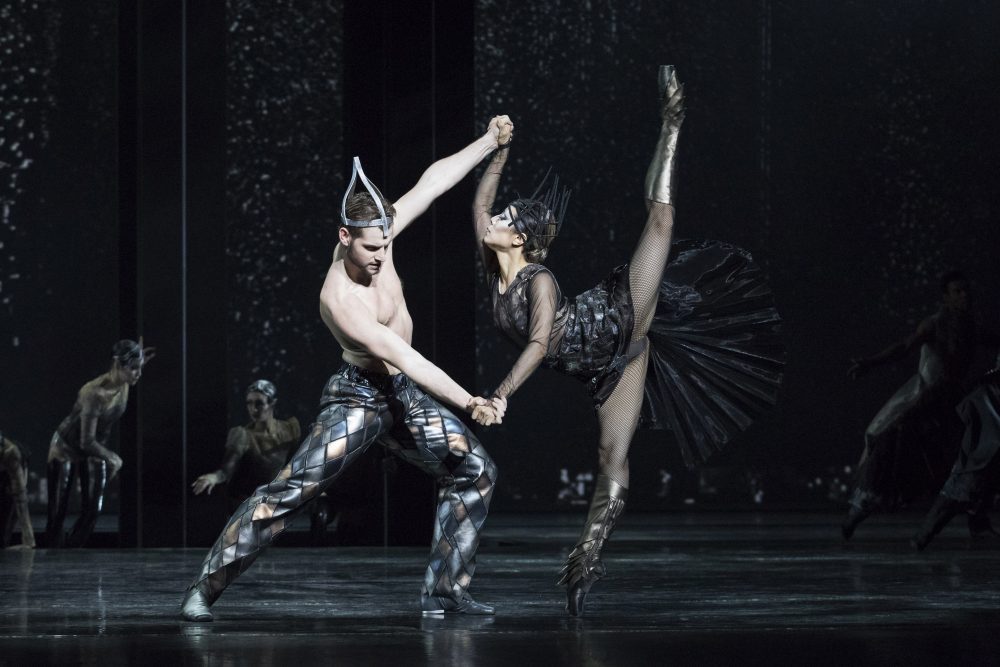
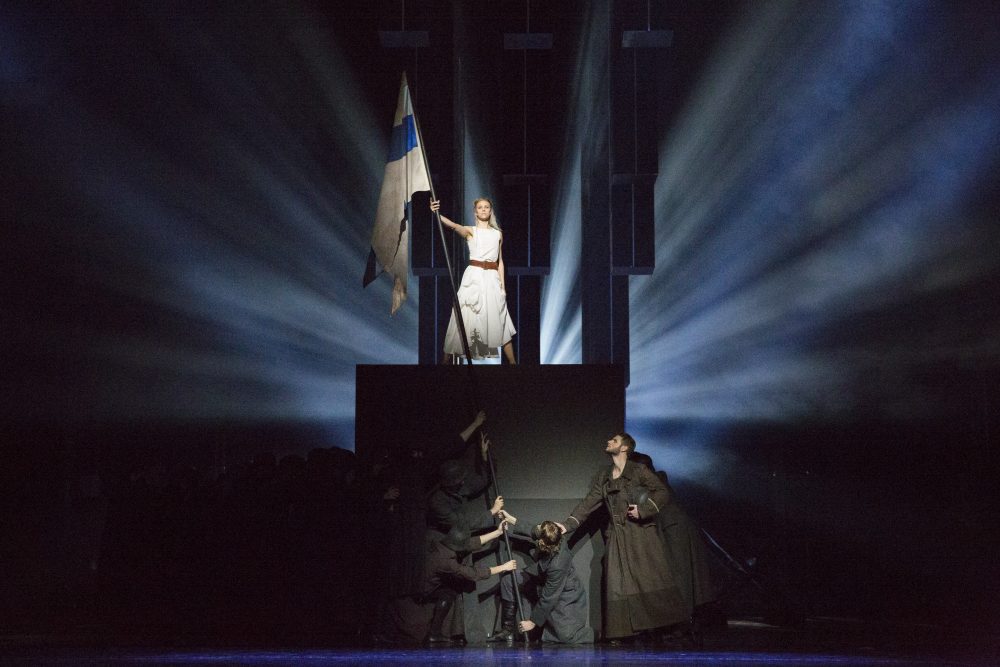
An entire troupe of swans from Tuonela, the land of death, swoop in at the end of the first half to lead the war dead away, while Aino, our everywoman, defiantly plants a Finnish flag in the ground. Ilmarinen, the legendary smith of the Kalevala, is seen in the second half building a post-war veteran’s house and shyly wooing a farm girl. I last spotted Väinämöinen, the god of songs and poetry, at the assembly line in a chair factory, a somewhat Gaimanesque touch as the old world thins and yet persists in the new.

Just as the Kalevala weaves its way into modern Finland, the Kalevalanmaa show invades the theatre itself. Soldiers drop a ladder into the orchestra pit to draft musicians as drummer boys. Tango dancers at a summer party drag the audience into a singalong of Unto Mononen’s “Satumaa”. A 21st century rave pelts the stalls with ticker-tape, and in the grand finale, members of the audience join the cast in dancing into the unknown future.

There were, one suspects, enough choices and compromises behind the scenes to make a “Making Of” documentary almost as fascinating as the show itself. I’d love to see the minutes of the meetings where the decision-makers decided what stayed, not only in terms of implied audiences, but what worked best for the story and the more prosaic consideration of what rights were available. It’s a shame, for example, in what essentially transforms into a juke-box musical about the Matter of Finland, combining the myths of the Kalevala with the icons of the long 20th century, that Aarno Raninen’s 1977 Eurovision toe-tapper “Lapponia” doesn’t get a look-in. When Eurovision looms on the stage, it whisks by in a moment of mime – Lordi’s “Hard Rock Hallelujah” would have presumably been a step too far for the Finnish National Opera. There are also enough odd moments of pacing to suggest that certain elements were bodged together, “not quite as well as Strömsö” as a Finn might say. A somewhat awkward prologue and epilogue threatens to ruin everything, at one point literally stopping the show with a Pythonesque apology for how sentimental it is. But this frankly self-destructive quality, hanging a lantern on the jokes and delaying one’s exit with five minutes of pointless faffery, is itself quintessentially Finnish. Greve’s grab-bag of Finnishness is affectionate even when documenting social problems – the men’s chorus get to deliver an impressively drunken rant about the rubbishness of modern life.

The show is framed as the reminiscences of Aino, a centenarian who hence is as old as the Republic of Finland herself, and who supposedly is the only person in the room who knows the Kalevala by heart. I suspect, however, that the true narrator’s perspective is that of the implied audience, and of many of the Finns sat around me – a Helsinki urbanite in her sixties, who thinks fondly of her heyday in the era of post-war reconstruction, and is faintly befuddled by the onrush of the 21st century. This raucous, exciting show is most certainly a gift for the Finns, not from them – you need to be steeped in Finnishness to see not only the touchstones before you, but the manner of their repurposing. In the midst of the Civil War conflict between Reds and Whites, a girl in a blindfold is carried across the stage on a stretcher. This is, any National Romanticist will immediately see, evocative of Hugo Simberg’s painting “The Wounded Angel”, but it is out of time, removed from its original context. My own experiences with Finnish history have taught me repeatedly that many such references are all too often lost on young Finns, although even they will see the significance of a dancing Angry Bird. This is not a show that will go on tour. It will fade away, like the northern lights, into the winter with the last show in February 2018. See it while you can.

Jonathan Clements is the author of An Armchair Traveller’s History of Finland.

Finns in America

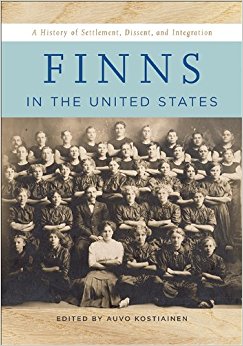
Blissfully devoid of jargon or academic cant, Auvo Kostiainen’s collection Finns in the United States: A History of Settlement, Dissent and Immigration offers a rich, inspiring account of an entire cultural enclave, from the largely Finnish population of “Swedes” who founded a 17th century colony in Delaware, through to the 600,000 modern Americans who claim Finnish ancestry. How much is left of their Finnishness after multiple generations of transformation and miscegenation? What would they make of their genetic homeland, if they ever went there, and what would a modern-day Finn make of them?

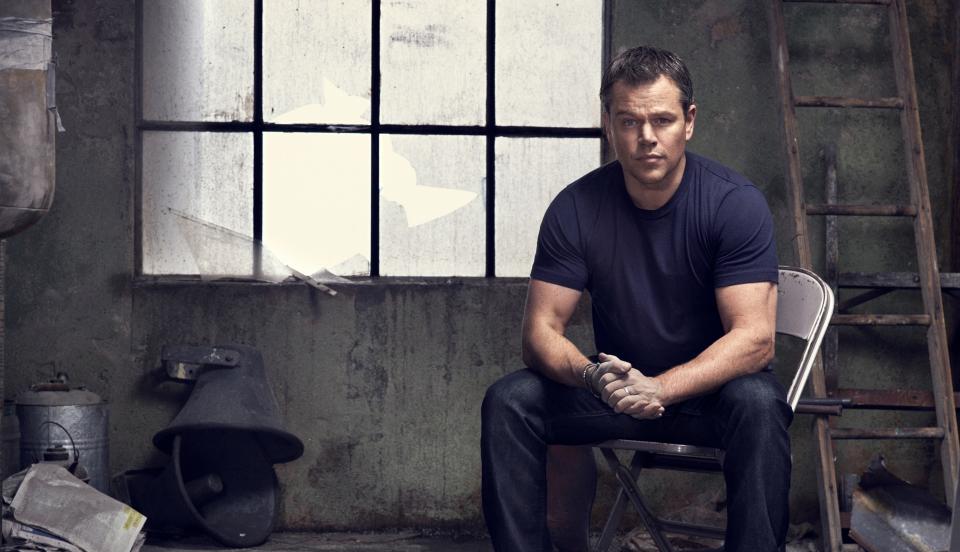
One look at the Finnfest 2017 programme makes it clear that Americans of Finnish descent (a group that includes Matt Damon and Christine Lahti) are proud of their heritage. Should you be in the Minneapolis area this September, you’ll get the heavy metal cellists Apocalyptica, a barrel of quintessentially Finnish pea soup, a symposium on saunas, a Finnish-language play, lectures on ecology and forestry, an appearance by Santa Claus and even Finnish author Sofi Oksanen. Kostiainen’s book, however, offers detailed accounts of the many paths and roads-less-travelled that led to the existence of such an event – the struggling miners and loggers of the late 19th and early 20th century; the migrants who actually gave up on the US and returned home as failures; the deported criminals and lauded local heroes. I thought I knew my way around books about Finns, but the references to be found here have quadrupled my personal reading list.

In a controversial court case in 1908, Finns were accused of being “Mongolian”, and hence subject to anti-Asiatic immigration restrictions. They were, grudgingly, eventually granted status as whites, but in a confusion that co-opted socialist movements of the early twentieth century and mixed it with anti-Native American prejudices, were often still reviled as “Red Finns”.

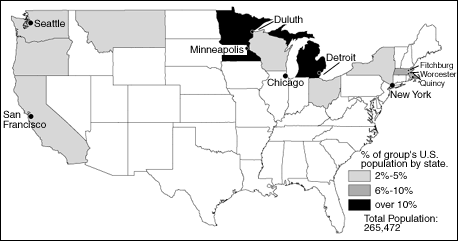
The term, of course, strictly applied to those who had fled the Finnish civil war, where Mannerheim and the victorious White Finns had pushed would-be Soviets out of the country. Many such revolutionaries ended up among the mining towns of Minnesota and Michigan, where the red dust from the copper added yet another nuance. Finns became instrumental in the temperance, cooperative and labour movements of the Depression era, but also saw their identity eroded after 1924, when quotas suddenly shut down substantial migration.

Until 1924, Finnish-speaking culture, particularly in the Great Lakes region, was kept alive by a constant stream of new arrivals from the Old Country. Second generation American Finns kept up their language skills by working as waitresses in Finnish-speaking canteens, or alongside newly arrived miners from Europe. The golden rule of cultural assimilation, that it’s the third generation that loses the former mother tongue, was postponed and kited for decades, fed by local Finnish-language newspapers and amateur dramatic societies, and a local publishing niche that clung quaintly to old-world vocabulary. The poet Kalle Koski wrote in 1894 about the dangers of racial mixing, conjuring the image of a Finnish girl who falls for a wieras airis, a beautifully archaic clash of old-world spelling and migrant slang – “a foreign Irish.” Such cross-cultural romances bred entirely new and alien phenomena, such as Finnish Catholics, a virtual impossibility back in Europe, where the Reformation had seen Catholicism hounded from the country centuries earlier.

Six thousand American Finns returned to Europe in the 1930s, lured to Soviet Karelia by promises of a socialist utopia. Finns in America struggled to brand themselves as Good Americans, assimilating swiftly into the local population, with only traces of their old culture remaining – Laestadian splinter groups, an obsession with log cabins… a few names or twangs in regional accents. In the 1950s, Finns fighting the cultural dominance of St Patrick’s Day concocted St Urho’s Day, a rival celebration purportedly marking the banishment of a plague of grasshoppers from Finland’s entirely fictional vineyards. The grim, joyless image it evokes, of scowling matrons pointedly sipping grape juice while beered-up young drunks threaten to stab each other at a sausage barbecue, is a fitting coda to Kostiainen’s superb study, which embraces not only the echoes of both good and bad from the old country, but also their inevitable thinning in a new world.

Jonathan Clements is the author of An Armchair Traveller’s History of Finland.

Trolled by the Finns

It was only a matter of time before the Finnish embassy in Tokyo came up with a mascot character. And what did they choose? An Angry Bird? A heavy-metal corpse? An open-source penguin? No, they came up with Fintan, a somewhat simple seven-year-old boy, dressed in a lion costume, whose gormless presence somehow helped propel the embassy Twitter feed to 130,000 followers, making it the “tenth most followed diplomatic mission Twitter account.” You hear that? Better than eleventh. In your face, Burkina Faso! Fintan has been infesting the embassy social media for five years, but this year, as the Finnish republic celebrates its centennial, he branches out into animation.

“Our aim through these short anime is to increase the interest of the Japanese public towards Finland, and convey the message that Finns are innovative but also easy-going and easy-to-approach people, who don’t take themselves too seriously”, said Markus Kokko, Counsellor, Press and Culture of the Embassy of Finland in Tokyo.

In Kenji Itoso’s first short episode, Fintan goes to an air-guitar competition and a cellphone-throwing competition, before sitting in a sauna for a while. The “plot” for this and episodes yet to come were the result of an open competition by the embassy in Tokyo, so I guess we should be glad that the public didn’t demand it be called The Adventures of Finny McFinnface. Coming soon from the British embassy, perhaps: the wacky animated adventures of Brekshit the incontinent, immigrant-hating bulldog?

And yet, Finland already has a good showing in Japanese animation. Lucy Heartfilia from Fairy Tail, sometimes seen wearing a Finnish flag made out of boobs, could easily be an ambassador for the country. The Moomins already are, to such an extent that there’s always summer work for Japanese-speakers if they want to dress up as troll-things in the Moominland Theme Park. Meanwhile, in Hetalia, the character of Finland is depicted as being in an oddly creepy relationship with Sweden… also true to life.

Hopefully Fintan’s later adventures will be more adventurous. Things that the Japanese would lap up like crazy about Finland: liquorice-flavour vodka, tar-flavoured ice cream, 58 words for frozen precipitation, the Winter War, the world’s 16th highest rate of gun-ownership, the Northern Lights, Topless Thursdays, and the time a Japanese secret agent sent a bunch of drunken sailors with a ship full of guns and ammo to start a Finnish revolution and distract the Russians from the Far East. Now there’s an anime…

I’m sorry: I made Topless Thursdays up, but there’s still time, Finland.

Jonathan Clements is the author of An Armchair Traveller’s History of Finland. This article first appeared in NEO #163, 2017.

Helsinki for the Armchair Traveller

Visitors this summer need not panic; although certain Finns may grumble, and locals themselves sometimes whine about their capital as if it were some sort of urban jungle, Helsinki is a charming city. Architects feted elsewhere in their Finnish hometowns have left many of their finest marks in the very buildings of the central district. Many of its sites are within walking distance, and a tourist bus line links the outliers and the cruise ship terminal. Buses and quaint trams ply similar routes, including one tram that is a travelling pub. Visitors should be warned: it lacks a travelling toilet. This, and further insights below, are extracted from A Short History of Finland by Jonathan Clements.

The visitor’s first sight of Helsinki, either descending from the airport bus or arriving by train, is liable to be Rautatientori (Railway Square), dominated by the temple-like railway station designed by Eliel Saarinen, its walls held aloft by great stone titans like heavy-metal rock gods. Animated and rendered a little cuter, these colossi often appear on posters and adverts for VR, the Finnish rail network. The author admits to a dorky thrill whenever he arrives at the station, as often one will catch a glimpse of the St Petersburg train at one of the platforms, adorned with alien Cyrillic, staffed by scowling baboushkas, and ready to depart for another world.

In the square outside the station’s east exit, outside the vampire’s castle that is the National Theatre, an odd statue of the author and playwright Aleksis Kivi shifts uncomfortably in his seat, as if he has just sat on something sticky. He faces the Ateneum, Helsinki’s National Gallery, and home to many of the most famous artworks of the National Romantic period.

A few steps to the south-west of the square is the southern end of Mannerheimintie, (Mannerheim Road), named for the country’s famous Regent and one-time President. This is the centre of Helsinki’s shopping district, boasting an iconic statue of blacksmiths at work, and the entrance to the Stockmann department store that sits beneath the Stockmann Clock. There is nothing particularly remarkable about the clock, but Finns seem to cling to it as a meeting place, and an encounter ‘beneath the Stockmann clock’ is an early phrase that torments many beginning students of Finnish.

The Statue of Mannerheim on his horse is here, walking earnestly past the nearby parliament, rather than facing it or putting his back to it. Statues of other Finnish presidents lurk around the parliament steps like discombobulated party guests, staring dourly at the news crews shooting pick-ups, and across the road at Kiasma, the modern-art counterpart to the Ateneum.

With typical Finnish self-awareness, the Suomen Kansallismuseo (National Museum of Finland) is itself a museum exhibit, one wing of which is designed to look like a church, which stood it in good stead during the war, when its appearance may have warded off Russian bombers. It was also the site of some scuffles during the Finnish Revolution, and its front doors still proudly display the bullet holes shot in the windows, now preserved behind a second layer of glass. The lobby is decorated with frescoes depicting scenes from the Kalevala, painted by Akseli Gallen-Kallela, and that’s before you’ve even bought your ticket!

Russian-era Helsinki was famously designed in imitation of St Petersburg, leading to its substitution for that city as a film location during the Cold War. Although tour guides make much of this, anyone who has seen St Petersburg themselves will know that the resemblance is merely superficial. Watch one of the aforesaid films, such as Warren Beatty’s Reds (1981), and images of Helsinki are shot in close-up, offering little more than street-level backgrounds and cobbled streets. Commonly, ‘St Petersburg’ imagery in films derives from Senaatintori (Senate Square) at the city’s historical centre, with towering steps leading up to the Neo-Classical cupolas of Helsinki Cathedral. The cathedral is frankly more impressive on the outside than within, since its interior displays an austere Lutheranism, as if Ikea were put in charge of church design. In the centre of the square stands the Statue of Alexander II, ‘the Good Tsar’ who granted the Grand Duchy of Finland greater autonomy under Russia than it had ever enjoyed under Sweden. It is supposedly the only statue of a Tsar standing outside Russia, and is an enduring testament to the love that the Finns once had for the country to the east. As the Russification policies of his successors began to bite, Alexander’s statue became the site of a subtle, peaceful protest as Finns laid wreaths at his feet, mourning not only his death, but also the slow erosion of his kind policies.

From Senaatintori it is but a short walk to the cobbled harbour, the site of many a farmer’s market and coffee kiosk, and ferries. The site of Helsinki was originally called Vironniemi (Estonia Point), and its proximity to Tallinn is still reflected in the hydrofoil terminal that will whisk you away in just 90 minutes. For anyone who is inexplicably tired of the Finnish capital, Estonia beckons within commuting distance. The harbour sits at the end of the Esplanadi, twinned parallel north and south avenues that lead back to Mannerheimintie, and constitute some of Helsinki’s prime real estate – their meeting place, at Erottaja, is the most expensive spot on a Finnish Monopoly board. It is the site of several posh restaurants, the Swedish Theatre, and Havis Amanda. This naked nymph, sculpted by Ville Vallgren (see Gazetteer: Porvoo), reflects the artist’s Art Nouveau inspirations, and was the subject of scandalised tutting in the Finnish media when unveiled in 1908. A loving recreation of the gamine curves of a French teenager, it caused uproar among Finland’s newly enfranchised women voters but is now a much-loved part of the scenery, affectionately nicknamed Manta. Her fountain waters apocryphally grant sexual potency to anyone who thrice washes their face and shouts ‘Rakastaa!’ (Love), and her crowning with a white student’s cap marks the beginning of Walpurgisnacht celebrations (see National Holidays and Local Festivals: Vappu). What was once clearly a student prank is now televised annually.

The harbour is also the place to get the ferry to nearby Suomenlinna, the Fortress of Finland, which remains a quaint getaway for the marine-minded. It evokes the Swedish, Russian and Finnish eras with numerous installations, as well as a couple of military museums and the Vesikko, a WW2 submarine open to the public. Visitors can also poke around the largely ruined fortifications – don’t miss the King’s Gate, built in 1752 as a sufficiently royal arrival point for Swedish rulers. Nearby inscriptions note that King Adolf Frederick laid the first stone here, while a sad, uncompleted plaque leaves the date blank for King Gustav’s laying of the final stone (he never got around to it). Beneath a plaque announcing that these ‘wolf islands’ have been transformed into a fort for the Swedes, a second inscription intones these immortal words: ‘Eftervärld, stå här på egen botn, och lita icke på främmande hielp.’ It is a fine prophecy for the world that lay in wait for the Finns: ‘Those that come after us, stand here on your own foundation, and trust not in foreign help.’ Arrive at around 09:30 or 17:15 and you can watch the gigantic cruise ships squeeze through the narrow strait (‘Gustav’s Sword’) to Helsinki harbour.

Helsinki City Museum is not one but eight separate facilities dotted around the city, including several villas and burghers’ houses, and the Street Museum on Sofiankatu, which recreates town life in earlier times.

The Uspenski Cathedral, Orthodox counterpart to the Lutheran one, is a more sedate, red-brick affair, deriving its name from the Russian for ‘the Dormition of Mary’. Perhaps Helsinki’s most internationally well-known religious building is further out of the centre at the Tempeliaukion Kirkko (the Church in the Rock), which as the name implies, was hewn into the bedrock. For some reason, this site appears to attract more than its fair share of Japanese tourists.

Out in the Kaivopuisto district, where many foreign embassies and consulates can still be found, the Mannerheim Museum is sited inside the former president’s house. Beware: it is only open on Fridays, Saturdays and Sundays, and free-range visitors are not permitted. The admission fee includes a well-informed guide, although only speakers of Finnish, Swedish and English are liable to be available off the cuff. If you speak French, German, Spanish or Russian, it is best to book ahead. Another Finnish president, who defined the nation throughout the Cold War, is celebrated at the Urho Kekkonen Museum in Tamminiemi – you can book a guide any time but it is far cheaper to take the once-a-day scheduled English tour at 14:30. Finnish and Swedish tours are far more regular; German ones must be booked in advance.

These are but a fraction of the many sights that one can find in Helsinki, which is riddled with smaller museums celebrating everything from the post office to the power company to the Salvation Army. As one might expect from any capital, it is also richly endowed with living history. You can still have cocktails at the Hotel Torni, a favourite hang-out for Cold War spies, or stroll in Kaisaniemi Park, where the eleven-year-old Mannerheim won his first recorded victory – a snowball fight.

Jonathan Clements is the author of A Short History of Finland.

The Grafton Affair

johngraftonIt was not lost on the Tsar’s enemies that the Finns were ready for direct action, leading the Japanese secret service to plot a daring act of espionage in 1905, designed to distract the Tsar from the Far East by creating trouble on his doorstep.

The Japanese naval attaché in Stockholm, Motojiro Akashi, was given a million yen in cash, and told to do everything he could to stir up the Finns. Akashi, a lone man ‘worth ten divisions’ in the eyes of the Japanese high command, hatched a plan to undermine Russia by starting a revolution in its most volatile territory. He assembled an unlikely multinational group of agents, led by Konni Zilliacus, a committed revolutionary who acquired an aging tramp steamer, the John Grafton, bought in the name of a Stepney wine merchant and stocked with thousands of rifles, pistols and rounds of ammunition, all bought by agents claiming to represent the King of Siam.

Owing to a misunderstanding with the aforementioned wine merchant, the John Grafton was also loaded with several hundred gallons of wine, which the Finnish crew had already begun to work through by the time the ship was in the North Sea. Zilliacus, meanwhile, unwisely chose this highly stressful secret mission, with his crew unconvincingly disguised as members of the Southampton Yacht Club, to try to give up smoking – leading to an embarrassing set-to with the police in Copenhagen where he was caught trying to break into a tobacconist.

After several more misadventures in the Baltic, the John Grafton eventually reached the Finnish coast, which it located by unceremoniously ramming into it. Trapped in the shallows of Ostrobothnia, the crew began unloading their cargo, only to be surprised by a vessel from the Russian navy. Realising that time was tight, they ran up the red flag, saluted it, and then ran for dear life while a lit fuse sparked the onboard explosives.

The explosion of the John Grafton was heard two counties away. The Tsar’s men inspected its twisted wreckage, and fearfully reported on the conditions of the many hundreds of rifles that had been landed before the explosion. Although the revolutionary mission had been a failure, the mere fact of the existence of the John Grafton, and the possibility that it was only one of many ships, was a source of great concern to the Russian state. However, it had taken care of most of Akashi’s money, and he would soon be run out of Europe after some of his meddling correspondence was made public; he ended up as governor of Taiwan. Konni Zilliacus, meanwhile, fled to England, and would write his memoirs and a cookbook. In one of those odd footnotes of history, his namesake son became the Labour MP for Manchester Gorton.

Extract from An Armchair Traveller’s History of Finland by Jonathan Clements, available now in print and on the Kindle (UK/US).