Podcast: Scotch Tape

Necromancy, ten years of NEO, and the carrot of continuations on our 27th podcast sla-2014.jpgJeremy Graves is joined by the fragrant Gemma Cox of NEO magazine, the pungent Andrew Partridge from Anime Ltd, and the newly doctored Jonathan Clements to discuss Scotland Loves Anime, the Boom Boom Satellite Distraction Device, and rogue robot tanks. You can download the podcast here.

0:00 intros and hellos

04:30 Dealing with a film festival in the shadow of Ghibli.

09:30 Bad hair days and uncanny valleys on Appleseed: Alpha.

11:30 The miseries of live television.

14:00 Appleseed: Alpha, the jury’s view.

16:30 The true nature of the Golden Partridge Award, soon to be renamed the SLA Glass… Thing.

20:00 Déjà vu and original dialogue in English.

22:00 Bayonetta and evocations of the beer-and-curry era.

25:00 Trigger warnings in The Wings of Honneamise. Berserk 3 and the “carrot of continuations.”

32:00 A young lady’s primer to fan service and fighting the patriarchy. Questions on the nature of the Noitamina target audience, and plugs for Psycho-Pass and Rolling Girls. Why do less women get promoted to anime director?

neo_double.jpg41:00 Gender demographics at NEO and Scotland Loves Anime. The flexibility of the female audience, and the desirability of girls in bikinis saving the world from aliens.

45:00 Just how involved is a “supervising” director?

46:30 The audience turn-out for Ghost in the Shell. The suggestion that fandom is a non-renewable resource. The longevity of Cowboy Bebop, outliving the television technology that originally screened it.

52:00 Celebrating ten years of NEO magazine with the 130th issue. The haptic luxury of print magazines, versus beaming digital data into your brain. The international reach and originality of the long-running Manga Snapshot feature. Deciding what goes on the cover, and the perennial problems of timing content to available releases and images.

68:00 Why commissioning your own artwork isn’t always the answer.

73:00 Paper quality, fonts and leading – a bunch of things that nobody ever thinks about.

76:00 Let’s go on a journey, a journey into NEO time… where did the name come from?

79:00 One more round on the whirligig of the “Manga” Entertainment name controversy.

space-dandy-honey-boobies-breastaraunt-fried-dragon-ramen.jpg81:00 The scandalous secret behind NEO’s recipe column. The tax-deductible nature of a “research” trip to Hooters.

85:30 The difficulties of knowing more than one’s readers when the readers have got all weekend to torrent, stream and binge the latest shows.

87:30 The desirability of “balanced” reviewing. What can we learn from Australian Vogue…? Would you buy a DVD compared to “colonic irrigation with cheap caustic soda” or with a review that promised “another shouty advert for stuff you don’t want”?

94:00 How do you define a star rating? We are 87.5% certain we know the answer to this question. The spoilerific nature of Sight & Sound and “the conversation.”

102:00 The need for necromancy in reminding fans of forgotten simulcasts. “Not all people live in the same Now.”

105:00 The perils of online search bubbles. Sting’s informational message for the future and the nature of the “closed circle of consumption.”

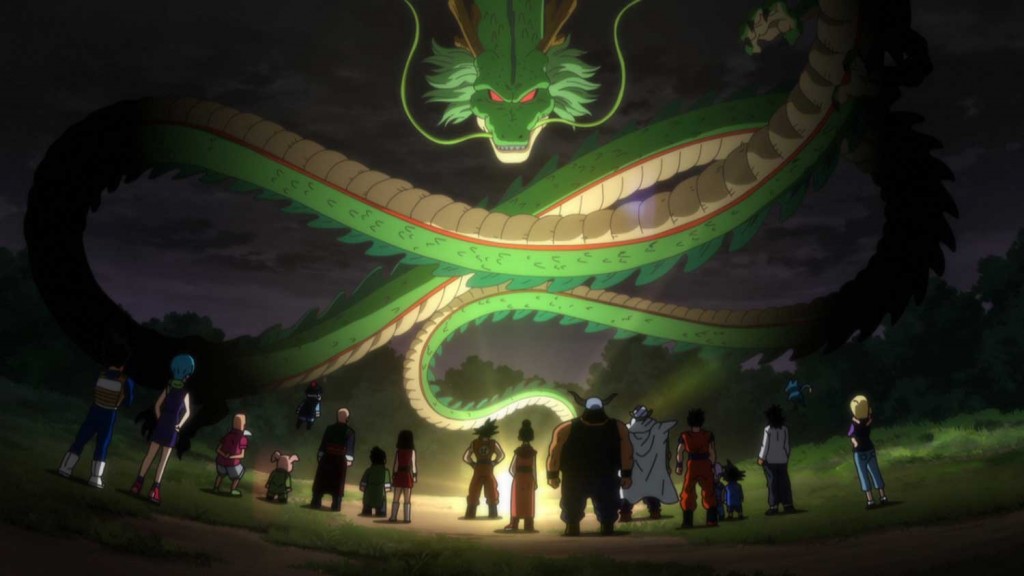
110:00 Dragon Ball Z: Battle of Gods.

117:00 Giovanni’s Island – the festival winner.

127:00 Jeremy returns from his dead battery to plug MCM Expo and events pertaining thereto.

And we’re out. The Podcast is available to download now HERE, or find it and an archive of previous shows at our iTunes page. For a detailed contents listing of previous podcasts, check out our Podcasts page.

Two Downloads

02After many years of waiting and wrangles, my book on the controversial medieval Chinese Empress Wu is finally re-released on Kindle and paperback from Albert Bridge Books (US/UK). As the blurb recounts:

Empress Wu Zetian (624-705 AD) was the only woman to be the sovereign ruler of imperial China. A teenage concubine of the Tang Emperor Taizong, she seduced his son while the emperor lay dying. Recalled from a nunnery as part of an intricate court power-game, she caused the deaths of two lady rivals, before securing her enthronement as the Emperor Gaozong’s consort. She ruled in the name of her husband and two eldest sons, presiding over the pinnacle of the Silk Road, before proclaiming herself the founder of a new dynasty. Worshipped as the Sage Mother of Mankind and reviled as the Treacherous Fox, she was deposed aged 79, after angry courtiers murdered her two young lovers.

The subject of countless books, plays and films, Empress Wu remains a feminist icon and a bugbear of Chinese conservatism. Jonathan Clements weighs the evidence of her life and legacy: so charismatic that she could rise from nothing to the height of medieval power, so hated that her own children left her tombstone blank.

Meanwhile, it’s a condition of my doctorate that my thesis be freely available to other researchers, but to spare you the bother of going to the Library of Wales and photocopying it, here’s a PDF. The title is A History of the Japanese Animation Industry: Developing Technologies, Changing Formats and Evolving Audiences. I’m afraid what blurb there is is couched in significantly more sesquipedalian prose:

This thesis offers a discursive genealogy of the Japanese animation, or ‘anime’ industry, outlining changes to its prevailing form caused by successive disruptions – fluctuations in economic conditions, applications of new technology, and changes in available formats. Instead of focussing on the content of the anime texts themselves, it addresses the form of the content – treating the anime texts as manufactured ‘objects’ or as performative ‘events’ that are created, refined, marketed and sold.

The approach is historiographical, favouring published testimonials and memoirs from the participants in the Japanese animation industry, and assessing them in terms of possible errors of historical practice. The participants’ activities are categorised as points on a chain from Ownership of the intellectual property to Access to the text, prompting not only consideration of changes in the processes of production, but also in the oft-neglected areas of distribution and exhibition.

Spanning the 67 years from 1945 to 2012, in overlapping periods defined by developments in formats and technology, a picture is presented not only of the anime industry, but of its participants’ changing sense of what that industry is, its traditions and potential. This will present a foundation for future research into anime’s history, not only through this narrative of events, but also through consideration of the theoretical issues deriving from the nature of the sources.

And of course, if you like what you see there, a significantly expanded version, losing a lot of the theory and introduction, but adding four extra chapters, has been published by the British Film Institute (US/UK).

Fifteen Minutes of Infamy

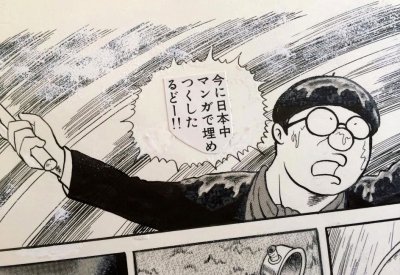
kurokoOne almost doesn’t want to comment, lest it amount to either feeding the troll or mocking the afflicted. But in the interests of chronicling Japanese popular culture, warts and all, this column reluctantly reports that a Tokyo judge has sentenced Hirofumi Watanabe (36) to the full four-and-a-half year jail sentence called for by the prosecution. The crime: being a colossal douche.

Since 2012, Watanabe had been harassing manga creator Tadatoshi Fujimaki, and anything connected to the artist’s popular manga Kuroko’s Basketball. I say “popular”, although it is bitterly ironic that Kuroko’s Basketball, the tale of a high-school sports team trying to make it to nationals, has barely attracted any foreign attention apart from the hate campaign directed at by Watanabe.

Seemingly jealous that Fujimaki was successful, and determined to drag him into a suicidal vortex of his own making, Watanabe sent poisoned packages, including one containing hydrogen sulphide to Fujimaki’s alma mater, and threatened terror attacks on any convention or event that included coverage of Kuroko’s Basketball. Japanese stores, fearful of some sort of big-eyed al-Qaeda, removed Kuroko’s Basketball from their shelves, and cinemas started demanding ID and proof of invitation from anyone older than 16 trying to get into an anime roadshow.

Why? Because Watanabe was jealous of Fujimaki’s success. Jealous and, frankly, mentally disturbed enough, and idle enough to send 250 threatening letters in a single calendar month, signing himself The Fiend with 801 Faces (a punning reference to 8-0-1 = yaoi). Watanabe was carted off in handcuffs to begin the sentence, still bragging that the whole exercise was a “good revenge” against his parents, and that as soon as he was out of prison, he intended to kill himself.

Stories like this break my heart. In a fandom that crowd-funds artists and has whip-rounds for local charities, in a subculture that welcomes and embraces all lifestyles and all kinds of weirdo, it saddens me that press column inches get expended instead on nutjobs like Watanabe. The Japanese system now has four-and-a-half years to get to the bottom of his problem before he’s out to cause more trouble. Like life isn’t difficult enough. His life, your life, mine…

Jonathan Clements is the author of Anime: A History. This article first appeared in NEO 128, 2014.

Judging Anime

DBZ_02-1024x576On my way to Glasgow today for my annual film festival obligations. I’m up on the Scotland Loves Anime blog with a piece about being the jury chairman, and a rundown of the films in competition for this year’s Golden Partridge award. Meanwhile, festival director Andrew Partridge and I are interviewed on the Daily Record website about the festival, and I talk solo to TV Bomb.

Claudius Bombarnac

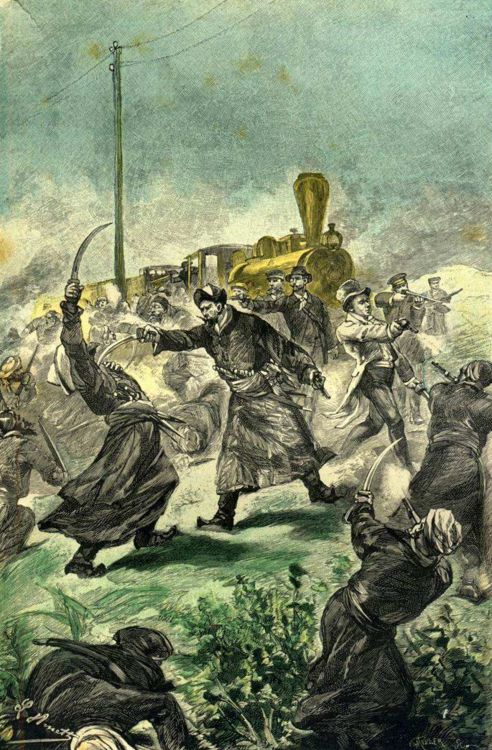
002 bombarnacTo the Reform Club on Pall Mall last night, legendary location of Phileas Fogg’s famous bet that he would travel around the world in 80 days, to speak about the Silk Road. I found myself talking about a much less well-known creation of Verne’s, the titular hero of Claudius Bombarnac (1892), a French journalist who travels across the south of the Taklamakan desert on the fictional Transasiatic Express, attended by intrigue, scandal and desert bandits.

Just as Fogg was a celebration of the British Empire in the 1870s, Claudius Bombarnac was a love letter to the orientalist romance of the 1890s, with the Russians and the British duelling over Central Asia and the newfangled concept, introduced only in 1877 by the geographer Ferdinand von Richtofen, that there was such a thing as a “Silk Road” trade route connecting east and west through the deserts of Xinjiang.

Anime Futures

With Mark Schilling’s permission, I’m putting up the unexpurgated text of the interview he conducted with me six weeks ago for his article on Japanese animation futures in the South China Morning Post, in part to show how much work goes on behind the scenes to get a sound bite and an article.

the-wind-rises-creating-planes-clipMark Schilling: You mentioned recently that several well-known anime studios might soon go kaput, but without naming names. Is it mainly a problem of rising costs? Declining revenues? Stiffer competition from Hollywood and elsewhere? All of the above?

Jonathan Clements: Some of it is economics — we’ve lost several minor studios recently, and their rise and fall, or restructuring and rebirth as “New” incarnations of themselves has been a common factor of the industry for decades. Ghibli itself was at least partly formed from the ashes of Topcraft, for example. Japanese studios in the twentieth century were able to function as subcontractors for American animation. That’s sometimes still true, but so many elements of anime production is now off-shored to China or South Korea that anime studios are smaller, and leaner, and more flexible in their behaviours. As Gonzo showed in the late noughties, it’s possible for a company to go almost completely dark, to give up its studio space, to lay off its animators and just coast for a couple of years as little more than a filing cabinet in an accountant’s office, waiting for the foreign residuals to roll in. That’s good for robust business, but bad for an animator’s job security!

There’s a generational issue that many people have spotted in the case of the high-profile retirements at Ghibli, but which is also common to the anime industry. The vision of a single creator, or team of creators, can steer a company and give it a distinctive style or brand, but nobody is immortal. People retire. The anime industry went through something very similar in the 1990s, where a bunch of the first-wave producers cashed in their shares, took their pensions, and handed over their companies to others — it’s what led to some of the big corporate buy-outs like Bandai taking ownership of Sunrise. That was seen at the time almost as a hostile take-over, but for many of the staff it was a welcome hand-over, with one of Sunrise’s biggest and most trustworthy clients taking a direct interest in its output, and thereby preserving the jobs of the employees.

What we have now, and have had for the last few years, is the aging of the Astro Boy generation, not of fans, but of animators. In 1963, Tezuka quadrupled the size of the animation industry, both directly through hirings at Mushi and indirectly through the creation of competition in the market. Those fresh-faced graduates are now in their seventies. Many of them are the leading lights of specific studios and, you know, some of them want to go off and play golf.

frozenIs the enormous success of Frozen in Japan a one-shot — or a game changer? Will more Japanese studios switch to Hollywood-style 3D CG animation, following the lead of the new Doraemon film? Will Hollywood exploit the fading of Studio Ghibli and become the dominant player at the Japanese box office, especially the animated segment of it?

Hollywood has always been the dominant player at the Japanese box office. There have been occasional spikes in local interest for particular directors or franchises, but Japanese cinema is eternally fighting a rear-guard action to push local product ahead of flashy foreign imports. Until Miyazaki’s late twentieth century successes, Japanese animation flourished like a weed, only in the spaces that The Lion King and Aladdin didn’t grow. Even in the 1990s, only a tiny handful of players like Gainax and Ghibli gave Disney anything close to a run for its money on home video. I think it’s worth considering Disney’s acquisition of Ghibli titles in that light — when Disney (or their subsidiaries) put money directly into Spirited Away, they weren’t just investing in a Japanese talent, they were ensuring that they got a piece of the pie from their main competitor in the Japanese market.

Japan has been slow to take up 3D CG, because it involves massive reskilling and investment in software and hardware. It’s a return to the state of the industry in the 1950s, when Disney product, made at a substantially greater cost to Japanese competition, was swamping the market with a relentless onslaught of material.

I don’t see Hollywood filling any new niche in Japan. Hollywood, in the form of Disney/Pixar and DreamWorks, will keep releasing its big family films and rolling on as before. The likely competition to do what anime does, to compete at a more domestic, perhaps even consciously “Asian” level, is going to come from China. Miyazaki’s retirement merited a sixty-page feature on Japanese animation in one of China’s biggest news-stand magazines, Lifeweek, last October. The implication was clear that this was a business feature, identifying a new market opening, and asking if China had what it took to move in on it.

I’m not saying that China is the new Ghibli. Far from it, the Chinese animation business has a lot to learn, and much of its output is highly derivative. But it is generating an animation labour base bigger than Japan’s every year. Kung Fu Panda 3 is going to be a “Chinese” film for contractual purposes, so even DreamWorks is relying increasingly on Chinese labour. The Chinese already represent two-thirds of the labour pool for what we call “Japanese” animation. Granted, that’s all concentrated in the lower, less-”skilled” echelons, but that doesn’t bode well for the future when the upper ranks of Japanese animation companies are increasingly drawn from the ranks of marketers and managers. It means that there is a very palpable risk that Japanese animation won’t have any actual animators steering it.

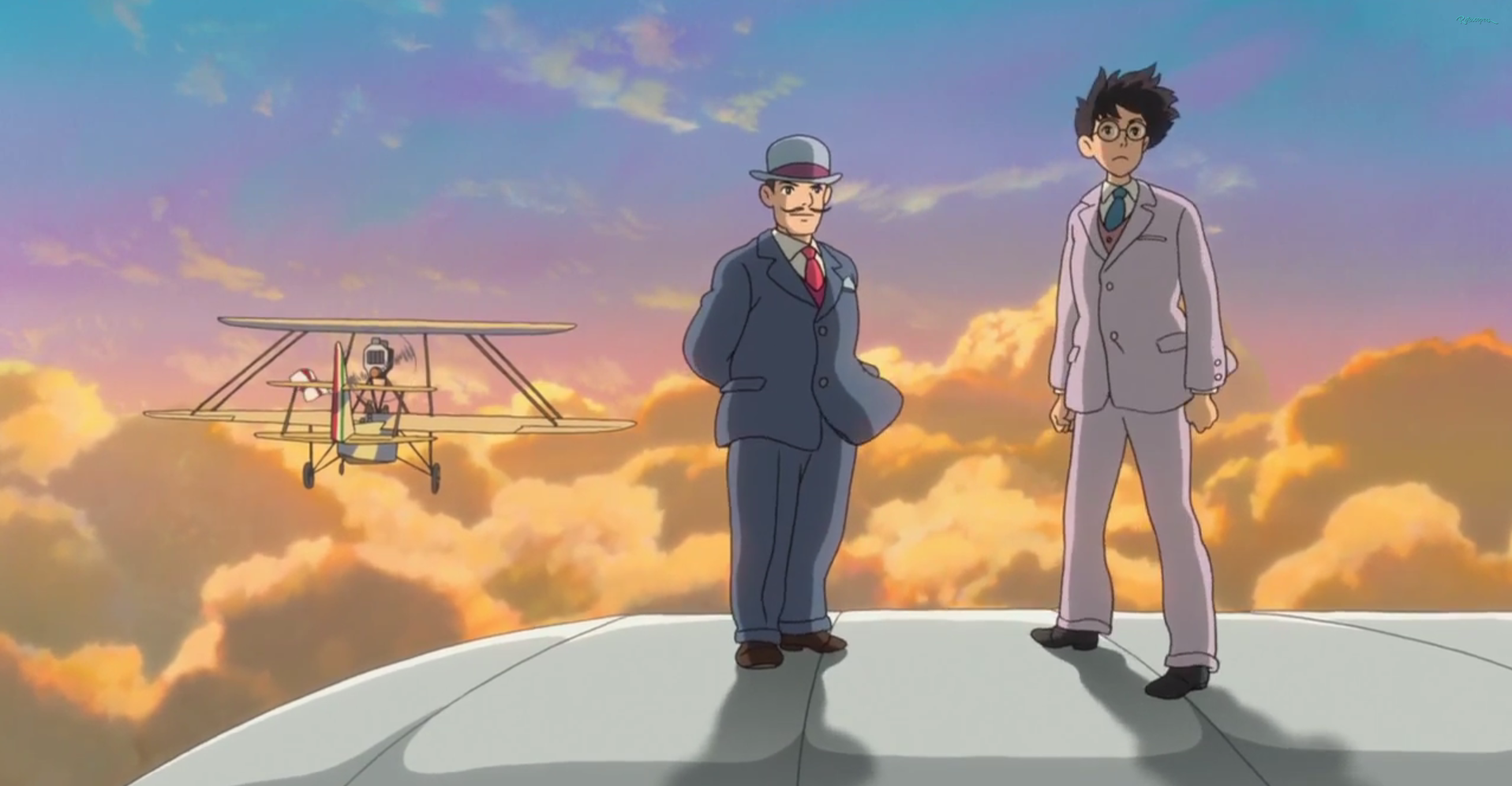
wind-rises-main_0You’ve no doubt read the anonymously sourced story about Studio Ghibli stopping production and becoming a rights management company. Do this strike you as credible? Some of the claims in that piece, such as The Wind Rises still being in the red, seem rather far-fetched to me…

You can see the signs very easily. When Toshio Suzuki was sitting on data that told him that “Studio Ghibli” had a 43% trust rating with the Japanese public, but that the name “Miyazaki” had a 64.2% trust rating, what did he do? He got Miyazaki’s son to direct Tales from Earthsea! I think you can see Suzuki’s very canny, very sharp management insight steering much of the last decade. Even as he retires, he puts a former Disney Japan executive in charge of Ghibli. He builds the Ghibli Museum, which is a classy theme park that generates a movie’s worth of revenue every year. He tries the Goro Miyazaki bait-and-switch manoeuvre, and essentially dares the Japanese public to come and watch the car-crash for themselves. He hypes up this father-son tension in the media, but then gets the Miyazakis working together on Poppy Hill. In the case of The Wind Rises, I see it as another calculated move by the studio, to wring one last box office winner out of Hayao Miyazaki. I like to think of them going to his house and begging him to make one last film to keep the momentum going at the museum and on video, and telling him he can make ANYTHING he likes. Because the subject of that film is so personal, and indulgent, and risky, that I can’t imagine anyone else being allowed to get away with it.
My prediction: in a couple of years’ time Ghibli will go into production on a script “written by” Hayao Miyazaki, just to ring that bell again. He’s effectively given them a 50-title wish-list of children’s literature worth adapting. There is undoubtedly a faction at Ghibli who wants to pivot it towards doing World Masterpiece Theatre, and carrying Miyazaki’s legacy in a different direction, by copying his early TV successes adapting children’s books. That’s why they’re moving into TV with Ronia the Robber’s Daughter, but you can see the Ghibli is only co-producing it. The animation is actually being done by Polygon Pictures.

That The Wind Rises is still in the red sounds ludicrous to me. If it is, it’s only in the movie-accounting sense that Forrest Gump is still technically “in the red.” The Wind Rises did fine.

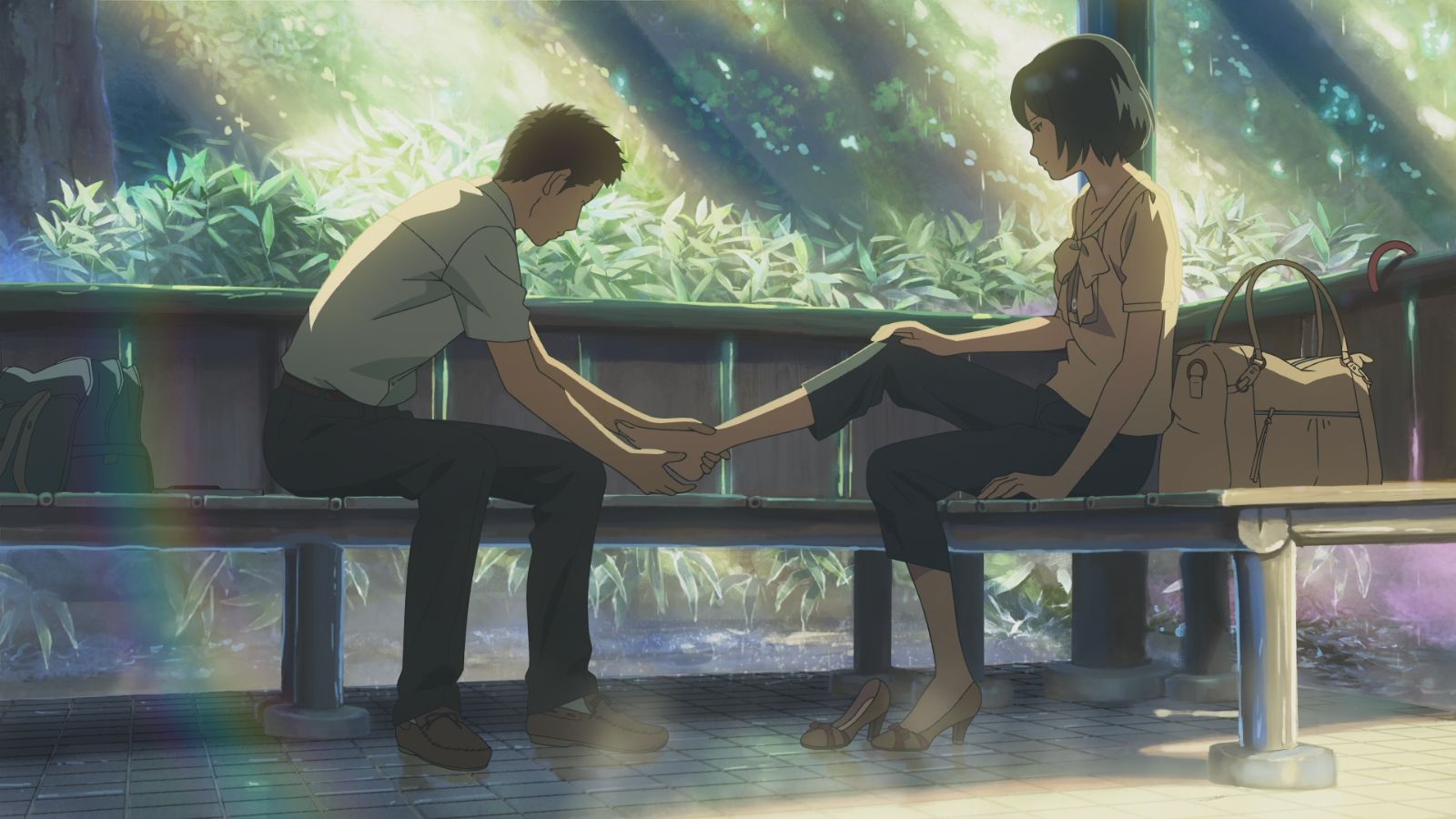
garden of wordsPeople have been talking about various “new Miyazakis” for years, but that we are truly in the post-Miyazaki era, who do you see as leading the industry, if not necessarily inheriting Miyazaki’s crown? If none of your names are from Studio Ghibli, why not?

It’s a cliche to talk about the “new Miyazaki.” Japanese animators hate the whole argument, because it usually implies nothing new at all, just a magical cloning of his unique skillset, and his unique, timely rise in the movie market, and with supporters like Takahata and Suzuki. Ghibli was a three-man success story, very much of its time, and you can’t have a new Miyazaki without having a new Takahata and a new Suzuki. It also requires some awareness of what we mean when we ask for a “new Miyazaki”. Because Makoto Shinkai has a lot of Miyazaki’s heart, but none of his “family” appeal. Shinkai has cornered a market in films for people who grew up watching Miyazaki movies, but he doesn’t make movies for tomorrow’s families. I guess that’s the problem, there. It’s not about who the new Miyazaki is, it’s about who the new audience is. It’s now easier in Japan to buy diapers for old people than for kids. The kids’ market is shrinking, and that further reduces your chances of making blockbuster money on a family film.

Studio Ghibli actually tried to grow the new Miyazaki themselves, in several abortive attempts to co-opt big-name talents like Mamoru Hosoda. The fact that Hosoda didn’t fit in at an increasingly management-oriented Ghibli is actually a sign of his true potential, far more than staying there would have been!

They also brought in a dozen promising animation assistants and put them to work directly with Miyazaki and Takahata to foster a new generation of talents. That was called the Higashi-Koganei Sonjoku scheme, and its graduates stand a good chance of making waves over the next ten years. People like Masayuki Miyaji, for example, Masashi Okumura and Kenji Itoso.

But ironically, Miyazaki’s own shadow looms so large that it’s difficult for someone to turn up at Ghibli with a distinctive voice and not have it shouted down by risk-averse managers. Goro Miyazaki’s films often look like a committee trying to recreate his father’s successes, and that should come as a surprise to nobody. Ghibli was lightning in a bottle, and rumours about its move into legacy management are only logical — I think what people forget was just how darn lucky Disney was that Pixar could show up at the right moment and completely revitalise its output with fresh ideas and fresh technology, and real talents. Ghibli doesn’t have that. Ghibli doesn’t have a powerful competitor that it can embrace and merge with.

Jonathan Clements is the author of Anime: A History and Modern Japan: All That Matters.

“All the Lonely Hearts in London…”

londynczycy3najserialLondynczycy (The Londoners) is a series that I have been aware of for five years, but which I couldn’t properly watch until I obtained the subtitled DVDs. It is a Polish television show about migrant workers in London, filmed by Polish film crew with Polish actors, who slip in and out of English depending on whom they are talking to. It’s fascinating to see England portrayed through foreign eyes, seen from the perspective of builders and nurses, cleaners and entrepreneurs. There’s the country girl who arrives as an unwitting drug mule, and gets dragged into industrial espionage in the finance sector. There’s the earnest young graduate forced to work as a builder, dumped by his girlfriend and hoping to make a go of it as a fast-food vendor. There’s the nurse who has been sending money home to her family while banging one of the doctors at her workplace, and the husband who comes out to see her, unaware of the minefield into which he is stepping. And then there’s the pensioner, neglected by her Anglicised children, who finds herself as the landlady to a coterie of her countrymen…

londynczycy-3The London they live in is geographically dispersed. Most of the Poles in the show live in Ealing, but the nurse works in Tooting and the yuppie works in Canary Wharf. Aesthetic requirements manage to ignore most of that, so that, as one wag noted, half the action seems to take place just outside Tower Bridge. There’s an element of honour winning through, as the eternally pure-hearted Andzrej tries to find a niche to make honest money, and keeps bumping into Asia, the hard-up would-be make-up artist with bee-stung lips, who is clearly destined to be his bride. But also there are elements of luck, as the teacher Marcin finds himself on a downward spiral in his new land, unable to even wash dishes competently, soon ending up in a squat packed with ne’er-do-wells. He turns on his fellow Polacks in a language class, berating them for having nothing to say about their homeland but jokes about vodka and football. He speaks of the glory days of Polish literature and culture, but can only do so in Polish, for which his teacher awards him no marks.

05Londynczycy_033I have spent most of the last six years living in someone else’s country, so perhaps Londynczycy speaks to me in a way it doesn’t for others. My own language is still a secret code I share with myself and occasional single-serving strangers. And London, my home for 15 years, stares out at me now as a fictional construct, in the Docklands glass of Spooks or bleached frames of Ultraviolet. But the Poles’ London is a wonderful sight to behold: a wainscot society of Slavic grafters, gangsters and good-time girls, where a bus will take you to Lodz from the outskirts of Ealing, and where every street has a “wailing wall” of help-wanted ads. Wladek, the doorman at a theatre, seems to be the oldest of all the Poles, with a vintage that suggests he was here with the last great influx in WW2. But his story remains untold, in favour of that of Pawel (“Call me Paul”), the city trader who sacrifices his soul for success, and Ewa, a nurse who is offered the high life, as long as she deserts her family.

b0759e8470317faecf8401d2ff2b9725The English cast are a menagerie of broad caricatures, seemingly instructed to bellow all their lines as CLEARLY AND DISTINCTLY as they can to help struggling Polish viewers keep up. A sizable chunk of them are also of immigrant origin, including an entire clan of scowling Pakistani wide-boys, a perpetually dancing family of samba-obsessed Brazilians, a posh British-Indian doctor and a gaggle of thick-necked Russian drug-dealers. Among the English, randy Isabella is a rich cougar with a thing for builders; shouty James is a city trader from the pointy-finger pointy-pointy school of acting; and chinless Peter is a yuppie who fancies Polish girls, who persuades Darek the builder to pretend to be “Derek from Edinburgh” in order to get off with Mariola, the swivel-eyed model who lurches and slurs through all her scenes as if drunk. Running through the whole thing is a fascinating subtext of form — that so many people in Poland have had this experience, or know someone who has, that it is possible to run an entire show about England on primetime on Poland’s national broadcaster. Meanwhile, modern technology allows for some interesting slants on time-honoured set-ups – it is now possible for example, for the loyal daughter to be talking in real time with her hapless sister in another country, as the former wires money for the other to pick up: a conversation held in two Western Union offices, albeit in two different countries.

The show’s tagline in Polish reads: “Great Britain, Great Expectations,” deliberately invoking a Dickensian sense of London as a city where dreams can be made and dashed, luring hopefuls from everywhere in search of that elusive secret of success.

Jonathan Clements is the co-author of The Dorama Encyclopedia: A Guide to Japanese Television Since 1953.