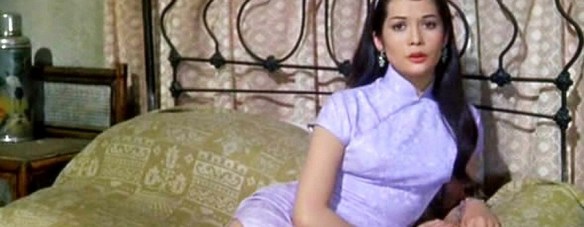
 The World of Suzie Wong by Richard Mason is a glimpse of the world of 1957, when old soldiers could still talk of having had a “good war”, and the British Empire was still teetering on the brink. Kindle makes it possible for me to nab it within moments, although Suzie Wong is one of those subjects that I have heard mentioned all my life, but never actually encountered before – a bit like Fu Manchu and the Black &White Minstrels, it seems to have been airbrushed from history in more enlightened times.
Robert Lomax is filth in all but name (Failed in London, Try Hong Kong), a clueless wannabe painter in Hong Kong, who accidentally takes a room in the Nam Kok Hotel, which turns out to be a brothel. Readers of this parish may scoff, but are reminded that the Clements family also somehow managed to end up a few floors up from a knocking shop in Chengdu, so it’s not like it’s impossible.
 Lomax falls for Suzie, a wilful, proud bar girl with a half-caste baby, and much of the story is taken up with their long, long, looonnng courtship, occasionally interrupted by other suitors and various dramas among the other bar girls. Mason has a matter-of-fact approach to dealings at the brothel, and that, coupled with the coy requirements of 1950s censorship, turn his account into a far less prurient tale than one might at first imagine. He certainly seems to know his way around the etiquette of the red light district, and has interesting observation about the peculiar protocols of the girls, who, for example, deride any sailor who doesn’t pick one girl and stick to her for the duration of his stay in town as a “butterfly”. It encourages comparison with Akasen Chitai (Red Light Zone), Kenji Mizoguchi’s last film, shot in a realist style in Toyko’s brothel district around the same time, just before prostitution was criminalised in Japan.
Curiously, the leading man is presented as somewhat ignorant of the East, which is exactly what I would expect from the average hack cranking out a Hong-Kong-hooker-with-a-heart-of-gold novel. But Mason was an old Asia hand, having fought in Burma in the war, and drafted to learn Japanese as a POW interrogator. It’s thus all the more impressive that he is prepared to present his leading man as a callow, nice-but-dim posh boy, drifting from plantation job to would-be artistry in Hong Kong, and failing to read a single squiggle. I don’t think I would have been able to resist the temptation.
Meanwhile, his slice-of-life of 1950s Hong Kong presents tantalising glimpses of a small town overwhelmed by a massive refugee influx from over the border. Suzie herself is from Shanghai, and there are whispers throughout the book that the girls are women fallen on hard times, forced to seek any job they can in order to escape the even greater miseries of (we now know) the Great Leap Forward.
 Lomax is just as much an outsider among the British expat community, which he regards as stifling and hidebound, not the least for its refusal to accept mixed-race marriages – when he approaches a consul for a wedding certificate for him and Suzie, the consul is actually surprised to learn that he is allowed to marry them. He also has some deeply odd things to say about oriental femininity, such as suggesting that the attitudes of Asian girls are designed to support masculinity, while those of European women are designed to destroy it.
Really. Presumably, by “destroying it” he means the unhelpful willingness of European women to have ideas and opinions of their own, thereby threatening to shatter the fragile worldviews of thin-skinned men.
I’d say that the book could never be written today (except that there’s one about Thai bar girls, called Paradise Lust, which is basically the same story, and many of the same observations, from fifty years later). But certainly modern readers would tut in indignation at the sense of entitlement of Suzie’s suitors, one of whom spanks her for daring to look at another man (like that isn’t her job). Although the book does attempt to present the girls’ case and the girls’ view, it is largely the tale of Chinese women available for rent, to largely uncaring and callous men, often cheating on their wives, who are themselves presented as ghastly termagants.
 There have been two unofficial sequels, both of which seek to tell the story of Hong Kong as a whole through Suzie’s eyes. One wonders what a modern author would do with the same material. Guo Xiaolu, for example, author of A Concise Chinese Dictionary for Lovers, might take the title literally, and tell it solely through the eyes and words of Suzie herself, thick with detail about the China left behind and the intricacies of the Nam Kok, but as numb and uncomprehending of Lomax’s world as he is of hers.
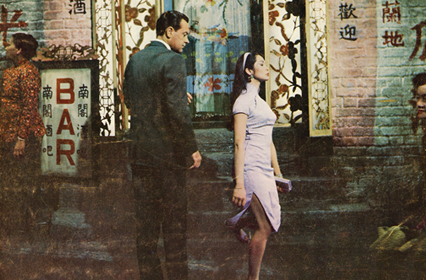
Suzie Wong was adapted for the stage within a year of its publication (starring William Shatner in the initial theatrical run, imagine!), and then turned into a film. The book was apparently a best-seller, which perhaps explains why Richard Mason doesn’t appear to have worked all that hard at being a novelist afterwards – he died in 1997, living just long enough to witness the Hong Kong Handover, but despite listing him as a “novelist”, his obituaries only seem to come up with four books to his name, of which Suzie Wong was the fourth. In 1962, at 43 years old (my age), his writing career was apparently over, presumably because he was quids-in for the rest of his life. I might be wrong – other mentions of him online suggest that he had a day-job working for the British Council, so possibly lost interest in writing anything else.
Jonathan Clements is the author of A Brief History of China.

 JJ O’Donoghue in the Japan Times covers my new book Christ’s Samurai, calling it “a concise and lucid account of a unique period in Japan’s history”.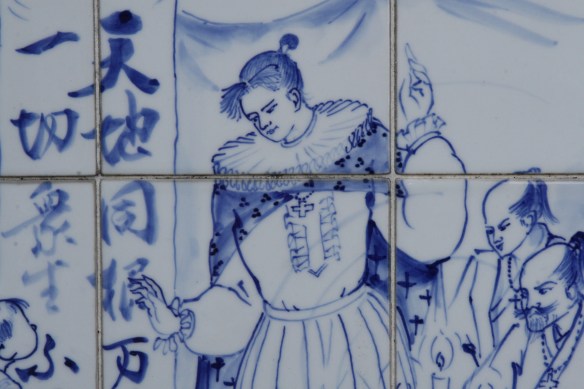
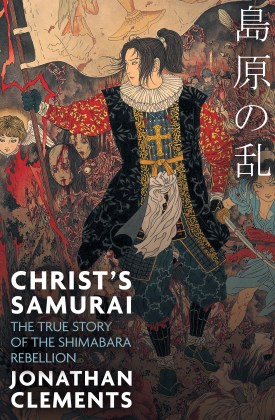 In 1638, the ruler of Japan ordered a crusade against his own subjects, a holocaust upon the men, women and children of a doomsday cult.
 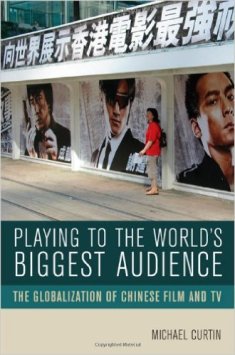 Over at the
 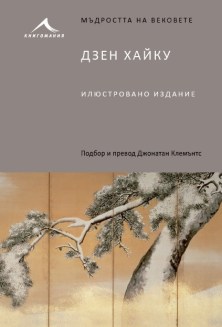 For what are undoubtedly thousands of my readers in Bulgarian, there is now a