
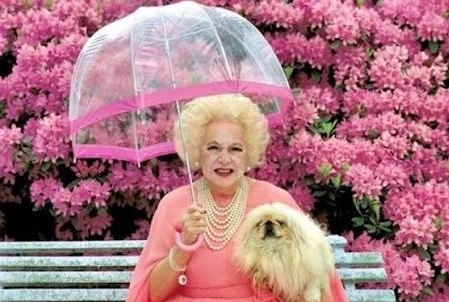
The journalist Sarah Harris asked Dame Barbara Cartland if relations between the classes had changed during her lifetime.
“Of course they have,” replied Cartland, “or I wouldn’t be talking to someone like you.”
Dame Barbara Cartland was, quite deliberately, an enigma and a performance – I remember her as a woman in her eighties, dressed like a pink parade float, grotesquely clinging to the stylings of the 1920s, as if fighting the ravages of time and reason, still pretending to be a teenage dilettante from one of her early novels. In my own youth, she became a pink ghost haunting the nuptials of then-Prince Charles to her step-granddaughter, Lady Diana Spencer. Cartland seemed to be regarded by the Establishment as an arriviste and an embarrassment, disinvited from a fairytale wedding that, as the media constantly pointed out, seemed inspired by one of her novels.
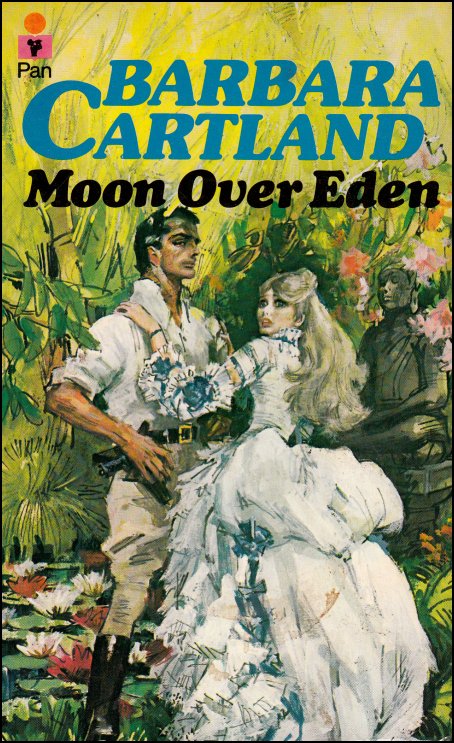
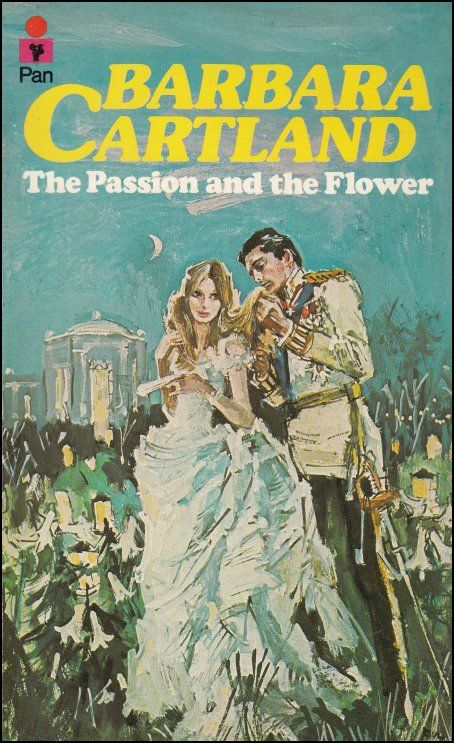
Matthew Sweet’s new biography of Cartland, chips its way through the wall of “pink granite” that Cartland used to shield herself from media enquiry. He points to her parallel careers in non-fiction and history, her time as an agony aunt, and a long and largely pseudonymous stint as the queen of gossip columnists. He also homes in on a critical rupture in her work, when in 1945 she turned aside from true-life accounts of what she knew into more fanciful tales of what she wished for. Until the end of the Second World War, her novels were crammed with flappers and airmen, motor-cars and Charlestons – the stuff of her lived experience. Thereafter, they segued more often into pirates and cannoneers, stage coaches and bodices, as she sought refuge from the modern world in olde-worlde fantasies.
“You can’t dress your heroine up, because clothes are rationed,” she complained. “You can’t give her a glamorous occupation because labour is directed. You can’t describe a dinner party because food is rationed. You can’t even send her for a ride in a car, because there is no petrol. I’m writing a Regency novel.”
In these days of AI slop, when “writers” can produce books at the touch of a button, wordcounts have become something of a theoretical metric. For the record, I consider a day well-spent if I walk away from my keyboard with 1,000 new, publishable words on the hard drive – which is, I vaguely remember, a yardstick I copied from Isaac Asimov. Dan Abnett, the most prolific of potboilerists, manages 3,000 a day. Joe Haldeman, 500. Graham Greene, a couple of sentences, but good ones. Barbara Cartland would recline on her ottoman, stare at the ceiling, and regularly dictate 7,000 words a day to her stenographer. It is this, writes Sweet, that propelled her to the record-breaking output that defined her literary life: 723 books published during her lifetime, with another 150 punted out post-mortem.
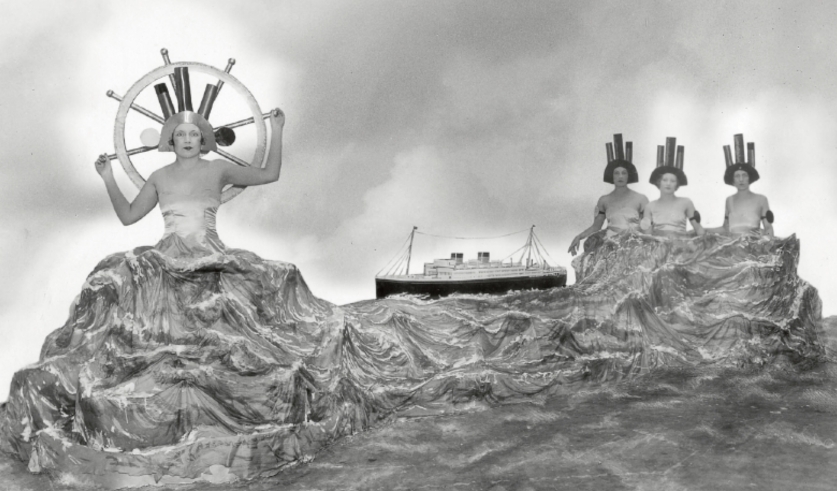
For the last few months, I have been working on a book of my own about another forgotten bestseller. Mrs Alec-Tweedie (1862-1940) was old enough to be Cartland’s mother, and indeed, when Cartland was hailed in the 1920s as the bright young voice in syndicated gossip columns, it may have been Mrs Tweedie whom she elbowed aside. Both women had a huge output derived from dictation; both skirted the fringes of bounderism, both were left behind by their eras; both ended their days fretting about the onset of blindness. They also competed to fling together a British Empire pageant in 1930 – reading between the lines, Mrs Tweedie’s failure was Cartland’s success, appearing literally dressed as a ship for the pageant of British industries, and quashing her rival’s attempt to come up with something similar. But whereas Mrs Tweedie’s papers were destroyed in a fit of depression and grief in 1926, Cartland’s were retained in meticulous order, ready for her great grand-daughter to grant access to Sweet.
Mrs Tweedie was pole-axed by the Great War, which claimed the life of her youngest son. But that same war had an arguably greater effect on the young Cartland, killing her father, and dooming her to come of age “in a world depleted of men. This,” writes Sweet, “is one of the most important facts of her biography, and one she shared, like a hidden wound, with her contemporaries and legions of her readers.” Cartland was one of an estimated surplus of two million women, left to pick and fuss among the traumatised and the walking wounded who made it to the 1920s, if not unscathed, then at least alive. Her life, and that of her readers, was dominated by World Wars 1 and 2, and the grim austerity that lagged behind them. In one of the most evocative moments in Sweet’s book, he recounts the sudden boils and eruptions of bone fragments through the skin of Cartland’s second husband, still manifesting the effects of a wound suffered decades earlier.
Sweet is given unfettered access to Cartland’s archives, including her unpublished manuscripts and her lifelong correspondence with her mother – the racier letters being discreetly filed in their own special brown envelope. He takes light-hearted relish in the bad reviews, of Germaine Greer declaring her fair game because she is an agent of the Patriarchy, or Peter Ackroyd calling her “the literary muzak of the hypermarkets.” But he also notes that Umberto Eco cited her as the very cornerstone of post-modernism – that it was impossible for a husband to tell his wife he “loved her madly”, since by the late twentieth century, both of them would know he was quoting one of Cartland’s novels, rather than saying it from the heart.
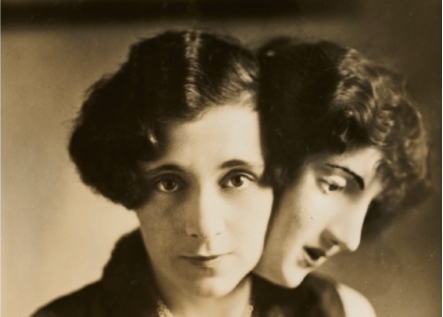
Sweet also pokes gently at the traumas behind her media profile, particularly her grandfather’s suicide in 1903, which had “a long trajectory… a long cold line through a century of mother-daughter relationships.” When asked in 1981 why she used boot polish to do her eyelashes, she revealed that, unlike mascara, she had discovered it would not run. “I cried,” she confessed, “all through my first honeymoon.”
In all this, Sweet offers an impassioned defence of the middlebrow, pointing out that while Cartland and her ilk became jokes among media pundits, they were far wider read and remembered than the people who were trashing them. He cautions the reader and the historian against assuming that everything was the way that the media choose to remember it today: “…the fabled sixties, the sixties of stock footage – screaming Beatles fans, Roundhouse happenings, Carnaby Street boys dressed as Edwardian hussars – obscure a counternarrative that tells us The Sound of Music was the decade’s biggest film at the UK box office; that polls conducted in 1963 and 1964 showed that two-thirds of people disapproved of sex before marriage.”
Sweet recounts angry screeds from Georgette Heyer, who accused Cartland (rightly, it seems) of plagiarism. The Cartland Reality Distortion Field was operating throughout her life, transforming the seediest and most sordid couplings into romantic fictions, but also dodging many a libel suit and plausible deniability. In her archives, Sweet digs up several affronted correspondents, including the royal muck-raker Kitty Kelley, who warns her to stop claiming they had never met, because she has her on tape.
Sweet admits that covering such overwhelming literary output in detail would risk turning “biography into bibliography.” But he offers up a single calendar year, 1975, in order to demonstrate Cartland’s word factory in action. In that twelve months alone, Cartland’s various publishers released twenty-five books, including several reprints of works from up to thirty years previously, given new titles and more modern covers – I have observed similar sleight of hand in the world of women’s romance manga, where nobody expects the same readers to be around a generation later. But someone was reading them – housewives and schoolgirls, and, bizarrely, Libya’s Colonel Gaddafi, who left a £50,000 deposit at Foyle’s to have her books forwarded to him in Tripoli.
The Great Dictator by Matthew Sweet is available in bookshops now. Ethel Brilliana: The Well-Travelled Mrs Alec-Tweedie by Jonathan Clements is forthcoming from the History Press.

