Gone Fishing

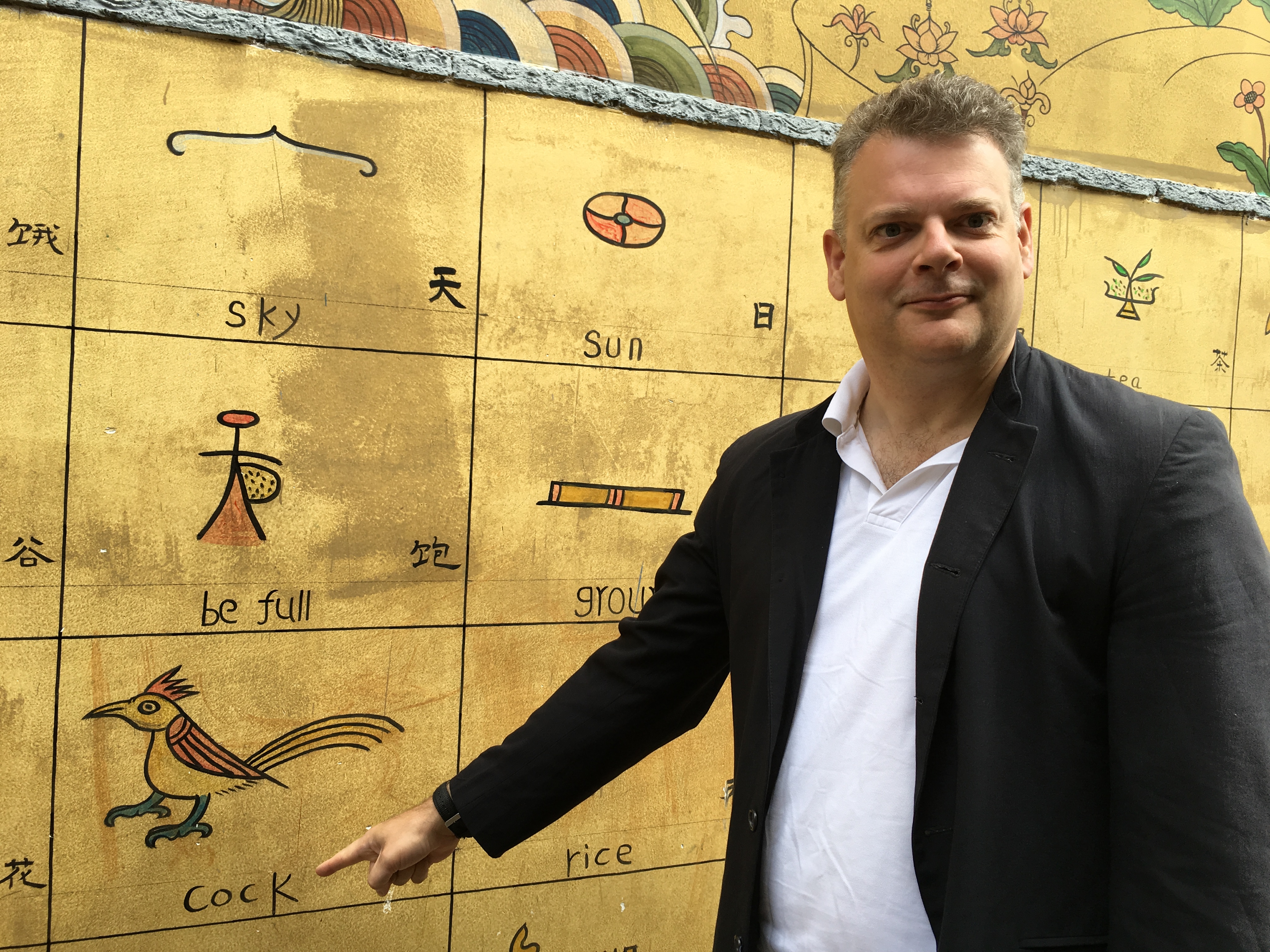
There are roosters crowing during the night. This is considered bad luck by the Kam, and the only remedy is to hack off the rooster’s head with a cleaver, so I guess it will be chicken tonight.

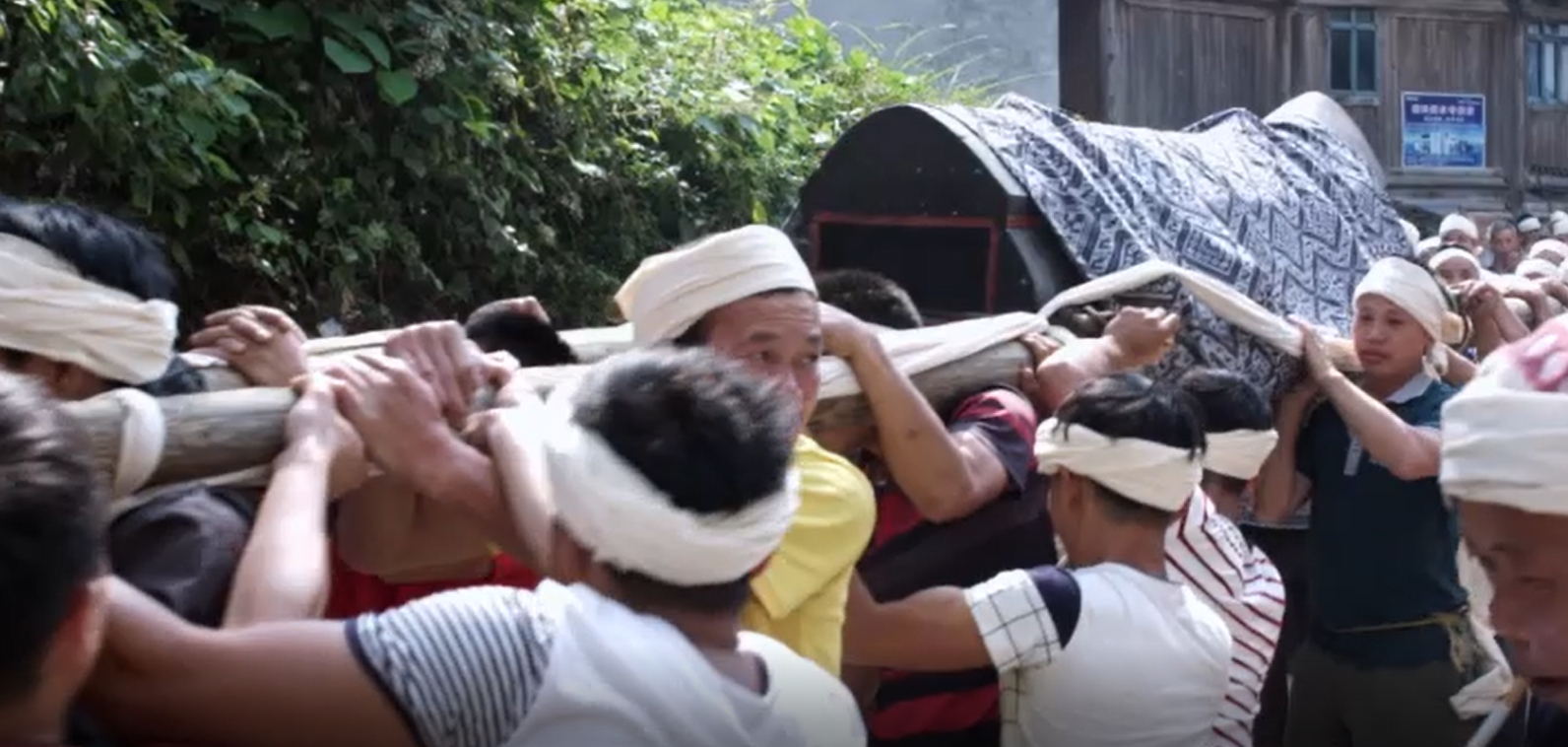
“I’m getting some ducks in,” says Mr Wu over our garlicky noodle breakfast. “You know, for the festival.” I don’t know, but I am sure I will find out. Daniel the cameraman returns from the drum tower in the morning light to say that the first ox of the mass slaughter has already been dispatched, and the place is awash with blood. Rather than film the aftermath, the director waits for them to clear it up, and decrees that this morning Pan will take me fishing, as practice for tomorrow’s fishing contest.

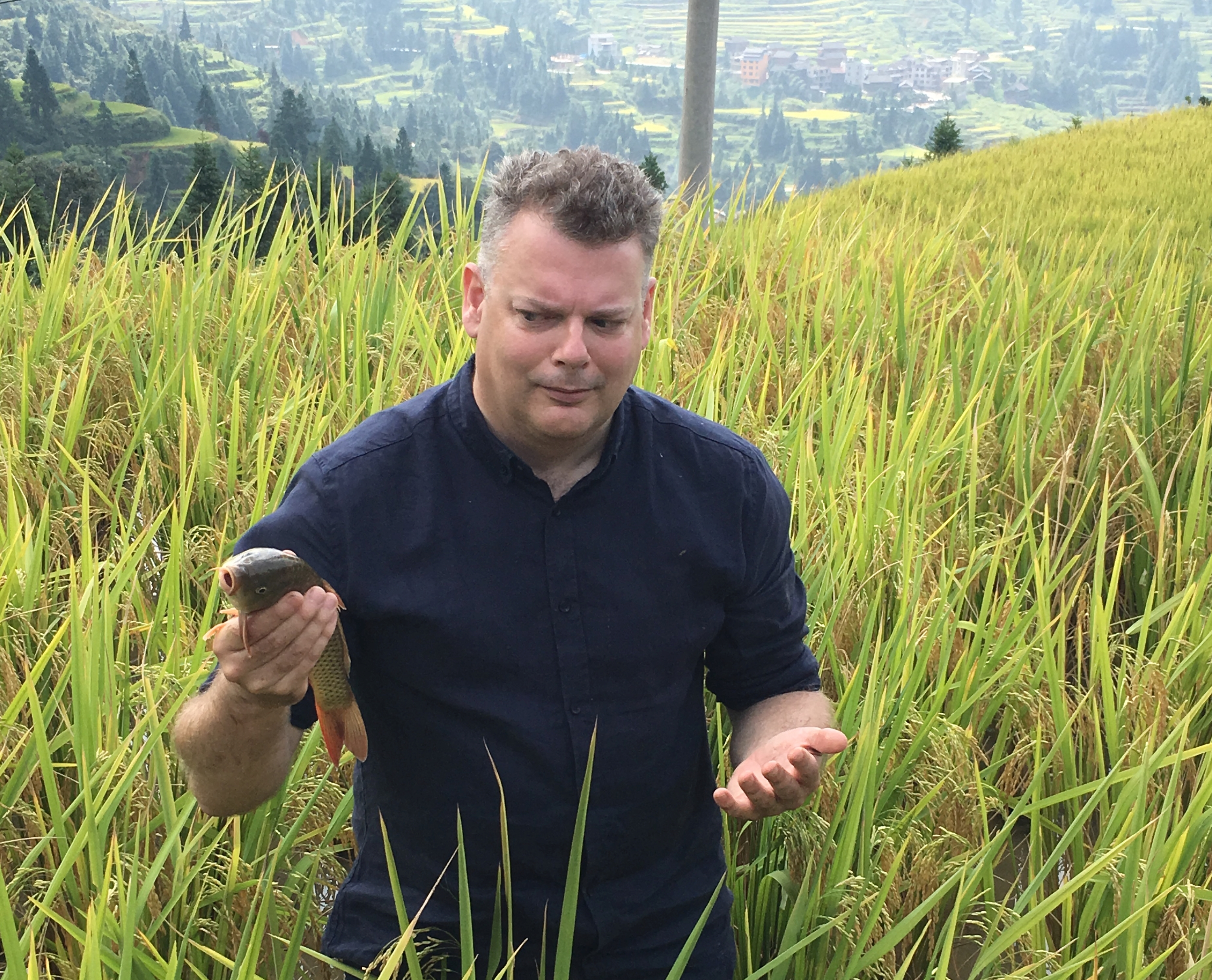
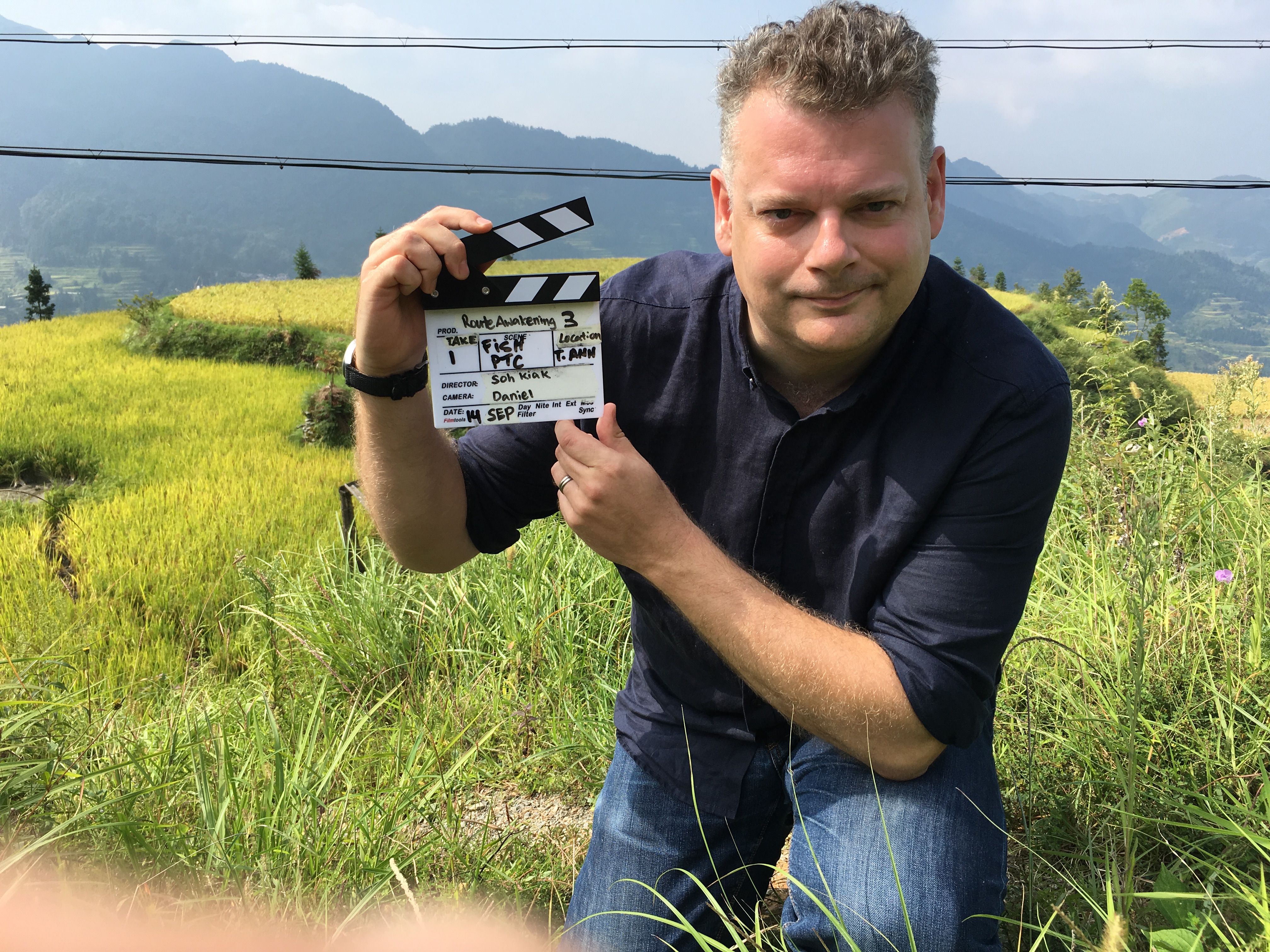
Never ones to do anything the sane way, the Kam prefer to catch their fish by hand, which is how I find myself knee deep in a rice paddy, sticking my arms into the muddy water in search of a helpful carp. Pan manages to snag one almost instantly and throws it over to me, so that I can do a good impersonation of a man trying to hang onto a wriggly fish.

He snatches one from the water, and observes that it is not wriggling enough. He shoves his little finger deep into its mouth, and its starts to thrash about, as you might well do if Pan shoved a digit in one of your orifices.

Jonathan Clements is the author of The Emperor’s Feast: A History of Chinese Food in Twelve Meals. These events features in Route Awakening S03E01 (2017).

The Flying Knives

If you need to avenge yourself against your enemies, you will need a basin filled with water and two knives used for killing pigs. Place the knives in the water and get your sorcerer to chant the correct incantation over the bowl. If he’s doing his job right, the knives will turn into fish and the water will turn into blood, and you will know that your enemy is not long for this world, because he will be killed by the “flying knives”.

Alternatively, stick pins in a doll and bury it on his birthday. Or kill a rooster, and stick pins in its head, on his birthday. Kam people don’t like to tell you when their birthday is.

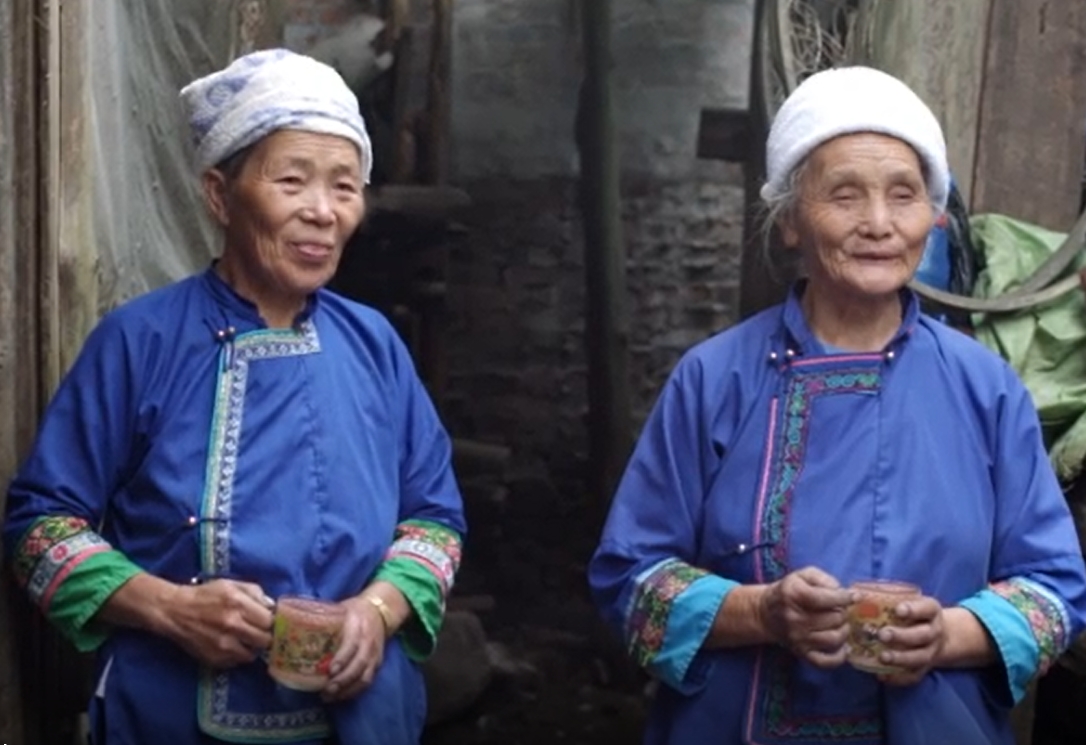
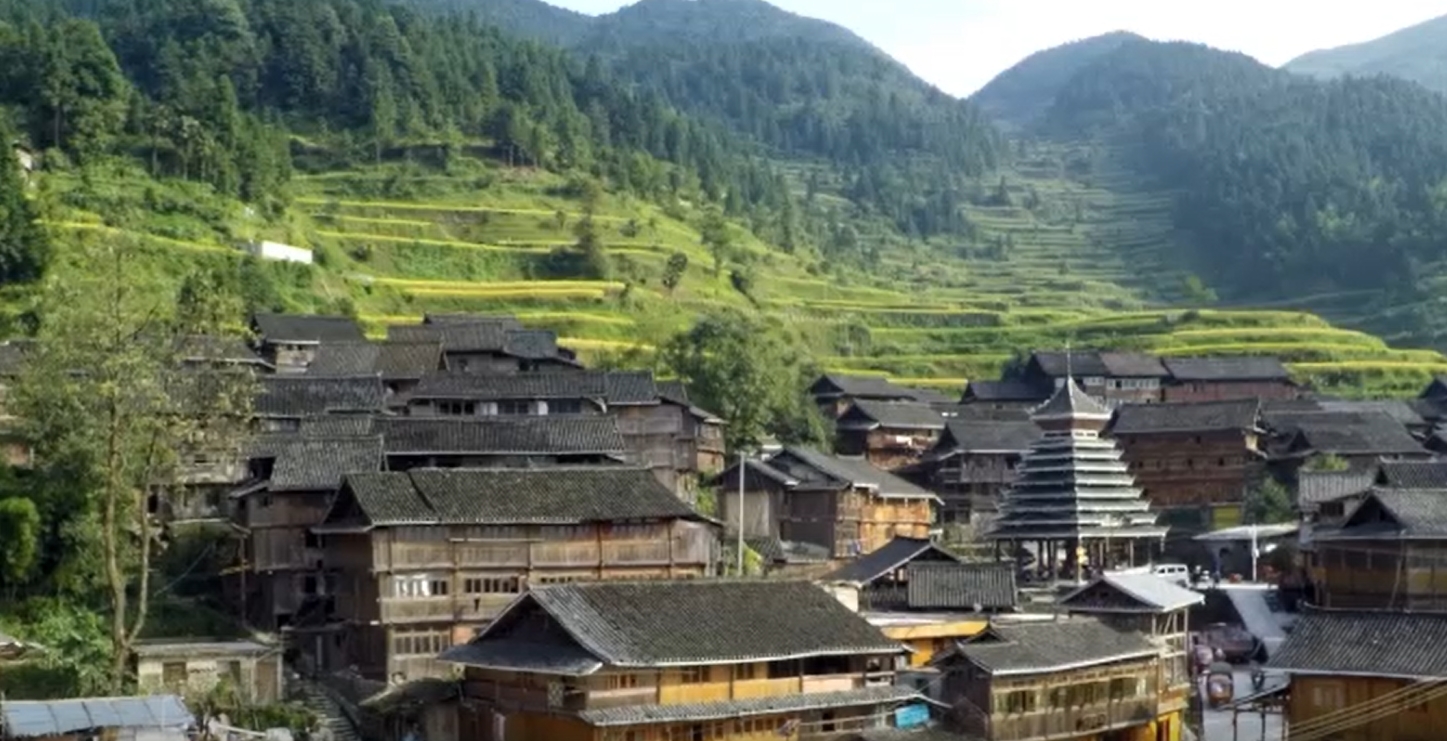
Eric the camera assistant likes to say we are among the “Southern Barbarians”, an oddly medieval construction that recognises so much of this part of China is a very different culture. The Kam are just one of the peoples in this area, who plainly migrated from somewhere else, pushed south by the Han Chinese themselves, and who have only partly got used to the idea of huddling on remote hillsides. They are all incredibly short, quite dark and often quite impassive. Pan, our local fixer, has taken two days to come out of his shell, and only then revealed to the director that he was married with a kid, and that he would be taking us to meet his family.

Pan’s village is called Tang-an. To get there involves a 40-minute drive from Congjiang, the nearest big town, through Zhaoxing, the “capital” of the Kam, because it has five drum towers – any more than one in a Kam town is liable to be a family tower to mark the presence of several households with the same surname. And then out into the mountains beyond Zhaoxing, along a winding mountain road, up into the heights, when Tang-an is stretched out on the slopes above the rice paddies.

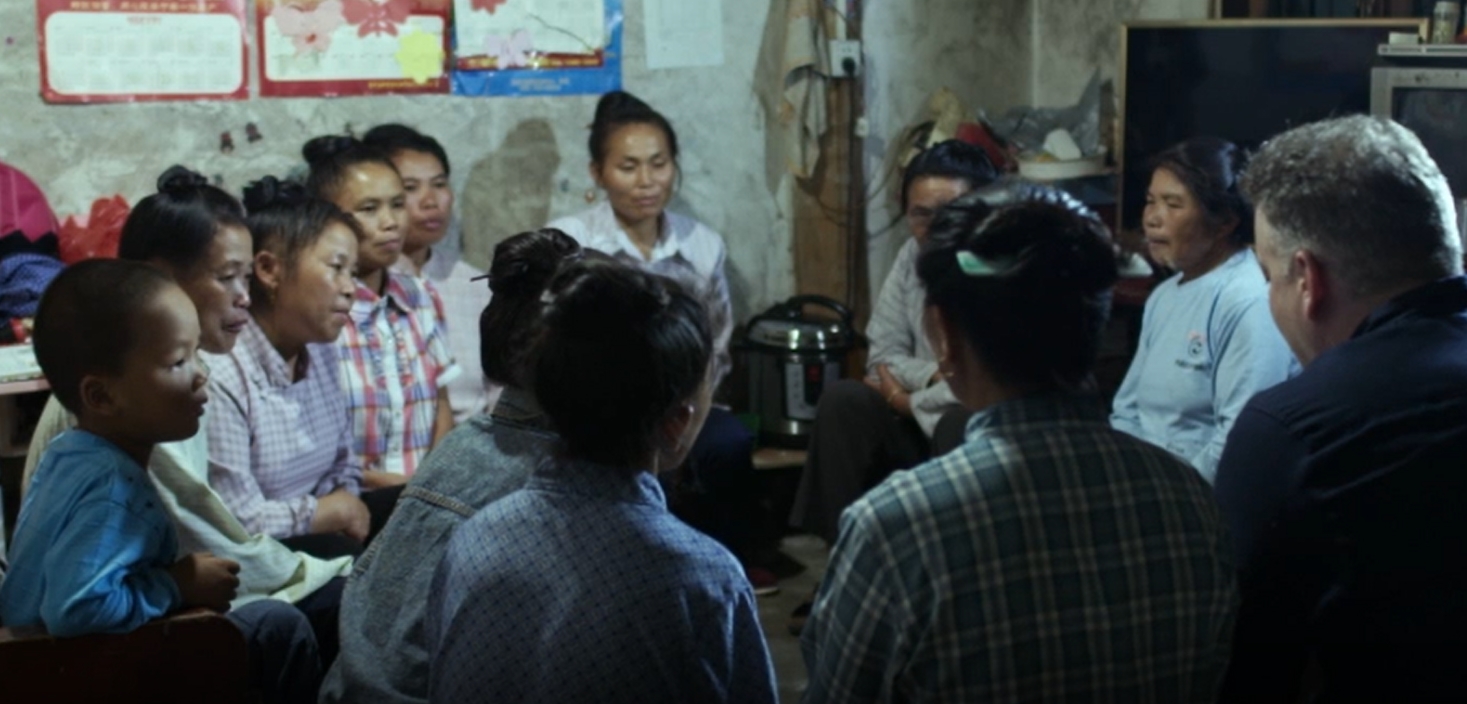
In the evening, we lurk around until half past nine, waiting for a practice session for the song contest that is coming up in the village. But none of the people who are supposed to be involved appear to be doing anything. Eventually an old lady called Lan Big Sister says she will take me to meet her friends, a bunch of cackling grannies who are singing a song in Kam in a dilapidated house near the fish pond. Matters are somewhat confused because Lan doesn’t really speak Mandarin.

“Here is some guy from Yinland,” she says, apparently not knowing where that is.

“Come in, come in!” shout the grannies. “We are singing a song in Kam about the benefits of government subsidies for pensioners.” So I try to sing along in a nine-tone language which sounds like the Bulgarian Shepherdesses falling down some stairs, while a heifer in the stalls next door keeps on letting out long farts that are picked up by my microphone.

Halfway through, a granny who has gone out for a dump comes back in to find the squalid room brightly lit with lamps, and a National Geographic film crew crouched in the corner while I perch on a little stool and try to sing a chorus that has two glottal stops.

“What the actual fuck is going on?” she gasps.

“Just pretend we are not here,” says the director.

It is past eleven at night before we struggle back through the streets, pausing only to help a villager carry a moped over a large pile of bricks that has been left in the middle of the narrow mountain road. My limbs are aching. I have a headache from our landlord Mr Wu’s moonshine, and we still don’t know what we are supposed to be filming tomorrow.

The director reveals that there is possible a mass slaughter of oxen at midday tomorrow. And before that, I shall apparently be jumping into the fish pond to hunt carp with my bare hands. What could possibly go wrong?

Jonathan Clements is the author of The Emperor’s Feast: A History of China in Twelve Meals. These events featured in Route Awakening S03E01 (2017).

Galway, JFK and Roger Moore

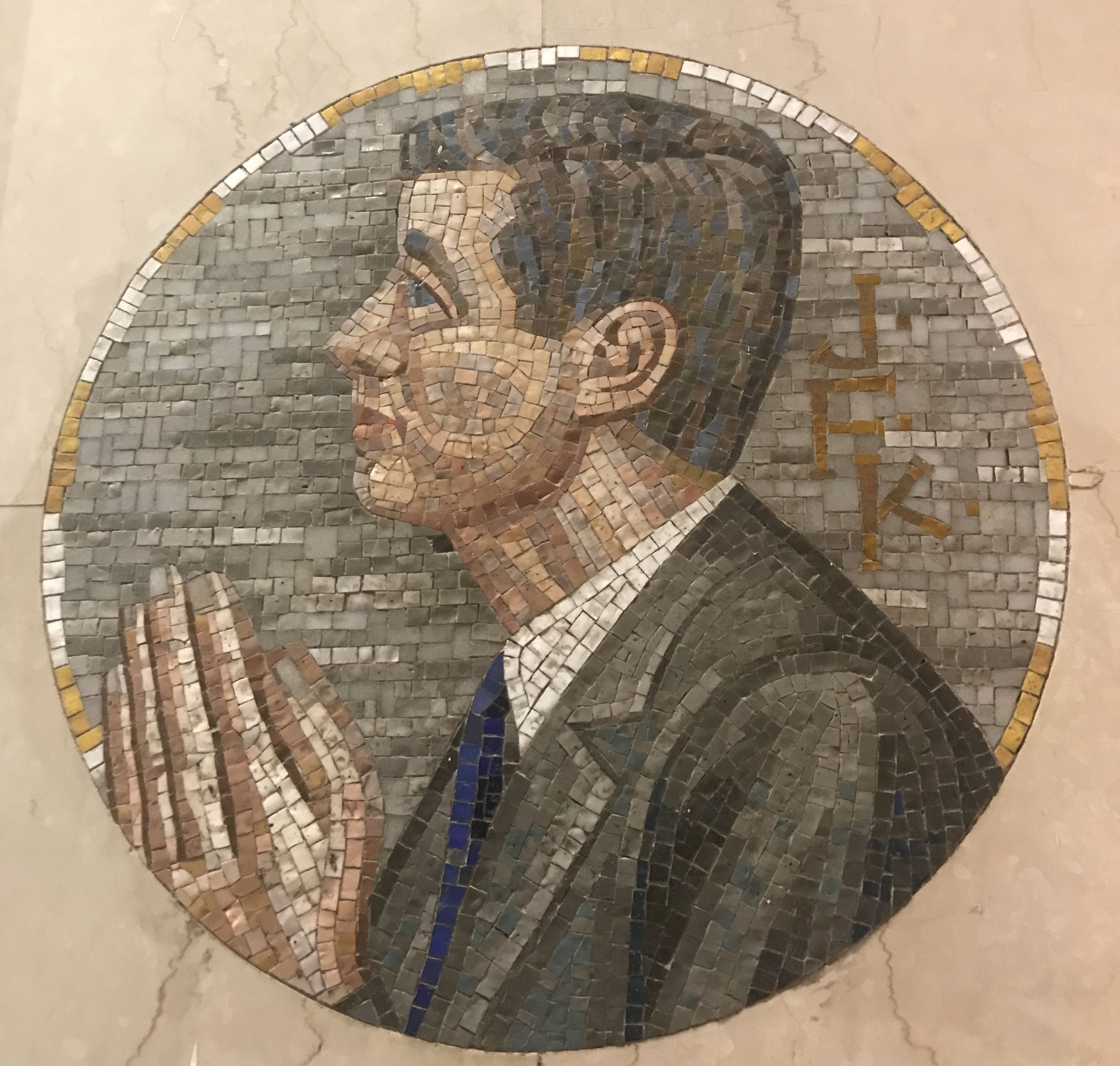
I’m in Galway, Republic of Ireland on a secret mission (Codename Blackbird) and today I stopped in at the cathedral to be confronted in the Chapel of the Resurrection with a mosaic depicting John F Kennedy, at prayer with the Irish martyr Pádraig Pearse, shot during the Easter Rising.

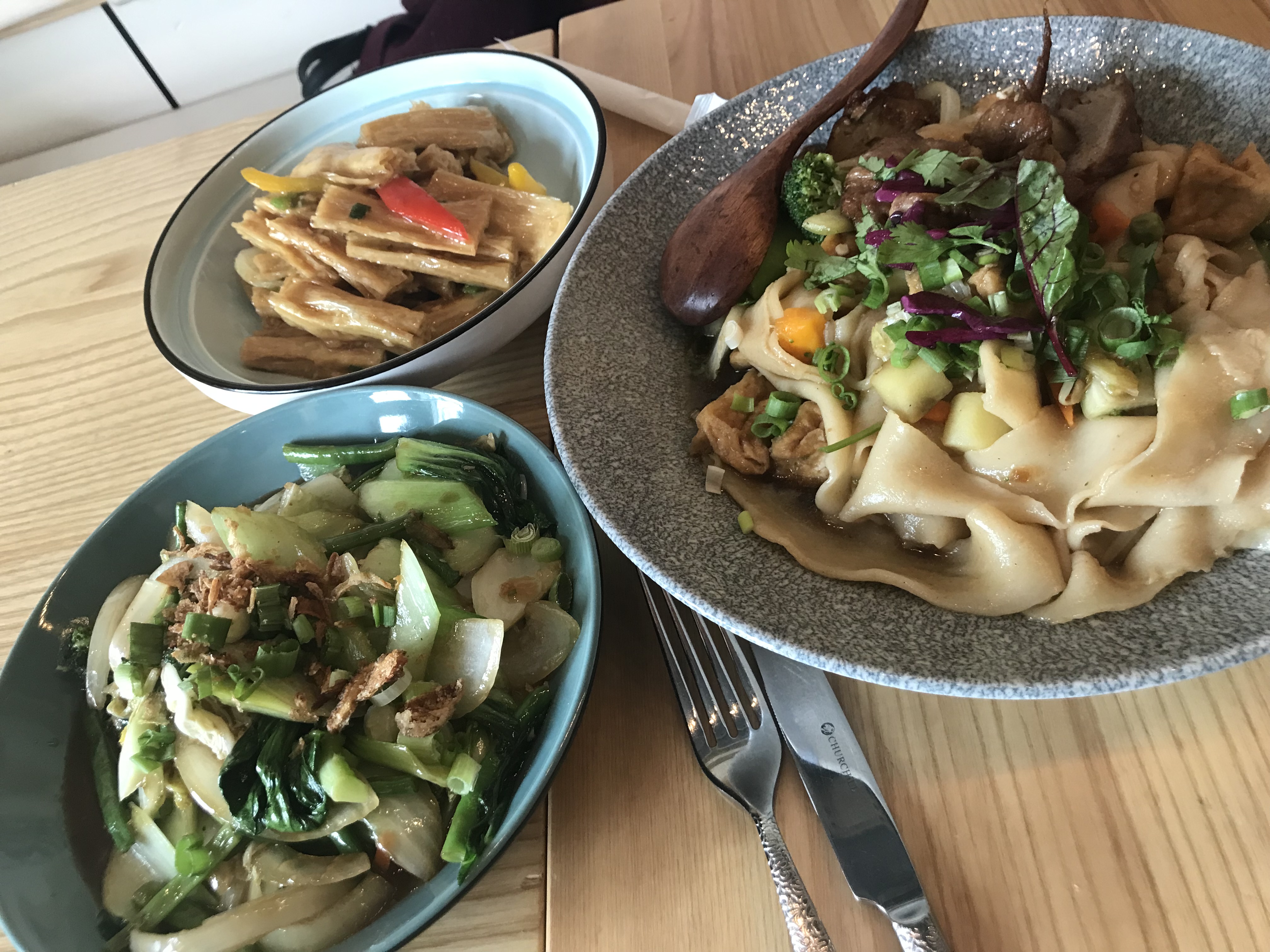
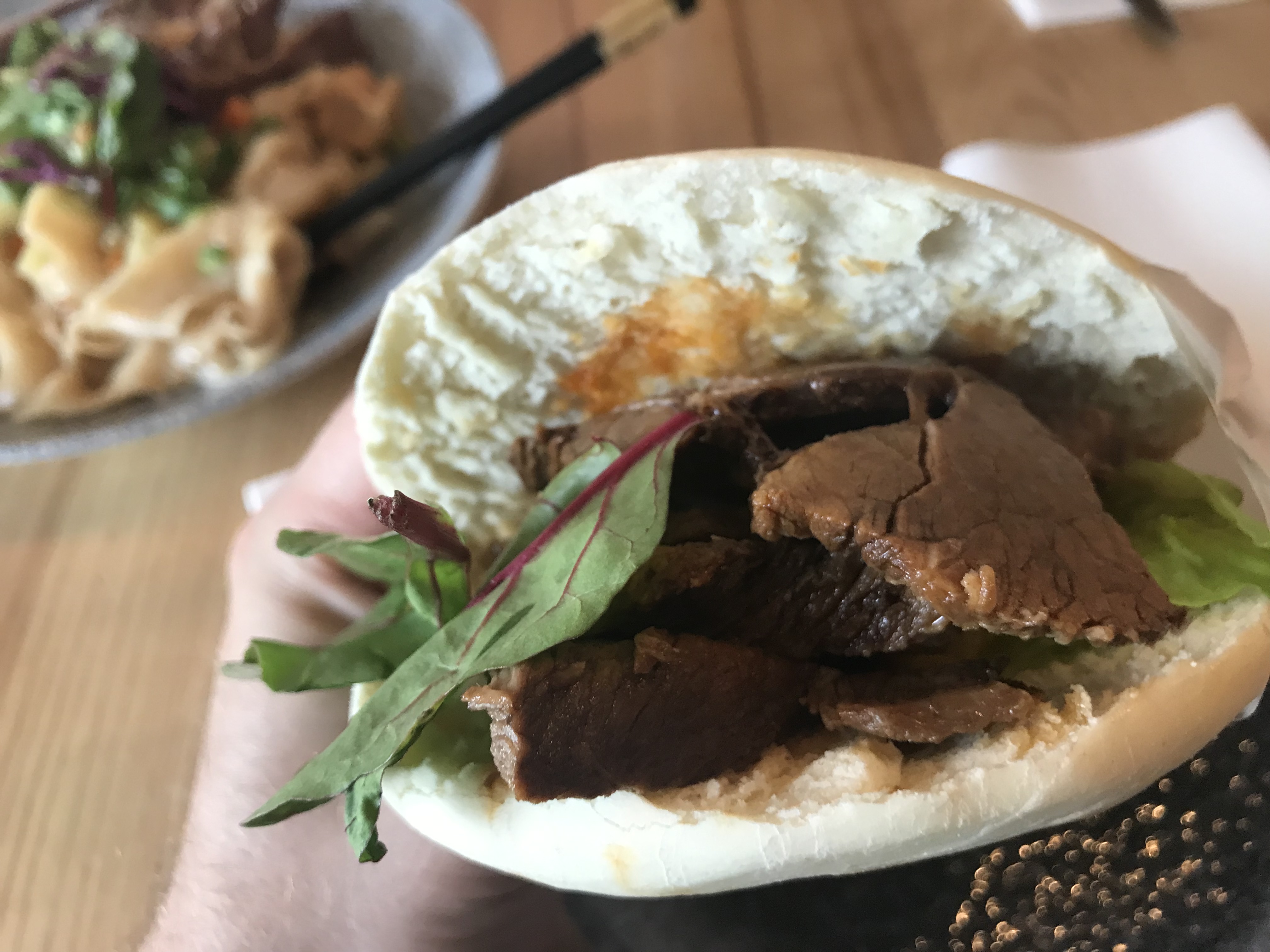
Lunch a block or so away at Re’Nao, a Chinese restaurant serving Xi’an food, which was authentic when I ordered it because I knew what was supposed to be in it. The restaurant offers so many customisation options on its food that it is possible for the overly picky client to turn everything into something completely different. I also had an authentic roujiamou meat bun (“rogermoores” as they are known in our house), although there were so many Have It Your Way options that I could have easily transformed it into a chicken bap with ketchup.

Re’Nao was one of three Xi’an establishments withing spitting distance of one another in Galway, all owned by the same Xi’an expat. For more about Chinese food in Ireland, particularly the never-ending quest for authenticity, you can click on my interview with Sean Moncrieff on Newstalk.

Jonathan Clements is the author of The Emperor’s Feast: A History of Chinese Food in Twelve Meals.

Stir Crazy

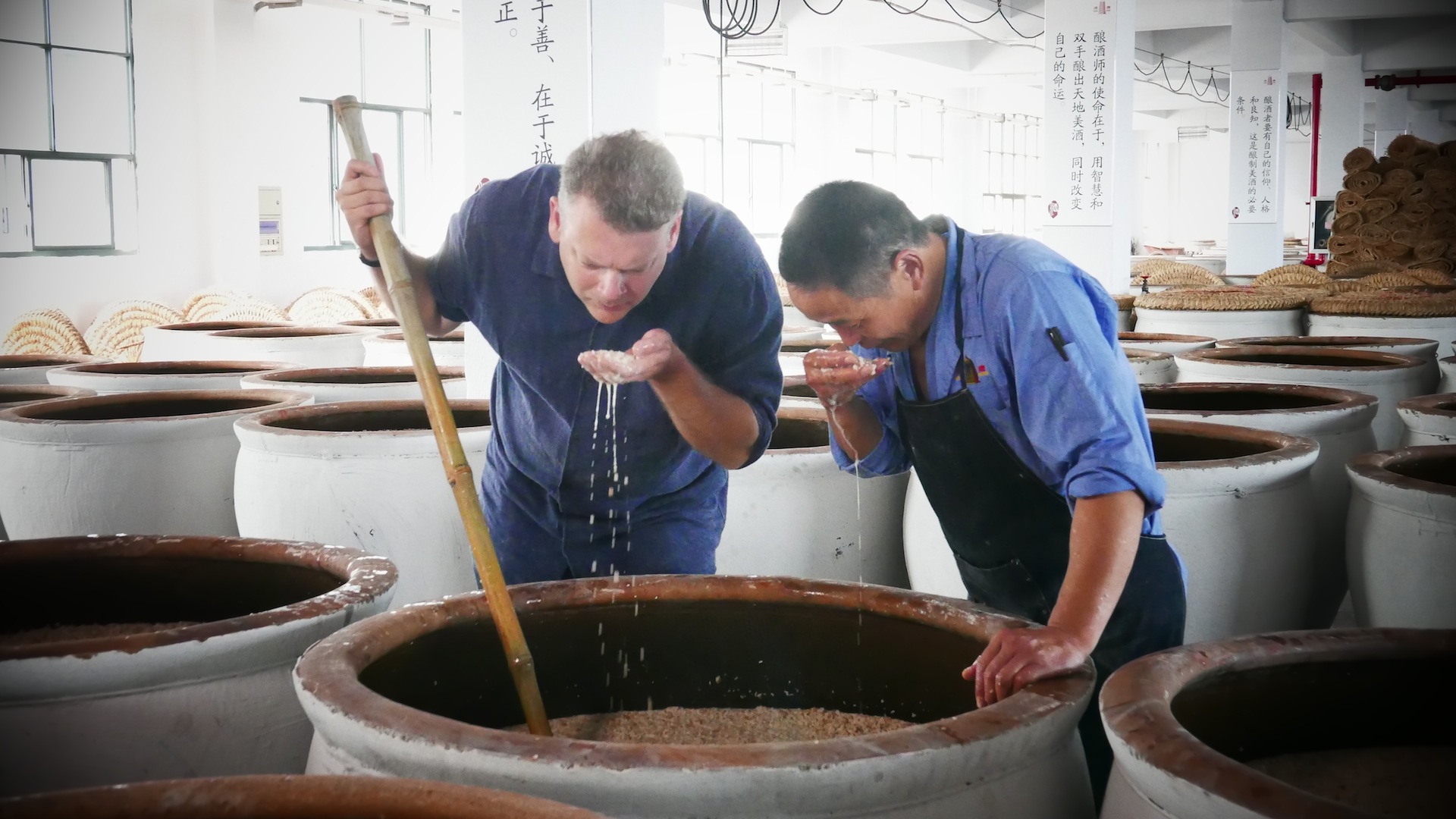
Today we are in Shaoxing, home of rice wine, at the Pagoda Brand factory. Not the distilled stuff that gets turned into baijiu, but the 20% booze made by traditional methods for the last 3000 years, which served to get the Chinese munted before they discovered the grape or the distillation process. “Traditional” methods on this leg always seem to amount to the same thing, which is mixing in some rotting fungus and leaving everything in jars for a few months. This is how the soy sauce was made in Amoy; this is how they knocked up the Kouzi baijiu, and it turns out to be the way they make the rice wine, too. There are some more complex steps, I am sure, but we won’t be shooting them until tomorrow.

On paper, the idea of spending the last four days in a Shanghai hotel had seemed like a good one. We could get to know a neighbourhood. We could get our laundry done and be around to pick it up the next day. We could wind down and lose the repetitive grind of checking out and in and out and in. Except our last two days are to be spent filming in Shaoxing, which turns out to be a two-and-a-half-hour drive each way. Today we leave the hotel at 0700 and don’t reach the factory before 10, but then there’s the tour and the pleasantries, meeting the boss, and dickering over the right angles… and then it’s time for lunch in the company restaurant.

The whole facility has been designed for super-class A* visiting dignitaries – the Shaoxing company has got an entire wall of specially designed “celebrity” bottles with their own bespoke logos, and the images of sportsmen I have never heard of emblazoned upon them. Maybe the staff are designed to be part of the experience. The walls are spattered with photographs of portly Chinese men in suits, grimly concentrating as someone in a company anorak hectors them about wine-making, but the staff in the visitor centre are all noticeably attractive Chinese girls in what appear to be regulation-issue flared miniskirts. Come for the drinks, stay for the view?

We don’t get started filming until 1300, severely limiting our light and our day. The director is spitting feathers at the fact that another film crew turned up this morning and faffed around all the things we want to faff around, thereby indisposing the workers to slow down their afternoon to pander to us. We shall have to come back tomorrow, on my last day, before I run to the airport, and the crew themselves will be obliged to return a third day without me to shoot a festival about the god of wine. Belatedly, we all realise that we should have stayed in a Shaoxing hotel – travel time over the next three days is going to rack up nine hours back and forth. Either we take it out of our shooting time, or wake up insanely early so as not to miss the light.

The fermentation process involves great vats of fresh-boiled rice tipped into large jars of lakewater, mixed with wheat-based yeast. The porridge thus created veritably bubbles like a soup, the heat of its own fermentation causing it to chug away to itself, warming the entire jar. Mr Wang, the chief fermenter, wanders among the vats with a stick that terminates in an H-shaped bar – this is a pa, used to stir the rice mixture and cool it. It has to be kept constantly around 34-36 degrees Centigrade for the optimum conditions. The director wants to film the stirring process, but arranging this is like herding cats, since every time we set up a shot, Mr Wang is called in to stir, and then he immediately does so before we can start filming. Moreover, he refuses to stir any given a pot a second time, as that would cool it too far, which means we have to set up his camera for another shot somewhere else; stir and repeat. Meanwhile, Mr Wang’s colleagues are banging around in the background, shouting at each other, and a coach party of Chinese tourists keeps blundering into the shot.

There is scant time remaining before I will have to leave for the airport, and we still need to film the introductions for the Grains and Ceramics episodes and my wine-tasting experience. We rush a shot of me at lunch talking about the prevalence of rice in the Chinese diet, and then over to the museum for the final shots. But whereas the museum was a relatively peaceful venue yesterday, today it is rammed with tour groups, who keep poking their heads around the corner and trying to take selfies in front of the equipment.

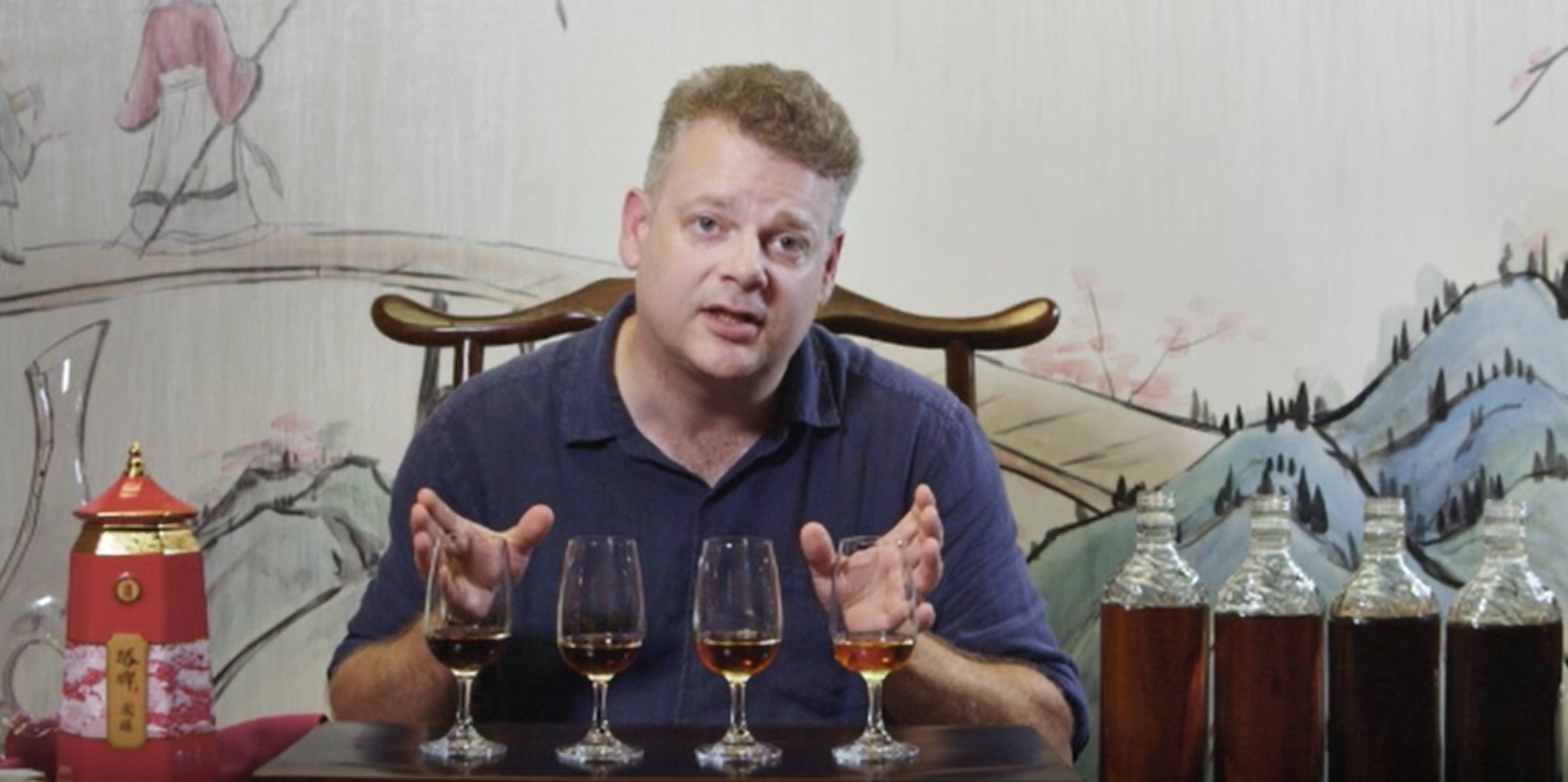
Perhaps fittingly, my final piece to camera is another boozy taste test, before an array of dry, semi-dry, semi-sweet and sweet rice wines. The best of them taste like dessert wines, the worst like a sherry solution of sugar and plums.

“Okay,” says the director. “Go to the airport. Everybody say goodbye to Jonathan. You won’t be seeing him again.” That’ll be my performance review, then. They already have more B-roll to shoot; I have a plane to catch. There is no time for speeches or proclamations. Mr Mao is already gunning his engine outside, petrified that he will be held responsible if I don’t make it to the airport in time. Eight weeks in each other’s company ends with the briefest of hugs and a dash for the door.

Jonathan Clements is the author of The Emperor’s Feast: A History of China in Twelve Meals. These events featured in Route Awakening S02E02 (2016).

The Forgotten Canal

The old Sui-Tang Canal stretched from a patch of river near Luoyang, the old Tang dynasty capital, all the way to the lakes that dot the hinterland north of Nanjing. Effectively, it linked the Yellow River with the Yangtze, consolidating that massive inland trade network that allowed for water transport.

I have heard of the Grand Canal, but the one I associate with China goes from north to south, linking Beijing to the Yangtze. But this one was just as huge an enterprise, heading from west to east in a south-easterly direction. It is also almost entirely forgotten. The Chinese can only guess at the route of the Sui-Tang canal. Occasionally, they luck into a section of it, and can extrapolate its rough bearings. But after being built in the 600s, and flourishing for several hundred years, it fell into disrepair after the Song dynasty, when the capital of China shifted north to Beijing.

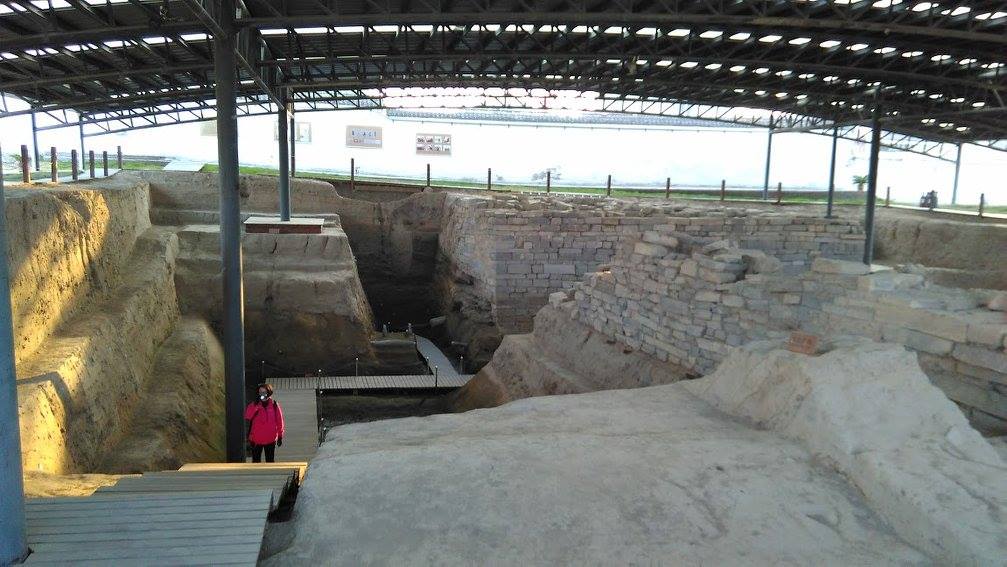
One of its docksides has been uncoverd in the small village of Liuzi, host to archaeologists since 1999. A Dutch-barn roof sits over the pit, where two metres below centuries of accumulated grime and soil, they found the large flagstones of a canal docks. During the middle ages, this was a site of frenzied bargaining, busy unloading, possibly even a bridging point. There are forgotten longboats, scuttled in the mud, and an entire sedimentary layer of Tang-dynasty porcelain. The site leader shows me a ceramic Tang lion in sancai tricolour ware, and a Jin-period statuette of a child in the lesser known red-and-blue ware. It’s the first time I can remember even seeing something that could be described as properly “Jin” – the name is used for the nomads who conquered north China and pushed the Song to the south, but the piece points to an era where north China blundered on its own path, applying its skills to new markets and new customers.

It is a difficult take. We are losing the light and there are only mere minutes before the sun will go behind the nearby houses. The director wants me walking and talking, and we have to go to and fro about the usual points of data – how to describe the Sui-Tang era in two seconds for an audience that doesn’t know its dynasties? Repeatedly, I refer to “the sleepy town of Liuzi,” only to be interrupted by a blast of truck horns as big-rigs turn off the highway. I resort to referring to “the sleepy town of Liuzi, CLOSE TO THE HIGHWAY” just in case we lack any clean takes at all. It makes me angry, because this is a rare occasion where I get to stand in an actual archaeological site, talking about actual archaeology.

Back to the hotel to film me turning on a television set. It will be the opening shot of the Theatre episode, for which all the footage is now banked. We are only four days away from wrapping, but the other five episodes all have pick-ups that will need to be crammed in.

Jonathan Clements is the author of The Emperor’s Feast: A History of China in Twelve Meals. These events featured in Route Awakening S02E06 (2016).

Twinned with Wuhan

Dropped in yesterday on Manchester’s Chinatown, graced by an authentic Chinese gateway erected in 1987, shortly after the city was twinned with Wuhan. There’s an immense sampan picked out in bricks on the side of the car park and few of the tat shops that are slowly taking over London’s equivalent. Lunch was heavenly vegetarian mock duck at the Little Yang Sing.

Great Bu’s Up

Our hotel in Huaibei is a carnival of lies. The crew veritably fought each other to get into the elevator for breakfast, eagerly awaiting the bagels, coffee and toast promised in the lobby posters. They arrived to find nothing but the usual dumplings, stodgy bread sticks and warm orange juice.

Huaibei is famous for one thing, and that is Kouzijiu, a popular form of alcoholic spirit. The process for making it is not dissimilar to the process for making soy sauce. Men with shovels mix a mushroom yeast into piles of sorghum grains, before leaving them to set for two months. Then, they are steamed in a giant vat, and the water that condenses at the other end is not water at all, but 60% alcohol.

Usually, the grains and yeast are spread and mixed by a machine on rails, but the shovels are out because a widget has broken on it. The shovellers walk back and forth over the warm grains, treading them into the floor with impunity. The air is rich with an earthy tang, like a sugar-coated fart.

A man called Bu brings a tray of fresh baijiu straight from the condenser, but he is obliged to wait for a whole hour while we faff with our shots. There needs to be one of me walking in, me describing the fermentation process, and me explaining that although it is only drunk in China, baijiu is still the world’s biggest selling spirit category, with annual turnover in excess of $23 billion.

Eventually, after Bu has been lurking for an hour in the shadows, the director decrees that we are done with documenting the making, and now we must move on to the sampling.

“Great,” she says at last. “Bu’s up.”

Mr Bu is to proffer a tray of the little thimble-glasses of baijiu, and I am to take one, and explain to camera how the Chinese show sincerity by draining their glass. Then I am to drain another one to show I am really sincere… then another.

I am, consequently, somewhat the worse for wear when I the local propaganda office insists on taking us for dinner. Three of their minions have been kicking their heels for an hour in the lobby, while our fixer shows them everything she can think of on her laptop. I am getting flashbacks to Bossy Lady in Yunnan, who was simply incapable of understanding that the last thing anybody wants to do after a 12-hour working day is sit across from her all evening chewing inedible local delicacies. Mr Fan from the propaganda office, however, is very keen to display the charms of Anhui, and drags us to a restaurant VIP room big enough for all nine of the crew, him, and the usual Chinese bunch of interlopers – a handful of people who may or may not also be propaganda office employees, but who sit at the table staring at their phones all evening.

Mr Fan opens up the first of many bottles of Kouzijiu, each one in a green ceramic bottle shaped vaguely like a fish, and decorated with a pattern of millet seeds. Everybody has a little thimble-glass by their plate, along with a small glass jug for booze. The toasting starts.

I am used to all this, so I know what to do. I know that I must drain my glass to show sincerity. I know that I must hold my glass slightly below my toaster’s, in order to show humility. I am not aware, until tonight, that when the Chinese go for a full-on blowout, they stop bothering with the thimble-glasses and start draining the jugs. Before long, they are all red-faced and giggly, trilling the joys of booze, and debating which country drank the most.

“We had a bunch of people a few years ago from Finland,” says a lady who is wearing a red leather jacket like a refugee from a 1980s Michael Jackson video. “They drank an awful lot.” Her name, it turns out, is Xi Feng, literally Western Phoenix – what are the odds that a woman from Anhui’s primary distillery town would be named after the competition in Shaanxi? It’s like meeting a man whose name is Jack Daniels.

Finally we are permitted to go back to our hotel, where we must pack for tomorrow’s journey to Shanghai – another ten hours on the road.

Jonathan Clements is the author of The Emperor’s Feast: A History of China in Twelve Meals. These events featured in Route Awakening S02E02 (2016).

Ni Kuang (1935-2022)

“Hong Kong remained his home thereafter, but his antipathy for the Communist regime did not slacken in later years. In a 2009 interview, he provocatively announced that he was less afraid of China during the purges of the Mao era, since the worst possible danger to the world would be presented by a predatory capitalist system run by a dictatorial elite.”

Ni Kuang, who died yesterday, is the subject of a long entry I wrote for the Encyclopedia of Science Fiction.

None Shall Sleep

One of Master Wei‘s children has gone into business with one of the nephews, thereby proving that although they look normal, they are just as much mentalists as Master Wei. They have set up a bespoke restaurant that only serves products that have been made with tea. The clientele is somewhat exclusive, restricted to coach parties of tea nutters doing the Tea Tour, as well as visiting Party bigwigs and foreign film crews.

Chef Chen, the cousin, has drawn elaborate displays on each plate, picking out the National Geographic logo in custard, and drawing a map of the Silk Road in chocolate sauce. He shows me around his brushed-steel kitchen, and fires up the volcano stove, so named because it whooshes into life like a lost jet engine, and heats up his wok in half a minute .

Chef Chen is decked out in all his funny-hat finery, and a chef’s hat is found for me as well so that I can look ridiculous next to him. He treats me to a selection of amuses-bouche, many of which have the slightly desperate taint of a man trying to find an excuse to put tea in things. There are deep-fried tea leaves in batter; goose feet braised in tea, lamb soup with a tincture of tea… you get the idea. I am forced to down far too many spoonfuls of his deep-fried bee larvae with crisped tea leaves for my liking, and there is no beer. Only… tea.

What first appears to be some sort of candy for dessert turns out to be balls of deep-fried salad cream, lightly dusted with… tea.

“You place them here on this map I have done in chocolate that shows the Silk Road,” he says. “There’s Quanzhou, where we are now, and Hong Kong, and Indonesia, Thailand… where are you from?”

“England,” I say. “So on this scale, that should be somewhere over there behind the fridge.”

For a lot of the time, I am mercifully excused from the kitchen while the crew film B-roll of Chef Chen at work concocting his masterpieces from ingredients that might as well have been randomly selected with a dartboard. This leaves me downstairs in the plush foyer, decorated with golden statues of elements of the tea-making process, and photographs of Master Wei shaking hands with a bunch of Chinese people I don’t recognise. There are also displays of the various Iron Guanyin teas that can be bought from the Wei family collective, including the infamous £36,000/kilo “Wei 18,” the most expensive tea in the world.

This leaves me for an hour in the company of the Wei son and his cronies, who while away the evening sipping little cups of… wait for it… tea, made by a prim young lady in business attire. My experiences in Yunnan have taught me the basics of the Chinese tea ceremony, and so I watch as she goes through the motions of cleaning, refreshing, boiling, washing… all seemingly quite common sense to me now, although they seemed impossibly intricate only a month ago. The men witter about nothing, while their serving girl remains impassive and silent. The time passes pleasantly enough, until midnight, when we are then informed that Chef Chen has now finished the food preparation for the documentary, but that now he expects us to eat it.

A tense and malevolently quiet banquet then ensues as we all try to force down as many bee larvae and deep-fried salad cream puffs as we can, before we are finally permitted to leave.

It is half past midnight, but that is of little help to us, since we have been consuming TEA all evening. I don’t get to sleep until 4am.

Jonathan Clements is the author of The Emperor’s Feast: A History of China in Twelve Meals. These events featured in Route Awakening S02E01 (2016).