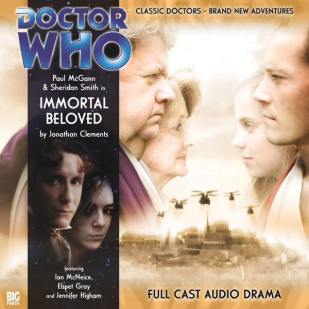
Empress Wu and Historiography

wu1

Michelle Lam, a student in Australia, emails me with a bunch of questions about conducting historical research on infamous bad-girl Empress Wu. I’ve asked her if I can repeat the interview here…

Michelle Lam: Why did you choose to write a book about Wu Zetian?

Jonathan Clements: My editor had seen that Wu was cropping up on a lot of women-in-history curricula, but that nobody really knew anything about her. She asked me what a book about Wu would be like, and I said that it would be too obscene to read out in public. “Excellent,” she said…

Did you experience any difficulties accessing evidence?

No, the evidence is easy to find. We’ve got evidence coming out of our ears, along with reams of noise. The Old Book of Tang and The New Book of Tang are only a click away if you can read Chinese. There’s a surprising amount of material that survives from the 7th century. Wu’s always been a popular subject, although in recent years, books about her have gone through the roof. I don’t rate a lot of the new Chinese stuff from the last decade, though, as most of it’s just cash-ins, except Meng Man’s work. She’s good.

How much of the evidence was biased?

All of it. Everybody had an agenda when writing about Wu. She’s striking a blow for women. She’s an evil witch-queen whose children despised her. She was a living god who ruled over a golden age. She was the most beautiful woman who ever lived. She was a murderous bitch who staged a palace coup. Take your pick.

wu2How hard was it to discern the truth from evidence that was evidently biased?

There are plenty of issues blocking our path to understanding Wu. There’s a distance of 1300 years, there’s the lost materials that we don’t even know existed in the first place. There’s the ridiculous spin and propaganda of her own regime, and the regimes that replaced her, which seem awfully keen on “alternative facts”. These are common errors of historical practice, and they’re certainly there with Wu’s historiography.

You talk about how hard it is to discern the truth from “evidence that was evidently biased”, but it’s much harder discerning the truth from evidence that seems completely on the level. There is an easy temptation to cherry-pick the best material, not in terms of its persuasiveness, but in terms of how it matches what we call “the mode of emplotment.” Which is to say, most historians want to tell a story with a convenient beginning, middle and end – is it a comedy? Is it a tragedy? Is it a tale full of ironic modern parallels? You can’t cling to a doubtful source or a later interpolation, just because it makes a good story. That’s fine if you’re writing a novel or a bodice-ripper TV show, but not a good enough reason if one is claiming to be a historian.

I found myself using some arcane methods with Wu, such as investigating the “content of the form”, whereby you can work out information by how something is said, or even by what is not said. This method is called abduction, searching for what isn’t there, and, for example, it was what I used when analysing that fantastic speech against Wu, issued in the name of a rebel prince.

“She entered the gate through deception, and all fell before her moth brows. She whispered slander from behind her sleeves, and swayed her master with her vixen flirting. She trampled on the pheasant regalia of the empress, and entrapped her prince in incest. With the heart of a serpent and the nature of a wolf, she gathered sycophants to her cause, and brought destruction to the just.”

And so on. The point with that proclamation is that it doesn’t mention some of the most infamous accusations levelled against Wu by later writers. If you were trying to take down an opponent, you would be sure to mention the most scandalous accusations against them, but Luo Binwang, who wrote those words, doesn’t seem to be aware of them. So we find ourselves in the odd position of using the words of Wu’s enemies to work out which of her alleged crimes didn’t happen. We’re essentially using them as witnesses for the defence.

Do you think your identity and personal opinions played a part in how you presented Wu Zetian in your book?

Certainly. I was once derided by another author for not being Chinese enough or female enough to understand her. Only a Chinese woman could possibly get it, she claimed, entirely unaware or uncaring of how sexist and racist that made her sound. It’s the sort of thing someone says when their identity turns out to be their sole qualification, and it’s a poor substitute for actual knowledge and research.

I would like to think that my personal opinions were less relevant in the construction of the book than my awareness of other people’s. It’s important, I think, to bear in mind that many Chinese historians were misogynists, determined to prove that women should not be given positions of power. This isn’t merely a matter of being bigots, sometimes it also reflects later times with different subtexts, such as periods of Mongol or Manchu rule, when women traditionally wielded more power, and the Han Chinese establishment never liked it. Then there are the later Wu historians determined to establish a parallel with the wife of Chairman Mao, or with Hillary Clinton, and the many, many TV writers determined to present her as some sort of innocent Cinderella or knife-wielding psychopath.

wu3

Do you think you were influenced by any external factors whilst writing the book?

Maybe. I know that while I was writing it, I was surprised at the number of conversations I found myself having with women who thought she sounded awesome, and who wanted to know what the cushions were like in the palace. “Write the cushions!” one of them said. She wanted to know what make-up Wu wore, and what her dresses were like, and what food was on the table. These aren’t the immediate concerns of the traditional historian, but they really should be, because history isn’t just about stuff that happened. It’s about the touch and smells and sounds of another world.

What are your personal thoughts on Wu Zetian? What do you think of her as a ruler? What do you think of her as a person?

I was doing an interview with Radio Four when the book came out (you can still find it online but it’s in a dinosaur format that’s difficult to convert), and the presenter suddenly stopped and said: “You really admire her, don’t you?” What I find most incredible about her is the fact that she got to where she was from nothing. When she started in the palace, she was little better than a chambermaid, and yet she was somehow able to run the country for decades. As a ruler, not only in her own right, but behind Gaozong’s throne, she presided over the height of the Tang dynasty. If a male emperor behaved like Wu, nobody would have batted an eyelid, so I see little reason to say that China suffered under her watch. As a person it is harder to say. The few reliable quotes from her lifetime make her sound like she was pretty insufferable. But who wouldn’t be…?

If there was anything you could have done differently whilst researching her person, what would it be?

There are so many rich resources for the Tang dynasty, and if I’d had, say, another month, I could have spent more time poking around the Chinese sources. But I must have been pretty satisfied with the book the way it was, because when we did the second edition recently, the only real changes I made were to update the media references, and for the Chinese-language edition, a new foreword.

Empress Wu is published by Albert Bridge Books.

Nothing Like a Dane

9781472136466‘I had that Danish karate team in the back of my cab once,’ says the driver. He uses the cabbies’ definite article, as if I am supposed to know which Danish karate team he is talking about.

‘They were over for that tournament, and they went out on the town afterwards. They drink a lot, you know? I was surprised. I didn’t think kung fu people liked beer or whatever. But I picked them up at like two in the morning, in their red tracksuits, and I was driving them back to their hotel, and we was all south of the river. In Brixton. And one of them says: “You know what, I want some orange juice. Pull over a second.” And I says: no mate, you don’t want to stop the car in bloody Brixton, not now, not at kicking-out time round all the clubs. And he laughs and says just pull over. So I do. I stops the cab, and all three of them hop out and go into a Seven-Eleven.

‘I just know there’s going to be trouble, and sure enough, there’s three big blokes go in. And one of them is like: give me your money. Give me your money, he says, to this ginger Dane in a tracksuit. Give me your phone and all. And the Danish guy is like: no, leave me alone. And the bloke is like (and he’s a big feller, right?) and he’s like give it to me now or I will eff you up. And the Dane is like: “No. Step away, sir, please.” Polite as you like.

‘So the bloke pulls back to punch him, and POOF! He’s on the ground clutching his head. And the Dane says: really, I am warning you. But he’s like: “GET THE LADS!” And the other two run off to the club, and they are back in flash with half a dozen mates, and they all charge at these Danes.

‘And these are tired, right, but they train for this every day. They don’t even have to think. It’s like BOFF! BOFF! BOFF! Kung fu fighting and they knock them all down. A couple of berks try to get up again, and then it’s BOFF! Stay down. Then they go to pay for their orange juice, and the police turn up.

‘And what do the police see? They see eight or nine big thugs just lying on the ground moaning and hanging on to their arms and that. And these three little Danes having a packet of Wotsits. And the policeman says to me: “Did you see what happened here, sir?”

‘And I says: “Them three blokes are the Danish karate team. And them others just found out what that means!”’

I’ll save you the trouble, dear reader. I Googled this one. I Googled every possible permutation of Brixton and Denmark and karate. When I came up blank, I tried every other Scandinavian country, as well as the Netherlands, on a hunch. I switched the martial arts, just in case it was kung fu or aikido or judo. But despite such an epic account from my story-teller, despite a midnight riot that was sure to have entered the folklore of south London, despite the implied eye-witness experience of the narrator himself, down to the tracksuit colours and omnipotent view of what was said and done a hundred feet away while he was still in his car, there is not a scrap of evidence online of this supposed event. No court hearing, no police report, not even a snickering comment in the local newspaper.

I Googled it in Danish, too, just to be sure.

Nothing.

But that’s the story I heard, word for word. Straight up.

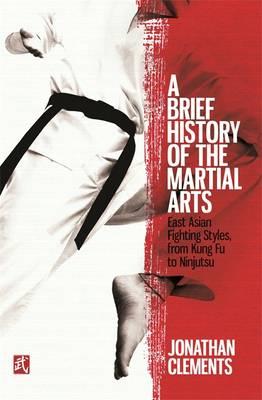
Excerpted from A Brief History of the Martial Arts, by Jonathan Clements.

Immortal Beloved

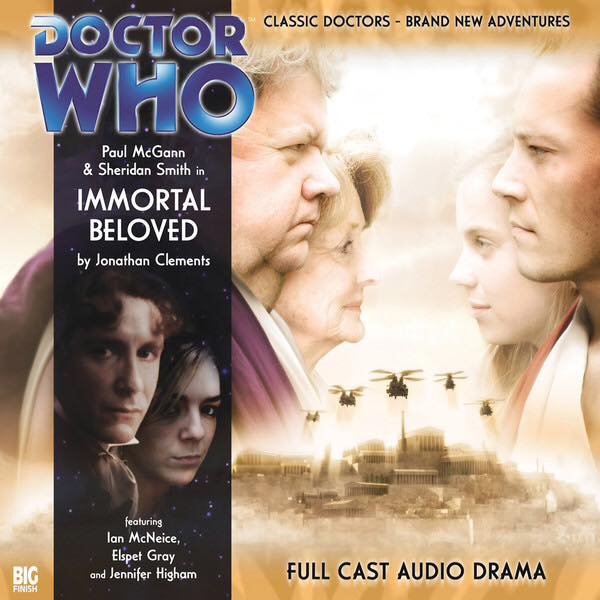
immortal-belovedThe Dr Who Guide alerts me to the fact that my radio play Immortal Beloved was broadcast on BBC7 on this day ten years ago. So in its honour, I post up the text of the interview that Kenny Smith did with me for Finished Product magazine.

KS: Firstly, was the finished story the one you always intended to go with? Or did you have other story ideas? Were you asked to submit an outline, and how detailed was it?

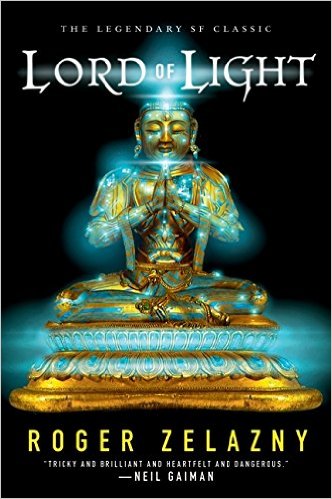
The story actually started out very differently, around 2002, as a Strontium Dog script. Toby Longworth asked me if I’d write something with Sanjeev Bhaskar in mind, so I had a character called Vishnu Patel, a six-armed mutant from Bradford, and his sexy associate Carly. The idea was that they’d set off a time grenade on their ship as the Strontium Dogs were getting ready to capture it. Suddenly, the ship was gone, but the formerly barren planet below was covered with city lights. At which point the bounty hunters would realise that their prey had gone so far back in time that they had founded an entire civilisation on the planet, and set themselves up as its divine rulers, an idea lifted from Roger Zelazny’s Lord of Light. The bounty hunters go down to apprehend them, and have to face the issue of the person they’re arresting being the nth generation clone of the person they were chasing. Then there would have been all sorts of arguments about statutes of limitations, and time travel and culpability.

But anyway, Strontium Dog was cancelled, and I was asked to pitch something for the short-lived Richard E. Grant animated Doctor Who. I retooled the story but kept its original title, which back then was Kingmaker. That actually made it a long way through the process before that, too, was cancelled.
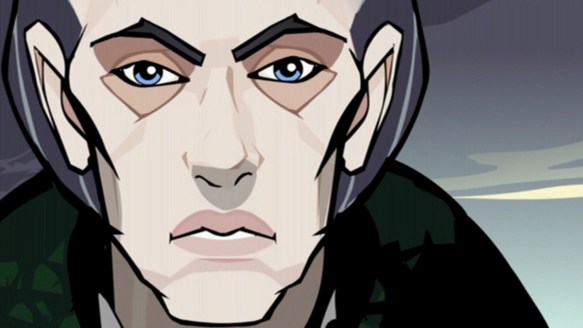
doctorwho-screamoftheshalka218 months later, the BBC’s option on Kingmaker ran out, and I was asked if I’d do something for the McGanns. Time was really of the essence, because everything had to be done in ten minutes flat, or something daft. So I said to Big Finish, look, I’ve got Kingmaker here, the BBC have already approved it. That’s going to go through a lot faster. So we went with that, under a working title of Sins of the Father. I gave [script editor] Alan Barnes some alternate titles, including Karma Police, Together Forever, and Immortal Beloved.

Of course, you can imagine, the outline was nicely matured by that point. It was about 3500 words long, for a script that needed to be 10,000 words total. So it was very well worked out by that point.

There was originally a lot more in there about cybernetic implants as well, in order to match with the Master, who featured in the Richard E. Grant scripts as a travelling companion.
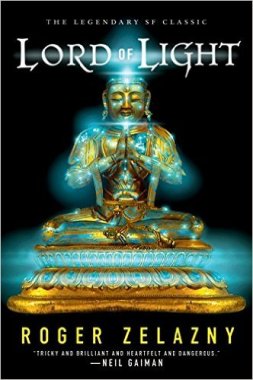
51ijm9-tel-_sx330_bo1204203200_There are still elements of the original, such as when Zeus threatens to kill a different Lucie every day for a hundred years, and a Lord of Light moment, when Hera remembers that Poseidon’s original name was Jeffrey.

Life and death are strong themes in the Sympathy for the Devil and Immortal Beloved – are these themes that you’re interested in exploring?

I’m more interested in what makes us who we are. Same in Sympathy for the Devil. Take the characters out of the situations you remember them in, and what do they do? The Doctor is still the Doctor, the Brigadier is still ultimately his ally, the Master is still a sneaky git. The Ke Le Divisions are supposed to be non-human, like clones, but they still end up with feelings, and those feelings backfire.

In Immortal Beloved, I wanted to ask questions about cloning. I don’t know the answers, but I like asking the questions. I love the idea of these clones turning into their parents, of being able to see them at two stages in their lives simultaneously, and wondering which one is the real person.

Jason Haigh-Ellery jumped on this one right away. I heard that back when it was still Kingmaker, he was already telling people that he was going to direct it, and even threatening to make it as a Big Finish with another Doctor if the BBC didn’t commission it as a Richard E. Grant. I don’t know why he was so enthusiastic about this one in particular, but he was supporting it for two years before it actually went into production! He wouldn’t let the idea drop, he really fought for it.

How did you find writing for a new Doctor/companion team? Were you given much in the way of pointers for Lucie (played by Sheridan Smith)? Did she turn out the way you’d hoped?

This one was great because Lucie is so bolshie. Her dialogue just writes itself, taking the piss out the Doctor all the time, referring to him as her assistant, ridiculing his navigation skills. The perfect Lucie line is actually in Jonathan Morris’s Max Warp, when she calls the TARDIS a shed. I just wrote her as everyone’s annoying big sister walking in while you’re trying to watch Doctor Who and ridiculing everything. So yes, she was perfect. Note-perfect, exactly as I imagined her.

What did you think of the finished story?

I thought it was great. I was rather irked that the BBC announcer said it was set in Ancient Greece, which it wasn’t. I actually had a very nice email from someone at BBC7 telling me who was responsible “just so you know we’re not a bunch of monkeys.” It turned out that the culprit was much closer to home at BF towers. I was present for the ceremonial flaying and keelhauling.

mv5bmtuxndg4mzm3mf5bml5banbnxkftztywmdexntk2-_v1_sx640_sy720_Weren’t the cast great!

Ian McNeice! You can’t do better than that. Frankly, I wrote it for him, without even realising it. I had Baron Harkonnen in mind as Zeus, without knowing that Ian had played Baron Harkonnen in the Sci Fi channel Dune.

One day my grandfather fell off a ladder and knocked himself out. My grandmother found him and thought he was dead. She grabbed him and said: “No! You can’t go! Not yet! I’m not ready!” I put a lot of that into the lines Elspet Gray had to say as Hera, particularly her scene in the garden. My grandmother said to me shortly before she died: “Jonathan, don’t get old. Don’t get old.” It was so mournful and heartfelt, but I remember thinking at the time, do I have a choice…? All that’s in Hera’s lines, and I think Elspet managed it very well.

Was it how you imagined it to be?

Yes, although Ganymede was a bit of a surprise, since he wasn’t in my script when I delivered it.

I believe that the ending was slightly different – Sarati was ‘poisoned’, to simulate death, thanks to the Doctor. As a result, Kalkin stabbed Zeus. How did the change come about? Are you happy with the revised change?

Yeah, the ending was different when I thought I was writing a 100-minute story. The only real difficulty with Immortal Beloved was slicing it down from 100 minutes for Richard E. Grant to 50 minutes for Paul McGann. Your question implies that was done for me, but I’m pretty sure that I wrote the Sararti stabbing scene myself. So it was all about timing — obviously the poison business was another Romeo and Juliet reference that got edged out. I thought it worked fine without it in the end, but something had to go when 50% of the content was being cut.

How much fun did you have coming up with alternative names for everyday things, like helicopters, etc? Was it a real challenge to get something mythological sounding for things like a decontamination chamber? Did you come up with any more that were cut or changed?

The “magic wand” business was something that had been floating around my head for 20 years, ever since I read the D&D Dungeon Master’s Guide. Look at what it says about the “charges” and powers of magic wands, and rods, and staves. It’s describing firearms: pistols, carbines and rifles. I thought that was so cool. So, I guess that’s my way of saying that it wasn’t my idea at all, but Gary Gygax’s.

I think other people had more fun with it than I did. The “ether trumpet” was someone else’s line. Nick Briggs, perhaps, or it could have been Alan, I suppose. It is the funniest line in the play, and I am now obliged to tell everyone I didn’t write it.

The notion of cloned Lucies being tortured is quite scary – copies of yourself dying in different ways, without you even knowing it. Do you like implied horror like that?

Actually I can’t stand horror. I find it too horrific. I am paid to have an over-active imagination, and horror tends to scare me! I think it’s an excellent way of reversing the standard questions about stem cells and cloning, though. You lose your arm, but there is a magical way of giving you a new arm… except somewhere, there is a copy of you who’s just had his arm hacked off… I think *that* is horrific.

How did you find writing for the McGann Doctor? I felt you had him down to a T – plenty of enthusiasm, but with a serious streak. Did you listen to many of the other Big Finish releases, or did you just write a generic Doctor that you remembered from childhood, as Rob Shearman did?

Is that what Rob did? Oh, bless! I suppose I did, too. There wasn’t a lot to go on with McGann because you only have the one TV outing. I listened to Chimes of Midnight, but more because it was Rob’s not because it was McGann.

To be honest, it’s Lucie that I write for with the McGanns. I find it easier to write the Doctor’s loving exasperation with her, than I do to write the Doctor himself. Lucie thinks of herself as the heroine in her own little show, and I write it that way, and then I put the Doctor’s reaction in later — his reaction being the actual plot and everything. There’s an element of that in Immortal Beloved where she introduces the Doctor as her “bumbling assistant.”

I  have to say, I only heard Brave New Town yesterday, and Sheridan Smith nails it. She nails every line. At her very worst, she does exactly what I wanted. At her best, she takes it and does something I never even thought of. You can’t ask for more than that, can you?

Big Finish don’t let you write “generic” Doctors, though. Briggs will throw something back at you and say: “That won’t work, it’s too Sixth Doctor.” You can actually give him words, single words, and he will tell you if a particular Doctor would use them or not. So whatever Rob thought he was doing, it will have been distinctively McGann by the third draft!

Anything you’d go back and change if you could?

There’s a line that someone altered that I wish they hadn’t, but there’s also a line that someone altered which made me look a lot smarter than I really am, so I figure we’d better call it quits.

If you could be reincarnated in another body, whose would you go for?

Ooh, Jason Haigh-Ellery’s. All that money, all those women, all that power…

Immortal Beloved is available on CD and download from Big Finish.

Getting Away With It

525077130_1280x720

Tetsuko “Alice” Arisugawa (Yu Aoi) is a writer’s daughter, cursed with an over-active imagination. Shunted into a new school by her parents’ divorce, she finds the perfect foil in local truant Hana Arai (Anne Suzuki), a pathological liar who eggs her on into wild conspiracy theories, breathless scandal-mongering and a series of misadventures that grow hilariously out of hand.

A decade after his early success with Hana & Alice, a live-action comedy about two hyper-active schoolgirls who dupe a boy with amnesia, director Shunji Iwai decided to revisit his characters with a prequel about a fateful day that saw them stranded in Tokyo and inadvertently starting a missing-persons hunt. The film’s title, The Case of Hana & Alice, makes it sound like some bloodthirsty murder investigation, a fitting evocation of the leads’ compulsion to read melodrama into everyday situations.

“The thing is,” Iwai laughs, “you can get away with a lot more when you’re a girl. Look at Hana and Alice and the way they behave. In the first movie, they were basically stalkers, telling that poor boy that they had a past together. In this prequel, they are causing all this trouble around the city. They’re kind of… how can I put this? They’re perverts. If I made that story about a man, if I made it about you, for instance, then you’d be locked up.”

It would also have been impossibly expensive as live-action. It wasn’t just a case of redressing Tokyo to look like it was 2004 – the film’s plot demands an absence of social media, as many of its escalating misunderstandings could be halted today by 20 seconds’ Googling. But the original film made stars of its leading ladies, who were not only now out of Iwai’s price range, but pushing 30 and unconvincing as middle-schoolers. Iwai hit on a solution inspired by the films of Ralph Bakshi. He shot the entire film on the run in 30 days, using teenage stand-ins for the stars, and then painting over every frame to make it look like an animated film.

After the guerrilla film-making was done, the touch-up was outsourced to 150 freelancers all around Japan. Iwai denies that he ran the whole post-production process without having to get out of bed, but one can easily imagine him pottering around his living room in a dressing gown, watching as digitised packets flow in and out of his server. The expensive leads were lured back for a single day to record just the voices; their younger onscreen selves moved and emoted like the teens they really were, and digital effects fixed the lighting and scrubbed out buildings and technology that did not exist a decade ago. The result might look on the surface like an animated film, but the use of live actors delivers huge amounts of nuanced data – flinches, tics and micro-expressions that would simply never happen in a cartoon.

The real charm of The Case of Hana & Alice is the compassion that suffuses the film. Two clueless kids, poised on the cusp of adulthood, go AWOL overnight in a big city, but are kept safe by the good deeds of the people they meet, from the taxi driver who waives an unaffordable fare, to the indulgent strangers who put up with their histrionics. There’s not a dark moment in a film that is as confident about its leads’ right to be silly as it is about the surety that all will be well in the end. The Japanese, unsurprisingly, have a word for it: omotenashi, or kindness for the sake of kindness.

The Case of Hana & Alice is also a winning portrayal of the slippery relationship that teens have with the truth, although Iwai himself says the original inspiration came from somewhere much closer to home. “When I started working in the film industry, I was astonished at how many of the people there were bare-faced liars. There are an awful lot of them, like half! It’s very surreal, and that provided a lot of material for Hana.”

Jonathan Clements is the author of Anime: A History. This article first appeared in Geeky Monkey #16, 2016.

The Walking Dead

world_15_temp-1315894811-4e6ef61b-620x348Some historians argue that there have only been three real ‘slave societies’ in human history: ancient Rome, where one in three human beings was held as property; Brazil, where a young Charles Darwin once noted that the sheer number of slaves had caused the ruling class to collapse into complete indolence; and certain southern states in the USA. I’ve always found this to be a little unfair – the definition of a ‘slave society’ seems to be based on very exacting percentages of slave and free, which rather avoids the point that slavery was everywhere. Even in America, arguments over the history of slavery have been largely reconfigured on racial lines, and avoid mentioning, for example, the ‘white cargo’ of English convicts, forced to work as indentured labourers [one reader has taken me to task for even mentioning this, since it is a favourite meme of white supremacists. All I’m saying is that in history, not all slaves have been African. The Roman republic and empire being a well-known case in point].

As Gaius Verres argues in Swords & Ashes, Rome’s slaves are its walking dead. For many of them, particularly prisoners of war, their legal position was a hair’s breadth away from being actually dead, postponed at that brink for as long as their master willed it. The Latin word for slaves, servi, contains within it that sense of having been ‘saved’ from the moment of execution – a doom held in suspension indefinitely thereafter. The concept of a slave rebellion in Rome was tantamount to a zombie uprising.

Newly-minted slaves like Spartacus were always trouble. They were surly, uncooperative, and often did not even speak good Latin. Romans placed a much high premium on vernae, those who had been born and raised in captivity. A verna was much more likely to know his place and appreciate what few advantages his slave status offered him to the alternative, which might be not existing at all.

Vernae were also expensive. A properly trained, skilled slave, young enough to have a good few decades of work in him, would cost the equivalent of high-end car or a small apartment today. It’s not all that surprising when one calculates the value of the labour involved – the cooking and the cleaning and the myriad daily household chores that a slave could perform, all in an age without washing machines or vacuum cleaners. Apologists for ancient Rome have used this fact to suggest that slavery was a relatively benign condition, in which disadvantaged or underprivileged people were given a roof over their head and a job to do, with the hope of eventual freedom, and that only a madman would have maltreated such a valuable investment.

Unfortunately, of course, Rome had its fair share of madmen, some of them even in charge. And arguing that a slave cost a lot of money was not guarantee against ill treatment, as the sight of a crashed Ferrari attests today. Some valued family slaves, like Cicero’s own manservant Tiro, might be fortunate enough to end their lives in relative comfort. Others, particularly the men captured in military campaigns, might find themselves toiling in the deadly conditions of the silver mines, or turned into beasts of burden on the vast, slave-run super-farms called latifundia.

Roman law is a fascinating area – so much of it is like our own, but there are entire areas that are simply alien. What of the status postliminium, introduced to deal with those embarrassing moments when a captured Roman soldier is rescued from the enemy? If a soldier is enslaved during a foreign war, but somehow escapes or is rescued, he is welcomed back as if he has literally been raised from the dead. In Swords & Ashes, Cicero argues that this creates a whole series of other problems. If a Roman soldier can be enslaved and then unslaved, then why not everybody else?

It could be worse. In China only a century before the time of Spartacus, the First Emperor had a slave unit called ‘the hidden offices’, comprising men and women so badly mutilated that they were used as glorified motors, shoved into cubby holes to power fans or open doors all day. I tried to write a Dr Who drama about it once, and got booted out the door for being so ghoulish.

But I don’t think it’s ghoulish to confront the ultimate implications of a society that is prepared to treat people as things. In modern times, we replaced slaves with machines, but began once more to replace machines with people. Has slavery really been eradicated or is it now exported, outsourced, globalised to some far-flung region out of everyday sight? Such questions are what keeps the story of Spartacus so alive for us, even two thousand years after he died.

Jonathan Clements is the author of Spartacus: Swords & Ashes. This article originally appeared on the Starburst website in 2012.

Jupiter’s Cock!

john-hannah-as-batiatus-in-spartacusThe scripts of Spartacus carefully replicate the effect and mood of a language and a culture from two thousand years ago. The elite Romans speak with received pronunciation and poetic metres; lower-class figures like Batiatus pepper their speech with profanities that take the names (and body parts) of the Roman gods in vain. Reflecting the hegemony of Latin, even the slaves speak the same language, but with more recognisable accents from further-flung colonies. And with a straight face –uttering the most boggling of insults and commands, but without a twitch of Anglo-Saxon embarrassment or shame. The Romans are used to speaking their words frankly, to slaves who dare not protest or blush.

Writers have long struggled with the problems of conveying the attitudes and ideas of a different time or place in the same language that readers use to write their shopping lists or shout at their kids. Tolkien invented an entire world in order to justify the authorship of a single sentence in a language that didn’t exist. Numerous science fiction authors have posited the use of an English that is decayed or mutated, each demanding new exercise on the part of the reader before they get a sense of the world they see. The same applies to historical fiction.

Derek Jarman found a way around it by having everyone speak Latin in his film Sebastiane. But even though his actors rose to the task, their argot sounds strange to modern ears. In the most memorable line, a man onscreen calls out “Oi! Oedipe!” The subtitles gleefully translate it as “Hey! Motherfucker!” Roman insults and oaths didn’t draw on vernacular concepts – more often than not, they drew classical allusions, to Hercules and Venus, Vulcan and Jupiter. And their body parts.

In Spartacus, the writers embark upon an extended exercise in capturing the sense of how ancient Romans communicate. Dialogue is as carefully Latinate as possible, to the exclusion of much earthy Anglo-Saxon. No, not the f-word and the c-word, both found in abundance, but little touches like hello, goodbye and thank you, banished from hearing in order to up the sense of a different world. “Gratitude” is itself an anachronism, not found in Latin until long after the time of the Republic, but its use in Spartacus sets a tone throughout, and matched by much other dialogue.

When Glaber (Craig Parker) says: “What promises have you made Batiatus and his faded bitch?” there is a cadence and a rhythm to his words. Even in English, the script conveys the sense of a language carefully conjugated almost into poetry, heavy with alliteration and assonance, even as it launches an insult.

That’s one of the reasons why I leapt at the chance to write the first Spartacus tie-in novel Swords & Ashes, because it was a chance to play with those ideas for a whole book. I get a real kick out of words like miscellanea (a gladiator’s porridge) or spoliarium (the room where they dump the dead). I think it’s sweet that a gladiatorial groupie is called a ludia (literally “schoolie”) or that the gladiators used to call their pre-game warm-up routine numeri (“the numbers”). Such ideas can impart a real sense of time and place by their presence.

There are also some that need to be absent. When my first draft came back from approvals, it was missing three thousand words, most of them “the” and “a”. Latin doesn’t have definite or indefinite articles, and while the producers are happy to have them in the text, they are reluctant to hear them in dialogue. The pseudo-Latinate dialogue of the show is jarring when you first see it on the page, but you soon get used to it. It’s not long before you hear Batiatus bellowing in your ear about wine, women, and the arena. I was very surprised that I was able to last a whole 28 pages before his first outburst of “JUPITER’S COCK!”

Jonathan Clements is the author of Spartacus: Swords and Ashes. This article first appeared at A Temporary Distraction in 2012.

The Mouths of Hell

silence2“Two Leagues from Nagasaki there’s a High towering Mountain called Unzen, and on the Top three or four vast Lakes with boiling sulphurous Waters, heated by subterraneous Fires. These Waters break out sometimes in wide Openings and Gapings of the Earth, with whole Mountains of Flames, called by the Japanese the Mouths of Hell… or Infernal Waters. These wide Openings happen only once in Eighteen Years, but then it overflows like a Deluge, with whole Torrents of stinking Waters, mixed with Sulphur and Brimstone, insomuch as one can’t look upon them without Horror. The Waters smoke and boil as if they stood upon a hot Fire, and make so hideous a Noise that we may properly compare them with the Lakes of Brimstone and Fire mentioned in the Apocalypse. For the rest, the Waters are so hot… that the least Drop penetrates to the Bone.”

Crasset — History of the Church of Japan, 1707.

Eighteen Christians, four of them found among the local baron Matsukura’s own subordinates, were taken in procession up the slopes of Unzen to the boiling lakes. One, gazing upon a Mouth of Hell, brightly opined that for him it would be the Gateway into Paradise. Another shouted praises to Jesu Cristo and hurled himself into the lake, much to the annoyance of another Christian, Paul Uchibori, who warned the others that they were there to be martyred, not to commit the sin of suicide. Thereafter, the Christians were thrown one-by-one into the waters of Unzen, all except Paul, who was vengefully dipped headfirst several times.

It was not the last time that Old Matsukura’s men would climb Unzen with a party of martyrs. One of Matsukura’s own officers turned himself in at Shimabara, claiming that he had gone into hiding in Fukae, but had realised that his lord would get into trouble with the Shogun if it was found out that he had allowed a Christian to escape. After making this incredible confession, he was duly sent up the mountain with another group of Christians, whereupon Old Matsukura’s men attempted to get some better results.

Simply killing the Christians had been proven unproductive, particularly since so many of them went uncomplaining or even gratefully to their deaths. Instead, Matsukura’s men tried to prolong their agony, dipping them in and out of the lakes, splashing them repeatedly with scalding water, and even slicing gashes into their flesh, to increase the pain. When none of this had any appreciable affect, they resorted to a far crueller method. They separated one John Chizaburo from the survivors, and allowed him to sit down and rest for a while. They then told the survivors that the man had been allowed to sit down because he had agreed to cast aside his Christian faith.

Christ's Samurai coverIt was calculated to wound the believers at a spiritual level and almost worked, but for John Chizaburo unhelpfully bellowing: ‘I declare before you all, that I live and die a Christian.’

Eventually, the torturers gave up, tied the survivors together and doused them in scalding water until they died. The pitiful corpses, which ‘appeared as if they had been flayed alive,’ were then weighted with stones and dumped in the lake, in an attempt to discourage other Christians from filching holy relics.

Excerpted from Christ’s Samurai: The True Story of the Shimabara Rebellion by Jonathan Clements.

Excess Baggage

kiki1

October’s cause celebre, as reported by Justin McCurry in The Guardian, involved a Japanese train conductor announcing to his passengers that their travel was being inconvenienced due to an excess number of foreigners on his train. He was reported by a Japanese passenger and swiftly reprimanded, but there’s more to this particular story than meets the eye. The clues can be found in the timing of the incident, Monday morning, and the location: on the Nankai express to Kansai International Airport.

The conductor had heard a Japanese passenger at an earlier station effing and blinding about the trouble being caused by “foreigners”, and sought to explain to the rest of the train what was going on. It’s clear to me that the problem was not the foreigners per se, but their luggage.

Japanese trains don’t have a whole lot of space. There’s the usual overhead shelf big enough for a rucksack or a carry-on, but extremely limited space for the kind of trunk-with-wheels favoured by the average foreign tourist. The reason for this is that no sane Japanese person carries their luggage any further than they have to. Ever since the 1970s, they have used a takuhaibin service, which picks up your luggage from your hotel or home and spirits it away to your next destination by the next morning. If I’m shuttling from Tokyo to Kyoto, say, then the freight cost is about £10, and my suitcase is waiting for me at the next hotel. I save more than that by not having to get a taxi to the train station, and I don’t end up clogging an entire carriage of angry commuters. The only place I expect to see big luggage is on the dedicated Kansai airport train, the Haruka.

More popularly, takuhaibin is known as takkyubin, but this latter term is actually a trademark of the Yamato Transport service, recognisable by its iconic logo of a black cat carrying a kitten, and best known to anime fans by the co-option of its name in the Japanese title of Kiki’s Delivery Service – the company was even a sponsor of Studio Ghibli’s charming film about a witch who goes into haulage. So if you are going to Japan any time soon, do look into takuhaibin services at the airport or your hotel, you’ll save yourself lugging a suitcase across town, and buy into a bit of anime history into the bargain.

Jonathan Clements is the author of Anime: A History. This article first appeared in NEO 157, 2016.