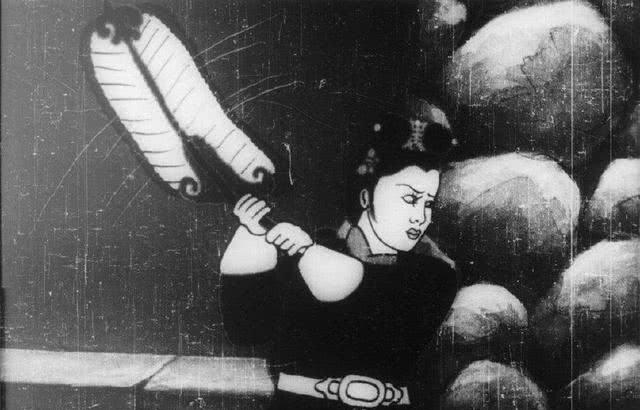
“Kosei Ono writes a chapter specifically about the impact of Chinese cartoons in Japan, beginning with the watershed success of Princess Iron Fan, conceived in China as an anti-Japanese parable, but screened in wartime Japan as an innocent children’s cartoon retelling an episode from Journey to the West. Of course, it also spooked the hell out of the Japanese Navy, which threw money into making a rival feature so that Japan could regain the cultural high ground – the result was Momotaro: Sacred Sailors.”
Over at All the Anime, I review Daisy Yan Du’s new collection Chinese Animation and Socialism, which manages to link wartime propaganda, Chairman Mao and contraband dubs of Jenny Agutter in The Railway Children.
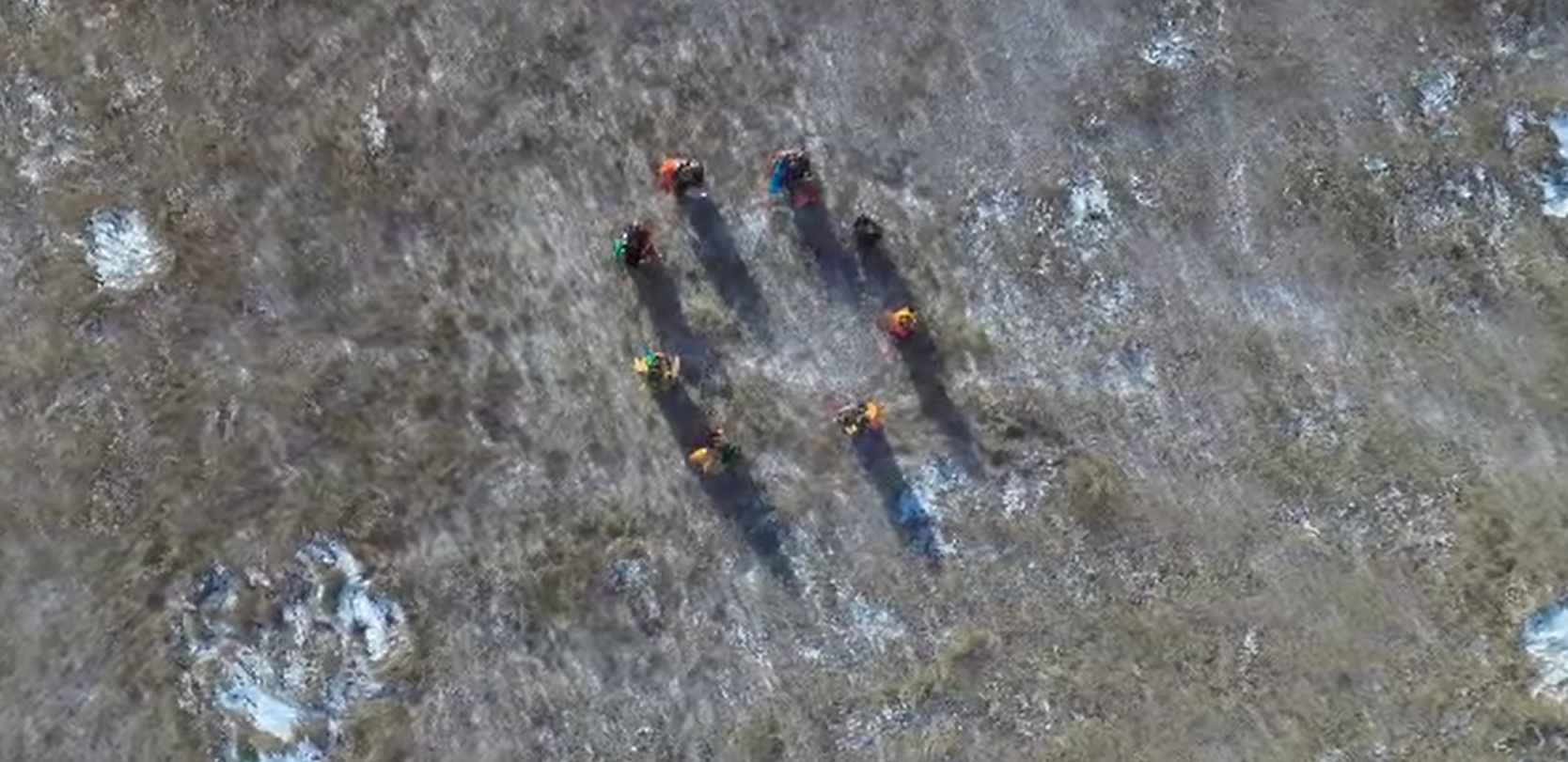
Back out to the park in ten degrees below, to film the shamanic procession and dancing from yesterday. Yes, we already filmed it, but today we have to do it again for the benefit of the drone to get some picturesque aerial photography. That isn’t as easy as it sounds, because the drone batteries go flat within ten minutes of hitting the cold air, and it often takes ten minutes to calibrate them, because the sound man’s phone is the interface with the controller for the flying camera, and it refuses to operate unless it is cuddled and cosseted within a pile of camping heater-packs.
Our drone pilot must also operate the phone using its touch-screen, which means he can’t wear gloves in the freezing temperature, and can’t actually feel where his finger ends and where the screen begins. The shamans are also complaining, because they never realised that they would be standing around in the snow.
“We don’t do this in winter,” says one tubby lady, whose name is Yufang. “And some of us are in our sixties. And what’s with all this ‘OKAY’ business? That director woman is always shouting ‘OKAY’ all the time. She says it when it’s time to start, she says it when it’s time to finish.” Her fellow shamans all titter and giggle, and start chanting “OKAY” while banging their drums and shaking their hips to ring the bells on the end of the long ribbons.
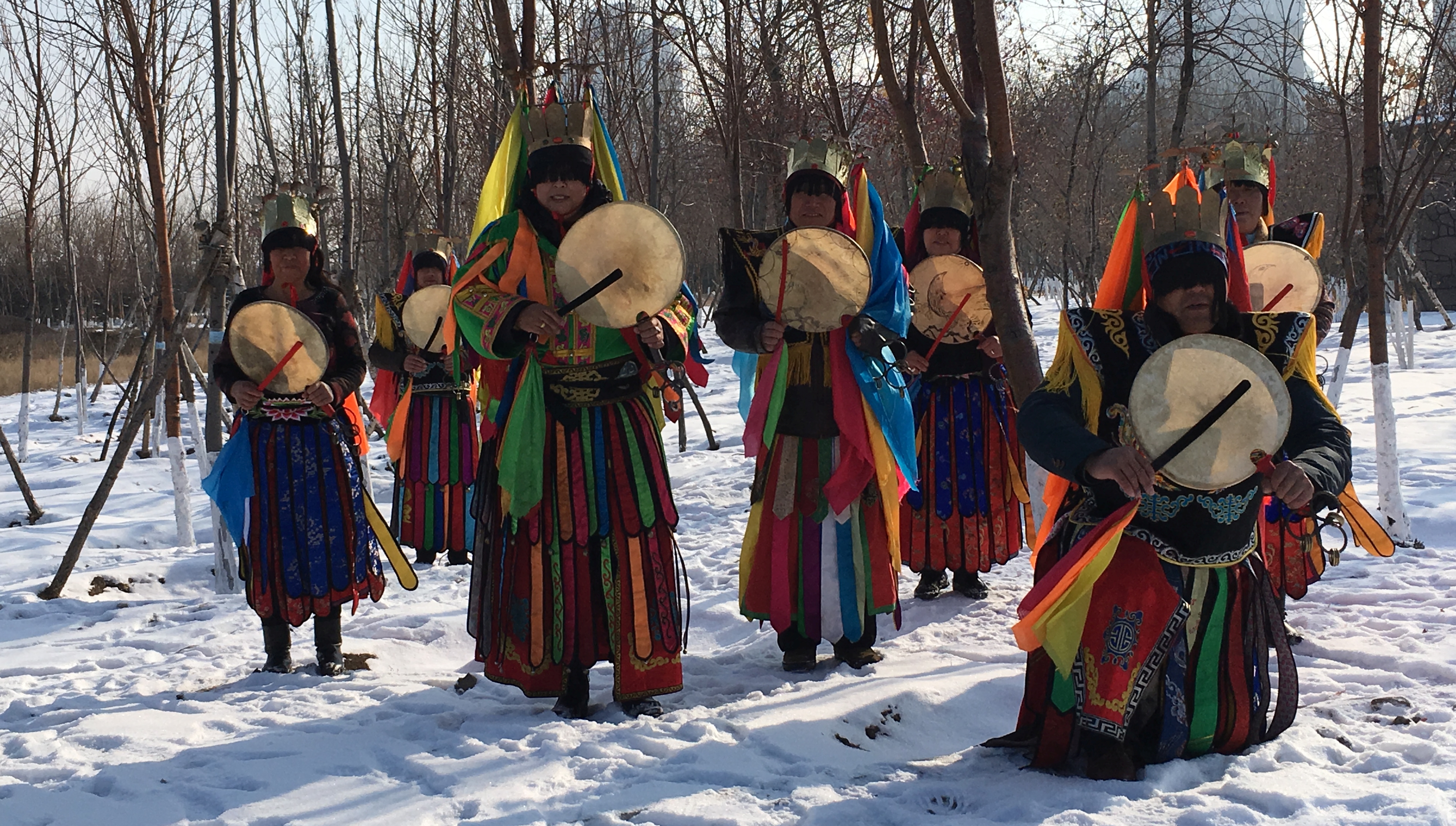
A man walking his dog stares at me like I am somehow responsible for the dancing wizards in gold crowns and rainbow ribbons, banging drums on a Tuesday morning in the park.
I explain what okay means, and ask Yufang what it is in Mongol.
“Bolok,” she replies, which is too good to be true.
The drone barely manages two ten-minute runs in the cold air, while the shamans shiver and wait for their cue. The locals don’t help by insisting on treating a public park like a public park, so that at least a couple of shamanic rituals are interrupted by a hatchet-faced woman in a purple tracksuit, power-walking along the path. The usual crop of men with giant telephoto lenses are in evidence, but we don’t think they are spies. Everybody and his dog seems to own a massive telephoto lens in Songyuan – maybe this is where they make them.
The afternoon is spent in an embroidery workshop run by the twins, Black Silver and Coral Red. Their grandfather was the scriptwriter on a Genghis Khan movie and they are plainly posh literati, whose workshop specialises in the Planet Mongo fashions of the Mongols, all Vulcan shoulders, and hats that seemingly have dildos sticking out of the top. Black Silver and Coral Red fuss around their guests with a pot of tea, and I interview two of the shamans, including Furong, the witch-woman from last night.
Furong isn’t drooling bogies and ash any more, nor is she spitting firewater at the camera. Instead she has transformed back into a well-turned-out forty-something in a fluffy fur coat, with the occasional habit of rolling her eyes to commune with unseen spirits. She is only 42, but I can see from the light behind her hair that she dyes it, and wonder if she is hiding bolts of grey witchy hair. But if she had it, why would a shaman hide it?
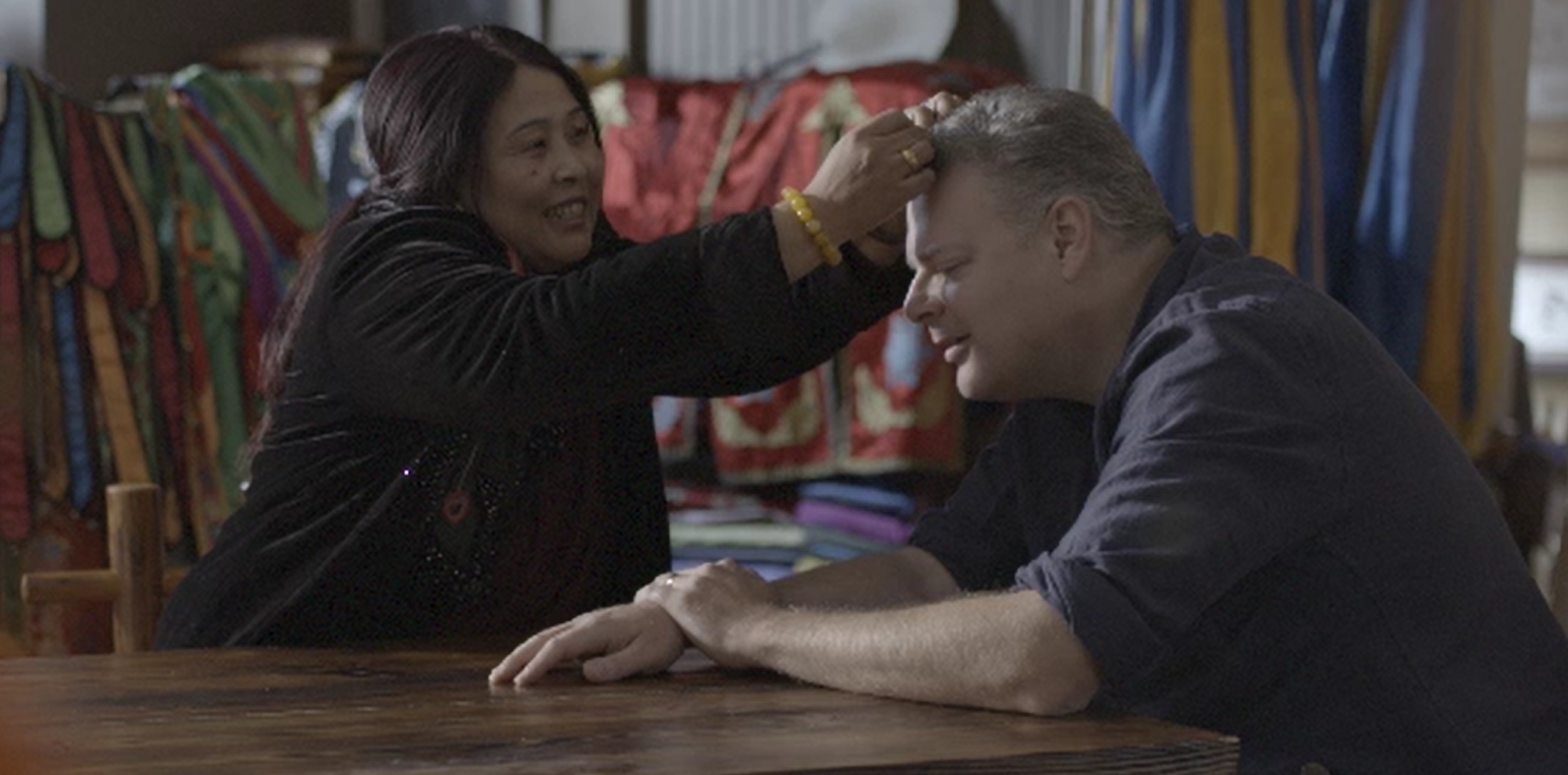
Her hands are amazingly warm and soft. Furong starts stroking my hands, peering underneath my eyelids, examining my stuck-out tongue, and pulling out one of my hairs.
“You must be careful with your heart,” she says, after conducting this odd examination. “You have an odd heartbeat, and stomach problems, too. Maybe your kidneys. But these are all signs of a haunting.” Sickness of some sort, particularly in the heart or stomach, is one of the signs of a shamanic disciple in waiting. “Your fingers are cold, but your hands are warm,” she continues. “This is because of the bad circulation from your heart.”
“There are spirits watching over you,” she says. “And you have great power within you, to be a black shaman, the most powerful kind of all. Your dreams already see the future. You cried when I danced. You must be exorcised to banish the sickness, and then you can begin your training, assuming you find a suitable mistress.” Her eyes flash.
In the mirror behind her, I see the crew exchanging quizzical glances. Nobody was expecting this, least of all the other Mongols in the room, who are wide-eyed with excitement. The sound man doesn’t help by humming the theme from Bewitched while he fiddles with the sound dials.
“Been a while since we found a black shaman!” beams Mrs Bao.
“Bit of a turn-up,” agrees Mr Bao. “Bolok!”
A black shaman apparently something of an untouchable in East Asia, who mediates with the lower and more terrifying spirits, as opposed to the white shaman who consorts with the nobility and the nicey-nicey spirits. It doesn’t sound like a particularly appealing career to me, particularly if I have to eat ashes and spin in circles while talking to the evil dead. But, you know, if writing doesn’t work out, it’s nice to have exorcism to fall back on.
Furong already has a disciple (some shamans have dozens), a soft-spoken man called Ping who was the subject of last night’s exorcism. While Furong sips daintily at some red tea with her long-suffering husband, Ping tells me about his damascene moment.
“I was in an accident,” he says, “and I couldn’t do sports any more. For three years my limbs were stiff like there was something squeezing my bones. But then I saw Her, and I realised I had seen Her before. I felt like I already knew Her, and we talked as if we were long acquaintances. And then I remembered, I had seen her in my dreams. You see your teacher in your dreams, and your dreams lead you to Her. She agreed to teach me. They chased out the ghosts and welcomed in the good spirits, and I felt such happiness. I was so happy… I, I…. can’t say in Mandarin.” He switches into Mongol, and we have to wait until we get home to get it subtitled.
Michelle the assistant producer is getting on with her usual tasks, scribbling the next shot title onto the clapperboard.
Furong suddenly seizes Michelle’s hands.
“You are a shaman,” she tells her. “You are from a family of shamans. I see your ancestors in you.” Michelle recoils in horror and scurries out to the toilets.
Furong doesn’t seem to be bothered by this.
“She knows,” she shrugs. She looks at me again, her eyes hypnotic. “Your dreams come true, don’t they? You have seen the future in dreams, but you only know it when it occurs. That is the first sign.”
The director is getting increasingly annoyed by all this hocus-pocus, and starts shooing people out of the room to the next location. The cameraman is similarly unmoved, claiming that Ping the Possessed only shook and wobbled at the exorcism last night when he saw that the camera was on him.
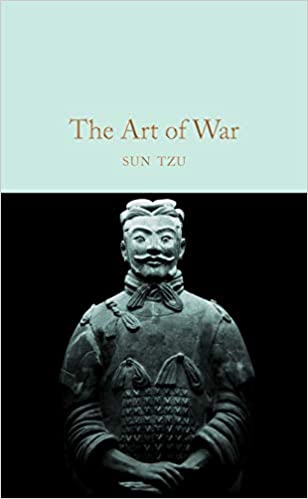
Unlikely achievements part 311221: discovering my 2012 translation of the Art of War is #1 in Amazon’s Ancient Chinese History Chart.
Part 311222: discovering that Amazon has an Ancient Chinese History Chart.
Part 311223: Discovering that of the other books in the top ten, one is a comic, another is about the middle ages, and the rest aren’t actually about China at all.
Part 311223: Noticing that the biographical data on the page describes me as “James” Clements.
Buick want us to showcase their latest model on this trip. I should be able to tell you all about it, but all I can say for sure is that it will be released in America in 2017, and that it is a red one. And the one we have been supplied by the Songyuan Buick dealership unhelpfully has National Geographic decals plastered all down the sides, having previously been part of this year’s journalist junket convoy. So the director orders a trio of idiots (me, the fixer and the D.O.P.) to take it out and get it cleaned, preferably in such a manner as to generate some interesting footage that will also fill up this episode’s quote of product-placement car shots.
She is hoping for an automated car wash, so she can get a sequence of me glumly sitting behind the wheel while big spongey rollers splash on the windscreen. My colleagues and I unanimously decide that what we really need is a Bikini Car Wash, where they can photograph me trying to look glum while perky Chinese girls rub their soapy boobs on the windscreen. This turns out to be a non-existent service in arctic Songyuan (or indeed, anywhere in China, indeed possibly in the world… I might have dreamt it). The best we can hope for is two men with low-hanging trousers and a high-pressure hose, blowing hot water on it in a garage. This, however, fogs up the lens every time he gets close, so we are getting very little footage.
The fixer’s phone rings. Even I can hear the irate voice yelling at him from the speaker. It is the manager of our hotel.
“What the fuck are you doing? Your wizards are out of control!”
We are, indeed, currently in charge of an octet of shamans, who are supposed to be setting up in one of the hotel’s dining rooms. It is an opulent, pointlessly baroque Chinese suite, decorated with pictures from the life of Khubilai Khan, overstuffed sofas, and for reasons that only a Mongol can explain, an astroturf pasture scattered with one-quarter-scale models of goats. And apparently, the shamans are “smoking and spitting on the floor.”
I find this hard to believe, not the least because there are eleven ashtrays in the suite, which seems to imply that smoking isn’t that big a deal. Indeed, even though smoking indoors is now at least officially illegal in Beijing and Shanghai, up here in the frozen north the people of Manchuria can regularly be seen chuffing indoors, in the warm. In fact, back at the room, a forensic investigation confirms that only one person, our liaison Mr Bao, has lit up at all, on the basis of his girly Huang Shan fag-ends in the ashtray. Even the director has not smoked anything while we were away. But the hotel’s complaint isn’t really about alleged smoking and notional spitting. It is about the presence of eight shamans on the premises, plainly up to no good.
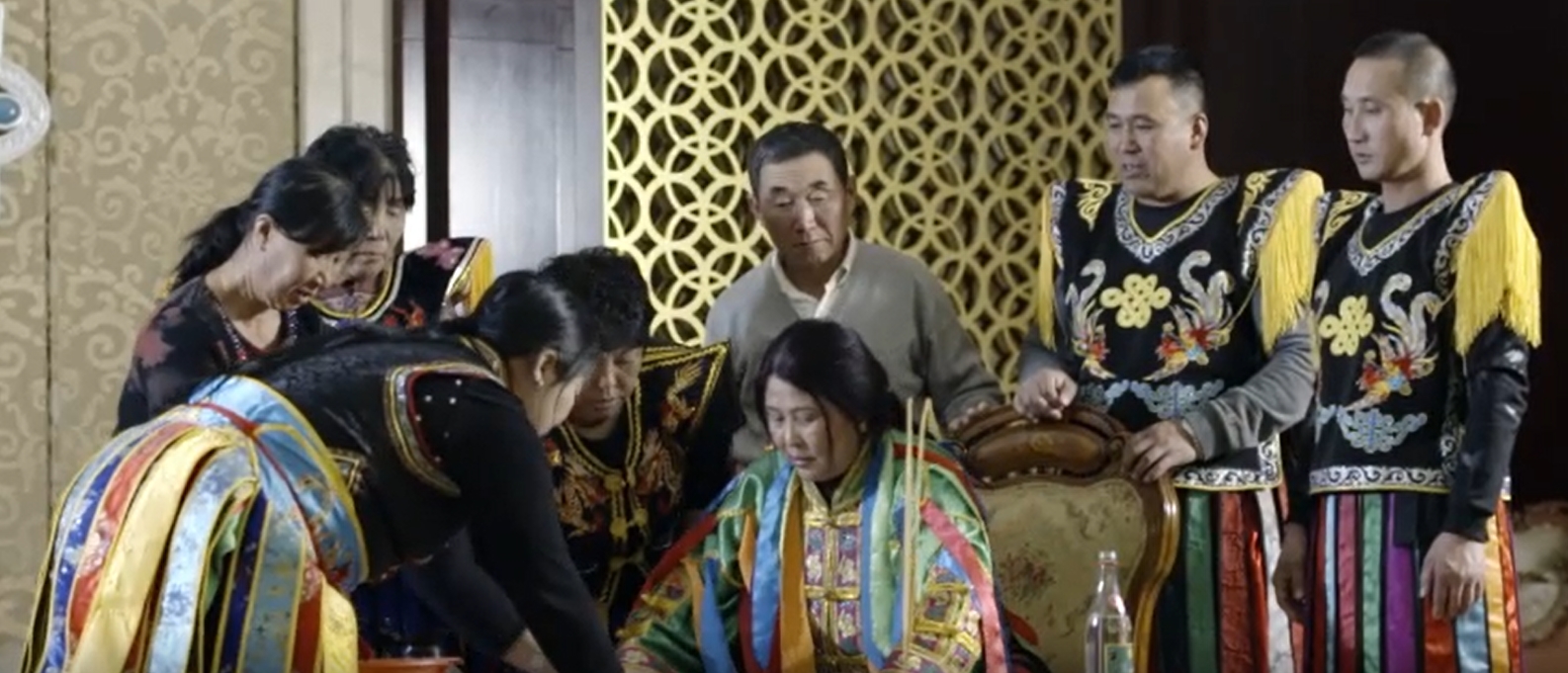
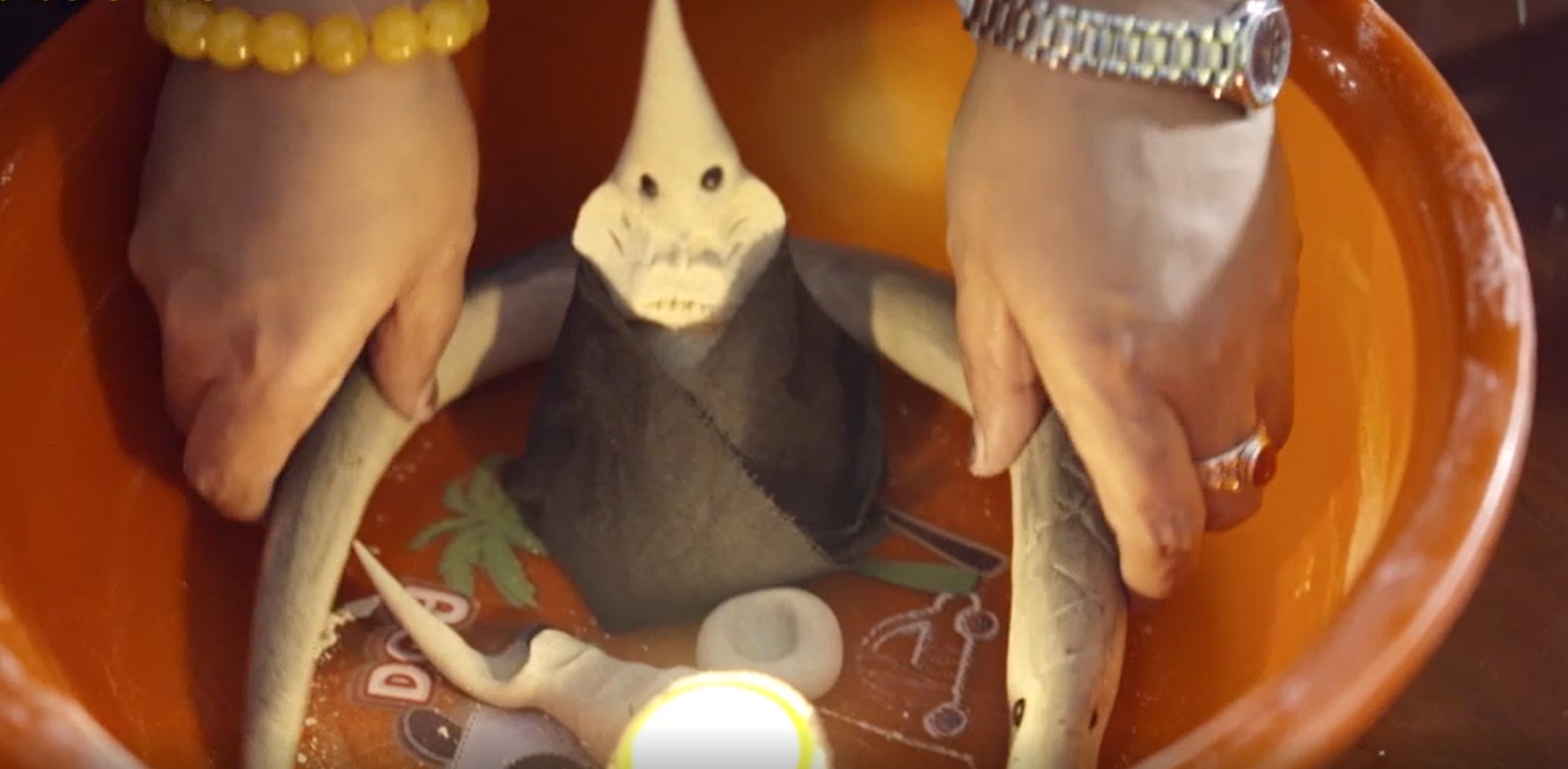
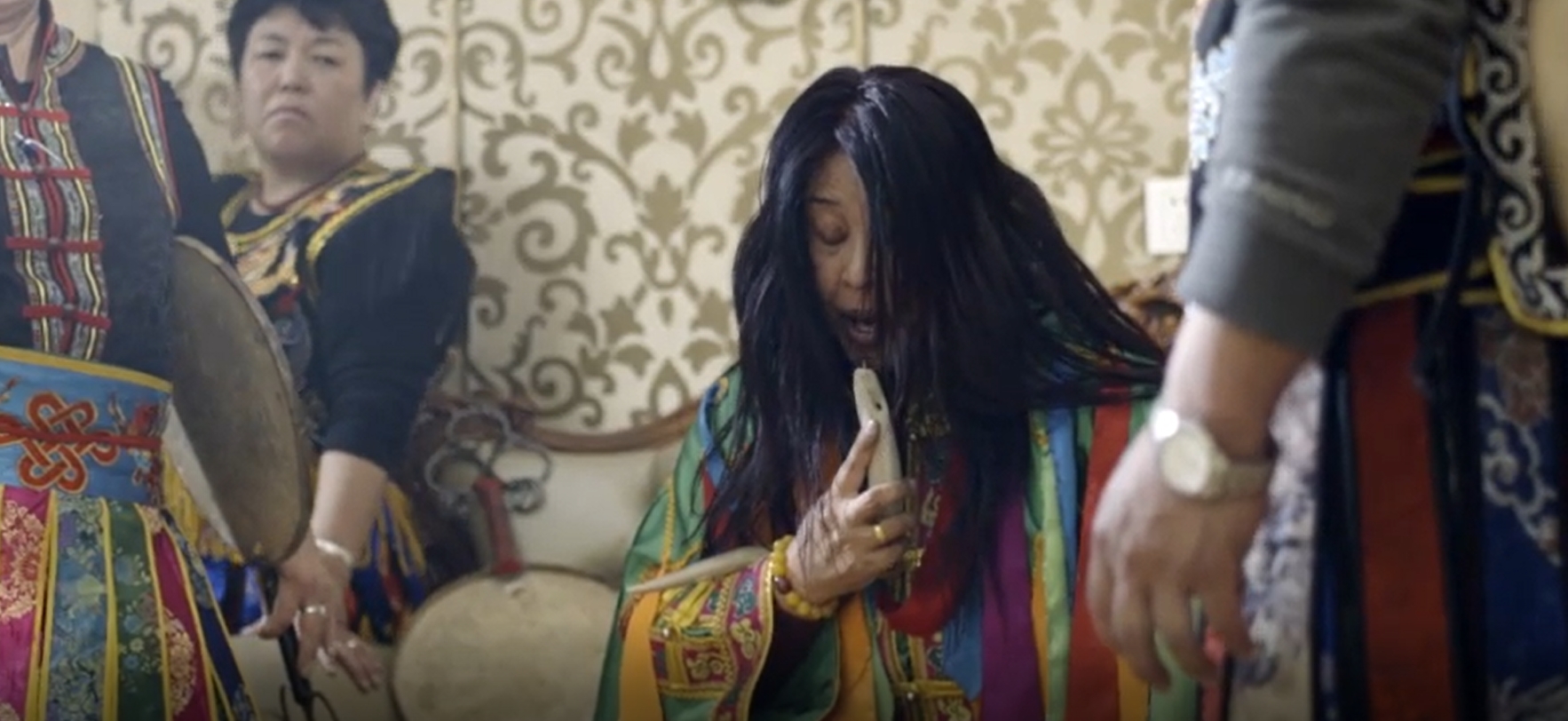
Tonight they are performing an exorcism ritual, or chu gui, which requires them to dance in circles with drums and tambourines, chanting spells in Mongol, while the central shaman, a lady called Furong, whirls and hyper-ventilates while setting fire to a small doll that looks like My Little Ku Klux Klansman.
In order to hang onto the suite, we have had to order dinner, which sits untouched on the Lazy Susan in the dining area while the ritual continues. The waitresses stare in stony disapproval, and tut as the sofas get moved. “We don’t care for their sort,” mutters one.
“‘Their sort?’” snarls Coral Red, a poet who happens to be sitting in. “THIS IS YOUR CULTURE, YOU STUPID HUSSY.” After that, the waitresses leave us alone, and when we need water, I have to go outside to the shops.
Meanwhile, the chanting and drumming reaches a crescendo. Furong’s long black hair now surrounds her face, completely obscuring it, and she is panting and muttering, her eyes rolling. She eats the embers from the fire she lit around the Ku Klux Klan doll, and is drooling black gunge from her mouth. She collapses onto the sofa and is fed 60% proof Mongol booze, which she spits across the room, muttering to herself in Old Mongol, a language that she has never learned.
“WESH!” she shouts hoarsely, “WESH!” She is drooling more black slime, and spitting out more firewater, her eyes wide, and staring at me across the room. “WESH!” she shouts. “WESH!”
Suddenly Furong’s henchman shouts at our assistant producer, who is standing by the exit, clutching at her head.
“OPEN THE DOOR! OPEN THE DOOR! IT’S TRYING TO GET OUT!”
She opens the door, and suddenly there is silence.
I am awake for dawn in Songyuan…. It is a city spattered with ice and snow and wreathed in poisonous mist. Identical breeze-block, seven-storey buildings stretch away into infinity, as if the entire city has been dropped out of the sky by God’s cloning tool. As a river confluence and the crossing point for five railways, Songyuan has been a hub of sorts for the last century, but it still seems odd to imagine that anyone would want to live somewhere so crushingly dull, where the boulevards are glum corporate landscapings, and the houses seem designed for people who never look up from their phones. This is a city of 2.8 million people, half the size of Finland.
I keep telling people I am in Inner Mongolia, but that is not true. I am actually in the Front Gorlos Mongol Autonomous County, which is in Jilin, just over the border from Inner Mongolia.
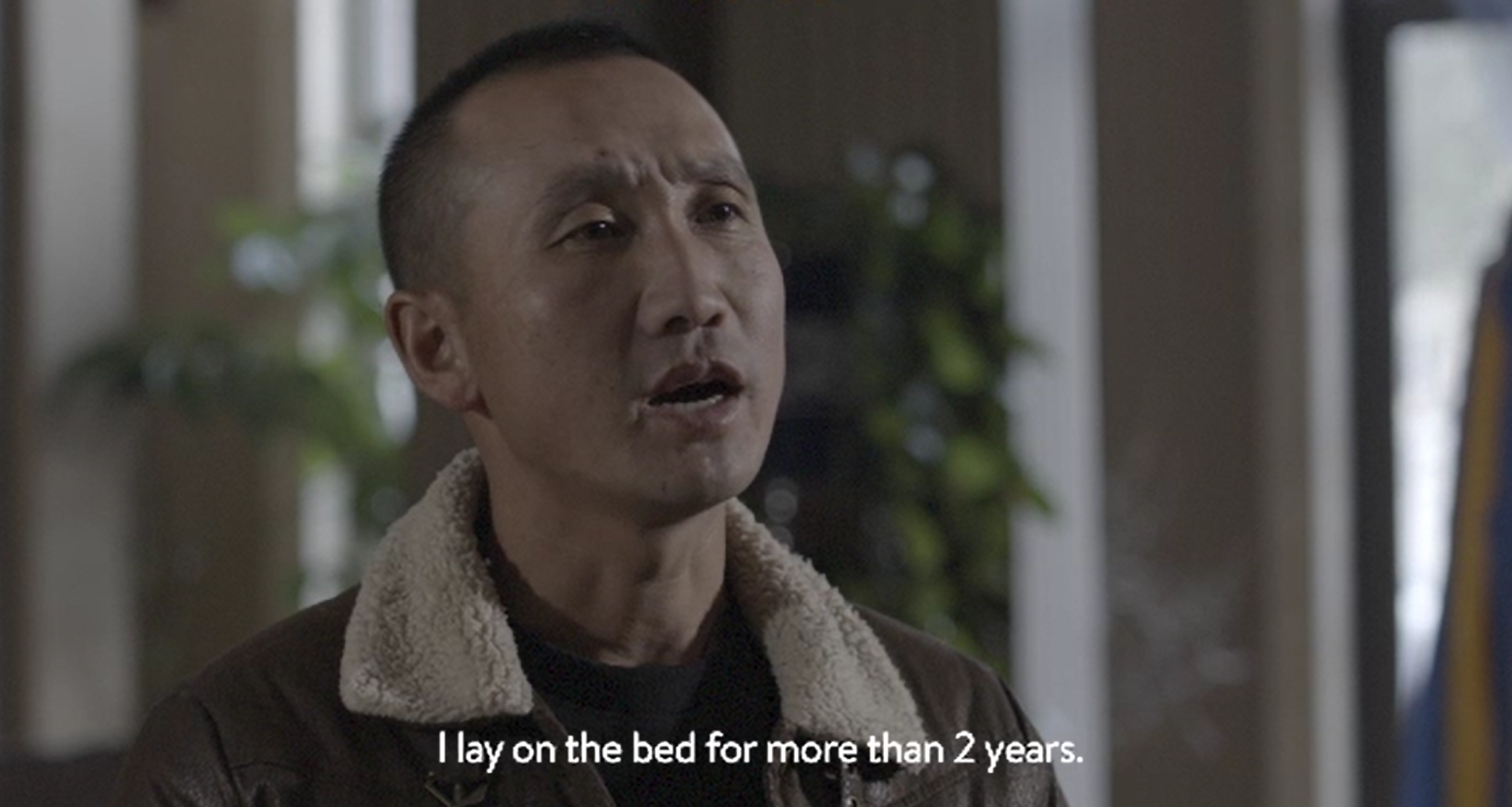
“Our ancestors had to move,” says Mr Bao, the cultural attaché, a chubby, avuncular man, who is very excited to have a film crew in town. “They picked a fight with Genghis Khan when he was a youngster, and their shamans told them: ‘this guy is going to be the king of the world; you’d better run. So we left Mongolia and took ten towns from the Manchus here. Then the Mongols took over the whole of Asia, and we were absorbed into one of the banners of the army. We are the Front Gorlos, who fight in the vanguard. There are Rearguard Gorlos as well, somewhere.”
My first meeting with Mr Bao is in our residence, The Gorlos Hotel, which is riddled with Mongol motifs, curlicues crawling up the pillars and thunderbolts in the walls. The gift shop sells horse-headed erhus and little Mongol dolls, and the convenience store has lots of yoghurt.
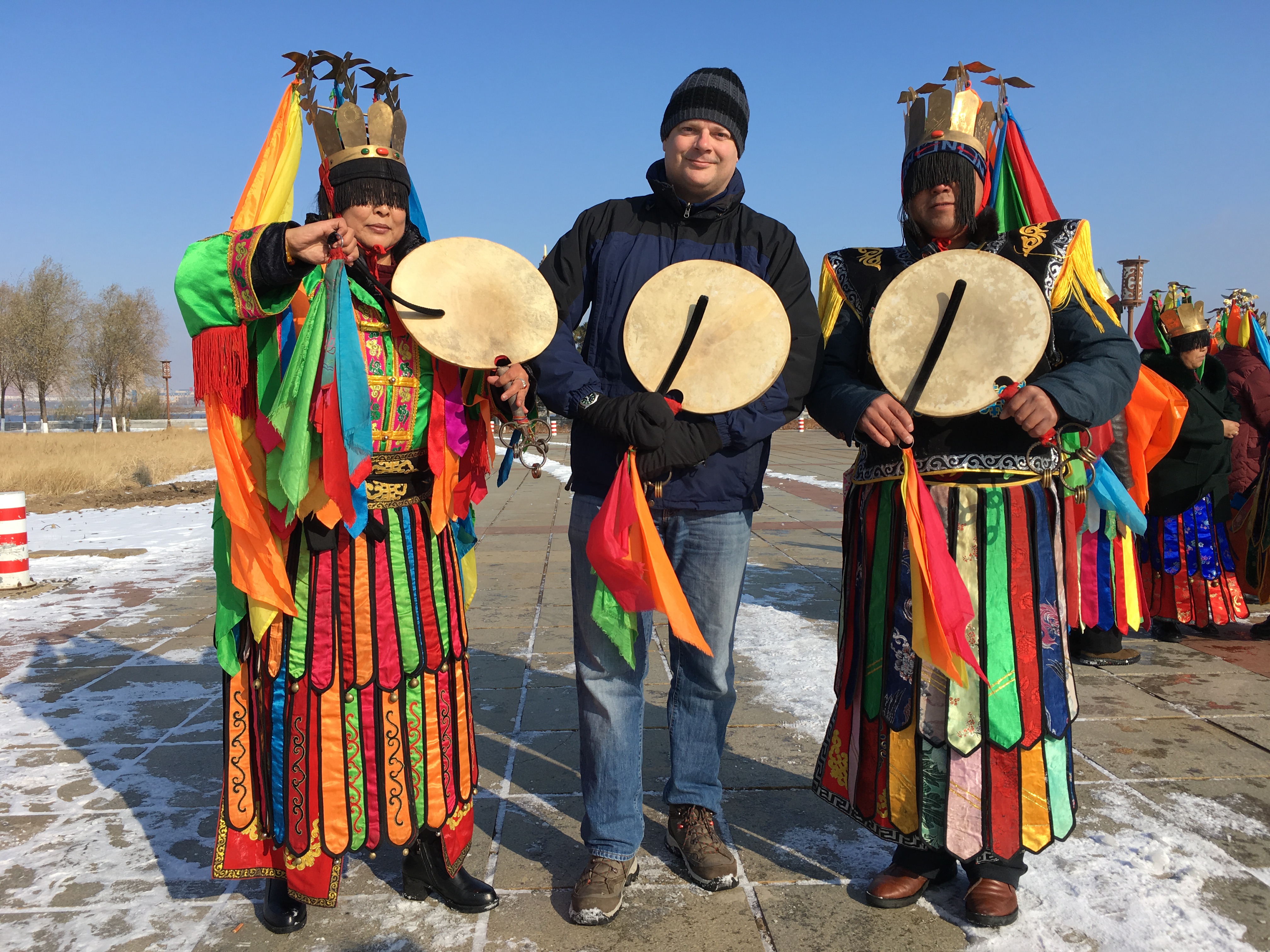
Today, we are filming a welcoming ceremony in the local park, next to the windswept waters of the icy Songhua river, dominated by eleven massive Mongol stupas. Each has a base of a circular stone cairn, topped by a flower bed planted with fir trees, superseded by a pole that holds aloft a sort of sacred umbrella, itself surmounted by a shamanic trident. Each takes on a writhing cone-shape, caused by all the flapping prayer flags that stream from the top like a multi-coloured rainbow.
It is cold. Our oh-so-high-tech thermometer broke after counting down to minus five degrees, and I suspect we are looking closer to minus ten.
“Stop complaining,” scoffs the cameraman. “You live in Finland.”
“Yes,” I point out, “but we don’t stand around in the fecking cold all morning.”
Mr Bao has gone full-on Mongol gangster. He turns up in an ankle-length dun-coloured robe with Vulcan shoulder pads and a Russian style furry hat. But he is veritably under-dressed when compared to the eight shamans he has brought along. Each has a skirt of rainbow ribbons, from which dangle jingly bells. Each has an embroidered tunic with twisting dragons on it, with shoulder pads that reach out for half a foot on each side, and a golden crown topped with metal butterflies, from which rainbow streamers depend down their backs like kabuki battle-flags. And to complete the ensemble, each wears a fringe of black beads that hangs down to their nose, completely obscuring everything above their upper lips.
For some reason, people stare. We are trying to film the shamans banging their tambourines and shouting at the gods, but the producer has to keep dragging gawpers away by the scruff of their necks. One particularly irritating passer-by has a camera that goes BING-BONG every time he tries to sneak a photograph, and lacks a telephoto lens, which means he keeps wandering into shot.
A far more sinister rubber-necker is a woman in a white snood who is nonchalantly toting a Canon 5D with massive grey telephoto lens, which the director identifies from 100 paces as a ten-grand EF200-400mm f/4L IS USM Extender 1.4x. Snood Lady then proceeds to spend the next two hours pointing it at us from the shrubbery, making her the most obvious tail we have ever had. Even Mr Bao eventually tires of all the attention, and gently admonishes her that she is wasting her time, as we have all the correct papers. She pretends to be photographing a bench for a few minutes, and then returns to her old ways.
Mr Bao and his eight wizards, men and women, dance around the stone cairns and burn incense, chanting in Mongol while the icy wind flaps at their prayer flags. The director hopes to get some aerial footage of them twisting and jiving on the brown grass in front of the stupas, but we discover after thirty minutes of false starts that the cold has done for the drone batteries. It takes a long while for the drone pilot to even get his phone to turn on, but by the time he has calibrated the drone software and launched it into the air, the drone’s own batteries are already flashing alerts, and it has to come down before it can shoot a scrap of footage.
The cinematographer reveals that his camera is similarly hobbled, and that he has somehow got through two batteries this morning. But at least we have the Welcoming Ritual in the can from the ground. What’s next?
“Next,” beams Mr Bao, “we need to find somewhere indoors to shoot the exorcism ritual. People get possessed, you know, and their bones ache, and they come to a shaman looking for help. And it’s from the ranks of the possessed that the shaman will select his future pupils. You don’t choose to be a shaman, shamanism chooses you, and you will dream of your master and seek him out. If he won’t teach you, then you will bleed to death from all seven of your holes.”
Nervously, the director asks him if he has a candidate for exorcism handy.
“Oh yes,” says Mr Bao. “His name is Ping. Can I bring him to your hotel this afternoon? We’ll need a room big enough to light a fire in, preferably with washable carpets.”
Over at the History Hack podcast, I talk about the life and times of Coxinga, the “pirate king of Taiwan,” the leader of the anti-Manchu resistance in the 17th century, son of the richest man in the world and his samurai girlfriend, scholar-turned-rebel, twice made a god, one of the most interesting figures in Chinese (or Japanese, or anyone else’s) history.
Also available on YouTube. And of course, should you want to read the book, you can find it here.
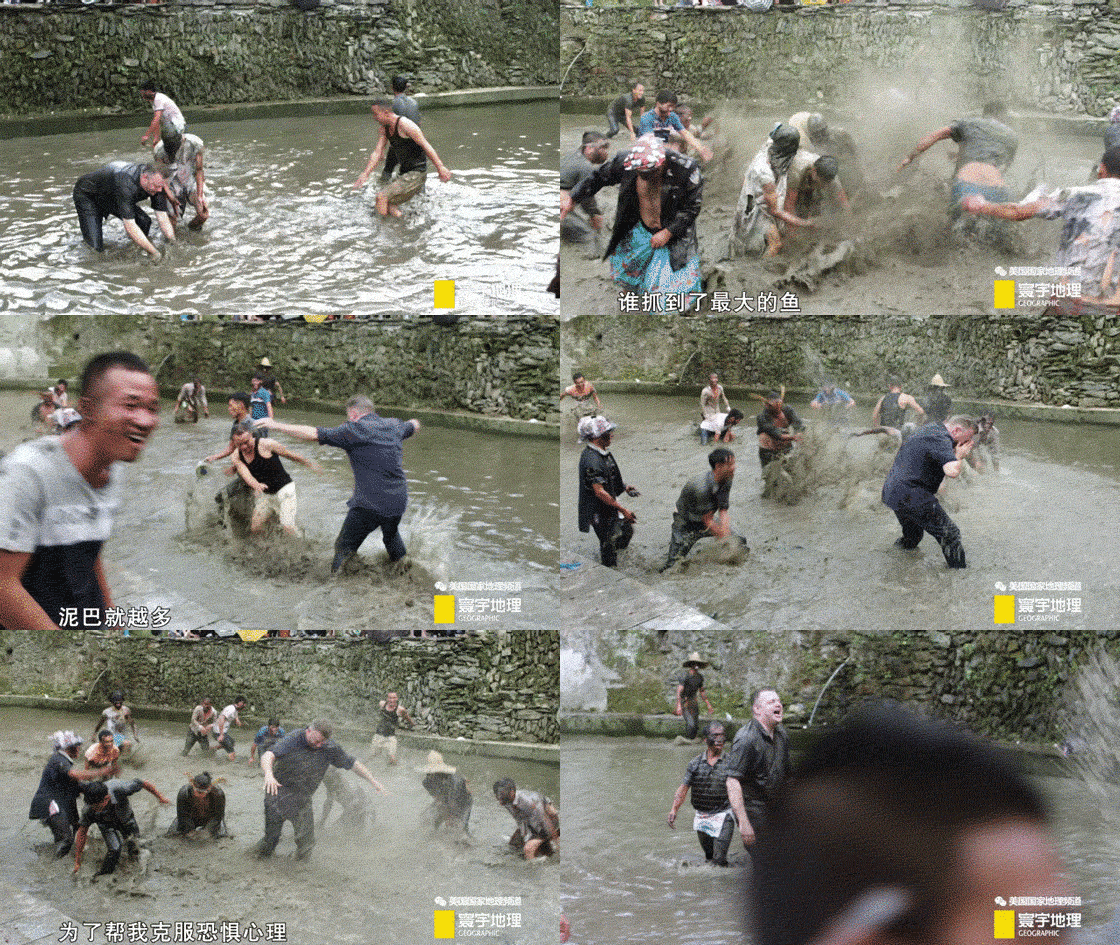
The area around the drum tower is thick with people. Tourists from all over the province, Kam youths and twentysomethings on vacation from their urban jobs – hipster girls from Canton pretending that this is all jolly larks, and their boyfriends in basketball shirts and baseball caps, like inflatable gangsters that have yet to be attached to a pump nozzle. All are clustered around the carp pond in the village centre, munching on melons and chanting the Chinese equivalent of Why Are We Waiting, while old men chuff on cheroots and the grannies wonder if anyone is coming in for lunch.
If you wish to hold a Kam fishing competition, you will first require a rancid area of water the size of a tennis court. Be sure to throw all your trash in it through the year, and for extra fun, try slaughtering half a dozen cattle the day before and hosing their terrified bowel evacuations into the water.
You will then need to get drunk. I mean, really drunk. I mean, try to make sure you can barely stand, and that the only thing which can hold you upright is the possibility that one of your mates is leaning in the opposite direction and you can cancel out each other’s collapse.
Smear mud on each other’s faces, then dress up. Leaders might like to wear a nice blue ballgown, others might prefer an Indian feather headdress, a policeman’s uniform, or perhaps a comical construction worker’s outfit. Because this is rural, tribal China, absolutely nobody will draw the obvious conclusion that you have just turned yourselves into a blackface parody of the Village People, accompanied for some reason by Jason from Friday 13th and a bunch of men banging gongs and letting off firecrackers.
Then jump in the pond, and RELEASE THE CARP!
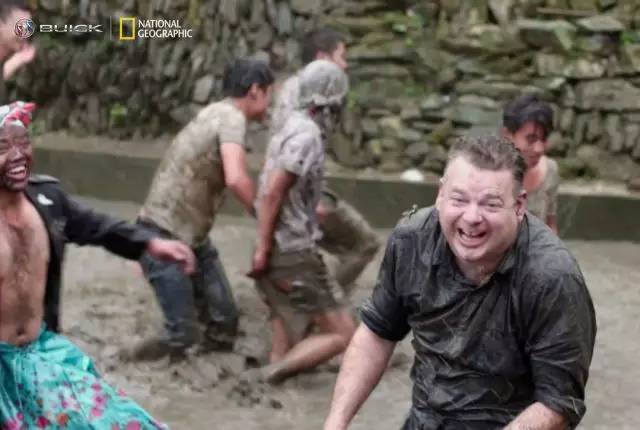
The village men completely ignore the carp, and instead turn on each other in a free-for-all, splashing each other and the crowd, dumping mud on each other’s heads, and occasionally paying a vague homage to the idea that they are supposed to be feeling in the water for fish, in the manner that Pan taught me up in the rice paddies the other day.
Some of the observers, not dressed as the blackface Village People, but certainly locals, also jump in. Then, two of the locals grab one of their friends and push him in. I look around me to see if we are filming, and see instead Pan, our local fixer, sprinting straight for me. I turn with him and we jump together into the pond, whereupon everybody starts splashing us and whooping.
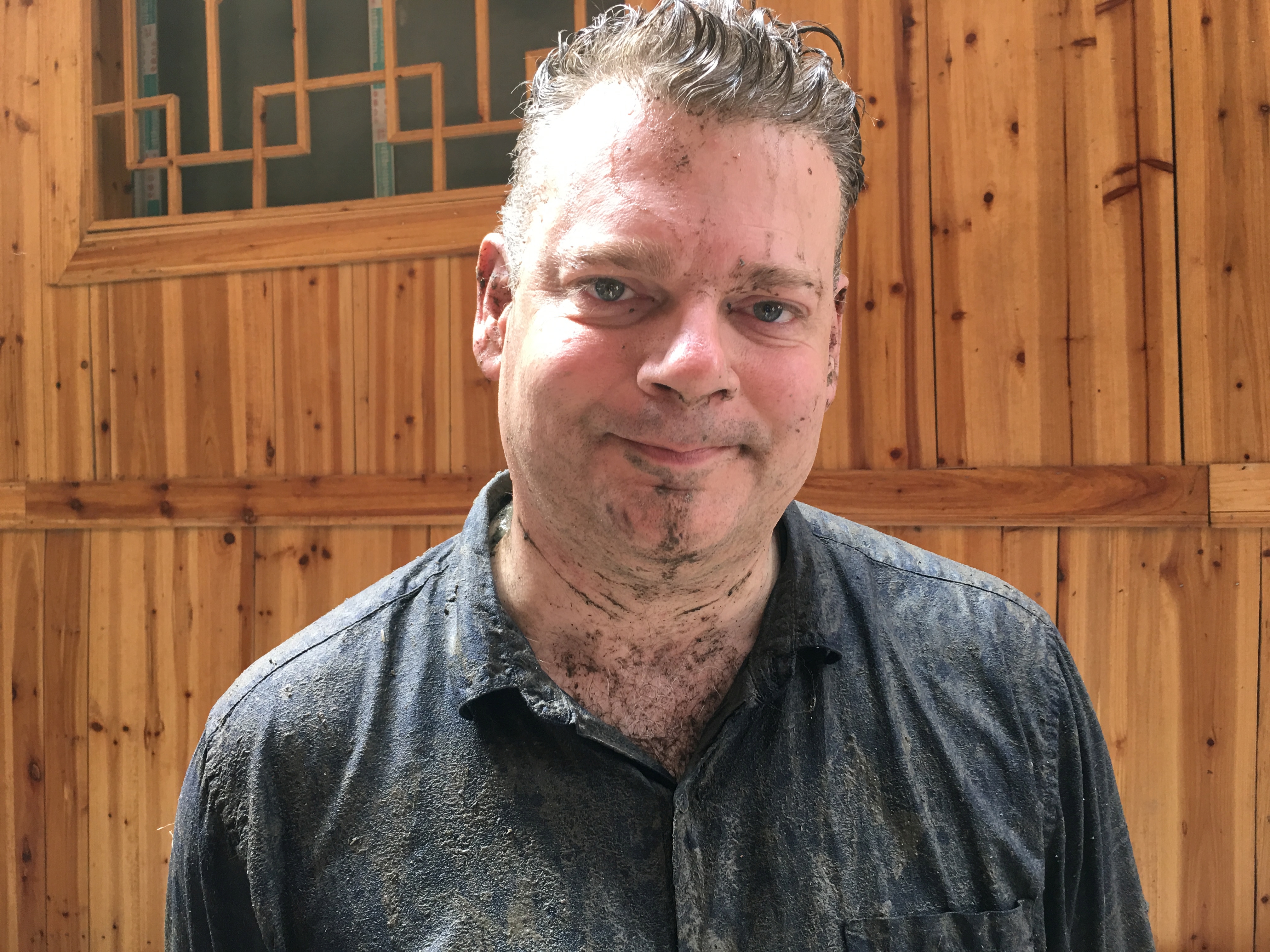
This is, it turns out, what happens. All new arrivals are thoroughly drenched by everybody else for a while, until people get bored and return to the job at hand, which is supposedly looking for the carp. At the time, however, I don’t know this, and presume simply that the entire nation of the Kam has turned on me and flung gritty, muddy water into my eyes. Somebody dumps mud on my head, and I chase around after Pan like a big muddy bear.
I am sure it all looks quite spontaneous to the crowd, although I have been preparing for this for weeks. I have arrived at the pond wearing my aqua shoes, not my boots, and although I look no different to an outside observer, I am actually wearing old clothes from last year’s shoot – one of the advantages of having five identical outfits. I am not wearing my watch and my pockets are empty, and I know I have a complete set of fresh clothes waiting down at the hostel.
Pan, however, hasn’t thought this through quite so hard, and sloshes over to the edge of the pond to dump a muddy confection in the director’s hand, which turns out to be his wallet, phone and keys.
The Village People Construction Worker has caught a fish. He brandishes a golden carp to the cheering crowd, and then flings it at them, eliciting squeals of delighted anguish from the Cantonese hipsters. Behind me, I hear girlish shrieks, and see that a trio of mud wrestlers have leapt out of the water and grabbed our Camera Assistant, who is protesting in terror as they threaten to throw him and the priceless lens bag into the water. Luckily his pleadings fob them off just before the filming would have been prematurely ended by the ruining of half our equipment.
The fight continues, with further findings of carp. I, however, come out with little more than a pencil, two empty bottles and a soggy cigarette packet. When the director adjudges that I look sufficiently ridiculous, I slosh out of the water and stand in front of the camera to do a piece to camera about tribal traditions. I then slosh off through the crowd down to the hotel.
Mr Wu is deep in his cups with his drinking buddies, who have also discovered the joys of the director’s French menthol cigarettes. They are off their faces by the time I reach the hostel, and he looks up to see me standing outside the terrace like a mud-spattered spaniel. I salute him.
“Ah,” he says in the best English he can manage, “gooder.”
“I don’t think I want you to go in the mud fight,” says the director. “Or rather, I think contractually I can’t make you do it. The pond looks disgusting. I wouldn’t get in there. And production-wise, if you get tetanus or ringworm or something, or a rash, it will compromise the rest of the shoot.”
Yes, I say, but if National Geographic send me to the Kam mud fight and I stand at the back reading a newspaper, you might as well not have sent me at all. Isn’t this what a presenter is for? Looking like an idiot?
“We’ll talk about this later,” she says. “In the meantime, I’ve found you this nice apron with puppies on it.”
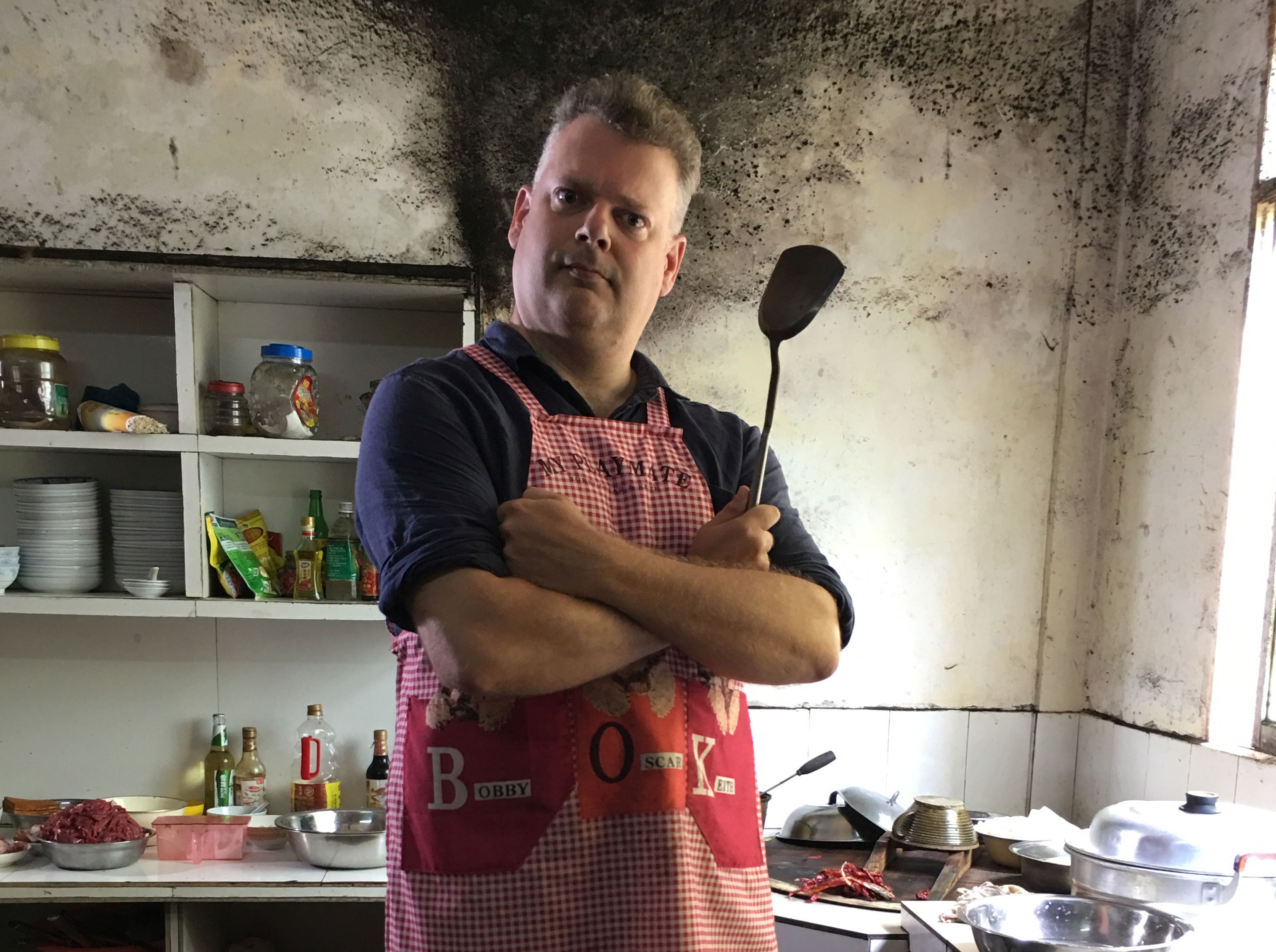
Mr Wu has fired up the stove, and thrown extra wood into the oven. The oil is crackling in the wok, and I am wearing a fetching gingham apron that has the words MY PLAYMATES written on it in large, friendly letters, above a picture of three puppies whose names are apparently Bobby, Oscar and Keith. I’m just saying: somebody had a meeting about that.
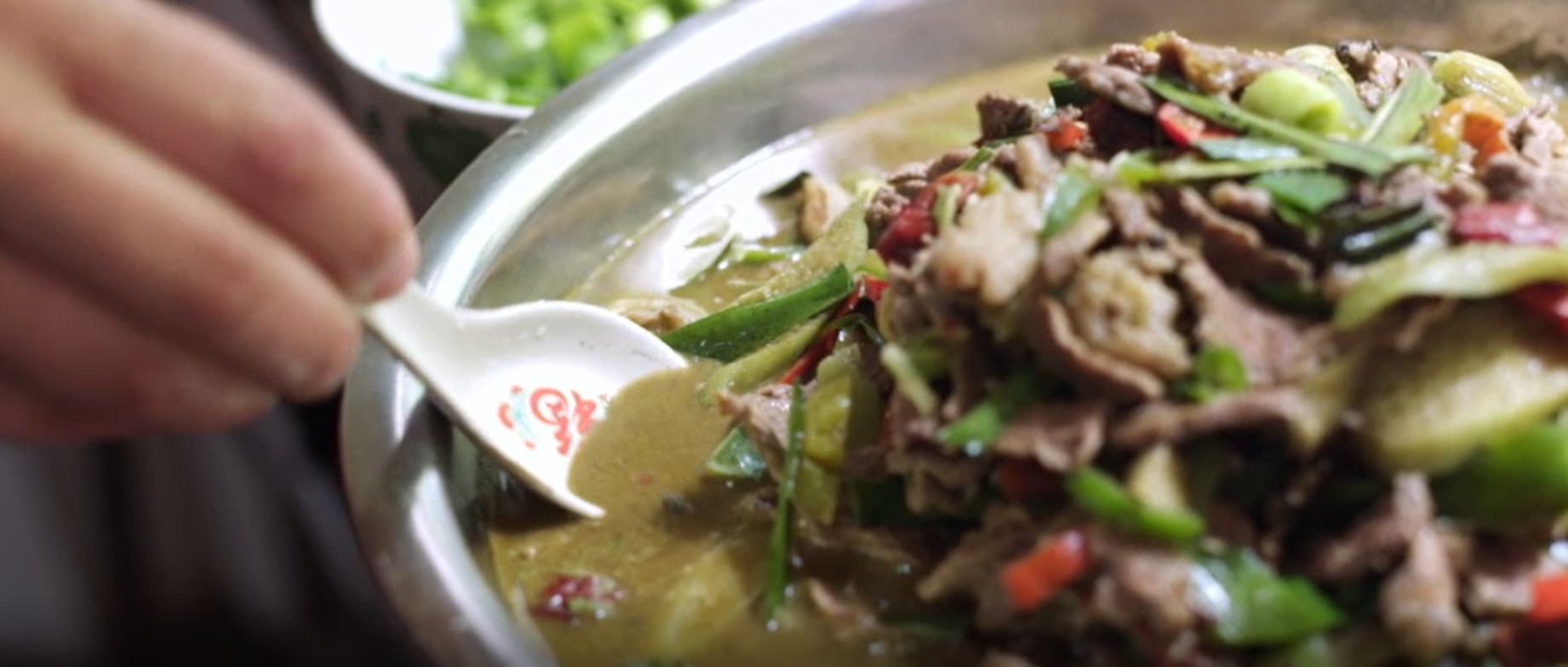
Today we shall require some roughly chopped red and green chilies, some ginger, some leek leaves, and some cubes of beef, as well as our magic ingredient: the intestinal juices of a recently slaughtered cow, wrung out from the grass of its last meal, itself ripped from the intestines in the middle of a tribal free-for-all. If you can’t find a recently slaughtered cow, feel free to use the intestinal juices of any creature in your vicinity, particularly one that eats grass, as it’s a good way to get that lovely green colouring. And I thought they only smelt bad on the outside.
Mr Wu boils up the niubie in his wok, then sets it to one side while he fries up the beef in the chilis. Then he pours the niubie over the top and dumps it all in a bowl. He offers me a spoon and I gingerly take a sip… It tastes like a soup made with chili and pepper and… oh, wait, there’s that burning aftertaste at the back of your throat like you just threw up a little bit in your mouth.
The director glares at me and I think of something else to say, vaguely suggesting that there is a Joycean uric tang.
It is only then that Mr Wu realises that he can’t find his blood.
“Where’s my blood?” he bellows?
“What blood?” squeaks Mrs Wu, who is trying to wok up a lunch for a group of eight tourists in the restaurant.
“The big bowl of blood with all the spices in it. We only scooped it out of the cow yesterday. I was going to cook xiehong for the foreigners.”
“Oh that,” says Mrs Wu, the dim dawn of realisation starting to glimmer on her face. “I thought that was waste, so I threw it out.” Mr Wu goes ballistic, since now he has to go and find some blood from somewhere else, like a five-foot vampire on a charity mission.