Hiroshi Yamamoto

Over at the Encyclopedia of Science Fiction, I write up the remarkable authorial career of Hiroshi Yamamoto, who started out as an elf-girl called Deedlit.

“In any other country’s sf community, an author like Yamamoto might have been the darling of the convention circuit for decades, and a regular sight at awards ceremonies. But in Japan, where his prolixity and varied output is notable but unremarkable, Yamamoto had to wait until Kyōnen wa Ii-nen ni Naru Darō [“Last Year Should be a Good Year”] (2010) to receive a Seiun Award for long-form fiction. Intimately involved in the post-911 zeitgeist, it imagines a world, but more pointedly an America, invaded by androids from the 24th century, determined to stop contemporary conflicts and terrorism as part of an operation in a much wider-ranging Changewar, the precise aims and consequences of which are hidden from inhabitants of the present day.”

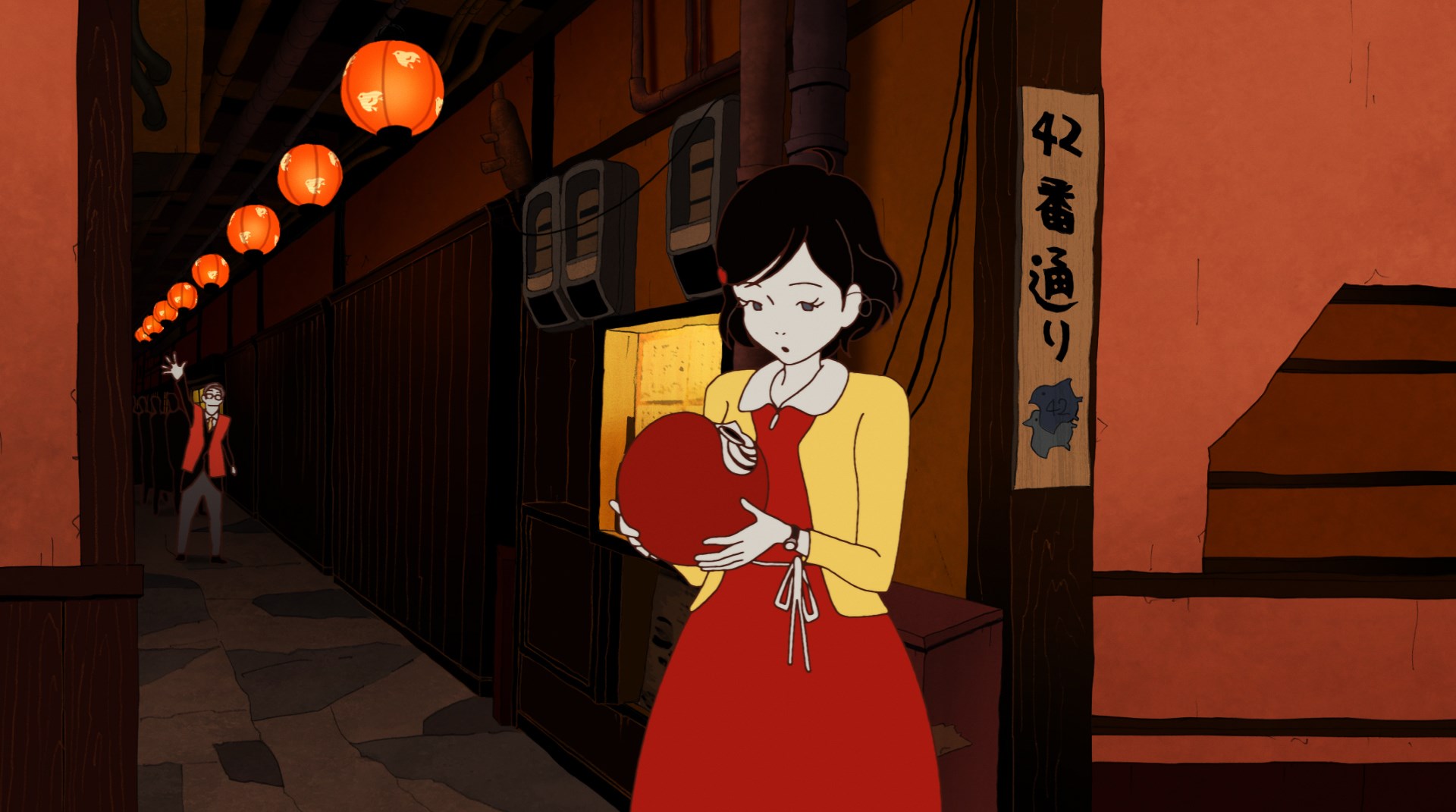
The Night is Short…

I once lived in Kyoto. It was a magical time of my life, wandering temples and wooden-shuttered backstreets, side-eyeing geisha at the bus stop – the town that had been Japan’s capital for a thousand years, simmering in the summer heat. My history tutor told me to ring the doorbell of a fearsome, fortress-like building, and to announce to the occupant that I was his deshi. This simple watchword unlocked the bolts, and an antique dealer, feared by the locals, welcomed me with open arms and showed me prints of the war with Russia from a hundred years before. “I remember your teacher when he was your age,” he said. “Like it was yesterday.” But it wasn’t yesterday; it had been twenty years. I went to a barber and sipped gingerly at tea that tasted of fish, while a man who seemed to think it was still 1951 asked me if I wanted a “G.I.” haircut.

Sometimes I forgot what year it was myself. I felt that was how the whole town got along. There was a children’s playground next to a mount called Mimizuka, the “Hill of Ears”. But the name was a lie; it was full of noses, hacked off Korean soldiers during the samurai invasion that closed the 16th century. Every day I would walk across the bridge at Gojo, where my hero Yoshitsune had legendarily fought the monk Benkei. I bought manga and rock CDs next to a little temple, where Oda Nobunaga had made his last stand. I ate noodles near the spot where Yasuke, the black samurai, had overwhelmed his traitorous enemies. Of course, I was going to be a historian, so that others could see what I could see.

In a tea-house, a girl all in grey with shining eyes told me that we had been married once before, in “a smoky room”. The next day, she shaved her head and became a Buddhist nun.

Nobody ever stole my pants from me in a dark alley, though.

Blood Will Tell

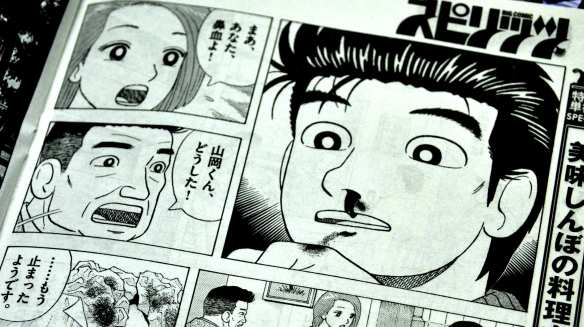
The nosebleed, long a sign of suppressed lust in manga, has taken on a whole new meaning, in a controversy that has now been running for five years, and left a stain on what should have been the triumphant ending of a successful series.

Tetsu Kariya’s Oishinbo (“The Gourmet”) has been running for three decades in the pages of Big Comic Spirits, drawn by Akira Hanasaki. “Thirty years,” wrote its author ruefully, “is long enough for anything,” and there were rumours afoot that with failing health and entirely reasonable weariness, he was planning on bringing the story to a close. However, Oishinbo bowed out suddenly and unexpectedly, after a May 2014 storyline about reporters covering the nuclear accident at Fukushima.

Oishinbo was one of the most successful manga in Japan, running to 111 compilation volumes, every one of them a million-plus best-seller. It is one of the last hold-outs of the “gourmet” trendiness of Japan’s 1980s bubble era, and an encyclopaedic introduction to the world of Japanese food and society. But Kariya’s final storyline before a sudden (and apparently planned “hiatus”) featured a character who suddenly develops a nosebleed after coming home from a Fukushima fact-finding mission, despite claims by the authorities that there should be no side-effects. “I myself began to have nosebleeds suddenly at dinner next day when I came back from coverage in Fukushima,” wrote Kariya on his blog, also citing sudden and inexplicable fatigue: “It felt like someone was trying to drag my spine to the ground.”

Kariya, who has lived in Australia since 1988, is a Japanese opinion-former with a large audience, but he seemed to make a lot of enemies. All twenty phone lines at his publisher, Shogakukan, were jammed for a solid fifteen hours – he blamed “pro-claimers”, a term for thugs hired to disrupt corporate activities. He subsequently got into a mud-slinging match with Shinzo Abe, the Japanese prime minister, who called his comments irresponsible and defamatory after Japan had received the much-needed economic boost of the 2020 Olympics. Last month he published an update on his blog, detailing further incidents of harassment and stone-walling directed against him and his publishers over the last five years.

“This was not a thing I heard from someone,” he wrote. “nor me repeating some rumour. This is something I experienced for myself.”

Jonathan Clements is the author of Anime: A History. This article first appeared in NEO #190, 2019.

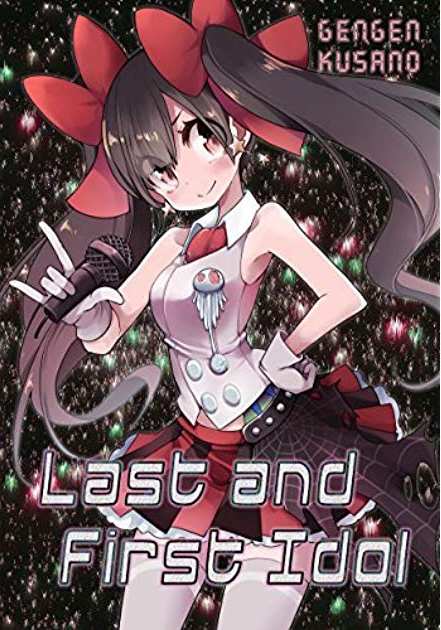
Last and First Idol

Over at All the Anime, I chronicle the controversial debut of Gengen Kusano, who recently snagged his second Seiun Award for science fiction.

“Mere months before Last and First Idol was nominated for the Seiun, it had previously appeared in an amateur press publication called School Idol Fictionally, where its true colours were revealed as a work of Love Live! fan fiction. Kusano’s original took a degree of icky glee at describing the sudden death of the idol Nico Yazawa, a gruesome operation to salvage her organs, and her subsequent transformation into a super-being with godlike powers.”

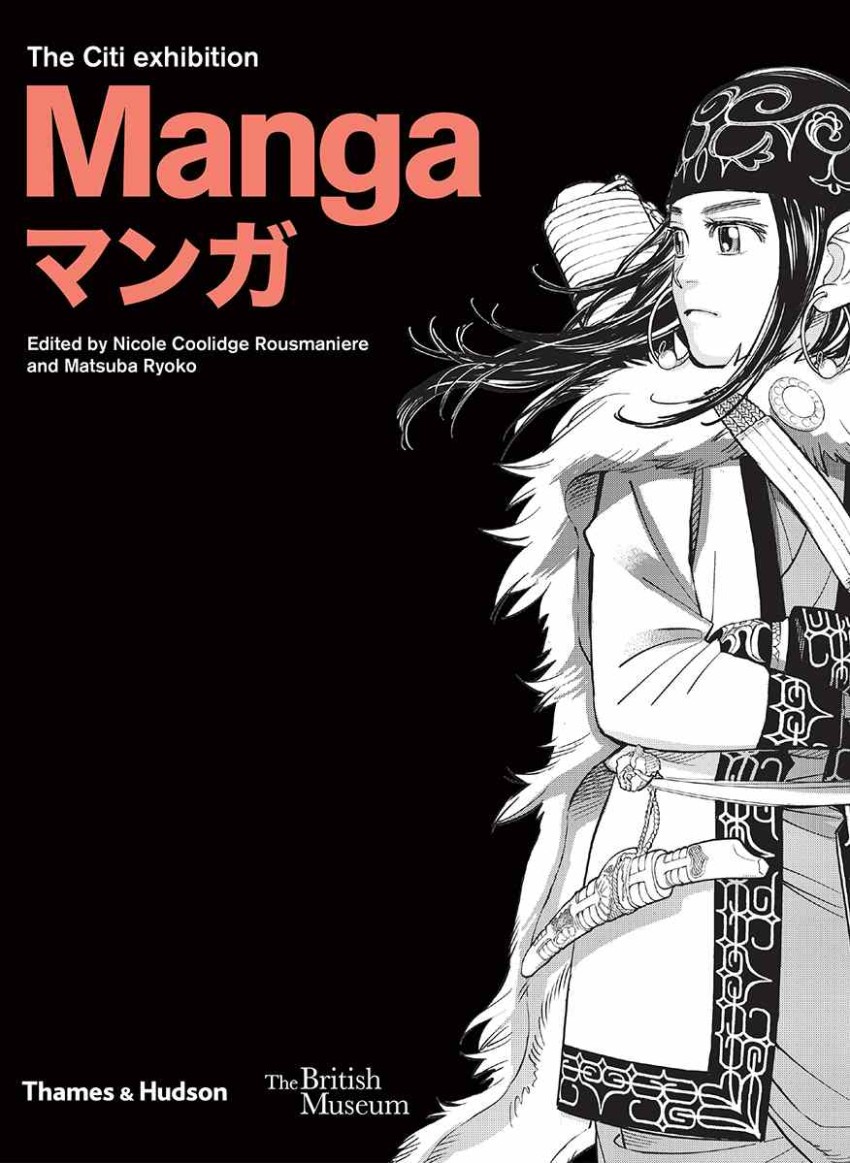
British Museum Manga

“As the exhibition winds down, its catalogue is going to form much of its historical footprint. On shelves and coffee tables in years to come, this hefty 350-page book is going to transform into a resource and an aide-memoire, a place for people to remember and revisit what they saw. Undoubtedly, it will form the germ of some new fans’ first appreciation of what manga is.”

Over at the All the Anime blog, I examine the heritage and likely legacy of the British Museum Manga exhibition.

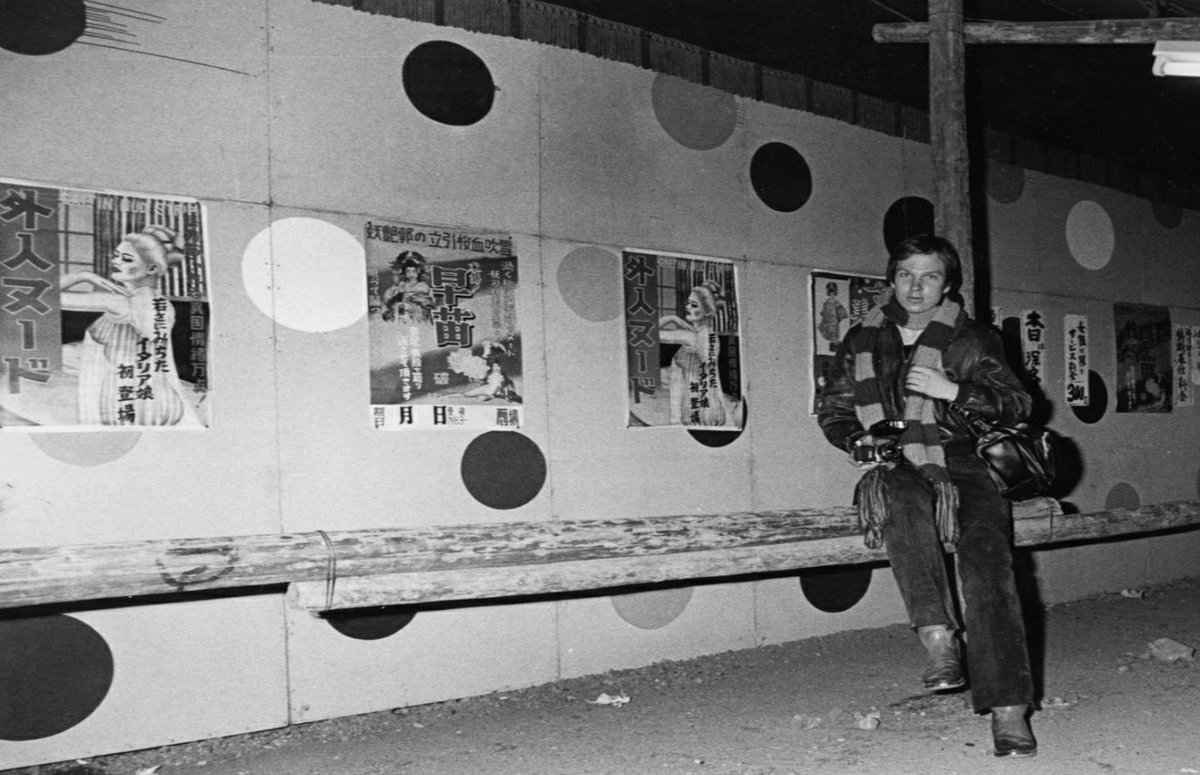
Gaijin Nude

Over at the All the Anime blog, I review Ian Buruma’s snapshot of the literary scene in 1970s Japan: A Tokyo Romance.

“Buruma’s Tokyo tales are a wonderful collage of ghastly poseurs and jocular racists, avant-garde theatrical performances, peep shows and strip clubs, forgotten circus celebrities and lost districts, which he wanders with the same melancholy interest as his literary hero Kafu Nagai. It is a lurid, lost Tokyo before the transforming influences of social media or wi-fi, where one must find books by reaching out and picking them up, and make appointments by speaking to human beings. It is also a world almost as insular as the Shogun’s Japan. Few Japanese, Buruma notes, had the means to leave the country, turning its capital into a side-show of theme-park mockeries of the Other and Far Away. ‘There was something theatrical, even hallucinatory about the cityscape itself, where nothing was understated; representations of products, places, entertainments, restaurants, fashion and so on were everywhere screaming for attention.'”

Miyazakiworld

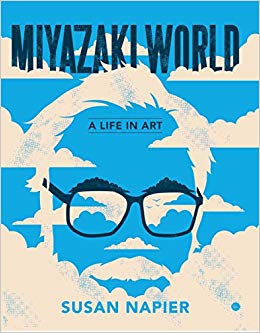
The new issue of Science Fiction Studies is out, including my long review of Susan Napier’s Miyazakiworld: A Life in Art.

“Perfectly judged for the undergraduate reader, Napier’s book offers a commendable balance of analysis and insight, production gossip and historical contexts. Its references diligently cram in signposts for delving deeper into untranslated sources, but not in such a way as to alienate scholars who can only work in English. There is sufficient material here to turn a fan into a critical viewer, but also to inform artistic appreciation of films that are already well-loved. It is sure to become part of the introductory toolkit for many a course on anime, not the least for its nuanced coverage of the life and works of Japanese animation’s most famous creator.”

Japanese Media Cultures

Over at the All the Anime blog, I review the new collection Japanese Media Cultures in Japan and Abroad — it’s often highly technical, but all the more valuable because it doesn’t demand that you take out a bank loan before accessing it.

Pricing in academic publishing is often a contentious issue in my book reviews. I don’t mind paying £80 for a book, but if I do, it had better be worth it, and if it’s not, I will say so. There are those who take me to task for “forgetting” that academic books are usually bought by libraries rather than members of the public. But libraries have limited funds, too, and librarians could do with fuller and franker appraisals of the books they spend their money on. So you can wait a year or more and wriggle behind an academic paywall to read a journal review of the books I cover. Or you can read what I say about them right now. Or, you know, both, because I’m not a gatekeeper, I’m just a guy who can look over the fence.

Women’s Manga etc.

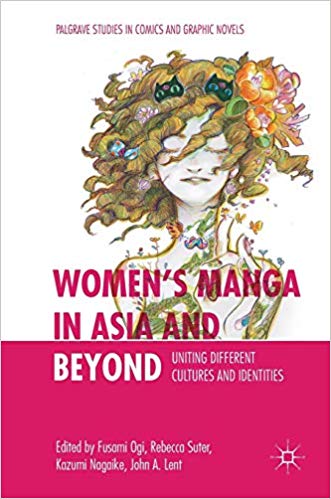
Over at the All the Anime blog, I review Women’s Manga in Asia and Beyond, a collection of academic essays that somehow manages to be less than the some of its parts, not through any fault of the contributors, but seemingly due to an editorial policy that refuses to acknowledge nuances in translation.

“The elision of the words manga and comics is commonplace in Japan, where the language doesn’t really distinguish between them, but definition is vital in English if Anglophone research is going to have any value. As noted by Casey Brienza in Manga in America, there are all sorts of devious applications and contractual loopholes available to someone prepared to agree that “manga can come from anywhere,” but I expect a good deal more rigour in the wording employed by academia. Otherwise, what is it for?”

The Bells of Old Tokyo

Over at the All the Anime blog, I review Anna Sherman’s book The Bells of Old Tokyo.

“Sherman’s investigation throws in all number of intriguing asides – not merely her red-herring quest to locate forgotten bronzes, but the many places in which the story of time crosses over with Tokyo life. There’s that little ‘xylophone lullaby’ that chimes every now and then, a familiar sound to anyone in the Tokyo streets, but also revealed here as a test for the city’s emergency broadcast system. There’s the business of the Japanese calendar, which changes its name and numbering with each imperial reign. And there’s the grass-roots resistance to foreign ideas, like Summer Time, which was imposed by the US Occupation forces and led to street protests.”