Lost Sols?

Anime Sols, established with the cooperation of a whole gaggle of anime studios, exploits all the best benefits of living in a digital age. A limited number of episodes of each anime show get streamed, for free, online with English subtitles. If you like what you see, you get to bid for a series of crowd-funding packages. Fully aware that these anime shows are of limited interest to a worldwide audience, Anime Sols sets its bar for success healthily low, with each serial’s block of episodes going to DVD as soon as they have a mere 1000 orders – this, in turn, exploits mastering houses’ new willingness to turn around small print-runs cheaply.

What could possibly go wrong? Well, as regular readers of this column will already know, it’s not necessarily that easy to get 1000 anime fans to put their money where their mouth is. As head honcho Sam Pinansky reported last month, Yatterman not only failed to get 1000 backers before its deadline on Anime Sols, but proved to be so unappealing that barely 40 people even watched it past the fourth episode!

Fandom was awash with recriminations – if only they’d picked a different show; if only fans could have bid from certain foreign territories (the UK, for example was excluded). But maybe people just weren’t that into Yatterman. Case closed. The project was cancelled, and the rights holders of Yatterman got a tiny reward – the chance to re-use those subtitles on a future Japan-only DVD release.

But Anime Sols is run by smart people, who were plainly disappointed but not undaunted. And I’d like to encourage everyone to regard Yatterman not as a failure, but as valuable data about anime’s appeal, or lack of it. It’s good, for the industry in general, for the Japanese to be confronted with how few people actually give a toss about some of their more obscure shows. And it’s good for fandom to be confronted with a put-up-or-shut-up ultimatum about making stuff happen. A few weeks later, Anime Sols offered Creamy Mami in the same way, and achieved its funding target with four days to spare.

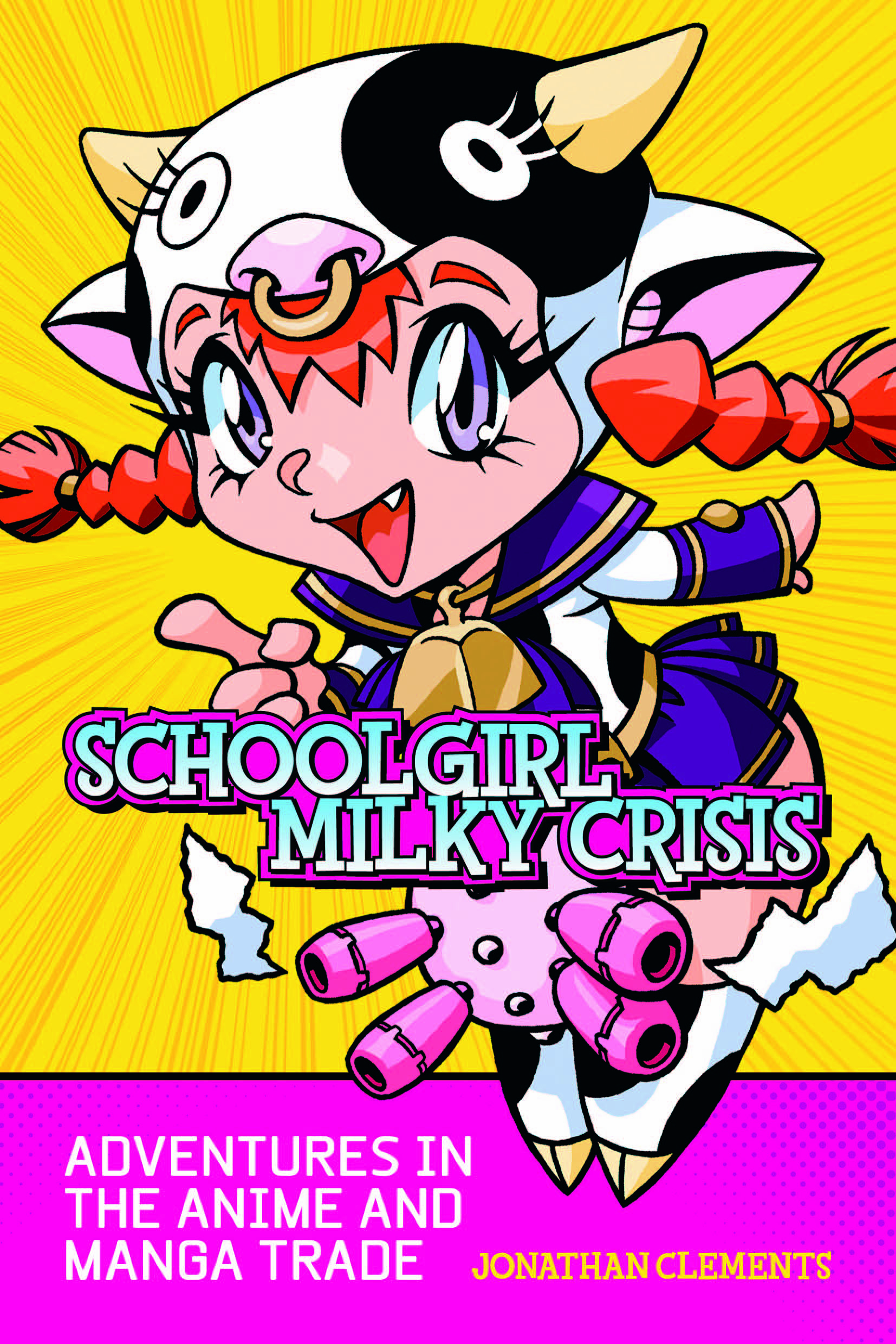
Jonathan Clements is the author of Schoolgirl Milky Crisis: Adventures in the Anime and Manga Trade. This article first appeared in NEO #115, 2013.
Anime: A History

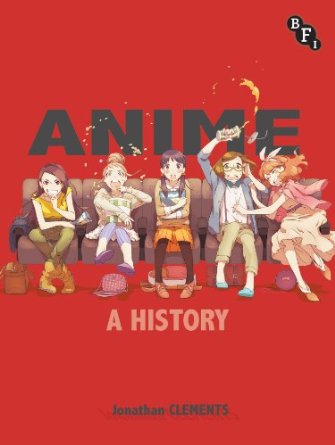
41bkTuP9TdL._SY445_Amazon is now listing my new book, Anime: A History, for sale in a few weeks in the US and in the UK. The contents and blurb are as follows:

Introduction: What Do We Talk About When We Talk About Anime?
1. Kid Deko’s New Picture Book: Early Cartoons in Japan 1912-21
2. The Film Factories: Animation Technique and Technology 1921-37
3. The Shadow Staff: Japanese Animation at War 1931-48
4. The Seeds of Anime: Japanese Animation Industries 1946-62
5. Dreams of Export: Toei Doga and MOM Production 1953-67
6. Warrior Business: Tezuka’s Anime Revolution in Context 1961-67
7. The Brown Screen: Trended Change in Japanese Animation 1966-83
8. The Third Medium: The Transformation of Ownership and Access 1977-96
9. The Pokemon Shock: Anime Goes Global 1984-97, 1997-2006
10. The Digital Engine: New Technologies and Animation 1983-2012
Epilogue: The End of Anime’s First Century

“Japanese animation is at the nexus of an international multimedia industry worth over $6.5 billion a year, linked to everything from manga to computer games, Pokémon and plushies. In this comprehensive guide, Jonathan Clements chronicles the production and reception history of the entire medium, from a handful of hobbyists in the 1910s to the Oscar-winning Spirited Away and beyond.

“Exploring the cultural and technological developments of the past century, Clements addresses issues of historiography within Japanese academic discourse and covers previously neglected topics such as wartime instructional animation and work-for-hire for American clients. Founded on the testimonies of industry professionals, and drawing on a myriad of Japanese-language documents, memoirs and books, Anime: A History illuminates the anime business from the inside – investigating its innovators, its unsung heroes and its controversies.”

I should also probably warn you that the BFI are only printing 1200 copies, so if you want to be sure to get hold of it, I advise you to pre-order. If it sells out on the day of release, it might be months before a second printing.

Gongqi Jun

1380521017497Out today and purchased this very morning by your correspondent from a petrified newsagent on Chang’an Avenue in Xi’an, the 7th October coverdated issue of China’s Lifeweek magazine, which features an incredible sixty-page article on Hayao Miyazaki, Studio Ghibli and the greats of anime and manga. Yes, that’s Miyazaki on the cover, gritting his teeth through the pain of wearing a ridiculous hat that bears the Studio Ghibli fashion logo, referred throughout the massive article as shenjiang (“divine/inspired craftsman”).

It doesn’t surprise me that the Chinese would run features on the man whose name they pronounce as Gongqi Jun. After all, his films have entered the country legitimately through their Disney associations, and are as beloved among Chinese viewers as they are anywhere else in the world. Nor, I suppose, does it much surprise me that Miyazaki’s much-publicised retirement should be an excuse for a retrospective that encompasses his collaborators Toshio Suzuki and Isao Takahata. What boggles me is quite so much space not only on them, but on their controversial latest film, the philosophy of their company, the rapid globalisation of their brand (with special reference to the influence of Pixar) and the other titles that form part of Japanese animation and manga exports – particularly Akira, Ghost in the Shell and Dragon Ball

Lifeweek is a large-circulation periodical in the People’s Republic, available on every street corner, and in times when the media seem obsessed with sabre-rattling over the Senkaku Islands, devotes a quarter of this latest issue to the celebration of Japanese soft power. It outs Doraemon, known to many Chinese as “Ding Dang the time-travelling cat”, as a Japanese product, and runs potted pieces on other anime creators of note – Osamu Tezuka, Leiji Matsumoto, Katsuhiro Otomo, Mamoru Oshii and Makoto Shinkai. And then there’s the traditional stuff about anime taking the world by storm, illustrated as usual by pictures of teenage girls dressed as elves, standing in a car park.

It’s a fantastic splash for anime in the Chinese media, and presumably meets with the full approval of the government censor. Now is a perfectly reasonable time to celebrate anime, but one can’t help but wonder if the enthusiasm masks something else – a sense that Miyazaki’s retirement leaves a vacuum that a canny Chinese entrepreneur might hope to fill. Lifeweek offers a 60-page blueprint for taking one nation’s cartoons to the world, but you can’t plan for genius and you can never guarantee success.

Jonathan Clements is the author of Anime: A History, available to pre-order now from the British Film Institute.

Astro Bwana

astro boyTezuka Productions is threatening to flog off Astro Boy to a number of emerging markets, not as a cartoon for dubbing, but as an idea to be entirely remade.

According to Variety, Tezuka’s general manager Yoshihiro Shimizu is already in talks with Nigeria’s Channel TV, as the first of several possible markets that might buy Astro Boy the idea, rather than the cartoon itself. So Swahili telly gets a superhero called Nyota Mvulana or something similar, and nobody knows it was Japanese to begin with.

Why are they doing this? This is a concerted effort by Tezuka Pro to get its nose into a Cool Japan trough of arts funding for a minimum amount of effort. Making an all-new cartoon will still cost money. But emailing old scripts to a new business partner will cost nothing, and still counts on some level as a form of cultural production. So let the Nigerians do all the work, and you can collect your 5% licensing fee, and your government grant without having to lift a finger.

But this also offers fantastic chances for true localisation. Just as Suraj the Rising Star threw away the baseball and the Japanese setting to turn Star of the Giants into an Indian rags-to-riches story about cricket, a whole bunch of anime storylines can be rendered entirely local. This helps remove a Japanese identity that, in some countries, would be unwelcome, ungracious or ill-advised.

The Japanese-ness of Japanese animation has been obscured from much of its viewing public for much of its existence. Maybe we’ll look on the period from 1989-2019 as an anomaly, where people actually noticed it. Torajiro, the pre-school tiger who forms the epicentre of a media mix including daycare franchises and language schools, already has a large following in China, but under a Chinese name.

I wonder where this will end up? An Islamic Naruto set in medieval Spain? Ghost in the Shell relocated to a future Argentina? Rose of Versailles repurposed for 19th century Arabia? How about pretending everyone in Science Ninja-team Gatchaman is actually American? Oh, wait…

Jonathan Clements is the author of Schoolgirl Milky Crisis: Adventures in the Anime and Manga Trade. This article first appeared in NEO #114, 2013.

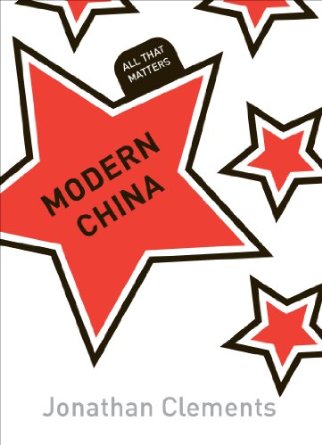
Modern China: All That Matters

51fwNBEb6RL._SY445_Out now in paperback and on the Kindle, a new introduction to modern Chinese history, from 1949 to today’s headlines.

Jonathan Clements charts the rise of China since the proclamation of the People’s Republic in 1949.  Presenting China as the Chinese themselves see it, he explains the key issues of national reconstruction; the Cold War, the Cultural Revolution, and the dizzying spectacle of China’s economic reform. Clements offers a Chinese perspective on such events as the Handover of Hong Kong, and chronicles the historical events that continue to resonate today in Chinese politics, economics, culture and quality of life.

Miyazaki Retires, Again

IMG_8991

Hayao Miyazaki’s forthcoming retirement (except for short films, occasional other projects, and whatever he can be lured into the office to do) still makes the front page of the Japanese newspapers, as well it might when so much of Japan’s cultural capital rests on the box office takings for his movies.

Yae no Sakura

6e9509ddc8In Japan, currently in a hotel in the middle of the Inland Sea, with giant tankers gliding past a backdrop of green, hilly islands, stretching back into the mists. And because I’m been busy writing all year, I haven’t been following this year’s Sunday night taiga drama, Yae no Sakura, all about a gunsmith’s daughter from Aizu-Wakamatsu, who gets dragged into the Boshin War — the last gasp of the samurai. This is a topic I have written about twice already, as it was also a proving ground for a young Admiral Togo, and I’ve got all the materials assembled for another book about its end, called Samurai Republic, which I have yet to sell. But today it’s mainly an excuse to print a picture of Haruka Ayase with a gun, in her role as “the Bakumatsu Joan of Arc.” The titular Yae (Yaeko Yamamoto, a.k.a. Yae Niijima, 1845-1932) went on to become the first non-imperial woman to be decorated for service to her country, serving as a nurse in the Sino-Japanese and Russo-Japanese Wars. Then she helped found Doshisha University.

Grey Exporting

milkycrisis-1His name was Supap Kirtsaeng and he made a few bucks on the side. While a studying in the USA, he realised that while his expensive college textbooks were also available in substantially cheaper editions in his native Thailand. So, he figured, why not buy a few and and sell them to his mates? Why not buy a dozen? A hundred?

John Wiley & Sons, a respectable academic press, took Kirtsaeng to court, claiming that his little sideline had already notched up lost sales of $1.2 million. And after appeal, Kitsaeng won in March of this year, with a Supreme Court ruling in his favour, stating that the First Sale Doctrine supported his little loophole. According to American law, in line with the laws of many other countries, once you buy an item for yourself, it’s your legal right to do whatever the hell you like with it, including selling it to someone else.

You may be wondering, what the hell does that have to do with you? Well… for starters, don’t be surprised if it’s a major contributor to the new X-Box policy on forcing people to rent access to their games instead of buying them outright. More importantly for the anime fan, it makes it unpleasantly clear to Japanese rights holders that if something sells cheaper, say, in the UK, than it does in Japan, then it is unlikely to be possible to argue someone can’t import it back into Japan. Take the argument to extremes, and it is a strong case for making all foreign fans pay the same high costs as Japanese fans, in order to protect the Japanese business.

Fast forward to June, and suddenly Macross Plus is released in Japan as a region-free blu-ray with English sub and dub. Great news for you if you want to drop £70 on it. But why on earth would a British distributor buy the rights, when they already know a substantial number of customers will have already bought it direct from Japan? The anime companies are now calling our bluffs. We said grey importing wasn’t worth worrying about. Okay, they’ve said, how do you feel about grey exporting…?

Jonathan Clements is the author of Schoolgirl Milky Crisis: Adventures in the Anime and Manga Trade. This article first appeared in NEO #113, 2013.