Opium

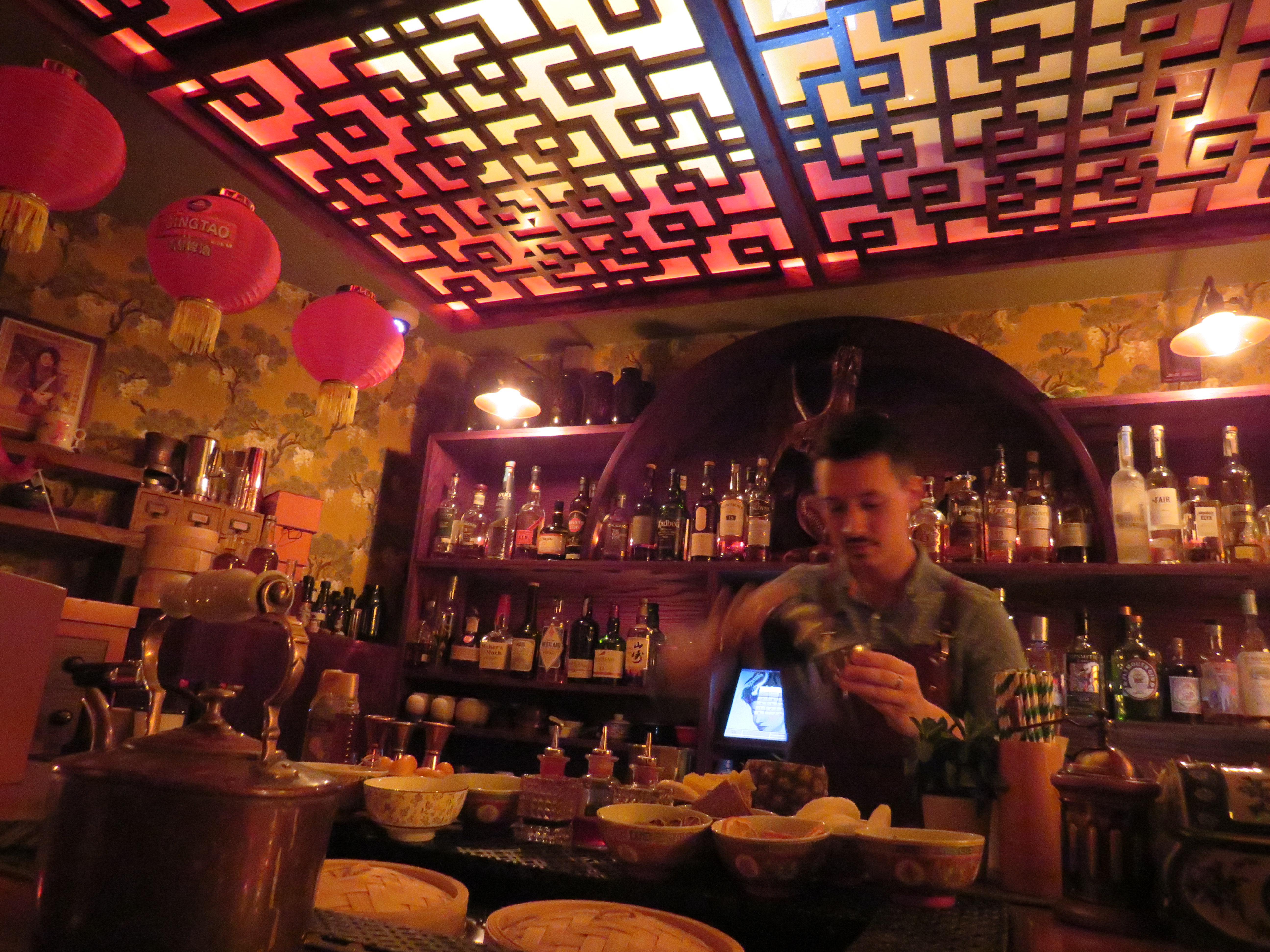
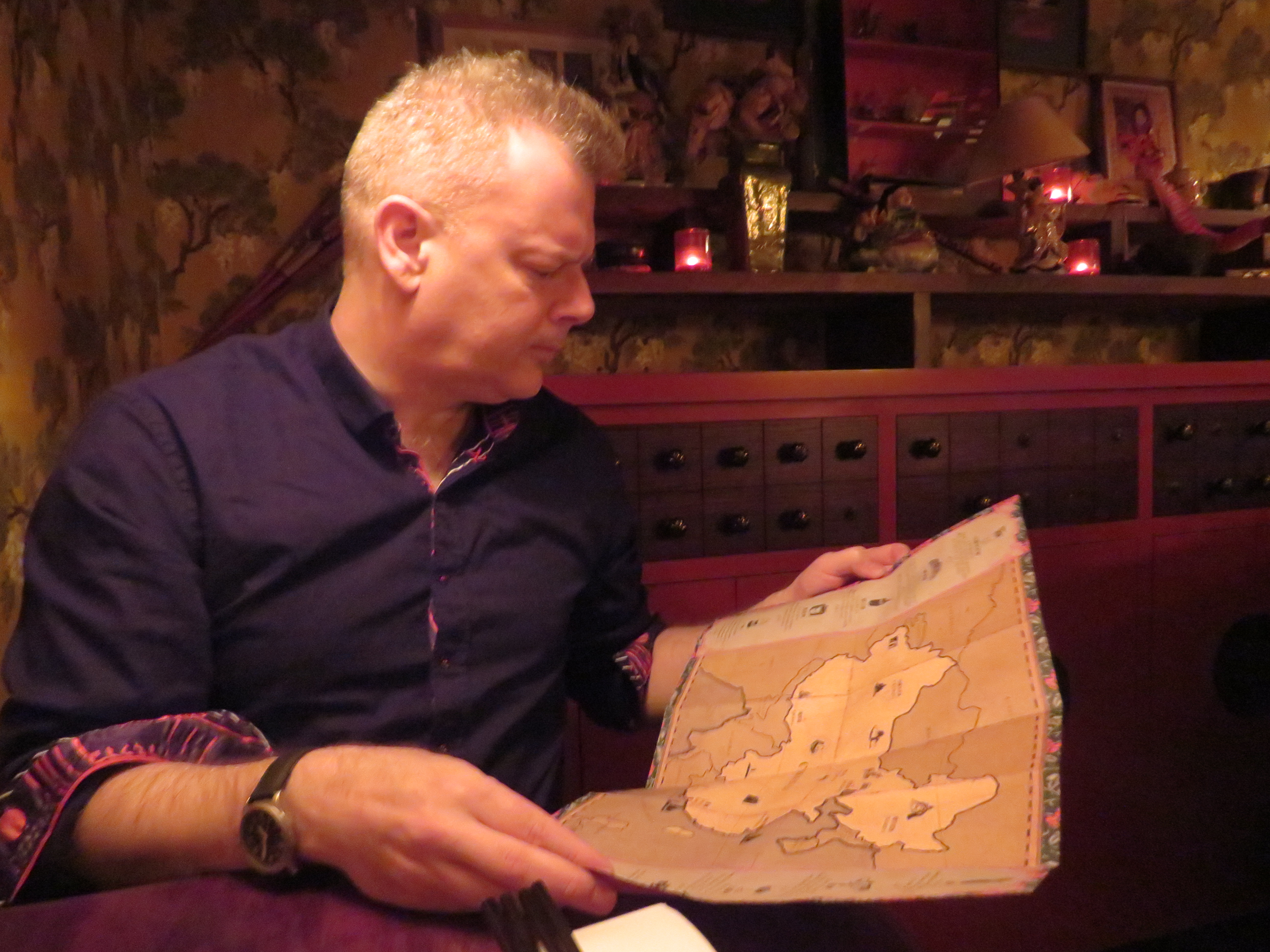
That is a map of China, but it’s also a cocktail menu at Opium, a speakeasy in London’s Chinatown that offers a set of mental drinks based on Chinese cities — the Beijing that comes with a calligraphy set and strawberry ink, the Macau that comes with pineapple chunks and a set of safety instructions, and the Urumqi, that comes with pistachio nuts and an eggshell filled with saffron joux. Barman Vincent even managed to do something to make baijiu palatable. I’m writing a history of Chinese food. This sort of counts.

The Man From Sysmä (1938)

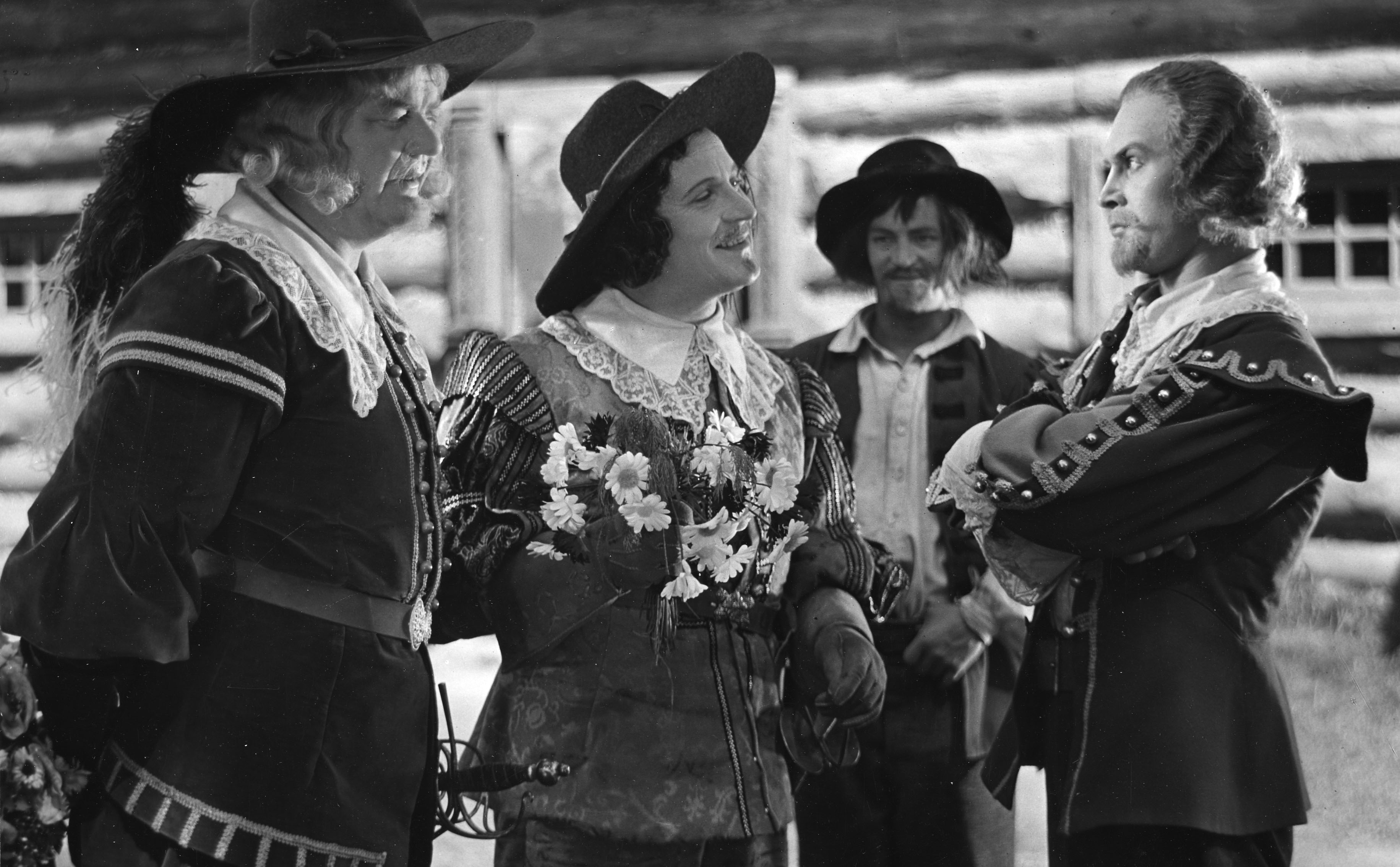
Sysmäläinen begins with a playful prologue in which a young Arvid (Kalevi Koski, who would grow up to be Finland’s top dentist) is mercilessly taunted by a young Brita (Tuulikki Schreck) about their betrothal. The pair are married when still children, before a 15-year-time jump to Turku in the mid-17th century, where a grown-up Arvid (Olavi Reimas) is a swashbuckling nobleman, obviously modelled on the same year’s Errol Flynn Robin Hood. He’s barely finished his lunch before he is in a spirited sword-fight with some German guy, while a serving girl swoons with glee. There’s lots of hearty quaffing and tankard clashing, while we wait, twiddling our thumbs a little, for the story to begin. It does when Brita (Sirkka Sari) rides by, and Arvid fails to realise that she is his wife.

Valentin Vaala’s camera absolutely loves Sirkka Sari, last seen in The Women of Niskavuori, who first appears with a fantastic cavalier hat, riding a horse in a manner that is snooty, contemptuous and oddly alluring. Arvid, who doesn’t recognise her, falls for her hard, to the extent that he sends a message to the child-bride he hasn’t seen for years, telling her he wants an annulment because he loves another. Oh, the irony! So Brita disguises herself as a boy and becomes his servant.

So she wins his heart when she’s in a dress, but is Just Some Guy when she puts some trousers on. Some further suspension of disbelief is required over the matter of the dialogue, since one might reasonably expect the ruling class in 17th century Turku to all speak Swedish. Jalmari Finne’s original 1910 novel seems somewhat out of its time, a Walter-Scott frippery when war was just an excuse to dress up in high boots and swirly cloaks, while Arvid’s predicament could have been oh-so-easily avoided form the outset by Brita simply telling him her fecking name. The pina-colada fancy of a jaded old idiot, spurning his wife only to fall in love with her when he thinks she is someone else, was already pretty old. But it is the shadow of Errol Flynn that falls most obviously over this film, in everything from Arvid’s moustache to his habit of wandering around the woods looking for a fight.

As Johanna the perky serving girl, Kerttu Salmi steals all her scenes with a constant patter of doormat philosophy about how real men “start with scolding and end with love.” She has already decided that Arvid will be hers, and throws herself at him with entertaining abandon. Meanwhile, Sirkka Sari is desperately unconvincing as a boy called Adolf, despite looking awesome in her musketeer get-up. Naturally, she bests Arvid with a rapier, but that’s just Finnish girls all over. Because it wasn’t surreal enough already, “Adolf” agrees to dress as a woman in order to persuade Johanna to leave the manor and stop pestering Arvid.

I’m disappointed that the Finns haven’t revisited this story in some sort of post-modern spoof. They could call it A Girl Called Adolf, and relentlessly take the piss out of all the cross-dressing nonsense, which is surely only a thing in drama because it was convenient for Elizabethan playwrights to get their female impersonators back out of drag. In the woke 21st century, the transvestite angle takes on a new prospect, since Brita runs rings around Arvid from the outset, and is plainly the one who wears the breeches in that relationship, now and forever.

This DVD came with English and Swedish subtitles.

Jonathan Clements is the author of An Armchair Traveller’s History of Finland. He is watching every Finnish film ever made, so you don’t have to.

What’s Next?

Shout out to Joshua Malina and Hrishikesh Hirway, makers of the West Wing Weekly podcast, which has just come to an end after four wonderful years. When it started, it was a welcome diversion as I walked home each morning along a frozen lakeside. In more recent months, it’s been my companion on many a flight. But I’ve been with it from the beginning, as they go through each episode of The West Wing, with guests from the cast, crew, and real-world influencers, and it’s been a great experience reliving the entirety of a much-loved TV show, one episode at a time, with the people who made it and the people whose lives it changed.

I’ve had less time for podcasts in recent weeks while I work on my new book, so I have neglected Script Notes, Savage Love and 99% Invisible. I guess I should walk more.

Chinese Antiquities

lovejoyAs an antique-dealer’s son, I have long been used to the world where loveable rogues wheel and deal over flintlock pistols and meerschaum pipes, and occasionally solve crimes and/or bed baronesses. Everything you see in Lovejoy is true; just ask my Dad, but stand well back when you do. My Dad, meanwhile, as the father of an oriental linguist, has gained a new-found second-hand ability to make sense of Chinese in later life, and whenever I drop by his stall at Portobello Road, I am beset with exhortations to date Kangxi pottery or read the inscriptions on opium scales.

Audrey Wang takes such larks to new levels in Chinese Antiquities: An Introduction to the Art Market, published by Lund Humphries in association with Sotheby’s, in which she outlines the state, scandals and securities of the modern trade in Chinese artifacts. The assistant director of Sotheby’s course on the Art Business, Wang is predictably good on the antiques market as a form of bank, where investors seek to stash their money by crystallising it in bronzes and watercolours. Although, of course, the value of investments can go up as well as down, as the British Rail pension fund discovered when it backed Ming vases just before their value slumped.

She has lots to say about the spats in the art world over the right of modern owners to sell pieces pilfered from China. There is some space, for example, devoted to the infamous 12 bronze animal heads from a baroque fountain at the Garden of Perfect Brightness (Yuanmingyuan), which are about as “Chinese” as Beyoncé, and were in fact once ordered removed by a Manchu princess who thought that they were ghastly. It is, Wang notes, ironic that pieces so untypical of Chinese culture should have come to become so symbolic of it. As noted elsewhere, not the least in a knockabout action movie starring Jackie Chan, the loss and recovery of these bronzes has become emblematic of China’s “Century of Humiliation,” and its long marathon back to international primacy.

I’ve long been aware of the army of Chinese agents who scour the world in search of antiquities to repatriate. But as an auction-house insider, Wang has a particular antipathy for the rarely mentioned gazumpers, who place winning bids on big-name artefacts, and then refuse to pay out of some sense of national revenge. Such actions consign antiquities to an unsold limbo, with auction houses pursuing their seller’s fee on a sum now redefined as £0, and sellers unable to off-load their property because its ownership is now a multi-faceted legal tangle.

Wang is not afraid to point out the elephant in the room, which is that some of the most prolific thieves and fences of Chinese antiques have always been other Chinese people. She observes, for example, that in 1913 “the imperial family offered to sell the imperial collection in its entirety to the American industrialist JP Morgan for $4 million,” but the trade was halted by his death. Had it gone through, presumably the Forbidden City would have been left entirely empty, and would have been turned into a Mao-era car park. In 1924, after the imperial family was pushed out of the Forbidden City, a suspicious number of antique dealerships opened up in Qianmen, “flooding the market with imperial artworks that had been secretly appropriated over the years.” There is, in fact, an entire 1926 volume, used as a sort of I-Spy book by Chinese collectors, called The Catalogue of Books, Calligraphy, and Paintings Lost from the Palace Collection, which continues to remind us how much has been removed. One of my favourite books of recent years, Who Collects the Yuanmingyuan?, attempts in a beautifully post-modern way to reassemble the Garden of Perfect Brightness by tracking down its extant fragments, built into other buildings, adorning swimming pools in Los Angeles, or gracing a French hotel lobby. Wang’s book deals with such issues deftly and dispassionately, while opening a window on the hard-nosed business world where ancient bronzes are used as storage devices for modern capital.

Jonathan Clements is the author of A Brief History of China.

Arcade Fire

Unsurprisingly, gaming arcades have been on the wane in Japan since their peak in 1986 of 26,000 sites. Thereafter, consoles took arcade games into the home, and miniaturisation took gaming onto your phone. Feeding dozens of 100-yen pieces into a Starblade machine, essentially buying one’s way through difficult levels, as your correspondent once did in Osaka for much of 1992, started to look like a silly option when you could own the thing outright and play it in your lounge.

These days, there are only 4,000 registered arcades in Japan, along with another 9,000 sites too small to count, having less than fifty machines. But with the closure of Anata no Warehouse, a five-storey grunge palace in Kawasaki, modelled on the Walled City of Kowloon, it seems that something has dealt a killing blow to the old gaming palaces.

The culprit is a simple 2% increase in consumption tax (Japan’s VAT). That puts up the cost of the average manga magazine by 0.0006p, hardly anything to write home about, you might think. But Japan’s arcade sector has been struggling for years to maintain its “one-coin” slot machine charges. Whereas the average slot machine in the UK takes pound coins, the nearest equivalent in Japan is the 100-yen piece, which is only worth 71p. Under the old 8% tax, 8 yen of that was already going to the tax man; since 1st October, that now goes up to 10 yen. Or in British terms, Japanese arcade games are only bringing home 63p per play. The next coin up is the 500-yen piece, which would mean each play would cost £3.58.

Put it another way: the arcade sites in Japan have declined not only because of new technologies and habits, but because the games are still charging 1986 prices! The consumption tax is liable to wipe out what little profits were left for suppliers, and is sure to lead to many more giving up the ghost. Anata no Warehouse is probably only the first to shut down.

I wonder, though, whether this will affect pachinko quite so much. Japan’s frightfully dull ball-bearing games are in a class of their own, often seem to be a cover for money-laundering anyway, and feature under-the-counter prizes that can be downgraded at will by site owners. So I expect that pachinko will continue to endure, as it bafflingly has for decades, even as the nature of the 100-yen coin leads to a shake-out in more everyday arcade games.

Jonathan Clements is the author of A Brief History of Japan. This article first appeared in NEO #195, 2019.

The Bachelor Patron (1938)

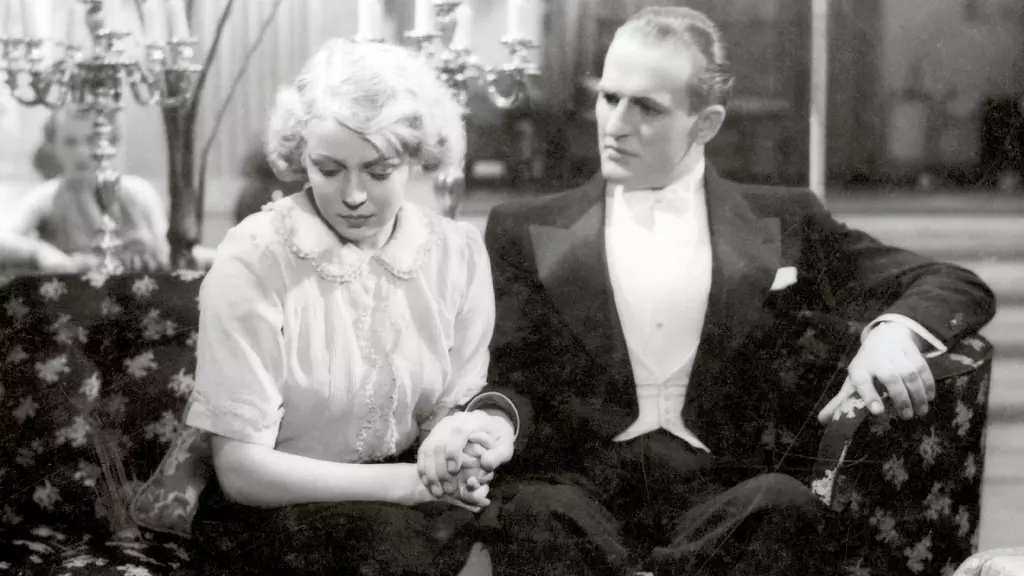
Katariina (Helena Kara), “call me Kati”, is an orphan teenager sent away from Oulu to Helsinki to be raised by Mauri (Tauno Majuri) a friend of her late father’s, appointed as her guardian. I think you can probably imagine what’s going to happen, as do all of Mauri’s friends, who tut in disapproval when he announces that he’s going to get a barely-legal ward. The housekeeper Mrs Simola (Aino Lohikoski) does her best to put a brave face on the arrival of a vivacious young girl in the house of a confirmed bachelor.

Directed by Orvo Saarikivi for Suomi-Filmi, Poikamiesten holhokki was based on a novel, originally set in England, by one “Denys Aston”, which turned out to be a pen-name for the Finnish author Anni Inkeri Relander. In other words, the original was a comedy of manners that turned upon a very British set-up. Etiquette in Finland is a somewhat bipolar issue – much like Mauri and Kati, there is an unspoken stand-off between “Swedish” self-declared urban sophistication, and a homespun, folksy charm born of the Finnish countryside.

In the lead role, Helena Kara is a luminous presence a generation ahead of her time, whose mannerisms and carriage could easily mark out her out as a time traveller from the 1950s. She had, legendarily, been spotted by director Risto Orko when working as an usherette in a Turku cinema in 1937, and appears here, just a year later, with palpable star quality.

“Wotcher, Mauri!” says Kati, blundering into his all-boys salon and heartily shaking everybody’s hand. In a subtle audio touch, she speaks at all times at a volume a couple of notches above everybody else, even supporting characters to whom she is supposedly deferent. She puts her feet up on the furniture and invites Mauri’s doctor friend to have a look at her feet, eagerly accepting a cigarette from a cavalryman. Neither of them are getting what they bargained for, and it’s unclear on their first encounter who has the upper hand – is Kati a breath of fresh air, or a wayward wild-child in need of some discipline? One is reminded, immediately, of the strong woman of Juurakon Hulda, but the emphasis with Kati is more that she is a free spirit. Perhaps unsurprisingly for the first country in Europe to give women the right to vote, Kati is by no means the first female lead in Finnish cinema to represent everything that is modern and progressive.
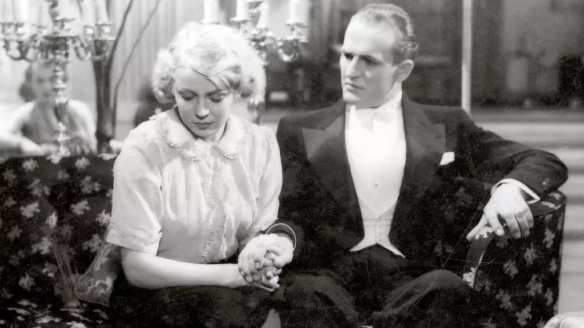
She bounces on the bed, she sings in the shower… it’s hardly smoking crack on the stairs, is it? Mauri tuts and frets about her dangerous ways, but without any real understanding of why he is so morose and snappy, it is difficult to know if he wrestling with problems of his own or just a git. He stuffily suggests that she should take up embroidery or singing, and she giggles that girls her age are more into smoking fags and riding horses. Their encounters become increasingly wearing, as the script demands that Kati repeatedly behave like a pouty ingénue, and Mauri frowns at her like she’s just farted. One is tempted to suggest that Helena Kara’s naturalist verve becomes increasingly trammelled and hesitant the more she is pushed upon to actually act. Meanwhile, the film itself seems unsure how to fill its middle section, bogging down in a long soirée in which Kati (and the audience) must sit fidgeting through two musical numbers, and then packing her off on a bus to get a job in shoe shop, as if even the script writer has grown bored with the previous set-up.

The shoe shop is initially a fascinating glimpse of 1930s Finnish life, lined with anonymous boxes as if the notion of customer choice is still a distant dream. Visitors creep in and speak in hushed tones as if they are in the Church of Footwear.

“I would like some brown shoes,” intones the first customer, as if he is participating in some arcane ritual.

“What size are you?”

“Forty-four.”

Such inadvertent entertainments, however, soon turn just as dreary as Mauri’s distant lounge. Comedy is supposed to derive from the fact that five boxes are hard for a small woman to carry.

With only twenty minutes to go, the film reluctantly gets around to its central romance, with all the insouciance of a surly teen getting out of bed. Jaska (Ossi Elstelä) the chauffeur has bonded with Kati over horse-care, but has been forgotten for half the film. Kullervo Kalske, one of the most impossibly handsome men in Finland, fresh from charming the ladies in the same year’s For the Money, parachutes into the story to wow Kati’s fellow shop-girls as Baron Klaus von Bartel, a wealthy man of the world. He asks Mauri for Kati’s hand, and Mauri is suddenly reluctant to divest himself of the tearaway teen.

With all the enthusiasm of a man ticking the No Junk Mail box on an email subscription, Mauri suddenly confesses that Kati has brought magic into his life and he doesn’t want her to go. It is a truth universally acknowledged, that a single man in possession of a good fortune must be in want of a wife, as someone once snarked.

Damning it with the faintest of praise in Aamulehti, journalist Orvo Kärkinen noted that it “met its most significant requirements.”

Jonathan Clements is the author of An Armchair Traveller’s History of Finland. He is watching every Finnish film ever made, so you don’t have to.

The End of Saturday Morning

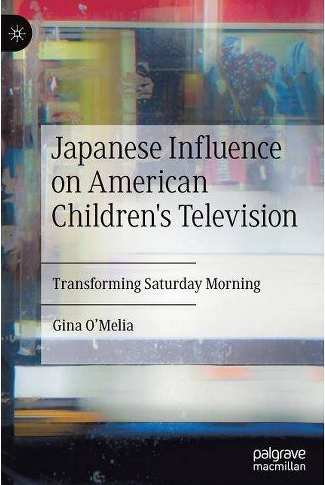
“Certain non-Japanese producers, post-Pokémon, were indeed actively reverse-engineering its success, asking what it was that made anime special and attempting to implement that – I know this because I was paid a lot of money to tell them… [O’Melia] focusses on some interesting areas within reception studies, particularly regarding the hybridity of global broadcasting. She notes that, like British television in days past, Japanese television has exerted a recognisable impact on American broadcasting, contrary to many scare-mongering claims that American media are being hurled at the world on one-way tickets.”

Over at All the Anime, I review Gina O’Melia’s account of the time that American children’s television began turning Japanese.

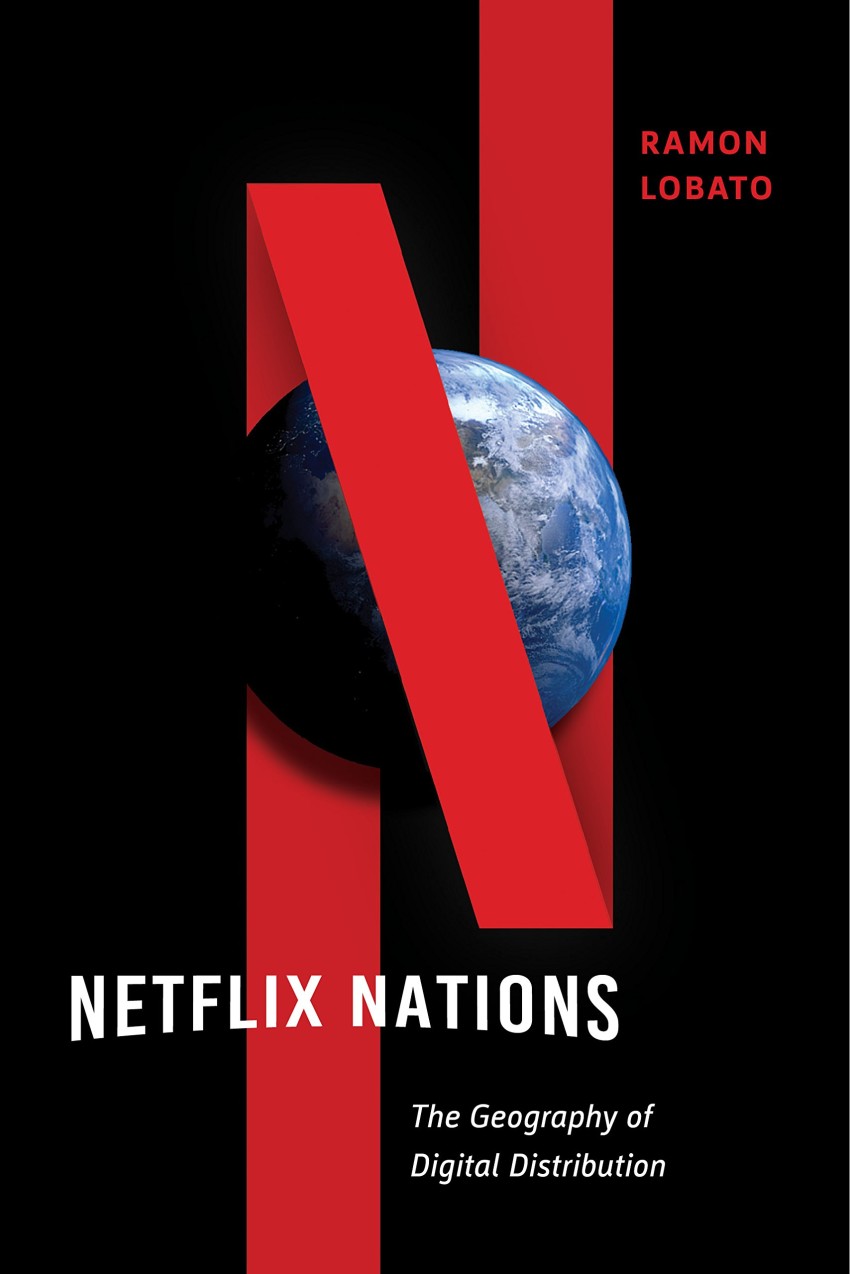
Netflix Nations

“Lobato details in depth with the panoply of widgets, laws and infrastructures required to put an episode of, say, Evangelion on your television, and the degree to which such provisions tie up local bandwidth in different countries. He details Netflix’s cunningly low-tech Open Connect service, which puts an actual, physical box into the server farms of 1,000 Internet Service Providers around the world, so that Netflix users can go direct to a particular machine for their content. In other words, it is ‘a private network built on top of the public internet.'”

Over at All the Anime, I review Ramon Lobato’s Netflix Nations.

Mulan and the Unicorn

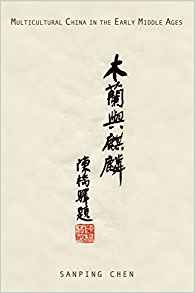
There are cunning forces at work before you even open Chen Sanping’s book on Chinese history. The squiggles on the cover give a romantic title, Mulan and the Unicorn, which is way more evocative than the bluntly descriptive English: Multicultural China in the Early Middle Ages. But that’s just the first of Chen’s points – that our sense of China is compromised by linguistic and historical assumptions, deeply embedded in the very words we use.

Chen’s interest is in the centuries preceding the founding of the glorious Tang dynasty, when China was split into northern and southern regions. Amid Dark-Age climatic upheavals that saw similar catastrophes in Europe, the Han people, or at least, those that had the means, fled south of the Yangtze, abandoning the north to nomad invaders who swiftly rebranded themselves as the new aristocracy. History books are alive with the odd customs and internal conflicts of the likes of the Xianbei – towering slavers whose womenfolk were expected to forge statues from gold to prove their suitability as queens, and to commit ritual suicide on the accession of their princely sons. Strangers in a strange land, they embraced Buddhism (a foreign import like them), and co-opted legions of local collaborators to make them seem more… Chinese.

This foreshadows the Mongols, Khitans and Manchus of later periods, all of whom similarly swept in and set themselves up as the new overlords. Chen suspects that it might also echo earlier dynasties, too, particularly the ancient Zhou, although the historical record may have deliberately garbled much of their foreign-ness.  He quotes here a spine-tingling observation from Allen Chun, that the Bronze-Age Zhou people, founders of much of historical Chinese tradition, once cryptically observed that “the gods do not accept sacrifices from persons who are not of their own race,” as if they, the priestly aristocracy, were from Somewhere Else. Suggestions of “barbaric” traits enduring among the Xianbei, and their Sui and Tang cousins who reunited China in the 6th century AD, were noted by the eminent scholar (and occasional prankster) Paul Pelliot over a hundred years ago, but Chen really runs with this idea in all sorts of exciting new directions.

With a healthy suspicion of the official record, Chen argues that the dynastic chronicles are riddled with outrageous incidents of spin and fake news, as Chinese authors try to excuse nomadic behaviour in a narrative determined to pretend that everybody is Chinese. He reframes the seizure of power by the Tang Emperor Taizong, a bloody coup fought against his own brothers at Chang-an’s Gate of the Dark Warrior (Xuanwu) in 626, as an entirely everyday incident of blood tanistry – among “Turco-Xianbei” peoples, brothers were expected to fight each other for the succession. In passing, Chen also observes that the gate in question was the barracks for the imperial guard – anyone who controlled the Gate of the Dark Warrior would presumably also have the support of the praetorians of medieval China.

Chen is wonderfully adept at reading between the lines of Chinese history, as chroniclers try to make a “Turkish-leaning” prince sound like a madman, rather than a chip off the old block, and kvetch about women like Empress Wu in positions of power, even though it was the queens who called many of the shots on the steppes. Chen recasts Empress Wu in the context of her Sui and Xianbei predecessors, as a woman for whom ordering the death of her own children would not be all that extraordinary – he’s ready to believe that she did indeed murder her own new-born daughter, which rather undoes all my attempts to make her sound more humane. For Chen, the influence of Turco-Xianbei heritage on the Tang imperial family would stretch all the way to Wu’s grandchild, the Emperor Xuanzong, who had three of his own sons killed on a single day in 737.

In other chapters, Chen gets deeply into historical linguistics, snaffling around for the origins of some remarkably common words, such as ge (elder brother), which he regards as a Turkish import, and nucai (“slave talent”) a later Chinese insult that he believes to have originated in a term for collaborators with invader regimes. Buried in the Chinese language, Chen finds clues to the existence of forgotten Iranian refugees and assimilated Huns, and legions of settlers from Central Asia who swiftly went native if they knew what was good for them.

In one of my favourite passages, he analyses a nonsensical comment in the chronicles, when a Chinese Emperor seemingly started babbling incoherently. But Chen does not see this as a copying error or a corrupted text, but a moment when an angry despot briefly allowed his mask to slip, shouting at his underlings in the language that still functioned as a secret cant among the elite –Chen has a stab at translating what the Emperor was actually saying.

And of course, there is a whole chapter on The Ballad of Mulan, a cross-dressing warrior-woman who loyally served a ruler addressed as “the Khan”, and whose world was so far removed from traditional China, that she is depicted riding on a camel. So, no, not like the cartoon, nor indeed like the forthcoming film. Chen sees Mulan, with its code-switching between Chinese and nomad traditions, its confusions of gender roles and geography as a core text in evoking the clash of alien cultures that defined China’s long medieval period, so carefully air-brushed and redacted by centuries of later authors.

Jonathan Clements is the author of A Brief History of China. Multicultural China in the Early Middle Ages is published by the University of Pennsylvania Press.

Confucius: A Biography (2nd edition)

‘Rich with history and studded with the sayings for which the sage is known. . . Clements uses his considerable story- telling skill to make “the troubled life of a teacher who lived two-and-a-half thousand years ago” come alive.’
The Asian Reporter

‘Clements reveals the man behind the legend, as well as providing a useful introduction to Confucius’ thoughts and teachings.’
The Good Book Guide

The teachings of Confucius have survived for twenty- five centuries and shaped over a quarter of the world’s population – his image appears not only in temples across East Asia, but also above the entrance to the US Supreme Court.

Confucius: A Biography reveals unexpected sides of the ancient philosopher – his youth, his interaction with his pupils, his feuds with his rivals and even his biting wit.

This revised edition includes three new chapters on the influence of Confucius in Chinese history, the modernist and post-modernist backlashes against Confucian thought, and its relevance in our world today.