 Starz were playing their cards very close to their chests about events in the Spartacus: Vengeance TV series. You don’t need a spoiler warning to know the broad historical details. You can get those right now in Plutarch and Appian, Florus and Frontinus. But as for the character details, they weren’t telling until long after my book would need to be delivered. It was too risky to set the first Spartacus novel anywhere near the second season. Instead, it would have to slot somewhere in the first season.
But thanks to those advanced spoilers from the likes of Plutarch, I also knew that while there would still be a couple of upcoming gladiatorial events onscreen, Spartacus’ days in the arena were over. This book could be the last chance to get back to the blood and sand, and show a gladiator’s life in intricate detail.
So I decided that I would make sure that Spartacus: Swords & Ashes included a fly-on-the-wall view of a whole day at the games, showing all those elements that never quite make it onto television. The crappy, low-rent animal-baitings before lunch-time. The midday executions. The clowns and the clean-up men. The doomed slaves who refuse to cooperate and the crowds that behave contrary to expectations. Behind the scenes, the trumpeters who have to knock up fanfares on command, and the stage manager trying to keep it entertaining, the food sellers and the groupies. And the end of it all, the man with a knife who cuts up the dead for dog-meat.
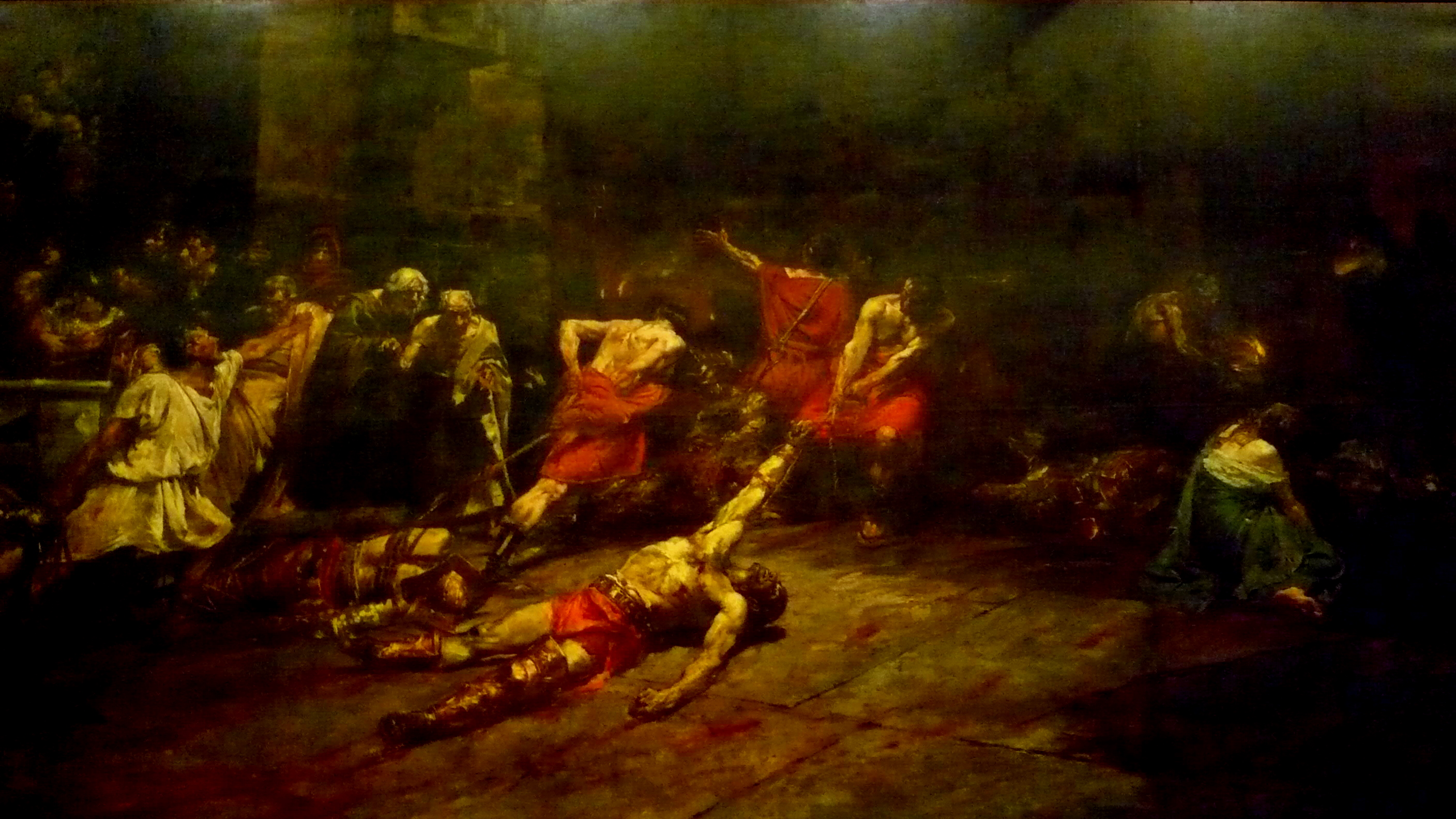
There’s a famous 1884 painting by the Filipino artist Juan Luna, The Spoliarium, which presents a deliberately shabby, unglamorous perspective on gladiatorial games. There’s no roaring crowd here, no flash of arms or glittering prizes. Instead, dead carcasses are dragged out of sight, while a woman weeps over a lost love, and hunched, covetous old men stare indifferently at the slaves who died to entertain them. The picture stands today in pride of place at the entrance to the National Museum of the Philippines, dominating an entire wall, confronting every visitor with the sight of the dark underside of absolute power.
This is what Spartacus is really about: the true costs of the garish free entertainment of bread and circuses, themselves doled out to Roman citizens to buy their votes and support for foreign wars and domestic corruption. Spartacus remains famous today because he stood up to the terrible state of a world in which one in three human beings is a slave with no rights. It’s why the story has become such a touchstone of rebellion, and why it still has such resonances two thousand years after it was first told.
I originally wrote this article for SF Review in 2012 as part of the press coverage for my novel Spartacus: Swords & Ashes. Since the original page is now full of cobwebs, I repost the article here.
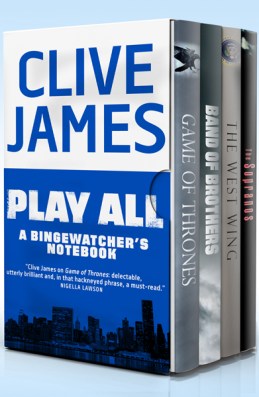 The concept of binge-watching is nothing new to readers of this column – indeed, it was first introduced
 Common to many Japanese magazines for the teenage male, Young Gangan features a “gravure” section – photo-sets of demure Japanese girls, posing in a sequence of fashions with occasional gormless texts.
 But the U-rated images in Young Gangan are notable for how low-rent they seem: Rina Ikoma is pictured in someone’s back garden beneath a drab grey sky; Hinako Kitano has at least gone somewhere with a pool, although she oddly jumps in while keeping her clothes on. Then, she stands in the street and throws around a baseball. Don’t play in the street, Hinako! This is that most innocuous of “girlfriend experiences”, the simple presence of a female making eye contact, although also discreetly whispering that her new album is in shops now. It’s all about the male gaze, although the gaze one can’t help imagining is usually that of Alan Partridge, fumbling ineptly with a Canon 5D.
 Soon after, the world itself shall be consumed in fire, leading to times so desperate that animals and birds will beg to be eaten by Christians, so that at least some small part of them might survive the apocalypse. Finally, Deus will return to the Earth and sit in judgement upon humanity. Those on his right, the Christian believers, will all become ‘buddhas’, and live eternally. Those on his left, the unbelievers, will be kicked down into hell along with the tengu.
 With the Jesuit books burned or rendered illegible by the absence of those who could read Roman letters, there was no longer a way to preserve the words of the original missionaries. Transmission of the religion proceeded solely by word of mouth, from generation to generation in isolated communities, and inevitably there were strange drifts in meaning. In some places, Christianity became little more than a cult of ancestor worship, where the ancestors who were revered were secretly remembered as Christian believers.