Frost on Top of Snow

ruffle 1In A Decent Bottle of Wine in China, author Chris Ruffle recounts his foolhardy efforts to set up a vineyard and build a replica Scottish castle in Shandong. This is not as crazy as it might sound, since Shandong was arguably the home of the modern Chinese booze industry – a former German colony that saw the first lines of grapes planted to make the usual acrid Riesling, as well as the site of the Tsingtao brewery. Ruffle decides to get in on the game, naming his company Treaty Port Wines with a certain degree of tactless cheek. His is by no means the first book to grapple with doing business in China – Tim Clissold has twice sobbed into his typewriter on such matters, and then there’s Paul Midler’s horrifying Poorly Made in China, for starters – but the wine trade brings with it unique issues of classification, husbandry and supply, not the least the government’s insistence that it is not “farming”, but “industry”.

Ruffle is no bumbling idiot or starry-eyed dreamer. He has already successfully restored a real Scottish castle, inadvertently becoming a baron along the way, so has a head start on sourcing architects and materials. He is a master strategist, thinking ahead not only about access roads and transport links, but also about the nature of his customers – the castle is there as a branding exercise, and because he knows the biggest chance of the Chinese spending big money is if they are in a wedding party, and he’s as interested in providing the view, the food and the roof over their heads.

Ruffle is a true money man – an investment capitalist with an eye for the bottom line and a smart drive to understand where his customers’ money is going. This being China, the usual troubles of any new business are compounded by additional hassles, which create, as the Chinese say, “frost on top of snow.” Ruffle’s agonies include inclement weather, corrupt officials and workshy staff. Although he sometimes leaves his tormenters anonymous, there are occasions where he bluntly names the names behind incompetences and betrayals. This, of course, only makes the book more fun, particularly when he reveals the blatant grade-inflation of the Shandong authorities, who talk up his investment almost tenfold in their official reports. As Ruffle observes, it’s this disruption between industry on the ground and officialdom’s appraisal of it that makes investment in China such a volatile enterprise. He captures this reality gap with his account of landing in a private jet at Shanghai airport – oh, it’s ever so swish, except one’s plane has been parked so far from the terminal that getting there requires a 30-minute ride across the tarmac in a ramshackle minibus.

Ruffle tries to do right by the local farmers, only to discover that they have been offered the merest fraction of the sum he handed over to the authorities to buy up their land. Some play the system by planting apple trees on their plots. These three-inch saplings transform their cabbage plots overnight into “orchards” and thereby increase their resale value. On several occasions, Ruffle loans money to grasping employees who then skip town, and he is even scammed by men who pretend to be buying an entire truckload of wine for the People’s Liberation Army, merely to get a free meal out of him.

Although Ruffle presents himself as a gruff and exasperated Yorkshireman shouting at yokels in flipflops, he has a degree in Chinese from Oxford. They don’t just hand those out with packets of cornflakes, putting him further ahead of the competition when it comes to getting things done. But as numerous slamming doors and maddened resignations imply, Ruffle’s plan is regarded by many of his underlings and professional advisers (and occasionally by Mrs Ruffle) as a quixotic money pit.

Despite such misgivings, he is an admirable salesman for capitalism. As he makes clear, but could have perhaps even made clearer, his nutty scheme for putting a Scottish castle in eastern China not only creates a slew of jobs for the population, but encourages the government to improve local amenities. His frankly blind faith in the quality of the soil lures the Lafite corporation to set up its own vineyard next door, and several of his disgruntled ex-employees are not quite so disgruntled that they don’t attempt to ape his project with vineyards of their own. Graciously, Ruffle does not regard them as competition, understanding that a cluster of rival vineyards is more likely to attract longer-term tourism. This, of course, brings problems of its own, such as the threat that some latecomer with no taste will ruin the valley by putting up a shopping mall on the next ridge. But it also brings economies of scale, with the rival vintners lending each other plant and machinery to get the best out of their crops.

Ruffle’s tenses waver from past to present, betraying the book’s origin as an occasional diary – halfway through, we see him having the idea to repurpose it as a book to promote his vineyard, which is honest at least. But like many novice authors, Ruffle has not quite worked out who his readership is. There are several chapters seemingly missing, sometimes out of modesty, sometimes out of discretion, sometimes out of lack of editorial foresight. It’s unclear at the start if Ruffle even knows anything about wine – it’s not until the closing chapters that he describes the industrial process in any detail, and only then reveals his numerous research trips to more established vineyards. Some chapters read like a business report; others like a sump of documents; still others like a Christmas round-robin, name-dropping a bunch of people that the reader stands no chance of knowing. There are odd cul de sacs, such as the full text of a visiting intern’s testimony, along with the suggestion that all was not as reported, but no further details.

As Ruffle notes himself, all land in China is owned by the state, “so what you are buying is only the right to use the land for a specific period of time: residential land for seventy years, industrial for fifty years and agricultural thirty years. No one knows what will happen at the end of the specified periods, but if there is not some ability to roll-over ownership, I guess there will be another revolution.” I was ready to pick up a banner and a brick myself by the end, when he finally glimpses success, only to be kneecapped by the very same institutions he has been struggling against.

In 2013, new government austerity initiatives deliver a savage blow to the gift-giving and booze-drinking market that Ruffle hopes to supply. Meanwhile, the authorities who have thus far only seemed to express an interest in back-slapping and glad-handing, suddenly come up with a bunch of tagalong schemes that seem destined to ruin Ruffle’s venture even as they profess to help it. There is a half-hearted effort to build a Taoist temple nearby, which gets its own eyesore access road, even though it is never finished. Ruffle’s efforts for the valley are eventually rewarded with the news that the government plans to drive a motorway right through the middle of it, compulsorily purchasing back large tracts of the vineyards, and sullying the carefully managed view.

Ever the disarming Oxbridge charmer, Ruffle does not let his anger show, although his quoting of a Czech proverb makes his feelings plain. “In capitalism, man exploits man. In communism, it’s the other way around.”

Jonathan Clements is the author of The Emperor’s Feast: A History of China in Twelve Meals.

Prime Directive

karab

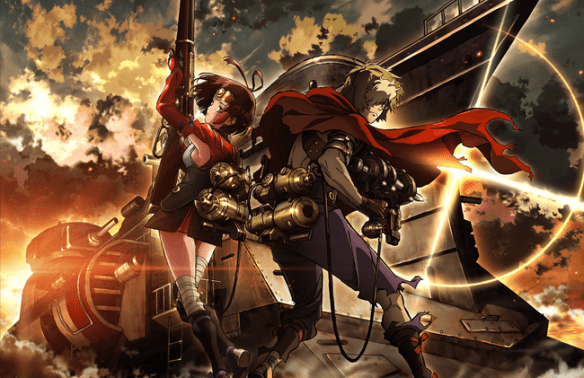
Starting with this season’s Kabaneri of the Iron Fortress, new shows from the highly-regarded Noitamina late-night slot on Japanese television will only be streamed abroad on Amazon Prime. Some fans are angry because that closes the window that previously might have allowed them to see it for free from another supplier.

But it doesn’t seem to bother the UK’s anime companies. “Streaming from another large platform can only be a positive thing,” comments Andrew Partridge of Anime Limited. “I heard naysayers flapping when Netflix came along, too. The truth of the matter is that the Amazons and Netflixes of this world are the terrestrial TV we never really had.”

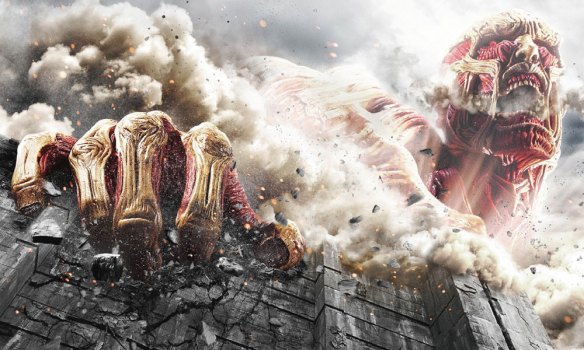
In the years before NEO, anime TV shows weren’t on TV in the UK. Japanese cartoons were written off as glorified toy commercials or unsuitably violent, and fans sourced them from the video trade instead. In the last decade, anime has undergone a quiet revolution in streaming and simulcasts, but I don’t think fandom likes to feel that it’s being “handled”, even though enclosing intellectual properties is the way that any broadcaster builds its brand. SKY TV initially sold itself as the place where you could watch The Simpsons. Sporting channels snatch exclusive access to Your Team versus Their Team. If you gave me the mission of seizing the high ground in anime, Noitamina would be the first thing I went for, because it’s come to be associated with quality. If you were previously the sole gatekeeper to Noitamina, you would have had Erased, Psycho Pass, and Terror in Resonance, Nodame Cantabile and Eden of the East. But so what? You still wouldn’t have had Attack on Titan or Ghost in the Shell.

Fans love the idea of getting their own, tailor-made anime-streaming “channel”. But they hate it when they discover it Doesn’t Have All The Things. So it’s not just one monthly payment, it’s two, it’s three… When Battery starts running in July, you won’t be able to preview it for free on Crunchyroll. But if you really want to see it, it will still be right there, if you pay the annual fee, on Amazon Prime. That’s what’s making a lot of fans twitch. When Funimation or Viewster subscriptions cost no more than a once-monthly Happy Meal, they feel negligible. But Prime’s £79 a year doesn’t feel like £7 a month, even though it is. Or another £5.99 a month for Prime Video, if you prefer.

Of course, down the line, these shows will continue to come out on disc anyway. Which is where the real cleverness lies, because if you’ve already paid for Amazon Prime, it’s pretty obvious where you’re going to buy your Blu-ray. They’ll get to take your money twice.

Jonathan Clements is the author of Anime: A History. This article first appeared in NEO #150, 2016.

The War on Christianity

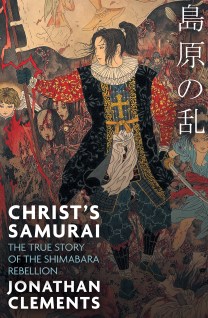
Christ's Samurai coverJJ O’Donoghue in the Japan Times covers my new book Christ’s Samurai, calling it “a concise and lucid account of a unique period in Japan’s history”.

Come for the article, stay for the comments! I was worried I might be accused of being anti-Christian, but it turns out that I am an apologist for missionary subversion and a whitewasher of colonialism… according to an online pundit who hasn’t actually read the book.

Out now: Amazon US, Amazon UK.

Bring it On!

Sport0018CheerleadingIn a plot worthy of a quirky anime show, two groups of feuding cheerleaders have prompted a US court battle that may spell the end of the world. Varsity Spirit, a company that makes mini-skirts and hair ribbons, is suing Star Athletica, another company that makes mini-skirts and hair ribbons. Varsitywants Star to stop copying some of its products; Star has gone to the Supreme Court, protesting that clothes are “useful articles” rather than works of intellectual property, and hence that you can’t put a trademark on pom-poms.

Prepare the drama torpedoes. Varsity has requested a “writ of certiorari”, or in Earth-language, a ruling on whether or not costumes can copy other costumes. If the judges are able to cut through the hair-pulling and face-scratching on this one, they will have to decide who owns a look. The future of dressing up will amount to a show of hands, because an unlikely ruling in Star’s favour would open up the floodgates to shutting down (or at least regulating) cosplay.

The idea is so preposterous that I previously suggested it as an April Fool’s Day gag last year on the Manga UK blog, but the world cosplay community is up in arms about it. Although there has been dressing up in Japan for decades, cosplay as we know it was born from what lawyers call the separability of rights, when Japanese fans in the 1980s realised that copyright didn’t apply to apparel in games and films. And anime companies merrily looked the other way, because cosplay didn’t really hurt anyone. Varsity and Star are fighting this one out because each one stands to make or lose money.

A certain anime company infamously gave up supporting cosplay competitions some years ago, because bosses realised that the participants were too busy sewing their sequins to actually pay for any of the anime products. But even if this ludicrous case was ruled in favour of Star, it would be sales suicide for an anime company to issue an actual cease-and-desist order to costumers, unless they already believed that costumers didn’t buy their product anyway, and that consequently the company had nothing to lose…

Fannish endeavours are only tolerated because they are amateur. And cosplayers can expect the tacit support of corporations for as long as they perform some sort of function. They give people something to do on convention evenings. Magazines get to run pretty pictures next to columns on tedious legal matters. And, supposedly, they function as a form of free promotion for the anime. But as two entrepreneurs recently discovered when they tried to sell camouflage costumes based on a convention hotel carpet pattern, companies will come down hard when you actually try to profit from something they own.

Jonathan Clements is the author of Anime: A History. This article first appeared in NEO #149, 2016.


Scurta istorie a samurailor

coperta1Out now in Romanian, translated by Iuliana Dumitru, my Brief History of the Samurai, with a spiffing new cover depicting the first encounter of Benkei and Yoshitsune. News like this is like getting a postcard from old friends — I delivered this book to my British publisher seven years ago, but every now and then it finds a new home in a foreign country. There have already been editions in Spanish and Italian.

Eurovision Shouty I-Spy 2016

nice hat

Godspeed, you funky Belgians! We’re back for the game of the year, the Eurovision Song Contest hosted in 2016 by Sweden, the country that never fails to be insufferably smug about winning all the time. And this year, it’s being broadcast in the USA: let’s see Trump put a wall around that.

We’ve already had to say goodbye to Bosnia-Hercegovina’s bacofoil cellist, Moldova’s break-dancing astronaut, Belarus’s naked wolf fondling, and Greece’s inexplicable claim to be the “land of the rising sun”. Categories still resting this year include readily identifiable mullet dresses, and our popular dubstep dance-off, although I am pleased to report that Buddha Jazz Hands is back.

Step One: you will probably need to be quite drunk. Step Two: The following sights will be seen during this Saturday’s Eurovision Song Contest. Can you see them first? Remember to shout it out. Party hosts will need to keep score of who gets what first, or otherwise dish out the forfeits to those that aren’t quick enough. As ever, there is more than one key change, and plenty of orbital cleavage, but this year you have to be quick to catch the subtlest of bimbles. Keep your eyes (or ears) open for any of the following. And when you notice it, SHOUT IT OUT!

In no particular order, in Saturday’s final you should look out for:

  • CAPE!
  • Princess Ardala and the Buck Rogers Backing Dancers
  • giant spinning twosome hoop
  • whistling chorus
  • Lyrics: “Your smell on me”
  • glow in the dark violin
  • standing on a giant clock
  • silver disco shorts
  • tuck your shirt in, you scruffy oik!
  • woman wearing a tent
  • glowing garters
  • Misheard lyrics: “massive balls weighing down the people all around”
  • Subtle Message: “WHAT COLOR IS YOUR LIFE?”
  • Lyrics: “I can feel my ship capsizing.”
  • pointless walk to a new microphone
  • holographic self-replicating clone backing dancers
  • POINTING!
  • sparkly fingerless Goth gloves
  • mid-air somersault
  • he’s got wings!
  • giant pink G
  • howling
  • sitting on a sparkly slab
  • Farah Fawcett hair (quite a few)
  • pointless time-wasting pause
  • Lyrics: “The monsters in my head.”
  • Winking
  • panda on her head
  • he’s fallen into his own vortex!
  • inadvisable bandy-legs dance
  • KEY CHANGE! (every time you hear one)
  • band in a cage
  • Bimbling*
  • ORBITAL CLEAVAGE**
  • pink ponytail
  • FLAME ON! (every time there’s pyrotechnics)
  • Lyrics: “Beep Beep Beep.”
  • he’s climbing the magic steps
  • Buddha Jazz Hands***
  • COSTUME CHANGE

(*swaying one’s head from side to side in a snakey fashion)

(**ostentatious cleavage sufficient to see from a satellite in orbit, which, according to Eurovision bra consultant Tom Clancy, requires a minimum of C-cup)

(***the dancers all pile behind the singer in a line and then fling their arms out, creating a multi-limbed oriental deity-look)

Apologies to American readers, who will have to just imagine what the world’s biggest, gayest song contest is like. Just imagine, for one day every year, Europe gets to behave the way that Japan does all the time.


Belgium, man. Belgium.

Isao Tomita 1932-2016

tomita-studioOver at All the Anime, I write an obituary for electronica pioneer Isao Tomita, who also composed the theme song to Tezuka’s Jungle Emperor.

“The 15-track Jungle Emperor album would become the first anime-themed LP, selling 100,000 copies – generating lucrative royalties for Tomita, but also for the unknown lyricist.  The main suspect was animation director Eiichi Yamamoto, leading to further arguments about whether he had written the words during a working day, thereby forfeiting his royalties to the company, or during one of the 250 hours of unpaid overtime he had clocked. Eventually, Mushi’s managers ruled in favour of themselves, fearful of setting a precedent.”

Occupert

occupied3

Over at the Science Fiction Encyclopedia, I sneak away from my usual China and Japan entries to write up the Norwegian thriller Occupert (Occupied), in which the perfidious European Union colludes with the nasty Russians to invade Norway.

“…if the narrative of similar Anglophone sf is one of good versus evil and open conflict, Occupert draws instead on a national experience of quisling collaboration, the thinning of everyday comforts and freedoms, and the slow but sure assembly of an effective resistance…”

Right-Hand Man

parasyte-the-movieThe Earth is under attack. Alien parasites have wormed their way into the brains of uncountable human beings, everybody from policemen to school teachers to noodle sellers. Teenager loser Shinichi (Shota Sometani) knows this because of a fatal flaw in the alien scheme – they can’t crawl in through your ears if you’re wearing headphones. Instead, his attacker Migi (Sadao Abe) misses Shinichi’s brain at the fateful moment and takes over his right hand, bonding them together for life.

Shinichi now has a wise-cracking alien attached to his arm, curious about world affairs, human relationships, and genitals. But he also has an ally in the war with the aliens, since Migi’s botched takeover turns him into a pro-human fifth columnist. Shinichi must somehow find out the aliens’ plans, without alerting the suspicions of his school teacher Miss Tamiya (Eri Fukatsu), whose blank-faced stare is sure-fire evidence that she has already had her brain eaten.

Japan’s first riff on Invasion of the Body Snatchers came in the form of the as-yet untranslated Beautiful Star by the infamously loopy novelist Yukio Mishima, in which a group of fanatical nerds became convinced that they are Venusian agents tasked with starting a nuclear war. The same period, the 1960s, also saw the granddaddy of all tales of alien symbiosis, when the dying alien Ultraman fused himself inextricably with a passing human, kicking off an ongoing franchise of transforming heroes fighting rubber monsters. By the 1970s, Japanese children’s telly was awash with the likes of School in Peril, in which teenage angst found new outlets in missions to defy scheming adults who turned out to be alien stooges.

In 1988 when the manga artist Hitoshi Iwaaki published the first chapter of Kiseiju (Parasyte – the misspelling is a deliberate imitation of a similar twist in the original Japanese), his story was a knowing homage to such childhood chillers. But running in Afternoon, a comic magazine for adults, Parasyte injected heavy doses of body-horror and paranoia. In gleeful, blood-spattered imitation of John Carpenter’s The Thing, Iwaaki’s aliens let rip with visceral, fanged transformations, like weaponised Salvador Dali paintings duking it out for control of the Earth. But it was also witty. Migi’s oddball friendship with Shinichi was genuinely charming, and their encounters with the humourless alien invaders inevitably creepy or inadvertently funny.

The original Parasyte manga finished in 1995, fading from public view for the oddest of reasons. For several years, the remake rights were purportedly in the hands of James Cameron. The Titanic director’s interest in manga is well-documented, but in the case of Parasyte, the rights acquisition may have been part of a complex legal issue, acquiring it to prevent ambulance-chasing lawsuits about the similarities between its shape-shifting aliens and the abilities of the T2000 in Terminator 2. There were certainly moments in the manga that bore a coincidental resemblance to iconic scenes in Cameron’s 1991 movie, and as a result, Parasyte stayed out of other media for over 20 years. Despite winning awards in comic form and bagging itself a Seiun (Japan’s Hugo award) for best science fiction, it didn’t make the obvious jump to anime or feature film until 2014, when it suddenly exploded into both formats. This delay has done it no harm at all, not the least in its evocations of modern terrorism – Shinichi is a double agent inside a sleeper cell, committed to preventing atrocities on his home turf.

As if two movies were not enough, Parasyte was also adapted as animation – arguably a medium more suited to the sudden outbreaks of alien shape-shifting. But Takashi Yamazaki’s live-action version also benefits from a generation of falling prices in digital effects, allowing him to inject heavy doses of rubber-bodied violence. It doesn’t always work, with the nature of Migi’s host leading Shinichi to literally hold his assailants at arm’s length, but most of the time, talky scenes of threats and scheming convincingly erupt into savage collisions of snapping flesh, often part-hidden in the shadows or obscured on scratchy CCTV.

Jonathan Clements is the author of Anime: A History. This article first appeared in Geeky Monkey #7, 2016.

And a child shall lead them…

IMG_6356

Over at All the Anime, Andrew Osmond writes a long piece about my new book, Christ’s Samurai.

“And they had a hero, a Japanese Christian guru called Jerome Amakusa. Clements picks his way through the legends, stressing how little we know of Jerome with any certainty. According to some accounts, he was a strikingly beautiful teenage boy, ‘an eerie, white-robed child messiah.'”