Elegantly Wasted

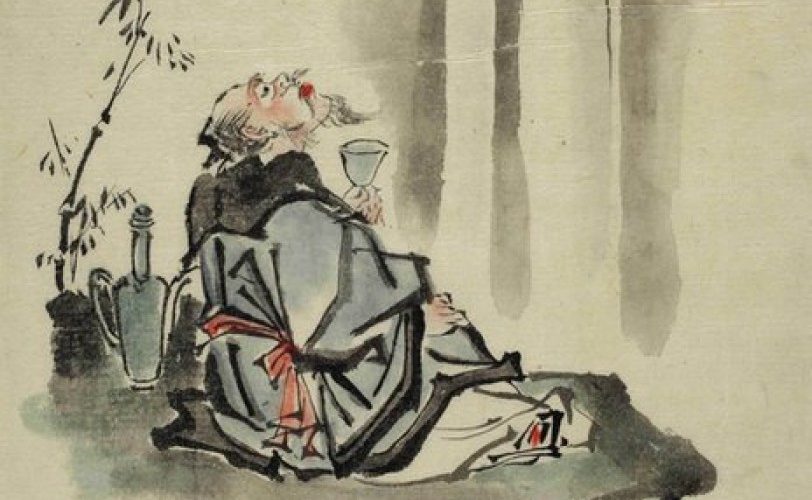
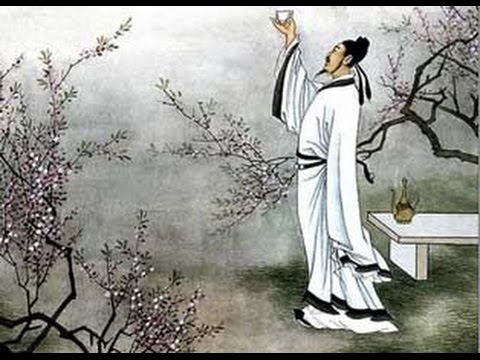
Had he been born in our era, Li Bai (701–762) would have surely been a rock star, wrecking hotel rooms and bedding groupies he met on a drug-fuelled stage-dive. In Tang dynasty China, he still enjoyed a reputation as a wild-child poet, lionised for his quick couplets and witty juxtapositions, summoned even to the Xuanzong Emperor’s entourage.

That was when he blew it. After dithering for days among a crowd of hangers-on, he got his moment to shine, called in as a script doctor on a court performance that needed punching up. Instead, he drunkenly tried flattering a prickly consort. With all the self-destructive tendencies of a heavy-metal frontman, Li Bai dissed the chief eunuch and back-handedly complimented the famously plump Yang Guifei for being as gracile as a legendary stick-thin kingdom-wrecker. It took a while for courtiers to unpick his cheeky insults, but his career at court was essentially over before it had begun.

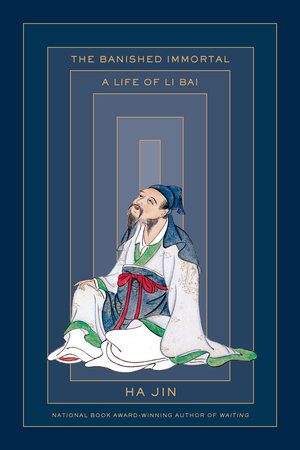
In his new book, The Banished Immortal, poet and novelist Ha Jin offers a slick and readable biography of China’s most famous poet – his wives and concubines, his dissolute life, and his flirtations with power and politics. It’s a warts-and-all portrayal that both evokes Li Bai’s talent and his ghastly, narcissistic disregard for others. “So long as the host can get me drunk,” he slurs in one epigram, “I’ll have no idea where my hometown is.” We’ve all got a friend like Li Bai… we just wish he’d warn us before he rings the doorbell and asks if we’ve got any booze.

Heaven is high and the Emperor is far away – one gets a strong sense with Jin’s text of the sheer, daunting size of China. A man of privilege who never seems to have to really work, Li Bai’s travels separate him from his wife for years on end, and he only writes to her on a couple of occasions. Her own letters never find him, defeated by the sheer length of lines of communication. In one amusing incident fit to fill an entire episode of Star Trek, a communiqué arrives from a people so remote that nobody at court understands it. Only Li Bai, who grew up in western China and may even have been born in what is now Kyrgyzstan, can decipher it, and reveals that it is a declaration of war.

Jin is at his best when dealing with Li Bai as a fellow creative – he makes no boast to be his equal, but has an informed insider’s grasp of the perils of poetry. He is not afraid to point out those places where his subject is just phoning it in, and is ready to suggest when certain “off-the-cuff” couplets have been composed in advance. This poet’s-eye view of another poet is Jin’s greatest contribution, cutting through the hagiographies and unmitigated praise of other authors to the heart of Li Bai’s true talent. The author, an exile who has spent much of his adult life in America, clearly identifies with the peripatetic Li Bai, excluded from high office and ever unsure of his situation, “a fish trapped in a roadside puddle, dreaming of returning to the ocean.”

Jin makes a strong case for Li Bai as a man of letters ousted from what might have been a more productive calling, an alcoholic genius who inevitably puts a foot wrong in the Tang court, and a late-life careerist who disastrously backs the wrong horse. We share in Li Bai’s elation when he hears that the new emperor, Suzong, has pardoned him, and in his disappointment when he tardily realises this was not a recognition of his eloquence, but a blanket amnesty. Jin digs down into the hidden messages of love poems, and the subtle asides contained in what first appear to be fawning songs of praise.

There are, nevertheless, some odd missteps in the prose. Jin writes at one point of the “Nan dynasty”, which never existed – any Chinese speaker can see that he is referring to the “Southern Dynasties”, but this error has been allowed to stand. The Xianbei tribe is archaically referred to as the Sien-pi. Jin bafflingly recounts the death of the concubine Yang Guifei as suicide, when most accounts agree that she was strangled. In what I can only assume is a sop to the American market, Jin praises the work of Ezra Pound, who spoke no Chinese and left scraps of Japanese gibberish in his “translations” from where he copied out a crib sheet. He guardedly acknowledges the earlier work of Arthur Waley, conceding that while dated, it still has weight – I would suggest that many of Waley’s translations retain a majesty and harmony that is often lacking here. But this is not Ha Jin’s fault – all but truly bilingual translators usually work into their native language, not out of it.

For the reader unfamiliar with Chinese, Jin’s explanations can open whole new worlds between the lines, although sometimes only patchily. He notes, for example, the allusion in the last line of the poem “Zhan Chengnan” to an epigram from the Dao De Jing, but omits to mention that the opening lines are obviously a nod to “We Fought South of the City Wall”, a famous protest song from the Han dynasty. When examining “A Lament of the Leaving Woman,” Jin interprets it as a poem that reaches out to Li Bai’s disenchanted live-in lover. But considering the hostility with which other poems rail against “that stupid woman,” it is surely more likely that this poem is a toxic masterpiece of passive-aggression, taunting her for losing her looks and having nowhere else to go, a “cheap concubine.” Jin flinches at pointing out just how good his subject was at being bad.

However, these are discussions to be had, rather than outright statements of incontrovertible fact. Jin has consulted a number of Chinese-language books on Li Bai, and his text valuably distils much of their arguments for an Anglophone audience. While he often quotes trenchant third-party observations, beyond his intuitions as a jobbing poet, he rarely gives evidence of a source-critical reading of these other authors – he is insightful on Li Bai’s poetry, but hands-off regarding his historicity. Repeatedly, he refers to these other works as if they are a unanimous chorus of approval, whereas a more historically minded author might have tried a little forensics to make sure these other sources weren’t largely citing each other.

Regardless, the field of popular biographies of medieval Chinese figures is shockingly small. Li Bai’s life spanned a rich, transformative period in the 8th century, the height of the Silk Road and the brief florescence of a truly diverse China. Ha Jin’s biography will introduce this poet to a whole new generation, suffused with examples of his philosophy and verse.

Jonathan Clements is the author of A Brief History of China.

The Year of the Stag

“Clocks are harbingers of funerals; knives mean you want to cut a friendship; ties and necklaces are considered intimate embraces and should not be gifted to casual acquaintances.” Over at the Times website, I explain why whisky is the ideal Chinese New Year Gift. Also ideal for any day with a “y” in it. I mean, you can give me socks if you like, but…

Wrapped at Christmas

After six weeks of shooting and over 1,500 miles of driving, I’m on my way home having wrapped on season five of Route Awakening for National Geographic, taking in two lost kingdoms, a forgotten emperor, several sets of grave robbers, and your correspondent trying to learn the steps to the World-Creating Dance of Kaishan, Divider of Mountains. Yes, I was working on Christmas Day. That’s the way I like it. Look out for more details on the topics of season five coming in spring 2019. Also coming in the New Year, my latest book: A Brief History of China from Tuttle Publishing, which begins with cavemen and ends with reality television.

Terracottas in Liverpool

DjEASR7XgAEvz3a

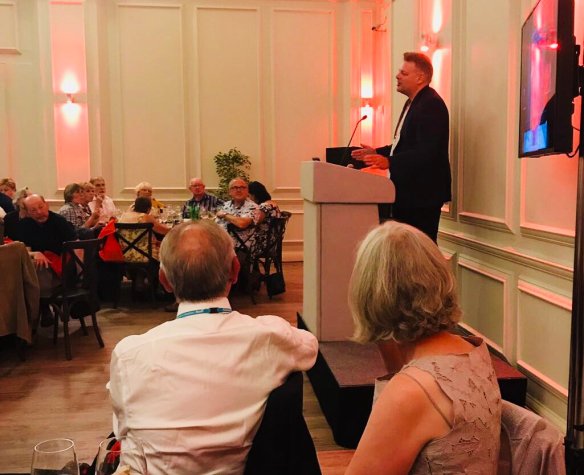
Back from the Liverpool World Museum, where I spoke this week about Chinese Bronze Age burial customs, the oddities of the Qin state in ancient China (including its most famous song), and the enduring mysteries of the Terracotta Warriors. The exhibition itself has lots of interesting and quirky pieces, including a cauldron like the one that Duke Wu dropped on his foot, a barbarian brooch from Qin’s contacts with the western nomads, and a statue of a goose from the First Emperor’s bronze menagerie.

I asked the crowd if they could remember what they were doing back in July 2005, when “You’re Beautiful” by James Blunt was number one, because that’s the timespan, just thirteen years, that separates the coronation of the First Emperor from the fall of his dynasty. The museum at the Terracotta Army site near Xi’an has already stood for twice as long as the dynasty it celebrates.

Drawing on the materials in my book on the First Emperor (which was doing a roaring trade in the museum shop, I am pleased to say), it’s only when you set the archaeology in context with the textual evidence from Qin documents (themselves often as recent a discovery as the Terracotta Warriors themselves), that the reason for every soldier having an individual face becomes clear.

Judge Dee Fights The Power

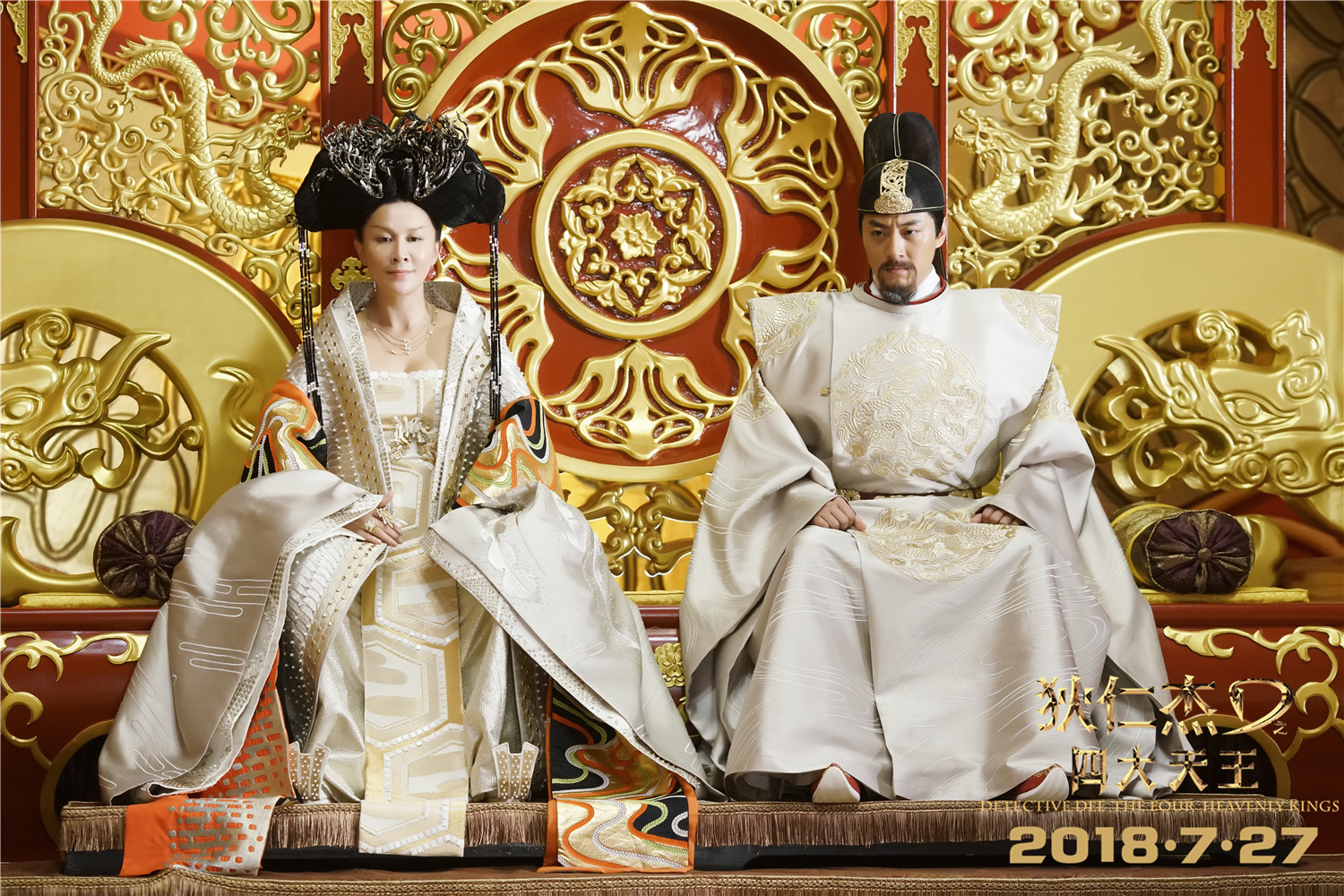
From Wu, by Jonathan Clements, available in the UK and the US. Recommended reading if you want to get the most out of Tsui Hark’s new Judge Dee movie, in which Empress Wu launches a vendetta against her former ally.

—-

Judge Dee was rounded up with a number of other officials, and escorted to the investigators’ head office by the Gate of Beautiful Scenery. Lai Chunchen informed his captives that they had one shot at mercy – under plea-bargaining terms that Empress Wu had recently approved, anyone who immediately pleaded guilty could have their sentences commuted from execution to banishment. With that in mind, Lai Chunchen asked Judge Dee if there was a conspiracy. Dee’s reply was blunt and sarcastic:

[Wu’s] Great Zhou revolution has occurred, and ten thousand things are changing. Old officials of the Tang dynasty like myself are soon to be executed. You bet there’s a conspiracy!

Lai Chunchen would have preferred a straight yes or no, but took Judge Dee’s response to be in the affirmative. Dee was locked up for processing, although his stance managed to impress some of his captors. One investigator, doubting very much that Dee would be detained long in exile, asked him if the judge would put a good word in for him on his return, to which the judge responded by literally banging his head against a wooden pillar while calling the investigator a series of rude names.

The Judge, however, was not going to go without a fight. Waiting for a moment when he was left alone, he wrote a letter to his son on the inner lining of his jacket, and then prevailed upon his captors to take the jacket back to his home, so that his family could take out the winter padding.

On finding the secret message, Dee’s son immediately applied for an audience with Wu herself, and showed the empress the accusing letter. Lai Chunchen was called to explain himself, but argued that the letter was a forgery, since he had no record of the judge’s clothes being sent back to his house. There, Dee’s case might have foundered before it could have truly begun, but for a slave who approached Wu himself. The ten-year-old boy was one of many palace servants who owed their position to the alleged misdeeds of their elder family members. Uncaring that his words could lead to his own torture or death, the boy announced that his family was innocent, and that he lived his life as a slave solely because of the persecutions and lies of the ‘cruel clerks.’

This dramatic turn of events forced Wu to summon Dee to the palace to explain himself. She asked the judge why he had pleaded guilty in the first place, to which Dee replied that it was the only way he could avoid torture and death”

Trangressive Typologies

Shangguan Wan’er, it was said, wore her hair in a lopsided bob, in order to cover up the scar on her face from where Empress Wu went for her with a fruit knife. It was an argument over a boy, of course – the drunken Wu had been fondling a sleeping gigolo and bragging about how he made her heart melt, and Wan’er had foolishly reached out a hand to touch him. So, at least, reads the Secret Record of the Director of the Guiding the Immortal Cranes Bureau, a racy work of historical fiction purporting to have been written in the 900s, but more likely to date from a millennium later. It’s just one of the lascivious works cited in Rebecca Doran’s Transgressive Typologies: Constructions of Gender and Power in Early Tang China, the kind of book that makes you wonder why everyone isn’t studying Chinese history.

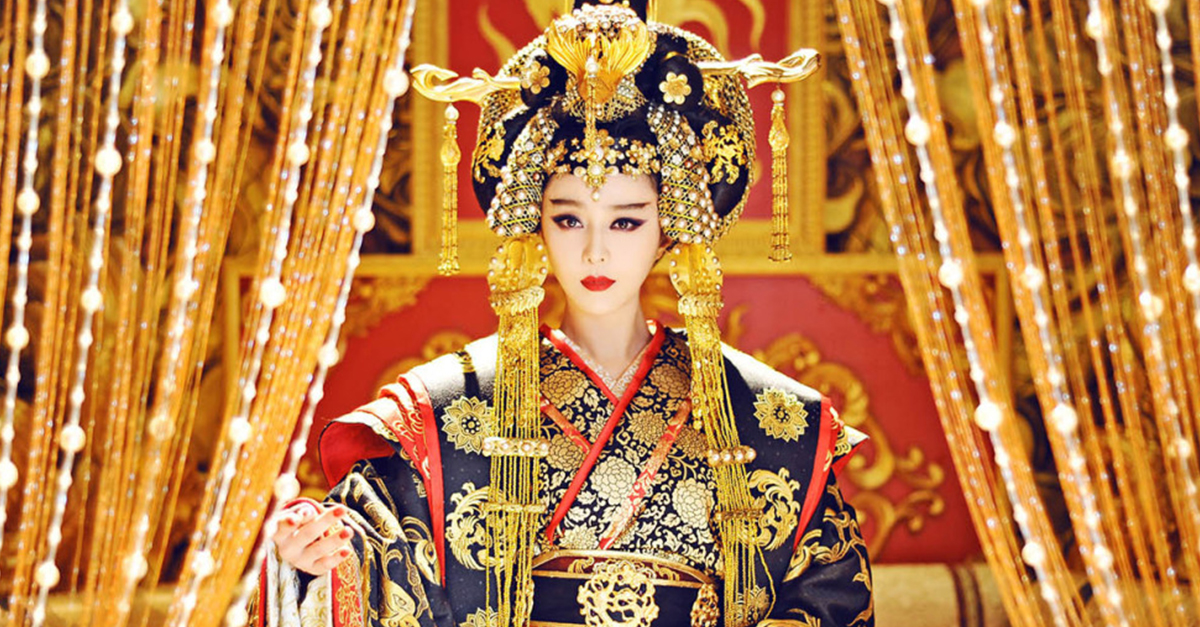
Doran is interested in what she calls “the historical period of female power”, from the time that the charismatic Wu Zhao was called back from a Buddhist nunnery as a new distraction for the Gaozong Emperor. She rose swiftly to power behind the throne, first as his empress, then as his interpreter following an unspecified illness likely to have been a debilitating stroke. She ruled behind the throne for the remainder of Gaozong’s life and the truncated reigns of two of their sons, before seizing power herself in the 690s. But Doran, like many other Tang historians, extends the period of female rule beyond the life of Wu, noting that an entire generation of women grew up during her reign, and came to regard equality, or more, as their birthright.

Shangguan Wan’er, Wu’s minister and speech writer, once regarded as the greatest poet of her generation, remained a power-broker after Wu’s death, and latched on to Wu’s grand-daughter Anle as a possible second empress regnant. Anle was brought down in a palace coup by Wu’s daughter and grandson, but the daughter, Princess Taiping, clung on to her own power base for several more years before her ally betrayed her. Depending on how you define it, the “historical period of female power” either spanned Wu’s adulthood and aftermath, c.650-713, or just the last two decades of that period – her years as empress regnant, and the “second generation” of the women who tried to emulate her. After 713, Wu would be vilified for twelve hundred years. It was only in the 20th century, and even then initially for shady political reasons, that Wu began to be reclaimed as a feminist icon, and her period in power regarded as anything but a woeful mistake.

Doran takes as her starting point the Biographies of Exemplary Women from the Han dynasty, because for centuries this book served as the template for good female behaviour. It was a touchstone for all the (male) historians who wrote about Wu and her imitators, and formed the basis of their disapproval. She also examines the life of Empress Dugu of the Northern Zhou, who controversially insisted on monogamy from her imperial husband – regarded by medieval protocol wonks as a “fatal mistake” sure to undermine palace harmony and dynastic vigour. In doing so, she points to the glorious chaos of the century before the Tang dynasty, when a series of tin-pot and occasionally barbaric dynasties contended to become the new Sons of Heaven, with a set of intrigues sufficient to make Game of Thrones look like Emmerdale.

Doran moves on to the reigns of Wu’s sons Zhongzong and Ruizong, and the kind of poetry and imagery that was popular in a world where their mother really ran the show. As Wu began manipulating the news of her era – Fortean phenomena, observations and media, all pointing to a coming paradigm shift – she pushed an agenda rooted in incredibly modern terms. As she argued at the epochal feng-shan sacrifice in her husband’s day, if the world was truly a constant cycle of yin and yang, dark and light, female and male, then women deserved an equal shot at public life, at power, and ceremonial roles. This, in the eyes of her chroniclers, was her dreadful sin, daring to push an equality agenda in a patriarchal world. Doran uncovers delightfully obsequious comments from fawning poets and courtiers, keen to praise Wu and her imitators for simply showing up, for their grace and their wondrous cultural achievements. She also delves deep into the surviving works of Shanggaun Wan’er, and their place in the history of Chinese poetry.

Then things get weird, as Doran examines the Comprehensive Record of Affairs Within the Court and Without, a Tang dynasty fantasy in which a minister is sent to hell over a bureaucratic mistake, witnesses the future of the Ruizong Emperor, and is then restored to the human world in time to live through it all, like some medieval Chinese variant on Back to the Future. She also reports on a common Fortean phenomenon in Wu’s era – transsexual chickens, regarded by Wu’s cronies as examples of her greatness, and by her detractors as symbols of the awfulness of the age. In once farcical scene, a courtier recalls the presentation of a three-legged fowl to Wu, who insists it is an auspicious event worthy of note in the dynastic chronicles, even as her son Ruizong points out that one of the legs is clearly fake. Wu tells him to shut up, but even as she does, the leg falls off.

There’s something quite wonderful about Wu and her courtiers bickering about auspicious bullshit, and Doran’s ongoing citations of gossip and innuendo from the time, such as the nursery rhymes and pop songs that slyly alluded to palace putsches and scandals, and the stories written when later writers tried to grapple with the sheer oddness of her reign. Needless to say, much of the disapproval directed at Wu and her imitators would be framed in familiar, materialist terms, lampooning them for flighty, grasping, gold-digging consumption. Doran begins with a famous poem about Anle putting on her make-up as the soldiers bash down the door to her chambers, observing that there are similarities in the story with the “painted” Jezebel of the Bible. There’s plenty of fun to be had with what today would be called tabloid sniping at Anle and Taiping’s pimped-up chariots, ridiculously opulent palace cribs, and bling-bling fineries.

Doran finishes with a prolonged discussion of the “gender anarchy” of Wu’s era, as described by both apologists and attackers, a sort of topsy-turvy Saturnalia of sexually predatory women and ineffectual men, the elevation of bad-boys and charlatans, and (worst/best of all), the Office of the Crane, Wu’s 120-strong personal harem of pretty boys. One of whom, of course, was the cause of that fateful catfight between Wu and Wan’er. When he was inevitably butchered in the coup that ousted Wu in 705, Wan’er tenderly carried off his penis and presented it to the grieving Empress. That’s what it says in the Secret Record of the Director of the Guiding the Immortal Cranes Bureau, anyway.

Jonathan Clements is the author of Wu: The Chinese Empress Who Schemed, Seduced and Murdered Her Way to Become a Living God.

Civilisation

“Aboard the Dingyuan, the wounded, half-blind William Tyler stumbled through the carnage. His ears were still ringing from the blast, and would continue to do so for the rest of his life. Up ahead, he saw a friend of his, Lieutenant Wu. Even as they exchanged greetings, a man standing nearby was torn apart by an enemy shell, smearing gore and entrails across the deck.

“‘So this is civilisation,’ said Wu. ‘This is what you foreigners are so keen to teach us.’”

From Admiral Togo: Nelson of the East, by Jonathan Clements.

Gold Remi

Season three of National Geographic’s Route Awakening, in which I wander some of the ethnic minority communities of modern China, has just snagged the Gold Remi award at the Houston International Film Festival for “TV: Information, Cultural or Historical.” You can see the trailer here. Seasons one and two won the same award in 2016 and 2017.