The Disc-covered Country

It was Sentai Filmworks’ Matt Greenfield, then at ADV Films, who uttered the magic words to me at a party in 2001: “The next format is no format.” And for many of you, watching anime on a laptop screen in your bedroom, streaming it straight from the interwebs, that prophecy has come to pass. What surprises me 17 years later is that it’s still not true for so many of us – the anime market remains a healthy niche in the entertainment business, possibly because anime fans were some of the first to notice that online streaming sites were anything but permanent archives.

But anime fans without a Blu-ray player may soon have little choice except to knuckle up and buy one. Companies all over the globe are giving up on DVD, and with the likes of Sentai Filmworks in the USA, and Madman in Australia not even bothering to burn DVD masters any more, this inevitably affects those companies that rely on them for materials. Now, in Britain, MVM’s Tony Allen announces that his company is releasing Flip Flappers only on Blu-ray, because DVD masters were not forthcoming from his overseas partners.

This column reported way back in NEO #95 on the decision by Bandai America to give up on DVD. If it’s taken another six years for everybody else to catch up, it’s because Bandai trusted other companies to take up the slack by licensing the products for DVD themselves. This latest round of cancellations reflects the fact they have stopped bothering.

Even though only 15% of the UK public seemingly owns a Blu-ray player, roughly 60% of anime sales are on Blu-ray. It well be that the true figure is significantly higher, and that many of the DVDs “sold” in dual-format packs are little more than throwaway coasters to purchasers who don’t need them – we can’t say for sure.

But American Blu-ray sales peaked in 2013 and have been plummeting ever since. Last year, Den of Geek observed that Cameron Crow’s Aloha (2014) didn’t even go “straight to DVD” in the UK, but went straight-to-streaming. Could it be curtains for all discs…

“Packaged goods”, as they’re known, still form a crucial part of the anime market, because without a physical disc containing the film, it’s impossible for a distributor to sell you the box that it comes in, with the foil on the box, and the special foldy-out thing, and the liner notes, and all the other things that create value in a collector’s edition. So Blu-ray is here to stay, at least in anime, at least for the immediate future. There can be no flip flapping on that.

Jonathan Clements is the author of Anime: A History. This article first appeared in NEO #179, 2018.

Troubles ANEW

I don’t imagine that this will be the last time this column talks about Cool Japan film financing boondoggles. It certainly isn’t the first – way back in NEO #60 we discussed the likelihood of bail-out packages; then in NEO #63 there was all that hoo-hah over the proposed Media Arts Centre. We’ve followed Japanese studios as they tentatively embraced not only crowd-funding but also charity for their underpaid staff, and the gravy train of J-LOP funding for copyright holders.

But producer Hironori Masuda has just behaved in a decidedly un-Japanese way by blowing the whistle on what he calls the “institutional corruption” of Cool Japan. The subject of his ire is ANEW, a film fund announced with great fanfare in 2011, promising $80 million for new projects. Recently rebuffed for a film funding application, Masuda followed the money trail, and discovered that there wasn’t any cash to be found. ANEW had been sold off in 2017 to venture capitalists for just $311,000, while all those millions injected into it to pay for movies had frittered away on administrative salaries and dead-ends.

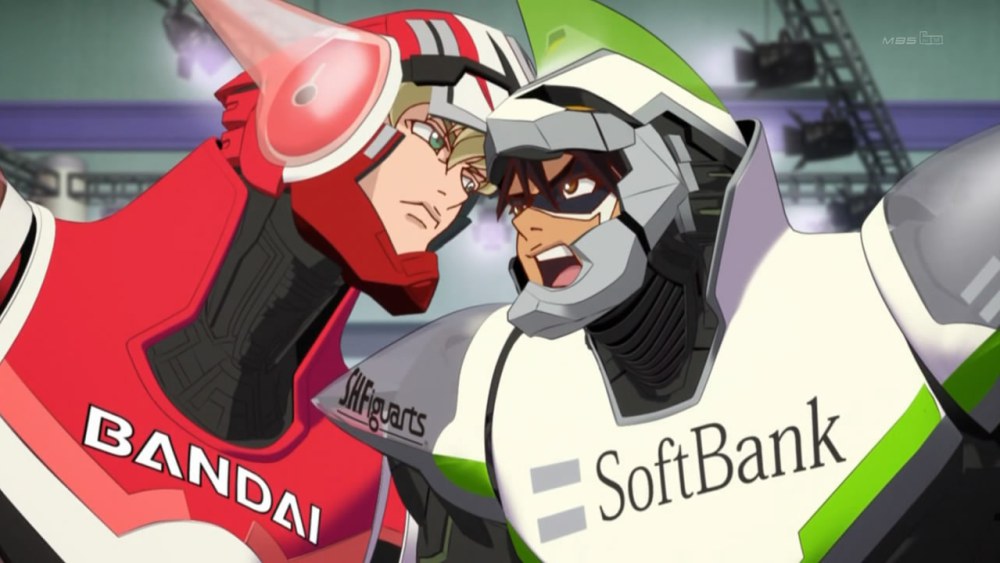
ANEW had five or six film projects under its aegis, including a putative live-action adaptation of the anime Tiger & Bunny, but none of them have come to fruition. Then again, isn’t this precisely what you expect to happen when government quangos dabble in media manipulation? Cool Japan has always been a marketing-focussed, image-obsessed concept, in which officialdom has lumbered far beyond the real achievers, trying to reverse-engineer their success. You can’t just make a new Pokémon happen. If you could, Bandai would have already done it. Nor does Japan go for those tax-break film initiatives that so many countries have successfully parleyed into movie success. There’s a reason The Walking Dead films in Atlanta – they get massive tax breaks, as long as they come to Georgia to spend their money. But that doesn’t work in Japan, where a tax break won’t take away the language barrier or the red tape. Instead, the Cool Japan policy wonks tried to make Cool Japan happen by starting their own movie projects.

Some might say that Masuda is just sulking because he didn’t get a piece of the pie, or that it was unrealistic all around for anyone to think that a mere handful of movie ideas might generate the next blockbuster. Regardless, after seven years, it seems that ANEW has absolutely nothing to show for all its investment, an amount of money that if spent more judiciously, could have paid for four Spirited Aways! Not even the Japanese government can create its own luck.

Jonathan Clements is the author of Anime: A History. This article first appeared in NEO #178, 2018.

Cat-astrophe

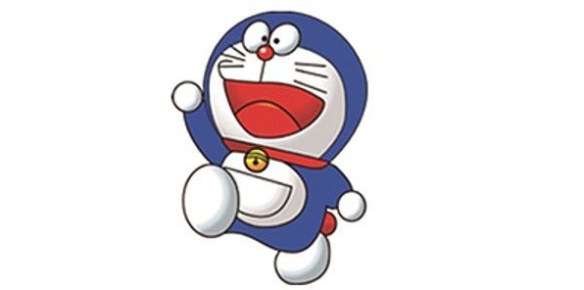
At Tonghuamen station in the Chinese city of Xi’an, a man is dressed as Doraemon, the big, fluffy blue cat, hero of many a manga series, and known in China as Ding-Dang, the Time Travelling Cat.

“DO YOU KNOW WHO I AM?” he yells at me through the mouth of his costume.

“Indeed I do,” I say, not stopping. He starts to scurry after me, his big clown-cat-feet flopping on the dusty pavement.

“SAY MY NAME, THEN! WHAT’S MY NAME?”

“Ding-Dang, the Time Travelling Cat.” I resist the urge to add that the Chinese media have recently outed Ding-Dang as an agent of Japanese oppression, with an insidious soft-power message designed to distract them from the ongoing dispute over the Senkaku Islands. Mainly because I don’t know the Chinese for soft power (it is ruan shili, for next time).

“NOT BAD! AND LET ME TELL YOU, LARGE FOREIGN FRIEND, YOU’LL WISH YOU HAD A TIME MACHINE IF YOU DON’T SIGN UP RIGHT NOW FOR ONE OF THE UNITS ON OFFER AT THE RENWEI TOWERS CITY DEVELOPMENT, COMING SOON RIGHT NEAR HERE.”

He has to shout because he is wearing an all-over velour suit designed to make him look like a giant blue cat. The thermometer is climbing towards 30 degrees today, so I think the heat might have driven him a little bit loopy.

“I’m not interested,” I say.

“TIME MACHINES AREN’T REALLY REAL, YOU KNOW. YOU CAN’T ACTUALLY GO BACK IN TIME AND SIGN UP FOR THIS OFFER LATER ON.”

“In which case, how did you get here, Ding-Dang?”

There is a pause, while Ding-Dang the Time Travelling Cat thinks about this.

“TO TELL THE TRUTH, I AM STUDYING FOR A DEGREE IN MARKETING. I AM REALLY HUMAN.”

“And if were you, Ding-Dang,” I add, “I’d be more worried about if you were legal.”

“OF COURSE I’M LEGAL—!”

“Because a Chinese court has just ruled that Robot Cat [Jiqimao], a trademark registered by a Fujian sportswear firm, is a blatant copy of Doraemon, so their right to use the image has been revoked, four years after they tried to register it.”

“Wow,” says Ding-Dang, his voice suddenly low and muffled. “They really did that…?”

“Yeah. Like nobody would notice!”

“Well, apparently nobody noticed for four years,” he observes.

“You got that right, Ding-Dang. I bet they wish they had a time machine now!”

Jonathan Clements is the author of Anime: A History. This article first appeared in NEO #177, 2018.

Remembering Paku-san

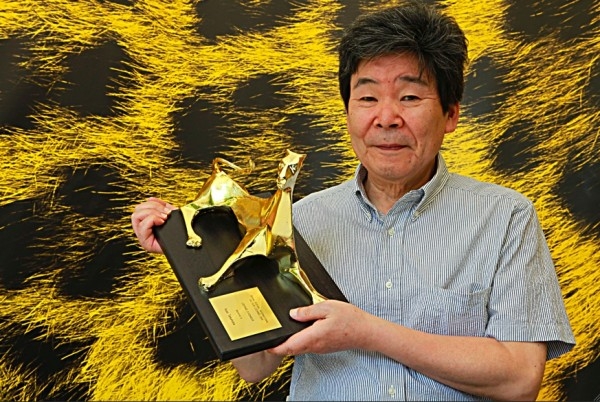
Look for the term Paku-san (“Mr Munchy”) – an affectionate nickname born of the late Isao Takahata’s habit of scoffing his toast on his early-morning studio rounds. It’s a common occurrence in Japanese-language reminiscences and studio memoirs. And reference to it often separated the wheat from the chaff in last month’s rondo of Takahata obituaries.

You’re in safe hands with NEO magazine, for which Andrew Osmond has fashioned a loving tribute this issue, but the coverage of Takahata in other publications has been of variable quality. It’s an interesting sampler not only of how far we’ve come (a lovely Guardian piece by Jasper Sharp, I see!), but of how far we haven’t – far too many clueless paste jobs from Wikipedia. Sadly, they don’t know who they are. Few obituarists, for example, noted that Takahata worked as a producer on both Nausicaa and Castle in the Sky, many accounts of his box-office “failure” Little Norse Prince, made under hostile studio conditions and effectively buried by its own distributors, were hopelessly garbled, seemingly by writers who thought it would be easy to cram such a full life of achievements into a simple list of films he directed.

One news-hound from a well-known British broadcaster inadvisably spammed anyone on Twitter who had mentioned Takahata, asking them if they wanted to come in for an interview. Unfortunately for him, this was all publicly visible, so would-be pundits could see him sucking up to Some Guy With a Blog with precisely the same enthusiasm as he was to Respected Filmmaker. In a marvellous gaffe, he also tried to get an interview with Roger Ebert, who has been dead for five years.

In obituary terms, Takahata might look like an easy grade. There is, after all, a lot of secondary material about him. It’s not like Akira Daikuhara, who died without half of the anime industry even knowing how to pronounce his name. But Takahata is still oddly under-represented in English-language interviews and books. At least one attempt to write a book-length study of Takahata’s work was thwarted in the early noughties by studio recalcitrance – it is not necessarily the fault of English-language authors that some figures are under-represented. Whatever the reason, there’s no BFI classic on Grave of the Fireflies or Princess Kaguya. There’s no translation (yet) of his collected essays, Things I Thought While Making Films. In criticism, as in life, Miyazaki got the attention first, and his friend and mentor was all too often tabled for later.

Jonathan Clements is the author of Anime: A History. This article first appeared in NEO #176, 2018.

Civilisation

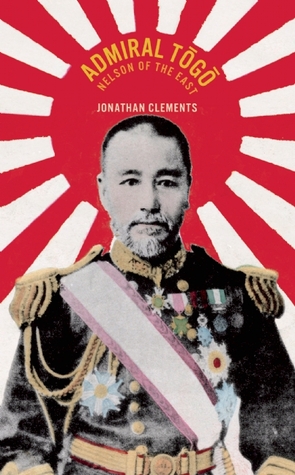
“Aboard the Dingyuan, the wounded, half-blind William Tyler stumbled through the carnage. His ears were still ringing from the blast, and would continue to do so for the rest of his life. Up ahead, he saw a friend of his, Lieutenant Wu. Even as they exchanged greetings, a man standing nearby was torn apart by an enemy shell, smearing gore and entrails across the deck.

“‘So this is civilisation,’ said Wu. ‘This is what you foreigners are so keen to teach us.’”

From Admiral Togo: Nelson of the East, by Jonathan Clements.

From Truant to Anime

Up on the All the Anime blog, my review of Mari Okada’s memoir of dismal schooldays and her escape to the not-that-glamorous world of anime screenwriting.

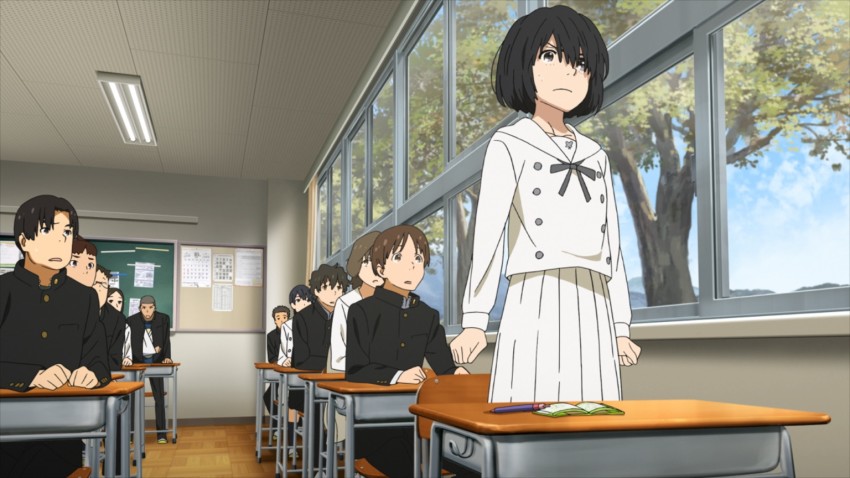
“Mari Okada’s memoir of two decades in the anime business begins and ends with the disastrous premiere screening of Anthem of the Heart in her hometown of Chichibu – a huge event in the middle of nowhere, inconvenient for all attendees, with a film that stops playing halfway. As the screenwriter, she fumes impotently as the patrons wait and flunkies try to look busy, and watches with head-shaking resignation as the celebratory fireworks, timed to coincide with the end of the film, are launched too early while the audience is still waiting for it to restart.

“From Truant to Anime Screenwriter: My Path to Anohana and The Anthem of the Heart is her account of how she got to that place, as the writer of a standalone film. Her writing is distinguished by a constant resistance to the performativity of Japanese life, refusing to play the game of empty accolades and fake-news proclamations that all is well. Instead, she presents a compelling portrayal of a life (and industry) that constantly ‘fails up’, until she becomes one of modern anime’s rare hyphenate talents.”

Ignoring Anime

Eiga Geijutsu (Film Arts) magazine is not afraid to call a spade a spade, infamously publishing both a Ten Best and Ten Worst list each year about Japanese movie releases. But in this year’s round-up of the highs and lows of 2017, editor Haruhiko Arai has refused to consider animated works.

The films that have particularly irritated him will be familiar to many readers of NEO magazine. One is Makoto Shinkai’s Your Name, which prompted Arai to ponder at a screening whether the enthusiastic movie-goers enjoying themselves around him had seen any other films recently.

Well, no they hadn’t. The huge box office figures for Your Name imply that many people who went to see it were either coming back for seconds or had not been to a cinema for a while. But how on Earth is that a reason to exclude it from consideration? It is surely an indication that Arai’s movie ratings are ignoring the opinions of the public. I, myself, make a living out of ignoring the opinions of the public, but Arai has not even afforded Your Name the backhanded compliment of calling it crap. He just stuck his head in the sand and pretended it wasn’t there.

Ignoring things, says Arai, is part of the problem with modern anime. He is disgusted by Your Name’s uplifting spin on tragedy, and regards it as a betrayal of history. He feels much the same way about In This Corner of the World, for presenting a childish innocent as a victim of war.

His reasoning is unexpectedly sound – frankly, it’s thought-provoking criticism. Your Name does indeed flaunt bad-taste brinkmanship by offering a reset button on an allegorical Tohoku earthquake – part of Shinkai’s incredible achievement lies in getting away with it. And ITCOW does rehash that old anime staple that regards WW2 as some sort of inevitable natural disaster visited upon the unsuspecting Japanese. But neither comment justifies pretending that the entire animated medium isn’t there anymore! In discounting two of the best anime of 2017 on spurious ideological grounds, Arai risks consigning his own magazine to the doldrums of film criticism. Instead, he argues that anime viewers are somehow cine-illiterate, unaware of trends and tropes in film itself, dumbly consuming pointless pap without any understanding of film as a medium. So I guess that tells us all where Miyazaki can shove his Oscar.

Jonathan Clements is the author of Anime: A History. This article first appeared in NEO #175, 2018.

The Anime Boom

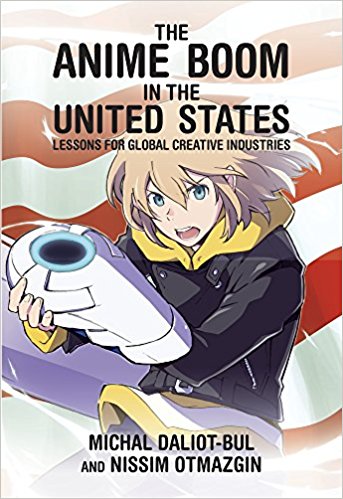
Up on the All the Anime blog, my book review of Daliot-Bul and Otmazgin’s The Anime Boom in the United States: Lessons for Global Creative Industries, which includes the following incendiary quote from Marco Pellitteri:

“Fans are a noisy minority that led many observers in the industry (and in academia!) to think that they are more numerous, representative and important than they actually are…. today, the targeting of narrow audiences is a self-fulfilling prophecy in terms of total economic failure: you make a series for a very tiny specific audience, then you want to sell it [overseas] for a higher price, because you want to make abroad the money that you failed to make in your own country.”

Ninja: Unmasking the Myth

“Ninja: Unmasking the Myth is a brave book. With a scientific sense of objectivity, Turnbull tears down an edifice that he himself helped to build, shining the harsh glare of academic rigour on his earlier work. In doing so, he uncovers some striking facts about the evolution of the ninja, not the least that the word doesn’t even occur in Japanese-English dictionaries until 1974.”

My review of Stephen Turnbull’s demolition (and reconstruction) of ninja in history, up now on the All the Anime blog.

From Our Sponsors

Everybody’s trying really hard not to call it the end of an era. But after 48 years the Toshiba Corporation is no longer the chief sponsor of the Sazae-san cartoon. Based on Machiko Hasegawa’s mild-mannered comic series, which itself ran from 1946 to 1974, Sazae-san has always been a time-capsule of post-war Japan. Its leading characters, a family with three children and several relatives, led by the titular harassed housewife, were always intended to be timeless. Scriptwriter Masaki Tsuji once explained that the stories were supposed to be as taboo-free as possible, sure to catch the largest possible viewership on primetime. But they were also decreed to be free of bad language, modern slang and electronic devices.

Sazae-san lives in a Japan untroubled by right-wing nationalism or looney religious cults, where nobody has heard of Tinder or Facebook. She has become a living fossil – even her three-child family is an outmoded phenomenon in a Japan where few can afford more than one kid. If you haven’t heard of her, then you can blame her late creator, whose contracts, signed before most of you were born, stipulated no spin-offs, which has been interpreted as meaning a ban on videos and DVDs.

That hasn’t stopped Sazae-san being the top-rated cartoon on Japanese television, and the longest-running cartoon series in the world. And all through her broadcasting history, Toshiba has paid the big bucks to top and tail every episode with whatever is up to the minute in electronics – air conditioners, washing machines, faxes and laptops. For the first thirty years, Toshiba was the sole sponsor, and even sneaked some of its devices into the show itself in early product placements.

But now that all has to change. Stumbling in the American atomic energy market and reeling from a series of accounting scandals, Toshiba can’t afford to keep fronting the cash. Instead, it gave the producers a season’s head start to find new sponsors, and officially bows out this March.

Is this the end for Sazae-san? Fortunately not – although nobody has the clout to be the sole sponsor of a primetime anime, someone did rustle up a committee of new sponsors to carry the costs. Clearly seeing the viewership as a bunch of young home-makers, the baby-wares company Nishimatsu has stepped up, alongside Daiwa House, a residential builder. Another new funder is Amazon Japan, suggesting that perhaps Sazae-san might soon be under pressure to allow a particular kind of new spin-off after all. Could streaming episodes be in its future…?

Jonathan Clements is the author of Anime: A History. This article first appeared in NEO #174, 2018.