Togo at the Movies (1923)

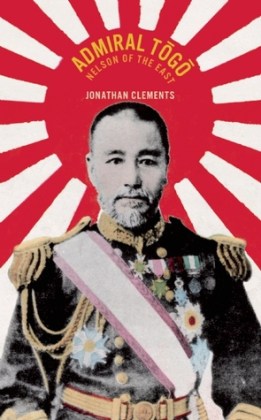
From Admiral Togo: Nelson of the East, by Jonathan Clements. Available now in the UK and soon in the US.

______

Togo the former samurai was brought face to face with a development of the new age – the motion picture. La Bataille (in America, Danger Line) directed by E.E. Violet, was the international star-studded epic of its day, the tale of the Japanese Marquis Yorisaka (Hayakawa Sessue) who suspects his wife of having an affair with the English captain Fergan (Felix Ford). The vengeful Yorisaka has Fergan transferred to his ship, and when wounded in action, orders the neutral Englishman to take charge of the ship. The film was an unabashed weepy, a refashioning of Othello, in which the wounded Marquis later discovers that his wife had been faithful to him, and seeks a tearful reconciliation. However, when screened to an audience of Japanese dignitaries by the well-meaning Viscount Ogasawara, the film’s scenes of naval combat had an unexpected effect on Admiral Togo. The sobbing Togo bolted from the theatre, confessing afterwards to Ogasawara: ‘Many of the men around me died in just that way. Do you think I can keep myself from weeping when I see the sight? It does not matter if it is a movie picture.’

___

And for readers in the London area there’s still time to book yourselves a place at my free lecture on Wednesday at the Japan Foundation, Johnny Chinaman: Admiral Togo and the British. I guarantee at least one joke at the expense of Essex.

Togo in America (1911)

9112825

From Admiral Togo: Nelson of the East, by Jonathan Clements. Out on the Kindle now in the UK and in the US.

______

The Americans were even more overwhelming in their reaction, leaving Togo taken aback at their enthusiasm and their energy. The pushy welcome began on the night that the Lusitania docked, when Togo found a midnight reception committee determined to whisk him onto land before dawn. Soon after, he faced a gesticulating, yelling wall of journalists and photographers, from whom his American minders selected a lucky foursome to take his picture. Togo stood to attention and stared grumpily into the cameras, only to discover that the paparazzi wanted him in a multiplicity of poses and aspects. He seemed particularly galled by the constant strobing of camera flashes. One single image, it seemed was not enough, and Togo suffered an excruciating fifteen minutes of man-handling and exhortations, until Chandler Hale, the Third Assistant Secretary of State, came to his rescue.

‘I have been beaten by the zeal of those cameramen,’ quipped Togo. ‘It is rather easier to fight the world squadrons than meeting those men.’

Faced with his customary silence, the American press filled in the blanks for themselves, with ruminations on the loneliness of command in the mysterious East, or patronising conjecture about what Togo might have said, had he been in a position to utter more than a few phrases. He was taken on a train to Washington, by a welcoming committee that plainly assumed he had never seen a train before, and whose excited fishing for compliments on American railways he found rudely obtuse.

The New York World concentrated on Togo’s encounter with local telephone exchange workers, whose place of work he visited on his way to the railway station. Dismissed as ‘Hello Girls’ in the early 20th century, switchboard operators were subject of contemporary gossip – a woman on the other end of a phone line, ready, in a certain sense, to do one’s bidding, and hence something of an erotic frisson. They were also habitually condescended to as bimbos, hence the World’s scoffing at the New York switchboard operators’ failure to remember to greet Togo with the correct cheer, which, the reporter assured his readers, was Banzai: ‘Ten Thousand Years’.

Other American crowds were soon educated by their press as to the expected form of address, and Togo was greeted with wild cries of Banzai everywhere he went. This verbal assault did not even escape him when riding in a government limousine, since on one occasion he found himself in an impromptu race with a car full of hysterical (and possibly drunken) flappers, who yelled Banzai at him and waved their handkerchiefs while the Admiral looked on in surprised amusement. At no point did Togo risk shaming his hosts by pointing out the unwelcome truth, which was that Banzai at the time was a military salute more appropriate to the gruff, tough army, whereas the more cultured Navy tended to salute with calls of Hoga: ‘Respectful Congratulations’.

The attention was clearly getting to Togo, as was the press’s constant demand that he say something, no matter how ill-informed or unfelt.

‘I have been frequently asked what I thought of America,’ he said with a rare scolding tone. ‘But isn’t it asking me too much? I have landed here only this morning, and I have nothing to tell.”

Welcome!

It was the best of shows. It was the worst of shows. Whenever I had to cover my tracks, I simply called it Schoolgirl Milky Crisis.

I have been writing about Japanese comics and animation for almost two decades, taking potshots at anime, manga and related fields, spreading scurrilous gossip and telling tall tales. And my friends in the business didn’t seem to mind, as long as they had plausible deniability, which meant that sometimes, even though the real name of a work was obvious to everyone, I needed to call it something else.

So I picked three random words out of nowhere: Schoolgirl Milky Crisis. At first, it was one of many fake titles, along with such creations as Warriors of the Test Card, Geek Gets Girls and Devil Devil Beast Beast. But there was something about Schoolgirl Milky Crisis that captured readers’ imaginations, and the non-existent show began to crop up regularly in my columns on the UK Sci Fi Channel’s website, in Newtype USA, and later in the Judge Dredd Megazine, NEO, and SFX Total Anime.

As time passed, colleagues approached me with woeful grievances and axes to grind. They would press documents into my hands naming names and stirring trouble. All they asked was that if I talked about this terrible show or that awful production experience, I should make sure everyone knew it was Schoolgirl Milky Crisis.

This blog is just a taste of the kind of things in the book that is due for publication in early 2009. The book contains serious newspaper articles, seminar speeches, frivolous web journalism and bitchy gossip from the specialist anime press. There is hard, useful information there, even in stories about gloves full of custard and snowball fights with martial artists. As part of the selection process, my editors and I have focussed on material that educates and informs, even if also discussing the ethics of sending celebrity guests to bondage clubs.

Schoolgirl Milky Start!

Jonathan.