 Sadly, it wasn’t the first time I had been called in to translate from English to English. The Japanese producer had once spent three years at University College London and was fully fluent, but he wasn’t quite getting through to the American producer. By the time I arrived they were talking at insanely cross-purposes.
The American thought he had the greatest idea ever: a samurai drama about a girl in Japan’s medieval wars – a woman warrior in the midst of all the conflict, kicking arse and taking names, all done in that wonderful anime style we hear so much about. All he needed was a co-producer. So he’d gone to a big Japanese studio and offered them the Chance of a Lifetime to invest in his brilliant idea. The Japanese had told him to get stuffed, but had done it so politely that he hadn’t realised.
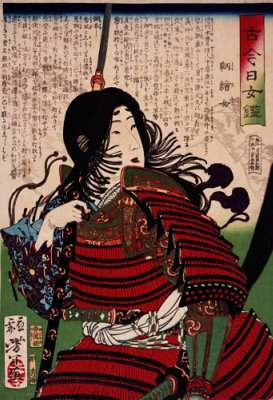
The big issue, as far as the Japanese were concerned, was that the American was offering them nothing. Worse than that, he was pitching them something that they already had, and then adding a pointless extra to justify his name on the credits. It was like me offering to tell the true story of Prince Charles and Lady Di, but from the perspective of their previously unmentioned cousin, Hagbard the Barbarian. Why were the Americans inventing a samurai heroine when there already was one in the historical record? Her name was Tomoe Gozen, and if the Japanese decided to make an anime about her life, they wouldn’t really need any help from abroad.
In fact, the Japanese were rather affronted that the Americans had suggested it at all. Their own company had made a very similar show, which we shall call Schoolgirl Milky Crisis, only two years earlier, and the breathless excitement of the foreign offer seemed to come from a producer who had no knowledge of what the Japanese had already made and recently sold. It would be like me calling up Zack Snyder and saying: “I know, why don’t you do a film of Watchmen!”
“It’ll make a great manga!” suggested the American, hopefully.
The Japanese honestly didn’t know where to begin, and left it to me. I tried to point out that there were already a lot of manga in Japan. The Japanese are up to their eyeballs in Japanese comics. They don’t really need anyone else’s help coming up with new ones. They’ve got that pretty much covered.
Instead, they offered the American an olive branch. If you think this is such a good idea, they said, go away and publish that comic. If it’s so good, it’ll be a bestseller, and then you’ll have people beating down your door to film it.
The American was baffled.
“But it’s a good idea!” he protested. The Japanese sucked air in through their teeth and began to bow their way out of the room.
“What did I do wrong?” the American asked me accusingly. “All I wanted was a coproduction deal. I bring the world-beating idea, and the Japanese bring the… well, the money. And do all the work. And then I tell them if they’re getting anything wrong.”
Yes, I said. I can’t imagine what put them off.
Jonathan Clements is the author of Anime: A History. This article first appeared in NEO #58, 2009.